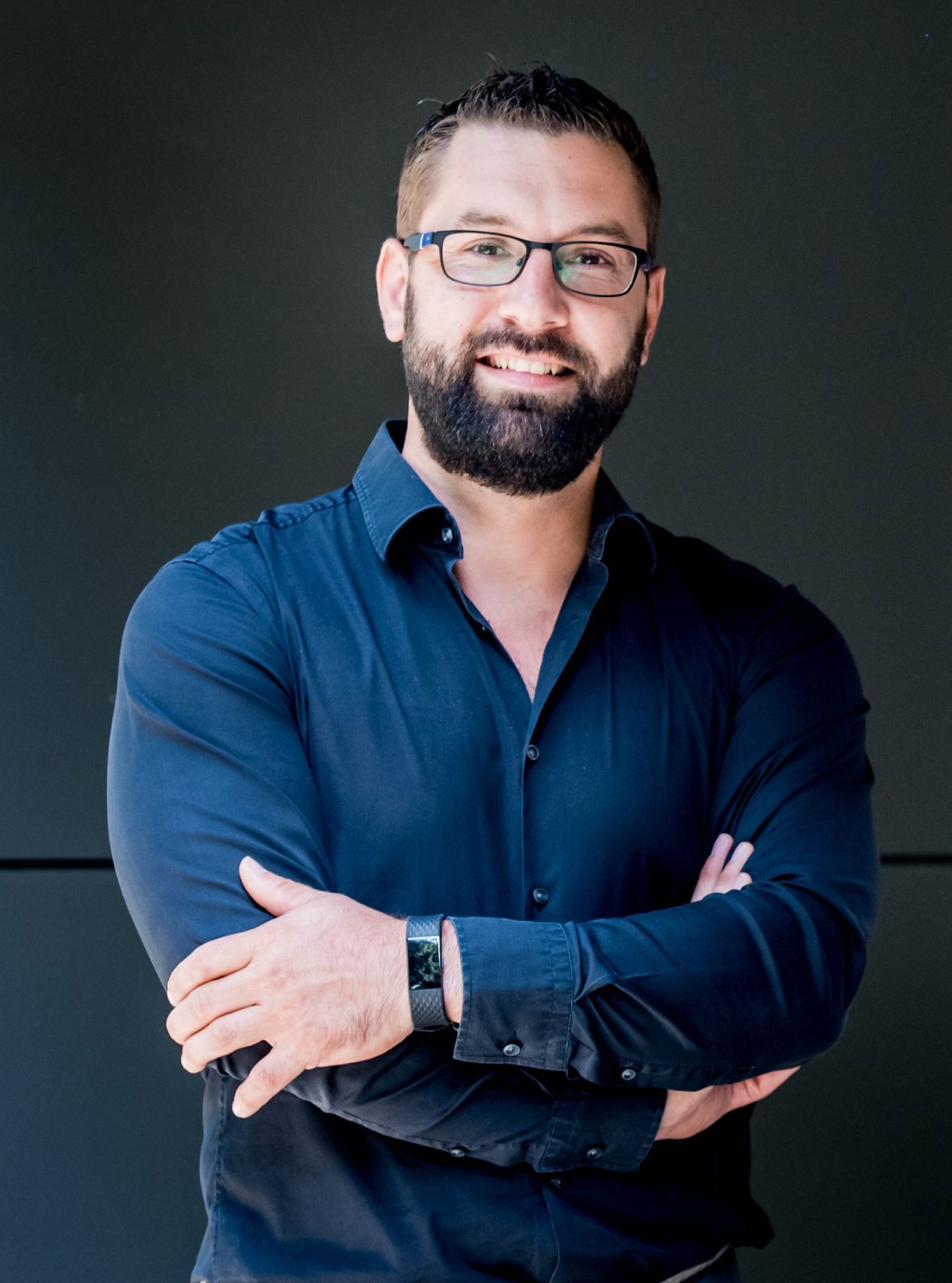
Yuri Bobbert is a Professor of Information System Science at Antwerp Management School (AMS), part of the University of Antwerp. He holds dual PhDs from Radboud University and the University of Antwerp, focusing on IT performance measurement. His career includes roles as Global Group CSO of NN Group and UWV (Government), leading cybersecurity integrations during mergers like NN Group and Delta Lloyds. As CEO of B-ABLE (IT consultancy), he developed cybersecurity frameworks. Currently, he advises on NIS2 compliance and Zero Trust strategies. His research spans cybersecurity ROI, regulatory frameworks (e.g., NIS2), and leadership in digital security. Education PhD in Information Systems (Radboud University) PhD in Cybersecurity (University of Antwerp) Research Interests Cybersecurity governance and compliance ROSI (Return on Security Investment) CISO leadership and board communication Zero Trust architecture Risk quantification in digital ecosystems Publications & Books Authored books: Strategic Approaches to Digital Platform Security Assurance , Cybersecurity in 60 Minutes , and Digital Security Leadership Over 100 peer-reviewed publications on cybersecurity performance and governance Grants & Awards Recipient of NIS2 implementation research grants Contributor to EU cybersecurity policy discussions Labs & Teams Leads AMS cybersecurity education programs and collaborates with ON2IT on global cybersecurity strategies.
Pieter d'Hoine serves as Professor and Vice Dean of Education at KU Leuven's Higher Institute for Philosophy. He is affiliated with the Wulf Mansion Centre for Ancient, Medieval and Renaissance Philosophy and LECTIO – KU Leuven Institute for the Study of Textual Transmission. Additional institutional roles include membership on the Board of the Institute for Living Languages, HIW Faculty Council, and Philosophy Program Oversight Committees. His research centers on Ancient Philosophy with emphasis on Neoplatonism, particularly Proclean metaphysics, logical structures in Platonic/Aristotelian commentaries, and mechanisms of philosophical canon formation. He investigates knowledge transmission from Greek-Roman antiquity through medieval and Renaissance scholarship, integrating digital humanities methodologies to analyze textual evolution and conceptual continuity across historical periods. Recent publications (2024) exhibit concentrated focus on Proclus' metaphysical frameworks, including predication theory, modes of being, and theological elements within Platonic exegesis. His work bridges textual criticism with systematic philosophy, examining how ancient commentators shaped enduring philosophical paradigms through citation practices and logical innovation in works like the Elements of Theology . No major scientific awards are documented in the provided materials. He actively supervises doctoral research, including G.J. Ruz Troncoso's analysis of Proclus' argumentative structures and S-H. Yang's study of Aristotelian metaphysics. Current funding supports eight major projects: "Een nieuw model voor de editie van antieke filosofische fragmenten" (2025-2031) as Co-promotor "De filosofische canon en de citaties van Plato en Aristoteles" (2024-2028) as Promotor "Rechtvaardigheid voor dieren" (Justice for Animals, 2024-2028) as Promotor "De mechanica van Canonvorming" (Canon Formation Mechanics, 2024-2028) as Promotor His research ecosystem operates through the Wulf Mansion Centre and LECTIO institute, which coordinate international collaborations on premodern textual transmission, utilizing digital tools to map philosophical concept evolution across millennia.
Matthew B. Blaschko is a Professor in the Department of Electrical Engineering at KU Leuven, Belgium. He serves as director of the KU Leuven ELLIS unit and is a fellow in the ELLIS Health program. He is a Core PI in the Flanders AI Research Program, working as a workpackage lead for Decision Support Systems and Medical Imaging. Blaschko is also a member of the KU Leuven Institute for Artificial Intelligence and one of the leaders of the working group on Machine Learning and Data Science. Professor Blaschko received his B.S. from Columbia University, M.S. from the University of Massachusetts Amherst, and Dr. rer. nat. from Technische Universität Berlin (awarded for work at Max Planck Institutes Tübingen). He was a Newton International Fellow at the University of Oxford and received his Habilitation (HDR) from École Normale Supérieure de Cachan. Prior to joining KU Leuven, he was a Permanent Research Scientist in the INRIA Saclay Research Center and a Faculty Member at Ecole Centrale Paris. His research focuses on machine learning techniques applied to visual data, with particular emphasis on calibration in deep learning, medical image analysis, and federated learning. Blaschko's work bridges theoretical foundations with practical applications, as evidenced by technology developed in his research being incorporated into MONA, software for ophthalmic image analysis. His research group has made significant contributions to the fields of model calibration, uncertainty estimation, and medical imaging analysis, with recent publications showing strong trends toward improving reliability of AI systems in medical contexts and advancing theoretical understanding of calibration metrics. Professor Blaschko has been recognized with several awards including the Université Paris-Saclay STIC Doctoral School Best Scientific Contribution Award, Best Paper Award at CVPR 2008, Main Award at DAGM 2008, and Best Student Paper Award at ECCV 2008. Professor Blaschko has supervised numerous PhD and Master's students, with current and former students including Deniz Soysal, Claire Marchal, Dongli Xu, Sebastian Gruber, Jiameng Li, Marco Mezzina, and many others working on diverse topics from Alzheimer's disease analysis to surgical phase recognition. His research has been supported by various funding sources including the Flanders AI Research Program. He has co-organized several influential workshops including the "Another Brick in the AI Wall: Building Practical Solutions from Theoretical Foundations" at CVPR 2025, Commands 4 Autonomous Vehicles workshop at ECCV 2020, and the Learning from Limited Labeled Data workshop series at NIPS 2017 and ICLR 2019. His laboratory focuses on machine learning for medical image analysis, with applications in ophthalmology, neurology, and surgical robotics. The group maintains active collaborations with medical institutions and participates in international challenges such as the KNee OsteoArthritis Prediction (KNOAP2020) challenge.
Tim Van de Cruys is a Senior Lecturer at the Faculty of Arts, KU Leuven, serving as Head of the Centre for Computational Linguistics (CCL). He maintains significant affiliations with LECTIO (KU Leuven Institute for the Study of the Transmission of Texts, Ideas and Images), Leuven.AI (KU Leuven Institute for Artificial Intelligence), and LILI (KU Leuven Interdisciplinary Language Institute). His work bridges computational linguistics, artificial intelligence, and humanities research with practical applications across multiple disciplines. Dr. Van de Cruys specializes in computational semantics and creative language generation, with particular expertise in applying NLP techniques to historical and classical texts. His research spans multiple domains including: Natural Language Processing for ancient languages (Latin, Ancient Greek) Computational approaches to lexical and compositional semantics Large language models and their applications in humanities research Creative language generation and human-AI collaboration Named entity recognition and disambiguation in historical contexts Non-autoregressive modeling for sequential generation tasks His recent publications demonstrate a strong focus on applying cutting-edge NLP techniques to humanities challenges, particularly in processing ancient languages. He frequently employs transformer models to address named entity recognition, word sense discrimination, and semantic analysis in low-resource language contexts. His work consistently bridges formal linguistic theory with practical computational applications, creating valuable tools for digital humanities scholars. As promotor and co-promotor on numerous research projects extending through 2029, Dr. Van de Cruys supervises PhD students working at the AI-humanities intersection. His current major projects include "Living Corpora" (exploring human-AI collaboration in digital humanities), "Stochastic processes and non-autoregressive models for sequential generation," and "NIKAW" (exploring knowledge networks from classical antiquity). These projects demonstrate his commitment to advancing both theoretical understanding and practical applications of computational linguistics. He teaches various courses including Computational Linguistics, Scripting Languages, Programming for Humanities, Computational Creativity, and AI for Humanities, training students to work at this critical interdisciplinary crossroads. His leadership of the Centre for Computational Linguistics positions him at the forefront of computational linguistics research in Belgium, where he continues to expand the boundaries of what's possible at the intersection of language, computation, and humanistic inquiry.
Alicia ALLEGRI is a Professor and educational researcher with expertise in Educational Sciences, currently affiliated with the Institute of School Administration (INAS). She holds a bachelor's degree in primary school teaching (2014) and a Master's degree in Educational Sciences (2017), with additional certification in Didactics of Philosophy and Citizenship (2018). Her professional experience includes teaching since 2017 across multiple educational settings: mainstream primary education, special primary education, and special secondary education. At INAS, where she has conducted research since September 2019, her work focuses on developing and validating educational tools and devices for geography education. Dr. Allegri's research examines learning regulation mechanisms, cognitive development, and educational methodologies. Her work integrates cognitive, social, and affective components of learning, with particular attention to self-regulatory strategies in educational contexts. She has developed expertise in 3D-2D representation techniques for educational games and the study of abstraction processes in student learning. Her research portfolio includes studies on decentering processes in children and adolescents, utilizing adapted educational tools like the Animo-déclic® game. Currently, her work centers on supporting teachers through the creation of validated educational resources for geography instruction. Dr. Allegri's professional development includes participation in research projects during her Master's program focused on educational psychology and learning mechanisms, establishing her foundation in evidence-based educational practices.
Charles-Henry Bertrand Van Ouytsel is a Research Assistant and Visiting Lecturer at Université catholique de Louvain , affiliated with the Louvain Polytechnic School (EPL) and the Computer Engineering Center (INGI) . His work focuses on malware analysis , symbolic execution , and machine learning for cybersecurity applications. Research Areas : Packing detection, intrusion detection systems, side-channel security, and adversarial machine learning. Teaching : Involved in courses like Secured systems engineering (LINFO2144) and Software engineering and programming systems seminar (LINFO2359) . His recent publications emphasize malware obfuscation techniques and security evaluation frameworks . Collaborations with Axel Legay and others highlight his contributions to tool development (e.g., Packing-Box , SEMA ). No scientific awards are explicitly mentioned.
Imke Baetens is a Professor at the Vrije Universiteit Brussel (VUB), affiliated with the Faculty of Psychology and Educational Sciences and the Department of Psychology. Her research focuses on self-injurious behavior, mental health in adolescents and older adults, and resilience-building interventions. She leads multiple projects addressing mental health challenges in schools, elderly populations, and marginalized groups like transgender individuals. Key initiatives include the PRISM network for mental health innovations and the SMARTS project enhancing resilience through schools. Baetens collaborates internationally, with studies on cross-national self-injury trends and personality risk factors for self-harm in older adults. She actively engages in public discourse on mental health via media contributions and hosts academic visitors to advance collaborative research. Education: Not explicitly stated in text; inferred doctoral training via research roles. Research interests prioritize bridging clinical practice and population health, with a focus on preventive mental health strategies. Over 97 publications since 2009 reflect her expertise in psychology, gerontology, and public health. Notable datasets include longitudinal studies on self-harm risk and cross-country comparisons of mental health interventions. Media engagements highlight her role as a public mental health expert, addressing topics like pandemic impacts on youth and elderly self-harm trends. She supervises numerous academic works, though specific student names are not listed.
Hilde Colpin serves as a Full Professor in the Faculty of Psychology and Educational Sciences at KU Leuven, where she leads the School Psychology and Development in Context research unit. She holds dual affiliations with the KU Leuven Institute for Child and Youth (LC&Y) and the KU Leuven Institute for Educational Research (LIVO), and serves on the PPW Faculty Council, Bachelor Psychology Program Committee, and Master Psychology Program Committee. Her research investigates the interplay between teacher-student and peer relationships within school contexts and their impact on children's social-emotional development and mental health. Specializing in identity-based bullying prevention and interventions for vulnerable youth—including children with refugee and migration backgrounds—she develops evidence-based frameworks for collaborative family-school partnerships. Her work bridges developmental theory with practical classroom applications. Her 2025 publications reveal a cohesive focus on relational dynamics in educational settings, with recurring themes of teacher connective practices, bullying intervention efficacy, and adolescent mental health outcomes. These works employ mixed-methods approaches across diverse age groups and school systems, consistently emphasizing the dual influence of teachers and peers on student well-being. Key outputs include validated measurement tools like the TAP-S questionnaire and the CONNECTIONS in CLASS research report for schools. Professor Colpin currently directs nine major research projects as promoter or co-promoter, including 'Primary Prejudice' (addressing identity-based bullying, 2023-2027) and 'CONNECTIES in the CLASS' (examining relationship dynamics, 2022-2026). She mentors students through courses such as 'Prevention: Children and Youth' and clinical practicum supervision in educational psychology. She spearheads the CONNECTIONS in CLASS (CiC) research initiative, which investigates how teacher-student and peer relationships interact to shape adolescents' mental health. This program produces actionable tools for educators and informs policy through its school-based implementation framework.
Tegoeh Tjahjowidodo is a Senior Lecturer at the Faculty of Industrial Engineering Sciences , KU Leuven , affiliated with the Department of Mechanical Engineering and the Manufacturing Processes and Systems (MaPS) unit at Campus De Nayer. He serves as Head of Education for Electromechanics programs and leads Subdivision 17 at the campus. Research Areas: Additive Manufacturing (Wire-Arc Additive Manufacturing), Process Monitoring, Control Systems, Laser Micromanufacturing, Wear Analysis, Robotics, and Condition Monitoring. Publication Trends: Focus on in-situ monitoring of laser micromanufacturing, machine learning for abrasive belt grinding, WAAM parameter optimization , and multi-sensor fusion for process control. Scientific Contributions: Co-promotor for MultiTRIBO (tribology), Promotor for WAAM structural integrity and pedicle screw surgical simulators . Active in international collaborations (e.g., 25th International Symposium on Laser Precision Microfabrication, Spain 2024).
Heidi Ottevaere is a Professor at the Faculty of Engineering of the Vrije Universiteit Brussel (VUB) since October 1, 2009. She serves as the head of the Instrumentation and Metrology platform at the Photonics Innovation Center and leads the 'biophotonics' research unit of the Brussels Photonics Team (B-PHOT), which is chaired by Prof. Hugo Thienpont. Her work focuses on the design, fabrication, and characterization of photonic components and systems for diverse applications in medical diagnostics, environmental monitoring, and industrial processes. Dr. Ottevaere earned her Electrotechnical Engineering degree with majors in Photonics from Vrije Universiteit Brussel in 1997 and completed her PhD in Applied Sciences at the same institution in 2003. Her doctoral research focused on 'Refractive microlenses and micro-optical structures for multi-parameter sensing: a touch of micro-photonics.' Professor Ottevaere's research spans multiple cutting-edge areas of photonics with particular emphasis on biophotonics, micro-optics, and optical metrology . Her work bridges fundamental science with practical applications, developing novel photonic components and systems that address real-world challenges. She has pioneered research in miniaturized optical systems for medical diagnostics, environmental monitoring, and industrial applications. Her current research focuses on advancing lab-on-a-chip technologies, microfluidic optical sensors, and novel optical fiber systems for biomedical applications. She has developed microminiaturized, integrated plastic detection units for absorbance and laser-induced fluorescence measurements in microfluidic channels, enabling portable, robust, and disposable diagnostic systems. Her recent publications demonstrate a strong trend toward integrated optical sensing systems with applications in medical diagnostics and environmental monitoring. There's a clear progression from fundamental optical component design to complete system integration, with increasing emphasis on artificial intelligence for data analysis and computational imaging techniques. Her work bridges photonics with biomedical engineering, materials science, and data science, reflecting the interdisciplinary nature of modern photonics research. Dr. Ottevaere has been recognized with several prestigious awards: Best Application award (2008) Educational award - Bronze (2019) MOC09 Contribution Award Winners (2009) As an educator and mentor, Professor Ottevaere has promoted 9 PhD students and supervised numerous master's theses. She has secured substantial research funding from diverse sources including the Fund for Scientific Research Flanders (FWO), the Institute for the Promotion of Innovation by Science and Technology in Flanders (IWT), and multiple European Framework Programs. Her current portfolio includes projects on miniaturized biosensors for drinking water screening, precision manufacturing, and photonics education initiatives in Uzbekistan. She has coordinated multiple strategic research and networking projects with regional, national, and international funding bodies. Professor Ottevaere leads the biophotonics research unit within the Brussels Photonics Team (B-PHOT), one of Europe's leading photonics research groups. Her team includes researchers working on optical metrology, micro-optics fabrication, and biophotonic applications. She collaborates extensively with industry partners including Melexis, Umicore, and Anteryon, as well as academic institutions across Europe through various EU-funded projects. She has been instrumental in developing the interuniversity engineering curriculum 'Master in Photonics' which received the EC Erasmus Mundus quality label in 2006, and continues to be the driving force behind photonics education at VUB.
Prof. Dominique Hansen is a Full Professor in Exercise Physiology and Rehabilitation of Internal Medicine at Hasselt University's Faculty of Rehabilitation Sciences, and a research associate at the Hasselt Heart Center (Jessa Hospital). His research focuses on 'precision exercise' to combat cardiometabolic diseases like obesity, diabetes, and cardiovascular disease, emphasizing tailored exercise protocols over generic recommendations. He co-developed the EXPERT tool, a digital decision-support system used across Europe to create personalized exercise prescriptions for cardiovascular patients. Education: Advanced degrees in Exercise Physiology and Medicine (details not specified) Key Collaborations: Prof. Paul Dendale, Prof. Karin Coninx, and the 30+ member EXPERT Network Group spanning 10+ European countries His research has produced over 200 peer-reviewed publications, including European guidelines for cardiac rehabilitation. Two major research lines include: (1) developing precision exercise guidelines for CVD prevention and treatment, and (2) exploring exercise's role in protecting non-cardiac organs (e.g., the brain in type 2 diabetes patients). He advocates for exercise as a core component of secondary prevention, emphasizing the need to move beyond 'one-size-fits-all' approaches. Current projects include optimizing physical activity monitoring via wearable tech and mHealth interventions for older adults. Labs/Teams: Hasselt Heart Center Research Group, EXPERT Network Group Grants: Funding details not specified, but receives donations via Hasselt Heart Center
Prof. Dr. Katrijn KLINGELS is a Senior Lecturer at the Faculty of Rehabilitation Sciences , Hasselt University , Belgium. Her work centers on Motivational Control , Developmental Neuroscience , and Pediatric Rehabilitation , with a focus on neurodevelopmental disorders like Cerebral Palsy and Developmental Coordination Disorder . Supervision of 11 ongoing doctorates, including studies on balance control heterogeneity , intensive balance training , and somatosensory deficits in children with motor disorders. Leadership roles in the OMT Bachelor ReKi program and the Examination Board for Rehabilitation Sciences. Her research integrates brain imaging , neuromechanics , and functional assessments to understand motor impairments and design targeted therapies. Current projects include CO-OP interventions for autism , ICP-Move implementation for intellectual disabilities, and muscle fatigue studies in cerebral palsy. She teaches courses like Evidence-Based Clinical Reasoning and Advanced Pediatric Rehabilitation .
Jan Elen is a full Professor at KU Leuven, specifically within the Instructional Psychology and Technology department of the Faculty of Psychology and Educational Sciences. They are also a member of DigiSoc – KU Leuven Institute for Digital Society and LIVO – KU Leuven Institute for Educational Research. Jan Elen's research interests focus on: Educational Technology and Digital Learning Instructional Psychology and Knowledge Scientific Reasoning and Argumentation in Education Educational Curation and Resource Management Teacher Education and Professional Development Assessment Methods and Educational Measurement Current research projects include Sabbatperiode Jan Elen: Fundamenten voor onderwijskundig redeneren (2023-2024), ICT in de lerarenopleiding: affordance versus daadwerkelijk gebruik in geselecteerde lerarenopleidingen in Ethiopië (2023-2027), and Naar een complementariteit tussen leraar en GenAI in de rol van de leraar als ontwerper van leeromgevingen (2022-2026). Their recent publications demonstrate a strong focus on the intersection of educational psychology, technology integration, and instructional design, particularly examining how teachers and students interact with digital learning environments and develop scientific reasoning skills, with emerging work on generative AI applications in education. Jan Elen serves in various academic capacities: Observer of the POC Criminological Sciences Observer of the POC Rights Member (as ZAP) of the PPW Faculty Council Member of the Assessment Committee of the Faculty of Psychology and Educational Sciences Observer of the OC Master of Psychology: Theory and Research Jan Elen teaches courses related to Leren in maatschappelijk betrokken onderwijs (Learning in socially engaged education) and supervises student placements in psychology and educational sciences across multiple formats including distance learning.
Gregory Ehx is a Researcher at the University of Liège's GIGA institute, specifically within the GIGA-I3 (Infection Immunity and Inflammation) research unit of the Faculty of Medicine. He leads the Translational Immunology and Leukemia research team in the Hematology Laboratory, focusing on understanding immune recognition of acute myeloid leukemia (AML) cells and developing novel immunotherapies. Dr. Ehx's research centers on how leukemia cells are recognized by immune cells and how they escape immune surveillance. His team studies the interaction between T cells and malignant cells, particularly focusing on MHC-presented peptides and immuno-inhibitory molecules like PD-L1 and CD47 expressed by AML cells. Key research areas include: Development of cancer immunotherapies for permanent leukemia eradication Maximizing immune recognition of chemotherapy-surviving cancer cells Identification of tumor-specific immunogenic peptides Understanding mechanisms of chemotherapy resistance His publication record demonstrates significant contributions to cancer immunology, with a focus on proteogenomics and computational approaches to identify actionable tumor antigens. Recent work has revealed how endogenous retroelements generate immunogenic peptides in AML and how autophagy affects immune recognition of cancer cells treated with 5-azacytidine. Scientific recognition includes: FNRS Research associate mandate (2023) Comte de Launoit Prize Dr. Ehx secured funding through the FNRS Research associate program to pursue his ambitious research program on developing vaccines targeting chemotherapy-resistant AML cells. His work on the BamQuery computational tool has enabled identification of tumor-specific MHC peptides, forming the basis for potential cancer vaccine development. His research has implications beyond AML, potentially benefiting treatment of other cancers including colon, lung, and breast cancer. The researcher leads his team within the Hematology Laboratory at GIGA, building on collaborations with researchers at the Institute for Research in Immunology and Cancer (IRIC) in Canada and other international partners. His laboratory combines wet-lab immunology with computational approaches to tackle the challenge of cancer immunotherapy.
Peter Bursens is a full professor of Political Science at the Department of Political Science, Faculty of Social Sciences, University of Antwerp, a position held since 2010. He is a senior member of the Politics and Public Governance Research Group (P&PG) and affiliated with the GOVTRUST Center of Excellence focusing on trust in multilevel governance systems. His academic roles extend to teaching at the Antwerp Management School and the Institute for Sustainable Development and Environment. He obtained his Ph.D. in Political Science from the University of Antwerp in 1999. Professor Bursens' research centers on European decision-making processes, Europeanization dynamics, federalism structures, and democratic legitimacy within multilevel political systems. As holder of a Jean Monnet Chair on 'skills teaching in European Union Studies', he develops simulation games and assessment tools for political science curricula. His work is embedded in the GOVTRUST Center of Excellence examining trust mechanisms across governance levels. Jean Monnet Chair (European Commission) He served as program director and vice-dean for education from 2012-2018, teaching European integration and multilevel political systems across Bachelor and Master programs in Political Science and International Relations. His extensive administrative involvement includes chairing the Examination Board for Bachelor Political Science and serving on the Education Committee of the Faculty of Social Sciences. Professor Bursens maintains governance roles across 15+ committees including the Faculty Council of Social Sciences, Departmental Council of Political Sciences, and Council of the Institute for Environment and Sustainable Development, reflecting deep institutional engagement.