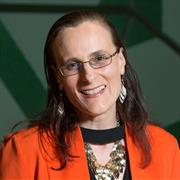
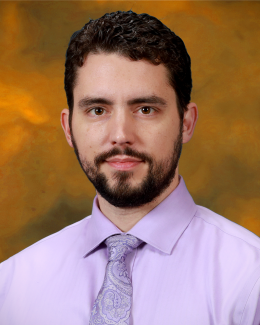
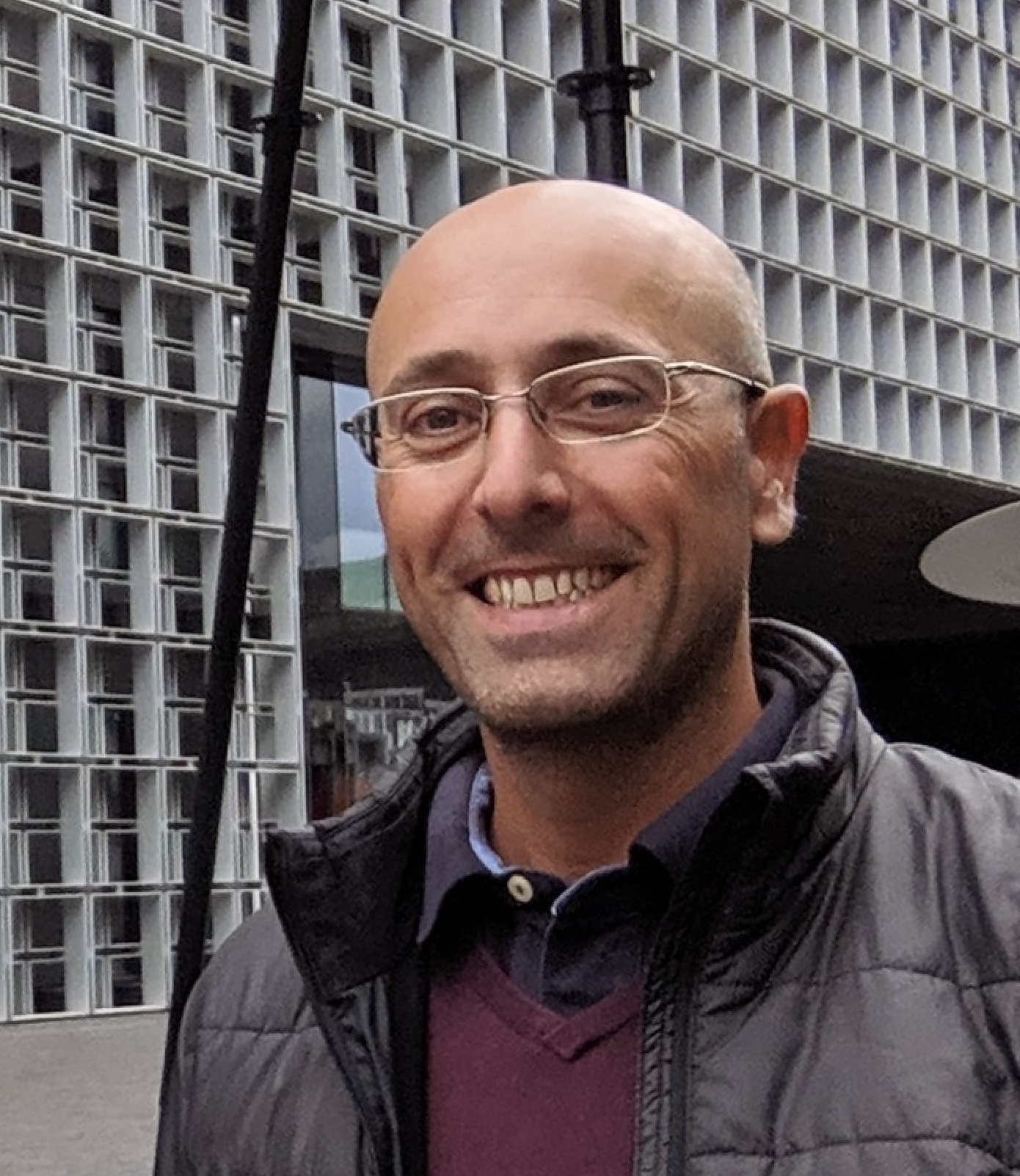
Martha Easton is an Associate Professor of Art History and Program Director of Museum Studies at Saint Joseph's University. She specializes in medieval art and architecture, with a focus on illuminated manuscripts, gender and hagiography, feminist theory, and medieval collecting practices. Easton is a founding member of the Material Collective, a collaborative dedicated to innovative approaches to visual culture, and has lectured extensively at institutions like the Met Cloisters. Education : PhD in Fine Arts (Institute of Fine Arts, New York University) with major fields in Early Christian and Medieval Art; minor in Japanese Art Certificate of Curatorial Studies (Institute of Fine Arts/The Metropolitan Museum of Art) MA in Fine Arts (Institute of Fine Arts, New York University) BA in History (Carleton College) Her research explores intersections of gender, medievalism, and the afterlife of medieval art in modern collections. She is currently writing a book on John Hays Hammond Jr., a scientist-collector who built Hammond Castle, and has published widely on feminist art history, medieval eroticism, and the Material Collective’s collaborative scholarship. Scientific Awards : Michael J. Morris Grant for Scholarly Research (2020-21) Teaching Innovation Grant (2020) Senior Research Fellowship, Center for the History of Collecting (The Frick Collection, 2015) Samuel H. Kress Foundation Travel Grant (1998) Andrew W. Mellon Foundation Fellowship (1996-97) Easton has taught at institutions including Seton Hall University, Bryn Mawr College, and New York University, and her work bridges medieval scholarship with modern curatorial practices and feminist reinterpretation of historical narratives.
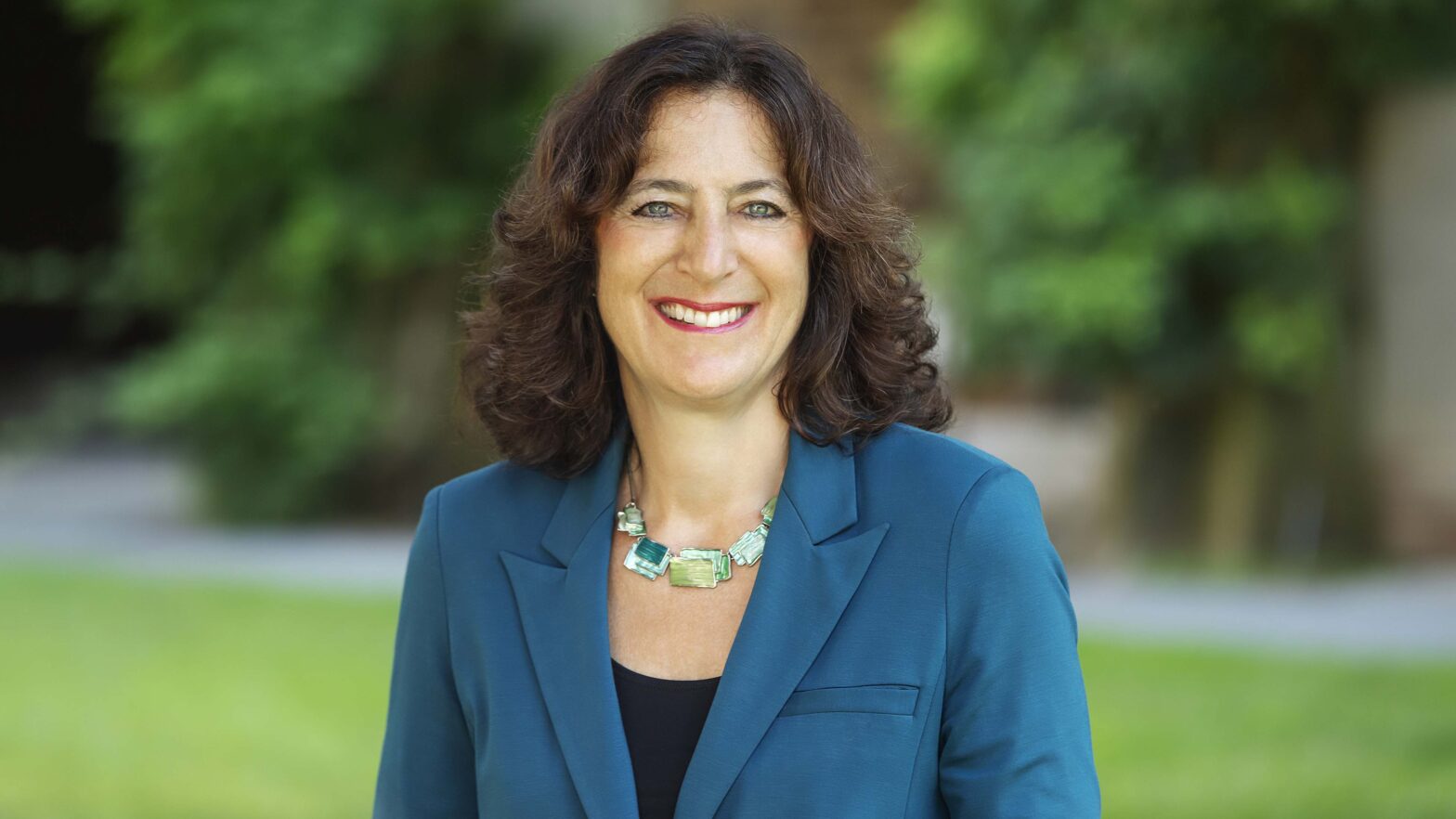
Dr. Erica Garcia is a Senior Lecturer in Environmental Science at Charles Darwin University’s Faculty of Science and Technology, specializing in aquatic ecology. She leads research on river, wetland, and groundwater ecosystems, focusing on food web dynamics and biodiversity in changing environments. Her current projects include citizen science initiatives for groundwater security and wetland condition assessments. Dr. Garcia holds a PhD from Michigan State University (2006) and a B.A. from the University of California, Berkeley (1999). She teaches courses in ecology and resource management and collaborates on interdisciplinary projects addressing water sustainability in Northern Australia. Her research spans observational, experimental, and molecular methods to understand ecosystem processes. Education: PhD in Zoology/Ecology, Evolutionary Biology and Behavior, Michigan State University (2000–2006) Bachelor of Science in Integrative Biology, University of California, Berkeley (1995–1999) Research Interests: Dr. Garcia’s work emphasizes freshwater ecosystems, including food web interactions, groundwater ecology, and the impacts of human activities on riverine systems. She employs eDNA, isotopic analysis, and remote sensing to assess ecosystem health and biodiversity. Current projects investigate groundwater resources and citizen science approaches to environmental monitoring. Grants & Projects: Co-lead on the Northern Australian Community Groundwater Security Project (citizen science) Principal Investigator for the Adelaide River Aquatic Ecosystem Mapping project (2023–2024) Collaborator on the Water Security for Northern Australia Program (2023–2026) Labs/Teams: She is affiliated with the Research Institute for the Environment and Livelihoods at CDU and collaborates with international networks on global river ecology and climate change impacts.
Professor Sylvia Urban is a distinguished academic at RMIT University, serving as a Professor of Chemistry in the School of Science. She leads the Marine and Terrestrial Natural Product (MATNAP) research group and is the Program Manager for the Bachelor of Science degree, the largest and flagship program in the School of Science. Professor Urban also holds significant leadership roles including Reconciliation and Responsible Practice Facilitator in the School of Science (STEM College) and member of the Nugulu Committee at RMIT University. Her expertise spans natural products chemistry and separation science, with particular focus on chromatography for purification and instrumental analysis for structural characterisation and elucidation. Professor Urban's research interests encompass natural product chemistry isolation and structural elucidation, NMR spectroscopy and mass spectrometry for characterisation of natural products, High Performance/Pressure Liquid Chromatography (HPLC) and other chromatographic techniques for natural product purification, hyphenated spectroscopic techniques such as HPLC-NMR and HPLC-MS for natural product profiling, and biological evaluation of natural products for drug discovery applications. Her work primarily focuses on exploring the biodiversity of Australian marine and terrestrial organisms including plants, fungi, sponges, and algae to discover new compounds with therapeutic potential. She has developed various dereplication and chemical profiling strategies to expedite the discovery process. Professor Urban's publication record demonstrates a strong focus on natural products derived from Australian flora and marine organisms, with particular emphasis on their chemical characterisation and biological evaluation. Her research spans ethnobotanical studies of Indigenous Australian medicinal plants, phytochemical profiling of Australian species, anthelmintic and antimicrobial assessments of natural compounds, and development of analytical methodologies for natural product research. The interdisciplinary nature of her work connects chemistry with pharmacology, ethnobotany, and sustainable development goals related to health, education, and gender equality. STEM College Learning & Teaching Award (Award for Values in Action) 2024 STEM College Athena Swan Award 2023 Top STEM College Media Star 2022 School of Science Reconciliation Champion Award for 2021 School of Science Associate Dean's Impact Award (Applied Chemistry) for 2021 STEM Female Educator of the Year Award in the STEM College in 2021 Fellow of the Royal Australian Chemical Institute (RACI) in 2020 2019 Australian Award for University Teaching (AAUT) Citation for Outstanding Contributions to Student Learning Professor Urban actively supervises Masters and PhD students, with recent projects focusing on nanoparticle synthesis, natural product evaluation from Australian plants and marine organisms, food science applications, and biomedical imaging agents. She has received numerous teaching grants including the SteLR Grant 2017 for Pen-enabled, Real-time Student Engagement for Teaching in STEM Subjects, SteLR Plus Learning and Teaching Grant 2016 for Contextualizing Learning Chemistry, and Global Learning by Design (GLbD) Learning and Teaching Grant 2014. As the leader of the MATNAP research group, Professor Urban oversees a team focused on exploring Australian biodiversity for drug discovery. She has been instrumental in establishing the VICS Molecular Resolution Facility (chromatography node at RMIT University) as part of "The Pipeline – An Integrated Approach to Drug Design and Development." Her research involves collaborations both within and external to RMIT University, including Australian and international university and industry partners.
Michael Felsberg is a Professor and Head of Division at the Department of Electrical Engineering (ISY) at Linköping University, leading the Computer Vision Laboratory (CVL). His research focuses on artificial visual systems (AVS), including 3D computer vision, computational imaging, object tracking, and autonomous systems. He emphasizes HVS-inspired approaches to bridge the gap between human and machine vision capabilities. Notable achievements include over 20,000 citations (h-index 47), leadership roles in the Wallenberg AI, Autonomous Systems and Software Program (WASP), and recognition as Sweden’s top AI researcher by Vinnova. His work spans academic contributions, industry collaborations, and interdisciplinary projects like climate science applications of machine learning. Positions : WASP Executive Committee Member, WASP Area Cluster Leader for Machine Learning, and Vice-Head of Department (Electrical Engineering). Education : Extensive academic background in electrical engineering and computer vision (details not explicitly stated). Research trends in his articles reflect advancements in autonomous systems, multimodal AI, and robust vision models. His teams address challenges like object tracking, generative models for 3D simulation, and culturally diverse AI systems. Awards : Tracking Challenge Winner (OpenCV, 2015) Best Paper Awards (ICPR 2016, VISAPP 2021) Vinnova’s Highest-Ranked Swedish AI Researcher (2018) He advises numerous PhD students and oversees grants in WASP-funded initiatives. CVL collaborates on projects like disaster-response robotics and Berzelius supercomputer utilization for AI.
Andrea Goldsmith is the Dean of the School of Engineering and Applied Science and the Arthur LeGrand Doty Professor of Electrical and Computer Engineering at Princeton University. Previously, she held the Stephen Harris Professorship at Stanford University and remains Harris Professor Emerita there. Her research focuses on information theory, communication theory, signal processing, and their applications to wireless communications, interconnected systems, and neuroscience. She founded Plume WiFi and Quantenna, Inc., and serves on the boards of Medtronic and Crown Castle Inc. Education: B.S., M.S., and Ph.D. in Electrical Engineering, University of California, Berkeley (1986–1994) Research Interests: Her work bridges theoretical foundations with practical applications in wireless systems, including MIMO communications, cognitive radio, and the integration of machine learning in communication protocols. She also explores the intersection of wireless technology with biomedical systems and neuroscience, emphasizing innovations like smart buildings and in-body networks. Key Contributions: Authored seminal textbooks, including Wireless Communications and MIMO Wireless Communications . Inventor on 29 patents, with significant industry impact through startups. Recipient of prestigious awards such as the IEEE Sumner Award, ACM Athena Lecturer Award, and Marconi Prize. Labs & Leadership: Leads the Wireless Systems Lab at Princeton, advancing cutting-edge wireless technologies. Chair of the IEEE Board of Directors Committee on Diversity, Inclusion, and Ethics.
Eetu Mäkelä is a Professor of Digital Humanities at the University of Helsinki, leading the research group at the Helsinki Centre for Digital Humanities. He focuses on computational methods in humanities and social sciences, including datafication and interdisciplinary collaboration. He serves as Technical Director of DARIAH-FI and a Research Programme Director at the Helsinki Institute for Social Sciences and Humanities. Currently, he heads the preparatory group for the Helsinki Liberal Arts and Sciences Bachelor’s Programme. His research emphasizes technological and theoretical foundations of computational research, with notable contributions to linked open data, sociolinguistic analysis, and historical text mining. He has developed widely used tools like Recon, Palladio, and Octavo, which are employed in academic and public sectors. His work has garnered over 20 awards, including best paper and open science recognitions. Key areas of expertise include digital humanities methodologies, data integration, and open science practices. He actively contributes to teaching, designing courses such as 'Methods for Digital Humanities' and demonstrating innovative pedagogical approaches. His recent projects involve analyzing 18th-century philosophical texts and sociolinguistic change using computational methods. Awards: Multiple best paper awards, open data awards, and open science awards. Grants/Advising: Leads research initiatives funded by the Academy of Finland and other bodies. Mentors interdisciplinary research teams but no specific student names listed. He maintains active roles in academic infrastructure, including the DARIAH-FI initiative and the Helsinki Institute’s datafication program. His work bridges technical innovation with humanities scholarship, emphasizing practical, enduring systems for academic and public use.
Jennifer Widom is the Frederick Emmons Terman Dean of Stanford University's School of Engineering and holds the Fletcher Jones Professorship in Computer Science and Electrical Engineering. She previously served as Chair of the Computer Science Department (2009–2014) and Senior Associate Dean (2014–2016). Widom earned her Ph.D. in Computer Science from Cornell University (1987) and completed her undergraduate degree in Music at Indiana University (1982). She joined Stanford in 1993 after research at IBM Almaden. Education: Ph.D., Computer Science, Cornell University, 1987 MS, Computer Science, Cornell University, 1985 MS, Computer Science, Indiana University, 1983 BS, Music, Indiana University Jacobs School of Music, 1982 Research Interests: Widom's work focuses on nontraditional data management, including data streams, uncertain databases, crowdsourcing, and query processing systems like STREAM and Deco . She has pioneered methods for managing and querying uncertain data, optimizing graph algorithms, and integrating human computation into data systems. Key Contributions: Developed the STREAM system for real-time data stream management Advanced techniques for crowdsourcing quality management Contributed to foundational work in uncertain databases and provenance tracking Awards & Recognition: ACM Fellow (2005) Member, National Academy of Engineering (2005) Edgar F. Codd Innovations Award (2007) ACM-W Athena Lecturer (2015) EPFL-WISH Erna Hamburger Prize (2018) Teaching & Leadership: Widom teaches courses on data analytics and database systems, advising students like Arnav Joshi. She has led major initiatives in computational education and institutional leadership at Stanford.
Grégoire DANOY is a Researcher at the University of Luxembourg's Interdisciplinary Centre for Security, Reliability, and Trust (SnT) and Head of the Parallel Computing and Optimization Group (PCOG). He specializes in artificial intelligence, with a focus on optimization algorithms, machine learning, and swarm intelligence. His work addresses challenges in cloud computing, high-performance computing, smart mobility, and unmanned autonomous systems like drone swarms. He has authored over 150 publications, including articles in IEEE Transactions and conferences like NeurIPS and GECCO. He currently leads major projects such as UltraBO (€1.019M), ADHOC (€1.291M), and SERENITY (€1.228M), collaborating with institutions in France and Poland. Education: PhD in Computer Science (2008) from École Nationale Supérieure des Mines de Saint-Étienne, Master’s in Computer Science (2004), and Industrial Engineering Degree (2003) from Luxembourg University of Applied Sciences. Research Interests: Developing novel AI techniques for solving large-scale optimization problems, with applications in distributed systems, autonomous robotics, and federated learning. He emphasizes scalable solutions for combinatorial challenges using parallel computing and swarm intelligence. Grants & Projects: Principal Investigator for EU-funded initiatives like ADARS (2021–2024) and FNR PoC/SIMMS (2019–2021). His work bridges academia and industry, with technology transfer projects in autonomous robot swarms. Awards: Recognitions include the Best Student Paper Nomination (2022), IEEE CybConf Best Paper Award (2017), and ACM GECCO nominations (2016, 2009). He serves on the editorial board of Engineering Applications of Artificial Intelligence (EAAI). Labs & Teams: Leads the Parallel Computing and Optimization Group (PCOG), focusing on interdisciplinary research in AI and distributed systems. He also contributes to outreach programs like FNR's Researchers at School.
Vyas Sekar is the Tan Family Professor of Electrical and Computer Engineering at Carnegie Mellon University (CMU), with a courtesy appointment in the Computer Science Department. He is affiliated with CyLab and co-directs the Future of Enterprise Security initiative. His research focuses on networking, cybersecurity, distributed systems, and IoT security, with an emphasis on data-driven approaches and network verification. Education: Ph.D. in Computer Science (2010) from CMU; B.Tech. from IIT Madras (President of India Gold Medal recipient). Professional roles include Chief Scientist at Conviva and co-founder of Rockfish Data. Research Interests: Cybersecurity, network security, software-defined networking (SDN), IoT security, DDoS defense, privacy-preserving data sharing, and network performance optimization. Recent work includes developing tools like Pigasus (FPGA-accelerated intrusion detection), Nomad (cloud side-channel mitigation), and frameworks for anomaly detection in IoT networks. Articles Trends: Recent publications address advanced threats like LLM-driven network attacks, stealthy automotive network exploits (CANDid), and optical-layer DDoS defenses. Emphasis on practical solutions (e.g., SketchPlan for telemetry, Pryde for firewall evasion detection). Awards: ACM SIGCOMM Test of Time Award (2022), IIT Madras Young Alumni Achiever Award (2022), Intel Outstanding Researcher Award (2021), and NSF CAREER Award (2016). Recognized for contributions to intrusion prevention, network security, and IoT resilience. Grants & Projects: Led NSF-funded ONSET project (optical-layer DDoS defense), CyLab's Secure IoT Initiative, and collaborations with industry partners like Intel, Facebook, and Nokia Bell Labs. Advises graduate students in cybersecurity and networking. Labs & Teams: Active contributor to CyLab, co-developer of frameworks like Lumos (hidden IoT device detection) and KalKi (IoT security platform). Engages in interdisciplinary research across CMU’s Robotics Institute and Software Engineering Institute.
Dr. Sajedul Talukder is an Assistant Professor in the Department of Computer Science at The University of Texas at El Paso (UTEP), directing the SUPREME Lab. He holds a Ph.D. in Computer Science from Florida International University (2019) and has held prior faculty positions at Southern Illinois University (2021-2024) and Pennsylvania Western University (2019-2021). Education: Ph.D. in Computer Science, Florida International University (2019) M.S. in Computer Science, Florida International University (2018) B.S. in Computer Science and Engineering, Bangladesh University of Engineering and Technology (2014) Research Interests: Focuses on cybersecurity, privacy-enhanced machine learning, and AI-driven solutions for social good. Key areas include: Security and privacy in online systems Abuse detection in social networks Quantum security and distributed systems Federated learning for healthcare and industrial IoT His work emphasizes practical applications like AI for nuclear plant cybersecurity and mitigating sockpuppet attacks. Recent Article Trends: Recent publications highlight advancements in federated learning frameworks (e.g., SAFARI, FLASH), context-aware emotion detection (CAMERA), and AI-driven nuclear facility security (ContextGPT, AML-TIN). These contributions address privacy, scalability, and real-time threat monitoring. Awards & Grants: $500K NRC grant (2024) for AI-driven nuclear plant cybersecurity NSF CISE CRII Award ($157K) for sockpuppet defense IMEC/NIST grant ($99K) for industrial IoT security Best Paper Awards (ICEEICT 2014, ACM SAC 2022) Advising & Labs: Mentored over 40 students (K-12 to Ph.D.), including 2 recent M.S. graduates. Leads SUPREME Lab and affiliated with UTEP AI Institute and NSF IDEAS Center. Active in program committees for ASONAM, ICWSM, and CHI.
Dr. Saeed Gazor is a full Professor in the Department of Electrical and Computer Engineering at Queen's University. He holds a cross-appointment in the Department of Mathematics and Statistics. His research focuses on signal processing applications in electrical energy systems, communications, and medical imaging. He has supervised postdoctoral fellows Babak Ghaffari and Yaser Esmaeili Salehani. Professional affiliations include Senior Member IEEE and membership in the Institution of Engineering and Technology. Education: PhD (1994) in Signal and Image Processing from Télécom ParisTech; M.Sc. (1989) and B.Sc. (1987) from Isfahan University of Technology with highest honors. Academic roles include former Assistant Professor at Isfahan University of Technology (1995–1998) and research associate at University of Toronto (1999). Research interests span detection theory, smart energy systems, hyperspectral imaging, and medical signal processing. Notable contributions include innovations in radar signal processing, sparse signal reconstruction, and adaptive filtering. Active in academic service, including editorial roles in IEEE journals. Awards: Professional Engineer designation from Professional Engineers Ontario. Over 200 peer-reviewed publications with recent focus on AI-driven hyperspectral analysis, robust beamforming, and energy-efficient communication systems. Labs/Teams: Leads signal processing research initiatives at Queen's, collaborating on projects involving smart energy grids, distributed radar networks, and biomedical signal analysis. Current work emphasizes integrating deep learning with traditional signal processing techniques.
Reza Ghabcheloo is a Professor at Tampere University, affiliated with the Faculty of Engineering and Natural Sciences and the Department of Automation Technology and Mechanical Engineering. He leads the Robotics major and the international Automation Engineering program. His research focuses on autonomous mobile machines, robotics, control systems, and safety engineering, with specific interests in construction robotics, sensor fusion, and hydraulic systems. He co-leads the Autonomous Mobile Machines Group and is associated with the Robotics and Intelligent Machines Lab and the Innovative Hydraulics and Automation Lab. His research emphasizes developing autonomous systems for off-road machinery, safe control strategies, and energy-efficient automation. He has published extensively on topics such as reinforcement learning for crane control, radar-based perception, and safety architectures for autonomous systems. His work bridges robotics, control theory, and industrial automation, addressing challenges in heavy-duty machinery and real-world robotic applications. Research Group: Autonomous Mobile Machines Group Labs: Robotics and Intelligent Machines Lab, Innovative Hydraulics and Automation Lab Key Projects: Safety of automated off-road machinery, machine learning for autonomous loading, and trajectory optimization
Immanuel Trummer is a Professor of Computer Science at Cornell University, specializing in database systems, query optimization, and applications of large language models (LLMs) and quantum computing. He leads research projects such as DB-BERT, UDO, and SkinnerDB, focusing on automated database tuning, adaptive query processing, and leveraging LLMs for code synthesis and system optimization. His research interests span quantum computing for database optimization, cost-efficient LLM utilization, and voice-based data exploration. Key contributions include developing systems like CEDAR for claim verification, CodexDB for LLM-driven code generation, and ThalamusDB for multimodal data querying. Trummer has received prestigious awards, including the NSF CAREER Award (2023-2028) and the Best Demonstration Award at BDA 2020. His work has been funded by NSF, Google, Huawei, and others, supporting projects like quantum-index selection and misinformation detection. He advises graduate students in database systems and teaches advanced courses such as CS 6320 (Advanced Database Systems) and CS 7390 (Seminar in Database Systems). His research lab hosts open-source tools like JoinGym and maintains extensive collaborations in industry and academia.
Dr. Joshua New is a Distinguished R&D Staff Member at Oak Ridge National Laboratory (ORNL) and holds a Joint Faculty Position at The University of Tennessee since 2012. He leads research in building energy modeling, climate change science, and supercomputing. His work focuses on urban-scale energy systems, AI-driven analytics, and high-performance computing applications. Education: Ph.D. in Computer Science (University of Tennessee, 2009), M.S. in Computer Systems, B.S. in Computer Science and Mathematics (Jacksonville State University). His research interests include optimizing building energy efficiency, simulating climate impacts on urban infrastructure, and developing tools like AutoBEM and ModelAmerica to model 122.9 million U.S. buildings. He has over 150 peer-reviewed publications and led 45+ projects involving supercomputing, visual analytics, and AI for big data. Awards include the R&D 100 Award (2016), ASHRAE Distinguished Service Award (2018), and Lab-Corps (2015). His teams prioritize utility use cases and validate models against real-world data. He is a Senior IEEE member, Certified Energy Manager (CEM), and holds certifications in project management and energy efficiency. Key contributions include the Roof Savings Calculator Suite, AutoGen/AutoSim tools, and the ModelAmerica initiative. His work addresses national energy policy, heatwave resilience, and sustainable city design through interdisciplinary collaborations.
Alfredo Capozucca is a full permanent Researcher at the Department of Computer Science (DCS) within the Faculty of Science, Technology and Medicine (FSTM) at the University of Luxembourg. He holds a PhD in Computer Science from the University of Luxembourg (2010) and an M.S. from the National University of Rosario, Argentina (2003). His research focuses on modern software engineering methods, dependable systems, and computing education, with an emphasis on formal verification and sustainable computing practices. Capozucca has contributed to the design of courses at undergraduate and master's levels, including serving as Deputy Programme Director for the BSc in Computer Science from 2021-2024. His work bridges theoretical foundations with practical applications in education and industry. Research interests prominently include AI in education (e.g., ChatGPT's role in formal specification writing), formal verification techniques, and the integration of DevOps philosophies into academic curricula. He has authored numerous papers on topics ranging from security policy analysis to energy-efficient transactional models. Capozucca's contributions extend to open-source projects and tool development, such as the Messir UML requirements engineering tool. His teaching spans software engineering fundamentals, dependability, and modern DevOps practices, reflecting a commitment to aligning education with industry needs. Key professional roles include R&D engineer positions (2004-2006) and leadership in educational program design. His research infrastructure is based at the Maison du Nombre facility in Luxembourg. While no specific grants or awards are listed, his extensive publication record and teaching contributions highlight sustained academic engagement.