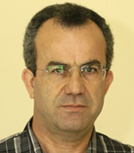
Dr. Emmanuel J. Yannakoudakis is Professor Emeritus of Computer Science at Athens University of Economics and Business, specializing in database systems and information retrieval. Education: Ph.D. in Computer Science, University of Bradford B.S. in Computer Science, University of Bradford His research spans database design, psychometric testing frameworks, and multilingual information systems. Notable contributions include the ARISTON expert system for vocational guidance. Awards: First Prize at CITSA Conference (2008) Fellow of British Computer Society Dr. Yannakoudakis has consulted for EU programs and Greek governmental bodies on information systems and terminology standardization.
Vassalos A. Vasilis is an Associate Professor in the Department of Informatics at Athens University of Economics and Business. His research focuses on integrating heterogeneous data sources, query processing for semistructured data, and peer-to-peer systems, with applications in eBusiness development. He holds a PhD from Stanford University and has participated in W3C standardization efforts for XQuery/XPath. Professor Vasilis has led research projects funded by EU and national programs exploring next-generation data integration systems.
George Xylomenos is a Professor in the Department of Informatics at Athens University of Economics and Business (AUEB), where he has been a faculty member since 2002, progressing from Lecturer to Professor. He serves as Scientific Coordinator of the Information Systems Management Center and previously held roles including Deputy Chair of the Department of Informatics and Deputy Rector for Financial Planning and Development. He is affiliated with the Mobile Multimedia Laboratory (MMlab) at AUEB and has made significant contributions to computer networking research. Professor (System Software) at AUEB, Department of Informatics (2020-present) Associate Professor at AUEB, Department of Informatics (2015-2020) Assistant Professor at AUEB, Department of Informatics (2007-2015) Lecturer at AUEB, Department of Informatics (2002-2007) Research Associate at University College London (2016-2017) Education Ph.D. in Computer Science, University of California, San Diego (1999) M.S. in Computer Science, University of California, San Diego (1996) Diploma in Applied Informatics, Athens University of Economics and Business (1993) Professor Xylomenos' research focuses on computer network and operating system design and implementation. His primary interests include Future Internet architecture, Information-Centric Networking, Quality of Service provisioning, communication protocols for wireless and mobile networks, and Network Music Performance systems. His work bridges theoretical networking concepts with practical implementations, particularly in the areas of content-centric networking and multimedia communications. He has pioneered research in multi-service link layers for wireless networks and has made significant contributions to the understanding of TCP performance over wireless links. His recent publications demonstrate a strong focus on Named Data Networking, decentralized identity systems, and Network Music Performance. The research trends show a progression from traditional IP networking toward information-centric architectures, with increasing emphasis on security, privacy, and multimedia applications in distributed environments. Scientific Awards Best demo award at ACM ICN Conference (2017) Future Internet Award from FP7 PURSUIT project (2013) Runner up for best local student paper at IEEE Symposium on Computers and Communications (2011) Best non-student paper award at European Wireless Conference (2007) National Semiconductor Corporation Graduate Fellowship (1996) Professor Xylomenos has supervised numerous research projects, including multiple EU-funded initiatives such as PURSUIT, PSIRP, and EIFFEL in the Future Internet domain, and MUSINET for Network Music Performance. He has served on the editorial board of IEEE Transactions on Mobile Computing (2016-2024) and has been active in numerous Technical Program Committees for major networking conferences. His research has attracted significant funding from European Union programs including FP7, H2020, and Horizon 2020. He is a core member of the Mobile Multimedia Laboratory (MMlab) at AUEB, which focuses on advanced networking technologies, multimedia systems, and future Internet architectures. The lab has been instrumental in Greece's participation in major European research initiatives related to Information-Centric Networking and Network Music Performance. The laboratory maintains strong collaborations with international research groups, particularly in Europe and the United States.
Vangelis Markakis is an Associate Professor at the Department of Informatics, Athens University of Economics and Business (AUEB), where he has been a faculty member since 2009. He holds a PhD in Theoretical Computer Science from Georgia Institute of Technology (2005), an M.Sc. in Computer Science (Georgia Tech 2004), and a Diploma in Electrical and Computer Engineering from NTUA (2000). His academic career includes postdoctoral research at the University of Toronto and CWI (Amsterdam). Research Interests: Theoretical computer science, algorithm design, game theory, mechanism design, social networks, combinatorial optimization Awards: Recipient of the 2025 ACM SIGecom Test of Time Award for foundational work on fair allocations (2004) and the 2003 ACM EC Best Student Paper Award His work bridges algorithmic game theory, fair division, and computational economics, with notable contributions to approximation algorithms for Nash equilibria and auction mechanisms. He has supervised numerous PhD and MSc students, including prominent researchers now at institutions like University of Essex, NTU Singapore, and Yale. Scientific activities include extensive program committee memberships (ACM EC, AAAI, AAMAS, SAGT, WWW) and organizing conferences like ISCO 2012 and ACAC 2009. His teaching portfolio covers game theory, data structures, and advanced algorithms.
George Ioannou is a Professor of Production Management and Business Processes at the Athens University of Economics and Business, where he leads the MBA International Postgraduate Program and the Center for Business Processes and ERP Systems at the Laboratory of Management Science. Previously, he served as Assistant Professor at Virginia Tech's Department of Production and Systems Engineering. His academic journey includes a B.Sc. in Mechanical Engineering from National Technical University of Athens, an M.Sc./DIC in Industrial Robotics/Production Automation from Imperial College London, and a Ph.D. in Mechanical Engineering from the University of Maryland. Current Academic Roles: Professor, Director of MBA Program, Head of ERP Systems Center Prior Academic Roles: Assistant Professor at Virginia Tech Education: B.Sc., M.Sc./DIC, Ph.D. His research focuses on integrating web-based technologies with operational research to optimize production systems, business processes, and supply chains. This spans applications in plant spatial planning, ERP systems, and cultural heritage digitization. He has secured research funding from global organizations including NSF, European Commission, and private sector leaders like Microsoft. Scientific awards include Microsoft's Excellence in Education Award and multiple teaching excellence recognitions for MBA programs. Ioannou serves on the Technical Chamber of Greece (TEE) and the editorial board of Production Planning & Control , with extensive consulting experience for public and private sector entities.
Nikolaos Vettas is Professor of Economics at the Athens University of Economics and Business (AUEB), holding this position since 2003 with current part-time employment status effective September 1, 2025. He previously served as Chair of the Department of Economics from 2007 to 2011 and has held academic positions at Duke University's Fuqua School of Business and INSEAD. His educational background includes: B.A. in Economics (1989) from the National and Kapodistrian University of Athens M.A. in Economics (1992) from the University of Pennsylvania Ph.D. in Economics (1994) from the University of Pennsylvania Professor Vettas's research spans Industrial Organization, Microeconomic Theory, Competition Policy and Regulation, and Game Theory. His scholarly work examines pricing strategies, market competition dynamics, vertical contractual arrangements, and economic policy implications, with particular focus on the Greek economy and European competition frameworks. His publications appear in top economics journals including the RAND Journal of Economics and Review of Economic Studies. His significant scientific recognition includes: Alfred P. Sloan Foundation Doctoral Dissertation Fellowship (1993-94) Young Economist Essay Competition Award from the European Association for Research in Industrial Economics (1994) Best teacher award in MBA programs at Duke University and INSEAD Professor Vettas has advised numerous PhD students throughout his career and maintains active editorial roles as Associate Editor for the Journal of the European Economic Association (2008-), Journal of Industrial Economics (2005-), and International Journal of Industrial Organization (2002-). He serves as Research Fellow at the Centre for Economic Policy Research (CEPR) in London and is a member of the Economic Advisory Group for Competition Policy at the European Commission's DG-Competition since 2004. His policy engagement extends to Greek economic reform initiatives, including co-founding Greek Economists for Reform in 2010 and contributing analysis on competition policy, business strategy, and regulatory frameworks in telecommunications and energy sectors.
Courcoubetis A. Costas is a Professor in the Department of Informatics at the Athens University of Economics and Business (AUEB). He holds a Diploma in Electrical Engineering from the National Technical University of Athens, followed by an M.Sc. and Ph.D. in Electrical Engineering and Computer Science from the University of California, Berkeley. His research focuses on network economics, resource allocation in broadband networks, formal methods for real-time systems verification, and applied probability models. Notable contributions include work on pricing network services, peer-to-peer system incentives, and stochastic scheduling. He has led projects such as the EuroNGI Network of Excellence and MMAPS, exploring theoretical and practical aspects of next-generation networks and economic models for P2P systems. Prof. Costas has authored influential publications on incentive mechanisms for P2P file sharing, asymptotic analysis of network performance, and CDMA resource control. His book Pricing Communication Networks: Economics, Technology and Modeling (Wiley, 2003) remains a key reference in network economics. Prof. Costas has held leadership roles, including Head of the Economics and Systems Theory Laboratory at AUEB and Administrator of the Networks and Telecommunications Sector at the Informatics Institute, ITE. He has served on program committees for major conferences like INFOCOM and ICQT.
Alexandros Ntoulas is an Assistant Professor at the National and Kapodistrian University of Athens, Department of Informatics and Telecommunications. He holds a Ph.D. and M.Sc. from UCLA, and prior industry experience at Microsoft Research, Zynga, Samsung Research, and LinkedIn, focusing on scalable Machine Learning for Big Data applications. He co-founded Infocious (now Piksel) and has served as Program Co-Chair for PAKDD 2020 and Track Chair for IEEE Big Data Congress 2017. Education: Ph.D. and M.Sc. in Computer Science, University of California Los Angeles (UCLA) MSc and Engineering Diploma, Computer Engineering and Informatics Department, University of Patras Research interests span Big Data systems for Web search, social networks, and scalable Machine Learning applications. Notable achievements include 15 patents and awards such as the Best Paper Award at ICDE 2005 and KDD 2017's Best Applied Data Science Reviewer Award. Teaching includes courses like Web Information Systems, Systems Programming, and Big Data Management at the University of Athens. He has also held invited lectureships at UC Berkeley, University of Patras, and the University of Patras' Mathematics Department. Awards highlight contributions to data science and search engine innovation, including recognition from academic foundations and industry peers.
Yannis Smaragdakis serves as a Professor in the Department of Informatics and Telecommunications at the National and Kapodistrian University of Athens, where he maintains office A55 and can be contacted via phone (+30 210 7275311) or email. His academic foundation includes: Ph.D. in Computer Sciences (December 1999, University of Texas at Austin; Advisor: Don S. Batory) M.Sc. in Computer Sciences (May 1995, University of Texas at Austin) B.Sc. in Computer Science (July 1993, University of Crete, Heraklion) His research bridges theoretical and applied computer science with emphasis on: Abstraction mechanisms including domain-specific languages and metaprogramming Systems programming models for concurrency and distributed computing Memory management optimization and program locality Automated program analysis techniques like symbolic execution and pointer analysis His work consistently targets practical implementations of language-based solutions for complex software engineering challenges, particularly in test generation and invariant inference. No scientific awards were documented in the source material. Details regarding student supervision and research grants remain unspecified in the provided text.
Nathanael Dimitrios is an Associate Professor at the School of Mechanical Engineering, National Technical University of Athens (NTUA), within the Department of Industrial Management & Operational Research. He serves as Director of the Ergonomics Laboratory and has been a faculty member since 2010. His research focuses on cognitive ergonomics, human-robot collaboration, autonomous systems, and occupational safety. He holds a PhD in Cognitive Systems Engineering (NTUA, 2005) and a DEA in Ergonomics from Conservatoire National des Arts et Métiers (France, 2001). Education: PhD in Ergonomics/Cognitive Systems Engineering, NTUA (2005) D.E.A. in Ergonomics, Conservatoire National des Arts et Métiers, France (2001) Diploma in Production & Management Science Engineering, Technical University of Crete (1991) Research Interests: Cognitive aspects of human activity, Human-Robot collaboration, Autonomous vehicles, User-Centered Design, Behavioral Safety, Health & Safety Management. He emphasizes interactive product design and systems safety through interdisciplinary approaches. Teaching: Undergraduate: Cognitive Ergonomics, Industrial Ergonomics, Safety Management, Product Design Postgraduate: Sustainability & Health (Athens MBA), Quality & Safety Management, HCI Master's Program Achievements: Supervised over 50 theses Co-author of 70+ scientific publications and 2 books Member of key organizations including ACM SIGCHI and European Association of Cognitive Ergonomics Labs & Teams: Directs the Ergonomics Laboratory at NTUA, focusing on applied research in ergonomics and safety systems.
Dionysis Reisis is Professor at the Department of Physics of the National and Kapodistrian University of Athens, leading the Digital Systems Team since 1991. His PhD in Electrical and Computer Engineering informs his research in parallel architectures, high-performance computing, and real-time systems for signal/image processing and telecommunications. He has served as Director of interdisciplinary MSc programs combining Electronics, Radioelectrology, Control and Computing. Research spans high-throughput systems for space applications, 5G telecommunications, and video encoding/decoding. Recent projects include FPGA-based accelerators for ESA space missions and award-winning student competitions in embedded systems design.
Overview Panayiotis Georgiadis is a Professor and Chairman of the Department of Informatics and Telecommunications at the National and Kapodistrian University of Athens (NKUA). He leads the e-Government Laboratory, a pioneering group in Greece focusing on electronic governance, business planning, and public sector IT systems. His career spans over four decades, including roles as Secretary General for Information Systems in the Greek Ministry of Finance (1997–2002) and Senate member of NKUA (1992–1994). Education B.Sc. in Physics (University of Athens, 1969) M.Sc. in Computer Science (Warwick University, 1974) Ph.D. in Computer Science (University of Athens, 1982) Research & Teaching His research focuses on distributed systems, simulation, and e-Government. He teaches courses in Operating Systems, Software Engineering, and Network Performance Evaluation. Key projects include the SMARTGOV platform and the Taxisnet service, which earned the 2001 eEurope Best Electronic Governance Award. He has supervised over 15 Ph.D. theses and contributed to 50+ scientific publications. Awards & Recognition Project of the Month Award (SMARTGOV, 2001) Best Paper Award at ECIS 2001 2001 eEurope Best Electronic Governance Award (Taxisnet) Advising & Labs Head of the e-Gov Lab, which develops tools for public sector IT systems. His students include notable researchers such as D. Anagnostopoulos (expert system design) and St. Gritzalis (information security). He also contributed to the International Journal of Electronic Governance as Editor-in-Chief.
Georgia Karali is an Associate Professor in the Department of Mathematics at the National and Kapodistrian University of Athens, Greece. She previously held positions at the University of Crete, including Professor (2019–2024), Associate Professor (2013–2019), and Assistant Professor (2011–2013). Her research focuses on partial differential equations, stochastic differential equations, and multi-scale problems, with applications in phase transitions, nonlinear dynamics, and mathematical physics. Education: Ph.D. in Mathematics, University of Athens (2002; Advisor: Prof. N.D. Alikakos) M.Sc. in Mathematics, University of Athens (1999) B.Sc. in Mathematics, University of Athens (1997) Research Interests: Georgia's work spans stochastic and deterministic partial differential equations, with a focus on free boundary problems, phase-field models, and stochastic analysis. She explores phenomena such as interface dynamics, pattern formation, and singular perturbations, often bridging theoretical analysis with applications in materials science and mathematical biology. Recent projects include modeling financial systems through stochastic Stefan problems and investigating drug absorption kinetics using pharmacokinetic models. Grants & Leadership: Principal Investigator for multiple grants from the Hellenic Foundation for Research & Innovation, Greek Secretariat for Research & Innovation, and the EU Marie-Curie programs. Organized over 20 international workshops and conferences, including the Mathematical Challenges in Multi-Phase Materials (2009) and Advances in PDEs in Physics and Materials Science (2024). Affiliated with the Institute of Applied and Computational Mathematics (IACM/FORTH) in Heraklion, Crete. Professional Contributions: Her research has been published in top journals like Archive for Rational Mechanics and Analysis and SIAM Journal on Applied Dynamical Systems . She actively promotes interdisciplinary collaboration, co-authoring studies on pharmacokinetics and leading workshops on stochastic analysis and PDE applications.
Professor Dionisios Pnevmatikatos holds the position of Professor at the School of Electrical and Computer Engineering, National Technical University of Athens (NTUA), where he leads research in Computer Architecture and Reconfigurable Computing. He previously served as a Professor at the Technical University of Crete (TUC) from 2000 to 2019, directing the Microprocessor and Hardware Laboratory (MHL) and chairing the department. His academic journey includes a B.Sc. from the University of Crete (1989), M.Sc. and Ph.D. from the University of Wisconsin-Madison (1991 and 1995). Research Interests: Focuses on Computer Architecture, Reconfigurable Computing, Application Acceleration, Custom Architectures, and Hardware Acceleration of Bioinformatics Algorithms. His work spans FPGA-based systems, parallel computing, and energy-efficient designs. Key Projects: Coordinator of FASTER (EU FP7), Principal Investigator in DeSyRe, AXIOM, dRedBox, and EDRAH2020 projects. Active in EU initiatives like H2020 OPTIMA and Vitamin-V for RISC-V ecosystems. Leadership roles in conferences include SAMOS 2018 and FPL 2011 program chairs. Teaching: Courses include Computer Architecture, Digital Systems Design, and Parallel Processing Systems at NTUA. Former roles include teaching at University of Crete and TUC. Labs: Affiliated with Computing Systems Laboratory (CSLab) at NTUA and FORTH-ICS since 1997. Involved in prototyping manycore architectures and network processors.
Prof. Chatzinikolaidou Maria is a Professor of Biomaterials in Bioengineering at the Department of Materials Science and Engineering, University of Crete, and Head of the Laboratory for Biomaterials in Tissue Engineering. She is affiliated with the Foundation for Research and Technology-Hellas (FORTH). Her research focuses on developing biomaterials for tissue engineering applications, including bone, cartilage, dental, cardiovascular, and skin regeneration, emphasizing biocompatibility validation and functionalization with growth factors. Education: Ph.D. in Biochemistry (University of Duisburg-Essen, Germany), B.Sc. in Chemistry (University of Essen, Germany) Affiliations: University of Crete, FORTH, European Society for Biomaterials, TERMIS-EU Research Interests Her research spans: 3D printing and bioprinting technologies Osteoinductive biomaterials and drug delivery systems Biomechanical characterization of scaffolds Protein immobilization and adsorption studies Awards & Leadership Fellowships: IAMBE, FBSE, FTERM International leadership roles: IAMBE Governing Council, ICF-BSE Steering Committee Conference leadership: Chair of ESB 2017, Program Chair of TERMIS-EU 2019 Labs & Collaboration She leads the Laboratory for Biomaterials in Tissue Engineering , collaborating on projects involving FORTH and EU initiatives like the ENTER program.