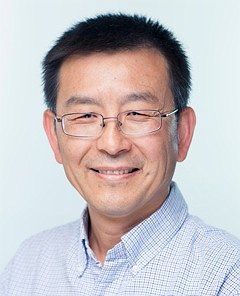
Agnès Bénassy-Quéré serves as Professor of Economics at Paris 1 Panthéon-Sorbonne University and Paris School of Economics, currently on leave to fulfill her role as Deputy-Governor at Banque de France. Her distinguished public service portfolio includes: Chief Economist at the French Treasury (2020-2023) Chair of the French Council of Economic Analysis (2012-2017) Director of CEPII (2006-2012) She additionally contributes to the French macro-prudential authority, tax advisory council, productivity council, and Franco-German council of economic experts. Her research concentrates on International Finance, Monetary Policy, and EU Economic Architecture, with specific expertise in international monetary systems, European fiscal frameworks, and crisis impact analysis. She investigates policy coordination mechanisms and economic governance challenges within the European Union through both theoretical modeling and empirical firm-level studies. Recent publications (2020-2025) reveal consistent analytical focus on euro area reform, fiscal-monetary policy synergies during crises, and equitable international monetary structures. Her work demonstrates methodological rigor through integration of firm-level data analysis with macroeconomic policy evaluation, particularly regarding pandemic impacts and investment frameworks.
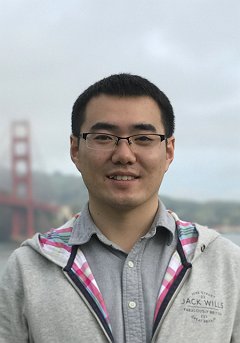
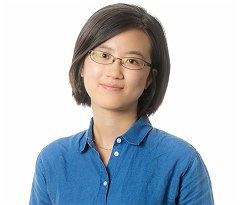
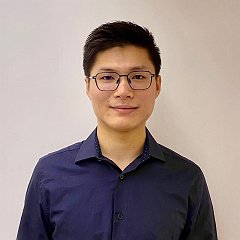
Yuhong Nan is an Associate Professor in the School of Software Engineering at Sun Yat-sen University, China, specializing in software security and privacy leakage analysis for emerging platforms including IoT, mobile systems, and blockchain. Previously a Post-doctoral Research Associate at Purdue University under Prof. Dongyan Xu, she builds practical security tools to detect and mitigate vulnerabilities in real-world systems. Dr. Nan earned her PhD from Fudan University in 2018 supervised by Prof. Min Yang. Her academic journey spans rigorous research in security engineering with emphasis on empirical validation and tool development for complex platform ecosystems. Her research program focuses on uncovering systemic security flaws through innovative analysis techniques. Key contributions include vulnerability detection in smart contracts (e.g., state dependencies, reentrancy), privacy leakage analysis in mobile/IoT ecosystems, and countermeasures against deceptive UI patterns. She employs hybrid approaches combining static/dynamic analysis, machine learning, and large-scale empirical studies to develop deployable security solutions. Analysis of her 15 most recent publications (2023-2025) reveals dominant themes in blockchain security (60%), particularly smart contract/DApp vulnerabilities, with significant work in mobile privacy (30%) and cross-platform threats (10%). Her methodology consistently leverages fine-grained static analysis, semantic enrichment, and feedback-driven fuzzing, yielding tools like SmartAxe and Midas that have influenced industry practices. Dr. Nan actively mentors graduate researchers with 17 advisees including Tencent-employed graduates, and serves as a trusted reviewer for premier journals (IEEE TDSC, TMC, TOPS) and conference committees (ASIACCS, ICICS). Her leadership in security communities bridges academic research with practical defense mechanisms. At Sun Yat-sen University, she directs a high-output research group that collaborates with industry partners to address evolving threats in decentralized systems, maintaining her position among top publishing authors in USENIX Security, CCS, and NDSS venues through rigorous technical innovation.
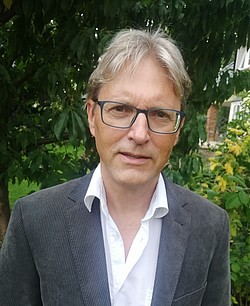
Claire Le Goues is a Professor of Computer Science at Carnegie Mellon University, primarily affiliated with the Software and Societal Systems Department (S3D) within the School of Computer Science (SCS). She serves as the Associate Department Head for Faculty within S3D and leads the squaresLab research group. Le Goues also co-directs the REUSE@CMU summer program and teaches software engineering and program analysis at undergraduate, master's, and PhD levels. Her research spans software engineering and programming languages, with a particular focus on how to construct, maintain, evolve, improve/debug, and assure high-quality software systems. Le Goues has made significant contributions to automated program repair, program analysis, and defect detection. Her work often bridges theoretical foundations with practical applications, addressing real-world challenges in software development and maintenance. Le Goues' recent publications demonstrate a clear trend toward integrating large language models and generative AI with traditional software engineering techniques. Her research examines how these technologies can enhance program repair (BatFix, AdverIntent-Agent), vulnerability detection (Interpretable Vulnerability Detection Reports), and testing (LWDIFF for WebAssembly). This represents an evolution from her earlier foundational work in program repair (GenProg) toward leveraging contemporary AI advancements. She has mentored numerous students through her squaresLab research group and has been instrumental in developing educational programs that prepare the next generation of software engineers. Le Goues is also known for her advocacy for double-blind review processes in academic conferences, having implemented this approach when co-chairing the Symposium for Search-Based Software Engineering in 2014.
Jinqiu Yang is an Associate Professor in the Department of Computer Science and Software Engineering at Concordia University in Montreal, Canada. Her research focuses on improving software reliability and quality assurance, particularly in the context of machine learning systems and autonomous vehicles. She leads active research projects in software testing, automated program repair, and mining software repositories, with strong connections to both academic and industrial applications. Her research interests span software reliability, quality assurance of machine learning systems including autonomous vehicles, software testing, automated program repair, text analytics of software artifacts, and mining software repositories. She has developed novel approaches for testing deep learning libraries, evaluating robustness in autonomous driving systems, and tracking the evolution of static code warnings. Her work bridges traditional software engineering with emerging challenges in AI systems, addressing critical issues of reliability and safety in complex software environments. Yang's recent publications (2021-2025) demonstrate a clear trajectory toward AI/ML system reliability, with increasing focus on autonomous vehicles, concept drift detection, and security aspects of large language models. Her work spans both theoretical foundations and practical applications, often involving empirical studies of real-world systems and development of practical tools to address identified challenges. ACM SIGSOFT Distinguished Paper Award Dr. Yang actively mentors graduate students and is currently recruiting Master's and PhD candidates. She has secured significant research funding including NSERC Discovery Grants (2019-2025), Gina Cody Research and Innovation Fellowship (2024-2026), and participation in the NSERC CREATE Program SE4AI (2021-2026). Her research is supported by multiple grants including NOVA – FRQNT-NSERC PROGRAM (2024-2027) and Volt-Age Seed Grant (2024-2026). She leads research in the O-RISA Lab at Concordia University, focusing on reliability and security aspects of intelligent software systems. Her team collaborates with industry partners including IBM, where she previously worked at IBM Watson Research Lab and IBM CAS, bringing practical experience to her academic research.
Prof. Dr. Michaela Noreik serves as Professor in the Department of Nutritional Science at Niederrhein University of Applied Sciences, Mönchengladbach, where she teaches Interdisciplinary Casework, Planetary Health Diet, and Special Seminar in Nutrition Research. She directs the Laboratory for Nutritional Status and maintains active consultation hours for student engagement. Her educational foundation includes a Dr. rer. medic. in nutritional therapy evaluation from Universität zu Köln (2009-2012) and dual degrees in Oecotrophology (Fachhochschule Münster) and Nutrition and Dietetics (Fachhochschule Nimwegen, NL) completed between 2004-2008. Noreik's research centers on obesity interventions, geriatric nutrition, and sustainable dietary systems. She leads projects including OWL (Online Weight Loss programmes), CReDDI (dietary intervention metabolism studies), and SwapSHOP (digital grocery interventions). Her work bridges clinical practice with academic rigor, emphasizing evidence-based approaches to nutritional assessment and therapy standardization. Recent publications (2013-2021) reveal strong focus on digital health interventions for weight management, dietary approaches to type 2 diabetes, and nutritional implications in neurodegenerative conditions. Her methodology frequently employs randomized controlled trials and systematic reviews, with growing emphasis on planetary health frameworks and sustainable food systems. Her scientific recognition includes: 2019 Award of Excellence for Consistent Outstanding Performance (Oxford University) Noreik has secured significant third-party funding for clinical studies in obesity and oncology during her Oxford tenure. Current student projects involve developing nutrition assessment databases and implementing mobee®360 digital platforms. She actively supervises interdisciplinary casework modules with healthcare disciplines. She established the Laboratory for Nutritional Status at Niederrhein University and previously built nutrition teams at St. Marien-Hospital Köln. Her international collaborations include Hogeschool van Arnhem en Nijmegen and Umeå University for planetary health initiatives, reflecting her commitment to transnational research networks.
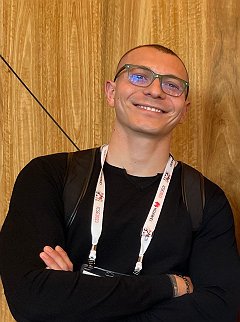
Dr. Antonio Mastropaolo is an Assistant Professor of Computer Science at William & Mary, USA. His research lies at the intersection of Artificial Intelligence, Natural Language Processing, and Software Engineering, with a strong emphasis on the automation of SE-related practices. He promotes explainability, efficiency, and optimization from both model-centric and output-centric perspectives. His research interests focus on the reliability and efficiency of AI systems for software engineering. He investigates robustness and adaptability of foundation models like GitHub Copilot, as well as documentation and summarization of code components. His work addresses critical challenges in AI-driven software development including transparency, scalability, and developer productivity. His publication portfolio shows a strong trend toward neurosymbolic approaches that combine neural learning with symbolic reasoning. Recent articles explore quantization of large code models, code summarization optimization, and resource-efficient AI for software engineering. His work spans both theoretical foundations and practical applications, with emphasis on empirical validation of AI techniques in real-world SE contexts. Distinguished Reviewer Award for service on FSE'25 program committees Distinguished Reviewer Award at ASE 2024 Distinguished Paper Award for 'Unveiling ChatGPT's Usage in Open Source Projects' at MSR'24 Distinguished Paper Award for 'How do Hugging Face Models Document Datasets, Bias, and Licenses?' at ICPC'24 Dr. Mastropaolo advises PhD students, with Saima recently starting her PhD journey with a publication in FORGE 2025. He received an NSF Grant (#2451058) in April 2025 for research on efficient and responsible AI for software engineering. His service includes committee membership for major conferences including ASE, ICSE, ICSME, and FSE across multiple tracks including Research Papers, NIER, and Tool Demonstrations.
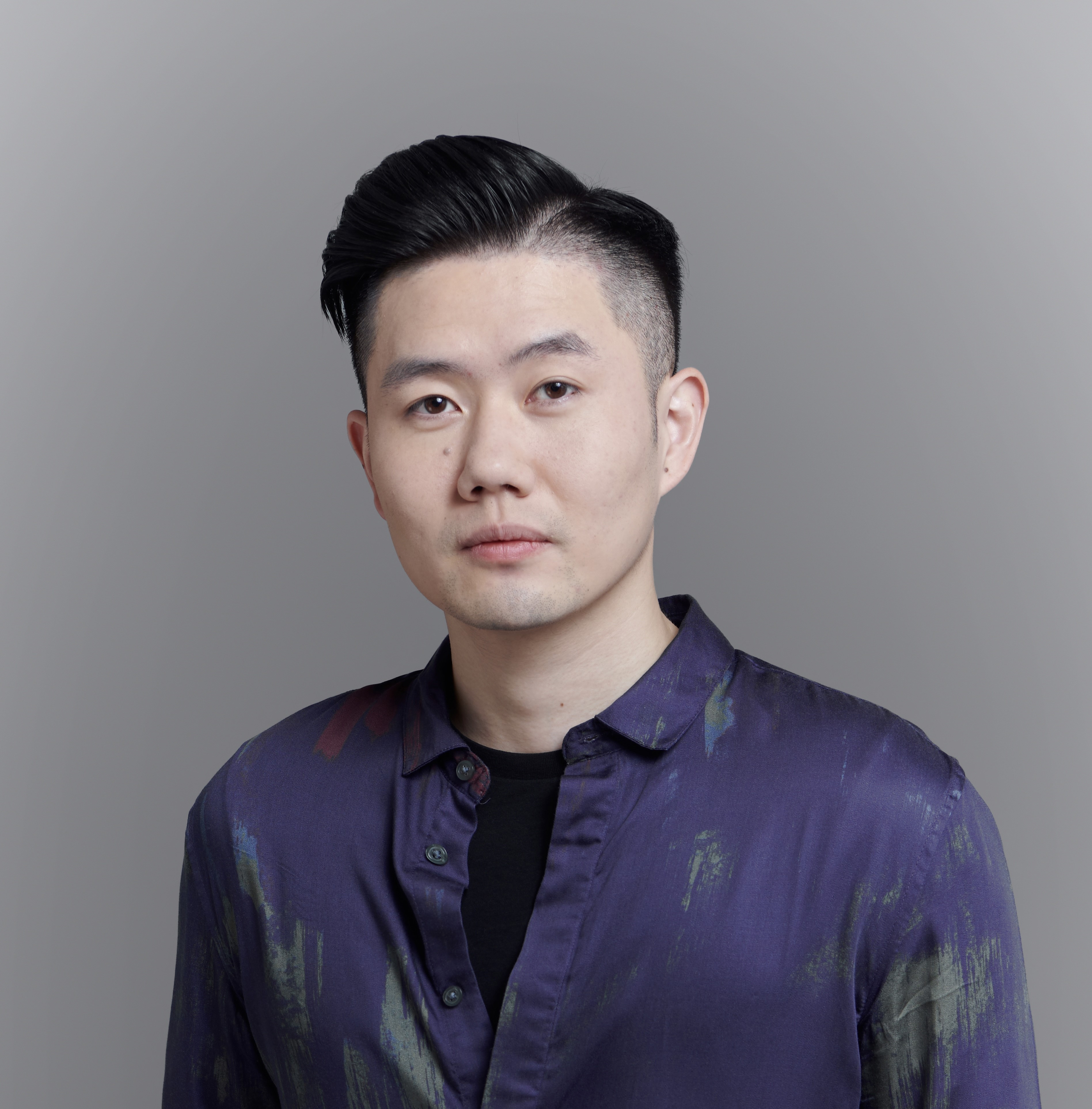
Dongdong She is an Assistant Professor in the Department of Computer Science and Engineering at The Hong Kong University of Science and Technology (HKUST). His research focuses on the intersection of security and machine learning, applying data-driven approaches to solve security problems. He has established himself as a prominent researcher in software security and fuzzing techniques with publications in top conferences including IEEE S&P, CCS, and USENIX Security. Dr. She received his Ph.D. from Columbia University's Department of Computer Science, where he worked with Professors Suman Jana and Baishakhi Ray. Prior to Columbia, he conducted research with Zhiyun Qian on Android Security at the University of California, Riverside. He completed his undergraduate studies at Huazhong University of Science and Technology. His research spans two main areas: LLM Security, which investigates the security of large language models and LLM-powered systems, and LLM for Traditional Security, which leverages LLMs to solve traditional security problems such as program analysis and vulnerability discovery. His work often combines machine learning techniques with traditional security approaches to develop innovative solutions for software security challenges. Dr. She's publication record shows a consistent evolution from foundational work in neural network-assisted fuzzing (NEUZZ) toward more advanced applications in LLM security and program analysis, demonstrating both theoretical rigor and practical impact with techniques adopted by the security community. Among his notable achievements: Distinguished Paper Award at ISSTA 2025 Distinguished Paper Award at IEEE S&P 2025 Best Paper Award Runner-Up at CCS 2022 Second Place in SBFT 2024 Fuzzing Competition Finalist in 2019 NYU CSAW Applied Research Competition Dr. She currently advises several Ph.D. students including Yuchong Xie, Shuangjie Yao, and Qiao Zhang, who began their studies in Fall 2024. He serves on program committees for major conferences including ASE 2025, where he is a PC Member for the Research Papers track. His research is supported by grants enabling his team to pursue innovative approaches at the intersection of machine learning and security. His research group maintains active collaborations with institutions worldwide and contributes to open-source security tools that are widely used in both academia and industry, with a particular focus on developing advanced techniques for software security analysis through the application of machine learning.
Jingling Xue is a Scientia Professor at the School of Computer Science and Engineering at the University of New South Wales (UNSW) in Sydney, Australia. As an IEEE Fellow of the Computer Society, he leads the Programming Languages and Compilers research group, focusing on practical applications of compiler optimization and program analysis techniques. His work bridges theoretical foundations with real-world software systems, particularly in developing open-source tools for large-scale program analysis. Professor Xue received his B.Eng and M.Eng degrees from Tsinghua University in 1984 and 1987, respectively, followed by a PhD from the University of Edinburgh in 1992. His academic journey has established him as a leading figure in programming languages and compiler technology. Xue's research spans programming languages, compiler technology, and program analysis with emphasis on practical relevance. His current projects include compiler techniques for improving parallelism and locality, pointer/alias analysis for million-line-scale programs, and static/dynamic analysis for detecting bugs and security vulnerabilities in real-world applications like web browsers and Android apps. His group actively develops open-source tools to support scientific replicability and reproducibility in these areas. His recent publications demonstrate a strong focus on applying program analysis techniques to modern challenges including AI compilers, homomorphic encryption, security vulnerability detection, and graph processing systems. The work shows evolution from traditional compiler optimization to addressing emerging domains like privacy-preserving computation and deep learning systems while maintaining rigorous theoretical foundations. Scientific Awards: Best Paper Award at CGO'13 Best Paper Award at CGO'16 Distinguished Paper Award at ECOOP'16 Distinguished Paper Award at ICSE'18 Distinguished Paper Award at ISSTA'19 Distinguished Paper Award at ASE'19 Distinguished Artifact Award at ISSTA'23 Best Artifact Award at FSE'23 Distinguished Paper Award at ASE'23 Test-of-Time Award at CGO'21 Professor Xue has successfully supervised 30 PhD students to completion, many of whom now work as professors or researchers in academia and industry. He has served as Program Chair for major conferences including LCTES'13, CC'18, CGO'20, and General Chair for LCTES'20. His group currently focuses on memory safety in Rust, smart contract analysis, AI compilers, compilation for privacy-preserving computation, and adversarial attacks in deep learning. The Programming Languages and Compilers group maintains strong connections with industry partners, translating theoretical advances into practical tools for real-world software development challenges. Their work on pointer analysis, memory safety, and compiler optimizations continues to influence both academic research and industrial practice.
Shaohua Li is an Assistant Professor at The Chinese University of Hong Kong (CUHK), specializing in the correctness and security of critical software systems with emphasis on compilers. His research spans Software Engineering , Programming Languages , and Security , focusing on innovative compiler testing methodologies. Key areas include leveraging large language models for test generation, optimizing fuzzing techniques through prefix-guided execution, and decoupling sanitization mechanisms to reduce overhead in vulnerability detection. His work addresses fundamental challenges in ensuring reliability of systems programming infrastructure. Recent publications demonstrate a cohesive trajectory toward practical compiler validation: from empirical rustc bug analysis to SAND's low-overhead sanitization framework. The research consistently bridges theoretical formal methods with real-world implementation challenges in security-critical systems, showing particular strength in adapting AI techniques for traditional software testing problems.
Daye Nam is an Assistant Professor in the Department of Informatics at the University of California, Irvine, where they design, build, and evaluate AI tools for developers using natural language processing techniques. Their work sits at the intersection of software engineering, artificial intelligence, and human-computer interaction, with a strong focus on creating useful and usable tools that make software development more accessible, efficient, and enjoyable. Education PhD in Software Engineering, Carnegie Mellon University (2018-2024) MS in Computer Science, University of Southern California (2016-2018) BS in Computer Science, Yonsei University (2012-2016) Research Interests Dr. Nam's research focuses on designing, building, and evaluating AI tools for programmers at all levels, with an emphasis on making these tools both useful and usable. Their work spans several key areas including machine learning for software engineering (ML4SE), developer experience, and human-AI interaction. They employ a user-centered approach that involves conducting empirical studies to understand programmers' needs, building and training machine learning models based on those insights, creating tools for programmers, and evaluating them using human-computer interaction methods. Their research has particular relevance to AI-powered developer tools, API documentation and discovery, and educational applications of AI for programming students. Publications and Research Trends Dr. Nam's recent publications demonstrate a clear trajectory toward understanding and improving how developers interact with AI systems. Their work increasingly focuses on empirical studies of developer-AI interaction, particularly with large language models for code generation and understanding. There's a strong emphasis on understanding trust in AI systems among developers, measuring the actual impact of AI on development speed, and designing tools that balance automation with user control. Their research methodology often combines log analysis, user studies, and the development of novel AI-powered tools that address specific developer pain points. Scientific Awards and Honors Best Tool Paper Award at ASE ACM Student Research Competition 2nd Place SIGSOFT CAPS Student Travel Award for FSE ACM SIGSOFT NSF Travel Award NSF Travel Award for ICSE SIGSOFT Best Research Award from University of Southern California Teaching and Service Dr. Nam teaches SWE 233: Intelligent User Interfaces at UC Irvine, guiding students through the design and evaluation of AI-powered interfaces for software development. They have previously served as a Teaching Assistant and Co-Instructor for Foundations of Software Engineering at Carnegie Mellon University. In terms of service, they've been on program committees for major software engineering conferences including ICSE, ASE, and FSE, and have reviewed papers for journals like TOSEM and Empirical Software Engineering. They've also been active in student support programs, organizing and mentoring for graduate applicant support initiatives.
Prof. Dr. Tanja Penter is a Professor of Eastern European History at Ruprecht-Karls-University Heidelberg since 2013. Her research focuses on 19th-20th century Ukraine/Russia/Soviet Union, Stalinism vs. National Socialism, Holocaust studies, transitional justice, and memory politics. She leads the DFG-GRK 2840 'Ambivalent Enmity' and directs the Research Centre on Antiziganism. Education/Positions: PhD (1999, Cologne), Habilitation (2008, Bochum), prior roles at Hamburg University and Humboldt University Berlin. Awards include the 2011 René Kuczynski Prize for her book Coal for Stalin and Hitler . Publications span over 70 works, including monographs on Odessa 1917 and Donbas labor history. Key areas include Nazi/Soviet collaboration trials, Holodomor legacy, and post-Soviet victim compensation. She advises on historical commissions (e.g., German-Ukrainian, German-Russian) and contributes to encyclopedic projects on Nazi genocide. Teaching: Exam authority across all history programs at Heidelberg. Consultation hours during lectures: Wednesdays 11:00-12:30.
Marion Müller is a Full Professor (W3) of Sociology with focus on Gender Studies at the University of Tübingen, affiliated with the Faculty of Economics and Social Sciences and the Department of Sociology. She has held this position since 2016 after serving as Junior Professor at the University of Trier (2013-2016). Her academic background includes a dissertation from Bielefeld University (2008) and sociology degree from Johannes Gutenberg University Mainz (2002), with studies spanning sociology, political science, and cultural anthropology. Her research program examines complex social differentiation mechanisms through multiple lenses: Theoretical frameworks: General sociology, interaction theory, globalization studies Human differentiation: Gender, ethnicity, disability, and categorical boundary formation Embodied practices: Sociology of the body, sports sociology, pregnancy/childbirth Global systems: World society theory, institutional categorization, human rights Publication analysis reveals consistent focus on deconstructing social categorization in bodily practices—particularly in sports contexts—with evolving attention to global governance mechanisms. Recent works examine institutional categorization of indigenous peoples and disability, building on earlier sports-related gender/ethnicity research. Major recognitions include: Fritz Thyssen Foundation Prize (2014) for racial category analysis German Sociological Association dissertation award (2010) Bielefeld University dissertation prize (2009) DGS qualification thesis award (2002) Teaching responsibilities span bachelor/master programs in sociological theory, gender studies, and qualitative methods. Student advising occurs through scheduled office hours and thesis colloquia, though no specific grant or lab information is documented.
Prof. Dr. Volker Stefanski is a University Professor (W3) at the University of Hohenheim's Faculty of Agricultural Sciences, leading the Department of Behavioral Physiology of Livestock. He holds a Dr. rer. nat. from Bielefeld University (1991) and has held roles including Postdoc at UCLA (1993-1995), Research Associate and Privatdozent at the University of Bayreuth (1995-2005), and Head of Immunology at the Leibniz Institute for Zoo and Wildlife Research (2006-2009). His research focuses on stress biology, immunology, and animal physiology, particularly in livestock like pigs and laboratory models. Key areas include hormonal stress responses, immune system dynamics, and the interplay between social stress and health outcomes in animals. His work spans from molecular mechanisms (e.g., catecholamine effects on Salmonella) to applied studies on housing conditions and immunological practices in agriculture. Selected projects explore diurnal rhythms in pig immunity, microbiome shifts due to diets, and maternal stress impacts on offspring. His research emphasizes translational applications for improving animal welfare and disease resistance in farming systems. He contributes to interdisciplinary collaborations, integrating physiology, immunology, and behavioral studies.
Dr. Birgit Kemmerling is a research group leader at the Center for Plant Molecular Biology (ZMBP) within the Faculty of Science at the University of Tübingen, Germany. Her research focuses on molecular mechanisms of plant innate immunity, particularly the role of leucine-rich repeat receptor-like kinases (LRR-RLKs) in pathogen recognition and defense signaling. Key projects include studying BAK1 and BIR3 kinases involved in immune receptor complex formation and regulation. She collaborates with institutions worldwide and has secured funding from DFG and EU programs such as AFGN, Bravissimo, and SFB1101. Teaching responsibilities include lectures and seminars on comparative immunity in plants and animals, practical courses in molecular mechanisms of innate immunity, and supervision of bachelor/master theses. Her group actively engages in interdisciplinary projects, integrating nanotechnology studies to assess immune responses to nanoparticles across species. Notable collaborators include Prof. Thomas Boller (Basel), Cyril Zipfel (Norwich), and Frans Tax (Tucson). Research highlights include discovering BAK1's dual role in brassinosteroid signaling and immune response regulation, as well as identifying novel LRR-RLK genes activated by pathogen infection. Current work explores nanomaterial biocompatibility and immune system interactions, leveraging advanced microscopy techniques like super-resolution imaging (OneFlowTraX software development).
Ingrid Hotz-Davies is Professor of English Literature and Gender Studies at the English Seminar, Philosophische Fakultät, Eberhard Karls University of Tübingen. She has held this position since 2001 and leads a dynamic research environment focused on gender, queer theory, early modern literature, and cultural narratives. She is actively involved in multiple academic programs and leadership roles, including co-directing the Tübingen Center for Gender and Diversity Studies and serving as the Gender Equality Representative for academic staff and students. Her academic journey includes a PhD from Dalhousie University (Canada), an MA/State Examination from the University of Munich, and a habilitation completed in Munich in 2000. Her research interests include Gender/Queer Studies, Women’s Literature from the Renaissance to the present, Early Modern Prose, and the dynamics of censorship and identity formation. She has organized numerous seminars on topics such as queer theory, camp aesthetics, postmodern realism, and the cultural construction of heterosexuality. Her work bridges literary analysis with philosophical, psychoanalytic, and sociopolitical inquiry. The recent publications analyzed reflect a consistent engagement with gender performativity, camp aesthetics, closet narratives, and the intersections of literature with psychoanalysis, religion, and political power. Her scholarship spans from Renaissance texts to contemporary science fiction, demonstrating a broad and interdisciplinary reach. Gender Equality Representative, University of Tübingen (since Nov. 2023) Academic Coordinator, Erasmus Mundus MA Program 'Crossway in Cultural Narratives' (since 2017) Co-Director, Tübingen Center for Gender and Diversity Studies (since 2013) Equal Opportunities Officer, University of Tübingen (2014–present; also 2002–2006) Academic Coordinator, Erasmus Mundus Doctoral Program 'Cultural Studies in Literary Interzones' (2010–2018) She supervises a diverse group of PhD candidates working on topics such as precariousness in Jean Rhys, polymigrant imagination, feminist speculative fiction, posthuman weird fiction, and the representation of subaltern female workers. Her mentorship extends into interdisciplinary research involving affect theory, postcolonial studies, and identity politics. While no direct mention of funding grants is made, her leadership in international Erasmus Mundus programs implies significant grant acquisition and project management experience. She is affiliated with the English Seminar's research environment and contributes to collaborative projects such as the 'Dark Side of Camp Aesthetics' and 'Naturalization of Gender'. Her work fosters transnational academic exchange and critical inquiry into marginalized voices and cultural border zones.