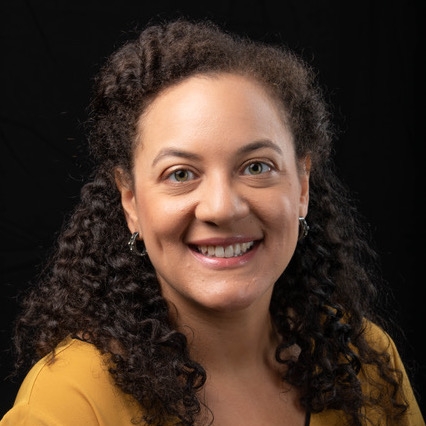
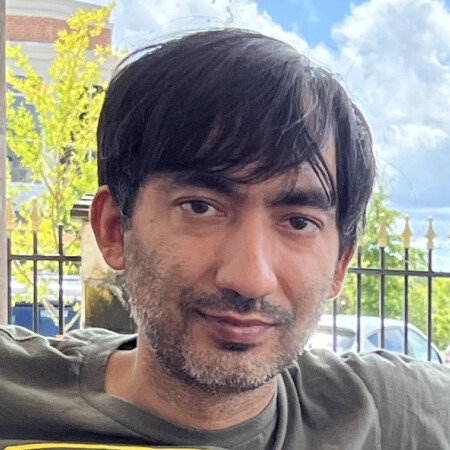
William O'Donohue, Ph.D., is a Professor in the Department of Psychology at the University of Nevada, Reno (UNR), within the College of Science. He holds advanced degrees in both clinical psychology (Ph.D., SUNY Stony Brook) and philosophy (M.A., Indiana University). His research focuses on forensic psychology, sexual assault, evidence-based practice, and the philosophy of psychology. He has directed a NIJ-funded clinic for 27 years, providing free services to victims of sexual abuse, and secured over $3 million in grants. He has authored 90 books and 300+ publications, serving on key committees like the APA's DSM revision panel. Education: Ph.D. in Psychology, SUNY Stony Brook (1986) M.S. in Psychology, SUNY Stony Brook (1982) B.S. in Psychology, University of Illinois (1979) M.A. in Philosophy, Indiana University (1988) Research Themes: His work critically examines forensic interviewing protocols, ideological bias in psychology, and the scientific validity of therapeutic practices. He advocates for procedural justice in psychological practice and challenges social justice movements' methodological rigor. Grants & Clinical Work: His clinic's NIJ grant supports free services for sexual abuse victims. He has consulted for the U.S. military and legal professionals on evidence-based practices. Labs/Teams: Operates a long-term clinical research program focused on forensic assessment and victim support through his UNR clinic infrastructure.
Dr. Han Du is an Associate Professor in the Department of Psychology at the University of California, Los Angeles (UCLA). He holds a PhD from the University of Notre Dame and leads the Du Research Lab. His methodological expertise includes Bayesian statistics, longitudinal data analysis, structural equation modeling, meta-analysis techniques, and machine learning applications in psychological research. Dr. Du's substantive research applies quantitative methods to developmental, clinical, cognitive, educational, and health psychology. His recent publications focus on transgender adolescent stress assessment, LGBTQ+ mental health in military contexts, social network interventions for HIV prevention, and minority stress theory applications. He teaches advanced statistical methods and supervises graduate students in quantitative psychology.
Anna Maria Oberländer is Assistant Professor for Information Systems and Digital Transformation at the University of Bayreuth's Faculty of Law and Economics. She also serves as Deputy Academic Director of the Research Center Finance & Information Management and holds a leading position at Fraunhofer FIT's Branch Business & Information Systems Engineering, where she co-heads a research group and manages the Digital Innovation Lab as one of its co-founders. Dr. Oberländer earned her Master of Science with honors from the Elite Graduate Program Finance & Information Management at the University of Technology Munich and the University of Augsburg in 2015, including a research visit at Queensland University of Technology. She was accepted into the 16th class of the Bavarian EliteAcademy, receiving leadership training across Germany, Belgium, China, and Vietnam. Prior to academia, she worked as a strategy consultant at McKinsey & Company from 2015 to 2018, supporting clients in Advanced Industries and Financial Services with digital transformations. She completed her dissertation at the University of Bayreuth's Law and Economics Faculty in 2020. Her research focuses on understanding and designing digital transformation and innovation from established companies' perspectives. She examines digital transformation processes and patterns, the relationship between organizational digital transformation and digital ecosystems, organizational ambidexterity, resource-based digital opportunities for incumbents, and the socio-technical and economic impacts of IoT and AI technologies. Her work spans theoretical frameworks like the OCO (Orientation, Cooperation, Orchestration) Theory for understanding digital ecosystems' influence on transformation. Dr. Oberländer's recent publications reveal a strong trend toward integrated digital-sustainability research (twin transformation), AI strategy and implementation, digital ecosystem dynamics, and industry-specific digital innovation. Her work bridges theoretical frameworks with practical applications across diverse sectors including public administration, manufacturing, and smart cities. She has developed capability maturity models for twin transformation and explored semantic search adoption in SMEs. Science Award 2020 from Universitätsverein Bayreuth e.V. With extensive industry experience at Siemens, Siemens Financial Services, Allianz, and McKinsey & Company, Dr. Oberländer brings practical insights to her academic work. Her Fraunhofer FIT role connects her research to real-world applications through the Digital Innovation Lab. She has led collaborative research projects across multiple industries, including the print industry's sustainability potential with AI, dairy industry digital innovation, and public administration digitalization. Dr. Oberländer co-heads a research group at Fraunhofer FIT and manages the Digital Innovation Lab, which serves as a hub for collaborative research between academia and industry. Her work with the Research Center Finance & Information Management facilitates interdisciplinary collaboration across finance and information systems domains.
Dr. Liyi Zhou is a Lecturer in the School of Computer Science at the University of Sydney, specializing in systems security, blockchain, and AI. His research focuses on developing automated and adaptive security tools using machine learning and reinforcement learning. He co-founded D23E.ch, a platform addressing blockchain security and privacy challenges. Research interests include AI-driven vulnerability detection, large security models, real-time intrusion prevention, advanced program analysis (fuzzing/symbolic execution), and privacy-preserving systems. He actively recruits PhD students for projects advancing AI in cybersecurity. Notable achievements include pioneering 'sandwich attacks' discovery in DeFi protocols, contributing to Ethereum Foundation grants, and receiving bug bounties from Flashbots and Ethereum Foundation for vulnerability disclosures. His work has been published in venues like IEEE S&P, USENIX Security, and SIGMETRICS. Teaching includes the course INFO2222. He seeks collaborations and funding to bridge academic research with real-world industry problems, emphasizing practical impact.
Stacey Garrett (she/her/hers) is an Associate Professor in the Counseling, Family Therapy, and Higher Education Department at Appalachian State University’s Reich College of Education. Her research focuses on diversifying higher education through qualitative exploration of faculty, staff, and students of color’s experiences. She advises graduate students across certificate, master’s, and doctoral programs delivered both online and in-person. Member of the Reich College of Education Mentoring Guild Advocate for faculty professional and personal growth Emphasizes institutional leadership strategies for recruitment/retention of diverse faculty Her work highlights challenges like pandemic-era community disruption and burnout prevention through mentorship. Key research themes include Black women faculty navigation, culturally responsive teaching, and systemic barriers faced by marginalized groups in academia.
Gergely Baics is an Associate Professor of History and Urban Studies at Barnard College, serving as Helman Endowed Faculty Chair of Urban Studies and Faculty Co-Director of the Barnard Empirical Reasoning Center. He holds a joint appointment between the History Department and Urban Studies Program, with collaborative ties to Columbia University's History Department and the Center for Spatial Research at GSAPP. His research focuses on spatial and urban history, digital public history, and 19th-century U.S. economic and social dynamics. Notable projects include the Envisioning Seneca Village 3D digital model and the Mapping Historical New York spatial atlas. Education: B.A. (2002) and M.A. (2003) from ELTE University and Central European University in Budapest; M.A. and Ph.D. (2009) in History from Northwestern University. His work has been supported by grants from the American Council of Learned Societies, the Andrew W. Mellon Foundation, and the Max Weber Fellowship. Research interests emphasize urban food systems, spatial analysis of historical patterns, and digital methods. His book Feeding Gotham (2016) was recognized as one of the Financial Times' Best History Books. Current projects explore 19th-century urban peripheries and Indigenous urban systems in colonial Spanish America. Awards include Barnard's Gladys Brooks Teaching Award and a CaGIS Map Design Competition win. Courses taught include transnational urban history, New York City history, and spatial history methodologies. Collaborative efforts involve multidisciplinary teams across institutions, focusing on public-facing digital history projects.
Randall D. Beer is a Provost Professor at Indiana University with affiliations across multiple departments and centers, including the Cognitive Science Program , Program in Neuroscience , School of Informatics, Computing, and Engineering , and the Center for Complex Networks and Systems Research . His research focuses on understanding how organisms function as integrated wholes, emphasizing the interplay between brains, bodies, and environments. He develops computational models of neuromechanical systems, biologically-inspired robotics, and dynamical systems approaches to cognition. Education: While formal educational details are not explicitly listed, Beer's academic trajectory is reflected in his extensive publications and roles in interdisciplinary research programs. Research Interests: Beer investigates: - Embodied cognition and enaction frameworks - Neurodynamics and central pattern generators - Evolution of behavior in artificial agents - Metabolic and developmental systems biology - Dynamical systems theory - Computational modeling of C. elegans locomotion Software Contributions: Beer has developed tools like Dynamica (for dynamical systems analysis), CTRNN (neural network simulation), and Evolutionary Agents (robotics control frameworks). These tools are widely used in computational neuroscience and robotics research. Advising and Teams: He supervises a large group of graduate students and postdocs, contributing to projects such as neuromechanical modeling and evolutionary robotics. His work is supported through grants focusing on embodied cognition and systems biology. Labs and Collaborations: Active in the Center for Complex Networks and Systems Research and collaborates with interdisciplinary teams exploring topics like autopoiesis, viability theory, and robotic embodiment.
Lucille C. McGee serves as the Director of Experiential Learning and Assistant Professor of Law at the Lincoln Memorial University Duncan School of Law in Knoxville, TN. Her expertise lies in clinical legal education and experiential learning methodologies, having pioneered a medical-legal partnership clinic linking law students with underserved populations. She holds a J.D. from the Appalachian School of Law and a B.A. in English from the University of Georgia, complemented by a Higher Education Teaching Certificate from Harvard University’s Derek Bok Center (2020). Her professional roles include licensure as a Tennessee attorney since 2013, and active membership in organizations such as the American Bar Association and National Association for Law Placement. McGee oversees LMU Law’s experiential programs including clinics, externships, and simulation courses, while teaching practice-oriented subjects like Pleadings & Practice. She has contributed to legal education through committee service with the Southeastern Association of Law Schools and hosting the 2021 Legal Writing Institute virtual conference. Her work emphasizes bridging legal education with real-world advocacy, particularly supporting low-income communities through collaborative healthcare-legal initiatives. Dean Matt Lyon highlights her role in equipping students with essential professional skills for service in Appalachia and beyond.
Richard A. Davis is the Howard Levene Professor of Statistics at Columbia University's Faculty of Arts and Sciences. He is affiliated with the Data Science Institute (DSI) and the Financial and Business Analytics Center. His research focuses on applied probability, time series analysis, stochastic processes, and extreme value theory, with applications to financial data and spatial modeling. He co-founded the Space-Time Aquatic Resources Modeling and Analysis Program (STARMAP), supported by an EPA-STAR grant. Education details are not explicitly provided in the text, but his academic roles indicate advanced qualification in statistics. His work combines theoretical advancements with practical applications, such as analyzing financial time series models (e.g., GARCH) and spatial environmental data. Recent research emphasizes high-dimensional extremes, sparsity, and privacy-preserving methods. His articles explore cutting-edge topics like kernel PCA for multivariate extremes, quantile treatment effects, and goodness-of-fit testing for time series. He has also contributed to applications in healthcare imaging and disaster economics. His collaborative projects aim to bridge statistical theory with environmental and societal challenges. Key contributions include the STARMAP initiative and grants focused on extreme value analysis. His work often integrates advanced statistical techniques with real-world data challenges, reflecting a commitment to both methodological innovation and interdisciplinary impact.
Professor Mounim A. El Yacoubi holds positions at Institut Polytechnique de Paris, Institut Mines-Télécom, and Telecom SudParis. His research focuses on AI, machine learning, and deep learning applied to e-Health (neurodegenerative disease detection, diabetes management), biometrics (gait, vein, and handwriting recognition), and smart systems (agriculture, surveillance, robotics). He leads the SAMOVAR CNRS Lab and has supervised 17 PhDs and 30+ master's students. Education: PhD (1996, Université de Rennes 1), HDR (2014, Paris-Saclay University). Experience: Senior Researcher at Parascript (2001–2008), Visiting Scientist at CENPARMI (1997–1998), Associate Professor at PUCPR (1998–2001). Research Interests: AI applications in healthcare, biometrics, pattern recognition, and smart technologies. Recent work includes Alzheimer’s detection via handwriting analysis, diabetes prediction using PPG signals, and palm/vein recognition systems. Grants & Leadership: Program Chair of ICPRAI 2022, ICCPRA 2024. Editor of IEEE Access and journals on cyber-physical intelligence. Authored books on Pattern Recognition and AI.
Christine Di Martinelly is an Associate Professor in Operations Management at IÉSEG School of Management. She holds two PhDs in Economic and Management Sciences from Louvain School of Management and Applied Sciences from INSA Lyon. Her research focuses on operations management, healthcare systems, supply chain optimization, and resource allocation. Di Martinelly's extensive publication record addresses operational challenges in healthcare, including surgical scheduling, inventory management, and resource allocation. Her work employs mathematical modeling, optimization algorithms, and multicriteria decision analysis to improve efficiency in healthcare delivery systems. She has served as Academic Director at IÉSEG since 2014 and has professional experience as a consultant at Arthur Andersen earlier in her career.
James Rothwell is a Professor of Physical Geography at The University of Manchester, specializing in environmental pollution and hydrology. He leads the MSc in Green Infrastructure and has held senior academic roles including Deputy Head of Geography and Co-Director of the Manchester Environmental Research Institute. His research focuses on urban challenges, microplastics, and peatland ecosystems, supported by over £15M in grants from NERC, EU, and others. He has supervised 8 PhD students and teaches courses on pollution, hydrology, and sustainable cities. Education: PhD (2006) and BSc (2002) in Geography from The University of Manchester. Professional roles include Lecturer (2008-2014), Senior Lecturer (2014-2017), Reader (2017-2019), and current Professorship since 2019. Research interests include green infrastructure for urban flooding, microplastic transport, and heavy metal dynamics in peatlands. Major projects include EU-funded GrowGreen (€11M+) and UK-based flood management initiatives. Over 50 peer-reviewed articles address environmental challenges in cities, peatlands, and global ecosystems. Grants highlight interdisciplinary work across continents, with notable projects like the Manchester Sky Garden Challenge (2024) and studies on peatland restoration. Media coverage includes high-profile reports on UK microplastic pollution in rivers. Teaching spans undergraduate to postgraduate levels, integrating research into courses like Environmental Pollution and Green Infrastructure Planning. Administrative roles include leading admissions and undergraduate programs in Geography.
Professor Alexander J. Hartemink holds dual appointments in the Department of Computer Science and Department of Biology at Duke University, Trinity College of Arts & Sciences. He is also a Bass Fellow in Computer Science. His research focuses on computational biology, machine learning, and systems biology, with applications to genomics, epigenomics, and transcriptional regulation. Hartemink leads the Duke Office of University Scholars and Fellows and has directed the Computational Biology and Bioinformatics graduate program. He earned a PhD from MIT (2001), MPhil from the University of Oxford (1996), and BS from Duke (1994). Research Interests His work integrates computational methods to study chromatin dynamics, transcriptional networks, and epigenetic mechanisms. Key areas include modeling chromatin accessibility, predicting transcription factor binding, and understanding cell-cycle regulation. Techniques employed include Bayesian networks, dynamic systems modeling, and machine learning algorithms. Publications & Trends Recent work emphasizes single-cell multi-omics integration, chromatin occupancy modeling (RoboCOP framework), and transcriptional regulation in response to genetic perturbations. Themes include epigenetic plasticity, disease-associated enhancers, and systems-level analysis of gene expression. Awards & Grants Hartemink has received the Sloan Research Fellowship (2005) and NSF CAREER Award (2004). Active grants include NIH funding for chromatin-transcription interplay studies and NSF support for regulatory genome research. He collaborates on projects like the Data+ initiative, promoting interdisciplinary data science. Affiliations & Labs Associated with Duke’s Center for Genomic and Computational Biology and Center for Advanced Genomic Technologies. His lab develops computational tools for genomic analysis, including software for chromatin modeling and epigenetic data integration.
Rizwanur Khan is an Assistant Professor in the Department of Mathematical Sciences at the University of Texas at Dallas (UT Dallas), affiliated with the School of Natural Sciences and Mathematics. His research focuses on analytic number theory, automorphic forms, and L-functions, with notable contributions to the study of moments of L-functions and elliptic curves. Education: Ph.D. in Mathematics, University of Michigan, Ann Arbor (2007) B.A. in Mathematics, University of Cambridge (2002) Research Interests: Khan’s work bridges analytic number theory and automorphic forms, emphasizing L-functions’ properties, such as moments, subconvexity bounds, and their applications to elliptic curves and modular forms. His research explores reciprocity relations, truncation techniques, and spectral analysis in these contexts. Publications Trends: Recent publications address moment estimates of L-functions, elliptic curve ranks over cyclotomic fields, and hybrid subconvexity bounds. His work often involves collaboration with experts in automorphic forms and spectral theory, reflecting a focus on advancing computational and theoretical tools in number theory. Awards: NSF CAREER Grant (2022–2027) NSF Standard Grant (2020–2024) Simons Collaboration Grant for Mathematicians (2019–2023) NSF CBMS Conference Grant (2018–2020) NSF Postdoctoral Fellowship (2007–2010) Grants and Advising: Khan has secured significant NSF and Simons Foundation funding to support research on L-functions and subconvexity. While no students are explicitly listed, his postdoctoral and faculty roles suggest mentorship in mathematical research. He has held positions at UCLA, University of Göttingen, Texas A&M at Qatar, and the University of Mississippi before joining UT Dallas in 2023. Labs/Teams: No specific labs or teams are mentioned, though his work likely intersects with number theory groups at UT Dallas and collaborating institutions.
Sheelagh Carpendale is a Professor and Canada Research Chair in Information Visualization at Simon Fraser University's School of Computing Science. Her research focuses on Information Visualization, Interaction Design, and Human-Computer Interaction, with a strong emphasis on large display interaction, visual analytics, and personal visualization. She leads the Innovations in Visualization Interactive Experiences (ixLab) and has contributed to over 200 publications. Education: PhD (Computing Science, Simon Fraser University, 1999); BSc (Computing Science, Simon Fraser University, 1992). Research Interests: Dr. Carpendale's work bridges theory and practice, emphasizing user-centered design and interdisciplinary collaboration. Key areas include data physicalization (e.g., Kirigami-inspired visualizations), interactive technologies for healthcare, and educational tools like TangiBooks for programming concepts. Her lab explores novel interaction paradigms for large displays and mobile devices. Recognition: Recipient of the 2018 IEEE Visualization Career Award, numerous best paper awards, and leadership roles in conferences like IEEE VIS. Her contributions span academic, industrial, and public engagement contexts, including projects on clinical decision support and public data literacy. Grants & Labs: Active in securing research grants for projects like the Arctic Movement visualization and Energy Data initiatives. The ixLab collaborates with artists, scientists, and healthcare professionals to create impactful visualizations.