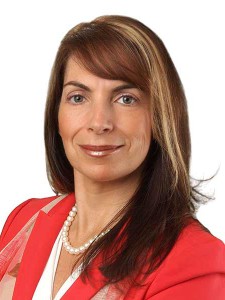
Dr. Chunyan Mu serves as a Senior Lecturer in the School of Natural and Computing Sciences at the University of Aberdeen, actively contributing to both academic instruction and cutting-edge research in computing science while currently accepting new PhD students. Her research program centers on Trustworthy AI and Safe Autonomy, with specialized expertise in formal verification of responsibility, accountability, and privacy mechanisms within multi-agent systems. She investigates resilience frameworks for autonomous intelligent systems and develops advanced methodologies for information flow security analysis, bridging theoretical computer science with practical security implementations. Analysis of her publication trajectory (2014-2025) reveals consistent innovation in applying formal methods to security-critical systems. Key thematic developments include probabilistic strategy logic for observability analysis, quantitative verification of opacity properties, and game-theoretic approaches to security verification, demonstrating increasing sophistication in handling multi-agent accountability and system resilience challenges. Dr. Mu currently supervises PhD candidates and offers a fully funded doctoral position focused on formal verification of safety properties in autonomous systems, providing comprehensive financial support including tuition coverage, £20,780 annual stipend, and dedicated research funding for candidates with strong backgrounds in formal methods and artificial intelligence.
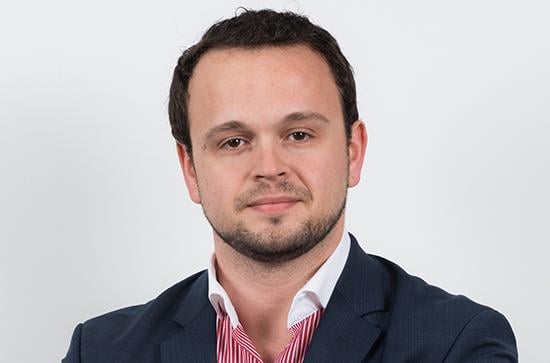
Habib Ullah is an Associate Professor in Data Science at the Norwegian University of Life Sciences (NMBU), Norway, where he conducts research at the intersection of computer vision and machine learning. He is affiliated with the Institute of Data Science under the Faculty of Science and Technology. He has previously held academic positions at COMSATS University Islamabad, Pakistan, and the University of Ha'il, Saudi Arabia, and served as a postdoctoral researcher at The Arctic University of Norway. Educational Background: PhD in Information and Communication Technology (Computer Vision), University of Trento, Italy (2011–2015) MSc in Electronics and Computer Engineering, Hanyang University, South Korea (2007–2009) BSc in Computer Systems Engineering, NWFP University of Engineering and Technology, Pakistan (2002–2006) Habib Ullah's research is primarily focused on computer vision and machine learning, with applications in aquaculture, agriculture, and human behavior analysis. He investigates underwater fish feeding sounds using audio classification, develops zero-shot learning models for recognizing unseen classes, and applies deep learning to detect stress in salmon via skin dot patterns. He also explores AI-driven controlled environment agriculture, leveraging sensors and automation for optimal crop growth. His work emphasizes practical AI solutions for real-world challenges in environmental and biological domains. The recent publications highlight a strong trend in leveraging deep learning for zero-shot and semi-supervised learning, particularly in computer vision tasks such as sea ice classification, crowd anomaly detection, and agricultural monitoring. His research spans remote sensing, biomedical signal processing, and human activity recognition, demonstrating interdisciplinary versatility. The keywords reflect a focus on robust feature representation, knowledge transfer, and model generalization. Scientific Awards and Funding: Industrial PhD grant 'Advancing Controlled Environment Agriculture AI' from The Research Council of Norway (Project number 354125, 2 million NOK, 2024) Team member (Coordinator-Participant) in the Battery Cell Assembly Twin (BatCAT) project funded by Horizon Europe (7 mEuro, 2023–2027) Development of an AI-Based Image Analysis System for Monitoring Plant Status (Funding: 1.8 mNOK, starting 2025) Habib Ullah actively supervises PhD projects and contributes to academic service through editorial and organizational roles. He has served as an Associate Editor for IEEE Access, Guest Editor for MDPI Remote Sensing, and Editor of the Springer book Machine Learning Techniques and Sensor Applications for Human Emotion, Activity Recognition, and Support (ML-SHEARS) . He has also been a Track Chair and Program Committee Member for several international conferences, reflecting his leadership in the academic community. His research is supported by significant grants and collaborative projects, indicating strong institutional and international engagement. He is involved in multiple research teams and projects, including the BatCAT project on battery manufacturing and AI applications in controlled environment agriculture with RIFT LABS AS. His lab work integrates deep learning, sensor fusion, and data analytics for environmental and biological monitoring systems.
Aggelos Kiayias FRSE is Chair in Cyber Security and Privacy and Director of the Blockchain Technology Laboratory at the University of Edinburgh. He is also Chief Scientist at blockchain technology company Input Output. His academic work spans over two decades with more than 200 publications in cryptography, blockchain, and security. Dr. Kiayias received his Ph.D. from the City University of New York and was an undergraduate at the University of Athens Mathematics department. His research focuses on computer security, privacy, applied cryptography, and foundations of cryptography with particular emphasis on blockchain technologies, distributed systems, e-voting, secure multiparty protocols, and identity management. His recent work demonstrates continued innovation across multiple dimensions of blockchain technology, with publications spanning theoretical foundations, practical implementations, economic modeling, and privacy-preserving techniques. The research output shows strong emphasis on security analysis, consensus protocols, transaction processing, and economic incentives within decentralized systems. His work bridges theoretical cryptography with real-world blockchain applications. Among his notable recognitions are an ERC Starting Grant, Marie Curie fellowship, NSF Career Award, Fulbright Fellowship, election as Fellow of the Royal Society of Edinburgh in 2021, and the BCS Lovelace Medal in 2024. He has served as program chair for major conferences including the Cryptographers' Track of RSA (2011), Financial Cryptography (2017), Real World Crypto Symposium (2020), and Public-Key Cryptography Conference (2020), and as general chair of Eurocrypt 2013. Professor Kiayias has supervised over 20 PhD students, many of whom have gone on to academic positions at institutions including Imperial College, Stanford University, Royal Holloway University London, University of Glasgow, University of Sydney, and Virginia Commonwealth University. His current advisees include Yu Shen, Amirreza Sarencheh, and Christina Ovezik with expected graduations between 2025-2026. He leads the Blockchain Technology Laboratory at the University of Edinburgh and is involved in several major blockchain research projects including Panoramix and Fentec. His research has received significant funding from the European Union (Horizon 2020, ERC), UK research councils (EPSRC), US agencies (NSF, DHS, NIST), and Greek research bodies.
Dr. Crystal Senko is an Assistant Professor and Canada Research Chair in Trapped Ion Quantum Computing at the Institute for Quantum Computing (IQC) , University of Waterloo. Her research focuses on quantum simulations, quantum computing with trapped ions, and qudit-based systems. She holds a Ph.D. in Physics from the University of Maryland (2014) and a B.Sc. in Physics from Duke University (2009). Her research interests span Quantum Computing , Quantum Simulation , Trapped Ion Manipulation , and Photonics . Key projects include optimizing qudit-based quantum computing protocols and developing photonic crystal waveguides for atom-photon interactions. Recent work emphasizes trapped ion efficiency, laser noise mitigation, and programmable quantum simulators. Dr. Senko has authored influential papers on trapped ion systems, including studies on multi-level qudit control, nanophotonic cavity coupling, and non-thermalization in spin chains. Her work bridges theoretical quantum models and experimental advancements in scalable quantum hardware. Awards: Canada Research Chair (Trapped Ion Quantum Computing) Teaching: Courses include Quantum Physics 2 (PHYS 334), Quantum Mechanics 1 (PHYS 701), and Special Topics in Quantum Information Processing (PHYS 768/QIC 890). Labs/Teams: Affiliated with IQC and previously contributed to Harvard’s Center for Ultracold Atoms.
Dr. Jennifer Katz serves as an Associate Professor in the Department of Educational and Counselling Psychology, and Special Education (ECPS) at the University of British Columbia's Faculty of Education. She joined UBC in July 2016 after previously holding an Associate Professor position in Inclusive Education at the University of Manitoba. Renowned for creating the Three Block Model of Universal Design for Learning (UDL), her framework is now implemented across Canadian school divisions to advance inclusive educational practices. Dr. Katz's research centers on inclusive education K-12 , social and emotional learning (SEL) , and mental health promotion in schools . Her work integrates the Three Block Model of UDL to address diverse student needs while emphasizing indigenous perspectives through extensive collaboration with First Nation elders and communities in Manitoba, Alberta, and Quebec. This intersectional approach reimagines inclusive education through reconciliation frameworks and culturally responsive practices. Analysis of her recent publications reveals consistent focus on mental health literacy programs for students with developmental disabilities, UDL's impact on academic achievement and teacher efficacy, and the integration of Indigenous knowledge systems. Her research bridges theory and practice through classroom-based interventions, cluster-randomized trials, and transformative learning frameworks that prioritize student well-being and social inclusion. Scientific Awards: No scientific awards were documented in the provided sources. Advising and Grants: While specific graduate students and research grants aren't detailed in the text, Dr. Katz's extensive publication record and community partnerships indicate active research leadership. Her work with school divisions across Canada suggests significant program implementation funding, though grant specifics remain unreported. Labs and Teams: Dr. Katz maintains critical partnerships with First Nation communities, embedding Indigenous knowledge into educational frameworks. Her Three Block Model implementation involves multi-school division collaborations nationwide, creating practitioner-researcher networks focused on inclusive classroom transformation.
Dr. Jon Gruda is an Assistant Professor and Lecturer in Organisational Behaviour at Maynooth University's School of Business. He holds a PhD in Management from emlyon Business School (France) and a joint Dr. rer. nat. in Psychology from Goethe University Frankfurt. His research focuses on relational leadership, dark leadership traits, anxiety in the workplace, and personality psychology, with a strong emphasis on integrating machine learning and AI methodologies. Gruda has been recognized with prestigious awards, including selection for the Lindau Nobel Laureates Meeting in Economic Sciences (2020). His interdisciplinary work includes predicting anxiety and personality traits via social media data analysis. He serves as an Associate Editor for journals like Personality and Individual Differences and Frontiers in Psychology . Education PhD in Management, emlyon Business School (2012–2017) Dr. rer. nat. in Psychology, Goethe University Frankfurt (2012–2017) MSc in Affective Neuroscience, Maastricht University (2018) MSc in Management Research, emlyon Business School (2012–2014) Triple MSc in Management, City University London/ESCP Europe (2010–2012) BSc in International Business & Management, University of Groningen (2007–2010) Research Interests Gruda’s work bridges leadership studies, personality psychology, and data science. Key areas include: Dark leadership traits (e.g., narcissism, Machiavellianism) and their organizational impacts Machine learning applications for detecting anxiety and personality traits via social media Cross-cultural studies on leadership perceptions and attachment orientations Impact of physiological/psychosocial factors on leadership effectiveness Publications & Projects Recent projects include predicting state-level health outcomes linked to narcissism and developing algorithms to track anxiety using Twitter data. Over 20 peer-reviewed articles since 2017 highlight his contributions to organizational behavior and computational social science. Awards 7th Lindau Nobel Laureates Meeting on Economic Sciences (2020) Benedictine University Award (Academy of Management, 2020) Wharton Global Faculty Development Program (2020) Grants & Collaborations Gruda leads projects on pro-environmental behavior and collaborates with the National Care Experience Programme on healthcare feedback analysis. Seed funding includes €301,930 for computational text analytics in healthcare. Labs & Teams Interdisciplinary research collaborations span psychology, data science, and public health, with a focus on applying machine learning to organizational challenges.
Tatsunori Hashimoto is an Assistant Professor of Computer Science at Stanford University, specializing in artificial intelligence, machine learning, and natural language processing. His research focuses on developing robust and ethical language models, addressing challenges in bias mitigation, fairness, and transparency. He leads projects like the Stanford Alpaca, exploring instruction-following models and their societal impacts. Key research interests include generative models, AI ethics, and privacy-preserving techniques. His recent work examines language model behaviors, security risks, and the societal implications of AI systems. Notable contributions include frameworks for auditing language models, improving factual accuracy, and reducing disparities in speech recognition. His publications highlight advancements in long-context processing, few-shot learning, and automated benchmarking. He emphasizes practical applications of AI while addressing dual-use concerns and ensuring alignment with human values.
Jiajun Wu is an Assistant Professor of Computer Science and, by courtesy, of Psychology at Stanford University. He holds multiple affiliations including membership in Bio-X, Faculty Affiliate status at the Institute for Human-Centered Artificial Intelligence (HAI), and membership in both the Wu Tsai Human Performance Alliance and Wu Tsai Neurosciences Institute. Dr. Wu earned his Ph.D. and S.M. in Electrical Engineering and Computer Science from the Massachusetts Institute of Technology before joining Stanford. Dr. Wu's research program focuses on creating AI systems that understand and interact with the physical world through the integration of computer vision, machine learning, robotics, and cognitive science. His work emphasizes physics-based modeling combined with deep learning to develop systems capable of perceiving, reasoning about, and predicting physical interactions. Key research areas include 3D scene understanding, neurosymbolic AI approaches, multimodal perception (combining vision, sound, and language), and embodied intelligence for robotics applications. His lab develops novel frameworks that bridge the gap between neural networks and symbolic reasoning to create more interpretable and robust AI systems. Analysis of Dr. Wu's recent publications reveals a strong trajectory toward integrated multimodal understanding for embodied AI. His work increasingly combines vision, sound, and language processing with physical reasoning to create systems that can interact meaningfully with the physical world. There's a clear progression from foundational computer vision research toward practical robotics applications, with significant emphasis on foundation models for robotics, sim2real transfer techniques, and creating comprehensive datasets for embodied AI research. Dr. Wu's exceptional contributions have been recognized with numerous prestigious awards including the NSF CAREER award (2024), Young Investigator Programs from ONR (2024) and AFOSR (2023), the Okawa research grant (2024), and being named to IEEE Intelligent Systems' 'AI's 10 to Watch' (2024). He has received multiple best paper awards at leading conferences including ICRA (2024), SIGGRAPH Asia (2023), and CoRL (2023). Dr. Wu actively mentors a large cohort of students across multiple levels, serving as primary advisor for doctoral candidates, master's students, and numerous independent researchers. His research is supported by substantial funding from major technology companies including Google, Meta, Amazon, Samsung, and J.P. Morgan, as well as government agencies like NSF, ONR, and AFOSR, reflecting the significance and impact of his work in physical AI and multimodal perception systems. Dr. Wu leads a dynamic research group at Stanford that collaborates extensively with the Wu Tsai Neurosciences Institute and Institute for Human-Centered AI. Current projects include developing neurosymbolic models for computer graphics, creating multisensory datasets like OBJECTFOLDER 2.0 for sim2real transfer in robotics, and building foundation models for embodied intelligence that can understand and manipulate objects with human-like physical intuition.
Michael Feeley is an Associate Professor in the Department of Computer Science at the University of British Columbia (UBC), affiliated with the Institute for Computing, Information and Cognitive Systems (ICICS). His research focuses on operating systems, distributed systems, and their applications in scalable file systems, cloud storage, and mobile computing. He leads projects such as the Unico file system, Parallax storage system, and Remus virtual machine replication framework. His research interests include peer-to-peer file systems, mobile ad hoc networks, interference mitigation in wireless networks, and system software for workstation clusters. He has supervised numerous graduate students, contributing to advancements in distributed systems and networking. His work often addresses challenges in resource management, fault tolerance, and performance optimization. Publications span topics like interference detection in WiFi networks, dynamic program analysis (Tralfamadore), and distributed storage solutions. Feeley teaches courses such as CPSC 213, emphasizing operating systems fundamentals. His office is located in CISR 393, with contact details available via email and phone.
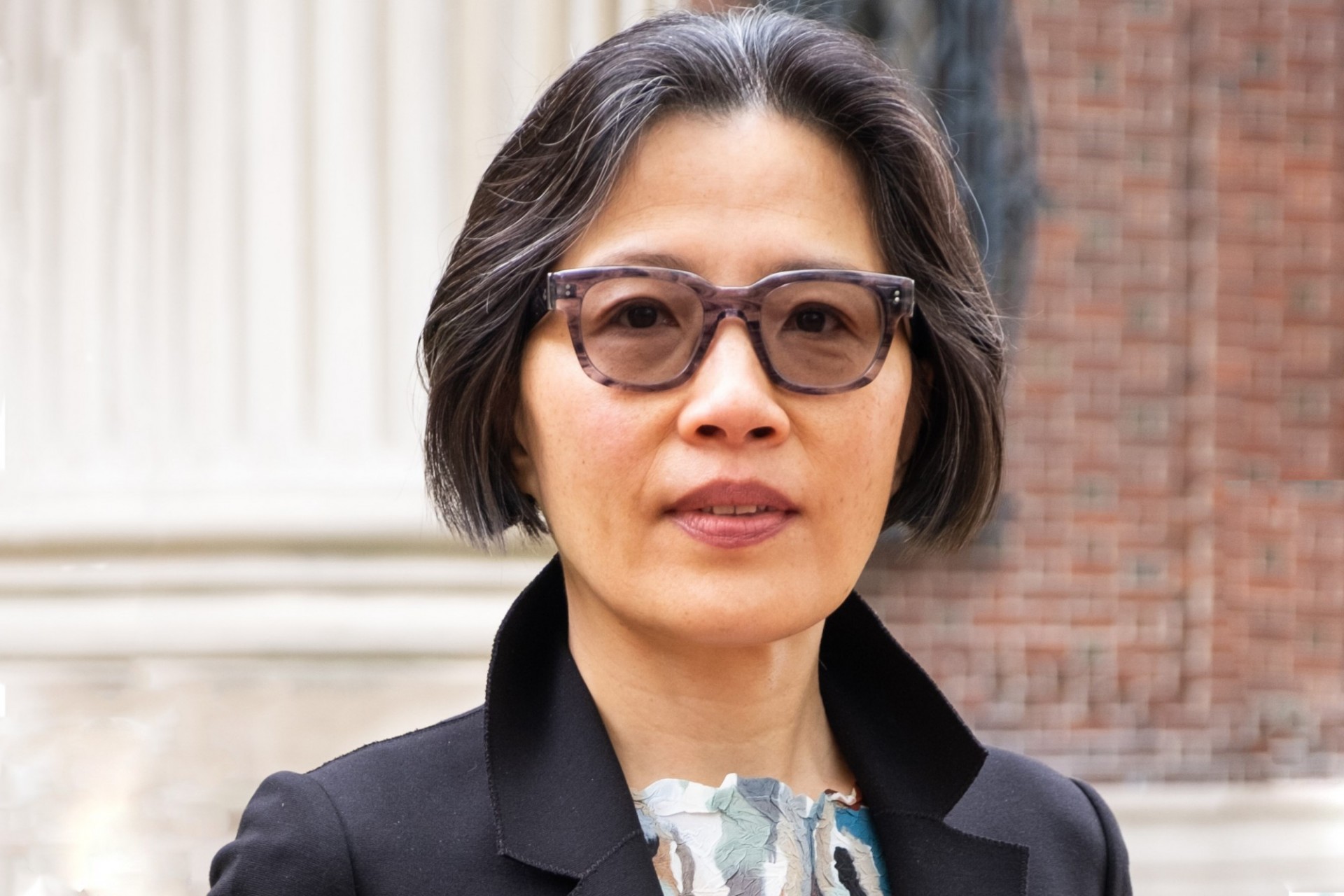
Weiping Wu is Professor and Director of the M.S. in Urban Planning program at Columbia University's Graduate School of Architecture, Planning and Preservation. She previously chaired the Department of Urban and Environmental Policy at Tufts University and currently serves as Columbia's Vice Provost for Academic Programs. Her research examines urban dynamics in developing countries with expertise in Chinese urbanization, migration, housing, and infrastructure. Publications analyze urbanization patterns, infrastructure financing, and socioeconomic transitions in Chinese cities, emphasizing how these conform to and challenge conventional urban theories. Recent books explore urbanization impacts on environmental resources, demographic changes, and sustainability challenges. Leadership roles include chairing the Planning Accreditation Board and serving on advisory panels for the Hong Kong Research Grants Council and Lee Kuan Yew World City Prize. She previously served as President of the Association of Collegiate Schools of Planning.
Dr. Christian Onof is an Associate Professor (Reader) in Stochastic Environmental Systems at Imperial College London's Department of Civil and Environmental Engineering (Faculty of Engineering). He holds affiliations with the Centre for Systems Engineering and Innovation, Environmental and Water Resource Engineering group, and the Grantham Institute. After completing undergraduate studies in Mathematics and Engineering in Paris and Hanover, he earned his PhD at Imperial College and began his academic career as a lecturer in 1994. Education: BSc in Mathematics/Engineering (Paris/Hanover), PhD in Environmental Systems (Imperial College London) His research focuses on stochastic rainfall modeling for hydrological simulations and flood design, particularly at fine time-scales, with emphasis on climate change impact assessment and development of downscaling tools. Recent work explores statistical/machine learning approaches for convective rainfall forecasting. Teaching responsibilities include pioneering courses in Statistics (MEng Year II), Operational Research (MEng Year IV), and Stochastic Hydrology (MSc). He has taught over a dozen undergraduate modules and contributed to international collaborations, including a course at École des Ponts ParisTech via the European Athens Network. As former Course Director of the MSc in Systems Engineering and Innovation, he has actively promoted student exchange programs, establishing partnerships with universities in Melbourne, Hong Kong PolyU, Barcelona, Queensland, and California. No scientific awards or specific grants are explicitly listed, though his research contributions are notable in environmental systems engineering.
Dr. Yi Shen is a Senior Lecturer at the School of Chemical and Biomolecular Engineering, The University of Sydney, and Chair of RACI Women in Chemistry. She is also affiliated with multiple research institutes including Sydney Institute of Agriculture, Sydney Southeast Asia Centre, The Centre for Drug Discovery Innovation, and The University of Sydney Nano Institute. PhD in Soft Materials from ETH Zurich Postdoctoral research at University of Cambridge and Harvard University Her research focuses on protein phase behavior and functional biomaterials development, utilizing soft matter approaches and microfluidic techniques to address challenges in neurodegenerative diseases, sustainable materials, and biomedical engineering. She has published extensively in top journals like Nature Nanotechnology and PNAS, with a particular emphasis on: Protein liquid-liquid phase separation mechanisms Biomaterials from protein nanofibrils Microfluidic manipulation of biological systems Biodegradable bioplastics development Shear force effects on biomolecular systems Pathological protein aggregation dynamics Key scientific achievements include: 2022 ARC DECRA Fellowship 2022 Sydney Nano Frontier award 2018 ETH Zurich Spark Award (for Fe delivery system invention) 2012 Princeton Grand Challenges Program 2 patents pending 2 Nature Nanotechnology cover articles As an educator, she coordinates CHNG2802 Chemical Engineering Modelling and Analysis, co-teaches CHNG3804 Biochemical Engineering and CHNG5605 Bio-products: Laboratory to Marketplace, and guest lectures across biomedical and nanotechnology programs. Her lab actively collaborates with institutions in Switzerland (ETH Zurich), UK (Cambridge), and US (Harvard, Princeton), focusing on transforming biomolecular understanding into real-world applications in health, industry, and environmental sustainability.
Youssef M. A. Hashash is the Grainger Distinguished Chair in Engineering and a Professor in the Department of Civil and Environmental Engineering at the University of Illinois at Urbana-Champaign (UIUC). He holds a B.S., M.S., and Ph.D. in Civil Engineering from MIT (1987–1992). His expertise spans geotechnical engineering, earthquake engineering, and computational geomechanics, with a focus on deep excavations, tunneling, and soil-structure interaction. He co-developed DEEPSOIL, widely used for seismic soil response analysis. Education: B.S. Civil Engineering, MIT (1987) M.S. Civil (Geotechnical) Engineering, MIT (1988) Ph.D. Civil (Geotechnical) Engineering, MIT (1992) Research Interests: Dr. Hashash's work integrates geotechnical engineering with advanced technologies like AI, visualization, and discrete element modeling. Key areas include: Seismic site response and amplification models for Central/Eastern North America Tunneling and underground infrastructure resilience Geotechnical applications of machine learning and augmented reality Soil-structure interaction and liquefaction analysis Professional Roles: Geotechnical co-leader, NIST investigation of the Champlain Towers South collapse (2022–present) Chair, National Academies' Committee on Geological and Geotechnical Engineering (2024–present) Past President, Geo-Institute of ASCE Awards: Presidential Early Career Award for Scientists and Engineers ASCE 2014 Peck Medal Elected to National Academy of Engineering (2022) Labs/Teams: Leads research groups at UIUC focused on computational geomechanics and geotechnical earthquake engineering. Collaborates with federal agencies like NIST and NSF on large-scale projects.
Professor Eric Atwell is a Professor of Artificial Intelligence for Language at the University of Leeds' School of Computer Science, part of the Faculty of Engineering and Physical Sciences. He holds additional roles as a LITE Fellow at the Leeds Institute for Teaching Excellence (40% part-time), Turing Fellow at the Alan Turing Institute, and member of the Leeds Institute for Data Analytics (LIDA) and Language at Leeds (LATL). His research focuses on AI applications in corpus linguistics, text analytics, and computational analysis of religious and medical texts, with a strong emphasis on Arabic and Islamic studies. He leads the AI4L research group and has supervised over 60 research students and fellows, many of whom have pursued careers in academia, tech, and AI-driven fields. Education: PhD in Corpus Linguistics and Language Learning (University of Leeds, 2008), BA (First Class) in Computing and Linguistics (Lancaster University, 1981) Grants: Includes EPSRC-funded projects like Natural Language Processing with Arabic and Islamic Studies (£337K, 2013-2015) and EDUBOTS chatbots for education (£94K, 2019-2022) Teaching: Leads modules in Data Mining, Text Analytics, and AI across multiple programs, including online Masters and PhDs. Known for innovative teaching approaches and student support, receiving positive feedback for engagement and course design. Research Interests: AI applied to corpus linguistics, Quranic text analysis, Arabic NLP, chatbots for education, and decolonizing curricula. Notable projects include Quranic semantic search tools, Hadith corpus analysis, and AI-driven fact-checking systems. Publications: Over 277 publications, with recent work focusing on Quranic QA systems, Arabic dialect identification, and generative AI applications in education. His research is widely cited, earning recognition from ResearchGate for high readership. Awards: Recognized for his most-read research items on ResearchGate (June 2021). Gallup StrengthsFinder highlights his top traits as Learner, Achiever, Ideation, Intellection, and Maximizer. Labs/Teams: Leads the AI4L research group and collaborates with international institutions including SUSTECH Sudan, King Saud University, and SWJT University (China). Active in research networks like LIDA and LATL.
Frederick Eberhardt is a Professor of Philosophy at the California Institute of Technology (Caltech) since 2013. He holds a B.S. from the London School of Economics (2002), an M.S. from Carnegie Mellon University (2005), and a Ph.D. from Carnegie Mellon (2007). His research focuses on the intersection of philosophy of science, machine learning, and cognitive science, emphasizing causal discovery from data, experimental methods in causality, and foundational issues in probability and causality. He also explores computational models in psychology and historical work on Hans Reichenbach's philosophy. Recent publications span topics like causal emergence, Reichenbachian probability coordination, and causal mapping in neuroscience. His work bridges formal philosophy with empirical applications in cognitive science and computational methods. Education: B.S., London School of Economics, 2002 M.S., Carnegie Mellon University, 2005 Ph.D., Carnegie Mellon University, 2007 Research interests include formal philosophy of science, causal inference techniques, machine learning applications to causal discovery, and the philosophical underpinnings of probability. His work on causal abstraction and computational models in cognitive science highlights interdisciplinary approaches to understanding causal mechanisms. Recent publications emphasize integrating experimental and observational data for causal discovery, with applications in neuroscience and psychology. Publications reflect a focus on advancing causal reasoning methods, from theoretical frameworks to empirical validation. No scientific awards are explicitly listed in the provided text. Advising and grants details are not available here. Eberhardt is affiliated with Caltech’s Philosophy Department and contributes to theoretical and applied research in causality and its implications across disciplines.