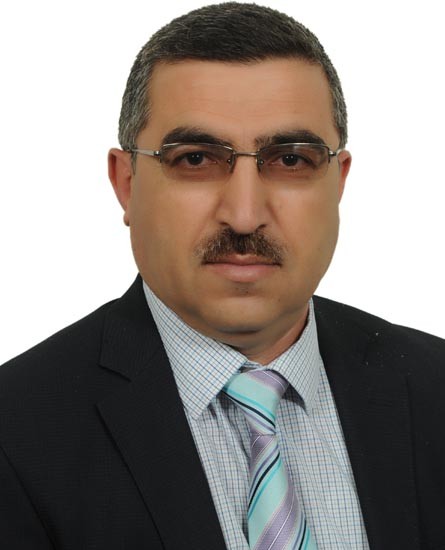
Duran Icels serves as an Associate Professor in the Department of Western Languages and Literatures at Kirikkale University's Faculty of Humanities and Social Sciences, specializing in French language and literature studies. His academic career spans appointments at Zonguldak Bülent Ecevit University (1997), Hacettepe University (2000-2007; 2014-2017), and current service at Kirikkale University since 2008, including roles as Erasmus-Farabi Coordinator (2009-2013) and Deputy Director of the School of Foreign Languages (2013-2016). Educational background: BA in French Language and Literature, Hacettepe University (1994) MA in French Language and Literature, Hacettepe University (1999) PhD in French Language and Literature, Hacettepe University (2005) Research focuses on French literary traditions, cross-cultural comparative analysis, and Turkish-French poetic dialogues. His scholarship examines structural and thematic intersections between Francophone and Turkish literary canons, with particular emphasis on translation theory and poetic form evolution across cultural boundaries. Academic leadership includes developing international exchange programs through Erasmus-Farabi coordination and administrative oversight as Deputy Director of Foreign Languages. He has supervised master's theses in translation studies while maintaining active bilingual (Turkish-French) scholarly engagement.
Associate Professor Mustafa GulTekin serves at Gaziantep University in the Faculty of Arts and Sciences , affiliated with both the Department of Turkish Language and Literature and the Department of Turkish Folklore . He holds a Doctorate in Turkish Folklorics (2010) from Ege University and has been teaching since 2004. Education: PhD in Turkish Folklorics, Ege University (2004-2010) MA in Turkish Language and Literature, Gaziantep University (2002-2004) Bachelor in Turkish Language and Literature, Balikesir University (1997-2001) Research Focus: Specializes in Turkic world fairy tales, oral literature analysis, minstrelsy traditions, and intangible cultural heritage. His work intersects folklore methodology with performance studies and cultural anthropology. Projects: Led/managed national projects including TUBITAK-funded research on Diyarbakir Alevi ocaks (2013-2016), Uzbek cultural studies in Gaziantep (2012-2015), and applied Karagöz education programs (2009-2010). Administrative Roles: Head of Department (2014-2017, 2012-present) Deputy Head of Department (2017-present, 2011-2012) Director of Research and Application Center (2012-2016)
Prof. Sadettin Emre Alptekin is a full Professor of Industrial Engineering at Galatasaray University, Faculty of Engineering and Technology, where he also serves as Vice Dean. Since joining the university as a research assistant in 2000, he has steadily advanced through the academic ranks, becoming an Assistant Professor (2006–2010), Associate Professor (2010–2023), and finally Professor in 2023. Education: PhD (Dr), Industrial Engineering, Istanbul Technical University, Institute of Science and Technology, 2001–2006 MSc, Industrial Engineering, Galatasaray University, Faculty of Engineering and Technology, 1999–2001 BSc, Industrial Engineering, Istanbul Technical University, Faculty of Management, 1995–1999 Languages: Advanced English (C1), Upper-Intermediate French (B2), Advanced German (C1) Research Interests: Prof. Alptekin’s research focuses on Computer Learning , Fuzzy Sets and Systems , and Decision Support Systems . His work integrates artificial intelligence, machine learning, and soft-computing techniques to solve complex industrial and managerial problems in areas such as supply chain management, quality function deployment, blockchain adoption, and mental-health prediction. Publication Trends: Across more than 50 refereed publications, Prof. Alptekin has consistently explored hybrid intelligent models that combine fuzzy logic, machine learning, and multi-criteria decision-making. Recent articles emphasize deep-learning-based anomaly detection in industrial time-series data, blockchain adoption in supply chains, and machine-learning applications in subjective well-being and mental-health modeling. Scientific Awards & Honors: No specific awards or medals are listed in the provided documents. Research Leadership & Funding: Since 2008 he has been the principal investigator (executive) of 12 nationally funded projects, covering topics such as Industry 4.0 sub-system design, Internet of Things applications, artificial neural networks in organizational decision-making, big-data analytics, and strategic decision processes. Graduate Advising: He has formally supervised at least 8 master’s theses and numerous undergraduate projects. Representative thesis titles include Gaussian-process-regression-based man-hour prediction, machine-learning-driven human-behavior modeling, recommender-system design for e-commerce, thyroid-nodule diagnosis from scintigraphic images, software-effort estimation via neural networks, spreadsheet heuristics for joint-replenishment problems, cross-selling decision systems in insurance, and profitability analyses of Turkish banks under disinflation. Laboratories & Teams: While no dedicated laboratory name is disclosed, his continuous role as Vice Dean and principal investigator implies active leadership of the Industrial Engineering department’s research clusters in intelligent systems and decision support technologies.
Cem Say is a Professor in the Department of Computer Engineering at Boğaziçi University's Faculty of Engineering, where he has established himself as a leading researcher in theoretical computer science and artificial intelligence. His academic journey began with the completion of his doctoral dissertation titled Qualitative System Identification in 1992, which was the first thesis of Boğaziçi University's Computer Engineering PhD program. Professor Say's research interests span multiple domains of computer science, with significant contributions to quantum computing, artificial intelligence, and theoretical computer science. His early work focused on qualitative reasoning and simulation, particularly through the QSIM algorithm, where he made significant improvements to filtering techniques and addressed challenges in representing physical systems. Over time, his research evolved toward quantum computation, where he has made substantial contributions to quantum finite automata theory, space-bounded quantum computation, and quantum complexity classes. His recent work explores the energy complexity of computation, bridging theoretical computer science with thermodynamics. His publication record shows a clear evolution from classical AI and qualitative reasoning toward quantum computation. The most recent articles demonstrate his focus on space-bounded quantum computation, energy complexity of regular languages, and interactive proof systems with minimal resources. His work consistently addresses fundamental questions about computational limits, particularly in quantum and sublogarithmic-space models. Professor Say has also made significant contributions to science communication through several books written for general audiences, including 50 Soruda Yapay Zekâ (2018), Yeni Dünya, Yeni Ağ (2020), and En Hakiki Mürşit (2021), which explain complex concepts in artificial intelligence and scientific methodology in accessible terms. Throughout his career, Professor Say has been actively involved in the Turkish academic community, editing proceedings for multiple Turkish symposia on artificial intelligence and neural networks. His doctoral dissertation established foundational work in qualitative system identification, and his subsequent research has consistently pushed boundaries in theoretical computer science, particularly in quantum computation where he has collaborated extensively with Abuzer Yakaryılmaz and other researchers.
Dr. Aykut Koç is an Associate Professor at the Department of Electrical and Electronics Engineering and a faculty member of the National Magnetic Resonance Research Center (UMRAM) at Bilkent University, Turkey. He leads the AykutKoc Lab, focusing on interdisciplinary research at the intersection of machine learning, signal processing, natural language processing, and graph signal processing. Education: B.S. in Electrical and Electronics Engineering (2005, Bilkent University); M.S. in Electrical Engineering (2007), M.S. in Management Science and Engineering (2009), and Ph.D. in Electrical Engineering (2011) under Professor Lambertus Hesselink at Stanford University; LL.B. in Law (Ankara University). His research integrates mathematical signal processing techniques (e.g., fractional Fourier and linear canonical transforms) with modern machine learning architectures like transformers and graph neural networks. Recent work explores semantic communication systems, bias mitigation in legal language models, and cross-modal applications in biomedical imaging and radar technology. Dr. Koç has published extensively in IEEE and Springer journals, with recent articles analyzing Fourier-enhanced transformers, graph-based NLP methods, and time-vertex signal analysis. His work addresses both theoretical innovations and practical applications, including schizophrenia diagnosis, legal outcome prediction, and maritime surveillance. Scientific Awards: Science Academy Young Scientists Award (BAGEP), 2023. He has supervised numerous graduate and undergraduate researchers, many of whom have transitioned to top-tier institutions such as MIT, UCLA, and TU Darmstadt. Dr. Koç actively serves as Associate Editor for multiple IEEE journals and participates in conference program committees, including EMNLP's Natural Legal Language Processing (NLLP) workshop.
Dr. Mehmet Kaya is a Lecturer in the History Department of Bingöl University's Faculty of Arts and Sciences since 2009. He holds a PhD in Republic History from Fırat University (2004) and has served as Department Head (2009-2012) and currently leads the Republican History Subdivision. His research focuses on Turkish-Iranian relations, modern Middle Eastern history, and the diplomatic history of the Republic of Turkey. Education: BA in History (Fırat University, 1987), MA in Revolutionary History (Istanbul University, 1992), PhD in Turkish-Iranian Relations (Fırat University, 2004) Research interests include 20th-century diplomacy, Ottoman-Turkish transition, and regional geopolitics. He has published extensively on topics like Iran's 1979 Revolution, Turkish-Israeli relations, and Kurdish uprisings. Recent works analyze Iran's Syria policy (2022) and Ali Şeriati's influence on the Iranian Revolution (2024). He co-authored chapters in volumes like Modern İran Tarihi (2021) and participated in international conferences on Karabakh conflicts and Iranian opposition groups. Serves as referee for Bingöl University's Social Sciences Journal.
Tuğba Dalyan is an Associate Professor in the Department of Computer Engineering at Istanbul Bilgi University, Faculty of Engineering and Natural Sciences. She holds a Ph.D. in Computer Engineering from Yıldız Technical University (2014), an MSc from Kocaeli University (2007), and dual BSc degrees in Mathematics and Computer Science and Business Administration (Minor) from Istanbul Bilgi University (2003). She has been a faculty member since 2016 and previously served as a Teaching Staff member and Research Assistant at the same institution. Her research focuses on Natural Language Processing , Machine Learning , Deep Learning , Text Mining , Data Science , and Big Data Analytics . Her work spans computational linguistics, sentiment analysis, author profiling, machine translation, and smart systems. She has led and contributed to numerous research projects, particularly in AI-driven urban solutions and health technologies. The most recent publications show a strong trend in Turkish NLP, zero-shot classification, multimodal AI (image captioning), emotional robotics, and decision support systems using fuzzy logic. Her work combines theoretical rigor with practical applications in smart cities, education, and healthcare. Best Paper Award , CICLing 2012 TÜBİTAK 2209-A student project awards (2022–2024) Horizon2020 Eşik Üstü Ödülü , MIMOSCSA 2024 TÜBİTAK 2242 competition: 2nd and 3rd place (2016, 2018) She has advised numerous student research projects, many of which have received national recognition. She has directed multiple TÜBİTAK and institutional research grants, including projects on smart homes, blockchain crowdfunding, mental health, and AI for social polarization. Her leadership roles include Head of Department, Vice Dean, and Director of Graduate Programs. Tuğba Dalyan leads research in AI and NLP with a strong emphasis on Turkish language technologies. She is involved in interdisciplinary teams working on emotional robots, smart city platforms, and citizen science ecosystems. Her lab activities focus on neural networks, text analysis, and intelligent systems development.
Prof. Dr. Emine Erçelebi is a full-time faculty member at Gaziantep University Faculty of Engineering, Department of Food Engineering . With over 25 years of academic experience, her research focuses on nanoemulsions, food preservation, and rheological properties of food systems. PhD (2007) : Food Engineering, Gaziantep University MS (2000) : Food Engineering, Gaziantep University BS (1997) : Food Engineering, Gaziantep University Her research program investigates: Stability and functionality of nanoemulsions for food applications Thermal degradation kinetics of natural food pigments Hydrocolloid effects on food rheology and texture Encapsulation techniques for bioactive compounds Physicochemical properties of fruit concentrates Recent publications demonstrate strong focus on nanoemulsions (2018-2024), fruit concentrate stability (2013-2020), and hydrocolloid applications (2016-2022). She has mentored 5 graduate students to completion and served as Domestic Erasmus Coordinator (2010-2014). Project Leadership : 2 completed research projects including a TÜBİTAK-funded study on protein-hydrocolloid systems Teaching : Delivers English-language courses in Analytical Chemistry, Instrumental Analysis, and Physical Properties of Foods (2014-2020)
Hümeyra Başol Çetin serves as a Lecturer in the English Language Program at Bilkent University, Ankara, Turkey, where she delivers English for Academic Purposes (EAP) instruction and provides academic writing support through the Bilwrite service. Her professional focus centers on: English for Academic Purposes (EAP) Academic Writing pedagogy Language Teaching methodologies She actively contributes to curriculum development for EAP courses and student writing enhancement initiatives across the university. Ms. Başol Çetin engages with the Instructor Development, Education & Research (CIDER) framework and utilizes the ENG Staff Handbook for instructional standards. She participates in the EAP Teaching Certificate program (CTEAP) for professional advancement and contributes to departmental resources including course topic coordination and student writing support systems.
MUSTAFA KESKİN serves as an Associate Professor in the Department of Arabic Language and Rhetoric within the Faculty of Theology at Gaziantep University, Turkey. Appointed to this position in 2021 after serving as a Doctor Lecturer since 2013, his academic career is deeply rooted in Islamic theological studies with specialized expertise in Arabic linguistics and rhetoric. His institutional affiliation spans both the Department of Fundamental Islamic Sciences and the specialized Department of Arabic Language and Rhetoric, reflecting his dual focus on theological scholarship and linguistic analysis. His educational trajectory includes: Doctorate (2013-2017): Gaziantep University, Institute of Social Sciences, Department of Basic Islamic Sciences Master's (2011-2013): Harran University, Institute of Social Sciences, Tafsir (Thesis) Licence (2008-2010): Ankara University, Faculty of Theology, Theology Undergraduation Completion (Distance Education) Associate Degree (2006-2008): Anadolu University, Faculty of Open Education, Department of Theology Licence (1995-2002): Anadolu University, Faculty of Business Administration Professor Keskin's research centers on the intersection of Arabic linguistic structures and Islamic theological texts, with particular emphasis on rhetorical devices in the Quran and Hadith literature. His work explores how classical Arabic grammatical frameworks inform Quranic exegesis, analyzes historical linguistic schools like the Baghdad tradition, and investigates poetic devices in early Islamic literature. This scholarship bridges philological precision with theological interpretation, revealing how linguistic choices shape religious meaning in foundational Islamic texts. His publications consistently demonstrate methodological rigor in applying classical Arabic linguistic theories to theological source materials. Analysis of his 15 most recent publications (2018-2024) reveals three dominant scholarly trajectories: systematic examination of rhetorical devices in Quranic surahs (particularly tibāq and metaphor), critical engagement with classical Arabic grammatical treatises (including works by Müberred and al-Fārisī), and historical studies of Islamic scholarly networks connecting Anatolia and Syria. His work demonstrates growing international collaboration, with increasing co-authorship in Arabic-language publications alongside Turkish and English outputs. The research consistently applies linguistic analysis to theological questions, creating a distinctive niche in Quranic stylistics and classical Arabic rhetoric. No scientific awards were documented in the source materials. Professor Keskin has supervised 15 graduate students across doctoral and master's programs, with thesis topics reflecting his core research interests. Doctoral work includes semantic analysis of Quranic roots (e.g., 'krm') and classical rhetorical poetry, while master's research spans prophetic traditions in poetry, Quranic command structures, and human values in early Arabic poetry. His editorial work on 6 academic volumes complements this mentoring role, particularly in publishing classical Arabic texts with contemporary commentary. Conference presentations (9 international venues) demonstrate active scholarly engagement, though specific research grants were not documented in the source materials. No dedicated research laboratories or formal research teams were mentioned in the institutional documentation.
Prof. Dr. Mehmet Reşit Tolun is a full-time Professor in the Department of Software Engineering at Çankaya University (Turkey) since 2022. Previously held full-time professor positions at Konya Food and Agriculture University (2020-2022), Aksaray University (2013-2017), and TED University (2011-2013), along with a part-time professorship at Başkent University (2017-2020). Specializes in Artificial Intelligence , Machine Learning , and Data Mining , with a focus on deep learning applications in aerospace, biomedical data analysis, and software process improvement. PhD in Computer Science (University of Kent, 1985) MSc in Computer Science (University of Kent, 1982) BSc in Physics and Computer Science (University of Kent, 1981) Research Interests span deep learning frameworks, hybrid expert systems, software engineering methodologies, and biomedical signal processing. Publications emphasize practical implementations in medical diagnostics, robotics, and agricultural pest detection. Scientific Awards include the IEEE Third Millenium Medal (2000). Supervised over 55 graduate students, including Burak Çetin, Uğur Özotuk, and Mahinur Doğan. Collaborated with researchers from Orta Doğu Teknik Üniversitesi , Çankaya University , and Aksaray University .
Assoc. Prof. Dr. Ali Şükrü Özbay currently serves as an Associate Professor at Karadeniz Technical University's Faculty of Arts, Department of English Language and Literature. He earned his PhD and MA in Applied Linguistics from Karadeniz Technical University and holds a BA in English Language and Literature from Ankara University. Education : PhD (2015) and MA (2004) from Karadeniz Technical University; BA (1996) from Ankara University Dr. Özbay's research focuses on Corpus Linguistics , Learner Corpora , Academic Writing , Translation Studies , and Language Pedagogy . His work investigates lexical bundles, support verb constructions, and pragmatic markers through computational corpus analysis. Recent publications analyze four-word recurrent expressions in educational technology contexts, collocational priming in Turkish EFL learners' mental lexicon, and semantic prosody of intensifiers in academic corpora. He supervises theses on data-driven learning applications and corpus-based teaching materials. Dr. Özbay has held managerial roles including Deputy Head of Department (2019–present) and Assistant Coordinator for Erasmus+ programs (2017–2021). He actively participates in international conferences and has published in journals like Turkish Studies , Australian Journal of Applied Linguistics , and Hacettepe Eğitim Dergisi .
Prof. Dr. Mehmet TAŞDEMİR is a faculty member at Kirsehir Ahi Evran University's Faculty of Education, Department of Educational Sciences, specializing in Curriculum and Instruction. He has been a Full-Time Professor since 2016, following roles as Associate Professor (2011-2016) and Doctor Lecturer (2006-2011). His academic career spans over three decades, including administrative roles such as Department Head and Scientific Projects Coordinator. Education: PhD in Primary Education Curriculum and Instruction from Hacettepe University (1995); Master's in Educational Sciences from Gazi University (1988); Bachelor's in Educational Sciences from Gazi University (1985); Associate Degree in Classroom Teaching from Gazi University (1983). Research Interests: His work focuses on curriculum development, instructional design, educational assessment, and values education. He has extensively studied foreign language teaching, mathematics education, and inclusive practices in primary and secondary schools. Recent Publications: His 2025-2024 articles analyze community-centered curricula, problem-based learning models, and mind games in education. Trends include foreign language motivation, mathematics teaching methods, and values integration in school programs. Scientific Awards: TÜBİTAK Yayın Teşvik Awards (2010-2012) Advising: Mentored 23 theses (Master's and Doctoral) and collaborated with researchers like Figen Taşdemir and Cem Şahin on topics spanning educational psychology, curriculum theory, and instructional practices.
Aslıhan And serves as an Associate Professor in the Music Department of Istanbul State Conservatory at Mimar Sinan Fine Arts University, specializing in Wind and Percussion Instruments with emphasis on flute performance. Education: Licence (2004-2008): Mimar Sinan Fine Arts University, Istanbul State Conservatory, Department of Music, Wind and Percussion Instruments Program Degree (2013-2016): Hochschule für Musik und Theater Hamburg, Music (Transverse Flute) Proficiency in Arts (2018-2021): Mimar Sinan Fine Arts University, Institute of Fine Arts, Wind and Percussion Instruments Language Proficiency: English (YDS score 68.75, 2016) Research and Performance Focus: Her expertise centers on advanced techniques in transverse flute performance within both classical and contemporary frameworks. She explores pedagogical methodologies for wind and percussion instruments while contributing to the evolution of performance practices in Turkish musical contexts. Her work bridges traditional conservatory training with modern interpretative approaches, particularly in solo and ensemble wind instrument repertoire.
Tülin Haşlaman is an Associate Professor at the Department of Elementary Education - Primary Education, TED University. She holds roles as a Coordinator and Vice Head of Department. Her teaching portfolio includes courses such as Instructional Technologies, Technology-Enhanced Language Learning, and Micro Teaching, reflecting her expertise in educational technology and pedagogical innovation. Her research focuses on ICT integration in education, self-regulated learning strategies, and teacher development. Notable areas of interest include the use of digital storytelling for computational thinking, infographics in supporting student autonomy, and smartphone addiction among university students. She has also studied the impact of social media platforms like Facebook on teacher training and the integration of ICT into teaching processes. Dr. Haşlaman’s work emphasizes bridging technology with educational practices, particularly in primary education contexts. Her articles highlight themes such as pre-service teacher digital competency, disabled teachers’ technology integration challenges, and peer assessment in online environments. Despite her extensive academic contributions, she has no explicitly listed awards or grants in the provided materials. Her courses over the years span foundational education topics like Learning Environments, Observation in Schools, and Research Methods, demonstrating a commitment to both theoretical and applied aspects of education. While she has not specified any affiliated labs or teams, her teaching and research activities suggest active engagement in educational technology initiatives and teacher professional development programs.