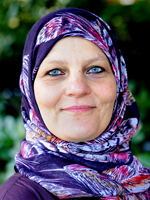
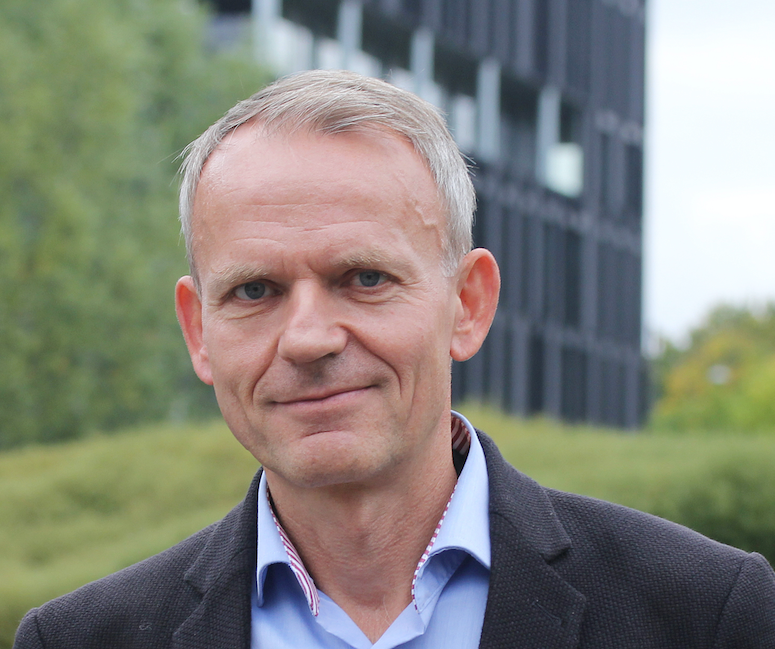
Anya Helene Bagge is an Associate Professor in the Department of Informatics at the University of Bergen, where she is a researcher at the Bergen Language Design Laboratory. Her work focuses on programming languages and software language engineering, with strong ties to education and tool development. Research Interests: Programming language design and implementation Software language engineering Semantics of programming languages Domain-specific languages and language extensions Program transformation using Rascal, MPL, and Stratego/XT Aspect-oriented programming, especially Domain-Specific Aspect Languages Her recent publications reflect a consistent focus on software language engineering, refactoring, microservice security, and programming education. Themes across her work include language design, program analysis, and the development of educational tools and methodologies. Scientific Awards: The Realist Committee's Teaching Award 2016/17 Lecturer of the Year in Computer Science (Spring 2015) Anya Bagge actively supervises students, including PhD and Master’s candidates such as Tero Hasu, Kristoffer Haugsbakk, and Nina Andersen. She has been involved in numerous academic activities, including organizing the OOPSLE workshop and serving on program committees for conferences like SLE, HILT, and WCRE. She has also taught core courses including INF101, INF225, and INF328, demonstrating a strong commitment to both research and teaching. Labs and Teams: She is affiliated with the Bergen Language Design Laboratory , collaborating with researchers such as Magne Haveraaen, Eva Burrows, and Tero Hasu.
Magne Haveraaen is a Professor in the Department of Informatics at the University of Bergen, where he leads the Bergen Language Design Laboratory (BLDL). He is actively engaged in research on programming theory, formal methods, language design, and high-integrity systems. His work centers on algebraic specifications, generic programming, domain engineering, and the design of the Magnolia programming language. He has been a long-standing instructor of key courses such as INF220 (Program Specification) and INF222 (Programming Languages), and contributes to national and international academic forums. University: University of Bergen School: Faculty of Mathematics and Natural Sciences Department: Department of Informatics Academic Rank: Professor Email: magne.haveraaen@uib.no His research interests include programming language design, formal specifications, generic and mouldable programming, multicore and GPU computing, and algebraic methods in software development. He emphasizes correctness, reuse, and high-integrity software through theoretical and practical innovations. He has contributed extensively to the literature on algebraic reasoning, array programming, and domain-specific abstractions. The recent publications highlight a consistent focus on algebraic semantics, language design (especially Magnolia), array programming, and formal verification. Themes across these works include correctness by design, specification-driven development, and adapting programming models for modern architectures. His involvement in workshops like ARRAY, WGP, and CALCO underscores his leadership in programming language theory. No scientific awards are listed in the provided texts. He advises students and welcomes collaboration in programming theory, language design, and formal methods. He has led funded projects such as MoSIS and SHIP and is involved in the High Integrity Systems Forum. He organizes and participates in key conferences including NWPT, GPCE, and SCAM. He leads the Bergen Language Design Laboratory (BLDL), which focuses on experimental language design, and contributes to the SAGA initiative on scientific computing with algebraic abstractions. His work integrates theory with practical tooling and language implementation.
Nora Sunniva Eggen is an Associate Professor at the Faculty of Theology, University of Oslo , specializing in language- and text-oriented Islamic studies with a focus on knowledge production and authority. Her research spans Arabic-Islamic intellectual history, Qur'anic studies, and contemporary Islam in Norway. PhD in Arabic and Islamic Studies (University of Oslo, 2012) Program Leader for the Bachelor in Religion and Society (2023–present) Leader of the Research Group in Interreligious Studies and Islamic Theology (2024–present) Her key research interests include: Qur'anic translation and reception in Scandinavia Conceptual history of social trust in Islamic disciplines Interpretive authority in religious texts History of Islamic studies in Norway Gender perspectives in Islamic theology The 15 most recent articles explore topics such as Scandinavian Qur'anic translations, medieval Islamic epistemology, prophetic legacy in pandemics, and gender in sacred texts. Publications emphasize interdisciplinary approaches, blending hermeneutics with translation studies, ethics, and historical analysis. She teaches courses on sacred texts, Islamic concepts, gender in religion, and advanced Qur'anic studies. Current projects include mapping Qur'anic translations in Scandinavia and analyzing non-formal faith education in public schools.
Therese Tishakov is a PhD candidate at Oslo Metropolitan University, affiliated with the Faculty of Education and International Studies and the Department of Primary and Secondary Teacher Education. Her research focuses on multilingualism, language education, and English as a lingua franca (ELF) in inclusive classrooms. Current research projects: English as a Lingua Franca for Inclusive Multilingual Classrooms (ENRICH) Research groups: Cultural Diversity and Multilingualism in a Global Perspective, Evaluation and Assessment (EnA) Her recent publications analyze language beliefs of English teachers, methodological considerations in applied linguistics research, and collaborative practices to expand multilingual spaces in classrooms. Key themes include teacher-researcher partnerships, ELF in Norwegian education, and pedagogical strategies for linguistic diversity.
Lilith G. Rüschenpöhler serves as Associate Professor for Chemistry Education at the Norwegian University of Science and Technology (NTNU) since 2023. Prior to this, she held a Margarete von Wrangell fellowship at Ludwigsburg University of Education (2021-2023) and worked as a part-time secondary school teacher in Germany (2021-2022). Research Interests: Decolonizing science education in European contexts Multilingual science learning strategies Science capital theory and application Generative AI integration in science instruction Philosophical foundations of science education Her recent publications focus on cultural comparisons in chemistry education (Germany/China), equity-focused teaching approaches, and vocational orientation tools. She has developed card games for science career exploration and conducted extensive research on self-concept formation in chemistry students. Scientific Awards: Margarete von Wrangell fellowship (2021-2023) As a trained secondary school teacher with expertise in chemistry and French as a foreign language, she has taught in four languages and developed innovative teaching materials including international science capital metrics and planetary boundaries lesson plans.
Thomas Ugelvik is a Professor of Criminology at the Department of Criminology and Sociology of Law, Faculty of Law, University of Oslo. He has held this position since 2017 and is currently on sabbatical leave until autumn 2025. His academic work focuses on penology, with particular attention to the practical execution of punishment, subjective experiences of punishment, and the aftereffects of punishment in Scandinavian contexts. Ugelvik earned his PhD in 2010 with a thesis examining everyday life in Oslo prison, with a specific focus on staff-prisoner relationships and the interplay of power and resistance. He was a Visiting Scholar at the Prisons Research Centre at the University of Cambridge in 2012, further developing his expertise in comparative penology. His educational background provides a strong foundation for his ethnographic and narrative approaches to criminological research. Professor Ugelvik's research interests span multiple interconnected areas within penology. He is particularly known for his work on narrative criminology, examining how stories and storytelling shape both criminal behavior and penal responses. His research on health in prisons challenges conventional understandings of the 'healthy prisons' initiative, exploring the complex relationship between illness and imprisonment. Ugelvik also conducts significant research on desistance from crime, investigating the processes through which individuals move away from criminal behavior, with particular attention to trust dynamics and social relationships that facilitate this transformation. His methodological approach is primarily qualitative, employing ethnographic and narrative methods to capture the lived experiences of those within penal institutions. Analysis of Ugelvik's recent publications reveals a consistent focus on Scandinavian penal exceptionalism, narrative approaches to understanding crime and punishment, and the intersection of health and incarceration. His work frequently examines how theoretical concepts like desistance and trust manifest in practical prison settings. There's a notable emphasis on qualitative methodologies and narrative analysis across his publications, reflecting his commitment to understanding the subjective dimensions of punishment and rehabilitation. Founding Editor-in-Chief of Incarceration: An International Journal of Imprisonment, Detention and Coercive Confinement (2020-present) Co-editor of the Palgrave Studies in Prisons and Penology book series Member of the National Committee for Research Ethics in the Social Sciences and the Humanities (NESH) Recipient of research funding for multiple projects including ORES and PRISONHEALTH As an educator, Ugelvik teaches courses KRIM1300, KRIM2904/4904, and KRS4106 at the University of Oslo. He has supervised numerous students who have gone on to contribute to the field of criminology, particularly in areas related to penology, narrative approaches, and Scandinavian penal exceptionalism. His podcast 'Kriminologene' serves as an important platform for disseminating criminological knowledge to both academic and broader audiences, featuring interviews with prominent criminologists discussing their research and theoretical perspectives. Ugelvik's research is characterized by its strong connection to real-world penal practices while maintaining theoretical depth. His work frequently appears in leading criminological journals including The British Journal of Criminology , Crime, Media, Culture , Ethnography , and Punishment and Society . His current research trajectory suggests a continued focus on the intersections between penal culture, health, and desistance processes within the distinctive context of Scandinavian penal systems.
Dag Sjøberg is a Professor at the Department of Informatics (Ifi), University of Oslo . He also holds a part-time position at SINTEF Digital . His research focuses on empirical software engineering with emphasis on development processes , agile methodologies , technical debt , and programming skill assessment . Research Interests: Empirical methods (controlled experiments, case studies) Construct validity frameworks Agile and Lean practices Microservices architecture Software quality and maintainability Scientific Achievements: Led Simula Research Laboratory's Software Engineering department ranked #1 globally (2004-2008) Developed Guidelines for Construct Validity in software engineering research Extensive publication record in top venues like IEEE Transactions and Journal of Systems and Software Academic Background: Cand.scient. in Informatics (University of Oslo, 1987) PhD in Software Engineering (University of Glasgow, 1993) Professional Involvement: Co-founder and board member of three IT companies Former research director at Simula Research Laboratory (2001-2008) Current head of the Programming and Software Engineering research section at Ifi
Marit Elise Lyngstad is an Associate Professor of English at the University of Inland Norway, affiliated with the Faculty of Education and the Department of English. She holds a Master's in English Literature from NTNU (2012) and a PhD in English Literature and Didactics from HINN's PROFF program (2019). Her work focuses on literature pedagogy, speculative fiction, and climate-conscious education. Lyngstad teaches across multiple programs including primary and secondary teacher training, master's in culture/language/didactics, and in-service teacher education. Her research explores the role of dystopian and fantasy literature in fostering critical thinking about societal issues. She leads the Literature and Literacy research group and collaborates on projects like Literature, teacher education and the climate-ready classroom . Key publications (2019-2024) address topics ranging from ecocritical analyses of climate fiction to pedagogical strategies using dystopian narratives. Her work emphasizes integrating literature with citizenship education and environmental awareness.
Bjarne Kristian Markussen is a Professor of Nordic Literary Studies at the University of Agder's Department of Nordic and Media Studies. He serves as the study program director for the Master's degree in Nordic Language and Literature. His research focuses on Nordic literature across historical periods, with a particular emphasis on song lyrics, popular music, and cultural heritage. Markussen co-leads the Song Lyrics Research Group, established in 2018, which explores song poetry's interdisciplinary dimensions and has grown into a Scandinavian research network with 35 members from 13 institutions. His research interests include the intersection of literature with music, psychology, and legal history. Notable projects include studies on Bob Dylan, Henrik Wergeland, and the skillingsvis tradition. He has published extensively on rap poetry, folk ballads, and the aesthetics of songwriting. Markussen has co-edited major works such as Den radikale Bob Dylan (2022) and Sanglyrikk. Teori - Metode - Sjangrer (2022), and leads initiatives to preserve and analyze traditional song forms. Markussen's work bridges literary analysis with cultural studies, emphasizing the evolution of oral traditions into modern media. He has received the Sørlandets kompetansefonds formidlingspris 2024 for his outreach efforts. His current research includes investigations into Sami joik traditions and the cultural significance of Italian influences on Norwegian authors like Jens Bjørneboe.
Vibeke Roggen is an Associate Professor emerita at the University of Oslo's Department of Classics, specializing in Neo-Latin studies, textual criticism, and Latin grammar. Her academic career includes leadership roles as Chair of Norway's National Council for Greek and Latin (2007–2011) and director of a cooperative project between Oslo and Azerbaijan University of Languages (2008–2013). Her research spans multiple Neo-Latin domains including the transmission of Catullus, analysis of Petrarch's Africa , and pedagogical approaches to classical languages. She maintains active engagement in public scholarship through initiatives like NRK Radio's 'Den lille latinskolen' program. Publication analysis reveals sustained focus on Latin linguistics and historical transmission, with recent works including comprehensive Latin grammars (2022) and dictionaries (2015). Her scholarly output demonstrates consistent exploration of language evolution, cross-cultural linguistic connections, and pedagogical applications of classical studies across different historical periods.
Ketil Lenert Hansen is a Professor at the UiT The Arctic University of Norway , affiliated with the Research Group for Child Welfare and Family Counselling under the College of Social Sciences . His work focuses on Sámi health and identity , mental health among Indigenous populations , and impacts of ethnic discrimination on psychosocial well-being. Research Leadership: Principal Investigator of the Mihá Study (Sámi Youth Mental Health) and Arctic Childhood Study (violence and health in Arctic Norway). Academic Contributions: Published extensively on Indigenous resilience , historical trauma , and cultural well-being in Sámi communities. Recent Articles (2024-2025) examine: Links between land use , cultural identity , and neuroethical frameworks in Indigenous contexts Psychosocial challenges faced by Sámi youth due to discrimination and assimilation policies Health disparities and resilience mechanisms in Arctic populations Scientific Recognition: Selected for the Fulbright Arctic Initiative Cohort 3 (2021-23) Featured speaker at the ISPCAN Congress 2024 Member of international networks: UArctic Thematic Network on Indigenous Health , InvolveMENT (mental health services for minority youth) Contact: ketil.lenert.hansen@uit.no
Marieke Gerdien Bruin is an Associate Professor of Pedagogy at the University of Stavanger, affiliated with the Faculty of Educational Sciences and Humanities and the Department of Primary and Secondary Teacher Education, Sports and Special Education. Her research focuses on inclusive education, vocational education and training (VET), and the social inclusion of at-risk youth. She explores topics such as parental involvement in education, equity in upper secondary education, and the experiences of marginalized learners. Bruin has contributed to comparative studies on VET systems in Norway and the Baltic countries, emphasizing cross-national strategies for youth empowerment. Her work often employs narrative analysis and discourse theory to examine power dynamics in educational contexts, particularly regarding families of children with cochlear implants and students in alternative education programs. Key research themes include the role of educators in fostering inclusion, the implications of policy-driven parental responsibility frameworks, and the voices of vulnerable learners in vocational settings. Her publications span book chapters, peer-reviewed articles, and conference presentations, highlighting her commitment to bridging academic research with practical educational challenges.
Anett Kaale is an Associate Professor at the Institute of Special Needs Education, University of Oslo. Her research focuses on autism spectrum disorder (ASD), particularly early intervention strategies for preschool and school-age children. She holds a PhD in Medicine from the University of Oslo (2014) and has extensive international experience, including a Fulbright Fellowship at UCLA (2008–2009). Her work bridges clinical research and educational practices, emphasizing developmental trajectories and social communication challenges in ASD. Education: PhD, Faculty of Medicine, University of Oslo (2014) Cand. Ed (Advanced Professional Degree in Special Needs Education), University of Oslo (2004) Master of Science in Emotional Disturbance and Autism, University of Texas at Austin (1994) Social Educator, Østfold College of Social Science (1990) Research Interests: Early intervention for ASD Developmental trajectories in ASD Social communication development Cognitive flexibility in young children with ASD Evaluation of intervention efficacy Research Groups: Cost Action BM1004 (Enhancing Early Autism Research), NeuroDevelop, and the Oslo-based Communicative Processes group. Key Projects: Investigating long-term effects of early intervention in ASD and moderating factors like sex and age. Collaborates internationally on neurodevelopmental frameworks for drug discovery.
Gunn Astrid Baugerud is a Professor at OsloMet - Storbyuniversitetet's Faculty of Social Sciences, Department of Social Sciences – Everyday life under different living conditions. Her research focuses on forensic psychology, child abuse investigation techniques, and integrating artificial intelligence into forensic interviewing. She leads projects like the Next Generation Avatar for Information-Gathering Interviews (ARGI) and Barneavhørsprosjektet, aiming to improve investigative practices through technology. Her work emphasizes improving the quality of forensic interviews with children, particularly those exposed to abuse. She has pioneered AI-driven child chatbots and avatar-based training tools for professionals such as police, social workers, and healthcare providers. Key projects include developing digital education programs using AI and cognitive psychology principles to prevent child maltreatment. Research highlights include national studies on preschool-aged abuse victims' disclosures and comparative analyses of 2D/3D virtual environments in interview training. Her dissemination includes workshops at international symposiums on child abuse and presentations to Nordic social work institutions. She collaborates with global institutions like the National Children's Advocacy Centers and the Canterbury Centre for Policing Research.
Tor Ole Bigton Odden is an Associate Professor at the Center for Computing in Science Education (CCSE) , University of Oslo, specializing in physics education research. His work bridges physics, computation, and educational theory to enhance student learning. Current roles: Research, teaching, and mentorship at CCSE Research focus: Computational literacy, epistemic agency, and AI in science education Education PhD in Physics Education, University of Wisconsin-Madison MSc in Physics, University of Wisconsin-Madison BSc in Physics, St. Olaf College Research Interests Tor Ole develops computational tools to empower students in physics learning. His research explores: Programming and creative ownership in physics Machine learning for large-scale qualitative analysis Epistemic agency and sensemaking Training teaching assistants Article Trends His publications emphasize computational essays, AI applications, and sensemaking frameworks. Key subfields include computational literacy, NLP in educational analysis, and simulation-based learning. Labs & Projects He contributes to the IMPEL project (Interactive Engagement in Physics) and collaborates with the Section for Physics Didactics at the University of Oslo.