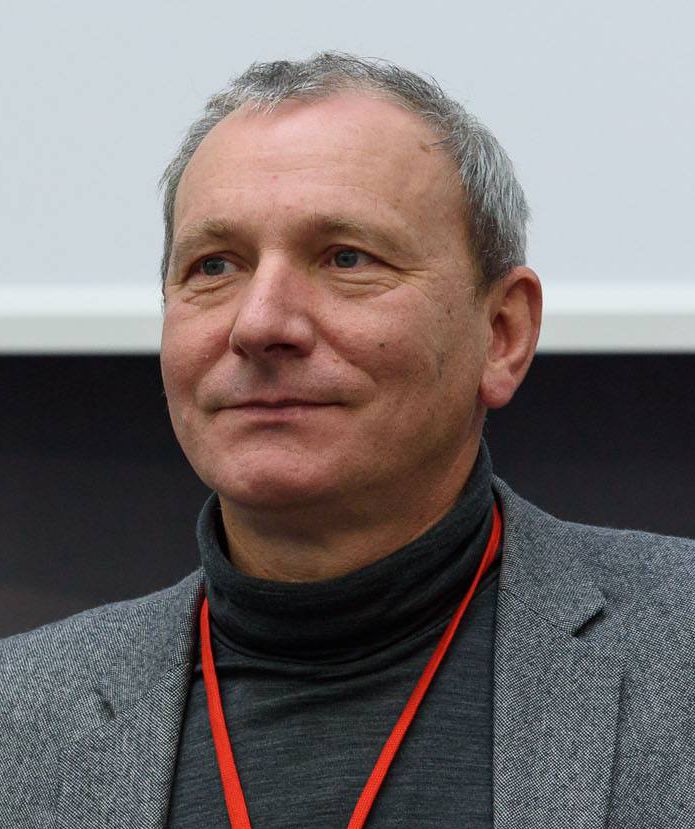
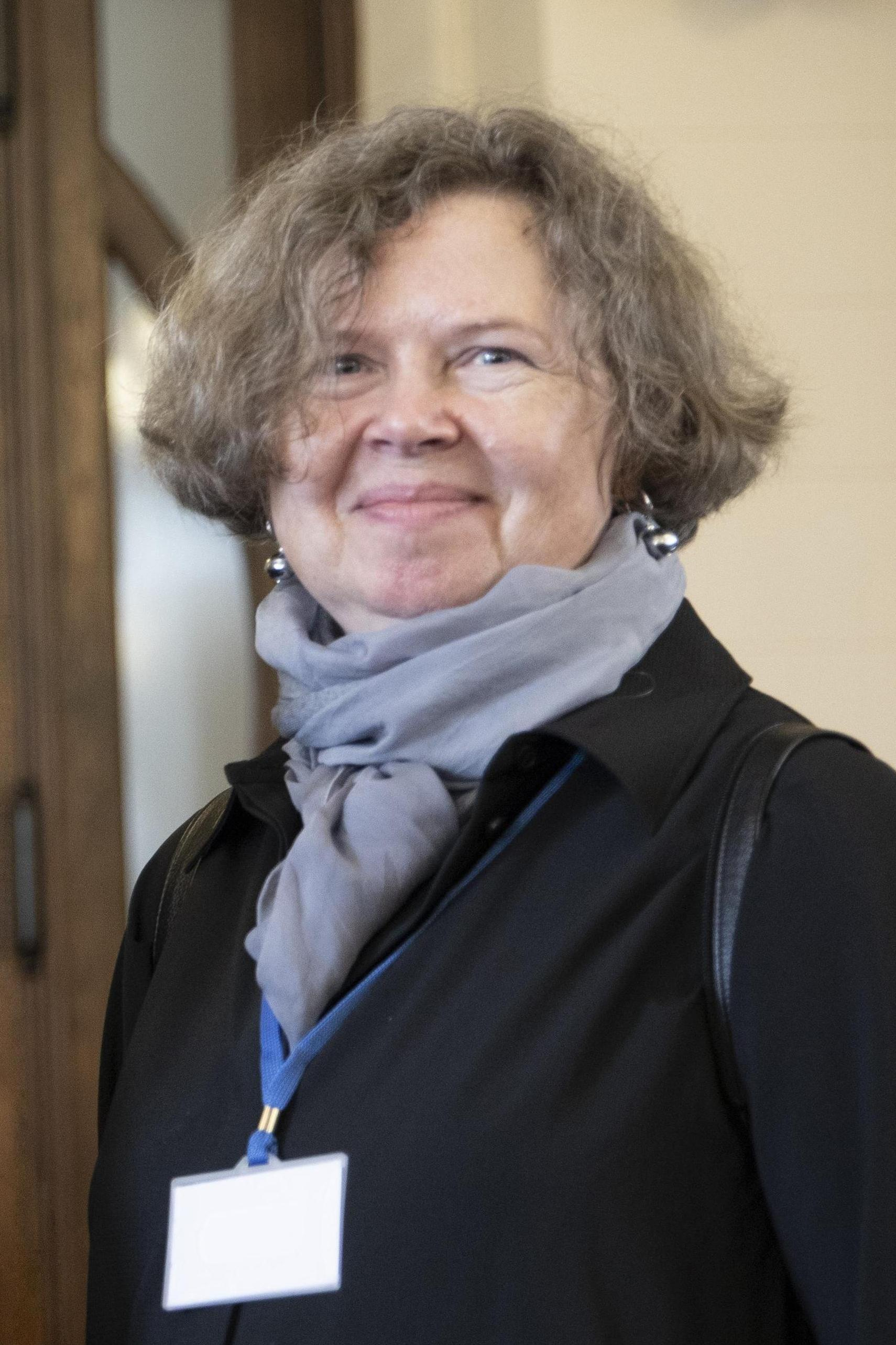
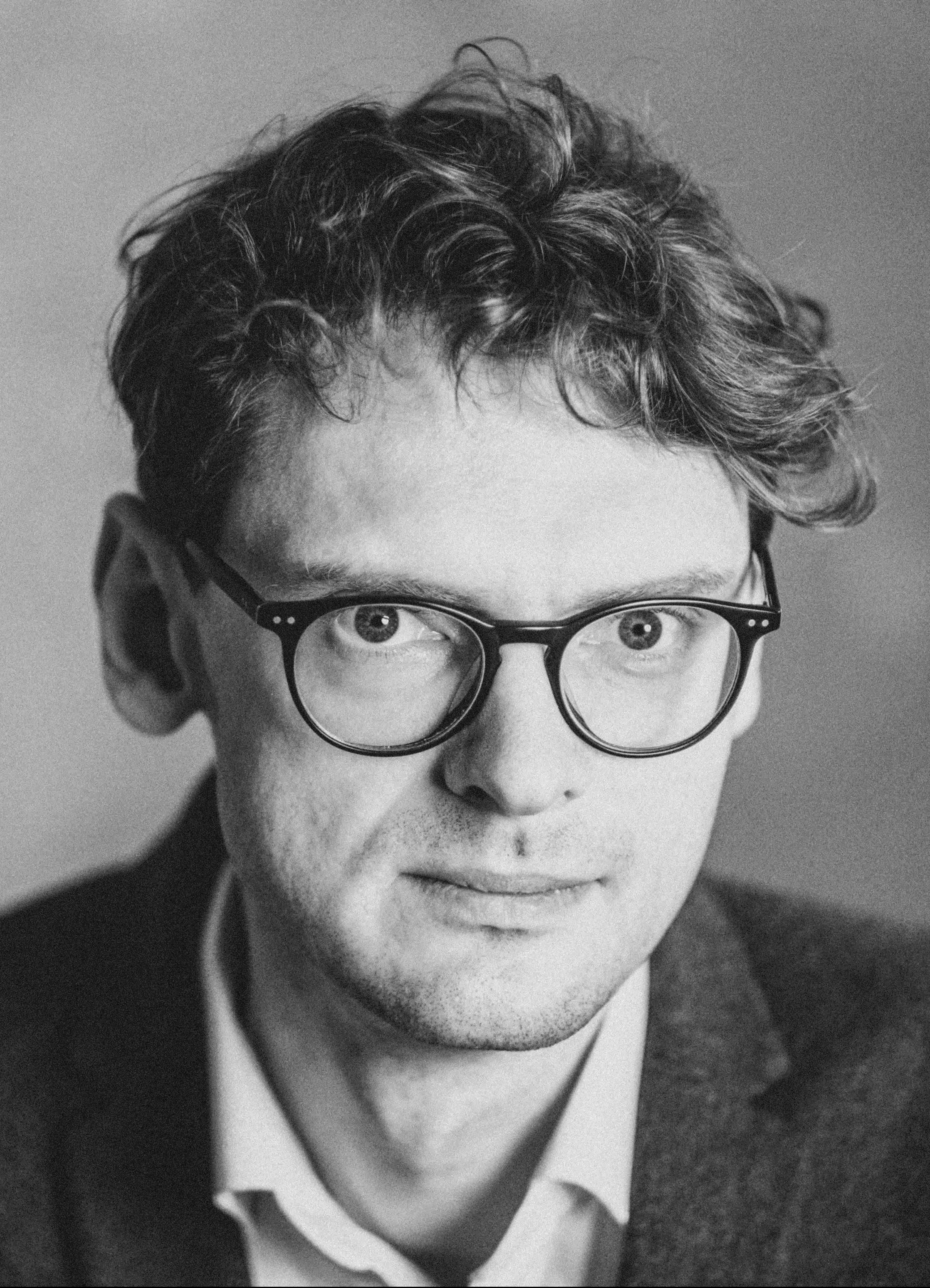
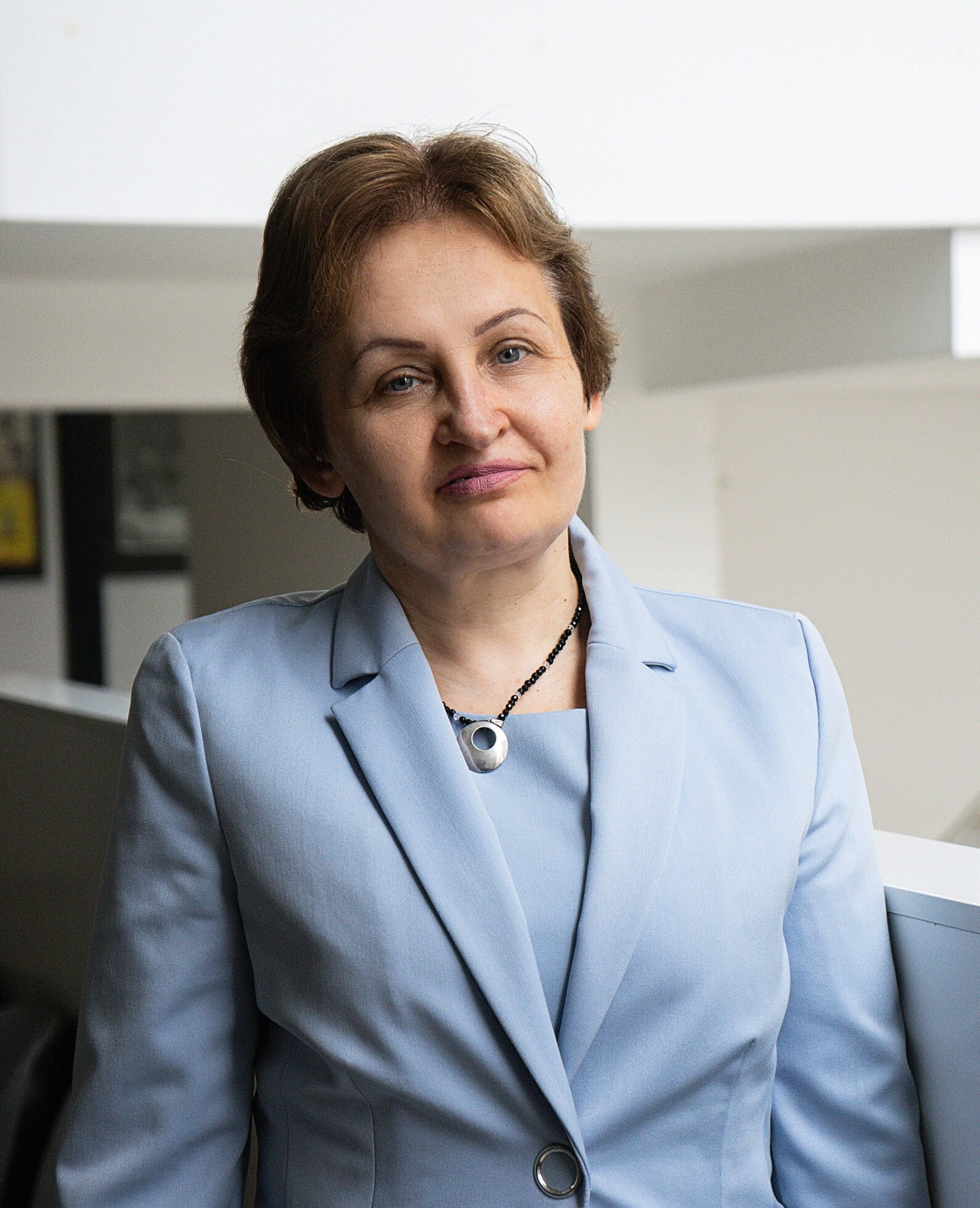
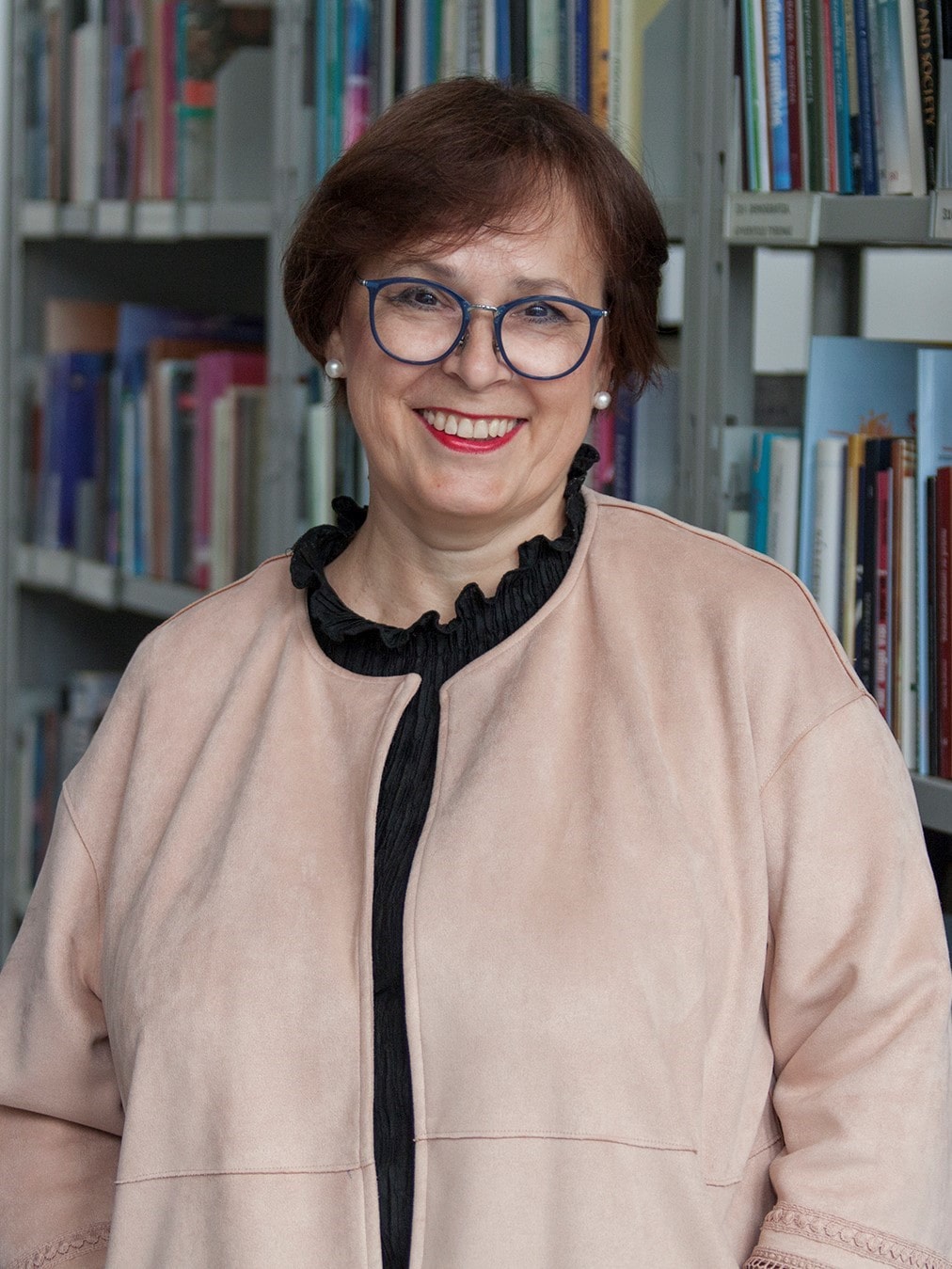
Katažyna Bogdzevič is a Professor at Mykolas Romeris University (MRU) Law School, specializing in Private International Law , European Law , Human Rights , and Environmental Law . She leads the MRU Human Rights LAB and contributes to the Environmental Management Research LAB, focusing on legal frameworks for ecosystem services, climate change mitigation, and stakeholder engagement. Key Research Themes: Integration of Private International Law with Environmental Law , analysis of legal conflicts in nature-based solutions, and name rights under international human rights conventions. Policy Engagement: Serves as advisor to Lithuania's Minister of Justice Ewelina Dobrowolska , emphasizing knowledge transfer to legislative and judicial practices. Email: roffice@mruni.eu
Prof. Dr. Vita Akstinaitė is a Professor and Vice-Rector for Research and Faculty at ISM University of Management and Economics (Lithuania). She leads the Master's program 'Global Leadership and Strategy' and the Executive Master's module on rhetoric/communication. As a Visiting Researcher at IDIAP (Switzerland) and Visiting Fellow at the University of Lausanne, she bridges academic and applied research. Her work focuses on leadership dynamics, hubris, linguistic markers, and AI applications in leadership assessment. Education: MSc Organizational Psychology (King's College London) and PhD in Business (University of Surrey), with research on linguistic markers of hubris. She co-founded The Hubris Hub and Knowledge4Hubris initiatives, fostering interdisciplinary collaboration. Notable projects include EU-funded AI leadership research (2021) and NordForsk's remote work study (2023-2026, €99k+). Research emphasizes innovative methods like AI-driven text analysis to evaluate leadership behaviors. Key areas include: executive hubris measurement, AI's role in leadership skill assessment, and ethical leadership frameworks. Her work spans international collaborations with institutions like Umeå University (Sweden), Murdoch University (Australia), and the London School of Economics. Awards include ISM Research Communicator of the Year (2023), Murdoch Teaching Excellence (2021), and EU research grants. Her publications explore topics like linguistic predictors of hubris, AI in leadership diagnostics, and pandemic leadership failures. Recent articles address data-driven executive role transformations and ethical leadership in AI contexts. Grants include €59k for AI leadership research (2021-2023) and €99k NordForsk funding. Active in conferences such as British Academy of Management and interdisciplinary leadership symposia. She advises on leadership development and serves as a module leader for global leadership courses. Labs/Teams: Co-leads The Hubris Hub research collective and directs ISM's executive communication initiatives. Current work explores AI ethics in leadership assessment and cross-industry sustainability leadership preferences.
Audrius Dubietis serves as Professor and Lead research scientist at Vilnius University's Laser Research Center (LRC), Faculty of Physics. He currently directs the Excellence Center of Advanced Light Technologies, a major national initiative funded by the Ministry of Education, Science and Sports of Lithuania with a 5.5 million Euro budget (2023-2027), and leads the FEMTOLAMA project on high repetition rate femtosecond laser-matter interactions. Dubietis specializes in ultrafast nonlinear optics, with research spanning laser-matter interaction, femtosecond filamentation, and supercontinuum generation in solid-state media. His pioneering work on table-top optical parametric chirped pulse amplifiers has advanced the field over three decades. His theoretical framework for understanding light bullets in Kerr media (Physical Review Letters 112, 193901, 2014) represents a significant contribution to nonlinear optics. Current research focuses on high repetition rate supercontinuum generation using burst-mode femtosecond lasers, with particular emphasis on comparative studies across crystalline materials to optimize performance for specific applications. Analysis of his recent publication record reveals a strategic shift toward practical applications of supercontinuum sources, with increasing attention to thermal management in high repetition rate systems and development of robust, turnkey solutions for industrial and scientific use. His work bridges fundamental nonlinear optics with practical engineering considerations. National Science Prize (2004, 2019) Vilnius University Rectors prize for the best publication in physical sciences (2014) Vilnius University Rectors prize for scientific achievements (2009, 2018) Dubietis has supervised eight doctoral students through completion, with research spanning spatiotemporal light bullets, parametric interactions for ultrashort pulse generation, and supercontinuum generation in novel materials. His research program maintains strong international collaboration, particularly with Ecole Polytechnique (France), and includes significant funding from the Lithuanian Science Council. He serves on the editorial board of the Lithuanian Journal of Physics and was Lead guest editor for the Journal of the Optical Society of America B feature issue on Supercontinuum generation (2019). As a member of the Lithuanian Academy of Sciences since 2019, Dubietis plays a pivotal role in advancing laser science in Lithuania. He teaches core courses in Laser Physics (undergraduate), Nonlinear Optics (graduate), and Modern Optics and Spectroscopy (PhD program), while maintaining active engagement with the public through popular science lectures and his Lithuanian-language book 'Nuostabusis švytėjimas: padangių fizika be formulių' (2014).
Darius Plikynas is a Senior Researcher at the Smart Technologies Research Group within the Institute of Data Science and Digital Technologies at Vilnius University . His research integrates computational intelligence methods with agent-based simulation to model cognitive and social processes. Position: Senior Researcher, Chief Researcher in the Project Address: Akademijos St. 4, room 224, Vilnius Contact: +370 5 210 9333, +370 620 95101 Email: darius.plikynas@mif.vu.lt Personal page: http://www.dariusplikynas.eu Dr. Plikynas' research spans interdisciplinary domains including neuroscience, physics methods, complexity theory, and distributed cognitive systems. He led the 2017–2019 project "Development of a metric, conceptual and simulation model of the social impact of cultural processes" under the LMT Research Group Funding Program. His recent publications (2016–2025) reflect trends in combining machine learning with social science questions (fake news analysis, propaganda detection) and agent-based modeling of cultural/social capital dynamics. Key collaborations include Leonidas Sakalauskas, Rimvydas Laužikas, and Arunas Miliauskas. Scientific supervision includes doctoral students: Andrius Budrionis (University of Tromsø, Norway) Ieva Rizgelienė (PhD topic: "Propaganda detection and classification in social media using hybrid deep learning") He also serves as an expert at Vilnius University and has contributed to projects involving: 2D financial market visualization Neural oscillation-based cognitive modeling Indoor navigation for blind individuals Cultural participation impact on social capital
Aušra Navickienė is a Professor and Head of the Department of Book Science and Publishing at Vilnius University's Faculty of Communication. She holds a doctoral degree and has served as Chair of the Communication and Information PhD Studies Committee. Her research focuses on the history of documentary communication, publishing media, manuscript heritage, and book science theory. She has authored or co-authored over 50 peer-reviewed articles, monographs, and edited volumes, with recent work emphasizing Lithuanian publishing history and international scholarly collaboration. Key projects include organizing conferences on Francysk Skaryna and leading initiatives under the National Programme for Lithuanian Studies. Navickienė has received multiple awards, including the Vilnius University Rector's Award (2011) and a Ministry of Education prize for her textbook *Book Science* (2008). She actively participates in global scholarly networks like SHARP and serves on editorial boards of international journals. Her academic leadership roles include chairing PhD committees, managing research projects, and promoting interdisciplinary studies in book and communication history. She has conducted research in Poland, Sweden, and the UK, enhancing Lithuania's international academic profile.
Vincas Grigas is an Associate Professor at the Department of Digital Cultures and Communication , Faculty of Communication , Vilnius University. His work focuses on media and information literacy, book piracy dynamics, scholarly communication, and digital culture transformations. He holds a PhD and has extensive international collaboration through ERASMUS programs and research visits to institutions like HTWK Leipzig and the University of Osijek. Research Interests: Media and Information Literacy Book Piracy Mechanisms Scholarly Publishing Practices Digital Transformation of Publishing Accessibility in Publishing Recent work analyzes digital piracy's societal impacts, challenges in small-language publishing ecosystems, and the transition from print to digital scholarly journals. He co-authored Lithuanian Scientific Periodical Publishing: From Printed Journals to Digital Ecosystems (2024) and has published in Publishing Research Quarterly , Information & Media , and LOGOS . Awards : Recognized as the Best Lithuanian Young Librarian (2011) and winner of the EU Journalist Award for Diversity (Lithuania) . Holds roles in professional bodies like the Lithuanian Library Council and Crossref Board.
Rimantas Vaicekauskas is a Professor at the Faculty of Mathematics and Informatics, Vilnius University. He has taught consistently since at least the 2016/2017 academic year, with scheduled courses through 2025/2026. His instructional responsibilities include delivering lectures on Logic Programming and leading practical exercises in Object-Oriented Programming with JAVA . His academic focus spans: Core computer science principles Programming language design and implementation Formal logic applications in computing Object-oriented software development methodologies
Eugene Sadler-Smith is a Professor of Organizational Behaviour at Surrey Business School, University of Surrey, and a Visiting Lecturer at ISM. His research focuses on hubris in leadership and intuition in decision-making. He has authored influential books such as The Intuitive Mind (2010), Hubristic Leadership (2019), and Human Resource Development: From Theory into Practice (2022). He is a Fellow of the Chartered Institute of Personnel and Development (FCIPD), Royal Society of Arts (FRSA), and Academy of Social Sciences (FAcSS). Research Interests: Hubris in Leadership: Analyzing destructive leadership behaviors and early warning signals, particularly in CEO contexts. Intuition in Decision Making: Exploring intuition’s role in managerial judgment, HR practices, and organizational learning. Linguistic Analysis: Using computational methods to identify markers of hubris and intuition in language. Key Publications: Recent works include studies on linguistic predictors of hubris, hybrid intelligence models for decision-making, and the ethical implications of hubris in climate change governance. His research has been featured in Leadership , British Journal of Management , and Journal of Business Ethics . Awards and Recognition: Sadler-Smith’s contributions to organizational behavior have earned him prestigious fellowships and media attention in outlets like BBC Radio, Sky TV, and Forbes . He leads The Hubris Project , collaborating with governments and organizations to mitigate leadership risks. Advising and Grants: While no specific grants or advisees are listed, his leadership projects and publications reflect extensive collaboration across public and private sectors. Labs/Teams: Directs 'The Hubris Project' at Surrey Business School, focusing on interdisciplinary research into leadership hazards and mitigation strategies.
Rima Bakutytė is an Associate Professor at Vilnius University Siauliai Academy's Institute of Education, holding leadership roles as Head of the Lifelong Learning Center and Chair of the Subject Pedagogy and Pedagogy study programs. She earned her PhD in Social Sciences (Education) from Siauliai Pedagogical Institute (1998), focusing on 'The Education of Humaneness of Students in Primary School.' Her research interests span adult education, comparative education, and fostering humaneness in primary education. She has led EU-funded projects such as 'Lets Continue' (STEAM education innovation), 'SOCPEDKOM' (pedagogical staff training), and 'IDEAL' (validation of non-formal competencies). Her work emphasizes teacher training, lifelong learning, and educational policy. Recent publications (2013–2022) address topics like parental expectations in preschool education, patriotic upbringing in vocational contexts, and formal/non-formal musical education. She has contributed to journals like Pedagogika and international conferences like INTED and ICERI. Bakutytė has coordinated requalification programs for teachers and authored guides on academic writing and mentorship. She has also held administrative roles such as Member of the Lifelong Learning Programmes Committee and Project Partner in EU initiatives.
Daiva Malinauskienė is a Professor and Director of the Institute of Education at Vilnius University Šiauliai Academy. She holds a doctoral degree in Social Sciences (Education) from Šiauliai University (1995–2000) and a qualification as a primary school teacher from Šiauliai Pedagogical Institute (1981–1985). Her work spans leadership in educational institutions, preschool and pre-primary education, and childhood pedagogy. Her research focuses on metaphorical thinking in children, quality preschool education, and leadership development. She has led projects on early childhood education policies, bilingual teacher training, and STEAM programs. Awards include recognition for contributions to education policy and international collaboration. Malinauskienė has authored over 50 publications, emphasizing sustainability in education, multilingualism in preschools, and teacher development. She actively participates in EU-funded initiatives and serves on editorial boards of education journals. Her leadership roles include directing the Institute of Education and spearheading national research programs on education quality and aging populations.
Andrius Gudauskas is an Associate Professor at the Centre for Journalism and Media Research within the Faculty of Communication at Vilnius University. His academic background includes a PhD in Social Sciences from the Pontifical Gregorian University (Rome, 2008), focusing on Andrei Tarkovsky's cinematography. His research interests span the philosophy of communication, film theory, media and religion, and audiovisual media aesthetics. He actively contributes to academic conferences and committees, including organizing roles in events like the Symposium on Audiovisual Media in Lithuania (2022) and the International Conference on Communication and Information Sciences in a Networked Society. His teaching includes courses on audiovisual media discourse, communication ethics, and video reportage. Key publications include monographs on film philosophy and edited volumes exploring media transitions. Notable awards include the Thalia Award for ethical journalism on human trafficking and recognition in the Pragiedruliai competition. He has conducted research collaborations in Italy, Sweden, and Latvia through Erasmus programs and international workshops. Gudauskas' work bridges cinematic theory with philosophical inquiry, particularly examining the intersection of time, transcendence, and media representation in works by filmmakers like Tarkovsky. His research also addresses ethical dimensions of communication in digital and traditional media contexts.
Mariana Sueldo is an Associate Professor in the Department of Organizational Information and Communication Research at the Faculty of Communication, Vilnius University. She holds a doctoral degree and has been residing in Lithuania since 1995. Her research focuses on strategic organizational communication, intercultural communication, and internal communication management. She has actively contributed to international conferences and publications, exploring topics such as organizational sustainability, hybrid institutions, and cross-cultural challenges in education. Sueldo teaches courses on intercultural communication and digital strategies for international audiences. Her work emphasizes mission-driven communication and the role of communication in institutional excellence. Education: Doctoral degree in Argentina (specific program details not explicitly stated) Research Interests: International Communication, Stakeholder Communication, Organizational Culture, and Cross-Cultural Education Her research publications span 20+ years, with recent contributions analyzing communication strategies in universities and public institutions. She has collaborated with institutions in Spain, Argentina, and Lithuania, reflecting her interdisciplinary and global focus. Sueldo’s pedagogical activities include leading courses for Erasmus students and postgraduates, emphasizing practical applications of communication theories. Her recent work (2023–2024) explores institutional listening mechanisms and online reputation tools, advancing frameworks for evaluating communication effectiveness. She has also co-edited works on PR agency selection criteria and hybrid organizational models. Key Awards: None explicitly mentioned, though her prolific research output reflects sustained academic recognition. Advising & Grants: Led a postdoctoral research project (2020–2022) on qualification advancements in communication studies. Collaborations include international projects with Spain and Argentina. Labs/Teams: Engaged in cross-departmental initiatives at Vilnius University, focusing on communication management and organizational communication practices.
Lorenzo Zucca is a Professor at King's College London, affiliated with the School of Law and the Department of Law. He is a distinguished legal philosopher and scholar with expertise in constitutional law, human rights, religion and state relations, and the philosophical dimensions of legal uncertainty. Recently, he visited Mykolo Romerio University (MRU) as part of an educational exchange program, delivering lectures and engaging in academic dialogue on pressing legal and philosophical issues. His educational background spans major institutions including Milan, Paris, Oxford, Florence, and New York, reflecting a deeply international academic trajectory. His research centers on the concept of uncertainty—not merely as a lack of knowledge, but as a constitutive element of legal and human experience. He explores how legal systems, institutions, and artificial intelligence navigate ambiguity, risk, and moral complexity. Legal Philosophy Constitutional Law Human Rights Religion and State AI and Law Shakespeare and Jurisprudence His recent and forthcoming publications reveal a strong interdisciplinary trend, merging law with literature, philosophy, and technology. The thematic focus across his articles shows a consistent engagement with indeterminacy, power, knowledge, and ethical responsibility in legal systems. He advocates for a 'poetic wisdom' approach in legal education, emphasizing dialogue, narrative, and sensitivity to ambiguity. Scientific contributions and recognition include: Author of The Poet of Uncertainty: Shakespeare on Law, Knowledge, and Power (2025) Leading a new international research project on uncertainty and cybersecurity Active participation in global academic discourse on democracy, AI ethics, and constitutional resilience Professor Zucca advises graduate students and collaborates internationally, with emerging partnerships discussed with MRU faculty, particularly in the areas of digital governance and democratic sustainability. He emphasizes the importance of interdisciplinary and transnational collaboration in addressing contemporary legal challenges. His teaching methodology is dialogic and Socratic, fostering intellectual engagement and critical thinking. He is associated with research initiatives at King’s College London that explore the philosophical foundations of law and the impact of emerging technologies on legal norms. His work contributes to a vibrant intellectual community that bridges legal doctrine with deeper existential and ethical questions.
Dr. Vytautas Čyras serves as an Associate Professor at Vilnius University's Faculty of Mathematics and Informatics, specifically within the Institute of Computer Science and Department of Software Engineering. With over three decades of academic experience since 1984, he bridges computer science and legal theory through groundbreaking interdisciplinary research. Education: Master's in Applied Mathematics (Computer Science) from Vilnius University (1979) Doctorate from Moscow State University's Faculty of Computational Mathematics and Cybernetics (1985) Second Master's in Law from Vilnius University and German Law Centre (2007) Dr. Čyras' research spans legal informatics, information systems, and computer science. His primary focus includes artificial intelligence and law, regulatory compliance, legal requirements, and pioneering work in legal visualization. His Structural Blanks approach to programming with recurrences demonstrates deep expertise in both foundational computer science and legal applications. His research explores how visual and multisensory approaches can transform legal reasoning and compliance in digital environments. His publication trajectory reveals an evolution from technical computer science topics toward sophisticated legal informatics applications. Recent work emphasizes multisensory legal machines, legal visualization frameworks, and the integration of AI with legal reasoning systems. He has made significant contributions to understanding how legal norms can be transformed into operational rules for virtual environments and digital governance systems. Professional Activities: Active participant and organizer of major legal informatics conferences including IRIS, Baltic DB&IS, and EGOVIS Contributor to European Framework Programme projects including VirtualLife and SKY-Scanner Longstanding member of the Lithuanian Computer Society and its Intellectics Section Dr. Čyras teaches courses including Artificial Intelligence, Knowledge Representation, and Human-Computer Interaction. His interdisciplinary background enables him to bridge theoretical legal concepts with practical applications in regulatory compliance systems and legal technology development.
Aliaksei Makhnach is an Associate Professor and Head of the Academic Department of Humanities and Arts at the European Humanities University (EHU) in Vilnius. He is also affiliated with the Jewish Studies Center. His academic focus includes Archaeology, Cultural Anthropology, and Liberal Arts, with research emphasizing European heritage, cultural identity, and historical preservation. Education: PhD in History from Belarusian State University. Research Interests: Dr. Makhnach explores the intersection of cultural heritage and historical narratives, particularly in post-Soviet contexts. His work often addresses the preservation of traditional Belarusian culture, the role of language in shaping European identity, and the socio-economic practices of rural communities during the NEP era. Key Contributions: His publications analyze European intellectual traditions, Soviet-era rural economies, and urban development in Minsk. He actively participates in international academic exchanges, such as the Erasmus+ program at the Hebrew University of Jerusalem (2022) and conferences celebrating EHU’s 30th anniversary. Labs/Teams: Leads initiatives within the Jewish Studies Center and collaborates with the Academic Department of Humanities and Arts to organize interdisciplinary events like the International Hannah Arendt Conference (2019).