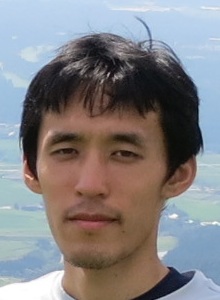
Hiroyuki Tanaka is a Professor at Waseda University's Faculty of Education and Integrated Arts and Sciences since 2009, with prior roles at Osaka Kyoiku University (1994–2009). His research focuses on education, curriculum development, classroom management, active learning, AI integration in pedagogy, and moral education innovations. He has led 15+ JSPS-funded projects, including AI-driven inquiry learning models and classroom competency frameworks. Education: Master of Arts (Osaka University) Key affiliations: Waseda University, Japan Society of Educational Technology Research interests include AI applications in education , self-development learning models , and multimedia-based teaching . Notable trends in his publications involve cross-disciplinary inquiry-based learning , generative AI tools , and ethical digital practices for K-12 education. Books and manuals like "Theory and Practice of Moral Education Lesson" (2025) and "Useful in the classroom! How to use ChatGPT for teachers" (2024) highlight his work bridging technology with traditional pedagogy. His grants from Japan Society for the Promotion of Science focus on curriculum innovation and classroom competency systems .
Takako Takano is a Professor at Waseda University 's School of Culture, Media and Society, with additional roles at Nagoya University's Research Center of Health, Physical Fitness and Sports. She holds a PhD in Outdoor Environmental & Sustainability Education (University of Edinburgh), M.Phil in Environmental Science (Cambridge), and MA in Sociology (Waseda). Her career spans roles at Rikkyo University, Tokyo Nogyo University, and Waseda University since 2004. Key Research Areas: Sustainability Education Place-Based Learning Community Development Environmental Sociology Cultural Integration in Curriculum Her 15 most recent articles (2004-2021) focus on land-based education , cross-cultural sustainability programs , and long-term impacts of outdoor experiences . These works analyze cases from Alaska, Japan, Micronesia, and global symposia, emphasizing cultural-environmental bonds , student self-awareness , and policy adaptation . Scientific Awards: Dragonfly Award (2019) The Butterfly Award (2018) Waseda University Teaching Award (2016)
Professor Yoko Tateoka is a distinguished faculty member at Waseda University's Faculty of International Research and Education, Graduate School of Japanese Applied Linguistics. With a Ph.D. in Education from Waseda University, she has established herself as a leading expert in Japanese language education, specializing in collaborative learning, learning environment design, and teacher development. Dr. Tateoka completed her doctoral program at Waseda University's Graduate School of Education. Her academic journey includes positions as an associate professor at the Inter-University Center for Japanese Studies and Tokai University International Student Education Center before joining Waseda University as a professor in 2007. Professor Tateoka's research focuses on innovative approaches to Japanese language education, particularly examining how collaborative learning environments can enhance language acquisition and cultural understanding. Her work emphasizes practical research, teacher education, and the design of learning environments that foster dialogue, interaction, and meaningful educational experiences. She has pioneered approaches to peer learning and critical reading in Japanese language instruction. Analysis of Professor Tateoka's recent publications reveals a strong focus on contemporary challenges in Japanese language education, particularly regarding teacher professional development, career sustainability, and adapting to multicultural contexts. Her work increasingly addresses how language education can support foreign talent integration into Japanese society, with emphasis on 'verbal collaboration practice' and designing learning environments for diverse classrooms. Academic Activities Contribution Award (2018) Member of The Japanese Language Education Association Member of Japanese Society of Educational Psychology Member of Japan Reading Association Professor Tateoka supervises numerous graduate students and leads collaborative research projects across Asia. Her 'dialogical teacher training' approach has created learning communities that extend beyond traditional training sessions. She directs the 'Collaborative Learning Research Society' and has developed workshop tools for Japanese language teacher professional development, focusing on creating environments where teachers can reflect on and improve their practice through peer collaboration.
Naoki Yamamoto is an Assistant Professor (non-tenure lecturer) at Waseda University's School of Fundamental Science and Engineering, Department of Computer Science and Engineering since April 2025. He also holds a part-time lecturer position at the University of Tokyo's College of Arts and Sciences (Junior Division) since October 2025. Previously, he served as a Research Associate at Waseda University from April 2022 to March 2025. He received his Doctor of Engineering from Waseda University in March 2025, following his Master of Engineering (2021) and Bachelor of Engineering (2019) from the same institution. Dr. Yamamoto's educational background is impressive, having earned his Bachelor's, Master's, and Doctoral degrees consecutively from Waseda University's School of Fundamental Science and Engineering. During his doctoral studies under Professor Kazunori Ueda, he focused on advanced topics in programming languages and graph theory. He was awarded the Outstanding Student Award (Dean's Award) from Waseda University in March 2019. His research interests center around graph-based programming language theory, with particular expertise in Graph Pattern Matching , Static Type Checking for complex data structures , and Graph Rewriting Languages . He has developed innovative approaches to handling graph structures that go beyond traditional algebraic data types like lists and trees. His work bridges theoretical computer science with practical implementation, focusing on how to safely manipulate complex graph structures in programming languages. His publication record demonstrates consistent advancement in graph-based type systems. Starting with foundational work on static type checking for graph operations (2019), he progressed to handling numeric constraints (2020), extending type expression power (2022), and developing grammar-based approaches for difference data structures (2024). His research shows a clear trajectory from theoretical foundations to practical applications, with increasing sophistication in handling complex graph structures. His work on LMNtal ShapeType represents a significant contribution to the field of graph rewriting languages. Outstanding Student Award (Dean's Award), Waseda University (2019) Dr. Yamamoto has been actively involved in teaching and research supervision, having served as a Teaching Assistant for 14 courses between 2018-2021. He currently teaches Introduction to C Programming and C Application Development at Waseda University, and Introduction to Algorithms at the University of Tokyo. He has received research funding through the Japan Society for the Promotion of Science Grants-in-Aid for Scientific Research, collaborating with Professor Kazunori Ueda on projects related to high-level languages with powerful data structures and concurrency. As a member of Ueda Laboratory at Waseda University, Dr. Yamamoto has contributed to the development of tools like Lambda Friends, a web-based interpreter for lambda calculus written in TypeScript. His research group focuses on advancing programming language theory, particularly in the areas of graph rewriting and type systems, with applications in both programming languages and modeling languages. His work demonstrates how graph rewriting languages can unify program execution and model checking functionalities while guaranteeing well-formedness of graph structures.
Douglass Scott is a Professor at Waseda University's School of Human Sciences in Tokyo, Japan, where he has made significant contributions to educational technology and intercultural communication research. His academic career spans over two decades with a particular focus on digital communication patterns, emotional expression in mobile media, and online education systems. He is closely associated with Waseda University's e-School, Japan's first complete undergraduate online degree program established in 2003. Dr. Scott earned his PhD in 1997 from the University of Michigan's School of Education with a specialization in Educational Foundations and Policy and Educational Technology. He also holds an MA in East Asian Studies (Japan) from the University of Michigan (1987) and a BS in Political Science from the University of Oregon (1985). His educational background includes a period at Waseda University's International Division during 1983-1984. His research primarily focuses on educational technology, information and communication technology, and intercultural communication, with special attention to how emotions are transmitted through digital channels. His work often compares Japanese and American communication patterns, particularly examining gender differences and cultural variations in mobile phone email usage. He has documented the development and implementation of Waseda University's pioneering e-School program across multiple publications. Analysis of his publication record reveals consistent scholarly contributions examining emotional expression in digital communication, with particular emphasis on how gender and cultural background influence emotional transmission through mobile devices. His research shows a clear trajectory from foundational work on educational telecommunications models to applied research on specific communication technologies in educational contexts. Dr. Scott maintains active research projects including comparative studies of mobile telephone use across countries and investigations into the role of social networks in cultural adjustment of exchange students. His work has been supported by Japan Society for the Promotion of Science Grants-in-Aid for Scientific Research. As an educator, he teaches across multiple programs at Waseda University including the Graduate School of Human Sciences and the School of Human Sciences Online Degree Program. His teaching portfolio encompasses Information and Communication Technology courses, Academic Writing, Intercultural Communication, and English language instruction.
Noriyuki Inoue, Ph.D. (Columbia University), is a Professor at Waseda University's Faculty of Human Sciences. With prior faculty roles at the University of San Diego (Associate Professor), University of Saint Joseph (Assistant Professor), and Teikyo Post University (Instructor), he specializes in educational psychology, action research, lesson study, and inquiry-based teaching. Ph.D. & M.A., Columbia University M.Ed., Harvard University Editor-in-Chief, Japanese Journal of Research on Educator Transformation His research explores social-emotional learning , teacher reasoning , and epistemological pluralism , with recent work on non-cognitive skills and cross-cultural educational innovation. Publications in Teaching and Teacher Education and others analyze consensus-building ('neriage') in Japanese mathematics pedagogy and teacher decision-making. Key awards include the 2014 University Professorship Award and 2010 Distinguished Faculty Award from the University of San Diego, plus a Fulbright Scholarship (1992). He leads international collaborations on lesson study and teacher development projects funded by the Japan Society for the Promotion of Science .
Shoko Komatsu is a Professor at Waseda University 's Faculty of Letters, Arts and Sciences since April 2024. She previously held academic roles at Kinjo Gakuin University from 2002 to 2024, including positions in its Department of Japanese Culture and College of Humanities. A double graduate from The University of Tokyo with a Master's (2002) and PhD (2002) in Language and Information Sciences/Humanities, her work bridges Japanese literature , detective fiction , gender studies , and cultural anthropology . Her research focuses on Edogawa Ranpo , comparative literature , and popular culture , particularly detective novels and popular literature . She has explored topics like the South Sea as an unhistorical region in detective fiction, gendered dislocation zones in Yoshiya Nobuko's works , and ninja representations in girls' manga . Her projects include JSPS-funded research on preserving modern Japanese detective fiction archives and analyzing abnormal psychology in 1920-1930s media. Though no specific scientific awards are listed, her media engagements (e.g., NHK programs on Edogawa Ranpo) highlight public outreach. She has contributed to edited volumes like Japanese Subculture and Crisis and Mysterious and Nationalism , while supervising grant-funded initiatives such as 'Fundamental Research for Preservation of Modern Japanese Detective Novels' (2023-2027) and 'Ninja and Detective: Cultural Studies' (2013-2016). Her teaching includes graduate seminars at Waseda and undergraduate courses at Kinjo Gakuin, emphasizing contemporary literature , popular novels , and text criticism .
Tetsuo Harada is a Professor at Waseda University 's Faculty of Education and Integrated Arts and Sciences. He holds a Ph.D. in Applied Linguistics from UCLA (1999), an M.A. in Phonetics from University College London (1992), and a B.A. in English Language and Literature from Waseda University (1984). His career includes visiting scholar roles at University of Washington (2024-2025) and UCLA (2013-2014). Research Interests : Second Language Acquisition, Phonetics/Phonology of Japanese and English, Content-Based Instruction (CBI), Content and Language Integrated Learning (CLIL), English Medium Instruction (EMI), Bilingual Education. Notable Contributions : Pioneering studies on age-of-acquisition effects in immersion education, VOT (Voice Onset Time) analysis in bilingual speech, and EMI pedagogical frameworks. Scientific Recognition : Recipient of multiple Japan Society for the Promotion of Science grants, Freeman Foundation fellowship, and NIH-funded collaborations. Academic Leadership : Editorial board member for Journal of Second Language Pronunciation and New Sounds symposium organizing chair.
Eijiro Sumii is a Professor at the Graduate School of Information Sciences, Tohoku University, where he has been employed since May 2014. Previously, he served as an Associate Professor at the same institution from May 2005 to March 2014, and as an Assistant Professor in the Department of Computer Science at the University of Tokyo from April 2001 to March 2003. He has also held research positions at the University of Pennsylvania under Professor Benjamin C. Pierce. Dr. Sumii's research focuses on the theoretical foundations and practical applications of programming languages and type systems. His work spans multiple domains including process calculi, partial evaluation, security foundations, and functional programming. He has made significant contributions to the field through his development of MinCaml, an educational compiler, and his Japanese translation of the seminal work "Types and Programming Languages" by Benjamin Pierce. His recent publications demonstrate a consistent focus on programming language theory, with particular emphasis on type systems for security applications, partial evaluation techniques, and functional programming paradigms. The publications reveal a trajectory moving from foundational theoretical work toward more applied security and distributed systems research. Dr. Sumii is highly active in the academic community, having served on program committees for major conferences including ICFP, POPL, PLAS, and ESOP. He has organized numerous workshops and conferences, including serving as program chair for ICFP 2016 and FLOPS 2014. He is the organizer of the PEPT (Partial Evaluation and Program Transformation) mailing list, which serves as an important forum for researchers in this specialized area. His leadership extends to membership in the Global Young Academy since May 2015 and the Young Academy of Japan since November 2010, where he served as Secretary from February 2015.
Mayuko Sakamoto is an Associate Professor at the Global Education Center of Waseda University , with a Doctor of Letters from Nagoya University (2012). She specializes in Cultural Studies , Intellectual History of the Meiji and Taisho Periods , Academic Writing , and Writing Instructor Training . Education: PhD in Japanese Language and Cultural Studies from Nagoya University's Graduate School of Languages and Cultures. Professional Memberships: Japan Society for Child Sociology, Japan Society for Children's Literature, Japan Society for Remedial Education, Kanto Engineering Education Association. Her research focuses on linguistic appropriateness in writing , visualization of language sense , and evolution of moral education materials through historical analysis of fables and textbooks. She also investigates effective feedback mechanisms in academic writing courses. Key trends in her recent work include: Quantitative analysis of writing support systems using factor analysis and data science techniques ; Comparative studies of face-to-face vs. online writing centers ; Development of indirect learning programs for logical text creation; Historical analysis of children's representations in Meiji/Taisho moral texts . She has received multiple accolades, including the Waseda University Presidential Teaching Award (2020) and the Japan Society for Remedial Education Paper Award (2019) . Her contributions extend to course design at Waseda's School of Fundamental Science and Engineering , where she teaches Written Expression and Academic Writing in Japanese .
Makiko Hoshii is a Professor at Waseda University's School of Law, specializing in German linguistics and foreign language education. She holds a PhD in German Linguistics from Dokkyo University and a Bachelor's degree from Tokyo University of Foreign Studies. Research Interests: German as a foreign language, second language acquisition, discourse analysis, interactive competence, and technology-mediated language learning. Recent Research: Focus on disfluency patterns, videoconferencing pedagogy, and longitudinal studies of Japanese learners' acquisition of German syntax. Professional Memberships: German Society for Foreign Language Research, Association for German as a Foreign Language, Japanese Association of Sociolinguistic Sciences. Key Collaborations: Nicole Schumacher (Humboldt University) on interactive language development and videoconference-based learning environments. Grant Funding: Multiple Japan Society for the Promotion of Science projects analyzing German word order, article systems, and virtual exchange programs.
Makiko Ikegami is Professor at Waseda University’s Graduate School of Japanese Applied Linguistics and a concurrent researcher at the Center for Japanese Language. Holding an M.A. in Japanese Language and Culture from Ochanomizu University, she has spent over two decades leading large-scale JSPS projects on how children—bilingual, deaf, or immigrant—acquire Japanese literacy. She is vice-editor of several practical JSL textbooks and a board member of the Intercultural Education Society and the Japanese Language Education Association. Education: Tsuda College, Faculty of Arts and Science (B.A.) Ochanomizu University, M.A. in Japanese Language and Culture Research focus: Ikegami’s work integrates longitudinal fieldwork, digital assessment tools (ATLAN and a web-based multi-layer composition analyzer), and classroom ethnography to clarify how diverse young learners develop Japanese reading/writing. Her findings feed directly into teacher-training workshops, JSL curriculum design, and policy briefs for local boards of education. Publications trend: Her recent articles cluster around three themes: (1) municipal-level support systems for foreign pupils, (2) developmental patterns of biliteracy in German-Japanese and Chinese-Japanese children, and (3) instructional strategies that fuse language scaffolding with subject-matter learning—especially mathematics. Grants & awards: She has continuously held JSPS Kaken-hi grants since 2008, totaling nine principal-investigator projects that developed assessment instruments, bilingual curricula, and nationwide teacher networks. No competitive awards or medals are explicitly listed. Teaching & supervision: At Waseda she offers a full cycle of graduate courses—introductory seminars, research methodology, practical teaching practicums, and both Master’s and Doctoral supervision—devoted to Japanese applied linguistics and plurilingual education. Labs & teams: She leads the “Collaborative Practical Research” group that links elementary schools in Sumida, Hamamatsu, Ota and overseas supplementary schools to refine JSL lesson study and open-access teaching resources.
Dr. Naoko Kinoshita is an Associate Professor at Waseda University's Center for Japanese Language , with affiliations also extending to the Global Education Center . Her career spans over two decades of research and practice in Japanese language education, phonetic acquisition, and learning advising systems. She serves on multiple academic committees including the Phonetic Science of Japan and Society of Japanese Speech Communication . Major Research Areas : Japanese language education, phonetic education, second language acquisition, language learning advising Key Sub-Fields : Japanese pronunciation pedagogy, collaborative community development, autonomous learning systems, multicultural workplace training, special mora instruction, rhythmic pattern analysis Her recent research focuses on pattern language applications for multicultural workplaces and web-based pronunciation systems like "Tsutaeru Hatsuon". The 15 most recent publications span topics from collaborative community development to phonetic learning mechanisms, with keywords showing consistent emphasis on Japanese phonology, language technology, and cross-linguistic rhythm studies. Scientific Awards : e-Teaching Award Good Practice Prize (2021) Waseda Teaching Award (2020) Waseda e-Teaching Award (2019) e-Teaching Award (2015) As lead author on multiple refereed papers, she has developed innovative phonetic learning frameworks and multilingual educational tools . Her work bridges theoretical phonetics with practical language instruction, particularly focusing on visual and kinesthetic learning methods for Japanese rhythm acquisition.
Takahiro Uchiya serves as Professor at Nagoya Institute of Technology, holding dual appointments in the Department of Information Engineering within the Faculty of Engineering and the Information Technology Center. His academic leadership spans agent-oriented knowledge engineering and intelligent informatics, with recent focus on disaster response robotics and multi-agent systems development. Uchiya completed his academic foundation at Tohoku University through a rigorous progression: Bachelor of Engineering, Faculty of Engineering (1999) Master of Information Science, Graduate School of Information Science (2001) Doctor of Information Science, Graduate School of Information Science (2004) His research centers on agent-oriented knowledge representation, problem solving, and acquisition techniques, with significant extensions into cyber society software platforms and social knowledge applications. Recent investigations reveal a pronounced shift toward practical disaster management solutions, including robot-guided evacuation systems and BLE-based positioning technologies. This trajectory demonstrates consistent innovation in translating theoretical multi-agent frameworks into real-world emergency response tools. Uchiya's scientific contributions have earned recognition including the BWCCA2024 Best Paper Award and IEEE CES West Japan Chapter Young Researcher Award. His award portfolio spans both Japanese and international venues, reflecting broad scholarly impact. Through committee roles in the Information Processing Society of Japan and Institute of Electronics, Information and Communication Engineers, Uchiya actively shapes academic discourse. His societal engagement manifests in developing voice dialogue systems for elderly care and robotics programming workshops for schoolchildren, bridging academic research with community needs through events like Science Agora 2018.
Tomohiro I is an Associate Professor in the Department of Artificial Intelligence at Kyushu Institute of Technology, Japan. He has been in this position since January 2019, following a research associate role at the same institution from 2015 to 2018. Prior to that, he held postdoctoral positions at Kyushu University and TU Dortmund, Germany. His academic foundation includes a Ph.D. in Science from Kyushu University, awarded in 2012. His research primarily centers on string algorithms , with a strong emphasis on compressed data structures , pattern matching , indexing , and algorithmic efficiency . Key interests include Lyndon factorization, Lempel-Ziv compression, palindrome matching, and reverse engineering of string data structures. He frequently collaborates with prominent researchers like Hideo Bannai and Shunsuke Inenaga, producing high-impact work in theoretical computer science. His recent publications demonstrate a consistent focus on improving algorithms for string processing in compressed formats. Work on Re-Pair , RLBWT , and SLP encoding highlights his expertise in space-efficient computation. The 2022 Best Paper Award at IWOCA for work on Lyndon subsequences underscores the quality and recognition of his contributions. His research bridges theoretical analysis with practical algorithm design. Best Paper Award, International Workshop on Combinatorial Algorithms (IWOCA) 2022 Tomohiro I advises graduate students in his laboratory, although he currently notes that the lab is not accepting new research students. His work involves significant algorithmic research, often supported by theoretical grants or institutional funding, leading to numerous publications in peer-reviewed journals and conferences. He has also presented his work in invited talks, such as at CompressedAI2025 and WCTA 2024, indicating active engagement with the research community. He leads a research laboratory at Kyushu Institute of Technology, focused on advanced string processing and compressed data structures. His team collaborates extensively on algorithm design and analysis, contributing to the broader field of combinatorial pattern matching.