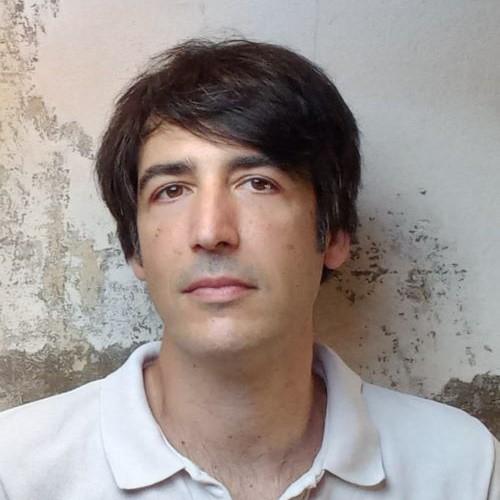
Alfonso Emilio GereviniView profile
Professor
Alfonso Emilio Gerevini is a Full Professor of Information Processing Systems at the Department of Information Engineering, University of Brescia, Italy. He has been a leading figure in Artificial Intelligence research for decades, with a focus on automated planning, knowledge representation, machine learning, and neurosymbolic AI. He has held visiting positions at the University of Rochester (USA) and the University of Freiburg (Germany), and is a Fellow of both the European Association for Artificial Intelligence (EurAI) and the Asia-Pacific Artificial Intelligence Association. His research interests span a broad spectrum of AI, including automated planning, knowledge representation and reasoning, machine learning, data mining, natural language processing, and applications in healthcare and industry. He has made seminal contributions to the development of planning systems such as LPG, PbP, and PbP2, which have achieved top rankings in international planning competitions. He has served on the editorial boards of premier journals including Artificial Intelligence and JAIR , and has organized major conferences such as ICAPS and AI*IA. The recent publications highlight a strong trend toward integrating large language models (LLMs) with classical planning, neurosymbolic reasoning, bias detection in AI, and medical applications of machine learning. His work increasingly bridges symbolic AI with deep learning, focusing on robustness, explainability, and real-world deployment. Fellow of the European Association for Artificial Intelligence (EurAI) Fellow of the Asia-Pacific Artificial Intelligence Association Best Fully-Automated Planner of IPC-3 (2002) for LPG Winner of Learning Track at IPC-6 (2008) for PbP Winner of Learning Track at IPC-7 (2011) for PbP2 Gerevini has advised numerous researchers and collaborators, many of whom are now active in AI research. His leadership in organizing international competitions and conferences has significantly shaped the AI planning community. He has been deeply involved in projects applying AI to real-world problems, including prognosis estimation in healthcare, bias detection in language models, and automated scoring systems for safety training. He leads a vibrant research group focusing on planning, learning, and reasoning. His lab is engaged in developing unified planning frameworks, neurosymbolic integration methods, and applying AI to healthcare and industrial domains. Current efforts include the Unified Planning framework in Python, GPT-based planning policies, and explainable AI for medical reports. Future work is expected to further advance hybrid neurosymbolic architectures, robust planning under uncertainty, and ethical AI systems.