Maria Amalia Barchiesi is an Associate Professor in Spanish Language and Translation (L-LIN/07) at the University of Macerata's Department of Humanistic Studies. She holds a European Doctorate in Information and Communication Theory (2004) and has been a researcher and academic in Hispanic Studies since 1993. Her research focuses on semiotics of Hispanic American literature, cultural imaginaries, translation theory, and political discourse analysis. She has authored monographs like Borges y Cortázar lo fantástico bilingüe (2009) and edited volumes such as Arti in traduzione. Semiotica Linguistica Antropologia (2023). She currently leads research in transmediality in Panhispanic poetry within a PRIN 2022 project. Education: Licentiate in Letters with Linguistics focus from Buenos Aires University (Argentina) European Doctorate in Information and Communication Theory (University of Macerata) Research Interests: Semiotics of narrative and cultural imaginaries in Hispanic America Translation studies (interlinguistic and intersemiotic) Analysis of political, advertising, and museum discourses Landscape aesthetics in literature Postmodern rhetoric in Zapatista discourses Recent Scholarly Contributions: Her 2025 works explore Borges' translation paradoxes and Cortázar's museum imagery. Recent projects analyze transmedial poetic forms and post-dictatorship testimonial theatre. She contributes to editorial boards of Heteroglossia and Lingue e Linguaggi . Awards: National Scientific Qualification as Full Professor (2020) Academic Service: Director of Spanish Language and Civilization courses Member of PhD boards in Information Theory and Humanities Chair of the Language Mediation Program admissions committee
Laura Refe is a researcher and faculty member in the Department of Italian Language, Literature, and Arts in the World (LILAIM) at the University for Foreigners of Perugia, where she has been conducting research and teaching in Philology of Italian Literature since December 2021. She holds a fixed-term research position under Italian national law and is actively involved in both research projects and academic instruction, including in Digital Humanities and Italian language teaching programs. Her academic background is distinguished by numerous prestigious fellowships and research appointments, including at Villa I Tatti (Harvard University), the Warburg Institute (University of London), Ca’ Foscari University of Venice, and the Herzog August Library in Wolfenbüttel. She earned her Abilitazione Scientifica Nazionale for Associate Professor in both Italian Philology and Italian Literature. Dr. Refe's research centers on Italian Renaissance literature, with a particular focus on Francesco Petrarca, his annotations of classical texts, and the transmission of Aristotelian philosophy in the vernacular. Her work spans textual criticism, manuscript studies, paratextual analysis, and intellectual history. She has led a national PRIN PNRR research project on 'Petrarch and the Reformation' and contributed to other major initiatives, including an ERC Starting Project on Aristotle in the Italian Vernacular. Her recent publications reveal a sustained and deep engagement with Petrarchan studies, particularly his marginalia on Cicero’s De natura deorum and the complex textual history of his Ad Posteritatem . She also investigates Renaissance translators, manuscript provenance, and the intellectual networks of humanists like Poliziano and Boccaccio. Among her notable honors are the 'Young Researchers 2006' Prize from the University of Messina and the 12th 'Marino Moretti' Prize for Philology (2015) for her critical edition of Petrarch’s Epistle to Posterity . She has advised and collaborated on research projects, though specific names of students are not listed in the provided text. She is actively involved in scholarly communities, with a strong publication record in peer-reviewed journals and edited volumes. Dr. Refe is a member of academic networks and contributes to editorial and research teams, including work on the Dizionario Biografico degli Italiani and collaborative volumes on Renaissance humanism. Her work bridges traditional philology with digital and interdisciplinary approaches.
Emiliano Morreale is a Full Professor at Sapienza University of Rome, where he teaches in the Department of Modern Literature and Culture within the Faculty of Humanities. His academic career spans multiple prestigious Italian institutions, having previously served as a Permanent Researcher at both the University of Turin (2011-2015) and Sapienza University of Rome (2015-2020) before his promotion to Professor. His teaching portfolio includes courses such as Theories and Languages of Cinema, History of Cinema, Literature and Cinema, Italian Cinema Forms and Models, and Cinematic Language. Dr. Morreale earned his undergraduate degree from the University of Pisa (1996/1997) and completed his PhD at the University of Teramo in 2009. His scholarly trajectory demonstrates a consistent focus on Italian cinematic culture, evolving from early research on individual filmmakers to broader cultural and historical analyses of Italian cinema. Morreale's research interests center on Italian cinema history with particular emphasis on popular genres, cultural history, melodrama, and nostalgia. His work explores the intersection of cinema with literature, regional Italian identities, and social history. He has made significant contributions to understanding mafia movies, neorealism, and the relationship between Italian cinema and national identity formation. His research demonstrates how cinematic representations reflect and shape cultural memory, particularly regarding southern Italy and post-war Italian society. His extensive publication record reveals a consistent focus on Italian film history, with particular attention to genre studies, director analyses, and the relationship between cinema and broader cultural phenomena. Morreale's work spans from early cinema to contemporary productions, with a distinctive focus on how Italian cinema has represented social change, regional identities, and historical memory. His recent publications increasingly examine gender representation, transnational reception, and the evolving landscape of Italian cinema in the digital age. Premio 'Maurizio Grande' miglior libro di cinema dell'anno (2006) for 'Mario Soldati. Le carriere di un libertino' Premio 'Lo straniero' (2006) for 'Mario Soldati. Le carriere di un libertino' Premio speciale 'Efebo d'oro' miglior libro di cinema dell'anno (2009) for 'L'invenzione della nostalgia' Premio 'Domenico Meccoli' miglior libro di cinema dell'anno (2015) for 'Il cinema di Claudio Gora' Premio 'Diego Fabbri' dell'Ente dello spettacolo per il miglior libro di cinema dell'anno (2015) for 'Racconti di cinema' (with Mariapaola Pierini) Morreale has secured significant research funding through national and international projects, including the PRIN-funded 'CinCit (International Circulation of Italian Cinema)' and 'F-ACTOR. Forme dell'attorialità mediale contemporanea.' He has directed numerous academic conferences focusing on Italian cinema, including events dedicated to The Leopard, Pietro Germi, neorealism, and Mario Soldati. His institutional leadership extends to serving on editorial boards for major film journals and directing publication series such as 'Quaderni della Cineteca Nazionale.' His research supervision has fostered numerous scholarly collaborations and contributed significantly to the field of Italian film studies. Beyond his university responsibilities, Morreale has held significant roles in Italy's cultural institutions, notably serving as Conservatore at the Cineteca Nazionale (2013-2016). His work bridges academic scholarship with cultural preservation, demonstrating commitment to both theoretical analysis and practical engagement with film heritage. His involvement with the 'Il cinema ritrovato' festival programming committee further illustrates his dedication to film preservation and historical contextualization.
Lucy Amelia Jane Bell is a Research Fellow at Sapienza University of Rome's Department of European, American and Intercultural Studies. Previously, she served as a Senior Lecturer in Hispanic Languages and Cultures at the University of Surrey (2013–2022). Her work bridges literary analysis, social theory, and activist practices. University of Cambridge BA (2008), MPhil (2009), PhD (2013) Her research focuses on Latin American literature and culture as instruments for social transformation. Key areas include cartonera publishing , prison reform , waste studies , and decolonial theory . She collaborates across disciplines with social anthropologists in marginalized communities. Recent publications explore intersections of necropolitics , environmental justice , and gender resistance , with a focus on Mexico and Brazil. Her 2022 book Taking Form, Making Worlds won the LASA Book Prize and pioneered trans-formal methodologies combining literary analysis with action research. Grants: AHRC, Global Challenges Research Fund, BBC Arts, Secretaría de la Cultura (Mexico) Projects: 'Cartonera Publishing' (2017–2020), 'Prisoner Publishing' (2020–2022)
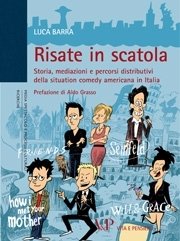
Luca Barra is Full Professor of Television and Digital Media at the Department of Arts, University of Bologna. His research focuses on media studies, particularly television history and contemporary evolution, transnational circulation of content, serialization, and comic/humorous genres. He has coordinated the Master's Degree in Information, Cultures and Media Organization since 2021 and serves as editor-in-chief of VIEW. Journal of European TV History and Culture. University of Bologna, Department of Arts Research areas: Television History, Transnational Media, Digital Transformation, Italian TV Production Barra's work examines the international mediation of ready-made TV formats, Italian streaming partnerships, and the cultural implications of digital television. His recent articles analyze dystopian narratives, sitcom reception in Italy, and the redefinition of celebrity during the pandemic. He contributes to academic discourse through editorial roles in journals like SERIES and Comunicazioni Sociali. His publications include monographs on Italian television programming, sitcoms, and co-edited volumes exploring European premium TV fiction and digital media frameworks. Barra has led research projects such as ATLas and F-ACTOR, and collaborates with international institutions including Brown University and NECS.
Elena Pollacchi is an Associate Professor at Ca' Foscari University of Venice, affiliated with the Department of Asian and North African Studies. Her academic work focuses on Chinese cinema, film festivals, and cultural diplomacy, with a particular emphasis on the intersection of cinema and political narratives. She holds the scientific sector (SSD) of 'Lingue e letterature della Cina e dell'Asia sud-orientale.' Her research explores topics such as the role of film festivals like the Venice International Film Festival in shaping cultural diplomacy, the representation of the 'China Dream,' and the works of directors like Wang Bing and Jia Zhangke. She has authored influential monographs, including Wang Bing’s Filmmaking of the China Dream , and contributed to peer-reviewed journals such as MONDO CINESE , Journal of Chinese Cinemas , and Studies in Documentary Film . Her teaching activities are centered on Asian cinema studies, language, and cultural analysis. She has curated exhibitions and participated in international film festivals, including the Venice Film Festival and Trondheim International Film Festival. Her work frequently addresses themes of cultural translation, historical memory, and the socio-political dimensions of film.
Piera Rossetto is a Researcher at the Department of Asian and North African Studies, Ca' Foscari University of Venice. Her work bridges Jewish studies, migration, memory, and creative methodologies, with a focus on postcolonial North African and Middle Eastern Jewish communities, especially from Libya. She leads major research projects and teaches Hebrew language and social research methods. PhD in Languages and Civilizations of Asia and the Mediterranean Africa, Ca' Foscari University and EHESS Toulouse (2015) MA in South and Western Asia: Languages, Cultures, and Institutions, Ca' Foscari University (2011) Her research explores memory, identity, and belonging through narrative cartography and co-creative methods. She investigates Jewish Mediterranean migrations, particularly of Libyan Jews, using oral histories, literary sources, and digital tools. Her work emphasizes marginalized voices and interdisciplinary, artistic approaches to research. The recent articles highlight a strong trend in narrative and creative cartography, Jewish postcolonial memory, and interdisciplinary research-creation. Themes include the poetics of identity, mapping invisible migrations, and digital documentation of diasporic memories. Her publications span monographs, journal articles, book chapters, and multimedia outputs. Scientific awards and fellowships include: Rita Levi Montalcini Program for Young Researchers (Principal Investigator) FWF Hertha Firnberg Postdoctoral Fellowship Fondazione Rothschild Doctoral Fellowship Fondazione CDEC Research Fellow She has secured competitive grants, including the FWF-funded "Europe's (In)Visible Jewish Migrants" and the ongoing Rita Levi Montalcini project on gender, aging, and migration. She has advised collaborative, interdisciplinary research teams and supervised creative digital projects. Her work often involves partnerships across Europe and digital humanities platforms. She leads the research project "Genere, invecchiamento e migrazioni: memorie e mascolinità ebraiche del Nord Africa e del Medio Oriente" and previously led an FWF-funded project at the University of Graz. She also contributes to digital initiatives like the World Jewish Congress’s MENA Jewish legacy project and co-developed interactive visualizations and audio-documentaries.
Li Li is a Professor of Software Engineering at Beihang University , China. Previously, he served as an ARC DECRA Fellow and Senior Lecturer at Monash University , leading the SMart software Analysis and Trustworthy computing (SMAT) research lab at the Department of Software Systems and Cybersecurity. His academic journey includes a Ph.D. in Software Engineering from the University of Luxembourg (2016), supervised by IEEE Fellow Prof. Yves Le Traon and Dr. Jacques Klein. Research Interests Li's research focuses on Mobile Software Engineering (Mobile Security, Quality Assurance) and Intelligent Software Engineering (SE4AI, AI4SE). He applies static code analysis , dynamic program testing , and machine/deep learning to enhance software security and reliability. Key areas include Android API evolution, automated patch validation, and multi-language code analysis frameworks like Scalpel for Python. Scientific Recognition ARC DECRA Fellowship Rising SE Research Star Top-5 Most Impactful Early Career SE Researchers (2020, 2017) 5 Best/Distinguished Paper Awards across PLDI, WWW, ASE, MSR, and SANER Academic Contributions He has contributed to foundational Android analysis tools (e.g., AndroZoo++, DroidRA) and developed scalable systems for distributed program analysis (Seads). His work appears in top venues like ICSE, ESEC/FSE, ASE, ISSTA, POPL, and TSE.
Paolo Trunfio is a Professor of Computer Engineering at the University of Calabria, Italy, and co-founder of DtoK Lab S.r.l., an academic spin-off focused on data analysis and distributed systems. He holds a Ph.D. and is affiliated with the DIMES Department, specializing in big data, cloud computing, and high-performance computing (HPC). His research emphasizes scalable data analysis frameworks, edge-cloud continuum solutions, and machine learning applications for social media and disaster monitoring. Trunfio serves as an Associate Editor for ACM Computing Surveys and Journal of Big Data , and is on the editorial boards of several journals including Future Generation Computer Systems . He has authored four influential books, including Programming Big Data Applications (2024) and Data Analysis in the Cloud (2015). His work spans distributed systems, IoT-based smart objects, and exascale computing. Notable projects include the EU-funded eFlows4HPC and ASPIDE initiatives, which focus on HPC workflows and exascale programming models. Trunfio’s publications (over 200 papers) address topics like social media analytics, energy-efficient P2P networks, and parallel data mining. He leads research in urgent computing for disaster response, edge-cloud integration for urban mobility, and AI-driven data analysis. His contributions to cloud frameworks (e.g., JS4Cloud, ParSoDA) and HPC libraries (e.g., DCEx) highlight his expertise in bridging theory and practice in distributed computing ecosystems.
Marco Lazzari is a Full Professor at the University of Bergamo in the Department of Human and Social Sciences. His research focuses on educational technology integration, digital storytelling applications in teaching, and inclusive education methodologies. Previously he served as Department Head (2018-2024) and coordinates doctoral studies in Human Sciences and Welfare Innovation. Education Background: Ph.D. in Computer Science M.S. in Information Sciences B.S. in Information Sciences Research Interests: Digital storytelling for inclusive pedagogy Educational robotics applications Technology-mediated distance learning Teacher training in digital literacy Social media's educational impact His recent publications demonstrate strong focus on educational technology in post-pandemic contexts, inclusive robotics programs, and digital storytelling frameworks. Research trends include addressing educational disparities through technology, evaluating pandemic learning impacts, and developing sustainable digital pedagogies across educational levels. Scientific Awards: No major awards listed in provided materials As Director of the Educational Technologies Center (2005-2018), he established technology-enhanced learning initiatives. Currently supervises doctoral students investigating educational technology efficacy, digital inclusion, and robot-assisted learning. Research collaborations span computer science, pedagogy, and special education disciplines. Laboratory Focus: Educational robotics implementation Digital storytelling frameworks Teacher technology training programs Accessibility in educational technology
Chiara Bodei is an Associate Professor at the Department of Computer Science, University of Pisa. She specializes in cybersecurity, formal methods, and programming languages. Her teaching responsibilities include courses such as 'Programming Fundamentals with Laboratory' and 'Security Methods and Verification' at both undergraduate and graduate levels. She has contributed to research in automotive cybersecurity, IoT security, and formal analysis of software systems. Her work emphasizes secure communication protocols, privacy policies in automotive data, and context-aware security mechanisms. She collaborates with industry and academia on projects related to software-defined vehicles and IoT security. Her research has been published in top-tier conferences and journals, focusing on practical and theoretical advancements in computer security and formal methods. Research Interests: Cybersecurity, Formal Methods, Automotive Systems Security, IoT Security, Programming Languages, Context-Aware Systems. She has co-authored numerous papers on topics such as vehicular communication security, secure automotive protocols, and privacy in IoT systems. Teaching: Bodei has taught courses like 'Fondamenti di Programmazione' (undergraduate), 'Security Methods and Verification' (graduate), and 'Language-Based Technology for Security' (master’s level) across multiple academic years. She emphasizes practical programming skills and theoretical foundations in her courses. Labs/Teams: Her work is supported by the Department of Computer Science labs at the University of Pisa, focusing on applied research in cybersecurity and formal systems.
Michele Guerra is a Full Professor of Cinema, Photography and Television (L-ART/06) at the University of Parma , where he has held progressively senior roles since 2011. He has directed research projects funded by MIUR, participated in international collaborations at Stanford University and Sorbonne Nouvelle, and currently oversees the film studies series "Pandora" (Diabasis). His affiliations include editorial board memberships for "Cinergie", "La Valle dell'Eden", and "Arabeschi". Principal Investigator, PRIN Project (2019-present): "A Private History of Italian Film Criticism" Principal Investigator, MIUR SIR Project (2015-2019): Film criticism in Italy 1940s-1950s Co-director, Cognitive Science and Neuroscience for the Humanities project at CASBS (2011) Guerra's research spans three major areas: Cognitive Film Studies (investigating neural mechanisms in film reception), Cinema and Visual Culture (analyzing sensory composition in media), and Historiography of Italian Film Criticism . His recent publications demonstrate interdisciplinary approaches merging neuroscience with film analysis, particularly focusing on cross-modal correspondences and emotional engagement. Scientific recognition includes: Giuseppe Medici Prize (2009) for rural class representation in Fascist-era Italian cinema Limina Prize (2016) for co-authored work "Lo schermo empatico. Cinema e neuroscienze" His academic leadership has included Vice-Director of DUSIC Department and Director of the Communication and Contemporary Media for Creative Industries degree program, though he resigned these roles in 2017 upon becoming Parma's Councilor for Culture.
Mara Bonelli is an Associate Professor in the Department of Medicine and Surgery at the University of Parma, Italy, teaching General Pathology across Nursing, Medicine and Surgery, and Speech and Language Therapy programs since 2013/2014 with appointments extending to 2025/2026. Education: Graduated with honors in Biological Sciences (1995), University of Parma PhD in Biology and Molecular Pathology (1999), University of Parma Research Focus: Her work centers on translational oncology , developing molecular-targeted and immunotherapeutic strategies for malignant pleural mesothelioma, breast, renal, and lung carcinomas using in vitro cell models and in vivo animal studies to overcome treatment resistance through technological innovation. Publication Trends: 2024 research demonstrates concentrated efforts in NSCLC resistance mechanisms via metabolic targeting (glucose starvation, glucosylceramide synthase) and immunomodulation of antiangiogenic drugs in renal carcinoma to enhance anti-PD-1 efficacy, reflecting interdisciplinary approaches in oncological therapeutics. Collaborations: Actively partners with Italian and international research groups in translational oncology initiatives.
Anna Maria Ambrosini Massari is a Full Professor (Professoressa Ordinaria) at the University of Urbino Carlo Bo, specializing in Modern Art History within the Department of Communication Sciences, Humanistic and International Studies (DISCUI). Her academic focus centers on artistic languages and the historical development of art styles. Her research interests span across Art History , Modern Art , and Artistic Languages , with particular emphasis on the evolution of visual styles throughout modern history. Her scholarly work examines how artistic expression has transformed across different historical periods and cultural contexts. Professor Ambrosini Massari's teaching portfolio includes comprehensive courses on History and Styles of Modern Art (12 credits), Artistic Languages (6-8 credits across multiple programs), and specialized Workshops on Recognizing Styles . Her courses serve students in both Art History and Digital Communication for Culture programs, demonstrating interdisciplinary applications of art historical knowledge. She maintains active academic engagement through her email contact anna.ambrosinimassari@uniurb.it and continues to contribute to the university's educational mission with upcoming courses scheduled through the 2025/2026 academic year.
Francesca Maria Ceragioli is an Associate Professor in the Department of Mathematical Sciences at Politecnico di Torino, specializing in Mathematical Analysis (MATH-03/A). She serves as a member of both the College of Mathematical Engineering and the College of Environmental and Land Engineering. Her research focuses on discontinuous ordinary differential equations, with specific lines of inquiry in the analysis and control of discontinuous differential equations and their application to social system models. Her expertise is recognized through classification under ERC sectors PE1_19 (Control theory and optimization) and PE1_10 (ODE and dynamical systems). Dr. Ceragioli has been consistently teaching Mathematics of Systems and Control for the Mathematical Engineering Master's program since 2019/2020 through the upcoming 2025/26 academic year, in addition to foundational courses like Mathematical Analysis I and Mathematics Laboratory for Aerospace and Computer Engineering programs. Her publications reveal a dual focus on theoretical research in control theory and practical mathematics education. The 2025 publications show particular emphasis on translating complex mathematical concepts into accessible educational materials through hands-on projects, while maintaining rigorous theoretical work in opinion dynamics and network systems. Mentoring Polito Project (M2P) badge issued June 11, 2024 She is currently participating in the MO.MO. research project (2025-2026) titled 'Taking time to enjoy ourselves together' as a member of the research group, demonstrating ongoing active research engagement.