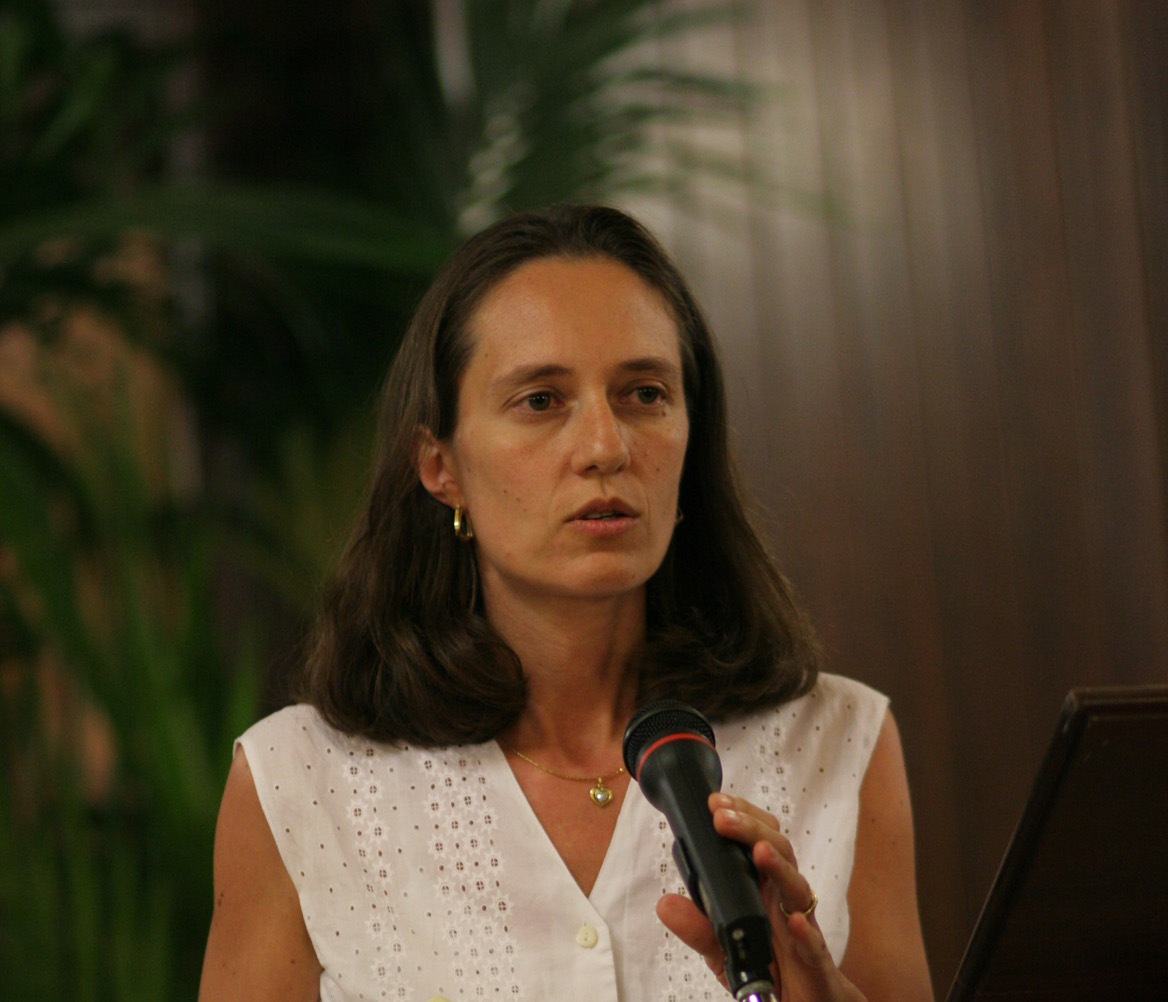
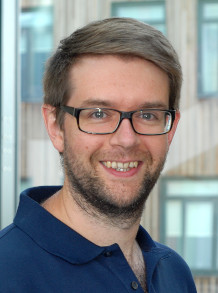
Alastair F. Donaldson is a Professor in the Department of Computing at Imperial College London, leading the Multicore Programming Group. His research focuses on programming languages, compilers, and automated testing of software systems. He previously directed GraphicsFuzz, an Imperial College spinout acquired by Google in 2018. Education: PhD in Computer Science (University of Glasgow), Postdoctoral Research Fellow (University of Oxford), Visiting Researcher (Microsoft Research Redmond) His research interests include: Compiler Design and Verification Randomized Testing Techniques Multicore and GPU Programming Formal Methods for Software Reliability Recent publications emphasize compiler fuzzing, metamorphic testing, and verification of GPU systems. He actively contributes to the development of testing tools for programming languages and hardware interfaces. Alastair holds leadership roles in academic conferences, including Publicity Co-Chair for POPL 2024 and committee roles in ASE, ECOOP, PLDI, and SPLASH. He maintains a personal website at http://www.doc.ic.ac.uk/~afd and has been registered on conf.researchr.org since 2015.
Zaharina Nikolova Petrova-Prodanova serves as Assistant Professor at New Bulgarian University's Department of Cinema, Advertising and Show Business, teaching typography, calligraphy, and graphic design courses since 2013. Holding a PhD in Logo Design from the National Academy of Arts (2014), she bridges academic theory with professional practice in visual communication. Education: 1997: BA in Arranging, Sofia University of Applied Arts 2002: BA in Book and Printed Graphics, National Academy of Arts 2004: MA in Book and Printed Graphics, National Academy of Arts 2014: PhD in Logo Design - Development and Contemporary Trends, National Academy of Arts Her research centers on logo design's historical evolution and theoretical foundations, with deep expertise in Bulgarian design heritage. She investigates the unity of aesthetics and semantics in visual communication, exploring how cultural context shapes typographic and calligraphic expression. Her work emphasizes practical applications in brand identity development and contemporary design challenges. Analysis of her 12 publications (2009-2011) reveals consistent focus on logo design's philosophical dimensions, historical trajectory in Bulgaria, and relationship to business strategy. Key themes include the role of cultural context in visual communication, the tension between minimalism and complexity, and the evolution of design thinking from socialist-era Bulgaria to contemporary practice. Scientific Awards: First place in Kazanlak Tourism Logo and Slogan Competition (2011) Third place in Lifelong Learning Logo Competition by Ministry of Labor and Social Policy (2008) As an educator, Prodanova mentors students through NBU courses and annual exhibitions for May 24 celebrations, showcasing student work in calligraphy and typography. She founded Darita Creative Studio (2010), directing design education programs for children and adults while co-founding Darita Graphic Design Studio (2006) where she serves as art director on corporate identity and branding projects. Her Darita Creative Studio functions as an educational hub hosting annual exhibitions of student work in graphic design, painting, and sculpture, while Darita Graphic Design Studio executes professional projects including logo systems, corporate identities, and illustration work for diverse clients.
Gina Burney serves as a Lecturer in Illustration & Graphic Design for the Integrated Foundation Year (IFY) program at Falmouth University, a position she assumed in June 2022 after relocating to Cornwall from Manchester where she accumulated 16 years of experience teaching Graphic Communication, Contextual Studies, and Art Foundation courses. Her academic credentials include: MA 'Maker Teacher' from Manchester Metropolitan University (2011) Postgraduate Certificate of Education in Art & Design from Manchester Metropolitan University (2005) BA (Hons) Graphic Arts from Liverpool John Moores University (2002) Diploma Foundation Studies in Art & Design from Manchester Metropolitan University (1999) Burney's artistic practice explores the intersection of ephemeral graphic artifacts and enduring visual language, particularly examining how graphic iconography shapes social and political discourse. Her recent Cornish-based work manifests in surrealist collaged 'dreamscapes' that investigate subconscious mark-making, layered abstraction, memory formation, perceptual frameworks, and collective human existence within distinctive landscapes. She maintains professional affiliations with the Institute for Learning, General Teaching Council, and Sixth Form Colleges Association, reflecting her commitment to art education pedagogy.
Dora Giammarresi is an Associate Professor of Computer Science in the Department of Mathematics at the University of Rome Tor Vergata. Her academic profile shows extensive involvement in theoretical computer science research and teaching activities across multiple degree programs. Educational Affiliations: Degree Course in Mathematics - Programming and Computer Science Lab 1 Degree Course in Media Sciences and Technologies - Structured Programming Lab Master's Degree in Pure and Applied Mathematics - LaTeX Lab Programming in Java and Graphics Management courses Research Interests: Professor Giammarresi's primary research focuses on formal languages, automata theory, and combinatorics on words. Her work bridges theoretical computer science with mathematical structures, particularly in the domain of picture languages and coding theory. She has made significant contributions to understanding the structural properties of picture codes and deciphering mechanisms in two-dimensional language systems. Publication Trends: Her recent publications demonstrate a consistent focus on theoretical aspects of picture languages, with particular attention to prefix codes and deciphering properties. The research shows progression from foundational studies of picture language structures to more complex investigations of coding properties and applications in two-dimensional formal language theory. Editorial and Conference Contributions: Associate Editor for Journal of Automata, Languages and Combinatorics Program Committee member for numerous international conferences including DCFS 2025, ICTCS 2024, DLT 2024, and several past conferences dating back to 2008 Teaching Activities: Professor Giammarresi teaches across multiple programs, with courses ranging from foundational programming (C language, Java) to specialized topics like LaTeX. Her teaching spans both undergraduate and graduate levels, serving students in Mathematics, Media Sciences, and Technologies programs. She maintains active office hours via Teams and provides detailed course materials for students.
Dr. Ana Cocho-Bermejo serves as a Senior Lecturer in the School of Engineering and the Built Environment within the Faculty of Science and Engineering at Anglia Ruskin University (ARU), specializing in Artificial Intelligence and Machine Learning applications for architectural and urban design. Previously, she held academic leadership roles at UIC Barcelona including Lecturer, Researcher, Academic Manager, and Vice-Dean for Student Affairs, while co-directing the Masters in Artificial Intelligence for Architectural Design at Barcelona Tech. Her academic credentials demonstrate exceptional interdisciplinary depth: PhD in Building Technology in Architecture, Construction and Urban Planning (Barcelona Tech, 2012) MPhil in Artificial Intelligence (Barcelona Tech, 2022) MRes in Adaptive Architecture and Computation (The Bartlett, 2011) MArch Design as Research (Architectural Association of London, 2006) MPhil Representation in Architecture (ETSA Coruna, 2006) MArch+ARB Architecture (ETSA Coruna, 2004) Her research pioneers hybrid design methodologies integrating evolutionary computation and machine learning with architectural practice. She investigates complex systems and distributed intelligence to develop computational frameworks for optimizing building envelopes, urban morphologies, and generative design processes. Her work bridges theoretical AI with practical architectural challenges, emphasizing sustainable material systems and responsive environments through supervised learning and behavioral modeling. Publication analysis reveals consistent innovation in applying evolutionary algorithms to architectural problems, evolving from foundational work on intelligent membranes (2014-2015) toward sophisticated behavioral studies of adaptive materials (2025) and urban tissue optimization. The interdisciplinary trajectory spans computational geometry, biomimetics, and complex systems theory, demonstrating increasing sophistication in merging AI techniques with architectural design constraints. She actively contributes to academic discourse through editorial roles for the International Journal of Architectural Computing and Sustainability, while maintaining memberships in leading professional bodies including ACADIA, ECAADE, and the Architects Registration Board (UK/Spain). Her scholarly development was supported by prestigious scholarships from Foundation Santander Universia and the Pedro Barrie de la Mza/British Council. As a research supervisor, she mentors students in computational design, data analytics, and AI-driven design methodologies. Her teaching portfolio includes Design Studio A and Technology A for Architecture programs, plus Sustainable Design Studio 1 for Architectural Technology. Fluent in four languages, she maintains strong European academic networks through conference participation and collaborative research.
Markus Weninger is a Senior Lecturer in Computer Science at the Institute for System Software at Johannes Kepler University Linz, Austria. Born in 1992, he completed his Bachelor's and Master's degrees in Computer Science with a focus on Software Engineering at JKU Linz. His dissertation on trace-based heap memory anomaly analysis was awarded the Award of Excellence from the Austrian Federal Ministry of Education, Science and Research in 2021. His research interests span Software Visualization, Software Understanding, Software Engineering Education, Performance Monitoring, and Performance Analysis. He has developed educational tools like JavaWiz, a trace-based graphical debugger for software development education, and has created numerous workshop formats for students of all ages to make computer science accessible and engaging. His publication record shows a strong focus on memory monitoring, visualization techniques, and software engineering education. His most recent work centers on trace-based debugging tools for education, Kotlin multiplatform performance monitoring, and SaaS observability. He has received multiple awards including Best Paper Awards at VISSOFT 2020 and STAG 2020, the JKU Young Researchers' Award, and the Kepler Award for Excellence in Teaching. Award of Excellence from Austrian Federal Ministry Best Paper Award for Memory Cities visualization Best Paper Award for Memory Leak Analysis visualization JKU Young Researchers' Award Kepler Award for Excellence in Teaching Weninger has supervised 36 bachelor theses, 14 master theses, and 12 software engineering projects, demonstrating his strong commitment to student mentorship. He has also conducted over 90 workshops for school children, with a particular focus on breaking stereotypes about computer science being only for boys, especially targeting elementary and middle school students.
Maureen Tartaglione is a Lecturer in the School of Journalism and Graphic Communication at Florida A&M University (FAMU), joining in August 2024 after a 30-year career in public relations, consulting, and academia. She teaches Strategic Communications (MMC 3603), Public Relations Agency (PUR 4800), and Language Skills for Media Professionals (JOU 1040), leveraging extensive industry experience from roles at Cox Communications and the University of Florida. Her educational background includes: B.S. in Public Relations (With Highest Honors), University of Florida (1994) M.A. in Mass Communication, University of Florida (1997) Ph.D. in Political Science (incomplete), University of Florida (1997-2001) Tartaglione's expertise centers on public relations and political communication, with deep specialization in government affairs, corporate social responsibility, and public policy advocacy. Her work bridges academic theory and practical applications, particularly in political campaigns, community outreach, and regulatory compliance, informed by co-authored publications on Florida politics. Her accolades include: Fierce Award for Women in Business (2017) Association of Cable Communicators Beacon Award (2014) Florida Cable and Telecommunication Association’s Don E. Reed Award (2015) University of Florida Teaching Award She has served as a speechwriter and community relations liaison for the University of Florida President’s Office, managed a $2.5 million community outreach program at Cox Communications, and led her consultancy advising on redistricting and non-profit fundraising. Tartaglione also moderates political forums and serves on non-profit boards, integrating civic engagement with her academic role.
Johannes Binotto is Professor of Film and Media Theory at the Lucerne School of Design, Film, and Art (part of Lucerne University of Applied Sciences and Arts) and concurrently teaches at the University of Zurich's English Department. Born in 1977, he completed his academic training at the University of Zurich where he earned his doctorate with the 2013 publication 'TAT/ORT. The Uncanny and Its Space in Culture' examining spatial phenomena across visual arts, literature, and film. His educational background includes: Undergraduate and graduate studies at the University of Zurich Doctorate from the University of Zurich (2013) Visiting professorship at University of Basel's Department of Media Studies Binotto's research explores the intersections of film theory, media technology, and psychoanalysis with pioneering work positioning video essays as legitimate academic research methodology. His investigations into how cinematic techniques shape perception have established him as a leading figure in videographic scholarship. He examines how film technology functions as both subject and tool of inquiry, with particular focus on embodied cognition and sensory experience in cinematic contexts. His extensive 2024 output features 24 video essays and multiple publications demonstrating his commitment to advancing videographic research as scholarly practice. These works collectively explore perception, embodiment, and cinematic techniques through creative experimentation that challenges traditional academic boundaries. His major recognitions include: 2024 Swiss Competition Videoex First Prize for 'Gestures of Thought: Scratch' 2023 Adelio Ferrero Cinema e Critica Festival First Prize for 'Practices of Viewing: Dubbing' 2022 Best Video Essays of 2021 recognition for Most Mentions 2018 Karsten Witte Prize for best film studies essay 2011 University of Zurich Annual Prize for his dissertation Binotto coordinates PhD programs at the University of Zurich while leading two major research initiatives: 'Means of Disfigurement: Toward a Poetics of Film Technology' (postdoctoral thesis) and 'Video Essay Research' (videoessayresearch.org). His work bridges theoretical film studies with practical filmmaking, establishing video essays as valid academic research tools that transform how film scholars analyze and communicate their findings. As both an experimental filmmaker and academic, he demonstrates how creative practice can generate theoretical insights through embodied research methods. He maintains active leadership in the field through conference presentations worldwide, including recent appearances at the University of Massachusetts Amherst, Schloss Herrenhausen in Hannover, and Paxmontana, where he explores videographic methodology's potential to revolutionize film scholarship and pedagogy.
Fabrice Depaulis is a Researcher in Data Engineering at ISAE-ENSMA, Poitiers, France, affiliated with Laboratory LIAS (a joint research unit with University of Poitiers). His work bridges academic research and practical applications in technical design systems. His primary research domains include Human-Computer Interaction, Programming by Demonstration, Software Engineering, and CAD Systems. He specializes in developing end-user programming techniques where systems learn from user demonstrations, creating interactive environments for structured dialog applications and technical design workflows. His H4 software architecture model demonstrates a focus on adaptable technical design tools with documented real-world implementations. Publications from 1999-2006 reveal consistent innovation in making programming accessible to non-experts through demonstration-based interfaces. Key themes include semantic interpretation of user actions, error correction in example-based systems, and integrating end-user class definition into CAD environments. This body of work significantly contributes to End-User Development methodologies within Human-Computer Interaction. Depaulis operates within the Data Engineering Team at Laboratory LIAS, which encompasses broader research groups in Automatic Control and Real-Time Systems. The lab's interdisciplinary structure supports his work on interactive technical design applications through collaborations across engineering and computer science domains.
Dr. Agnieszka Wasiak serves as Professor and Head of Composition Fundamentals Studio No. 3 at the Institute of New Media and Composition within the Faculty of Fine Arts at The Władysław Strzemiński Academy of Fine Arts in Łódź, Poland. Her role continues a pedagogical tradition established in 1958 and shaped by Professors Tomasz Jaśkiewicz, Bogumił Łukaszewski, and Henryk Hoffman. Her research and teaching focus on foundational visual language principles derived from psycho-physiology of vision. The curriculum she leads systematically covers plastic composition elements including color theory, rhythm dynamics, and spatial organization across two-dimensional, three-dimensional, and spacetime dimensions. This program emphasizes workshop skill development and individual artistic personality cultivation while avoiding aesthetic prescriptions, preparing students for specialized studios in graphic arts, painting, sculpture, and textile design. Professor Wasiak's educational philosophy centers on creative partnership and responsibility, utilizing individual and group critiques to stimulate independent exploration. She has organized major student exhibitions at the Kobro Gallery in 1996, 2002, 2010, and 2016, documenting the studio's pedagogical outcomes. Her work implements the historical framework developed by Władysław Strzemiński and expanded through textbooks like 'Plastic Form – Theory and Practice' (2008), though she is not an author of these publications.
Dr. James A Walker is a Senior Lecturer in the Department of Computer Science at the University of York, UK. His primary affiliation is with the Artificial Intelligence research group within the department. He holds a permanent academic position and is actively involved in research and teaching. His research interests span multiple areas including artificial intelligence, machine learning, quantum computing, esports analytics, and constraint programming. He has contributed to high-impact studies on topics such as Bayesian frameworks for neural networks, SAT encoding techniques, and quantum error correction. Dr. Walker's work often intersects interdisciplinary fields, blending theoretical computer science with practical applications in gaming, healthcare, and aerospace. Department: Department of Computer Science University: University of York Research Group: Artificial Intelligence His recent publications highlight a focus on cutting-edge technologies such as quantum computing, esports strategy analysis, and advanced machine learning methodologies. He has consistently published in top-tier venues, demonstrating expertise in both foundational and applied computer science research. Dr. Walker's work on real-time 3D tracking and quantum phase correction underscores his ability to tackle complex technical challenges with innovative solutions. His contributions to esports analytics and game design parameters reflect an interest in applying AI techniques to dynamic, competitive environments.
David Sontag is a Professor of Electrical Engineering and Computer Science at MIT, affiliated with the Institute for Medical Engineering & Science (IMES), the Computer Science and Artificial Intelligence Laboratory (CSAIL), and the J-Clinic for Machine Learning in Health. His research focuses on advancing machine learning and AI, particularly in healthcare applications, including clinical decision-making, causal inference, and medical knowledge extraction. He leads the Clinical Machine Learning Group and co-founded Layer Health, a company applying AI to healthcare challenges. Sontag holds a PhD from MIT (2010) and previously served as an Assistant Professor at New York University. His work bridges theoretical foundations of ML with practical healthcare solutions, emphasizing robust, deployable systems. Education: PhD in Computer Science (MIT, 2010). Awards include the George M. Sprowls Award for best doctoral thesis and multiple best paper awards. He explores topics like causal effect estimation, algorithmic fairness in healthcare, and scalable ML for medical data. His labs and collaborations drive innovations in digital twins, clinical NLP, and medical informatics.
Dr. Md Shadab Mashuk is a Lecturer in the School of Science, Engineering & Environment at the University of Salford. He brings several years of industry experience as a Data Scientist and Research Software Engineer to his academic role, which enriches his teaching and fosters industry collaboration and interdisciplinary research. His academic credentials include: Currently pursuing Postgraduate Certificate in Academic Practice (PGCAP) at University of Salford (2023-present) PhD in Computer Science from University of Nottingham (2014-2019) MSc in Advanced Computing Science from University of Nottingham (2013-2014) BSc in Computer Science and Engineering from NSU, Bangladesh (2006-2010) Dr. Mashuk's research spans multiple interdisciplinary domains with a strong focus on practical AI applications. His work bridges Machine Learning, Deep Learning, Natural Language Processing, and Agent-Based Modeling with real-world challenges in healthcare, building science, and user-centered systems. Recent projects demonstrate particular emphasis on health AI applications for Functional Neurological Disorder analysis and agent-based modeling for building occupancy and energy prediction. His publication trend shows consistent output across different domains, with a notable concentration in 2024 on computer vision for building inspection, NLP for healthcare communication analysis, and agent-based modeling for energy systems. This indicates an active research trajectory with increasing focus on applying AI techniques to solve domain-specific problems. Dr. Mashuk's research contributions span several key areas: Computer vision applications for building inspection and mold detection NLP techniques for analyzing clinical communications and terminology extraction Agent-based modeling for building occupancy patterns and energy consumption prediction Indoor positioning systems for occupancy monitoring Medical training technologies using augmented/virtual reality Character recognition systems for multilingual contexts As an educator, Dr. Mashuk teaches core computing courses including Programming, Data Structures & Algorithm Analysis, and Web Development. He supervises undergraduate final year projects and is open to PhD supervision for students whose research aligns with his expertise. His industry background provides valuable practical insights that enhance both his teaching effectiveness and student supervision approach.
Sebastian Pokutta is a Professor at Technische Universität Berlin, Vice President at Zuse Institute Berlin (ZIB), and Chair of the Cluster of Excellence MATH+ and MODAL. His research focuses on artificial intelligence, optimization, and machine learning, with emphasis on algorithmic development, decision-making systems, and real-world applications in areas like satellite data analysis, quantum computing, and combinatorial mathematics. He leads a research group exploring AI-driven methodologies and their interdisciplinary applications. He holds academic positions including leadership roles in major institutions and has contributed to numerous high-impact publications in optimization, machine learning, and quantum computing. His work has been recognized with awards such as the Science Prize of the Association for Pediatric Orthopedics (VKO). Pokutta actively engages in academic outreach, delivering talks on optimization and AI, and contributes to open-source projects like the FrankWolfe.jl library. His research bridges theoretical foundations with practical implementations, addressing challenges in computational efficiency, mathematical modeling, and AI ethics.
Carl Vondrick is an Associate Professor of Computer Science at Columbia University. He leads the Perception and Robotics research group focused on creating intelligent systems that understand and interact with the physical world through vision and robotics. His work emphasizes interpretable models, multimodal learning, and robustness. Education: PhD in Computer Science from MIT (2017), advised by Antonio Torralba BS in Computer Science from UC Irvine (2011), advised by Deva Ramanan Research Interests: Generative models for physical intelligence Interpretable machine learning Robotics and embodied AI Large-scale video understanding AI for scientific discovery Article Trends: Recent work focuses on neuro-symbolic methods , generative AI safety , and robot learning . Notable contributions include DIFFusion for subtle visual learning, DiSciPLE for scientific discovery, and differentiable robot rendering frameworks. Awards: 2024 PAMI Young Researcher Award 2021 NSF CAREER Award Advising & Grants: Current PhD students (9) and former advisees (4). Active grants from NSF, DARPA, Toyota Research Institute, and Amazon. Program chairs for ICLR 2025/2026. Labs/Teams: Leads Columbia's Perception Lab and collaborates with industry partners like Google, Cruise, and TRI.