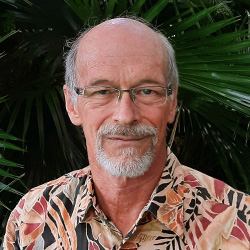
Stewart Crawford, Ph.D., is an Associate Professor of Computer Science and Chair of the Department of Computer Science, Engineering, and Physics at the University of Hawaii at Hilo. He holds a Ph.D. in Computer Science from Colorado State University, an M.S. in Operations Research from Stanford University, and an A.B. in Mathematics from Dartmouth College. His research focuses on integrating programming and visualizations into STEM education, neuro-biologically inspired computing, machine learning, graphics/image processing, and software engineering. He emphasizes real-world applications in teaching, drawing from his experience in R&D organizations, software development firms, and academia. Crawford teaches courses such as Digital Literacy, Computer Science I/II, Assembly Language, Software Engineering, and Numerical Analysis. He advocates for project-based learning to deepen students' understanding of STEM concepts through programming. No scientific awards or active grants are listed in the provided text. His professional biography highlights interests in cycling, photography, and travel, reflecting a balance between academic rigor and personal passions.
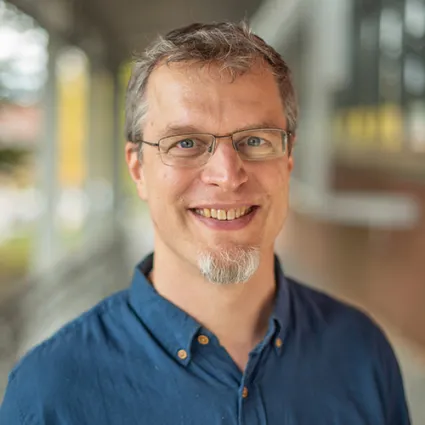
Dr Steven Watterson is a Lecturer in Computational Biology (Hypertension) at the University of Ulster , affiliated with the School of Medicine within the Faculty of Life & Health Sciences . His work integrates systems biology, computational modeling, and biomedical data to understand cholesterol metabolism and cardiovascular disease. Education: MPhys (Hons) in Physics – University of Edinburgh PhD in Mathematics – Trinity College Dublin Postdoctoral training at Los Alamos National Laboratory and University of Edinburgh Research Focus: Steven’s research centers on the dynamic networks of genes, proteins, and small molecules that govern biological function. He investigates how these networks are altered in disease states, particularly in cardiovascular and metabolic disorders, and how they can be therapeutically reprogrammed. His work spans cholesterol metabolism, interferon signaling, and innate immunity. Teaching & Leadership: He is a Fellow of the Higher Education Academy and coordinates modules in mathematical and computational methods for both undergraduate and postgraduate programs in Stratified Medicine. He has supervised multiple PhD students and contributes to curriculum development in computational biology. Scientific Awards: Collaborative Award for Teaching Excellence (CATE) – 2024 Distinguished Collaborative Education Excellence Fellowship – 2023 Grants & Collaborations: Steven has participated in consultancy projects such as the Innovation Voucher with Altomics Datamation Limited and maintains active collaborations across Europe and the UK. He is a member of the Royal Irish Academy’s Life and Medical Sciences Advisory Committee and serves on the editorial board of Frontiers in Synthetic Biology . Labs & Teams: He is based at the Northern Ireland Centre for Stratified Medicine , where he leads computational biology initiatives and contributes to large-scale systems medicine projects including disease map development and multimorbidity analysis.
Kyle Boyd is a Lecturer in Interaction Design at the Belfast School of Art within Ulster University. Based at the Belfast campus, he contributes to the Art and Design Research group. PhD in Computer Science (Ulster University, 2014) MA in Multidisciplinary Design (Ulster University, 2009) BSc (Hons) in Interactive Multimedia Design (Ulster University, 2007) His research focuses on Interaction Design , User Experience , and Digital Health , with particular emphasis on: Usability engineering for aging populations Trust analysis in mental health chatbots Sustainable design practices aligned with UN SDGs Co-creation methodologies in health technology Recent publications reveal a strong focus on chatbot usability , dementia care applications , and temporal bias in UX measurement . His work bridges Human-Computer Interaction with healthcare innovation through projects funded by: InvestNI InterTrade Ireland European Union programs ESPRC Interreg Notable achievements include: 2024: Outstanding Interdisciplinary Research Team Award 2025: Senior Fellowship in Higher Education Academy 2018: Fellowship in Higher Education Academy He actively contributes to academic service as: External Examiner (University of Limerick, ongoing since 2025) Conference organizer (15th Irish HCI Symposium, 2022) Industry consultant (UX evaluation of business simulation interfaces)
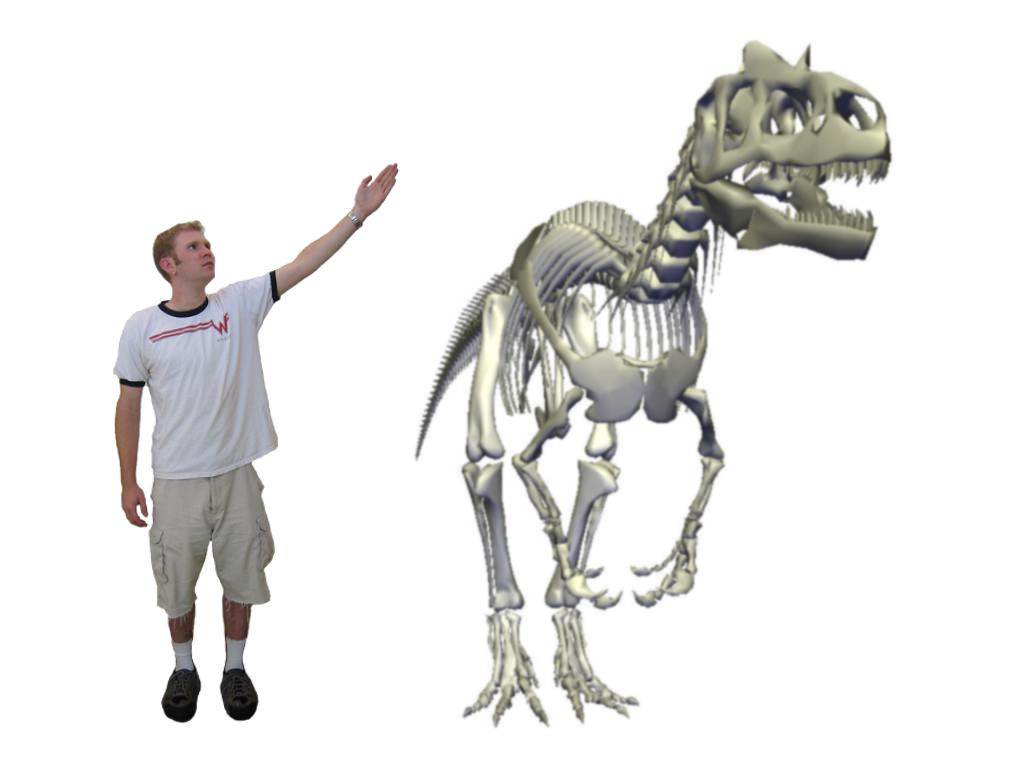
Eric Wills is a Senior Lecturer at the University of Oregon , affiliated with the School of Computer and Data Sciences and the Department of Computer and Information Science . He holds a PhD in Computer Science from the University of Oregon (2008). Education: BS (2000), MS (2002), PhD (2008) in Computer Science from the University of Oregon Research Interests span Computational Biomechanics, Computer Graphics, Artificial Intelligence, and Computer Architecture, with a focus on 2D/3D rendering, interactive skeletal animation, physics-based animation, and programmable shaders. His work bridges computational methods with paleontology, particularly in simulating dinosaur locomotion and posture. Publications highlight interdisciplinary trends, combining computer science (Python metaclasses, 3D modeling) with biomechanical analysis of dinosaur skeletons. Notable collaborations include Dr. Kevin A. Stevens in reconstructing gaits and posture for Triceratops and Tyrannosaurus rex.
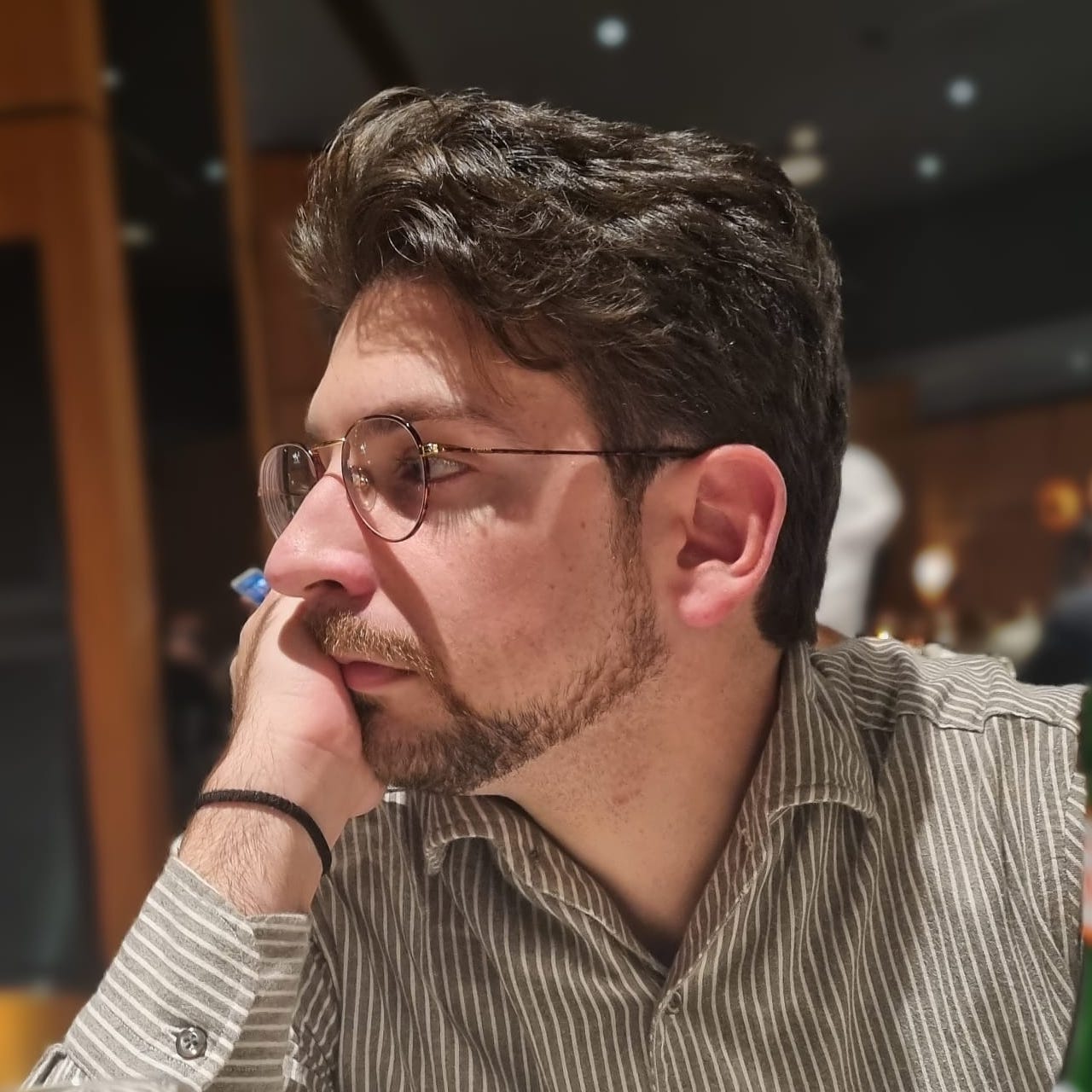
Stefano Lambiase is a researcher in Computer Science currently affiliated with Aalborg University in Denmark, where he holds an institutional email address (stla@cs.aau.dk). He earned his PhD in Computer Science from the University of Salerno at the Software Engineering Laboratory (SESA Lab), with a doctoral project titled "Longitudinal Data-Driven Software Project Management" focusing on the social and human aspects of Software Development and Management. His educational background includes: PhD in Computer Science from University of Salerno (2019-present) Master's Degree in Computer Science from University of Salerno (2019-2021), with thesis on "Cultural and Geographical Dispersion Impact on Communication and Collaboration of Software Development Teams" Bachelor's Degree in Computer Science from University of Salerno (2015-2019), with thesis on "Test Smell Detection and Suggestions (TESEUS)" Stefano's research interests center around the human and social dimensions of software engineering , with particular focus on cultural and geographical dispersion in software development teams, community smells (socio-technical anti-patterns), and their impact on productivity and software quality. His work bridges theoretical frameworks with practical applications, developing tools like CADOCS (a conversational agent for community smell detection) and DARTS (a test smell detection and refactoring plugin). He has also explored emerging areas including quantum software communities, metaverse development, and the integration of large language models in software engineering practices. His publication record demonstrates a consistent focus on socio-technical aspects of software development, with recent work examining cultural dispersion effects, community smells in various contexts (including machine learning systems and quantum computing), and educational applications in the metaverse. His research employs diverse methodologies including empirical studies, surveys, interviews, and tool development. Stefano has received recognition for his work, including a Best Paper Award at the 25th Euromicro Conference on Software Engineering and Advanced Application (SEAA 2022) for his paper "'There and Back Again?' On the Influence of Software Community Dispersion Over Productivity". He has been actively involved in the software engineering research community, serving on program committees for major conferences including ICSE-SEET 2024, SANER 2024, ICSEA 2023, MSR 2023, and SCAM-NIER 2023. Additionally, he served as Social Media and Web Chair for the Third Workshop on Gender Equality, Diversity, and Inclusion in Software Engineering (GE@ICSE 2022). Stefano has developed several research tools and projects: DARTS (Detection And Refactoring of Test Smells): An IntelliJ plugin for detecting and refactoring test smells CADOCS : A conversational agent for community smell detection and refactoring in Slack Erwin Bot : A chat bot for management support built with Azure Cloud Services BiblioNet : A Spring Boot Web App for library support QuantuMoonLight : A low-code platform to experiment with quantum machine learning SENEM : A software engineering-enabled educational metaverse SERGE : A serious game for risk management education in software project management
Maria Cristina Boido is an Associate Professor in the Department of Architecture and Design (DAD) at Politecnico di Torino, within the College of Architecture and Design. She is actively engaged in teaching and research, focusing on architectural representation, survey drawing, and inclusive communication of cultural heritage. Her academic roles include membership in the Planning and Design Board and teaching responsibilities across multiple programs including Architecture and Territorial, Urban, and Landscape-Environmental Planning. Research Interests: Her research explores survey drawing , design drawing , graphic languages , and inclusive communication , particularly in the context of architectural and urban heritage. She investigates how visual representation shapes understanding of historical and urban spaces, with a strong emphasis on cultural memory and sustainable development. The most recent publications reflect a consistent focus on urban representation, historical reconstruction, and the communication of heritage through drawing and multimedia. These works span disciplines such as architectural history, cartography, and cultural studies, with recurring themes of memory, sustainability, and visual narrative in urban environments. Scientific Awards: No awards mentioned. Advising and Grants: No specific students or grant funding are listed in the available information. However, her collaborative research projects suggest active participation in academic and interdisciplinary initiatives. Labs and Teams: While no formal lab or research team is explicitly named, her collaborations with scholars like Pia Davico and Michela Benente indicate involvement in research groups focused on architectural history, representation, and heritage communication.
Filipe Santos is an Assistant Professor in the Department of Information Science and Technology at ISCTE – Instituto Universitário de Lisboa. He is also an Associate Researcher at ISTAR-IUL, the Research Center in Information Sciences, Technologies, and Architecture, where he contributes to the Digital Living Spaces research group. His work bridges computer science with architectural and urban design through computational methods. PhD in Computing, Faculty of Sciences – UL (1998) Master's in Applied Mathematics, Higher Technical Institute – UTL (1991) Bachelor's in Computing, Faculty of Sciences – UL (1987) His research focuses on computational design, shape grammars, procedural generation, and multi-agent systems. He explores how algorithmic and AI-driven techniques can be applied to architectural and urban design, particularly in mass customization, modular housing, and sustainable urban development. His work often integrates genetic algorithms and formal design languages to automate and enhance creative processes. The recent publications highlight a consistent trend in applying computer science to design automation. Key themes include shape grammars for generative design, genetic algorithms for layout optimization, and digital tools for sustainable and inclusive urban planning. His work spans formal computing, human-computer interaction, and interdisciplinary design, with applications in virtual environments, residential architecture, and urban morphology. Filipe Santos actively supervises graduate students and has held academic leadership roles, including Director of the Master's in Integrated Decision Support Systems and Coordinator of the 2nd Year in Computer Engineering. His teaching includes core courses such as Algorithms and Data Structures and Theory of Computation . While no scientific awards are listed, his research has been published in reputable venues including GECCO, eCAADe, and IEEE conferences. He is part of the Digital Living Spaces research group at ISTAR-IUL, which focuses on innovative computing applications in living environments, particularly through intelligent systems and digital design tools.
Barbara Pezzotti is a Senior Lecturer in the Department of European Languages within the Faculty of Arts at Monash University, Australia. She holds a PhD from Victoria University of Wellington and a Laurea in Philosophy from Università La Sapienza, Rome. Her academic career spans Italy, New Zealand, and Australia, and she is currently an active researcher and supervisor, accepting PhD students in literature and cultural studies. Education: Laurea in Philosophy, Università La Sapienza, Rome PhD, Victoria University of Wellington, New Zealand Her research centers on modern and contemporary literature and culture, with a focus on crime fiction , popular culture , literary geographies , and Mediterranean narratives . She explores cultural representations of space, reinterpretations of history in literature and film, migration, and identity. Her work often intersects with utopian literature and gender studies. Her recent publications reflect a strong trend toward interdisciplinary analysis of crime fiction as a lens for understanding cultural, historical, and spatial dynamics. Topics include asylum seekers in Italian TV, transnational identities in graphic memoirs, and the democratic potential of crime narratives in Italy and Spain. Her research demonstrates a consistent focus on transcultural exchange and social critique. Scientific Awards: Faculty Award for Programs that Enhance Student Learning (2020) She has supervised multiple PhD theses on Italian literature and translation studies and is currently advising on topics including identity in graphic novels and masculinities in Mafia films. She has secured competitive research grants, including an ARC Discovery Project (2024–2027) on world crime fiction. She also contributes significantly through editorial work, serving as Editor-in-Chief of Clues: A Journal of Detection (from 2025) and on the editorial board of Cambridge University Press publications. She has held external roles such as Honorary Research Fellow at the Australasian Centre for Italian Studies and Partner Investigator in EU-funded projects. Labs and Research Teams: She is a key member of the research network around crime fiction and popular culture, collaborating internationally through projects like DETECt H2020 and the ARC-funded 'World Crime Fiction' project. She contributes to interdisciplinary teams in literary, cinematic, and cultural analysis.
Simon Coupland is a Principal Lecturer in the School of Computer Science and Informatics at De Montfort University, within the Faculty of Computing, Engineering and Media. He is an active researcher affiliated with the Centre for Computational Intelligence (CCI), focusing on type-2 fuzzy logic and its applications in AI and decision systems. His educational background includes a PhD in Computer Science and a BSc (Hons) in Computing. PhD in Computer Science BSc (Hons) Computing Simon's research centers on the theoretical and practical aspects of type-2 fuzzy logic, including improving computational performance, assessing extensions to fuzzy systems, and applying these methods to real-world problems such as control and decision-making. His work bridges foundational mathematics with applied AI, particularly in uncertainty modeling and semantic computing. His recent publications reflect a strong trend toward integrating fuzzy logic with neural networks, semantic similarity, and innovative educational practices. The articles span topics in computational intelligence, computer vision, and pedagogical transformation, especially in block teaching models and authentic assessment. Notable scientific awards include: IEEE CIS Pre-college Education Video Competition Joint Winner (2012) IEEE Transactions on Fuzzy Systems Outstanding Paper Award (2009) British Computer Society Machine Intelligence Award (2008) He has contributed to student supervision and curriculum development, particularly in MSc programs related to computing and IT. Simon was a Co-Investigator on the AHRC-funded FuzzyPhoto project (2012–2014), demonstrating his involvement in externally funded research. His teaching includes modules on mobile robotics and advanced topics in fuzzy logic and neural networks. Simon is actively involved in the Centre for Computational Intelligence, where he contributes to research output, student co-creation, and the development of innovative AI-driven educational tools and assessment methods.
Liliane Weissberg is the Christopher H. Browne Distinguished Professor in Arts and Sciences and Professor of German and Comparative Literature at the University of Pennsylvania's School of Arts & Sciences. She holds cross-affiliations with multiple graduate groups and programs, including Jewish Studies, Art History, English, Gender and Sexuality Studies, Religious Studies, Architecture, and Psychoanalytic Studies, reflecting her deeply interdisciplinary scholarship. Her research centers on German and comparative literature from the late eighteenth to early twentieth century, with a strong focus on German-Jewish intellectual history, the Enlightenment, Romanticism, realism, and psychoanalytic theory. She also contributes significantly to visual studies and cultural memory, often bridging literary analysis with philosophical inquiry and museum curation. The recent publications and curated exhibitions in her body of work reveal a sustained engagement with questions of identity, authority, and representation. Her scholarship frequently explores the intersections of literature, philosophy, and Jewish thought, particularly through figures like Hannah Arendt, Walter Benjamin, and Rahel Varnhagen. The thematic threads across her articles include commentary as a mode of thinking, the construction of cultural memory, and the role of literature in political and psychoanalytic discourse. Her scientific awards include some of the highest honors in the humanities: the Guggenheim Fellowship, Fulbright Fellowship, Alexander von Humboldt Prize for her life's work, Berlin Prize from the American Academy in Berlin, and an honorary degree from the University of Graz. Additional recognitions include the Mercator Fellowship and a Senior Fellowship from the IFK in Vienna. She has advised numerous graduate students and has been awarded major research grants that supported her fellowships and publications. Her curatorial work, including exhibitions at the Jewish Museum Frankfurt and the German Historical Museum Berlin, demonstrates a commitment to public scholarship and interdisciplinary collaboration. She has also held visiting professorships at institutions in the United States, Germany, Austria, and Switzerland, including the Franz Rosenzweig Professorship at the University of Kassel. She is actively involved in academic and cultural institutions, serving on the scholarly board of the German Historical Museum Berlin. Her recent curation of the exhibition What is Enlightenment? Questions for the Eighteenth Century (2024–2025) underscores her ongoing leadership in shaping public understanding of Enlightenment thought.
Arvind Satyanarayan is an Associate Professor of Computer Science at MIT, leading the Visualization Group within MIT CSAIL. His research focuses on intelligence augmentation through interactive data visualization, exploring how computational tools can amplify human cognition and creativity while respecting user agency. He holds a PhD from Stanford University, advised by Jeffrey Heer. Key research themes include visualization design tools, machine learning interpretability, accessible visualization for visually impaired users, and behavioral principles for information systems. His work has been recognized with an NSF CAREER Award and a 2024 Alfred P. Sloan Fellowship, alongside best paper awards at CHI and IEEE VIS. Education: PhD in Computer Science from Stanford University (Interactive Data Lab) Notable Achievements: Developed widely-used systems like Altair and Vega-Lite, impactful in data science communities Advising: Mentors over 20 graduate and undergraduate researchers, with notable alumni advancing to faculty roles at Brown CS and Utah CS Recent projects include tactile visualization systems (Tactile Vega-Lite), semi-formal programming frameworks (Pluto), and cultural interpretability of AI models. His lab emphasizes collaboration with diverse stakeholders to ensure inclusive design practices.
Joshua A. Levine is an Assistant Professor in the Department of Computer Science at the University of Arizona, where he has been since 2016. Previously, he held positions at Clemson University’s School of Computing (2012–2016) and the University of Utah’s Scientific Computing and Imaging Institute (2009–2012). He earned his Ph.D. in Computer Science from The Ohio State University, along with BS and MS degrees in Computer Engineering and Mathematics from Case Western Reserve University. Education: Ph.D., Computer Science, The Ohio State University (2009) M.S., Computer Science, Case Western Reserve University (2005) B.S., Computer Engineering and Mathematics, Case Western Reserve University (2003) Research Interests: His work focuses on visualization , geometric modeling , topological analysis , and computational topology . He develops tools like the Topology ToolKit for analyzing complex datasets and explores applications in mesh generation, vector fields, and performance analysis. His methods bridge theory with practical systems for scientific and engineering domains. Key Contributions: His publications span top-tier venues like IEEE VIS, SIGGRAPH, and Computer Graphics Forum , emphasizing scalable visualization techniques and algorithms for high-performance computing. Notable work includes Neural Volume Compression and Particle Merging-and-Splitting . Awards: DOE Early Career Research Program (2018) Best Paper Honorable Mention (IEEE VIS SciVis 2017) Multiple Best Paper Awards at visualization and meshing conferences (2010–2017) Labs & Collaborations: Leads visualization research at the University of Arizona, contributing to the Topology ToolKit (TTK), an open-source platform for topological data analysis. Engages in interdisciplinary projects with civil engineering and natural language processing communities.
Joachim Schäfer , born in 1970, is a dedicated academic staff member at the Institute for German Language and Literature at the University of Education Ludwigsburg . Holding a Diploma in Education (2002) and a PhD in Education (2024), he specializes in German as a Second Language (DaZ), Writing Processes , and Multilingual Education . Co-developer of competency grids for writing assessment Coordinator of writing consultations since 2012 Deputy head of Language Didactics Center since 2015 Former head of German Department (2015-2016) Research Focus : His work investigates text production differences between monolingual and multilingual students, emphasizing text quality indicators , narrative development , and language acquisition in lower secondary education. He employs frameworks from Grießhaber (2017), Augst et al. (2007), and Grünke et al. (2017) to analyze writing competence and multilingual challenges. Scientific Awards : Hans Böckler Foundation Scholarship (1995-1998) Notable Contributions : He pioneered process-oriented writing assessment through the "Reading, evaluating and writing texts" examination task, supported development of peer-tutoring graphic organizing strategies for students with learning disabilities, and created multilingual writing diagnostic tools like the "gezinkte Bildpaarspiel" (2011).
Nicholas R. Howe is a Professor of Computer Science at Smith College, where he has taught since 2001. His research focuses on handwriting and document analysis for historical manuscripts, with prior work in 3D human motion tracking . He has offered courses on web design, data structures, operating systems, and computer vision. Education: Ph.D., Computer Science, Cornell University M.S., Computer Science, Cornell University A.B., Physics, Princeton University Research interests include document digitization, historical manuscript analysis, and systems programming. His technical work involves Linux kernel module development and operating system design , with lab assignments covering memory simulation, process management, and device driver implementation. Office: 354 Ford Hall, Clark Science Center, Smith College. Contact: nhowe@smith.edu , (413) 585-3878. Teaching highlights: Current courses: CSC 231 (Microprocessors and Assembly), CSC 370 (Computer Vision Seminar) Past courses: 10+ courses covering web fundamentals, programming languages, operating systems, and computer graphics
Jacqueline Cummine is a Professor in the Communication Sciences & Disorders department within the Faculty of Rehabilitation Medicine at the University of Alberta. Her research focuses on understanding reading and writing processes, particularly examining how skilled readers adapt their approaches, how reading breaks down, and how sensory systems contribute to reading proficiency. She employs behavioral measurements and brain-based methodologies including fMRI and DTI to investigate these phenomena. Her educational background includes a B.A. Honours in Psychology from the University of Saskatchewan (2005) and a Ph.D. in Cognitive Neuropsychology from the same institution (2009). Cummine is affiliated with several research groups including the Alberta Cognitive Neuroscience Group, the Neuroscience and Mental Health Institute at the University of Alberta, and serves as a Research Affiliate at the Glenrose Rehabilitation Hospital Research. Dr. Cummine's research interests center on literacy skills as critical communication tools across all aspects of life. She investigates the skills that facilitate skilled reading, what happens when reading breaks down, and resources that may benefit individuals with reading impairments. Her current projects include 'Behavioural and Neurobiological Correlates of Basic Reading Processes: The Print-to-Speech Network' (NSERC funded, 2018-2023) and 'Auditory-Visual Integration for Individuals with Impairments in Reading, Hearing and/or Speech.' Her publication record shows a consistent focus on the neural underpinnings of reading processes, with recent work examining cortical thickness relationships, white matter pathways, and structural brain asymmetry in relation to reading abilities. Her research demonstrates an increasing sophistication in neuroimaging techniques and a growing recognition of the complex interactions between motor systems, sensory processing, and reading proficiency. Dr. Cummine teaches several courses including Research Methods and Design (CSD 501), Advanced Univariate Statistics (REHAB 699), and Readings on Selected Topics in Neuroscience (NEURO 450). Her teaching spans both the Rehabilitation Science and Neuroscience programs, reflecting the interdisciplinary nature of her research.