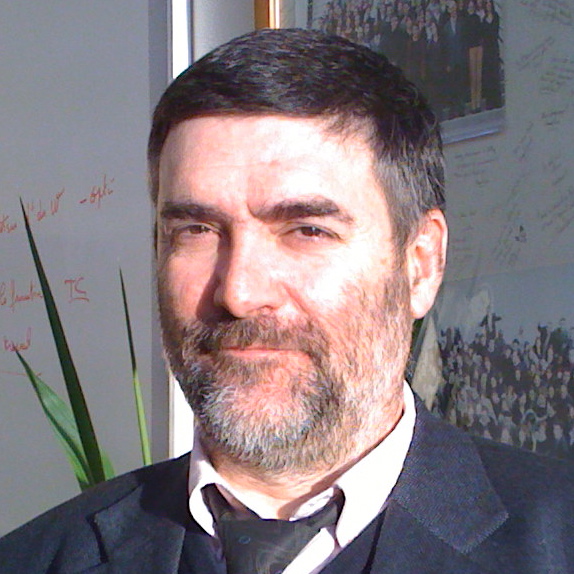
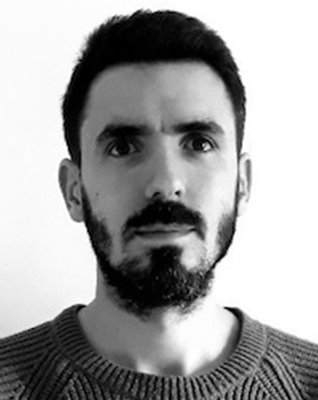
Dr. Sandra Tomc is a Senior Lecturer (Exceptional Class) at Jean Monnet University, affiliated with the Faculty of Arts, Letters and Languages and the Department of French as a Foreign Language. She leads research at the ECLLA Laboratory, focusing on sociolinguistics and multilingual education. Her extensive affiliations include directing the French as a Foreign Language Department (2018-2020), heading Master's programs in Language Didactics and Sociodidactics, and coordinating international projects like NEW ABC and Erasmus partnerships with Turkish universities. Her research examines: Multilingualism and minority language inclusion Language policy and teacher training Gender representations in educational settings Anti-discrimination pedagogies She employs interdisciplinary approaches blending sociolinguistics, didactics, and gender studies. Recent publications (2018-2024) demonstrate strong focus on: Classroom applications of plurilingualism Emotion-centered language learning Critical analysis of gender biases in education Community-based language interventions She actively develops training programs for educators, including workshops on inclusive language practices and anti-stereotype methodologies. Her leadership in the ECLLA Laboratory involves collaborations across European institutions to advance research on language, power dynamics, and social inclusion.
Emmanuel Grolleau is a Full Professor at ISAE-ENSMA (Institut Supérieur de l'Aéronautique et de l'Espace - École Nationale Supérieure de Mécanique et d'Aérotechique) specializing in real-time systems. He is affiliated with the LIAS laboratory (Laboratoire d'Ingénierie des Applications de la Sensorique) where he leads the Real Time Team. His work bridges theoretical scheduling principles with practical embedded system implementations across multiple domains. Professor Grolleau's primary research interests include: Real-Time Scheduling: uniprocessor, multiprocessor, and distributed scheduling with practical considerations like transactions and precedence constraints Model-Based Systems Engineering (MBSE): developing bridges between UML-MARTE and AADL to real-time scheduling tools Unmanned Aerial Vehicles (UAVs): autopilot architecture design and optimization Energy Systems: co-heading the LabCom ANR Laboratoire d'Insertion des Énergies Nouvelles et d'Optimisation des Réseaux (LIENOR) His publication record demonstrates a clear progression from fundamental scheduling theory to applied work spanning avionics, drone technology, and power systems. Recent work shows strong focus on UAV autopilot architectures, model-based frameworks for real-time systems, and energy management in power distribution networks. Professor Grolleau serves on multiple prestigious program committees including Real-Time Networks & Systems (RTNS) since 2012, ACM/SIGAPP Symposium On Applied Computing (SAC) since 2015, DETECT since 2018, and DroneSE in 2023. He has led significant research projects such as PIA CORAC Panda and FUI WARUNA, which developed the Time4Sys pivot meta-model to connect theoretical scheduling with practical implementation. His collaborative work extends across multiple institutions and industries, with publications spanning real-time scheduling theory, UAV systems, energy management, and avionic architectures. The consistent thread through his work is the practical application of real-time scheduling principles to solve complex engineering problems in safety-critical systems.
Brice Chardin is an Associate Professor in Data Engineering at ISAE-ENSMA since 2013, affiliated with the LIAS (Laboratoire d'Ingénierie des Applications de la Connaissance et des Systèmes) Data and Model Engineering team. His work bridges academic research and industrial applications, focusing on data management solutions for critical systems. His research spans clustering algorithms under dissimilarity constraints , RDF query relaxation for explaining empty/overabundant results, pattern mining through the RQL language, and energy data management . Key projects include Chronos (a NoSQL system for industrial sensor data) and collaborations with energy companies SRD and Nexeya for predictive consumption analysis. Recent publications (2021-2024) emphasize constrained clustering techniques and cooperative query processing for RDF knowledge bases, revealing a strong trend toward practical solutions for industrial data challenges. His work integrates machine learning with database theory to address real-world data imperfections. PhD in Computer Science from INSA Lyon (2011) Postdoctoral position at LIRIS (2012-2013) on ANR DAG project Specialized in industrial data management since 2011 EDF collaboration Chardin actively supervises academic projects including drone simulation with Ardupilot and Smart Data mining initiatives. His industrial partnerships focus on energy sector applications, particularly predictive analysis for electricity distribution and storage systems. Current work involves developing clustering algorithms with error bounds and query relaxation frameworks for semantic web technologies.
Patrick Girard is a Full Professor in Data Engineering at ISAE-ENSMA (Institut Supérieur de l'Aéronautique et de l'Espace - École Nationale Supérieure de Mécanique et d'Aérotechnique) in France. He is a member of the Data Engineering Team within the LIAS (Laboratoire d'Ingénierie des Applications de la Sensorique) laboratory, with dual affiliations at ISAE-ENSMA in Chasseneuil and ENSIP in Poitiers. Professor Girard's research focuses on Human-Computer Interaction , with particular expertise in task modeling , interactive systems design , and programming by demonstration techniques. His work spans theoretical foundations to practical applications in model-based development, user interface design methodologies, and educational technology for programming. He has made significant contributions to task model validation, simulation techniques, and the application of these principles in complex systems engineering, particularly in aerospace contexts. His publication history demonstrates a consistent evolution from foundational work on programming by demonstration and task-oriented architectures in the 1990s to more recent applications in complex systems engineering and avionics. A distinctive trend in his work is the integration of formal methods with practical HCI approaches, creating robust frameworks for developing user-centered interactive systems with safety-critical applications. Professor Girard has mentored numerous researchers throughout his career, with frequent collaborations showing sustained relationships with scholars like Loé Sanou, Nicolas Guibert, and Thomas Lachaume. His research has involved multiple interdisciplinary projects, often connecting academic research with industrial applications, particularly in the aerospace sector. Within the LIAS laboratory, Professor Girard works in the Data Engineering Team alongside colleagues in Automatic Control and Real Time research groups. The laboratory maintains strong industry partnerships, especially with aerospace companies, enabling practical implementation of theoretical research in real-world engineering contexts. His work bridges computer science theory with practical engineering applications, particularly in the French aerospace ecosystem.
Edwige CAMP is a Professor at the Polytechnic University of Hauts-de-France (UPHF), within the Faculty of Humanities and Social Sciences, Department of English Studies. She has served as a University Professor since 2010, having previously been a Maître de conférences (equivalent to Associate Professor) from 2000-2010 at the same institution (formerly known as University of Valenciennes and Hainaut-Cambresis). She is an elected member of the CRISS laboratory council and participates in research axes 3 and 4. Her educational background includes a Habilitation à Diriger des Recherches (HDR) in English from Strasbourg II in 2008, a PhD in English Studies from Paris III in 1997, a Master's degree in Law from Aix-Marseille III in 1993, and a DEA in Contemporary British Civilization from Paris III in 1992. She also holds a diploma from the Institute of Political Studies of Aix-en-Provence. Professor CAMP specializes in Scottish political life, institutions, and public policies, with particular expertise in devolution processes, Scottish independence movements, constitutional politics within the UK framework, and the impact of Brexit on Scotland. Her research examines the evolution of Scottish political institutions since devolution, the Scottish National Party's strategies, and the complex interplay between Scottish identity and British unionism. She has extensively analyzed referendums, electoral behavior in Scotland, and the development of distinct Scottish policies in areas such as justice, education, and social welfare. Her recent publications demonstrate a clear trajectory focusing increasingly on post-referendum Scottish politics, the evolving relationship between Scotland and the UK following Brexit, and the changing nature of Scottish nationalism. While her earlier work concentrated on the establishment and functioning of devolved institutions, her more recent scholarship addresses contemporary challenges including fiscal autonomy, the impact of Brexit on devolution, and the SNP's evolving political strategies in the post-2014 referendum landscape. Professor CAMP is an active member of several academic societies including the CRECIB (Centre for Studies and Research in British Civilization), the SFEEC (French Society for Scottish Studies), and the SAES (Society of English Studies in Higher Education). She regularly contributes expert commentary to major media outlets including France Culture, France Inter, Radio Canada, France Info, RFI, and France 24, where she provides analysis on Scottish politics, Brexit, and UK constitutional issues. Her teaching responsibilities include British civilization and UK history for undergraduate programs in English Studies, International Business, and Law/AES-Language programs. She also teaches in the Master MEEF programs, covers the British market and European institutions in the International Business Negotiation Master's program, and leads seminars in various research Master's programs, particularly the HVCI Master's.
Clément QUINTON is an Associate Professor at the University of Lille, affiliated with both Inria and the CRIStAL laboratory (Centre de Recherche en Informatique, Signal et Automatique de Lille). He is an elected member of the laboratory council and maintains offices in both the Inria building (Room B312) and the M3 building (Room 224) at the Cité Scientifique campus. Dr. QUINTON is a member of the Spirals research team and holds the HDR (Habilitation à Diriger des Recherches), a French academic qualification that allows him to supervise PhD students. Dr. QUINTON's research spans several areas within computer science, with a primary focus on parallel computing, polyhedral models, and hardware acceleration. His work bridges theoretical computer science with practical applications in embedded systems and biomedical monitoring. He has made significant contributions to the fields of: Polyhedral compilation and loop optimization techniques High-level synthesis for FPGA-based hardware acceleration Systolic array design and parallel architectures Disruption-tolerant wireless sensor networks for biomedical applications Sustainable software engineering and cloud configuration Application of Large Language Models to software development Analysis of Dr. QUINTON's publication history reveals a consistent research trajectory that began with foundational work in parallel algorithms and systolic arrays, evolving toward more contemporary applications involving FPGA acceleration, polyhedral compilation, and biomedical sensor networks. His recent work shows increasing interest in sustainable computing, cloud architectures, and the application of Large Language Models to software engineering challenges. This evolution demonstrates his ability to adapt theoretical computer science concepts to address emerging technological challenges. Dr. QUINTON has supervised numerous PhD students whose research aligns with his expertise: Virginie Amand: Sustainable software services using large-scale models Alexandre Bonvoisin: Frugal software architectures for cloud-native microservices Tristan Coignion: Energy impact of Large Language Models for code Edouard Guegain: Software optimization through configuration (defended September 2023) Brell Péclard Sanwouo Chekam: Automatic detection and correction of side-channel vulnerabilities in cryptographic libraries Nada Zine: Complex and self-adaptive software systems Maxime Huyghe: Sustainable software services development based on Language Models (LLM) As a member of the Spirals research team at Inria and CRIStAL, Dr. QUINTON contributes to a collaborative environment focused on software engineering, system architecture, and sustainable computing. His work bridges theoretical computer science with practical applications in healthcare monitoring, cloud computing, and energy-efficient software development.
José Rouillard is a Lecturer-Researcher in Computer Science (section 27) at Université de Lille, affiliated with the CRIStAL laboratory (Centre de Recherche en Informatique, Signal et Automatique de Lille) where he works in the Brain-Computer Interface (BCI) research team. His academic position combines teaching responsibilities with active research in human-computer interaction, particularly focusing on novel interface technologies and assistive applications. Dr. Rouillard's primary research interests center around Brain-Computer Interfaces with particular expertise in Steady-State Somatosensory-Evoked Potentials (SSSEP). His work explores multimodal interaction techniques, virtual reality integration with BCI systems, and applications for individuals with motor disabilities such as Duchenne muscular dystrophy. Recent publications (2023-2024) demonstrate continued innovation in BCI technology, including Wizard of Oz studies on user perception, advanced SSSEP recording techniques with cEEGrid systems, and multimodal cobot interaction frameworks using MQTT protocol. His research bridges theoretical neuroscience with practical applications for assistive technologies. As an educator, Dr. Rouillard has created one of the most comprehensive App Inventor 2 teaching resources available, with 76 detailed projects covering the full spectrum of mobile application development. His course materials progress from basic applications to advanced implementations involving Bluetooth communication with Arduino, Firebase database usage, and AI APIs including OpenAI's ChatGPT and DALL-E. His teaching spans multiple academic years, with documented student projects from 2013 through 2023 across various Master's programs including MMD IAE, MIAGE, and e-Services. Supervised PhD thesis: "Hybrid brain-machine interface to overcome disability caused by Duchenne muscular dystrophy" (Alban Dupres, 2016) Supervised PhD thesis: "Filtrage somesthésique pour des interfaces cerveau-ordinateur utilisant des stimulations vibro-tactiles" (Jimmy Petit, 2022) Dr. Rouillard maintains a strong educational presence through his extensive online resources, including YouTube video tutorials, NextCloud file sharing for course materials, and detailed project guides. His student projects demonstrate practical applications of mobile development across diverse domains including health monitoring, gaming, social networking, and educational tools. The breadth of his educational impact is evident in the hundreds of student applications documented from 2013-2023, showcasing his commitment to practical, hands-on learning in computer science education.
Jorge Raul Navarro-Cabrera serves as a contracted lecturer in the Faculty of Engineering and Architecture at Peruvian Union University since March 2025, while concurrently holding technical and editorial roles at Universidad Nacional de San Martin in Tarapoto, Peru. His institutional affiliations demonstrate dual engagement in academic instruction and university publishing operations. He earned his Systems and Computer Engineering degree from Universidad Nacional de San Martin, establishing the foundation for his interdisciplinary research career. This educational background directly informs his applied technical approach across diverse domains. Navarro-Cabrera's research program centers on artificial intelligence and data science applications addressing Peruvian societal challenges. His work in health informatics develops non-invasive diagnostic tools using computer vision, while tourism technology research focuses on ICT solutions for destination promotion. Educational data mining constitutes another pillar, particularly unsupervised learning for student retention prediction. These threads converge in practical implementations like municipal sociocultural web applications and immigration risk classification systems. Analysis of his 15 most recent publications reveals a consistent pattern of collaborative research with Miguel Valles-Coral and Lloy Pinedo, spanning healthcare diagnostics, tourism innovation, and educational technology. The geographical focus remains predominantly Peruvian, with methodological strengths in unsupervised learning algorithms and multimodal data analysis. His academic service includes editorial assistance for scientific journals at Universidad Nacional de San Martin, complementing his technical role in the university's editorial department. This combination of teaching, research, and publishing support reflects a multifaceted academic profile engaged with both theoretical and operational aspects of higher education.