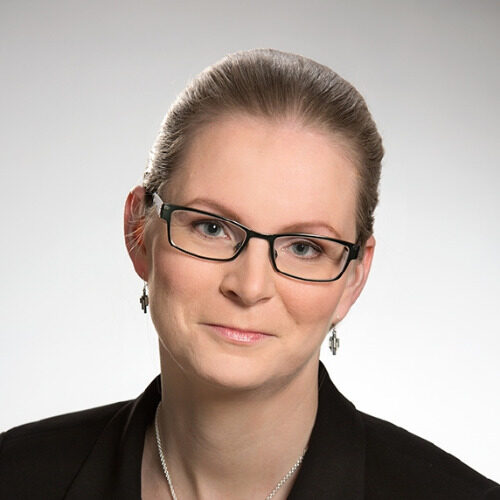
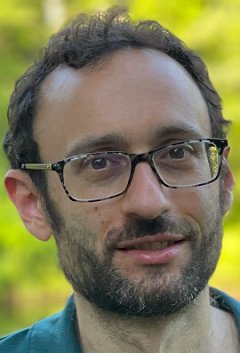
Morgan Rogers is an Associate Professor specializing in category theory, with a focus on abstractions that isolate essential problem-solving features. His research centers on toposes of actions of monoids and expanding mathematical toolkits. His work bridges mathematical logic, algebraic structures, and theoretical computer science, developing frameworks for understanding complex systems through categorical approaches. His research interests include category theory, topos theory, and algebraic structures, with applications in lambda calculus, linear logic, and topological dynamics. Recent publications explore geometric theories, endomorphism monoids, and factorization systems in categorical frameworks. Rogers' articles demonstrate consistent focus on categorical foundations of algebra and logic, with innovations in modeling computational systems and topological representations. Theoretical contributions advance understanding of monoid actions and their categorical representations.
Professor Saman Amarasinghe is a leading academic in the MIT Electrical Engineering and Computer Science Department, specializing in compiler design, high-performance computing, and programming languages. His research bridges theoretical computer science with practical applications, focusing on optimizing compilers for modern hardware architectures. He holds a professorship within the School of Engineering at MIT. His research interests span artificial intelligence, machine learning integration into compilers, sparse tensor algebra optimizations, and domain-specific languages (DSLs) for high-performance computing. He has pioneered frameworks like TACO (Tensor Algebra Compiler) and GraphIt, which enable efficient handling of complex data structures across diverse computational domains. Recent work emphasizes compiler-driven optimizations for sparse data formats, machine learning models for code optimization, and unified interfaces for large language models. His projects often address scalability challenges in exascale computing and bioinformatics applications. Publications highlight advancements in compiler techniques for sparse tensor operations, graph analytics, and memory-efficient algorithms. His contributions to Halide, Simit, and Weld further demonstrate his impact on DSLs for image processing and physical simulation. Awards and recognitions are integral to his career, though specific personal accolades are not detailed here. His work is characterized by a strong focus on practical compiler solutions for emerging computational challenges.
Scott Sanner is a Professor in the Department of Mechanical and Industrial Engineering at the University of Toronto's Faculty of Applied Science and Engineering. With an extensive publication record spanning over two decades, his research bridges artificial intelligence, machine learning, and engineering applications. His work demonstrates significant contributions across multiple top-tier conferences including AAAI, ICLR, NeurIPS, and SIGIR. Dr. Sanner's research interests encompass Reinforcement Learning, Knowledge Representation, Planning and Decision Making, Recommender Systems, and Large Language Models. His work shows a consistent focus on bridging symbolic and neural approaches to AI, with particular emphasis on commonsense reasoning, traffic signal control, and conversational recommendation systems. Recent publications demonstrate increasing integration of large language models with traditional AI techniques for complex reasoning tasks. Analysis of his recent publications reveals a strong trend toward leveraging large language models for knowledge representation and reasoning tasks, while maintaining his foundational work in reinforcement learning and planning. His research increasingly focuses on practical applications in transportation systems, recommendation technologies, and commonsense reasoning frameworks that combine neural and symbolic approaches. Dr. Sanner has mentored numerous graduate students who have become active researchers in the field, including Jihwan Jeong, Zheda Mai, Armin Toroghi, and Anton Korikov. His collaborative work spans multiple institutions and demonstrates strong industry and academic partnerships, particularly with researchers from Australian National University and various technology companies. His research group appears to focus on intelligent systems for decision making under uncertainty, with applications ranging from traffic management to personalized recommendation systems. Current projects show significant emphasis on integrating large language models with traditional AI techniques for more robust and explainable systems.
Christopher Terman is a Senior Lecturer (Emeritus) at the Massachusetts Institute of Technology (MIT), affiliated with the School of Engineering and the Department of Electrical Engineering and Computer Science (EECS). He holds office in 32-G790 and can be reached at cjt@mit.edu. His research interests span digital communication systems, VLSI design methodologies, and educational technology innovations in engineering education. Terman has contributed extensively to the development of simulation tools for digital integrated circuits and has pioneered interactive learning environments for VLSI design education. His work integrates theoretical advancements with practical applications in both industry and academia. Over his career, Terman has authored influential papers on topics ranging from multiprocessor architectures to compiler optimization techniques, reflecting his interdisciplinary expertise in electrical engineering and computer science. His educational contributions include the design of MIT's 6.004 Computation Structures course, emphasizing scalable and learner-centered pedagogical strategies. Terman's publications demonstrate a sustained focus on bridging computational theory with real-world implementation challenges, particularly in the realms of digital signal processing and embedded systems. While no formal scientific awards are listed, his long-term academic leadership and contributions to foundational engineering education have had lasting impacts on both the field and MIT's curriculum. His work continues to inform modern approaches to integrating simulation, design automation, and collaborative learning in technical disciplines.
Dr. Marco Eilers is a **Lecturer** in the **Department of Computer Science** at **ETH Zürich**, Switzerland. His research focuses on formal verification, programming languages, and cybersecurity, with particular expertise in smart contract verification for blockchain systems like Ethereum and Libra’s Move language. He has contributed to tools such as Viper’s symbolic execution backend and frameworks for modular program verification. His work emphasizes practical applications of formal methods to ensure security and correctness in concurrent, distributed, and GPU-based systems. Key research areas include static analysis for information flow security, product program models, and SMT-based type inference for languages like Python. He is affiliated with the Professur für Software Technology at ETH Zürich’s CAB H 89 laboratory. Publications highlight advancements in verifying real-world systems such as internet routers, GPU kernels, and blockchain smart contracts. Though no awards are explicitly listed, his contributions reflect significant impact in formal verification and programming language research. Eilers’ advising and grants are not detailed here, but his involvement in cutting-edge projects like Igloo and modular product programs indicates active collaboration in distributed system verification and secure software development.
Alex Lew is an Assistant Professor of Computer Science at Yale University, affiliated with the Yale School of Engineering & Applied Science. He is a core member of the GenLM consortium, a multi-university initiative focused on controlling and understanding large language models through probabilistic programming and Bayesian inference. His research emphasizes automating and scaling principled probabilistic reasoning, combining techniques from programming languages, machine learning, Bayesian statistics, and cognitive science. Alex holds a Ph.D. and S.M. from the Massachusetts Institute of Technology (MIT) and a B.S. from Yale University. His work bridges theoretical foundations and practical applications, particularly in probabilistic programming languages and their integration with modern machine learning systems. Key contributions include advances in programmable variational inference, denotational semantics for probabilistic programs, and scalable Bayesian data cleaning. His research has been recognized with prestigious awards, including the ACM SIGPLAN Distinguished Paper Award (POPL 2023), ACM SIGLOG Distinguished Paper Award (LICS 2023), and the Probability and Programming Research Award from Meta (2023). His publications span top venues like ICLR, PLDI, and POPL, focusing on topics such as sequential Monte Carlo, stochastic inference algorithms, and formal semantics. Alex collaborates with industry and academia through the GenLM consortium and contributes to open-source probabilistic programming systems like Gen. His lab focuses on advancing the theoretical and practical tools for probabilistic reasoning in complex systems.
Giorgio Ghelli is a Full Professor at the Department of Computer Science, University of Pisa. His research focuses on database systems, XML/JSON schema validation, type systems, and formal methods. He has contributed to foundational work on programming languages and query systems, including the development of the Fibonacci database programming language and the TQL query language for semistructured data. His recent work emphasizes JSON schema formalization, validation techniques, and interactive schema inference for large datasets. Teaching includes advanced database courses and foundational database theory. Research interests span data management, formal semantics, and efficient query processing. Over 150 publications including seminal works on XML updates, JSON schema validation, and type systems for mobile ambients.
Emma Aarnio is a Senior Researcher at the School of Pharmacy , Faculty of Health Sciences , University of Eastern Finland. Her work focuses on pharmacoeconomics, pharmacoepidemiology, and medication adherence research, particularly in chronic disease management such as type 2 diabetes and cardiovascular conditions. She is affiliated with the Pharmaceutical Policy Research Group and Pharmacoeconomics and Outcomes Research Group , contributing to national and international projects like the GuideGap and ENABLE COST Action . Research Interests Pharmacoeconomic modeling of preventive interventions Medication persistence and adherence mechanisms Population-level impact of drug reimbursement policies Pharmacoepidemiology using national registers Health-related quality of life assessments Pharmaceutical care in diabetes risk reduction Recent Article Trends Emma's 15 most recent publications (2025-2023) emphasize real-world effectiveness of medication adherence interventions, cost-utility analyses of diabetes prevention programs, and register-based studies on cardiovascular drug persistence. Key themes include type 2 diabetes screening , pharmacist-led public health initiatives , and socioeconomic factors in drug therapy . Projects & Collaborations Current projects include the GuideGap study on guideline-adherent prescribing and Media Visibility of Medicines research. She contributes to the House of Effectiveness initiative and previously participated in the StopDia diabetes prevention program, demonstrating expertise in community pharmacy interventions and digital health economics.
Alexander J. Summers is an Associate Professor and Associate Head of Graduate Affairs in the Department of Computer Science at the University of British Columbia (UBC), where he joined in 2020. Prior to UBC, he was a senior researcher (Oberassistent) at ETH Zurich. His research focuses on program correctness, including specification and verification logics, type systems, and automated tools for deductive verification. He leads the Prusti Project, developing verification tools for the Rust programming language, and collaborates on the Viper Project, an intermediate verification language framework. Summers is also actively involved in teaching, offering courses on advanced software engineering and program verifiers. His research interests span formal methods, programming languages, and automated reasoning, with a particular emphasis on Rust and ownership-based systems. He has contributed to the development of verification tools like Viper and Prusti, which aim to enhance software reliability through deductive techniques. Summers has been recognized with awards such as the Distinguished Reviewer Award (ACM SIGPLAN) and the Amazon Research Award. Summers has published extensively in top venues like POPL, PLDI, and OOPSLA, with recent work addressing challenges in Rust's ownership model, formal verification frameworks, and automated reasoning techniques. His lab focuses on advancing the state of the art in program verification while maintaining strong ties to practical tool development and empirical studies of programming practices. He actively mentors students at UBC, including PhD and M.Sc. candidates, and has supervised postdoctoral researchers. Summers is also engaged in academic service, serving on program committees for conferences like OOPSLA and IJCAR, and contributes to the broader formal methods community through tool development and educational initiatives.
Shalom Lappin is a Professor of Natural Language Processing at the School of Electronic Engineering and Computer Science, Queen Mary University of London. He holds a dual affiliation as Chief Scientific Advisor at the Centre for Linguistic Theory and Studies in Probability (CLASP) at the University of Gothenburg. His research focuses on computational linguistics, deep learning, and probabilistic models applied to syntax, semantics, and grammar induction. He leads research in areas such as neural network architectures for compositional semantics, Bayesian inference semantics, and the application of machine learning to natural language understanding. His work bridges theoretical linguistics and computational models, emphasizing the cognitive plausibility of AI systems. His contributions include foundational texts like Deep Learning and Linguistic Representation and Foundations of Intensional Semantics . He has collaborated extensively on projects exploring gradient acceptability judgments, context effects in language processing, and the evaluation of large language models. Lappin's affiliations include roles in both academic and collaborative research centers, reflecting his commitment to advancing interdisciplinary research at the intersection of computer science, linguistics, and artificial intelligence.
Daniel Gratzer is an Assistant Professor at the Department of Computer Science, Aarhus University. His research focuses on theoretical computer science, particularly in type theory, modal logic, and programming language semantics. He has contributed to foundational work in multimodal type theory, cubical type systems, and separation logic frameworks like Iris. His work often bridges categorical logic, homotopy type theory, and formal verification techniques. Gratzer's research interests include: Dependent and modal type theories Formal verification of concurrent systems Semantics of programming languages Proof assistants and logical frameworks His recent publications explore topics such as idempotent resources in separation logic, univalent reference types, and proof systems for multimodal logics. Gratzer collaborates on projects like the mitten proof assistant and has developed syntactic/semantic frameworks for categorical type theories. His work emphasizes foundational formalizations, with contributions to both theoretical results (e.g., normalization proofs, categorical semantics) and practical tools (e.g., Iris implementations).
Magnus Madsen is an Associate Professor at the Department of Computer Science, Aarhus University. He specializes in programming language design, compilers, and type and effect systems, and is the lead developer of the Flix programming language. His research focuses on advancing static analysis techniques and declarative language constructs for effectful and data-driven programming. Research Interests : - Programming language design - Type systems and effect systems - Static program analysis - Datalog and declarative programming - Compiler optimization and implementation Awards & Grants : - 2023: Sapere Aude Grant (Independent Research Fund Denmark) - 2022: Dahl-Nygaard (Junior) Prize (ECOOP) - 2022: STEM Grant (Stibo Foundation) - 2021: Amazon Research Award (collaboration with Jaco van de Pol) - 2020: DFF Project One (Independent Research Fund Denmark) Advising & Collaboration : - Supervises four current PhD students (listed above). - Active in academic service: PC member for ECOOP, OOPSLA, PLDI, and other conferences. - Collaborates with industry (e.g., Google, Systematic) and academia on tool development and language research. Labs & Projects : - Core contributor to the Flix programming language and the CASA (Center for Advanced Software Analysis) initiative. - Involved in interdisciplinary projects combining declarative programming with domain-specific applications.
Adam Naumowicz is an Assistant Professor at the Faculty of Computer Science, University of Bialystok, where he has been employed since 2000. His academic work centers around the development and application of the Mizar system for automated proof checking and formalization of mathematics. Ph.D. in Informatics from Shinshu University (2005) M.Sc. in Mathematics from University of Bialystok (2000) B.A. in English Philology from University of Bialystok (2004) Naumowicz's research focuses on automated theorem proving and the formalization of mathematics , particularly through the Mizar system. His work spans formal methods in computer science education , with additional interests in general topology , continuous lattices , and algebraic geometry . He has made significant contributions to the Mizar Mathematical Library, advancing the formal verification of mathematical results. Analysis of his recent publications (2017-2023) reveals a strong emphasis on number theory formalization within the Mizar framework, with multiple "Elementary Number Theory Problems" papers. His work increasingly integrates automated reasoning techniques with mathematical education , as seen in his study of Mizar user interactivity in university courses. The publications demonstrate consistent development of the Mizar system's capabilities for handling complex mathematical structures and proofs. Editor of Formalized Mathematics journal Editor of Journal of Formalized Reasoning Managing Editor of Central European Journal of Computer Science (2010-2014) Guest Editor for special issue on Computer Reconstruction of Mathematics Naumowicz has been actively involved in numerous research grants from 1997-2018, including EU-funded projects like TYPES II and CALCULEMUS. He regularly teaches courses on structured programming, logic, set theory, and formal methods. As a key member of the Mizar development team, he participates in major conferences including CICM, ITP, and TYPES, often serving on program committees and organizing workshops on formal mathematics.
Alex Gryzlov is a researcher at IMDEA Software Institute in Madrid, focusing on logic, programming languages, and systems. His work centers around formal methods, type theory, and abstract machine implementations. Key contributions include formalizations of sequent calculi, lambda calculus variants, and verified abstract machines in proof assistants like Idris and Coq. He maintains active repositories exploring foundational topics such as Software Foundations in Idris , Total Parser Combinators , and Functional Data Structures in SSReflect . His research spans delimited continuations, call-by-need evaluation, and operational semantics.
Adam Chlipala is the Arthur J. Conner (1888) Professor of Computer Science at the Massachusetts Institute of Technology (MIT), where he is a faculty member in the Department of Electrical Engineering and Computer Science (EECS), the Computer Science and Artificial Intelligence Laboratory (CSAIL), and leads the Programming Languages & Verification Group. He has been a faculty member at MIT since 2011, following a postdoctoral position at Harvard University. PhD in Computer Science, UC Berkeley (2007) BS in Computer Science, Carnegie Mellon University (2003) His research lies at the intersection of programming languages and formal methods, with a strong emphasis on using the Coq proof assistant to build verified compilers, cryptographic systems, and hardware-software stacks. His work spans from high-level language design to gate-level hardware verification, aiming for end-to-end correctness proofs. Recent efforts focus on high-performance parallel computing systems with full formal assurance. The 15 most recent publications highlight a consistent trend in verified compilation, cryptographic security, hardware verification, and tensor/ML program optimization. His work increasingly integrates software and hardware verification, emphasizing modular, extensible frameworks and end-to-end correctness. Key themes include side-channel resistance, automated proof techniques, and practical deployment of formally verified systems. Advisory Board Member, BlueRock Systems (formerly BedRock Systems) Member, DARPA Information Science and Technology (ISAT) Study Group (2018–2022) Advisory Board Member, SiFive Former Advisor, krypt.co (acquired by Akamai) Chlipala has advised numerous PhD and Master’s students and regularly teaches core MIT courses such as 6.009 (Fundamentals of Programming), 6.042 (Mathematics for Computer Science), and 6.822/6.5120 (Formal Reasoning About Programs). He is the author of the widely used textbook Certified Programming with Dependent Types and co-developer of the FRAP (Formal Reasoning About Programs) educational materials. He is also the founder of Nectry, a startup based on Ur/Web and UPO, aiming to democratize enterprise application development through AI-assisted, type-safe programming. His research group develops tools and frameworks for modular verification, verified compilation, and formal analysis of complex digital systems. The work is deeply collaborative, involving students, industry partners, and open-source contributions via GitHub. Projects like Fiat Cryptography have been deployed in major web browsers, demonstrating real-world impact.