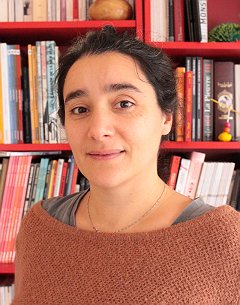
Parastoo Abtahi is an Assistant Professor in the Computer Science Department at Princeton University. She leads the Situated Interactions Lab (Ψ Lab) as part of the Princeton HCI Group, focusing on AR/VR and spatial computing. Prior to Princeton, she worked at Meta Reality Labs Research. PhD in Computer Science from Stanford University BSc in Electrical and Computer Engineering from University of Toronto (Engineering Science program) Her research explores wearable interactive technologies that augment human intelligence in physical contexts through: Input on-the-go: Low-effort, privacy-preserving multimodal interfaces Intelligent output: Timely, minimal multisensory systems Situated AI: Personalizable, predictable, safe physical-digital interaction Recent publications analyze: Drone-based haptic illusions for AR/VR Microgestures for mobile AR input Interactivity in explainable AI systems Temporal dynamics in VR haptics Awards include: 2025 Google Research Scholar Award CHI 2019 & 2018 Honorable Mentions She teaches courses like: COS 436: Human-Computer Interaction COS IW: AR Meets AI
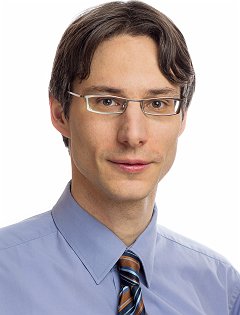
Chris J. Maddison is an Assistant Professor at the University of Toronto, holding joint appointments in the Department of Computer Science and the Department of Statistical Sciences. He is also a CIFAR AI Chair at the Vector Institute and a member of the ELLIS Society. Maddison earned his DPhil from the University of Oxford and previously worked as a Senior Research Scientist at Google DeepMind and a member at the Institute for Advanced Study. His research focuses on advancing machine learning methodologies, particularly in leveraging data’s natural structure for efficient learning, with applications in drug discovery, causal inference, and AI safety. Education: DPhil in Computer Science, University of Oxford His research interests span machine learning, AI safety, reinforcement learning, and the integration of logical reasoning into large language models. Maddison has contributed to foundational work on gradient estimation techniques and was a key member of the AlphaGo project. He actively explores how statistical structures in real-world data influence AI capabilities. Recent publications emphasize evaluating conversational agents, mitigating AI safety risks, and enhancing logical reasoning in LLMs. His work bridges theoretical advancements with practical applications, such as code generation and multi-agent systems. Awards: NeurIPS Best Paper Award (2014), Open Philanthropy AI Fellowship Maddison advises multiple PhD students and postdoctoral researchers, fostering collaborations across academia and industry. His former advisees now hold roles at institutions like OpenAI, Stanford, and Magic AI. He teaches advanced courses in machine learning and statistical methods, including CSC 2541 (Large Models) and STA 314 (Machine Learning). Maddison is affiliated with the Schwartz Reisman Institute for Technology and Society, extending his impact to societal implications of AI. His lab’s interdisciplinary approach combines algorithmic innovation with real-world problem-solving.
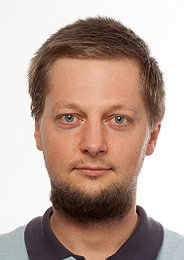
Assia Mahboubi is a tenured researcher ( directrice de recherche ) at INRIA in the Gallinette team, Nantes, France, and an endowed professor in the Algebra and Number Theory section of the Vrije Universiteit Amsterdam, Netherlands. Her work bridges theoretical computer science and formal mathematics, with significant contributions to proof assistants and formal verification. Her research focuses on the foundations and formalization of mathematics in type theory, particularly on the automated verification of mathematical proofs. She explores the interplay between computer algebra and formal proofs, and is a key contributor to the Rocq prover (formerly Coq) and the Mathematical Components libraries. Her work often examines how familiar mathematical objects can be optimally represented for computer-aided proof checking. Recent publications show a strong trend toward categorical reasoning, diagram chasing, and continuity properties in constructive type theory, with increasing focus on practical applications of formal methods in computational mathematics. Her work demonstrates the maturation of formal verification techniques from theoretical foundations to practical tools for mathematical research. ERC Consolidator grant for the FRESCO (Fast and Reliable Symbolic Computation) project Mahboubi actively supervises doctoral students including Vojtěch Štěpančík, Tomás Vallejos Parada, and Alain Chavarri Villarello. She has received significant research funding through her ERC Consolidator grant for the FRESCO project, which aims to develop fast and reliable symbolic computation techniques. She is deeply involved in the international research community, serving on program committees for major conferences including POPL, CPP, and ICFP. She leads research in the Gallinette team at INRIA, which focuses on the intersection of proof assistants, programming languages, and formal mathematics. Her work has helped establish formal verification as a practical tool for mathematical research, moving beyond theoretical foundations to real applications in computational mathematics.
Mohammad Aliannejadi is an Assistant Professor at the IRLab (formerly ILPS) within the Informatics Institute at the University of Amsterdam. His research focuses on Information Retrieval (IR), machine learning, natural language processing (NLP), and conversational systems, particularly in modeling user information needs on mobile devices and conversational search systems. He holds a Ph.D. in Informatics from Università della Svizzera italiana (USI), Lugano, Switzerland, and a M.Sc. in Computer Engineering from Tehran Polytechnic. During his Ph.D., he visited the CIIR Lab at the University of Massachusetts Amherst, USA. His research interests include conversational search systems, recommender systems, unified search frameworks, and user-centric evaluation methodologies. Notable contributions include work on clarifying questions in open-domain dialogues, contextual suggestion systems, and cross-market recommendation. Aliannejadi has organized major shared tasks and workshops, including the IGLU Contest (NeurIPS 2021) and XMRec Workshop (RecSys 2021). He serves on program committees of top IR conferences like SIGIR, CIKM, and ECIR, and has authored over 50 peer-reviewed publications in these areas. His work has received recognition, including top performance in TREC Contextual Suggestion tracks (2015, 2016). He actively contributes to the IR community through teaching, including courses on Information Retrieval and Human-in-the-Loop Machine Learning at the University of Amsterdam.
Gordon Plotkin is a Professor at the School of Informatics, University of Edinburgh, where he is affiliated with the Laboratory for Foundations of Computer Science (LFCS). His research lies at the intersection of theoretical computer science and programming language semantics, with a profound influence on the formal understanding of computation. His research interests include Programming Language Theory, Semantics of Programming Languages, Domain Theory, Operational Semantics, Lambda Calculus, Type Theory, Concurrency Theory, and Algebraic Effects. His seminal work on structural operational semantics and domain theory has laid the foundation for modern semantics of programming languages. His publications span over five decades, showing a sustained and evolving research trajectory from foundational work in lambda calculus and domain theory to recent contributions in algebraic effects, probabilistic computation, and biochemical systems modeling. The articles demonstrate a consistent focus on formal methods, mathematical rigor, and the algebraic structure of computational effects. He has collaborated with leading researchers including Martín Abadi, John Power, Glynn Winskel, and John Reynolds. His work continues to influence both theoretical and practical developments in programming languages and systems. Gordon Plotkin has made foundational contributions to computer science, particularly through his development of structural operational semantics and domain-theoretic models of computation. He has advised numerous researchers and supervised many influential PhD theses, though specific student names are not listed in the provided text. His work has been supported by long-standing affiliations with the Laboratory for Foundations of Computer Science and the University of Edinburgh, and he has contributed to major collaborative projects in programming language design and verification. He is associated with several research groups and labs, most notably the Laboratory for Foundations of Computer Science (LFCS), which serves as a hub for theoretical research in programming languages, semantics, and logic at the University of Edinburgh.
Caroline Lemieux is an Assistant Professor at the Department of Computer Science, University of British Columbia (UBC), with research focused on advancing software correctness, security, and performance through innovative testing and synthesis techniques. Her work bridges Programming Languages and Software Engineering , particularly in fuzz testing, specification mining, and program synthesis. PhD from University of California, Berkeley (2021), advised by Koushik Sen Postdoctoral researcher at Microsoft Research, NYC (2021-2022) Key contributions: FuzzFactory , CodaMOSA , Arvada , and Gauss Her research integrates machine learning with traditional testing methods, exemplified by projects like RLCheck (reinforcement learning for test generation) and AutoPandas (neural synthesis for dataframes). Recent publications analyze generator-based fuzzing challenges and propose hybrid strategies combining coverage feedback with AI-driven insights. Scientific Awards : ACM/SIGSOFT Best Paper Award (ESEC/FSE 2019) ACM/SIGSOFT Tool Demonstration Award (ISSTA 2019) ACM/SIGSOFT Distinguished Artifact Award (ISSTA 2019) NSERC Postgraduate Scholarship-Doctoral (PGS D) UBC Governor General's Silver Medal (2016) Teaching roles include: 2025W2: CPSC 539L - Topics in Programming Languages 2024W2: CPSC 410 - Advanced Software Engineering 2023W2: CPSC 410 (with Alex Summers) She supervises graduate and undergraduate researchers working on projects like ExploTest (automated unit test generation) and GRIMOIRE (grammar extraction from pseudo-rules). Her research team collaborates with institutions including Microsoft Research, Google, and academic partners in systems security and AI-driven testing.
Daniel Varro is a Professor affiliated with McGill University (Faculty of Engineering, School of Computer Science), with strong ties to Budapest University of Technology and Economics and Linköping University. He is a leading researcher in model-driven engineering, cyber-physical systems, and software engineering, actively contributing to top-tier conferences such as MODELS, ICSE, and ASE. His research focuses on model-based systems engineering (MBSE) , automated model generation , model transformations , and constraint-based consistency checking . Recently, his work has expanded into integrating large language models (LLMs) and machine learning into modeling workflows, including model querying, domain modeling, and bug detection. The recent publications reveal a strong trend toward AI-augmented modeling, logic-based solvers (e.g., Refinery), and safety assurance of autonomous systems (e.g., COLREGs compliance). His work bridges formal methods with practical software engineering challenges in industrial and safety-critical domains. Scientific Awards: No specific awards mentioned in the text. Advising and Grants: While no explicit list of students or grants is provided, his mentorship in the Doctoral Symposium and repeated leadership roles suggest active supervision and likely grant funding. He has led projects on automated model generation, model quality, and AI integration in modeling. Labs and Teams: Daniel Varro is associated with research groups focused on model-driven engineering and software evolution, likely leading or co-leading teams working on the VIATRA and Refinery frameworks for model transformation and solving.
Ruoyu (Fish) Wang is an Associate Professor at the School of Computing and Augmented Intelligence, Arizona State University (Tempe campus). He also holds affiliations as Associate Director of Impact at the Global Security Initiative, Center for Cybersecurity & Trusted Foundations, and with the Biodesign Center for Biocomputing, Security and Society. His educational background includes: Ph.D. in Computer Science, University of California, Santa Barbara Professor Wang's research focuses on system security, with an emphasis on automated binary program analysis and reverse engineering of software. He is the co-founder and core developer of the angr binary analysis platform, which won third place in the DARPA Cyber Grand Challenge (2018). His work spans vulnerability discovery, fuzzing, and security tool development for binary program analysis. His current research interests include: Binary program analysis and reverse engineering Automated vulnerability discovery and mitigation Fuzzing techniques and robust testing Phishing and fraud detection in e-commerce Security of firmware and embedded systems Application of machine learning to security problems His recent publications (2024-2025) demonstrate cutting-edge research in fraud detection for e-commerce using LLMs, advanced fuzzing methodologies, and binary decompilation techniques. Key trends include bridging theoretical program analysis with practical security tools, as evidenced by extensions to the angr platform, and addressing emerging threats in financial ecosystems and client-side security. Dr. Wang has received notable recognition: Third place in DARPA Cyber Grand Challenge (2018) with team Shellphish As an active educator, he supervises graduate research (CSE 599/799) and teaches core cybersecurity courses including Software Security (CSE 545) and Information Assurance (CSE 365). His teaching spans multiple semesters through 2025, covering practicums, internships, and special topics in computing security. Dr. Wang co-founded the angr binary analysis platform and contributes to Arizona State University's security research ecosystem through leadership roles in the Center for Cybersecurity & Trusted Foundations and Biodesign Center for Biocomputing, Security and Society.
Dr. Chunyan Mu serves as a Senior Lecturer in the School of Natural and Computing Sciences at the University of Aberdeen, actively contributing to both academic instruction and cutting-edge research in computing science while currently accepting new PhD students. Her research program centers on Trustworthy AI and Safe Autonomy, with specialized expertise in formal verification of responsibility, accountability, and privacy mechanisms within multi-agent systems. She investigates resilience frameworks for autonomous intelligent systems and develops advanced methodologies for information flow security analysis, bridging theoretical computer science with practical security implementations. Analysis of her publication trajectory (2014-2025) reveals consistent innovation in applying formal methods to security-critical systems. Key thematic developments include probabilistic strategy logic for observability analysis, quantitative verification of opacity properties, and game-theoretic approaches to security verification, demonstrating increasing sophistication in handling multi-agent accountability and system resilience challenges. Dr. Mu currently supervises PhD candidates and offers a fully funded doctoral position focused on formal verification of safety properties in autonomous systems, providing comprehensive financial support including tuition coverage, £20,780 annual stipend, and dedicated research funding for candidates with strong backgrounds in formal methods and artificial intelligence.
Mattias Heldner is Professor of Phonetics and Head of Department at the Department of Linguistics, Stockholm University. He also serves as Director of the Phonetics Laboratory where he has developed advanced recording facilities for breathing movements and voice quality dynamics in conversation. Dr. Heldner received his PhD in Phonetics from Umeå University in 2002, completed a postdoc at TeliaSonera Sweden in 2005, became Docent in Speech Communication at KTH Royal Institute of Technology in 2007, and was appointed Professor in Phonetics at Stockholm University in 2011. His research focuses on communicative behavior relevant for turn-taking in conversation and signaling of prosodic functions such as prominence and boundaries. His work spans multiple dimensions of speech communication, including: Respiratory patterns and their role in conversation flow Voice quality dynamics as turn-taking cues Prosodic functions in spontaneous speech Physiological constraints in verbal communication Acoustic properties of child speech development Neural correlates of lexical stress Dr. Heldner's recent publications demonstrate how respiratory signals provide crucial information for predicting speech activity and managing turn-taking. His research combines physiological measurements with acoustic analysis to uncover hidden aspects of conversational organization, particularly the relationship between breathing patterns and speech timing. As an educator, Dr. Heldner has taught phonetics courses for Speech and Language Pathology students at Karolinska Institutet, University of Gothenburg, and Umeå University. He currently supervises one PhD student and has successfully supervised two PhD theses to completion. Dr. Heldner has held several Swedish research grants and served as one of the Technical Program Chairs for Interspeech 2017 in Stockholm. His Phonetics Laboratory has developed innovative systems like RespTrack for measuring respiratory movements during speech with high experimental control.
Andrew Rice is a Professor of Computer Science at the University of Cambridge's Department of Computer Science and Technology, and holds the Hassabis Fellowship in Computer Science. He is also the Director of Studies in Computer Science at Queens' College. His research focuses on programming languages, software engineering, and machine learning applications in software development. He leads projects like Isaac Computer Science and ALTA (Automated Language Teaching and Assessment), advancing adaptive learning technologies. His work includes static analysis tools such as Error Prone at Google, energy efficiency studies in computing infrastructure, and contributions to the Computing for the Future of the Planet initiative. His teaching emphasizes practical skill development through flipped classrooms and video lectures, earning him the 2014 Pilkington Prize for teaching excellence. He has held visiting roles at Google and collaborated on energy consumption research for mobile devices and data centers. His research spans systems, networking, and natural language processing, with a strong focus on applying computational methods to real-world challenges. Key Projects: Isaac Physics/Computer Science, ALTA, Error Prone Static Analysis Research Themes: Programming Languages, Machine Learning, Energy Efficiency Awards: Pilkington Prize (2014)
Cezary Kaliszyk is a Professor in Theoretical Computer Science at the University of Melbourne, previously affiliated with the University of Innsbruck. He is actively involved in research and leadership in formal methods, automated reasoning, and machine learning for theorem proving. Research Interests: Automated Reasoning and Interactive Theorem Proving Formalized Mathematics and Proof Automation Machine Learning for Logic and Theorem Proving Integration of AI with Proof Assistants (Coq, Isabelle) Dependent Type Theory and Higher-Order Logic His recent publications (2023–2025) span topics in dependently-typed logic, learning for proof guidance, formalization of surreal numbers, and blockchain-based formal methods. The works consistently bridge formal logic with machine learning, emphasizing automation, explainability, and cross-system integration. Scientific Leadership and Projects: Principal Investigator, ERC project FormalWeb3 Lead Developer, CoqHammer , Tactician , ProofWeb WG5 Leader, COST Action EuroProofNet (until 2024) Contributor to HOL(y)Hammer , Isabelle Enigma He supervises multiple PhD students and has mentored several graduates in formal methods and AI. He teaches courses in theoretical computer science, logic, and machine learning. There are no listed awards in the provided data, but his extensive publication record and project leadership indicate significant recognition in the field. Labs and Research Groups: He leads a research group focused on formal methods and learning-based reasoning, collaborating internationally on projects involving proof automation, formal libraries, and semantic technologies.
Westley Weimer is a Professor in the Department of Electrical Engineering and Computer Science (EECS) at the University of Michigan, College of Engineering. He teaches advanced courses such as EECS 590 (Advanced Programming Languages) and EECS 481 (Software Engineering), and has previously taught at the University of Virginia. His research integrates software engineering, programming languages, and cognitive science, focusing on automated program repair, program analysis, and the neuroscience of code comprehension. University: University of Michigan School: College of Engineering Department: Department of Electrical Engineering and Computer Science Academic Rank: Professor His research interests include automated program repair (e.g., GenProg), software quality, cognitive modeling of programming, neuroimaging studies of code review, and the application of medical imaging to software engineering. He explores deep questions at the intersection of consciousness, time, and computation, advocating for interdisciplinary approaches to understanding the mind through programming behavior. The most recent publications reflect a trend toward empirical and cognitive studies in software engineering, combining automated repair with human factors, neuroimaging (fMRI, TMS), and real-world software challenges. Themes include bias in code review, programming under cognitive influences, and the neurological basis of code comprehension. His work increasingly bridges computer science with psychology, neuroscience, and social science. Scientific awards include multiple Distinguished Paper Awards at ICSE, FSE, and ESEC/FSE, Best Paper and Runner-up awards, and several 10-Year Most Influential Paper Awards from ASE, GECCO, POPL, and ASPLOS, recognizing the lasting impact of his contributions to automated software repair and program analysis. He has advised numerous PhD and Master’s students, many of whom have gone on to faculty positions or industry research roles. He contributes to academic service through organizing diversity and inclusion initiatives, maintaining graduate career resources, and promoting ethical and inclusive practices in computing. He leads a vibrant research group focused on improving software quality through both technical and human-centered innovations, with ongoing projects in automated repair, cognitive modeling, and secure systems.
Lily Chen is an Associate Professor at the Research School of Accounting within the ANU College of Business and Economics. She previously held positions at the University of Auckland Business School where she earned her PhD in Accounting (2013). Her research focuses on financial reporting, corporate governance, CSR, machine learning applications in accounting, and integrated reporting frameworks. Her work has been published in top journals like The Accounting Review and widely cited by regulatory bodies. Education: PhD in Accounting from the University of Auckland (2013). Professional Affiliations: Board member of Accounting and Finance Association of Australia and New Zealand, editor for Pacific Accounting Review, and editorial board member for Accounting and Finance and Meditari Accountancy Research. Research Interests: Combines traditional accounting topics with emerging technologies, particularly exploring machine learning applications in financial disclosure analysis. Her studies on institutional investor behavior and CSR governance have received significant industry attention. Awards: Multiple accolades including Research Excellence Awards from University of Auckland (2013), Teaching Excellence Awards, and Best Paper recognitions. Supervised 5 PhD, 8 Masters, and 8 Honours students. Teaching: Leads financial accounting courses for both undergraduate and postgraduate students. Active in curriculum development and postgraduate program administration.
Brandon Lucia is a Professor in the Department of Electrical and Computer Engineering at Carnegie Mellon University's College of Engineering. He holds the Kavčić-Moura Professorship and leads the Abstract research group. As CEO and co-founder of Efficient Computer Corp., he bridges academic research with commercial applications in energy-efficient computing. Dr. Lucia received his Ph.D. in Computer Science and Engineering from the University of Washington in 2013, following an MS from the same institution in 2010 and a BS in Computer Science from Tufts University in 2007. His research focuses on the intersection of computer architecture, computer systems, and programming languages, particularly in energy-constrained environments. His primary research interests include intermittent computing, energy harvesting computers, orbital edge computing, and parallel computing systems. Lucia's work addresses fundamental challenges in creating programmable, reliable computing devices that operate without batteries by harvesting energy from their environments, with applications in sensing, medical implants, and space systems. He also investigates software systems and architectures for making parallel computing correct, reliable, and efficient in the post-Moore's Law era. Lucia's publication record shows a clear trajectory toward orbital edge computing and nanosatellite systems, with recent work focusing on computational constellations, visual navigation for satellites, and energy-efficient processing in space. His research spans both theoretical foundations of intermittent computing and practical implementations in hardware and software. 2021 Sloan Research Fellowship 2018 NSF CAREER Award 2018 ASPLOS Best Paper Award IEEE MICRO Top Picks in Computer Architecture (2009, 2010, 2016) 2015 OOPSLA Best Paper Award 2019 IEEE TCCA Young Computer Architect Award 2022 Engineering Faculty Award As an advisor, Lucia has mentored numerous graduate students including Brad Denby, Zhuo Cheng, and Kyle McCleary, many of whom have become co-authors on his significant publications. His lab developed the world's first batteryless PocketQube nanosatellite (Tartan-Artibeus-1), which was deployed to low-Earth orbit aboard the SpaceX Transporter-3 Rocket. Lucia's research has received funding from sources including NSF, DARPA, Google, and VMware, supporting both fundamental research and practical implementations of energy-harvesting computing systems.