Gregory Gay is an Associate Professor in the Interaction Design and Software Engineering division within the Department of Computer Science and Engineering at Chalmers University of Technology and the University of Gothenburg, Sweden. His academic profile spans numerous software engineering conferences where he has served as committee member, program chair, and active researcher since at least 2018. Dr. Gay's research focuses on the intersection of software engineering and artificial intelligence, with particular emphasis on: Software Testing and Analysis Search-Based Software Engineering AI for Software Engineering (AI4SE) AI Engineering Automation of development tasks Software Carbon Footprint and sustainability His recent publications demonstrate a strong trend toward applying AI and optimization techniques to software testing challenges, with increasing focus on sustainability aspects of software development. Many studies take an industrial perspective, examining real-world applications in automotive software systems. His work blends theoretical foundations with practical applications, making significant contributions to both academic research and industrial practice in software engineering. Dr. Gay has been actively involved in numerous top software engineering conferences including ASE, ICSE, ESEC/FSE, ISSTA, and ICST, serving on program committees and organizing tracks. His research methodology typically combines optimization, artificial intelligence, and machine learning to help developers deliver complex systems in a safe, secure, and efficient manner.
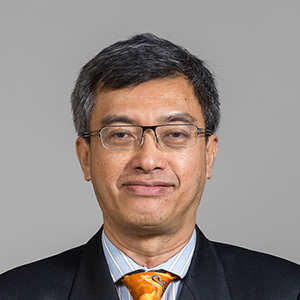
Seung Yeob Shin serves as a Research Scientist at the University of Luxembourg's Interdisciplinary Centre for Security, Reliability and Trust (SnT), where he contributes to the Software Verification and Validation (V&V) Lab under Prof. Lionel Briand. His active participation in major software engineering conferences includes serving on ASE 2025's Research Papers Program Committee and authoring multiple journal-first publications presented at premier venues like ICSE and ESEC/FSE. Shin earned his PhD in 2016 from the Laboratory for Advanced Software Engineering Research (LASER) at the University of Massachusetts Amherst's College of Information and Computer Sciences. His research expertise centers on applying formal methods to complex software systems, with particular emphasis on model-based verification techniques. His current research program bridges theoretical modeling and practical system validation across critical domains. Key focus areas include developing simulation frameworks for software-defined networks, creating model-checking approaches for cyber-physical control loops, and establishing probabilistic methods for real-time system verification. This work consistently targets reliability challenges in safety-critical infrastructure through rigorous engineering methodologies. Recent publications demonstrate a cohesive trajectory in applying formal verification to emerging system paradigms. The 2024 journal-first papers reveal increasing sophistication in handling non-deterministic behaviors across networking, embedded systems, and requirements engineering domains, with notable emphasis on failure induction and probabilistic safety guarantees. No scientific awards were documented in the available materials. While conference contributions indicate significant scholarly engagement, no information regarding student advising or research grants appears in the provided documentation. As a core member of the V&V Lab at SnT, Shin contributes to Luxembourg's national cybersecurity research infrastructure. The lab specializes in developing mathematical frameworks for system validation, with current projects addressing verification challenges in autonomous systems, critical infrastructure, and secure communications protocols through model-driven approaches.
Prof. Tegawendé F. Bissyandé is a Chief Scientist in the Professor category at the Interdisciplinary Centre for Security, Reliability and Trust (SnT) at the University of Luxembourg. He holds the prestigious position of ERC Fellow and serves as Principal Investigator of the NATURAL project focused on Artificial Intelligence for Program Repair. His research spans software engineering, cybersecurity, and artificial intelligence, with particular emphasis on applying machine learning techniques to software development and security challenges. Dr. Bissyandé's research interests include: Software Debugging (especially bug localization and program repair) Software Security (especially malware detection and analysis) Code Search (both free-form and semantic code-to-code) Machine Learning and Natural Language Processing for software engineering Cyber-security applications in mobile and cloud environments His recent work demonstrates a strong focus on leveraging Large Language Models (LLMs) for various software engineering tasks. Analysis of his 15 most recent publications reveals several key trends: extensive application of LLMs to program repair and code generation; innovative approaches to Android security and malware detection; development of novel techniques for code search and understanding; and exploration of the intersection between natural language processing and software engineering. His research increasingly bridges theoretical software engineering with practical applications in mobile security and developer productivity tools, with a significant portion of his work focusing on Android ecosystem security and program repair technologies. Dr. Bissyandé has received numerous prestigious awards throughout his career: APSEC Best ERA Paper Award (2018) for 'LSRepair: Live Search of Fix Ingredients for Automated Program Repair' IPSJ SIG SE Excellent Research Award (2018) for 'FaCOY: a Code-to-Code Search Engine' FOSS Impact Paper Award (2018) for 'Characterizing Deprecated Android APIs' SANER Best ERA Paper Award (2016) for 'Parameter Values of Android APIs: A Preliminary Study on 100,000 Apps' ASE Best Paper Award (2012) for 'Diagnosys: automatic generation of a debugging interface to the Linux kernel' As an active member of the software engineering research community, Dr. Bissyandé serves on program committees for major conferences including ICSE, ASE, and ISSTA, and has been an Area Chair for ICSE 2024. His industry partnerships include significant collaborations with BGL BNP Paribas (since January 2019), Luxembourg Stock Exchange (since January 2018), and Paul Wurth (January 2015 to 2018), demonstrating the practical impact of his research. He leads the SerVAL lab at SnT, which focuses on software validation and analysis, with particular expertise in mobile security and program repair technologies, and actively mentors PhD candidates through FNR research grants.
Andreea Costea is an Assistant Professor in the Programming Languages Group within the Faculty of Electrical Engineering, Mathematics & Computer Science (EEMCS) at Delft University of Technology. She joined TU Delft in October 2024 after completing her PhD at the School of Computing, National University of Singapore (NUS), where she worked in the Programming Languages and Software Engineering lab collaborating with the Automated Program Repair team, Trustworthy and Secure Software group, and VERSE lab. Her primary research focuses on programming languages design and implementation, with particular emphasis on software verification for critical code, program synthesis, and automated program repair. She maintains strong connections with industry while pursuing formal methods research, especially in the context of Rust programming language safety and interoperability. Dr. Costea's publication record demonstrates consistent contributions to software engineering and programming languages research, with recent work focusing on automated program repair techniques, Rust language safety mechanisms, and communication protocol verification. Her research shows a clear trajectory from theoretical foundations in session types and separation logic toward practical applications in memory safety and program repair. She actively serves the research community as Program Committee member for major conferences including ASE, ICSE, ICFP, and APLAS. Her service includes chairing publicity committees for SPLASH and artifact evaluation for ESOP. Regular Journal Reviewer: CACM, TOSEM, TSE Panel discussions: PLMW @ POPL'22, PLDI'21, PLMW @ PLDI'21, POPL'21 Extensive reviewing for top-tier conferences including POPL, OOPSLA, CAV, VMCAI Dr. Costea supervises multiple Master's students working on Rust-related safety projects and is actively recruiting PhD students to work on software interoperability, particularly focusing on how to restore Rust's safety guarantees when integrating with legacy C code and ensuring correct interaction between components written in different languages.
Sam Malek is a Professor in the Department of Informatics at the University of California, Irvine's School of Information and Computer Sciences, where he directs the Software Engineering and Analysis Laboratory. Previously serving as Director of the Institute for Software Research (2018-2022), his academic leadership spans software engineering research and institutional management. His research centers on software engineering with specialized expertise in software analysis and testing , mobile computing , security , software architecture , and accessible computing . Malek's work consistently focuses on developing practical techniques and tools for constructing, analyzing, and maintaining large-scale software systems, with recent emphasis on accessibility challenges in mobile and web environments. His publication trends reveal a strategic shift toward accessible computing since 2020, where he pioneered frameworks like Ma11y for web accessibility testing and Groundhog for mobile app crawling. Earlier work established foundations in energy testing (2020), GUI input generation (2021), and architectural analysis, demonstrating methodological evolution from core software engineering to human-centered accessibility solutions. ACM SIGSOFT test-of-time award (2020) National Science Foundation CAREER award (2013) GMU Emerging Researcher/Scholar/Creator award (2013) GMU Computer Science Department Outstanding Faculty Research Award (2011) Malek serves on editorial boards for ACM Transactions on Software Engineering and Methodology and ACM Transactions on Autonomous and Adaptive Systems , while frequently acting as a software expert witness in intellectual property litigation. His research group actively recruits PhD students through UCI's Software Engineering PhD program, with current projects focusing on AI-driven accessibility solutions and mobile testing frameworks. The Software Engineering and Analysis Laboratory under his direction maintains strong industry connections through sponsored research and tool development, particularly in accessibility testing and mobile application quality assurance.
Shui Yu is a Professor of the School of Computer Science in the Faculty of Engineering and Information Technology at the University of Technology Sydney (UTS), where he also serves as the Deputy Chair of the UTS Research Committee. His academic career spans over 20 years in Australia and 7 years in China, with additional teaching experience in Hong Kong and Indonesia. He has developed more than 10 units in cybersecurity, computer science, data analytics, and computer games, serving as the Course Director for Computer Science undergraduate programs. Professor Yu's research interests center on cybersecurity, privacy, networking aspects of Big Data, and applied mathematics for computer science. He pioneered the field of 'networking for big data' in 2013 and edited the seminal book 'Networking for Big Data' published in 2015. His work has practical applications in industry, including Amazon Cloud's auto-scale strategy against distributed denial-of-service attacks. Current research focuses include privacy and security concerns associated with big data, security issues in smart grids, anonymous transactions on Blockchain, and anonymous communication for web browsing privacy. Analysis of his recent publications reveals a strong research trajectory spanning cybersecurity, privacy-preserving technologies, networking for big data, and applied mathematics. His work shows increasing focus on quantum-resistant cryptography, federated learning security, and adversarial robustness in AI systems. The interdisciplinary nature of his research bridges theoretical foundations with practical applications in IoT, blockchain, and cloud environments. Fellow of IEEE (2023) Distinguished Lecturer of IEEE Communications Society (2018-2021) Distinguished Visitor of IEEE Computer Society (2022-2024) Professor Yu has secured numerous research grants from the Australian Research Council, including current projects on privacy and fairness in high intelligence models (DP240100955), improved security and privacy for online platforms (LP220200808), and secure blockchain for financial applications (LP220100453). He has served on editorial boards of multiple IEEE journals including IEEE Communications Surveys and Tutorials, IEEE Communications Magazine, and IEEE Internet of Things Journal. His service extends to organizing major conferences such as IEEE Globecom 2015 and IEEE INFOCOM 2016-2017.
Dr. Siobahn Day Grady is an Assistant Professor of Information Science/Systems at North Carolina Central University (NCCU) and serves as the Founding Director of the Institute for Artificial Intelligence and Emerging Research (IAIER), which she established in 2025. She also holds leadership roles as Co-Director of The Center fOr Data Equity (CODE), Program Director of the Information Science Program, and Faculty Fellow in the Office of Faculty and Professional Development. Dr. Grady reports to the Provost with oversight of a $1M+ annual budget and $3M+ grant portfolio, managing a staff of 5 plus advisory boards. Ph.D. in Computer Science, North Carolina Agricultural & Technical State University (2018) M.S. in Computer Science, North Carolina Agricultural & Technical State University (2018) M.S. in Information Science, North Carolina Central University (2009) B.S. in Computer Science, Winston-Salem State University (2005) Dr. Grady's research focuses on the ethical implementation of artificial intelligence, with particular emphasis on fairness, bias mitigation, and equity in AI systems. Her work bridges technical AI development with social justice considerations, especially in healthcare applications and educational contexts. She has pioneered initiatives to increase AI literacy at HBCUs and developed frameworks for operationalizing fairness in AI governance. Her research interests include natural language processing, machine learning applications for social good, digital literacy programs for marginalized communities, and strategies to increase diversity in STEM fields through her STEM-It-Yourself program. Analysis of Dr. Grady's recent publications reveals a strong trajectory toward practical applications of AI ethics in real-world settings, particularly in healthcare and education. Her work demonstrates a consistent focus on creating frameworks that translate theoretical AI ethics principles into actionable guidelines for practitioners. There's a clear progression from technical AI research toward more interdisciplinary work that bridges computer science with social sciences, nursing, and education. Her publications increasingly address the needs of underrepresented communities and focus on practical implementation strategies rather than purely theoretical contributions. Winston-Salem State University 2023 Distinguished Alumni Award Durham Section of the National Council of Negro Women 2024 Distinguished Educator Sigma Iota Omega Chapter of Alpha Kappa Alpha Sorority, Incorporated® 2022 Soaring to Greater Heights in Science Technology Engineering Arts Mathematics Honoree The Links, Inc., Raleigh (NC) Chapter 2022 Emerald Award Honoree Association for Educational Communications and Technology (AECT) Culture, Learning, and Technology (CLT) Division 2023 Outstanding Publication Award Dr. Grady has secured significant grant funding totaling over $3 million, including a $1 million Google.org investment, $100K+ from Cisco, $15K from FICO, and funding from NTIA and NIH. She serves as Principal Investigator for the Digital Equity Leadership Program (DELP) and the Genomic Research and Data Science Center for Computation and Cloud Computing (GRADS-4C). Her mentoring extends to numerous students through programs like STEM-It-Yourself, which focuses on cultivating STEM identity among adolescent girls. Dr. Grady has established three endowed scholarships supporting economically disadvantaged students at multiple HBCUs, demonstrating her commitment to educational access. As Founding Director of the Institute for Artificial Intelligence and Emerging Research (IAIER), Dr. Grady leads North Carolina Central University's strategic vision for AI education, research, and policy. The institute includes the AI Emerging Scholars and Leaders Programs, which engage students, faculty, and staff in cross-disciplinary AI innovation. She has developed NCCU's first AI minor (pending approval) and serves as co-facilitator for the UNC AI Faculty Learning Community. Dr. Grady also holds leadership positions on the Governor's AI Council and multiple advisory boards, positioning NCCU as a national leader in responsible AI development and implementation.
Michael Carbin is an Associate Professor at MIT in the Department of Electrical Engineering and Computer Science (EECS), where he leads the Programming Systems Group at the Computer Science and Artificial Intelligence Laboratory (CSAIL). His research centers on developing programming systems that handle uncertainty through probabilistic programming, quantum computing, and neural networks. Carbin's work spans programming languages, systems, and machine learning, with themes including uncertainty management, efficiency optimization, and formal verification. His publications demonstrate a strong focus on probabilistic inference methods, neural network optimization, and quantum programming frameworks. Awards and Honors: Sloan Research Fellowship (2020) Multiple Best Paper Awards (OOPSLA 2013, 2014; ICLR 2019) NSF CAREER Award (2018) Google Faculty Research Award (2018) As the head of the Programming Systems Group, he advises 10+ graduate students and postdocs, focusing on cutting-edge systems research. He has secured grants including Facebook Research Awards and NSF funding.
Faysal Shezan is an Assistant Professor in the Computer Science and Engineering department at the University of Texas at Arlington. His research focuses on security and privacy intersections with cyber-physical systems, medical healthcare, software engineering, and machine learning. He received his PhD from the University of Virginia (2023) and a BS from Bangladesh University of Engineering and Technology (2016). His work has been published in top-tier venues like NDSS, WWW, PoPETs, and SOUPS. Research Interests : Security & Privacy, Cyber-Physical Systems, Medical Healthcare, GDPR Compliance, LLM Security Lab : Cyber Guard Research Lab Recent Publications span vulnerability repair automation (USENIX 2025), IoT privacy analysis (NDSS 2023), GDPR compliance (WWW 2020), and VR security (SSPX 2022). His work combines program analysis, machine learning, and NLP for security solutions. Awards : CPS Rising Stars (2022), UT System Rising Stars (2023), Microsoft Azure credits ($20k, 2023) Grants : REU Program Grants (2023-24), Departmental REU Support He advises students with publications at IEEE S&P (2024) on LLM security topics and leads the Cyber Guard Research Lab exploring software security, IoT vulnerabilities, and LLM privacy.
CHIN Wei Ngan is an Associate Professor at the Department of Computer Science, School of Computing, National University of Singapore (NUS). His academic credentials include a PhD in Computing from Imperial College of Science, Technology and Medicine (1990), an MSc in Computer Science from University of Manchester (1983), and a BSc (First Class Honours) in Computer Science from University of Manchester (1982). Research Focus His research spans several interconnected domains in computer science: Foundations of programming languages and advanced type systems Automated program verification and analysis techniques Dependable software construction methodologies Formal software specification models Programming language design principles Research Projects Automated Specification Discovery for Trusted Software (MoE Tier-2 funded) Security - Software Library Verification (NRF-funded) SLEEK: Entailment Prover for Separation Logic HIP: Program Verifier for Imperative Languages HIPO: Program Verifier for Object-Oriented Languages Fixpoint Calculator development Teaching He teaches CS2030 Programming Methodology II, focusing on modern programming paradigms and methodologies.
Ragnhild Kobro Runde is an Associate Professor in Computing Education at the Department of Informatics, University of Oslo. Her work focuses on software engineering methodologies, formal methods in system design, and computing education at both secondary and undergraduate levels. She is affiliated with the Computing Education research group. Her research explores topics such as UML sequence diagram semantics, formal specification techniques (Event-B/STAIRS), and the transition from block-based programming (Scratch) to text-based languages (Python) in schools. She also investigates how ICT exposure impacts mathematics self-belief and academic performance in PISA assessments. Runde has contributed to over 30 peer-reviewed publications since 2005, appearing in journals like Formal Aspects of Computing and Software and Systems Modeling. Her work frequently addresses challenges in software design, security risk analysis, and service-oriented architecture modeling using UML extensions. Key contributions include developing pattern languages for web application security risk analysis, analyzing nondeterminism in sequence diagrams, and creating methodologies for dynamic service composition using UML 2.x. She has collaborated with international researchers on computing education initiatives and formal methods applications.
Seif Haridi is a Professor at KTH Royal Institute of Technology in Stockholm, Sweden, specializing in parallel and distributed computing systems. He holds dual roles as Chair-Professor of Computer Systems and Chief Scientific Advisor at RISE SICS. His research integrates systems engineering with theoretical foundations, focusing on programming systems, distributed computing, and big data technologies. Key contributions include co-designing SICStus Prolog, the Mozart Programming System, and Apache Flink, as well as leading the development of HOPS, a European big data platform awarded the IEEE Scale Prize 2017. He has led major EU projects like EIT-Digital’s cloud computing initiative and co-founded startups such as LogicalClocks and HiveStreaming. His teaching includes courses on distributed algorithms and peer-to-peer computing at KTH. Notable awards include the European Data Science Technology Innovation 2019. His work spans systems like HOPS, Flink, and Kompics, emphasizing scalability and robustness in distributed environments. Current projects include CDA (Continuous Deep Analytics) and ExtremeEarth for geospatial data analysis. Research interests include distributed algorithms, consensus protocols, and cloud-native systems. His lab’s contributions to scalable storage (e.g., HopsFS) and stream processing (Apache Flink) highlight his impact on both academia and industry.
Dr. Peter J. Robinson is an Honorary Research Fellow at the School of Electrical Engineering & Computer Science, The University of Queensland. His academic career spans over three decades, focusing on foundational research in programming languages, formal methods, and distributed systems. His work includes contributions to Qu-Prolog, a multi-threaded Prolog implementation, and TeleoR, a robotic task programming framework. Research interests include agent-based systems, blockchain security for aerospace applications, software verification, concurrent programming, and education technology. Notable projects include the Pedro publish/subscribe server and MyPyTutor, an interactive Python learning tool. He has collaborated on railway safety protocols and spacecraft control systems using blockchain. Publications span journals like Formal Aspects of Computing and conferences such as IEEE Symposium on Computers and Communications. Technical reports include work on unification algorithms and multi-agent verification frameworks. He has advised on projects involving IoT architectures and swarm intelligence simulations.
Georg Simhandl is affiliated with the Faculty of Computer Science, specifically within the Research Group Software Architecture. His work focuses on advancing theoretical and practical aspects of software engineering with a strong emphasis on cybersecurity, microservices, and empirical studies. Research Interests: His core research spans Microservices Architecture , Cybersecurity in Software Systems , Formal Methods , and Empirical Software Engineering . He investigates topics such as secure firmware updates, threat modeling for microservices, and developer cognition in system maintenance. Recent work highlights include leveraging TPMs for cryptographic anchoring and analyzing how dataflow diagrams enhance security analysis. Activities: He has presented at conferences like the ACM SIGPLAN International Conference on Software Language Engineering (SLE '24) and participated in workshops such as the IEEE/ACM International Workshop on Eye Movements in Programming (EMIP). His research bridges theoretical frameworks with practical software development challenges. Labs/Teams: Works within the Research Group Software Architecture, contributing to projects on secure architecture design and empirical evaluation of software practices.
John Clements is a Lecturer in the Department of Computer Science at California Polytechnic State University. He teaches undergraduate and graduate courses including CSC 430 (Programming Languages) and CSC 202 (Data Structures). His research focuses on programming languages, functional programming, and educational technology, with contributions to the Racket language ecosystem and tools like DrRacket. He emphasizes ethical computing and pedagogical innovation in introductory courses. Clements is actively involved in curriculum design, particularly in integrating test-driven development and socially responsible computing principles. His work spans educational research, compiler design, and IDE development, with a focus on making programming more accessible and inclusive. Education: While specific academic credentials are not explicitly detailed, his extensive contributions to Racket and functional programming suggest advanced training in computer science. He has been affiliated with Cal Poly since at least 2008, contributing to courses and research initiatives. Research Interests: Functional programming, language design, educational computing, test-driven development, and ethics in technology. His projects include Racket's Typed Racket extension, spectral analysis tools for music, and password generation systems using Markov models. He advocates for diverse and inclusive learning environments. Publications: Over 20 papers on topics ranging from notional machines for runtime stacks to ethics-first computing education. Recent work emphasizes integrating social responsibility into CS curricula and improving student retention through interest-based CS0 courses. Labs/Teams: Active in the Racket community, contributing to open-source projects like rust-antlr, RSound, and molis-hai. Collaborates with researchers on pedagogy and programming language theory.