Hendrik BaierView profile
Assistant Professor
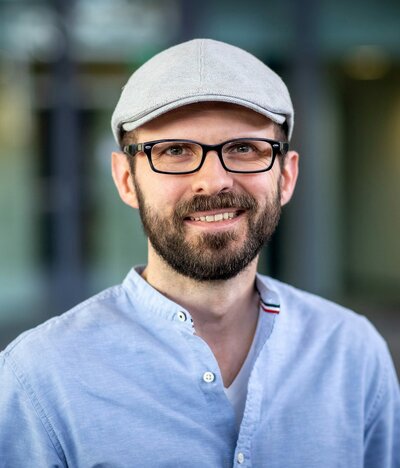
Hendrik Baier is an Assistant Professor in the Information Systems group at Eindhoven University of Technology (TU/e), where he joined in 2022. His research focuses on creating agents capable of succeeding in complex decision-making tasks to help human users solve real-world problems. His work spans planning for long-term goals, learning in unknown environments, and explainability of AI systems for effective human-AI interaction. Dr. Baier's research interests center on planning and search algorithms, reinforcement learning, and explainable AI systems. His work investigates how AI can think ahead and explain its reasoning process, particularly in sequential decision-making contexts. He applies these techniques to practical domains including logistics and transportation, smart manufacturing, and sustainable energy systems. His research bridges theoretical foundations with real-world applications through collaborative projects with industry partners. Analysis of his recent publications reveals a strong focus on explainability in sequential decision-making, with increasing integration of large language models to enhance traditional planning algorithms. His work spans theoretical foundations of Monte Carlo Tree Search, programmatic policy generation, multi-agent reinforcement learning, and practical applications of these techniques. A notable trend is the growing emphasis on human-AI collaboration, where AI systems must not only perform well but also effectively communicate their reasoning to human users. Dr. Baier actively collaborates with researchers across multiple institutions, including CWI Amsterdam where he maintains an affiliation, and has participated in significant interdisciplinary efforts such as the Dagstuhl Seminar on Explainable AI for Sequential Decision Making. His research group at TU/e works closely with industry partners to translate fundamental research into practical applications. He is affiliated with EAISI (Eindhoven Artificial Intelligence Systems Institute) and contributes to the Decision Making with Artificial Intelligence educational program at TU/e. His laboratory work focuses on developing benchmark environments and frameworks that enable rigorous evaluation of decision-making algorithms, with recent contributions including MOMAland for multi-objective multi-agent reinforcement learning.