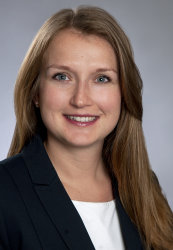
Prof. Dr. Dorothee Gelhard is a full Professor of Comparative Literature (Slavic/German/Romance Philology) at the University of Regensburg since 2002. She founded the Yiddish studies program (2007) and co-established the Master's program in General and Comparative Literature with Jewish studies focus (since 2007). As Principal Investigator of the Graduate School for Eastern and Southeastern European Studies (since 2012), she leads the research group 'Construction, Translation and Transgression in Art and Literature'. She also holds guest professorships at Hebrew University of Jerusalem (2012-2013) and University of Haifa (2014-2015). Specializes in Ernst Cassirer, Aby Warburg, Walter Benjamin, and Emmanuel Levinas Focus on German-Jewish, Russian-Jewish, and Italian-Jewish literatures Key research areas: Literary forms of philosophy, dance studies, and intermediality Her publications and editorial work (E.g., the Pegisha – Begegnung book series) emphasize Jewish cultural encounters with European modernity, including assimilation, secularization, and cultural memory. She has led seminars on dance-literature interactions, analyzing works like Romeo und Julia and Les Ballets Russes collaborations.
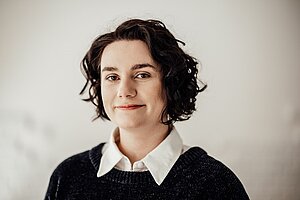
Slavo Šerc is a Lecturer (Lektor) for Slovene at the University of Regensburg, Germany, where he teaches beginning and advanced Slovene language courses each semester. His research spans German and Slovene literature, translation studies, and comparative cultural analysis. Research Interests Contemporary and modern German literature Slovene literary and cultural studies Translation theory and practice Comparative literature and cultural transfer Editorial and Translation Work Šerc has edited several anthologies of contemporary German and Swiss short prose, translated numerous German-language authors into Slovene, and authored critical studies on writers such as Peter Handke, Thomas Bernhard, and Herta Müller. Publications Overview His scholarly output includes the monograph Nemška književnost danes (1996), edited volumes, and over two hundred translations, reviews, and essays published between 1980 and 2018, demonstrating sustained engagement with both canonical and emerging voices in Germanophone literature.
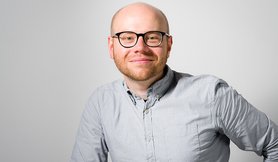
Lena Sowada , a researcher at the Department of Romance Studies of the University of Heidelberg , focuses on historical sociolinguistics, language contact, and writing practices in multilingual contexts. Since 2022, she has been a member of the Junge Akademie of the Heidelberger Akademie der Wissenschaften. PhD (2019) in cotutelle between Heidelberg University and Université Paul-Valéry Montpellier 3 BA in Spanish and French Linguistics Her research explores French language history (19th-20th centuries) Writing practices of less-experienced scribes Language contact in bilingual spaces (e.g., Alsace-Lorraine, Balearic Islands) Recent projects examine multilingualism and WWII correspondence. Her publications analyze Ego-documents from WWI Discursive traditions in private texts Orthographic challenges in historical writing She coordinates Erasmus programs for Spain and serves on the university's research commission.
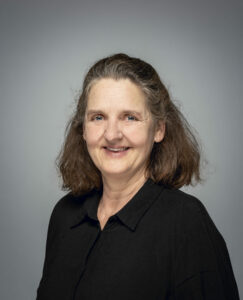
Marie Beckmann serves as a Lecturer and doctoral student at the Chair of American Studies within the Institute of Modern Languages at Julius-Maximilians-University Würzburg. Her role includes research assistance until March 31, 2025, and active teaching responsibilities in the American Studies program. Her educational qualifications include: PhD project (since October 2024) titled "Patterns of the Posthuman: Negotiating Community in Ancient Greek Tragedy and post-45 US American Literatures" Teaching Degree for Secondary Education (State Examination) in English and Latin (October 2023) Bachelor of Arts in English and American Studies/Latin Philology (October 2022) Beckmann's research critically examines community formation through literary negotiation, focusing on dehumanization and marginalization in post-1945 US literature and ancient Greek tragedy. Her work extends into environmental humanities, posthuman theory, and contemporary media analysis, particularly film and television studies, revealing interdisciplinary connections between classical and modern cultural production. Professional recognition includes: Doctoral scholarship from Evangelisches Studienwerk Villigst (active since May 2025) Long-term scholarship support from Evangelical Study Center Villigst (2018-2023) She maintains active membership in the German Society for American Studies (DGfA) and the European Association for the Study of Literature, Culture, and the Environment (EASLCE), contributing to transnational academic discourse.
Dietrich Kammer serves as Professor of Technical Visualization at Dresden University of Applied Sciences' Faculty of Computer Science/Mathematics, holding Germany's first dedicated professorship in this field established to address growing demands for innovative visualization methods in human-computer interaction. His teaching emphasizes project-based learning grounded in solid theoretical foundations, focusing on virtual/augmented reality technologies and comprehensible user interfaces across programs including Media Informatics and Geomatics. His research centers on transforming abstract data into interactive visual representations through technical visualization, employing creative techniques like metaphor production and morphological analysis. Key focus areas include tangible user interfaces, elastic displays, and multimodal interaction systems designed to enhance user experience with complex datasets. He explores how customized graphical interfaces can make otherwise unmanageable data volumes visually interpretable and actionable. Analysis of his 2021-2025 publications reveals dominant research themes in elastic display technology, tangible interaction, and information visualization. Notable trends include adaptive visual assistance systems for smart factories (AVISAR), dynamic vibrotactile feedback mechanisms, and AI applications in metadata acquisition and learning analytics. His work consistently bridges theoretical frameworks with practical industrial and educational implementations. No specific details regarding student advising or research grants appear in available materials, though he advocates for student-led project development in his pedagogical approach. He directs the Technical Visualistics Working Group, which functions as an interdisciplinary platform for developing innovative interaction and visualization solutions through collaborative research and development initiatives.
Prof. Dr. Ute Schmid is a Professor for Cognitive Systems at the University of Bamberg and a key figure in human-centered AI research. As a member of the Bavarian AI Council, bidt Board of Directors, and EurAI/GI Fellow, she focuses on bridging AI development with ethical societal application through projects like FELI (Elementary Computer Science Research Group) and initiatives promoting AI literacy in schools. Research Interests : Human-like machine learning, interactive AI, AI ethics, educational technology, and trustworthy systems. Scientific Awards : Rainer Markgraf Prize (2020) EurAI Fellow GI Fellow Notable Contributions : Keynote speaker at re:publica/TINCON, Digital Humanism Conference participant, and advocate for AI transparency and correctability. Email : ute.schmid@bidt.digital
Prof. Dr. Magnus Gaul serves as Professor and Chair of Music Education and Music Didactics at the University of Regensburg within the Faculty of Philosophy, Arts, History and Social Sciences. He has held this position since 2013 following his appointment to the W3-Professorship, after previously serving as Professor for Music Didactics at the Hochschule für Musik und Theater Rostock from 2008-2013. His academic leadership extends to coordinating teacher education programs for primary, middle, and high schools, serving as ERASMUS coordinator for music education, and administering music aptitude tests for teaching positions. Gaul's educational trajectory features international breadth with studies completed at the University of Regensburg, Goethe-Universität Frankfurt/Main, and the Conservatory in Cremona, Italy. Key academic milestones include: 2001: Doctorate in Musicology at University of Regensburg with thesis "Music Theater in Regensburg in the first half of the 19th century" 2003-2006: Additional studies in Germanistics and Music Education at Goethe-Universität Frankfurt/Main 2007: Habilitation in Music Education at Goethe-Universität Frankfurt/Main with empirical study "Music Lessons from a Student's Perspective" 2009: Qualification as professor in music education His research program demonstrates remarkable thematic coherence while evolving toward increasingly applied educational contexts. Core research interests include music education methodology, language acquisition through music (notably the SPRING program - "SPRache lernen durch sINGen"), time perception processes in musical learning contexts, and inclusive educational approaches for diverse student populations. His methodological approach combines qualitative data collection techniques including interviews, classroom observations, group discussions, and video technology analysis. Recent publications reveal growing emphasis on digital learning environments and time management aspects in contemporary music education. Gaul has developed distinctive expertise in applying qualitative-hermeneutic and quantitative-analytical approaches to classroom research, particularly regarding student perspectives on music instruction. Analysis of Gaul's publication record reveals a clear scholarly trajectory from historical music theater research toward increasingly applied educational studies with practical classroom implications. His work consistently bridges theoretical foundations with practical teaching applications, with notable thematic clusters including music-mediated language acquisition (SPRING program), time perception in musical learning, inclusive education approaches, and interdisciplinary connections between music education and other academic domains. The publications demonstrate methodological diversity, combining qualitative hermeneutic approaches with quantitative analytical techniques, reflecting his commitment to comprehensive understanding of music education phenomena. Gaul has supervised numerous academic advisees across various teacher education programs and secured funding for multiple research initiatives including the SPRING language acquisition project and studies on time perception in musical learning. His collaborative work extends to partnerships with cultural institutions including the Norddeutsche Philharmonie Rostock and Volkstheater Rostock during his tenure in Rostock, and more recently with various schools in Regensburg focusing on inclusive education processes, migration contexts, and SPRING implementation. He has coordinated multiple continuing education programs for music teachers across German federal states including Bavaria, Hesse, and Mecklenburg-Western Pomerania. Active research teams under Gaul's direction include the SPRING research group examining music-mediated language acquisition, projects investigating time perception in musical learning contexts (notably his 2022 publication "Vom Umgang mit der Zeit bei Kindern"), and interdisciplinary collaborations exploring connections between music education and special educational needs. His international research network includes collaborations with institutions in England, France, Italy, Lebanon, Austria, Spain, and the Czech Republic through ERASMUS programs and international workshops. Current projects focus on digital time management in music education (2024 publication) and creating spatial opportunities for musical education (2021 publication).
Dr. Iuliia Alieva serves as a postdoctoral researcher at the Department of Computational Social Science within the Institute of Social Sciences at the University of Stuttgart. Her interdisciplinary work integrates computational methodologies with social science inquiry to analyze digital information ecosystems, with particular emphasis on geopolitical conflict zones and societal crises. Her research portfolio spans critical domains including: Computational Social Science Network Science and Analysis Disinformation and Propaganda Research Social Media Analytics Journalistic Framing Mechanisms Political Communication Dynamics Analysis of her 2021-2024 publications reveals concentrated investigation into Russian information operations on Twitter, especially regarding Ukraine invasion narratives. Her methodological approach consistently combines network analysis, natural language processing, and mixed-methods frameworks to dissect propaganda architectures, anti-war counter-narratives, and media coverage patterns across geopolitical events. Collaborative work with Kathleen Carley's research group forms the backbone of her empirical investigations. Dr. Alieva demonstrates active academic engagement through scheduled 2025 teaching appointments for courses on mis/disinformation and AI-society interactions. No scientific awards or formal student advisement relationships were documented in source materials. Her research emerges from collaborative computational social science teams applying network science to contemporary challenges including election integrity, pandemic communication, and state-sponsored information warfare.
Thorsten Holz is a Professor and Head of the Chair for System Security at Ruhr-University Bochum's Faculty of Computer Science. His research team focuses on critical areas of cybersecurity including binary analysis, automated vulnerability discovery (fuzzing), embedded systems security, and privacy compliance (GDPR). Research Focus: His work spans: Binary analysis & reverse engineering techniques Software security with emphasis on fuzzing and automated vulnerability assessment Security of embedded/IoT systems Privacy mechanisms and GDPR implementation Network and internet security protocols Publication Trends: Recent works (2024-2025) demonstrate strong emphasis on: Advanced fuzzing methodologies for software/hardware systems Security of satellite and aerospace systems Detection of AI-generated media (deepfakes) and LLM vulnerabilities Trusted execution environments (TEEs) and memory corruption defenses Social media/platform security abuses He leads a research group developing cutting-edge tools for vulnerability discovery and security validation, with significant real-world impact in both academic and industry domains.
Prof. Günter Neumann is a Professor of Computational Linguistics at Saarland University and a Research Fellow at the German Research Center for Artificial Intelligence (DFKI) . He has over 30 years of experience in research software development, with a focus on language technology , information extraction , and question answering systems . PhD in Computer Science (1994) and Venia Legendi in Computational Linguistics (2004) from Saarland University Visiting researcher at Stanford , CMU , and MIT His research spans computational linguistics , artificial intelligence , and their applications in defence , healthcare , and education . He leads projects like AtLaS (AI-based NLP for low-quality data in defence), PRECISE4Q (predictive modeling in stroke medicine), and iREAD (personalized reading apps). Recent publications focus on low-resource language retrieval , cross-lingual transfer , and graph-based reasoning in biomedical domains. He has participated in numerous program committees (ACL, AAAI, LREC) and contributed to advancements in multilingual question answering , knowledge graph reasoning , and medical text de-identification . He has collaborated with institutions like Fondazione Bruno Kessler , econob , and NICE Systems . Current tools developed with his team power semantic search services for Informationsdienst Wissenschaft and the Deutsche Allianz Meeresforschung portal.
Prof. Dr. Martin E. Müller is a Professor in the Department of Computer Science at Bonn-Rhein-Sieg University of Applied Sciences, specializing in the mathematical and theoretical foundations of informatics. His research bridges abstract algebraic structures with practical computational applications, particularly in knowledge representation and reasoning systems. Dr. Müller's primary research interests include Algebraic Logic , Modal Logic , Relational Algebra , Universal Algebra , and Logic Knowledge Discovery (also known as explainable machine learning). His work demonstrates how theoretical mathematical frameworks can provide robust foundations for practical computational problems, particularly in the areas of rough set theory, formal concept analysis, and inductive logic programming. He approaches machine learning through logical structures, emphasizing transparency and explainability in AI systems. Analysis of his publication record shows a consistent scholarly trajectory from 1994 through 2023, with increasing emphasis on applying formal logical methods to contemporary machine learning challenges. His work spans theoretical foundations of computing, relational methods in program semantics, and practical applications in user modeling and knowledge discovery. Recent publications demonstrate growing interest in making machine learning more interpretable through logical frameworks. Among his professional recognitions is the Seahorse award from 1975 . Dr. Müller serves as a reviewer for numerous academic journals and conferences and is an active member of several professional associations in computer science and logic. Dr. Müller has led significant research projects including PARIA (2004-2008), which developed the PACME architecture for concurrent processes; Rela-X (2010-2019), which implemented libraries for efficient relation calculus with the R-Lang programming language; and the ongoing COMPARE project (2024-) focusing on pairwise multidimensional comparisons for survey analysis. His current work with the 'Sets, Structures, Semantics' project (2018-) aims to create a comprehensive resource on discrete mathematics and logics. His research group maintains strong international collaborations, particularly with researchers in the relational and algebraic methods community, including notable figures like Tony Hoare, Peter Höfner, Peter Jipsen, and Bernhard Möller. The Rela-X project established a productive student working group environment that produced both theoretical insights and practical software tools for relational calculus visualization.
Prof. Dr. sc. nat. Elke van der Meer is a Senior Professor at the Institute of Psychology, Humboldt University of Berlin. With a career spanning over four decades, she has made significant contributions to cognitive psychology, psycholinguistics, and temporal perception research. Her work integrates psychometrics, behavioral experiments, and neuroimaging techniques like fMRI and ERP to explore event knowledge, attention mechanisms, and differential psychological aspects in conditions such as Parkinson's and dyslexia. Education: Diploma in Psychology (1974), Humboldt University of Berlin; Dr. rer. nat. (1979) on analogy recognition; Habilitation (1983) on concept knowledge usage. Research: Focuses on knowledge representation, psychological time processing, and environmental perception. Key methodologies include pupillometry, eye tracking, and neural connectivity studies. Publications: 15 most recent works span pitch discrimination, temporal focus scales, analogical reasoning, and migration-related delinquency studies. Her research bridges cognitive science with urban ecology and educational psychology. Leadership: Served as Managing Director of the Institute (2004-2006), Principal Investigator in multiple graduate programs, and held editorial roles in key psychology journals.
Dr. Marie Hornberger is a Research Associate at the Technical University of Munich (TUM) School of Social Sciences and Technology , focusing on AI literacy and educational technology. Her work bridges artificial intelligence and pedagogical practices in higher education. M.Sc. Psychology (University of Tübingen, 2020) B.Sc. Psychology (University of Tübingen, 2016) Research Interests: AI literacy frameworks for university students Teacher training in artificial intelligence Impact of AI on science education Development of assessment tools for digital competencies Recent Publications (2023–2025) demonstrate her expertise in AI literacy testing , with a focus on international validation, self-efficacy models, and pedagogical integration of generative AI. Her work appears in Computers and Education: Artificial Intelligence and Learning and Individual Differences . Conference Contributions: Presented validation studies of AI literacy tests at annual conferences of the Society for Empirical Educational Research (2023–2025) Poster session on AI literacy measurement at the 2023 Essen conference Current Projects: Lead researcher in the Doctoral project 'Measuring and Promoting AI Literacy in Higher Education' and contributor to the KI-CP@TUM initiative on AI study programs.
Dr. Stefan Seegerer is an Associate Scientist in the Didactics of Computer Science group at the Department of Mathematics and Computer Science , Free University of Berlin. His work focuses on integrating computer science education with digital literacy and artificial intelligence. Research Projects: ENKIS (AI study programs), TrainDL (Data Literacy teacher training), DigiProMIN (digital professionalization for STEM teachers), and others.
Jaklin Kornfilt is a Professor in the Department of Languages, Literatures and Linguistics at Syracuse University's College of Arts and Sciences. She serves as the Turkish Program Coordinator and is affiliated with Jewish Studies, Modern Jewish Studies, Linguistic Studies, and Middle Eastern Studies programs. Her research focuses on Turkish linguistics, syntax, morphology, and language acquisition. She has authored and co-edited significant works in Turkish descriptive grammar and cross-linguistic syntactic theory, contributing to first language acquisition studies. Her publications include Turkish (Descriptive Grammars) (Routledge, 2010) and co-edited volumes on syntactic theory. Jaklin Kornfilt's office is located at 305 HB Crouse Hall. Reach her via email at kornfilt@syr.edu or phone at 315.443.5375.