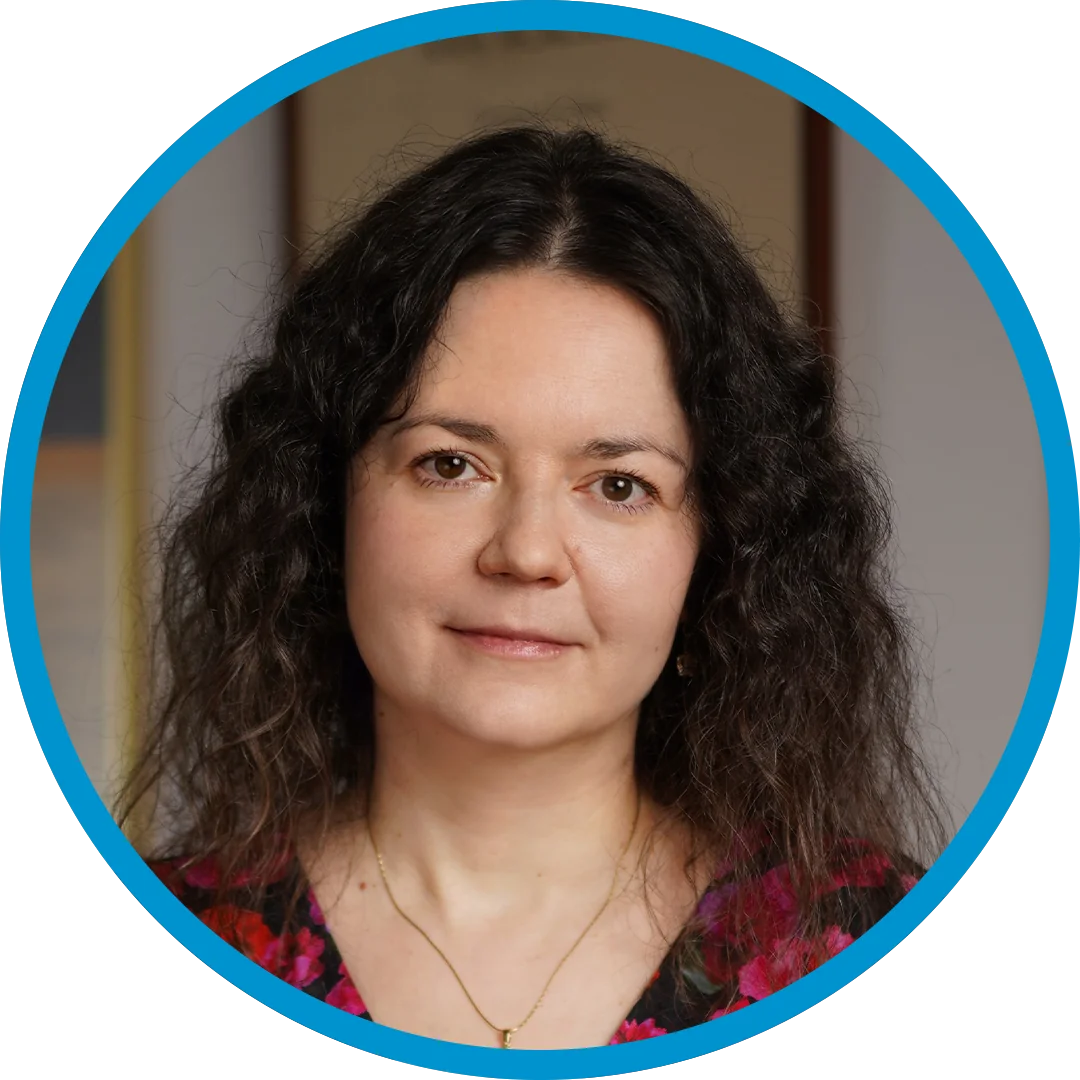
Przemysław Kordos is a Professor at the University of Warsaw , affiliated with the Faculty of Liberal Arts , where he serves as Coordinator for the Development of the Modern Greek Philology Program . He holds two PhDs in Humanities (2007, 2019) and was awarded the Loukis Papaphilippou Seat of Advancement in Modern Greek scholarship. Education: MA in Ethnology and Cultural Anthropology (University of Warsaw, 2001) MS in Sociology (University of Warsaw, 2002) PhD in Humanities (University of Warsaw, 2007) Second PhD in Humanities (University of Warsaw, 2019) His research interests span: Contemporary Modern Greek and Cypriot literature Polish-Greek cultural relations (philhellenism) Social and ethnographic issues in Greece and Cyprus Travel literature analysis Fantasy literature's cultural implications His scientific work reveals a focus on linguistic assimilation in foreign language learning (via fMRI studies), historical parallels between Polish and Greek independence movements, and critical analyses of Cypriot folk culture's politicization. Key scientific awards include: Loukis Papaphilippou Seat (University of Warsaw) Internships at EKPA and IKY (Greece) Scholarships at IMXA (Greece) and MUNI (Czech Republic) His academic contributions include cataloging 60+ Polish travel accounts to Greece, analyzing the shift from travel literature to tourism discourse, and examining the Hellene-Romios dichotomy's role in modern Greek identity construction.
Alina Landowska serves as Assistant Professor in the Department of Cultural Studies at the Faculty of Humanities, SWPS University of Social Sciences and Humanities in Warsaw. Her academic profile integrates cultural studies, computational linguistics, and ethics, with significant contributions to understanding moral foundations in digital discourse and technological futures. Her educational background includes degrees in Management and Economics from Gdańsk University of Technology and European Integration from the Pontifical University of John Paul II in Krakow, complemented by international scholarship experiences: SDG Academy (United Nations) Tantur Ecumenical Institute, Jerusalem (University of Notre Dame) Baltic University Program, Uppsala Swedish Institute of Environmental Research, Kalmar Royal Danish Student Fund, Copenhagen Landowska's research investigates cultural evolution through computational discourse analysis, focusing on morality-technology intersections. She pioneers text-mining methodologies to examine moral foundations in social media, anticipatory rhetoric in digital communication, and value-based management frameworks. Her work bridges humanities with data science, analyzing polarization mechanisms and proleptic cues in online environments while exploring cooperation ethics in business contexts. Recent publications demonstrate methodological innovation in mapping technological futures through sentiment/emotion analysis and moral-value detection systems. Her article corpus reveals consistent thematic threads: digital rhetoric analysis (particularly prolepsis functions), moral psychology applications in AI/social media, and cultural evolution studies linking cooperation theory with business ethics. This interdisciplinary approach positions her at the nexus of computational social science and humanistic inquiry. No scientific awards or prizes are documented in her current professional profile. As an educator, Landowska mentors students in discourse analysis methodologies and socio-economic media studies while serving as executive coach with EMCC Poland. Her research leadership extends to co-founding the Institute for Development think tank and representing Employers of Poland at the OECD's Business and Industry Advisory Committee (2016-2018). She previously held vice-presidential roles in the Polish Association of Businesswomen. Landowska maintains active research affiliations with the Humanistic Management Center (University of Lucerne), International Council for Small Business (George Washington University), and ArgDiaP association. Her 2022-2024 tenure with New Ethos Lab advanced dialogue studies in persuasion frameworks, complementing her current work on digital rhetoric's ethical dimensions.
Michał Paweł Skrzypczak is an Associate Professor at the Institute of Informatics, Faculty of Mathematics, Informatics, and Mechanics, University of Warsaw. He is actively involved in teaching and academic service, with a focus on theoretical computer science and formal methods. His research interests lie primarily in theoretical computer science , particularly program semantics , program verification , logic in computer science , and automata theory . These interests are reflected in his long-standing teaching of advanced courses such as Program Semantics and Verification , Logics for Computer Scientists , and Automata on Infinite Trees . While no publications are listed in the provided text, the consistent engagement with formal methods and mathematical logic across multiple courses over more than a decade suggests a sustained research trajectory in foundational aspects of computing. Scientific Awards: No awards listed. He has contributed to the academic development of students through teaching and exercise sessions, particularly in core theoretical subjects. Though no formal advisees are listed, his role as an instructor in graduate-level courses indicates mentorship responsibilities. He is affiliated with the Institute of Informatics at the University of Warsaw, which serves as his primary academic unit. There is no mention of specific research labs or teams, but his collaborations with researchers like Prof. Andrzej Tarlecki and Prof. Paweł Urzyczyn suggest integration into a strong logic and semantics research group.
Roman Matuszewski is a retired Associate Professor at the University of Bialystok, affiliated with the Faculty of Philology's Department of Applied Linguistics. His research focuses on automated reasoning, formalized mathematics, and the Mizar Project, which he has been involved with since its inception in 1973. He holds a PhD in Computer Science from Shinshu University (2000) and has held academic positions at multiple institutions, including part-time roles at Bogdan Janski University. Education: PhD in Computer Science (2000), Master of Science in Mechanics (1975), Engineer (1973), all from Polish institutions. His work emphasizes formal proof systems, mathematical knowledge management, and education integration of automated reasoning tools. Research interests include automated deduction, formal proof verification, and the application of these methods to mathematics education. His contributions to the Mizar Mathematical Library and its 50-year history (celebrated in 2023) are foundational for interactive theorem proving. Key awards include the Silver Cross of Merit (2004) and multiple Rector’s prizes. He has organized major conferences like MKM2004 and served on program committees for events such as IJCAR and Tableaux. Grants include leadership roles in EU-funded projects like TYPES and CALCULEMUS. His work bridges computer science and mathematics through formalized systems, impacting both research and education.
Ewa Kępa is a Lecturer at the Faculty of Cultural Studies, University of Białystok, specializing in gender studies, autoethnography, and contemporary cultural identity. She teaches aesthetics, cultural theory, visual anthropology, and interdisciplinary methodologies, including English-language workshops. She collaborates internationally with universities in Spain and Italy. Her research examines feminine identity construction through craft practices (knitting, pottery), DIY culture, and autobiographical narratives. Work explores themes of cultural resistance, material heritage, and gendered labor in Polish contexts. She publishes on folk traditions, craftivism, and post-communist cultural memory. Key domains include textile subcultures, domestic ritual objects, and ethnographic approaches to everyday life. She integrates feminist frameworks with visual and material culture analysis. Administrative roles include coordinating Erasmus+ programs and serving on editorial boards for gender studies journals. Office location: Faculty of Cultural Studies building.
Professor Katarzyna Marciniak is a distinguished scholar at the Faculty of Artes Liberales, University of Warsaw, where she serves as Director of the Center for Research on Ancient Tradition (OBTA) and Head of The Cluster: The Past for the Present – International Research and Educational Programme. She was Vice-Dean for International Cooperation from 2016 to 2024 and has established herself as a leading expert in classical reception studies, particularly regarding children's literature. Professor Marciniak earned her Master of Arts in Classical Philology (2000) and Italian Philology (2003) from the University of Warsaw, completing the Inter-Faculty Individual Studies in the Humanities in 2003. She received her Doctor of Humanities degree in 2004 (summa cum laude) with a dissertation on Cicero's translations from Greek to Latin as ideological manipulation tools, supervised by Professor Jerzy Axer. She completed her habilitation in 2009 and was awarded the title of Professor of Humanities in 2019. Her research focuses on the reception of Classical Antiquity in children's and young adults' culture, exploring how ancient myths function as transformation markers in contemporary societies. She examines the role of mythical creatures in youth literature across different cultures and how classical mythology serves as a cultural code that facilitates intergenerational communication. Her work bridges classical philology with modern literary studies and educational theory. Professor Marciniak's publications reveal a consistent trajectory examining how classical antiquity, particularly mythology, is adapted for younger audiences. Her work spans from scholarly analyses of Cicero to accessible mythological guides for children. The most recent publications focus on how ancient myths serve as medicine for life's hardships and how mythical beasts function as cultural transformation markers across global youth literature. Prime Minister's Award for best doctoral dissertation (2004) Klio Award 2nd class for best historical book (2011) Polityka Scientific Award (2012) Title of Young Ambassador of the Polish Language (2013) Medal of the 200th Anniversary of the University of Warsaw (2016) ERC Consolidator Grant (2016-2022) ERC Proof of Concept Grant (2023-2025) Professor Marciniak has secured significant research funding, including the prestigious ERC Consolidator Grant (the first in humanities in Poland) and ERC Proof of Concept Grant for her "Our Mythical Childhood" program. She has also received multiple Alexander von Humboldt Foundation awards and has been elected to the Academy of Young Scientists of the Polish Academy of Sciences. She serves on the Management Board of the International Federation of Classical Studies and the Board of Curators of Department I of the Polish Academy of Sciences. She directs the Center for Research on Ancient Tradition (OBTA) which coordinates the international "Our Mythical Childhood" research program. This initiative has grown into a global network connecting scholars from Europe, North America, Africa, Asia, Australia, and New Zealand. The program has produced several major publications and educational initiatives, including the "Modern Argonauts" multicultural educational program.
Dr. Anna Bendrat is an Assistant Professor at the Department of English and American Studies, Maria Curie-Skłodowska University, Poland. A scholar in Rhetoric, American Drama, and Cognitive Poetics, she is actively involved in interdisciplinary research, particularly through the Cognitive Studies Team and the International Federation for Theatre Research (IFTR). Her research interests span Rhetoric, Social Communication, Identity Studies, New Media, and Affect Studies. She has led the EU Erasmus+ project MigraMedia (2023–2026) and co-founded the journal New Horizons in English Studies . Her work bridges academic rigor with public engagement, including organizing the Media in America, America in Media conference series. Anna’s recent publications interrogate urban trauma in Pulitzer-winning drama, AI’s role in reconstructing memory, and cognitive texture in multi-perspective narratives. Her scholarly activities are enriched by editorial roles in Res Rhetorica and New Horizons in English Studies , alongside grants for research in New York and Poland. She mentors the UMCS Philology Student Circle, promoting anglophone cultures, and maintains a focus on Polish-American academic collaborations. Her research team explores digital rhetoric, migration narratives, and the intersection of literature with cognitive theory.
Dr. Urszula Kizelbach is an Assistant Professor in the Department of Studies in Culture at Adam Mickiewicz University in Poznań, Faculty of English. She specializes in literary pragmatics with a focus on Early Modern drama and contemporary fiction. Her academic career is deeply rooted at Adam Mickiewicz University where she earned all her degrees and has established herself as a leading scholar in Shakespeare studies and pragma-stylistics. Her educational background includes: BA in English, Adam Mickiewicz University (2004) MA in English, Adam Mickiewicz University (2006) MA in Russian, Adam Mickiewicz University (2008) Ph.D. in English, Adam Mickiewicz University (2011) Postgraduate studies at School of Translation, Interpreting and Languages, Adam Mickiewicz University (2015) Dr. Kizelbach's research focuses on the intersection of linguistic pragmatics and literary analysis, particularly examining Shakespearean drama through the lens of politeness and impoliteness theory. Her work explores how pragmatic theories can illuminate character motivations, political discourse, and narrative structures in both Early Modern and contemporary literature. She has made significant contributions to understanding the role of face-work in Shakespeare's history plays, blunders in Early Modern communication, and extradiegetic impoliteness in modern fiction. Her research methodology combines close textual analysis with theoretical frameworks from pragmatics, stylistics, and discourse analysis. Her recent publications demonstrate a clear trajectory from Shakespearean studies toward broader applications of pragmatic theory in contemporary fiction, particularly in the works of Ian McEwan. While maintaining her expertise in Early Modern drama, she has expanded her research to examine how pragmatic concepts operate across different literary periods and genres. Her work consistently bridges literary scholarship and linguistic theory, creating innovative approaches to textual analysis that have gained international recognition. Dr. Kizelbach is actively involved in academic service as a review editor for Studia Anglica Posnaniensia and serves as the Polish Ambassador of the Poetics and Linguistics Association (PALA). She has received teaching grants through the Swiss-European Mobility Program for staff mobility at The University of Zurich (2017) and Erasmus staff mobility at The University of Maribor, Slovenia (2014). Her extensive conference participation across Europe demonstrates her active engagement with international scholarly communities.
Dr. hab. Agata Seweryn, holding the title of Professor at the John Paul II Catholic University of Lublin (KUL), serves in the Department of Enlightenment Literature, Romanticism and Art Criticism within the Institute of Literary Studies at the Faculty of Humanities. Her academic career spans decades of dedicated scholarship focused on Polish literary traditions from the Enlightenment through Romanticism, with particular emphasis on the intersections between literature and music. Professor Seweryn's research interests form a cohesive interdisciplinary framework examining Polish Enlightenment literature, Romanticism, literary criticism, and the complex relationship between music and literature. Her work demonstrates particular expertise in Norwid studies and Chopin's cultural reception, revealing how musical elements permeate literary works and vice versa. She has made significant contributions to understanding how Polish Romantic poets engaged with musical forms and how composers interpreted literary works. Her scholarly output reveals consistent thematic threads connecting musicology with literary analysis, particularly in examining how Polish Romantic writers incorporated musical structures into their poetry and prose. This interdisciplinary approach has yielded important insights into figures like Norwid and Chopin, while also exploring broader questions about artistic synthesis in 19th-century Polish culture. Medal of the National Education Commission Rector's Award, 1st degree Individual Award, 3rd degree Professor Seweryn actively supervises doctoral and master's theses while participating in numerous research projects funded by the Ministry of Education and Science, including the National Program for the Development of Humanities. She serves on juries for national literature and language olympiads and contributes to academic discourse through conference organization, including co-hosting the nationwide conference '(Po)między: borderlands, crossroads, undefined places.' Her service extends to editorial roles for scholarly publications and review work for academic journals. Her academic activities include regular lectures for secondary schools across Poland and specialized courses on voice production and spoken language culture at the Seminary of Friars Minor Capuchin in Lublin, demonstrating her commitment to both scholarly research and practical language education.
Dr hab. Agata Małyska is a Professor at the Center for Polish Language and Culture for Poles Abroad and Foreigners (CJKP) at Maria Curie-Skłodowska University (UMCS), Lublin, Poland. She has served as Deputy Director of CJKP since 2000 and heads training programs for Polish-as-a-foreign-language teachers. Her work spans Polish language instruction, political discourse analysis, and intercultural communication. Academic Affiliation: Center for Polish Language and Culture for Poles Abroad and Foreigners (CJKP), UMCS Leadership Roles: Deputy Director of CJKP, Head of "Lato Polonijnego" courses Her research focuses on political and social discourse , with emphasis on ritualization , lexical evaluation , linguistic taboos , persuasion , and intercultural communication . She applies interdisciplinary methodologies combining linguistics, psychology, and sociology to analyze parliamentary speeches, media texts, and Polish language teaching strategies. Analysis of her publications reveals trends in political linguistics , Polish-as-a-foreign-language pedagogy , and intertextuality in marketing . Recurring themes include language taboo evolution , persuasive communication , and lexical dynamics in political contexts . Scientific Achievements : Co-editor of 70 Years of Contemporary Polish Organizer of international Polish language training programs Member of State Commission for Polish Language Certification (2024) As an educator, she trains teachers for Polish-as-a-foreign-language instruction in domestic institutions and abroad. Her organizational work includes coordinating internships for trainees and directing academic conferences on language and culture.
Dr hab. Anna Maziarczyk is a Professor at the Department of Romance Languages, Faculty of Languages, Literatures and Cultures, Maria Curie-Skłodowska University. She serves as Chair of the Quality Assurance Team for Romance and Italian Studies and leads editorial committees for Lublin Studies in Modern Languages and Literature . PhD studies at UMCS Specialized training at École de Hautes Études Commerciales (Lille, France) Her research focuses on: Contemporary French & Francophone literature Narrative structures & unreliable narration Ecocritical fiction Intermediality & intertextuality War trauma in literary representation Ludic elements in modern novels Her recent publications analyze narrative strategies in works by Éric Chevillard, Éric Laurrent, Ahmadou Kourouma, Alain Mabanckou, and Gilles Rozier. Key themes include ecological storytelling, childhood perspectives in conflict zones, and metafictional techniques. She has received multiple Rector's Awards for high-impact publications and coordinates the implementation of specialized French business language programs developed with École de Hautes Études Commerciales du Nord. 2018: National Education Commission Medal 2018, 2020 (twice), 2022: UMCS Rector's Awards for scientific articles Active in international collaboration through Erasmus and specialized training programs with French institutions.
Prof. Wilken Engelbrecht is a prominent scholar in Dutch language and literature at the John Paul II Catholic University of Lublin. His work focuses on historical linguistics , medieval philology , and literary reception studies in Central and Eastern Europe. He has led international projects like CODL and organized conferences including the 15th Regional Colloquium van Comenius . Education & Appointments : PhD in Dutch Philology, habilitation on prepositional complements, founder of Olomouc Neerlandistiek program His research spans 150 years of Dutch studies in Czech Republic , medieval Latin commentaries on Ovid, and translation dynamics under socialist regimes. Recent publications analyze Czech reception of Frisian literature and Ovidian traditions in academic contexts. Awards & Recognitions : Bronze Medal for Long Service Silver Medal of Palacký University Officier van de Orde van Oranje-Nassau Individual Rector's Award (I stopień) He serves on editorial boards for Roczniki Humanistyczne and Neerlandica Wratislaviensia , and has reviewed over 10 habilitation theses. His teaching includes Dutch language courses and comparative studies at Palacký University.
Dr. Wojciech Kosior is a researcher at the Department of Comparative Civilization Studies within the Centre for Comparative Studies of Civilisations at Jagiellonian University, Poland. He holds degrees in Jewish Studies from the Paideia Institute, Religious Studies, and Psychology from Jagiellonian University. Education: Jewish Studies (Paideia Institute) Religious Studies (Jagiellonian University) Psychology (Jagiellonian University) His research focuses on angelology, demonology, and apotropaism, cognitive science of religion, and digital humanities applications in religious text analysis. He specializes in Hebrew Bible, early rabbinic literature (Talmuds, Midrashes), Targums, Dead Sea Scrolls, and apocryphal texts. His work often intersects ancient religious traditions with modern quantitative and qualitative analysis. Key trends in his recent publications include systematic databases for supernatural entities (Elyonim veTachtonim project), cognitive theory of religion applications, and digital humanities tools in Jewish and Biblical studies. His work has been supported by grants from the National Science Centre (2018/31/D/HS1/00513) and Ministry of Science and Higher Education initiatives. While he has not explicitly listed scientific awards, his research has been funded through competitive grants. He manages significant projects like the Elyonim veTachtonim database and co-edits comparative religious studies outputs.
Dr. Krystian Barzykowski is a Professor at the Department of General Psychology within the Faculty of Philosophy at Jagiellonian University in Kraków, Poland. He currently serves as Head of the Applied Memory Research Laboratory and is a Member of the Research Ethics Committee. He also holds the position of Proxy of the Dean of the Faculty of Philosophy for quality assessment and is a Member of the Board of the Krakow Branch of the Polish Psychological Society. Barzykowski obtained his doctorate in 2014 from Jagiellonian University and has since established himself as a leading researcher in cognitive experimental psychology with a focus on memory processes. His research spans multiple areas of cognitive psychology, particularly examining the mechanisms of autobiographical and episodic memory, involuntary cognitive processes, and the intriguing phenomenon of déjà vu. His work uniquely integrates cross-cultural perspectives with experimental cognitive psychology, exploring how multiculturalism and multilingualism affect psychological assessment and memory processes. His research program demonstrates a sophisticated approach to understanding the cognitive mechanisms behind memory retrieval, particularly focusing on how working memory influences involuntary autobiographical memories. Barzykowski's work on mind-wandering and thoughts detached from tasks represents a significant contribution to understanding spontaneous cognition. His recent Marie Skłodowska-Curie Postdoctoral Fellowship project 'SpontaneousPAST' specifically investigates how déjà vu can illuminate spontaneous memory retrieval processes. Barzykowski's extensive publication record shows a consistent focus on memory mechanisms while increasingly incorporating cross-cultural dimensions. His recent work has expanded to address timely societal issues including the psychological impact of the pandemic, refugee integration in educational settings, and the development of cultural intelligence among healthcare professionals. The interdisciplinary nature of his research connects cognitive psychology with educational, clinical, and social applications. Marie Skłodowska-Curie Postdoctoral Fellowship (2023) Andrzej Malewski Award from the Polish Academy of Sciences (2020) Mieczysław Bekker Scholarship from the National Agency for Academic Exchange (2020) Ministry of Science and Higher Education Scholarship for Outstanding Young Researchers (2018-2020) Multiple French Government Scholarships (2019-2021) International European Roma Spirit Award Finalist (2016) Barzykowski has successfully led multiple significant research projects funded by prestigious organizations including the National Science Centre, the Ministry of Science and Higher Education, the Stefan Batory Foundation, and the European Commission. His project portfolio includes 'Analysis of the role of working memory in the formation of involuntary autobiographical memories' (2020-2025), 'Wandering-mind: Advances in involuntary past and future thinking research' (2020), and 'The Role of Cognitive Inhibition in Involuntary Thinking about the Past and Future' (2016-2019). He is particularly noted for originating and co-authoring the first Polish textbook on psychological assessment in multicultural and multilingual contexts, which received a recommendation from the Council of Europe. At Jagiellonian University, Barzykowski leads the Applied Memory Research Laboratory, which focuses on experimental investigations of memory processes, particularly examining involuntary and voluntary memory retrieval mechanisms. His laboratory work integrates sophisticated experimental designs with cross-cultural perspectives, creating a unique research environment that bridges cognitive psychology with multicultural considerations. The laboratory has become a significant center for memory research in Poland, attracting international collaborators and contributing to major multinational research initiatives.
Professor Anna Wojciechowska is a distinguished faculty member at the University of Zielona Góra, where she serves as Professor in the Department of Linguistics within the Faculty of Humanities. She holds the prestigious position of Director of the Doctoral School of Humanities and Social Sciences and is an active member of the University Senate for the 2020-2024 term. Her academic career has been deeply rooted at her alma mater since her graduation with distinction from the Polish Studies Department in Zielona Góra. Graduated with distinction from Polish Studies Department at University of Zielona Góra Completed research internship at University of Wrocław under Professor Jan Miodek (1993) Doctoral dissertation prepared under Professor Marian Bugajski, defended at University of Wrocław (1997) Habilitation monograph published in 2012, earned habilitation from University of Silesia in Katowice (2013) Professor Wojciechowska's research spans multiple dimensions of linguistic inquiry, with particular emphasis on the pragmatic and genological aspects of linguistic communication across both synchronic and diachronic perspectives. Her scholarly journey began with stylistics and cultural linguistics, focusing on individual language determinants, before expanding to contemporary press statements and digital communication. Her historical linguistic research has examined manuscripts from the partition period and meeting minutes from Polish social associations, culminating in her habilitation work on 19th-century community protocols. Her research methodology integrates textual analysis with sociolinguistic theory to explore how language functions within specific cultural and historical contexts. Analysis of Professor Wojciechowska's publication record reveals a consistent scholarly trajectory centered on Polish linguistic traditions, with particular focus on epistolary discourse and protocol communication. Her work demonstrates methodological diversity, employing both qualitative discourse analysis and quantitative linguistic approaches. A significant portion of her research examines the intersection of language with cultural memory, particularly through examination of literary correspondence and institutional documentation. Her recent publications show increasing engagement with digital communication while maintaining her foundational expertise in historical linguistics and genre studies. Director of the Doctoral School of Humanities and Social Sciences Member of the Senate of the University of Zielona Góra (2020-2024) Active participant in the Polish Linguistic Society Member of the Society of Polish Language Enthusiasts Professor Wojciechowska has supervised numerous bachelor's, master's, and doctoral theses throughout her career. She served as secretary for three academic conferences and supervised the 'Sem' Student Linguistics Club for ten years. She participated in two research projects sponsored by the Ministry of Science and Higher Education as part of the National Program for the Development of Humanities (2012-2014). She has been instrumental in developing study programs for Polish Philology with journalism specialization and Media Communication, and is the author and co-author of two ECTS guides. Her organizational contributions include co-founding the Language Counseling Center at the Department of Linguistics. Professor Wojciechowska co-founded and continues to be actively involved with the Language Counseling Center at the Department of Linguistics, University of Zielona Góra. She has been a key member of the 20th/21st Century Literature and Fairy Tale Research Workshop, collaborating with colleagues across various linguistic disciplines. Her work with the Language Counseling Center demonstrates her commitment to practical language application and community engagement, bridging academic research with real-world language challenges.