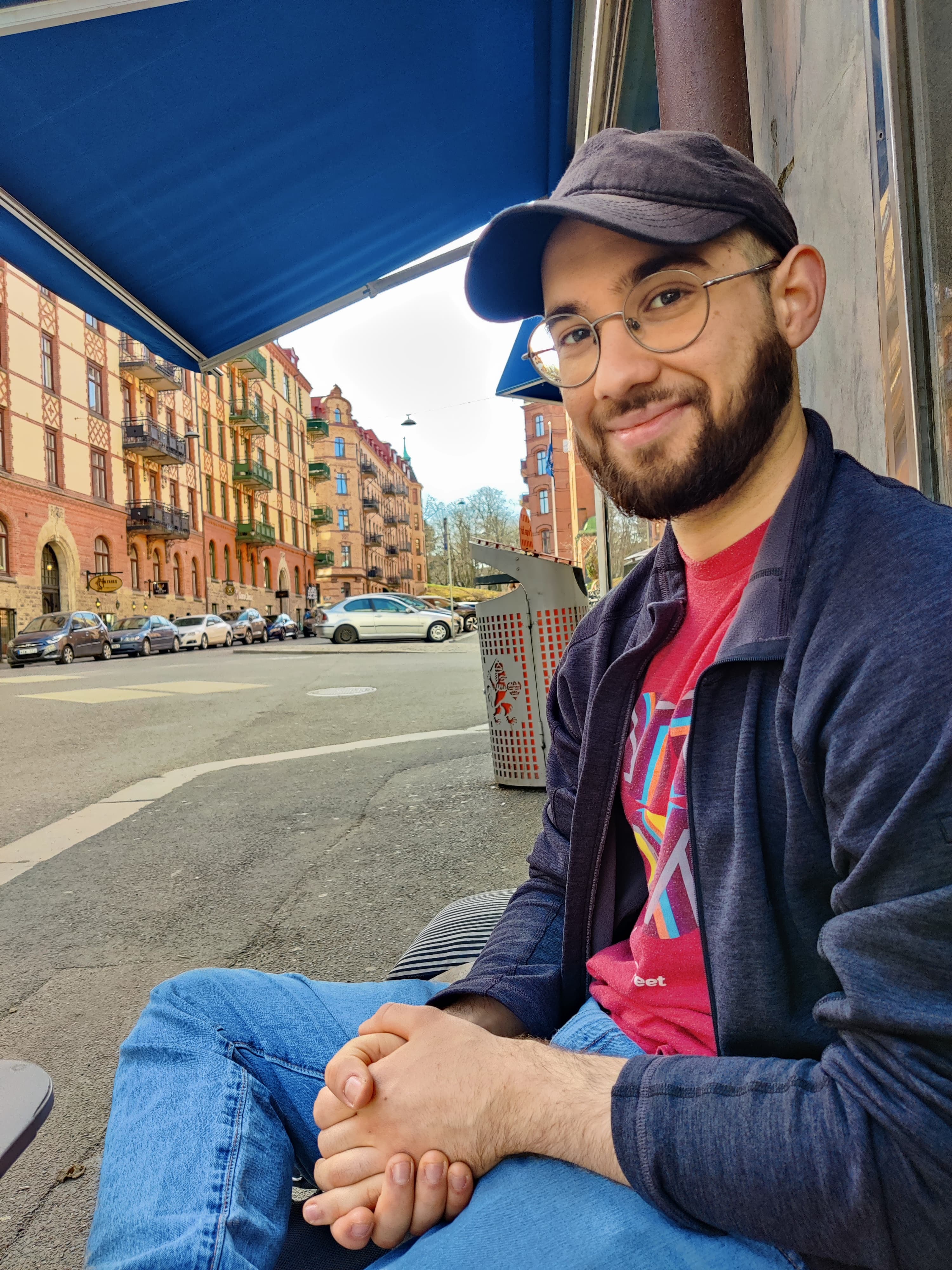
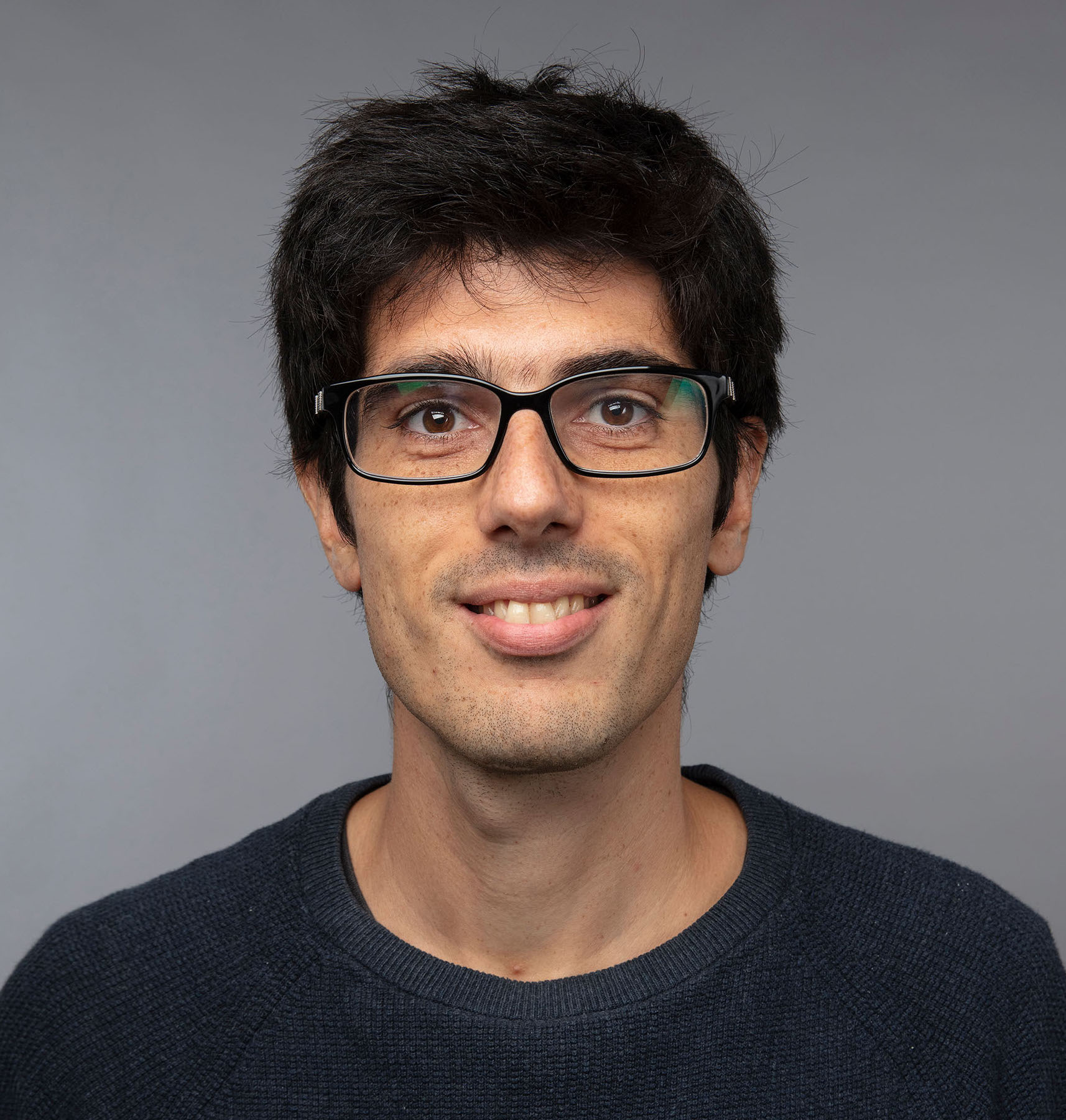
Daniel Gratzer is an assistant professor in the Department of Computer Science at Aarhus University, affiliated with the Logic and Semantics group. He studies programming languages and type theories through category theory, focusing on dependent, modal, and homotopy type theory. He co-teaches graduate courses on type theory and maintains a forthcoming textbook with Carlo Angiuli. Daniel is visiting Oxford from August 2024 to February 2025. His research explores applications of modal type theory to synthetic (∞,1)-category theory, guarded type theory for denotational semantics, and categorical methods in program logics like Iris. He collaborates with researchers including Carlo Angiuli, Lars Birkedal, and Jonathan Sterling. Recent work includes publications at LICS 2025, FoSSaCS 2025, and LMCS 2025. He contributed to the development of proof assistants like mitten and formal verification tools for higher-order concurrent separation logic. Contact: gratzer@cs.au.dk
Per Grau Møller is an Associate Professor in the Department of Culture and Language at the University of Southern Denmark, where he specializes in the spatial dimensions of history, particularly focusing on the Funen region and Northwestern Europe from 1000 AD to the present. His work emphasizes long-term landscape transformations, human imprint on cultural environments, and heritage preservation. Education: Master of Arts in History and Medieval Archaeology, 1984 (Odense and Århus Universities) Lic.phil. in History, 1988 (Odense University), thesis: From village to dormitory town. Rural settlements and their economic and cultural landscape preconditions on Funen ca. 1770–1965 His research interests include settlement history, landscape history, agricultural history, historical cartography, cultural heritage, and planning. He explores the interplay between nature and culture, particularly in rural and urban landscapes, with a focus on sustainable development and historical continuity. His recent publications (2022–2025) reflect a consistent engagement with manor landscapes, cultural environments, road networks in Viking and medieval Denmark, and the evolving perception of heritage. Themes such as agricultural transformation, historical land use, and the integration of heritage into modern planning are recurrent across his work, indicating a strong interdisciplinary approach bridging history, geography, and environmental studies. Scientific and Professional Engagement: Head, Changing Landscapes – Center of Strategic Studies in Cultural Environments, Nature and Landscape History (1997–2000) Head of History Studies (2008–2015) Chairman, Agricultural Society (2001–2009) Danish Representative, Permanent European Conference for the Study of Rural Landscape (until 2022) Member, COST-network A27 LANDMARKS (2004–2008) Board member of multiple historical and cultural societies, including the Historical Society for Funen, HisKIS, and Earth ESF-program He has supervised students and taught courses in Danish social and cultural history, historical methods, and medieval urban development. His advisory roles and public lectures highlight his commitment to knowledge dissemination and community engagement in heritage matters. Per Grau Møller is actively involved in research, teaching, and public outreach, contributing significantly to the understanding of Denmark’s cultural landscapes and their historical evolution.
Martin Elsman is a full-time Professor in the Programming Languages and Theory of Computation section at the Department of Computer Science, University of Copenhagen (DIKU). He serves as head of the PLTC section and head of studies for the BSc education in Computer Science and Economics. Elsman is also an active maintainer of several software tools including the MLKit and SMLtoJs. Joined DIKU in 2012 after 4 years at SimCorp (2008-2012) and previous Associate Professorship at IT University of Copenhagen (2003-2008). Co-developer of Futhark, TAIL APL compiler, SMLtoJs, and SMLserver. Education: M.Sc. in Engineering, Technical University of Denmark Ph.D. in Computer Science, University of Copenhagen (DIKU), supervised by Mads Tofte. Research Interests: Elsman works on programming language design and implementation, with a focus on functional programming, module systems, domain-specific languages for financial contracts, region-based memory management, compilation techniques for parallelism, program optimization, and static type systems. His work spans both theoretical and applied domains, including blockchain-based financial contract execution, web technology, and GPU programming using functional languages. Publication Trends: His recent articles focus on functional programming, array programming, parallelism, and memory management. Topics include region inference, type systems for data-parallelism, program optimization techniques, and domain-specific compilation for financial and quantum computing. He frequently collaborates with Troels Henriksen and others on tools like Futhark and MLKit.
Omry Ross is an Associate Professor at the Department of Computer Science, University of Copenhagen. His research focuses on Programming Languages and Theory of Computation, with significant contributions to decentralized finance (DeFi), blockchain technology, and algorithmic governance. Research Interests: Decentralized Finance (DeFi) and Smart Contract Systems Blockchain Protocol Design and Cryptoeconomics Programming Language Theory and Formal Verification Token Governance in Decentralized Autonomous Organizations (DAOs) Algorithmic Game Theory and Market Mechanisms Recent publications highlight his work in AI moderation of online communities, compliance reporting in DLT systems, and MEV optimization in multi-block scenarios. His research bridges theoretical computer science with practical applications in financial cryptography. Scientific Awards: Nasdaq Nordic Foundation Grant (2021) Omry Ross collaborates extensively with researchers in blockchain and DeFi, including contributions to the Financial Cryptography and Data Security workshops.
Siddharth Bhaskar is an Assistant Professor in the Department of Mathematics and Computer Science at the University of Southern Denmark. His research lies at the intersection of theoretical computer science and mathematical logic, with a focus on programming language foundations and formal structures. His research interests include structured programming, imperative languages, graph traversal algorithms, and the application of category theory (particularly functors) to computation. These areas reflect a deep engagement with the mathematical underpinnings of programming and algorithmic processes. The two recent publications show a consistent trend in formalizing programming concepts through mathematical structures—particularly using universal constructions from category theory and extending structured programming into transfinite domains. This indicates a research trajectory grounded in computability, logic, and the semantics of programming languages. No scientific awards mentioned in the provided text. Siddharth Bhaskar has no listed advisees or grant information in the available data. However, his peer-reviewed publications in high-quality conference proceedings (CiE and MFCS) suggest active research supervision and potential involvement in collaborative projects, though specific details are not disclosed. There is no mention of specific laboratories, research groups, or teams in the provided text. However, his affiliation with the Department of Mathematics and Computer Science and his research profile suggest potential collaboration within formal methods or logic research circles at the University of Southern Denmark.
Andreas Pavlogiannis is an Associate Professor in the Department of Computer Science at Aarhus University. His research focuses on formal methods , algorithmic verification , automata theory , concurrency , static and dynamic program analysis , network diffusion , evolutionary graph theory , and evolutionary game theory . Teaching courses: Programming Languages (Bachelor) , Algorithmic Model Checking (Master) , and Program Analysis (Master) Service: Program committee member for POPL, ESOP, AAAI, IJCAI, CONCUR, OOPSLA, and organizer of CONFEST'25 His research has been supported by the Austrian Science Fund (FWF), VILLUM Foundation, Stibo Foundation, and Danish Council for Independent Research (DFF). He is actively recruiting PhD and PostDoc researchers. Recent publications span quantum computing , concurrent systems , evolutionary dynamics , and network science , with particular emphasis on symbolic algorithms , dynamic analysis , and graph-based models .
Patrizia Paggio serves as an Associate Professor and Senior Researcher within the Department of Nordic Studies and Linguistics at the University of Copenhagen's Faculty of Humanities, concurrently holding a full professorship at the University of Malta's Institute of Linguistics and Language Technology since September 2011. Her scholarly work centers on the intricate relationship between verbal and nonverbal communication modalities, with international recognition for advancing methodologies in multimodal analysis. Academic Background: PhD in Computational Linguistics from the University of Copenhagen (1997), dissertation: "The Treatment of Information Structure in Machine Translation" Professor Paggio's research program investigates how gestures, head movements, and other nonverbal cues interact with spoken language to construct meaning in natural communication. She has pioneered methodologies for constructing and analyzing multimodal corpora, while maintaining technical expertise in machine translation systems, grammar engineering, and content-based querying frameworks. Her theoretical work spans formal syntactic structures, discourse phenomena, information packaging, and ontological representations for linguistic data, consistently bridging computational methods with linguistic theory. Analysis of her recent publications (2020-2025) reveals a sustained focus on computational approaches to nonverbal communication, particularly the automatic detection and annotation of head movements and gestures in both physical and digital environments. Key contributions include the GEHM Zoom corpus for online interaction analysis, eye-tracking studies of emoji processing, and diachronic modeling of historical language change. Her work strategically integrates eye-tracking, corpus linguistics, and machine learning techniques, establishing her at the convergence of linguistic theory, cognitive science, and artificial intelligence applications. Professional Leadership: Coordinator of the international GEHM (Gestures and Head Movements in Language) research network Organizer of MULTIMODAL CORPORA 2018, 4th European/Nordic Symposium on Multimodal Communication, and LREC2022 Workshop on People in Vision, Language and the Mind
Anders Møller is a Professor and Vice Head of Department at the Department of Computer Science, Aarhus University, Denmark. He is a leading researcher in programming languages and software engineering, with a primary focus on static and dynamic program analysis. He serves as Chairman of the PhD Committee and holds leadership roles in the international research community, including Vice-Chair of ACM SIGPLAN and Associate Editor for ACM TOPLAS and ACM TOSEM. His research interests include programming languages, software engineering, static and dynamic analysis, program verification, and security. His work bridges theoretical foundations and practical applications, particularly in improving software reliability and security through advanced analysis techniques. The trends in his recent publications reflect a strong emphasis on static analysis for security, scalability, and real-world impact—especially in web applications, smart contracts, and open-source software supply chains. His research has evolved toward practical deployment, demonstrated by the founding and acquisition of Coana by Socket in 2025 for enhanced vulnerability detection. Recipient of the Danish Elite Research Prize 2020 ACM Distinguished Member He actively mentors students and contributes to the academic community through conference leadership (e.g., OOPSLA, PLDI, ICSE). He also co-authored the widely used textbook Static Program Analysis with Michael I. Schwartzbach. His work is deeply integrated into both academic and industrial advancements in software analysis and security.
Troels Henriksen is an Assistant Professor on Tenure Track at the Department of Computer Science (DIKU) at the University of Copenhagen, where he is affiliated with the Programming Languages and Theory of Computation research section. His research focuses on programming languages, particularly functional array programming languages, compiler design, and parallel computing. He maintains an active research profile with numerous publications in top-tier programming language conferences. Dr. Henriksen's research interests center around programming language theory and implementation, with particular emphasis on functional array programming languages. His work bridges theoretical foundations with practical high-performance computing applications. His research spans type systems, compiler optimizations, parallelism, and memory management in the context of array programming languages, contributing to both academic knowledge and practical language implementations. His recent publications reveal a strong focus on array programming language design and implementation. There is a clear trend toward optimizing functional array languages for high-performance computing environments, with significant work on fusion optimizations, parallelism, and memory management. His research often intersects with practical applications in scientific computing and machine learning, particularly through work on automatic differentiation for array languages. Dr. Henriksen is actively involved in the programming languages research community, regularly publishing in prestigious venues such as the ACM SIGPLAN conferences. His collaborations span multiple institutions, indicating an active research network in the programming languages field.
Robert Glück is a Professor at the Department of Computer Science under the Faculty of Science , University of Copenhagen. He also served as a Visiting Professor at the National Institute of Informatics, Tokyo . His research spans programming languages , reversible computing , and metaprogramming , with a focus on energy-efficient computation. Email: glueck@di.ku.dk Phone: +45 29611655 Address: Universitetsparken 5, Building B, 2100 Copenhagen Ø Glück's research interests center on reversible computing , program generation , and metaprogramming , particularly for low-energy systems. His work includes developing reversible logic circuits, invertible interpreters, and tools for program inversion via term rewriting systems. Recent publications highlight advancements in reversible flowchart languages , partial evaluation techniques , and compiler design . Key themes include garbage-free reversibility, memory-efficient algorithms, and formal verification of reversible systems. Scientific Awards: Japan Society for the Promotion of Science (JSPS) Fellowship Grants & Projects: Presto Basic Research Grant (JST) Danish Council for Strategic Research (DSF) project Danish Council for Independent Research (FNU) project Administrative Roles: Current member of the Study Board for Mathematics and Computer Science Former Head of Studies for the Master in Computer Science Professional Activities: IFIP Technical Committee WG 2.11 member (2004–) Steering Committee roles at LOPSTR 2024, FLOPS 2024, HCVS 2024, RC 2024 Editorial Board member for New Generation Computing (2005–)
Sarah Robinson is an Associate Professor at Aarhus University's Centre for Educational Development (CED). Her work focuses on curriculum development, teacher agency, and the future of universities. She combines ethnographic research with innovative pedagogical frameworks to promote change-making practices in higher education. Her research explores the intersection of entrepreneurship education, institutional values, and societal impact. Her current projects include redesigning the Master in Digital Innovation program, leading the SEEDS initiative on social entrepreneurship in preschools, and investigating feedback mechanisms in entrepreneurial learning. She provides coaching for educators and supervises PhD students in teaching methodologies. Key research themes include curriculum reform, entrepreneurial learning processes, and the role of universities in addressing 21st-century challenges. Her work emphasizes ethical considerations, participatory methods, and the transformation of educational systems through pedagogical innovation. Recent publications highlight collaborative learning dynamics in entrepreneurship education, transformative learning through pedagogical nudging, and ethnographic approaches to studying educational practices. Her projects often involve interdisciplinary collaborations and practical toolkit development for educators.
Marcell Richard Fekete is a Research Fellow at Aalborg University Copenhagen's Department of Computer Science within The Technical Faculty of IT and Design. Funded by the Carlsberg Foundation, his work focuses on multilingual modeling for resource-poor languages under Professor Johannes Bjerva's supervision. Education MA in Human Language Technology from Vrije Universiteit Amsterdam (2022) BA in Linguistics from University of Cambridge (2018) His research explores multilinguality, language typology, parameter-efficient fine-tuning methods, and computational linguistics interpretability. He investigates how language models represent linguistic knowledge and compares human-AI language understanding paradigms. Recent publications focus on adapter modules for cross-lingual transfer, phonetic similarity in toponym matching, and creole language benchmarks. His work demonstrates strong connections to machine translation, language modeling, and computational linguistics subfields. Active in academic dissemination, he has presented at major conferences like ACL and NAACL, participated in workshops, and engaged in international collaborations including a guest researcher position at Hungary's Research Centre for Linguistics.
Ashutosh Dhar Dwivedi is an Assistant Professor in the Cybersecurity Group at Aalborg University, Copenhagen, Denmark. He specializes in blockchain security, applied cryptography, post-quantum cryptography, and advanced cybersecurity. His interdisciplinary research spans cryptography, IoT security, and AI-driven security analytics. Education: PhD in Cryptography, with postdoctoral research at institutions including the University of Waterloo, Technical University of Denmark, and the Polish Academy of Sciences. His pedagogical focus includes professional upskilling in cyber defense and post-quantum resilience. Research interests include post-quantum cryptographic protocols, privacy-preserving blockchain systems, and machine learning for security. His work has yielded over 50 peer-reviewed papers, including contributions to high-impact journals and conferences. Notable achievements: 2023 and 2024 Stanford University Top 2% Scientist ranking. Contributions: Editorial roles in international journals, program committees for premier conferences, and leadership in academic-industry collaborations like the Quantum Communication Infrastructure (QCI) consortium. Active in developing quantum-secure systems for national and industrial infrastructure.
Robin Kaarsgaard Sales is an Assistant Professor on the tenure track in the Department of Mathematics and Computer Science at the University of Southern Denmark, Faculty of Science and Engineering. His research focuses on the theoretical foundations of programming languages, with an emphasis on reversible computation, quantum programming, and categorical semantics. His research interests span Programming Languages , Reversible Computation , Quantum Computing , Categorical Semantics , Functional Programming , and Formal Methods . He investigates how invertibility and reversibility can be integrated into programming models, particularly in the context of quantum computation, using tools from category theory and mathematical logic. His recent publications, appearing in high-impact venues such as POPL and ICFP, demonstrate a consistent focus on compositional models of reversible and quantum computation. Key themes include invertible functional programming, quantum semantics via groupoids and morphisms, and program transformations for tail recursion in reversible settings. These works reflect a deep integration of theoretical computer science with mathematical structures. Robin was a participant in the research project Landauer Meets von Neumann: Reversibility in Categorical Quantum Semantics (2020–2022), funded by the Danish Research Council, which underscores his active role in advancing foundational aspects of quantum computing. He has collaborated extensively with prominent researchers including Jacques Carette, Chris Heunen, and Amr Sabry. His work has been featured in public media, including TV2 News and regional press, highlighting both his research impact and community engagement. He is also referenced on Wikipedia and has a presence on academic platforms such as ORCID, Scopus, and Mendeley. He is affiliated with a research group active in programming language theory and quantum computation, contributing to a growing international network in reversible and quantum computing. His ongoing work continues to explore the mathematical underpinnings of computation, aiming to bridge theory with practical language design.
Kurt Jensen is a Professor at the Department of Computer Science, Aarhus University, Denmark. His academic career spans decades, focusing on formal modeling, concurrency, and software specification techniques. Research interests: Coloured Petri Nets, modeling and validation of distributed systems, simulation tools, and formal methods. Affiliation: Aarhus University, Department of Computer Science (School of Engineering not explicitly mentioned). His publications, including the seminal book series Coloured Petri Nets , emphasize theoretical computer science and practical applications in concurrent systems. Key contributions include the Invariant Method for Petri Net analysis and tools for system validation.