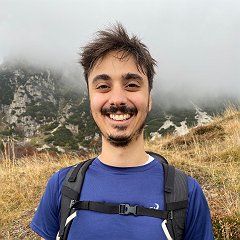
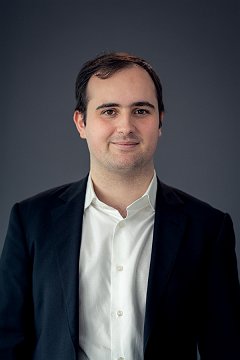
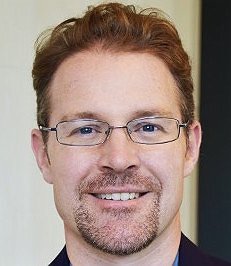
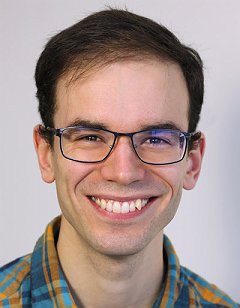
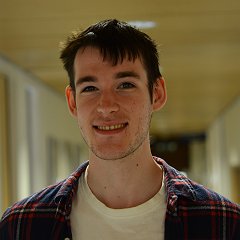
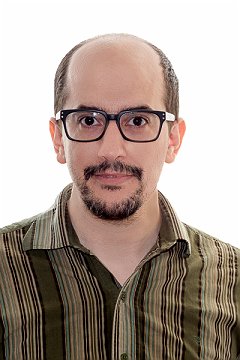
William J. Bowman is an Assistant Professor in the Department of Computer Science at the University of British Columbia. He focuses on secure and verified compilation, dependently typed programming, and meta-programming systems. His work bridges high-level language design with low-level code generation to maintain correctness and security invariants throughout compilation. Education: PhD in Computer Science from Northeastern University Research spans type-preserving compilation, including: Typed closure conversion for dependently typed languages Allocation-aware type universes Hybrid embedding techniques Secure interoperability via multi-language semantics Recent publications examine: Heap allocation modeling through type universes Flat closure representations WebAssembly extensions with indexed types Control-effect semantics
Matteo Busi is a researcher at University Ca' Foscari Venice , specializing in software security, language-based security, and secure compilation. His work focuses on formal verification of security properties in cryptographic implementations and protocol verification using symbolic methods. Research interests include: Software Security Language-Based Security Secure Compilation Formal Verification Cryptographic Protocol Analysis Embedded Security Recent publications examine constant-time preservation under obfuscation, remote attestation protocols using pi-calculus, and robust compilation techniques. His contributions span POPL, PriSC, and APLAS conferences from 2019 to 2024.
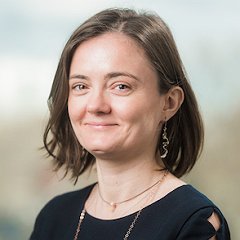
Farzaneh Derakhshan is an Assistant Professor in the Computer Science Department at Illinois Institute of Technology . Her research focuses on Programming Languages , Type Theory , and Formal Methods , with applications to concurrent programming , security verification , and intermittent computing . PhD in Pure and Applied Logic from Carnegie Mellon University (2021) Postdoctoral Fellow at Carnegie Mellon University Her research projects include: Designing modal logic for system verification Relational logic for GPU side-channel security Type systems for intermittent computing Behavioral types for security Advising : PhD Students: Godha Pallavi Bhogadi (co-advised with Stefan Muller), Myra Dotzel (co-advised with Limin Jia), Lang Liu Master's Students: Akash Madhu (co-advised with Minxuan Zhou) Scientific Awards : NSF Collaborative Award #2350217 for "Mixed Assurance Reasoning via Modal Logic" (2024) Teaching : Courses include CS595. Language-based Security , CS534. Types and Programming Languages , and CS440. Programming Languages and Translators at Illinois Tech.
Joaquín Ángel Triñanes Fernández serves as a Professor in the Department of Languages and Computer Systems at the University of Santiago de Compostela. He teaches core courses including Business Intelligence, Software Engineering, and Environmental Data Analysis and Mining across multiple programs such as the Bachelor’s Degree in Informatics Engineering and Master in Massive Data Analysis Technologies. His research focuses on data-intensive systems, with primary interests in Big Data architectures, Data Science methodologies, and Software Engineering practices. These themes directly align with his teaching portfolio and affiliation with the SYSTEMS LABORATORY research group, where he contributes to computational solutions for environmental engineering and business intelligence applications. As an active member of the SYSTEMS LABORATORY, he participates in research initiatives centered on scalable data processing frameworks and real-world implementations of analytics systems, particularly emphasizing environmental data mining and enterprise-level business intelligence solutions.
Almudena Nevado Llopis serves as a Professor at Jaume I University's Faculty of Communication and Social Sciences, teaching core courses in the Translation and Intercultural Communication degree program including Translation B-A (English-Spanish) I, Interpretation Techniques B-A (English-Spanish), Intercultural Mediation, and Public Service Interpreting. She extends her expertise to the Nursing degree through Health Communication and Education courses and contributes to the Master's in Health Sciences Research with Qualitative Research Designs instruction, demonstrating significant interdisciplinary engagement across communication, health, and social sciences domains. Her academic foundation includes a Licentiate in Translation and Interpretation and a PhD in Translation, Society and Communication, both completed at Jaume I University where she earned the prestigious Extraordinary Doctorate Award for her dissertation. These credentials establish her deep institutional roots and scholarly recognition within Spain's academic framework. Dr. Nevado Llopis's research program centers on intercultural communication and mediation with specialized focus on public service interpreting, particularly in healthcare settings. Her scholarly work systematically examines language brokering dynamics, ethical challenges in gender-based violence contexts, interpreter training methodologies, and the transformative impact of digitalization and pandemics on remote interpreting services. She investigates how cultural and linguistic barriers affect healthcare access for immigrant populations in Spain, advocating for professionalized interpreting services and intercultural competence development through rigorous empirical analysis and policy-relevant recommendations. Analysis of her recent publications (2022-2024) reveals three dominant trajectories: (1) healthcare interpreting systems across Spain, Italy and Romania through comparative studies of provider and user perspectives; (2) innovative training approaches for medical interpreters emphasizing ethical decision-making and crisis management; and (3) the pandemic-driven acceleration of remote interpreting services and its implications for quality assurance. Her work increasingly addresses mental healthcare accessibility through multilingual resources and intercultural competence building in educational institutions. Her scientific recognition includes the Extraordinary Doctorate Award. Significant research contributions include coordination of the ReACTME project (2019-2022) which developed medical interpreting training resources and databases, and participation in multiple Erasmus+ initiatives advancing intercultural education and healthcare communication across European borders. Dr. Nevado Llopis has successfully led international research collaborations including the ReACTME consortium and Erasmus+ projects, securing funding for cross-border studies on medical interpreting. Her research stays at King's College London's Clinical Communication Unit (2016) and Babeș-Bolyai University (2018) demonstrate active global engagement. Current work focuses on mapping mental healthcare resources through the MentalHealth4All project and analyzing leadership in international education contexts, with strong emphasis on practical implementation and policy impact. Embedded within Jaume I University's Translation and Intercultural Communication program, her research operates through dynamic project-based collaborations rather than a dedicated laboratory. She maintains strategic partnerships with European institutions including King's College London and Babeș-Bolyai University, contributing to transnational networks focused on healthcare interpreting standards, intercultural communication training, and multilingual resource development for vulnerable populations.
María Luisa Sierra Huedo serves as Professor and Vice Dean of Internationalization at the Faculty of Communication and Social Sciences, Universidad San Jorge, where she teaches Intercultural Communication for Communication and Translation undergraduate programs and Educational Processes and Contexts for the Master's in Teaching program. Her leadership in internationalization initiatives shapes institutional strategy across Spanish higher education. Her academic credentials include: PhD in International Education, University of Minnesota Master in Comparative International Development Education, University of Minnesota Dr. Sierra Huedo's research establishes critical connections between intercultural competence development, climate migration patterns, and higher education internationalization. She pioneers frameworks for implementing intercultural pedagogy across art education, translation studies, and nursing curricula while addressing Mediterranean migration challenges through EU-North African university collaborations. As principal investigator for seven Erasmus+ projects (2016-2024), she advances practical models for inclusive teaching through initiatives like MULTICLASS and REACT, with fieldwork spanning Morocco, Turkey, and Bulgaria. Her publication trend reveals three interconnected research streams: intercultural competence assessment in Spanish degree programs (2009-2012), climate migration impacts on Mediterranean education systems (2014-2019), and innovative internationalization-at-home methodologies (2013-2020). This work consistently bridges theoretical development with practical implementation across arts, health sciences, and technological education. Her grant portfolio demonstrates sustained European Commission funding through major Erasmus+ initiatives: LIFE (2016-2018): Interculturality through religious education CATCH (2019-2021): 21st-century teaching approaches LIFE TWO (2019-2022): Outreach-focused intercultural activities Learning Schools (2020-2022): Inclusive classroom environments REACT (2020-2024): Critical thinking development MULTICLASS: Multicultural higher education classrooms PAIDEIA: EU Solidarity Corps innovation She actively contributes to the DGA-recognized research group "Migraciones, Interculturalidad y Desarrollo Humano," coordinating cross-border collaborations that examine climate migration through educational lenses while developing practical intercultural teaching resources for European universities.
Dr. María Belando Montoro is a Professor in the Theory and History of Education department at the Complutense University of Madrid's Faculty of Education. She is affiliated with the EDUINNO - HUM971 Eduinnovagogía research group and specializes in Educational Gerontology, Service-Learning methodology, and Social Pedagogy. Dr. Belando Montoro's research focuses on educational aspects of aging, health promotion for elderly populations, and socio-educational interventions for older adults. Her work challenges traditional notions of retirement as a period of passive leisure, instead framing it as an opportunity for personal development. She has developed comprehensive programs addressing physical, psychological, and social dimensions of aging, emphasizing conscious use of free time despite health or economic limitations. Her recent publications demonstrate a strong focus on Service-Learning methodology in higher education, with studies examining student perceptions across sociodemographic variables and systematic reviews of international implementations including in China. Her work consistently identifies the need for more conscious learning about competencies acquired through university studies. Extensive research on elderly care and educational gerontology Significant contributions to Service-Learning methodology research Multidimensional studies on vocational education decision-making Development of socio-educational intervention programs for aging populations Dr. Belando Montoro employs mixed-methods research approaches, combining qualitative and quantitative methodologies. Her work has important implications for educational policy and practice, particularly regarding information systems to support students and families in educational decision-making and expanding Service-Learning beyond higher education to other educational stages. She is actively involved in the training of Social Educators at the Complutense University of Madrid, contributing to professional development programs that prepare educators for non-formal educational settings and socio-educational interventions.
Francisco Javier Pérez de la Cruz serves as an Associate Professor in the Department of Civil Engineering at the School of Industrial Engineering, Polytechnic University of Cartagena, Spain. His academic career integrates technical expertise in water infrastructure with innovative educational methodologies, reflecting a commitment to sustainable engineering solutions and pedagogical advancement within civil engineering disciplines. His research spans water resources engineering, flood risk management, and sustainable water systems, with notable focus on historical water supply contexts, energy recovery in distribution networks, and carbon footprint reduction in irrigation. Educational research forms a parallel pillar, emphasizing project-based learning and gamification tools like Kahoot! to enhance multidisciplinary engineering education. This dual trajectory bridges practical infrastructure challenges with evolving teaching paradigms. Analysis of his 15 most recent publications (2018-2025) reveals consistent interdisciplinary patterns: historical engineering analyses inform modern sustainability practices, while flood risk modeling and SUDS implementation address climate resilience. Educational studies demonstrate systematic exploration of digital tools for competency development, with Kahoot! research evolving from classroom implementation to cross-disciplinary frameworks. The convergence of water-energy nexus investigations and pedagogical innovation defines his scholarly identity. Scientific Awards: No awards, fellowships, or medals were documented in the available information. Advising and Grants: The provided text contains no records of student advisement, research grants, or funded projects. His supervisory roles and external funding mechanisms remain unreported in the current dataset. Labs and Teams: No specific research laboratories, field teams, or collaborative networks were referenced. His operational research environment appears institutionally embedded within the university's civil engineering infrastructure without dedicated team descriptions.
Denis Merigoux is a researcher at Inria specializing in the intersection of programming languages , formal verification , and computational law . As the lead of the Catala project, he focuses on translating legal texts into verifiable code to modernize tax and social welfare systems. His academic background includes a PhD in Computer Science from Université Paris Sciences et Lettres (2021) and a Master's thesis at École polytechnique.
Jeremy G. Siek is a Professor at Indiana University Bloomington in the School of Informatics and Computing. His research spans programming language design, type systems, gradual typing, mechanized theorem proving, and optimizing compilers. Gradual typing integration in functional languages Co-inventor of the Boost Graph Library Former NSF CAREER award recipient Active in programming language foundations research Jeremy's research focuses on reconciling static and dynamic type checking through gradual typing, with current work on parametricity in polymorphic blame calculus, combining gradual typing with dependent types, and formal criteria for gradual type systems. He investigates high-performance implementations of gradual typing and its application to security enforcement. His recent publications examine verified nanopass compilers, gradual security guarantees, and parameterized cast calculi. He has received multiple distinguished visiting fellowships and maintains the Deduce proof assistant for educational use. NSF CAREER Award (2009) Distinguished Visiting Fellowships (2010, 2015) Jeremy leads the Center for Programming Systems at IU and advises Ph.D. students Tianyu Chen (gradual security) and Darshal Shetty (gradual dependent types). He teaches courses in compilers, data structures, and programming language foundations.
John Wickerson is a Senior Lecturer in the Department of Electrical and Electronic Engineering at Imperial College London. His research spans formal methods, concurrency, and hardware/software synthesis. Academic Rank: Senior Lecturer Affiliation: Imperial College London His research interests include concurrency semantics, weak memory models, transactional memory, GPU and FPGA programming, and high-level synthesis for hardware accelerators. These areas intersect formal verification, programming language design, and hardware-software interface optimization. The publications of John Wickerson reflect trends in formalizing memory models, improving hardware synthesis reliability, and testing concurrency frameworks. His work addresses challenges in quantum compiler validation, GPU workgroup progress, and weak memory persistency across Intel, ARM, and C++ architectures. He actively contributes to academic communities as a Publicity Co-Chair and Session Chair in conferences like POPL and as a Committee Member in SPLASH and PLDI. His GitHub repository activity and X (Twitter) presence further demonstrate his engagement in technical dissemination.
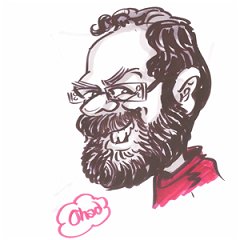
Ohad Kammar is a researcher at the University of Edinburgh , actively contributing to programming language theory, denotational semantics, and algebraic effects. His work bridges theoretical foundations with practical implementations. Research Themes : Type-driven development, concurrency, probabilistic programming, normalization algorithms, and algebraic effects. Conference Involvement : Committee member in Diversity, Equity and Inclusion , Student Research Competition , and LAFI tracks at POPL; program committee roles in ICFP, APLAS, PEPM, and HOPE. Publications : Focus on denotational semantics, effect handlers, relaxed memory concurrency, and dependently-typed probabilistic models.
Conrad Watt is an Assistant Professor at Nanyang Technological University in Singapore. His research focuses on the formal verification and mechanisation of WebAssembly, particularly its concurrency and security features. He previously held a Research Fellow position at Peterhouse, University of Cambridge. His work bridges theoretical formal methods with practical systems implementation, contributing to standards proposals for WebAssembly's evolution. He co-chairs the W3C WebAssembly Community Group and has served on program committees for POPL, PLDI, and SPLASH. Education: PhD in Computer Science (University of Cambridge, 2021), supervised by Peter Sewell Research interests include mechanisation of programming language specifications, relaxed-memory concurrency, and domain-specific languages for formal semantics. His projects like SpecTec aim to unify WebAssembly's specification across documentation, implementations, and mechanisations. Selected contributions to WebAssembly include: Designing its initial concurrency specification Developing WasmRef-Isabelle as a verified interpreter and fuzzing oracle Creating Iris-Wasm for modular program verification Scientific recognition includes: ACM Doctoral Dissertation Award Honorable Mention EAPLS Best Dissertation Award He advises PhD students in WebAssembly-related topics and leads collaborations with industrial partners like Wasmtime. Current research explores irreducible control flow in WebAssembly, richer concurrency models, and performance optimization through mechanised specifications.
Alexandra Silva is a Professor of Computer Science in the Department of Computer Science at Cornell University's College of Engineering. She joined Cornell as faculty in 2021 after previously serving as a Royal Society Wolfson Fellow and Professor of Algebra, Semantics, and Computation at University College London. Her research spans programming languages, formal verification, and theoretical computer science, with particular focus on Kleene Algebra with Tests (KAT), probabilistic programming, and automata theory. She has held numerous leadership roles in major programming languages conferences including POPL, PLDI, and ICFP. Dr. Silva completed her PhD at Centrum Wiskunde & Informatica (CWI) in Amsterdam under the supervision of Jan Rutten and Marcello Bonsangue, with her thesis entitled "Kleene coalgebra" defended in December 2010. Prior to her PhD, she was an undergraduate student at University of Minho in Portugal, where she completed a 5-year Mathematics and Computer Science degree in May 2006. Her research focuses on the modular development of specification languages and algorithms for models of computations, often from the unifying perspective offered by coalgebra. She has made significant contributions to Kleene Algebra with Tests, probabilistic programming semantics, network verification, and automata learning. Her work bridges theoretical foundations with practical verification tools, particularly in the domain of Software-Defined Networking where her NetKAT framework has gained significant attention. Analysis of her recent publications reveals a strong trend toward unifying frameworks for program verification, particularly through her development of Outcome Logic which provides foundations for both correctness and incorrectness reasoning. Her work increasingly integrates probabilistic and concurrent aspects of programming languages, with applications to network verification and security. The NetKAT ecosystem remains a central theme, with extensions to infinite state verification, symbolic execution, and learning-based approaches. Distinguished paper award for Guarded Kleene algebra with tests: verification of uninterpreted programs in nearly linear time (POPL 2020) Dr. Silva advises a large research group with numerous PhD students, postdocs, and undergraduate researchers. Her group has produced significant work in programming languages theory, verification, and applications to networking. She has secured substantial research funding through various grants that support her work on formal methods for network verification and probabilistic programming. Her mentoring approach emphasizes both theoretical depth and practical impact, with many of her students moving to prestigious academic and industry positions. Her research group, spanning both Cornell University and University College London, focuses on developing theoretical foundations for programming languages with practical applications in network verification, probabilistic systems, and program analysis. The group maintains active collaborations with researchers at CWI, University of Oxford, and other leading institutions in programming languages and formal methods.
Francisco Ferreira is a Lecturer (tenure track, equivalent to Assistant Professor) in the Department of Computer Science at Royal Holloway, University of London. Previously, he was a postdoctoral Research Associate in the Department of Computing at Imperial College London, working with Professor Nobuko Yoshida. Dr. Ferreira's primary research interests include type systems and formal logic, formal meta-theory, concurrency and process calculi, session types, temporal logic and other modal logics, and principled approaches to programming. His work bridges theoretical foundations with practical applications, particularly in the realm of communication protocols and programming language design. His publication record demonstrates a strong focus on session types and their applications, with a trajectory moving from foundational theoretical work to practical implementations. Over the past decade, his research has increasingly emphasized the verification and implementation of communication protocols, resulting in tools and frameworks that ensure communication safety in distributed systems. Scientific Awards: ICFP'12 Student Research Competition First Place Dr. Ferreira has teaching experience in programming languages and paradigms, having served as both a lecturer and teaching assistant for COMP 302. His industrial experience includes Haskell consulting for Erudite Software, game programming for Bluberi, and developing mission-critical software for Motorola Argentina in the telecom industry.