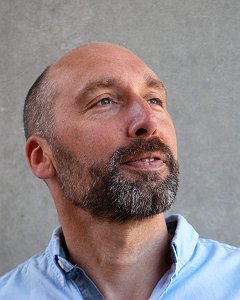
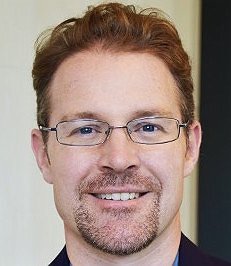
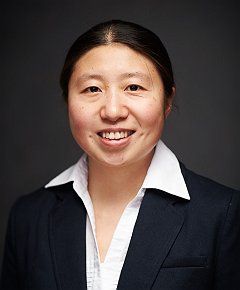
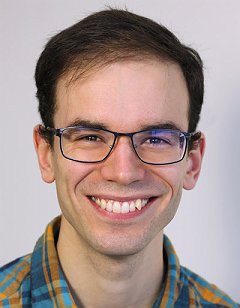
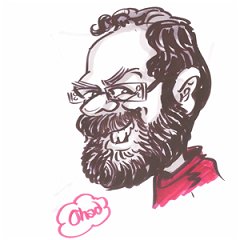
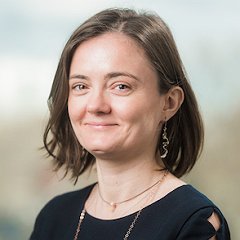
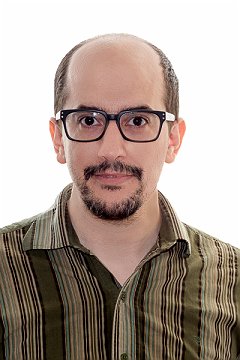
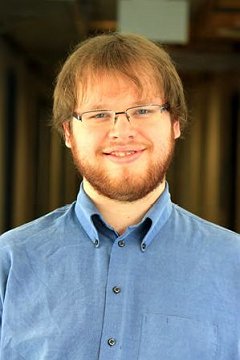
Osbert Bastani is an Associate Professor at the University of Pennsylvania's Department of Computer and Information Science, where he leads the trustml@Penn research group. He is affiliated with multiple research centers including ASSET, PRECISE, PRiML, and PLClub. Previously, he completed his Ph.D. at Stanford University advised by Alex Aiken and was a postdoctoral researcher at MIT working with Armando Solar-Lezama. His research focuses on Trustworthy Machine Learning , specifically addressing: adversarial robustness through formal verification methods, distributional robustness, uncertainty quantification via conformal prediction, fairness definitions and verification, explainability techniques (LIME/SHAP), and counterfactual explanations. His work bridges theoretical guarantees with practical applications in safety-critical systems. He teaches graduate courses including CIS 7000: Trustworthy Machine Learning and CIS 4190/5190: Applied Machine Learning , with coursework covering robustness verification, calibrated prediction, fairness constraints, and attribution methods. He leads the trustml@Penn research group and collaborates with multiple Penn research centers focused on embedded systems, machine learning foundations, and programming languages.
Bas Spitters is an Associate Professor at the Department of Computer Science, Aarhus University, Denmark. He leads the Concordium Blockchain Research Center and the Blockchain workpackage in Digit , and contributes to Aarhus University's Quantum Campus initiative. His research spans Homotopy Type Theory , Formal Verification , and High-assurance cryptographic software . He develops proof assistants like Coq for applications in probabilistic programming , blockchain security , and quantum computing . Recent article trends focus on verified compilation (CertiCoq-Wasm), smart contract certification (ConCert), and applications of HoTT to probabilistic and blockchain systems. Key keywords include Formal Methods , Blockchain , Quantum Computing , and Cubical Type Theory . Scientific awards and grants: AFOSR grant (2018-2021) for Homotopy Type Theory in probabilistic computation Villum Foundation grant (2015-2019) for Guarded Homotopy Type Theory NWO VENI grant (2010-2013) for Reasoning and Computing DIAMANT researcher grant Advising and collaboration: Advised PhD students: Benjamin Salling Hvass, Jakob Botsch Nielsen, Andreas Aagaard Lynge, Soren Eller Thomsen, Martin Bidlingmaier Collaborated on computer-verified exact analysis, smart contracts, and quantum logic Organized workshops: TYPES workshop , HACS , and DMV Mini-Symposium
Georg Zetzsche is a tenure-track faculty member at the Max Planck Institute for Software Systems (MPI-SWS) in Kaiserslautern, Germany, since November 2018. He leads the Models of Computation group , focusing on theoretical foundations of formal verification and synthesis for infinite-state systems. His work bridges decidability, computational complexity, and automata theory , with applications to program analysis and concurrent systems .
Jeremy G. Siek is a Professor at Indiana University Bloomington in the School of Informatics and Computing. His research spans programming language design, type systems, gradual typing, mechanized theorem proving, and optimizing compilers. Gradual typing integration in functional languages Co-inventor of the Boost Graph Library Former NSF CAREER award recipient Active in programming language foundations research Jeremy's research focuses on reconciling static and dynamic type checking through gradual typing, with current work on parametricity in polymorphic blame calculus, combining gradual typing with dependent types, and formal criteria for gradual type systems. He investigates high-performance implementations of gradual typing and its application to security enforcement. His recent publications examine verified nanopass compilers, gradual security guarantees, and parameterized cast calculi. He has received multiple distinguished visiting fellowships and maintains the Deduce proof assistant for educational use. NSF CAREER Award (2009) Distinguished Visiting Fellowships (2010, 2015) Jeremy leads the Center for Programming Systems at IU and advises Ph.D. students Tianyu Chen (gradual security) and Darshal Shetty (gradual dependent types). He teaches courses in compilers, data structures, and programming language foundations.
Limin Jia is a Research Professor in the Department of Electrical and Computer Engineering at Carnegie Mellon University, with a courtesy appointment in the Computer Science Department. She is affiliated with CyLab, CMU's security and privacy research institute. She received her PhD in Computer Science from Princeton University and a BE from the University of Science and Technology in China. Her research applies formal techniques to enhance software security, focusing on programming languages and distributed systems. Key interests include: Language-based security mechanisms Formal verification of distributed systems Secure compilation techniques Intermittent computing foundations Her publications demonstrate strong emphasis on security guarantees in programming languages (Rust/WebAssembly), formal methods for intermittent systems, and software supply chain security. Recent works frequently address type systems, compiler verification, and energy-constrained computing. Dr. Jia maintains an extensive advising portfolio with current and former students spanning PhD and Master's programs. She teaches foundational security courses including Browser Security and Introduction to Information Security .
John Wickerson is a Senior Lecturer in the Department of Electrical and Electronic Engineering at Imperial College London. His research spans formal methods, concurrency, and hardware/software synthesis. Academic Rank: Senior Lecturer Affiliation: Imperial College London His research interests include concurrency semantics, weak memory models, transactional memory, GPU and FPGA programming, and high-level synthesis for hardware accelerators. These areas intersect formal verification, programming language design, and hardware-software interface optimization. The publications of John Wickerson reflect trends in formalizing memory models, improving hardware synthesis reliability, and testing concurrency frameworks. His work addresses challenges in quantum compiler validation, GPU workgroup progress, and weak memory persistency across Intel, ARM, and C++ architectures. He actively contributes to academic communities as a Publicity Co-Chair and Session Chair in conferences like POPL and as a Committee Member in SPLASH and PLDI. His GitHub repository activity and X (Twitter) presence further demonstrate his engagement in technical dissemination.
Xavier Denis is a researcher in formal methods and program verification, recently completing his PhD at Laboratoire Méthodes Formelles (LMF) under Université Paris-Saclay. He developed Creusot , a deductive verifier for Rust programs, and will join the Proof Methodology group at ETH Zurich as a postdoctoral researcher under Prof. Peter Mueller. Affiliation: Université Paris-Saclay, CNRS, ENS Paris-Saclay, INRIA Research interests: Program Verification, Ownership, Programs & Types His contributions include: Co-chairing the Student Volunteer subcommittee at POPL 2024 Authoring a PLDI 2022 paper on functional verification of Rust programs with unsafe code
Daniele Nantes-Sobrinho is a tenured Adjunct Professor at the Department of Mathematics, University of Brasília, currently on sabbatical leave. She concurrently serves as a Research Fellow at Imperial College London. She obtained her Ph.D. in Mathematics from the University of Brasília in 2013, with research focused on equational unification in security protocol analysis. Education: Ph.D. in Mathematics, University of Brasília, 2013 Research Interests: Her work develops mathematical structures and logical foundations for modeling, specifying, and verifying critical systems. Core areas include: Formal Methods, Separation Logic, Verification, Logical Methods for Computer Science, Rewriting, Unification, Nominal Techniques, Security Verification, and Behavioral Types. Publications: Her 15 most recent articles (2018-2023) cluster around Formal Methods, with emphases on Nominal Techniques, Concurrency, Unification/Algorithms, and Verification. Trends show increasing focus on non-determinism in concurrent systems and certified unification algorithms. Student Advising: Current MSc Students: Daniella Santaguida Magalhães, Gabriela de Souza Ferreira, Leonardo Melo Batista, Ali Khãn Ribeiro Former Students: Bruno Falcão (Undergraduate), Vinícius Sugimoto (Undergraduate), Andrés Gonzalez (MSc), Deivid Vale (MSc), Bruno Delboni (MSc) Affiliations: Member of the Theoretical Computer Science Group (GTC-UnB) and external collaborator for the VIDI project Unifying Correctness for Communicating Systems .
Ohad Kammar is a researcher at the University of Edinburgh , actively contributing to programming language theory, denotational semantics, and algebraic effects. His work bridges theoretical foundations with practical implementations. Research Themes : Type-driven development, concurrency, probabilistic programming, normalization algorithms, and algebraic effects. Conference Involvement : Committee member in Diversity, Equity and Inclusion , Student Research Competition , and LAFI tracks at POPL; program committee roles in ICFP, APLAS, PEPM, and HOPE. Publications : Focus on denotational semantics, effect handlers, relaxed memory concurrency, and dependently-typed probabilistic models.
Alexandra Silva is a Professor of Computer Science in the Department of Computer Science at Cornell University's College of Engineering. She joined Cornell as faculty in 2021 after previously serving as a Royal Society Wolfson Fellow and Professor of Algebra, Semantics, and Computation at University College London. Her research spans programming languages, formal verification, and theoretical computer science, with particular focus on Kleene Algebra with Tests (KAT), probabilistic programming, and automata theory. She has held numerous leadership roles in major programming languages conferences including POPL, PLDI, and ICFP. Dr. Silva completed her PhD at Centrum Wiskunde & Informatica (CWI) in Amsterdam under the supervision of Jan Rutten and Marcello Bonsangue, with her thesis entitled "Kleene coalgebra" defended in December 2010. Prior to her PhD, she was an undergraduate student at University of Minho in Portugal, where she completed a 5-year Mathematics and Computer Science degree in May 2006. Her research focuses on the modular development of specification languages and algorithms for models of computations, often from the unifying perspective offered by coalgebra. She has made significant contributions to Kleene Algebra with Tests, probabilistic programming semantics, network verification, and automata learning. Her work bridges theoretical foundations with practical verification tools, particularly in the domain of Software-Defined Networking where her NetKAT framework has gained significant attention. Analysis of her recent publications reveals a strong trend toward unifying frameworks for program verification, particularly through her development of Outcome Logic which provides foundations for both correctness and incorrectness reasoning. Her work increasingly integrates probabilistic and concurrent aspects of programming languages, with applications to network verification and security. The NetKAT ecosystem remains a central theme, with extensions to infinite state verification, symbolic execution, and learning-based approaches. Distinguished paper award for Guarded Kleene algebra with tests: verification of uninterpreted programs in nearly linear time (POPL 2020) Dr. Silva advises a large research group with numerous PhD students, postdocs, and undergraduate researchers. Her group has produced significant work in programming languages theory, verification, and applications to networking. She has secured substantial research funding through various grants that support her work on formal methods for network verification and probabilistic programming. Her mentoring approach emphasizes both theoretical depth and practical impact, with many of her students moving to prestigious academic and industry positions. Her research group, spanning both Cornell University and University College London, focuses on developing theoretical foundations for programming languages with practical applications in network verification, probabilistic systems, and program analysis. The group maintains active collaborations with researchers at CWI, University of Oxford, and other leading institutions in programming languages and formal methods.
Steve Zdancewic is the Schlein Family President's Distinguished Professor and Associate Chair in the Department of Computer and Information Science at the University of Pennsylvania. His research spans programming languages, computer security, formal verification, and type theory, with significant contributions to LLVM verification, program synthesis, and quantum programming. He co-leads Penn's Programming Languages Research Group with Benjamin Pierce and Stephanie Weirich. His research focuses on: Programming language foundations (type theory, linear logic, semantics) Formal verification (Coq, LLVM, interaction trees) Security (information-flow control, memory safety) Emerging paradigms (quantum programming, secure distributed systems) Publication trends reveal deep engagement with formal methods (67%), programming language design (20%), and systems security (13%), primarily using Coq for mechanized verification. Recent works demonstrate increased focus on parallel/streaming computation and synthesis techniques. Awards Distinguished Paper Awards (ECOOP 2023, POPL 2020) Schlein Family President's Distinguished Professor (2021) Lindback Distinguished Teaching Award (2018) IEEE MICRO Top Picks (2013) Sloan Fellowship (2009-2010) NSF CAREER Award (2004) Best Paper Awards (SOSP 2001, ICFP 1999) Research Leadership Directs multiple NSF-funded projects including DeepSpec (verified systems infrastructure), Vellvm (LLVM semantics), and ExCAPE (program synthesis). Advises 5 PhD students and 31 former advisees/postdocs. Served as General Chair for POPL 2025 and associate chair for PLDI/ICFP/POPL. Infrastructure Leads the Vellvm project developing Coq-based LLVM semantics, the Interaction Trees framework for recursive/impure programs, and Qwire for quantum circuit verification. Maintains active collaborations with Galois Inc. and INRIA.
Francisco Ferreira is a Lecturer (tenure track, equivalent to Assistant Professor) in the Department of Computer Science at Royal Holloway, University of London. Previously, he was a postdoctoral Research Associate in the Department of Computing at Imperial College London, working with Professor Nobuko Yoshida. Dr. Ferreira's primary research interests include type systems and formal logic, formal meta-theory, concurrency and process calculi, session types, temporal logic and other modal logics, and principled approaches to programming. His work bridges theoretical foundations with practical applications, particularly in the realm of communication protocols and programming language design. His publication record demonstrates a strong focus on session types and their applications, with a trajectory moving from foundational theoretical work to practical implementations. Over the past decade, his research has increasingly emphasized the verification and implementation of communication protocols, resulting in tools and frameworks that ensure communication safety in distributed systems. Scientific Awards: ICFP'12 Student Research Competition First Place Dr. Ferreira has teaching experience in programming languages and paradigms, having served as both a lecturer and teaching assistant for COMP 302. His industrial experience includes Haskell consulting for Erudite Software, game programming for Bluberi, and developing mission-critical software for Motorola Argentina in the telecom industry.
Andrew K. Hirsch is an Assistant Professor at the University at Buffalo, SUNY , Department of Computer Science and Engineering. He leads the Databases and Programming Languages group and focuses on programming languages for decentralized systems, particularly choreographic programming and information-flow security. Education: Ph.D. in Computer Science (2019) from Cornell University, supervised by Ross Tate on computational effects. B.S. in Computer Science and Pure Mathematics from The George Washington University. Research Interests: His work centers on choreographic programming, a paradigm ensuring deadlock-free concurrent systems, and information-flow security for decentralized applications. He also explores computational effects and type systems in programming language theory. Publications: Recent work includes advancements in process polymorphism (OOPSLA 2025), type-level polymorphism (PLACES 2025), and security definitions for higher-order declassification (OOPSLA 2023). Students: Doctoral: Michael Piskozub, Keith Allen Mason Masters: Alexander Bohosian, Gianna Bossoreale Undergraduate: Alex Doyoon Kim, Julia Montouri Recent Alumni: Ethan Canton, Tiffany Cai, Vamsi Krishna Bellam, Vincent Chan, Frank (Feng-Mao) Tsai Projects: Leads initiatives such as Choret (open choreographies) and The Pirouette Language and Compiler , which translate choreographic programs into concurrent system implementations.
Elvira Patricia Pino Blanco is a Professor in the Department of Computer Science at the Barcelona East School of Engineering, Polytechnic University of Catalonia (UPC). She is a member of the ALBCOM research group (Algorithms, Bioinformatics, Complexity and Formal Methods) and has an extensive publication record spanning over two decades. Her research interests focus on formal methods in computer science, particularly in graph theory, logic programming, and database systems. She has made significant contributions to navigational logics for graphical structures, graph databases, and model synchronization using triple graph grammars. Her work bridges theoretical foundations with practical applications in software engineering and data management. Her publication trends show a consistent focus on graph-based approaches to computational problems, with recent work emphasizing logical approaches to graph databases and navigational query languages. She has published in high-impact venues including Journal of Logical and Algebraic Methods in Programming, Theoretical Computer Science, and various international conferences. Professor Pino Blanco has been involved in numerous competitive R&D projects related to algorithmics, bioinformatics, and formal methods. Her work demonstrates interdisciplinary connections between theoretical computer science and practical applications in data management and software engineering. She is affiliated with the ALBCOM research group which focuses on algorithmics, bioinformatics, complexity theory, and formal methods. This group represents a vibrant research community working at the intersection of theoretical computer science and practical applications.
Ángel Alonso-Cortés Manteca is a distinguished linguistics scholar affiliated with the Faculty of Philology at Complutense University of Madrid. With a career spanning from 1976 to 2022, he has established himself as a significant contributor to Spanish linguistics, historical linguistics, and theoretical linguistics. His academic profile includes 44 journal articles, 8 collective works, 13 reviews, 9 books, and direction of 3 doctoral theses, reflecting his substantial scholarly output and mentorship. His research interests span multiple dimensions of linguistic study, with particular emphasis on Spanish phonology, syntax, and historical development. He has made notable contributions to Basque language studies, examining its historical documentation and relationship with Spanish. His work on language evolution, from theoretical explorations of language origins to practical analyses of contemporary phenomena like Spanglish, demonstrates both breadth and depth in his scholarly approach. Alonso-Cortés Manteca has also engaged critically with major linguistic theories, from Saussurean structuralism to Chomskyan generative grammar, as evidenced by his publications examining these frameworks. His publication record shows consistent scholarly activity across five decades, with recent work including the 2022 RLD Corpus study of linguistic resources in Spanish law, demonstrating continued relevance and engagement with contemporary linguistic issues. His directed doctoral theses on Spanish phonology, spoken Spanish discourse patterns, and Spanish temporality reflect his influence on emerging scholars in the field. As an academic, Alonso-Cortés Manteca has contributed significantly to linguistic education through his textbooks, particularly the multiple editions of his "Lingüística" series, which have served as foundational resources for Spanish linguistics students. His work bridges theoretical linguistics with practical language analysis, making complex linguistic concepts accessible while maintaining scholarly rigor.