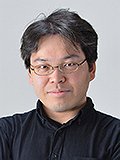
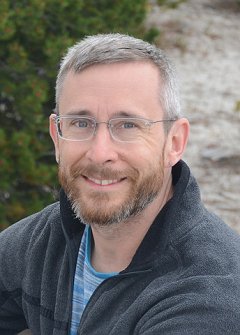
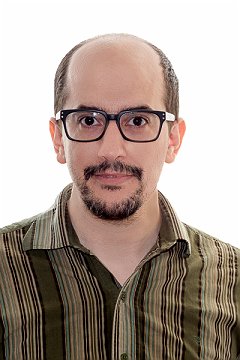
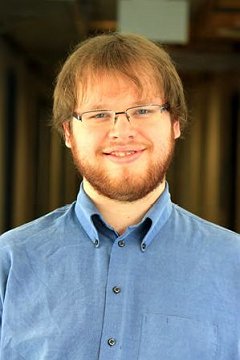
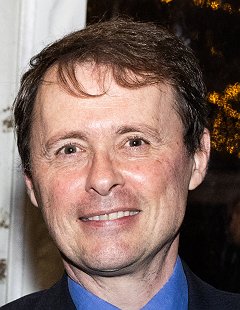
Hiroshi Unno is a Professor at Tohoku University 's Research Institute of Electrical Communication and a Visiting Professor at the National Institute of Informatics. He has served on program committees for major conferences like POPL , PLDI , ICFP , and CAV . Dr. Unno's research focuses on Programming Languages Software Verification Artificial Intelligence Higher-Order Model Checking Refinement Type Systems Temporal Logic His recent work (2023-2025) includes advancements in algebraic effects , probabilistic program verification , and prophecy-based type systems . Key contributions appear in POPL , PLDI , and ICFP journals. Scientific awards include Distinguished Paper Award at POPL 2024 Distinguished Paper Award at POPL 2023 PPL 2014 Best Paper Award He leads development of tools like RCaml , Thrust , and EffCaml for refinement type checking. Current projects involve Kakenhi grants 20H04162 and 25H00446 . Dr. Unno actively contributes to academic communities through Program Committee roles at AAAI, CAV, and SAS Editorial work for IPSJ Transactions Organizing PPL Summer School (2022)
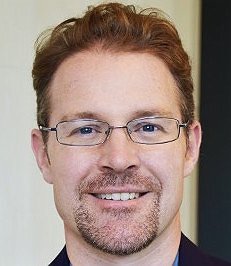
Jeremy G. Siek is a Professor at Indiana University Bloomington in the School of Informatics and Computing. His research spans programming language design, type systems, gradual typing, mechanized theorem proving, and optimizing compilers. Gradual typing integration in functional languages Co-inventor of the Boost Graph Library Former NSF CAREER award recipient Active in programming language foundations research Jeremy's research focuses on reconciling static and dynamic type checking through gradual typing, with current work on parametricity in polymorphic blame calculus, combining gradual typing with dependent types, and formal criteria for gradual type systems. He investigates high-performance implementations of gradual typing and its application to security enforcement. His recent publications examine verified nanopass compilers, gradual security guarantees, and parameterized cast calculi. He has received multiple distinguished visiting fellowships and maintains the Deduce proof assistant for educational use. NSF CAREER Award (2009) Distinguished Visiting Fellowships (2010, 2015) Jeremy leads the Center for Programming Systems at IU and advises Ph.D. students Tianyu Chen (gradual security) and Darshal Shetty (gradual dependent types). He teaches courses in compilers, data structures, and programming language foundations.
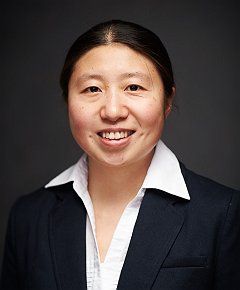
Limin Jia is a Research Professor in the Department of Electrical and Computer Engineering at Carnegie Mellon University, with a courtesy appointment in the Computer Science Department. She is affiliated with CyLab, CMU's security and privacy research institute. She received her PhD in Computer Science from Princeton University and a BE from the University of Science and Technology in China. Her research applies formal techniques to enhance software security, focusing on programming languages and distributed systems. Key interests include: Language-based security mechanisms Formal verification of distributed systems Secure compilation techniques Intermittent computing foundations Her publications demonstrate strong emphasis on security guarantees in programming languages (Rust/WebAssembly), formal methods for intermittent systems, and software supply chain security. Recent works frequently address type systems, compiler verification, and energy-constrained computing. Dr. Jia maintains an extensive advising portfolio with current and former students spanning PhD and Master's programs. She teaches foundational security courses including Browser Security and Introduction to Information Security .
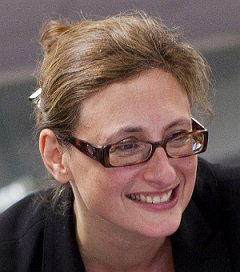
Philippa Gardner is a Professor in the Department of Computing at Imperial College London, where she has been on faculty since 2001 and became a professor in 2009. She holds a UKRI Established Fellowship (2018–2023) and directs the EPSRC-funded Research Institute on Verified Trustworthy Software Systems (VeTSS) from 2017 to 2022. Previously, she held an EPSRC Advanced Fellowship at the University of Cambridge (hosted by Robin Milner) and a Microsoft Research Cambridge/Royal Academy of Engineering Senior Fellowship (2005–2010). She completed her PhD in 1992 at the University of Edinburgh under Professor Gordon Plotkin, followed by five years of postdoctoral fellowships at Edinburgh. Her research focuses on program verification , with specialized interests in web programming (JavaScript/DOM), concurrent systems, and formal methods. She developed the Gillian platform for multi-language symbolic execution and has made significant contributions to separation logic, WebAssembly verification, and compositional reasoning techniques. Her recent publications demonstrate a strong emphasis on unified formal methods, scalable verification techniques, and practical tools for real-world languages like JavaScript and WebAssembly. Key themes include symbolic execution, correctness/incorrectness reasoning, and mechanized semantics. Awards and Fellowships: UKRI Established Fellowship (2018–2023) Microsoft Research Cambridge/Royal Academy of Engineering Senior Fellowship (2005–2010) Leadership and Service: Directs the VeTSS research institute focusing on trustworthy systems. Chaired the BCS awards committee (2013–2018), overseeing the Lovelace Medal and Roger Needham Award.
John Wickerson is a Senior Lecturer in the Department of Electrical and Electronic Engineering at Imperial College London. His research spans formal methods, concurrency, and hardware/software synthesis. Academic Rank: Senior Lecturer Affiliation: Imperial College London His research interests include concurrency semantics, weak memory models, transactional memory, GPU and FPGA programming, and high-level synthesis for hardware accelerators. These areas intersect formal verification, programming language design, and hardware-software interface optimization. The publications of John Wickerson reflect trends in formalizing memory models, improving hardware synthesis reliability, and testing concurrency frameworks. His work addresses challenges in quantum compiler validation, GPU workgroup progress, and weak memory persistency across Intel, ARM, and C++ architectures. He actively contributes to academic communities as a Publicity Co-Chair and Session Chair in conferences like POPL and as a Committee Member in SPLASH and PLDI. His GitHub repository activity and X (Twitter) presence further demonstrate his engagement in technical dissemination.
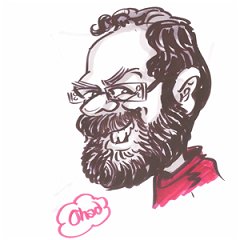
Ohad Kammar is a researcher at the University of Edinburgh , actively contributing to programming language theory, denotational semantics, and algebraic effects. His work bridges theoretical foundations with practical implementations. Research Themes : Type-driven development, concurrency, probabilistic programming, normalization algorithms, and algebraic effects. Conference Involvement : Committee member in Diversity, Equity and Inclusion , Student Research Competition , and LAFI tracks at POPL; program committee roles in ICFP, APLAS, PEPM, and HOPE. Publications : Focus on denotational semantics, effect handlers, relaxed memory concurrency, and dependently-typed probabilistic models.
Nate Foster is a Professor of Computer Science at Cornell University and a Visiting Researcher at Jane Street . During 2023-24, he also holds a Visiting Professor position at EPFL in the Data Center Systems Laboratory. His research focuses on Programming Languages and Networking , with significant contributions to formal verification of network data planes and domain-specific language design. Awarded NSF CAREER Award , Sloan Research Fellowship , ACM SIGCOMM Rising Star Award , and ACM SIGPLAN Robin Milner Award Active in program committees for conferences like POPL, PLDI, SPLASH, and ICFP Research Trends : His recent work explores intersections of programming language theory with networking, including symbolic verification tools like KATch , infinite-state network analysis with StacKAT , and active learning frameworks for network automata. He applies formal methods to practical challenges in software-defined networking and hypervisor verification. Scientific Awards : NSF CAREER Award Sloan Research Fellowship ACM SIGCOMM Rising Star Award ACM SIGPLAN Robin Milner Award Academic Leadership : Serves as Session Preview Co-Chair for POPL 2024 and organizes workshops like RPLS 2025. He has chaired tutorials on P4 programming and mentored researchers through PLMW programs.
Conrad Watt is an Assistant Professor at Nanyang Technological University in Singapore. His research focuses on the formal verification and mechanisation of WebAssembly, particularly its concurrency and security features. He previously held a Research Fellow position at Peterhouse, University of Cambridge. His work bridges theoretical formal methods with practical systems implementation, contributing to standards proposals for WebAssembly's evolution. He co-chairs the W3C WebAssembly Community Group and has served on program committees for POPL, PLDI, and SPLASH. Education: PhD in Computer Science (University of Cambridge, 2021), supervised by Peter Sewell Research interests include mechanisation of programming language specifications, relaxed-memory concurrency, and domain-specific languages for formal semantics. His projects like SpecTec aim to unify WebAssembly's specification across documentation, implementations, and mechanisations. Selected contributions to WebAssembly include: Designing its initial concurrency specification Developing WasmRef-Isabelle as a verified interpreter and fuzzing oracle Creating Iris-Wasm for modular program verification Scientific recognition includes: ACM Doctoral Dissertation Award Honorable Mention EAPLS Best Dissertation Award He advises PhD students in WebAssembly-related topics and leads collaborations with industrial partners like Wasmtime. Current research explores irreducible control flow in WebAssembly, richer concurrency models, and performance optimization through mechanised specifications.
Alexandra Silva is a Professor of Computer Science in the Department of Computer Science at Cornell University's College of Engineering. She joined Cornell as faculty in 2021 after previously serving as a Royal Society Wolfson Fellow and Professor of Algebra, Semantics, and Computation at University College London. Her research spans programming languages, formal verification, and theoretical computer science, with particular focus on Kleene Algebra with Tests (KAT), probabilistic programming, and automata theory. She has held numerous leadership roles in major programming languages conferences including POPL, PLDI, and ICFP. Dr. Silva completed her PhD at Centrum Wiskunde & Informatica (CWI) in Amsterdam under the supervision of Jan Rutten and Marcello Bonsangue, with her thesis entitled "Kleene coalgebra" defended in December 2010. Prior to her PhD, she was an undergraduate student at University of Minho in Portugal, where she completed a 5-year Mathematics and Computer Science degree in May 2006. Her research focuses on the modular development of specification languages and algorithms for models of computations, often from the unifying perspective offered by coalgebra. She has made significant contributions to Kleene Algebra with Tests, probabilistic programming semantics, network verification, and automata learning. Her work bridges theoretical foundations with practical verification tools, particularly in the domain of Software-Defined Networking where her NetKAT framework has gained significant attention. Analysis of her recent publications reveals a strong trend toward unifying frameworks for program verification, particularly through her development of Outcome Logic which provides foundations for both correctness and incorrectness reasoning. Her work increasingly integrates probabilistic and concurrent aspects of programming languages, with applications to network verification and security. The NetKAT ecosystem remains a central theme, with extensions to infinite state verification, symbolic execution, and learning-based approaches. Distinguished paper award for Guarded Kleene algebra with tests: verification of uninterpreted programs in nearly linear time (POPL 2020) Dr. Silva advises a large research group with numerous PhD students, postdocs, and undergraduate researchers. Her group has produced significant work in programming languages theory, verification, and applications to networking. She has secured substantial research funding through various grants that support her work on formal methods for network verification and probabilistic programming. Her mentoring approach emphasizes both theoretical depth and practical impact, with many of her students moving to prestigious academic and industry positions. Her research group, spanning both Cornell University and University College London, focuses on developing theoretical foundations for programming languages with practical applications in network verification, probabilistic systems, and program analysis. The group maintains active collaborations with researchers at CWI, University of Oxford, and other leading institutions in programming languages and formal methods.
Steve Zdancewic is the Schlein Family President's Distinguished Professor and Associate Chair in the Department of Computer and Information Science at the University of Pennsylvania. His research spans programming languages, computer security, formal verification, and type theory, with significant contributions to LLVM verification, program synthesis, and quantum programming. He co-leads Penn's Programming Languages Research Group with Benjamin Pierce and Stephanie Weirich. His research focuses on: Programming language foundations (type theory, linear logic, semantics) Formal verification (Coq, LLVM, interaction trees) Security (information-flow control, memory safety) Emerging paradigms (quantum programming, secure distributed systems) Publication trends reveal deep engagement with formal methods (67%), programming language design (20%), and systems security (13%), primarily using Coq for mechanized verification. Recent works demonstrate increased focus on parallel/streaming computation and synthesis techniques. Awards Distinguished Paper Awards (ECOOP 2023, POPL 2020) Schlein Family President's Distinguished Professor (2021) Lindback Distinguished Teaching Award (2018) IEEE MICRO Top Picks (2013) Sloan Fellowship (2009-2010) NSF CAREER Award (2004) Best Paper Awards (SOSP 2001, ICFP 1999) Research Leadership Directs multiple NSF-funded projects including DeepSpec (verified systems infrastructure), Vellvm (LLVM semantics), and ExCAPE (program synthesis). Advises 5 PhD students and 31 former advisees/postdocs. Served as General Chair for POPL 2025 and associate chair for PLDI/ICFP/POPL. Infrastructure Leads the Vellvm project developing Coq-based LLVM semantics, the Interaction Trees framework for recursive/impure programs, and Qwire for quantum circuit verification. Maintains active collaborations with Galois Inc. and INRIA.
Francisco Ferreira is a Lecturer (tenure track, equivalent to Assistant Professor) in the Department of Computer Science at Royal Holloway, University of London. Previously, he was a postdoctoral Research Associate in the Department of Computing at Imperial College London, working with Professor Nobuko Yoshida. Dr. Ferreira's primary research interests include type systems and formal logic, formal meta-theory, concurrency and process calculi, session types, temporal logic and other modal logics, and principled approaches to programming. His work bridges theoretical foundations with practical applications, particularly in the realm of communication protocols and programming language design. His publication record demonstrates a strong focus on session types and their applications, with a trajectory moving from foundational theoretical work to practical implementations. Over the past decade, his research has increasingly emphasized the verification and implementation of communication protocols, resulting in tools and frameworks that ensure communication safety in distributed systems. Scientific Awards: ICFP'12 Student Research Competition First Place Dr. Ferreira has teaching experience in programming languages and paradigms, having served as both a lecturer and teaching assistant for COMP 302. His industrial experience includes Haskell consulting for Erudite Software, game programming for Bluberi, and developing mission-critical software for Motorola Argentina in the telecom industry.
Andrew K. Hirsch is an Assistant Professor at the University at Buffalo, SUNY , Department of Computer Science and Engineering. He leads the Databases and Programming Languages group and focuses on programming languages for decentralized systems, particularly choreographic programming and information-flow security. Education: Ph.D. in Computer Science (2019) from Cornell University, supervised by Ross Tate on computational effects. B.S. in Computer Science and Pure Mathematics from The George Washington University. Research Interests: His work centers on choreographic programming, a paradigm ensuring deadlock-free concurrent systems, and information-flow security for decentralized applications. He also explores computational effects and type systems in programming language theory. Publications: Recent work includes advancements in process polymorphism (OOPSLA 2025), type-level polymorphism (PLACES 2025), and security definitions for higher-order declassification (OOPSLA 2023). Students: Doctoral: Michael Piskozub, Keith Allen Mason Masters: Alexander Bohosian, Gianna Bossoreale Undergraduate: Alex Doyoon Kim, Julia Montouri Recent Alumni: Ethan Canton, Tiffany Cai, Vamsi Krishna Bellam, Vincent Chan, Frank (Feng-Mao) Tsai Projects: Leads initiatives such as Choret (open choreographies) and The Pirouette Language and Compiler , which translate choreographic programs into concurrent system implementations.
Michael Norrish is an Associate Professor at the School of Computing, Australian National University (ANU) , specializing in formal methods, programming language semantics, and interactive theorem proving. His career spans roles at NICTA, Data61, and ANU, with a focus on mechanised mathematics and verified systems. PhD in Computer Science (University of Cambridge, 1999) Undergraduate degree from Victoria University of Wellington His research bridges interactive theorem-proving (ITP) systems like HOL4 with real-world systems verification, particularly in programming languages and compilers. He leads the CakeML project, developing a verified compiler for functional languages. His work intersects formal verification with practical system design, including projects on reproducibility debt in scientific software and verified processors. Recent publications highlight verified compilation techniques, reproducibility challenges, and Kolmogorov complexity formalization. He actively participates in conference program committees (e.g., CPP, PLDI) and promotes trustworthy systems development through tools like HOL4. Current affiliations: ANU, CakeML Project, Trustworthy Systems Research Group (UNSW) Collaborations: Chalmers University (postdoc opportunities), seL4 microkernel ecosystem
Aymeric Fromherz is a researcher at Inria Paris, focusing on formal methods for secure systems. He leads projects in Rust verification, high-assurance cryptography, and formalization of computational legal texts. Education includes a PhD from Carnegie Mellon University (co-advised by Bryan Parno and Corina Păsăreanu) and degrees from École Normale Supérieure. His research spans Rust verification (via Aeneas toolchain), verified cryptographic primitives , and computational law (through the Catala language). Recent publications address memory allocators, borrow-checking, and legal ambiguity detection. Major Scientific Awards : Distinguished Artifact Award (CAV 2025) Best Tool Paper Award (ESOP 2024) ACM SIGSAC Dissertation Award (2021) A.G. Milnes Dissertation Award (2021) He contributes to conferences like POPL, ICFP, and CPP, and participates in the Everest Project. The Prosecco Team at Inria Paris supports his research on formal methods and security.
María Teresa Sánchez Nieto is a Professor in the Department of Spanish Language at the University of Valladolid, specializing in Translation and Interpretation. She is affiliated with the Faculty of Translation and Interpreting of Soria, where she contributes to academic research and teaching in translation studies. Her research interests focus on German-Spanish translation, corpus-based translation studies, specialized translation (particularly wine-related terminology and tourism discourse), contrastive linguistics, and translation pedagogy. She has developed significant expertise in analyzing adverbial constructions, passive forms, and cultural references in translation contexts. Dr. Sánchez Nieto has maintained an active publication record from 1998 to 2024, with 17 journal articles, 24 collaborative works, 11 reviews, and 5 books. Her recent work (2020-2024) shows continued engagement with translator agency, corpus applications, and German-Spanish contrastive analysis. She has directed at least one doctoral thesis on tourism discourse translation. Key research areas include: German-Spanish parallel corpus (PaGeS) development and application Wine terminology and cultural references in translation Translation of adverbial constructions and passive forms Effects of mobility programs on translator training Interdisciplinary approaches to translation education She has edited significant volumes including 'Parallel Corpora for Contrastive and Translation Studies: New resources and applications' (2019) and 'Corpus-based Translation and Interpreting Studies: From description to application' (2015), demonstrating her leadership in corpus-based translation research methodology. Dr. Sánchez Nieto's work bridges theoretical translation studies with practical applications in translator training, making her a significant contributor to both academic research and pedagogical innovation in the field of translation studies.