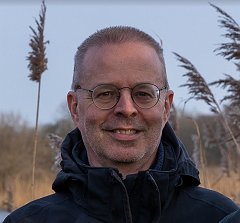
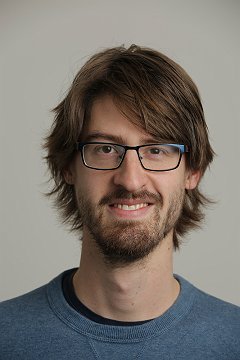
Michael Raskin is a Lecturer (maître de conferences) at LaBRI, University of Bordeaux, where he conducts research in theoretical computer science with a focus on distributed systems and formal methods. His work bridges theoretical foundations with practical implementations, particularly in population protocols, temporal graphs, and Petri nets. His research interests span Theoretical Computer Science , Distributed Systems , Algorithms , and Formal Methods , with specific expertise in population protocols, temporal graph analysis, vector addition systems, and verification techniques for parameterized systems. His publications demonstrate a consistent focus on computational complexity, state complexity, and threshold phenomena in distributed models. Recent publication trends show a strong emphasis on temporal graph theory (with multiple papers on random temporal graphs and giant components), population protocol analysis (including modular protocols and leaderless rendez-vous systems), and verification techniques for parameterized systems. His work often combines mathematical rigor with practical implementation insights. Raskin has developed significant software projects including: Agnostic Lizard - A portable code walker for Common Lisp QueryFS - A filesystem defined through compiled queries His technical contributions span both theoretical advances and practical systems implementation, with a recurring theme of applying programming language techniques to systems problems. His work on Common Lisp tools demonstrates a commitment to practical language implementation alongside theoretical research.
Jorge Carrión Gálvez is a part-time lecturer at the UPF Barcelona School of Management and co-director of the Master in Literary Creation. He previously held academic roles including professor of Spanish at the University of Chicago, associate professor of Spanish Language and Literature at the Department of Humanities at Universitat Pompeu Fabra (UPF), visiting professor at the University of Los Andes (Colombia), and professor of the Master in Journalism Specializing in Culture at UPF-BSM. He also serves as Academic Director of UPF Barcelona School of Management and leads the Management, Law, Society & Humanities academic unit there. Dr. Carrión Gálvez holds a PhD in Humanities with a thesis on comparative literature focused on contemporary travel. His research interests include travel literature, non-fiction narratives, television seriality, virality, and cultural studies. He explores intersections between literature and media, urban cultural landscapes, and the evolution of narrative forms in digital and traditional contexts. His scholarly work spans literary criticism, cultural analysis, and media studies. Notable trends in his publications include analyses of cultural institutions (museums, libraries), adaptations of classic texts for television, and the interplay between urban spaces and narrative forms. His books and essays address topics ranging from Madrid and Barcelona’s literary histories to experimental writing techniques and the future of television. Carrión Gálvez has directed academic programs such as the Master in Literary Creation and collaborated on interdisciplinary research initiatives like the MOOC on television’s golden age. His work bridges academic scholarship with cultural production, emphasizing the role of media and spatial narratives in shaping contemporary cultural discourse.
Maria Teresa Abad Soriano is affiliated with the Universitat Politècnica de Catalunya (UPC), specifically within the Faculty of Computer Science (FIB), Department of Computer Sciences. She is a researcher in the GPLN - Natural Language Processing Group and the TALP Research Center, contributing to both educational technologies and computational linguistics. Her work spans decades, showing sustained academic engagement. Her research interests focus on educational technology, higher education internationalization, computer-supported collaborative learning, distance learning systems, knowledge representation, and academic mentorship . These are reflected in her long-term involvement in projects related to e-learning platforms, tutoring systems, and institutional development in computing education. The analysis of her recent publications (2019–2024) reveals a strong trend towards the internationalization of higher education in computing, with detailed studies on mobility, academic policies, and institutional impact. Earlier works (1990s–2000s) center on algorithmic education, groupware modeling, and intelligent tutoring systems, showcasing a career that evolved from technical AI and educational software to broader educational policy and management. She has contributed to competitive R&D+i projects such as OPENMT and SKATeR, and has co-authored technical reports, conference papers, and indexed journal articles. Her collaborations include key figures like Nuria Castell, Juan Antonio Pastor, and Maria Felisa Verdejo. Scientific Awards: No scientific awards were mentioned in the provided text. She has supervised or contributed to the Doctoral Program in Business Administration and Management, and her technical and educational outputs suggest an advisory role in research, though specific students are not listed. She has participated in multiple competitive research projects funded under Spain’s National Research Plans, indicating success in grant acquisition. Her work with open datasets and technical documentation supports open science and institutional transparency. She is actively involved in research groups such as GPLN and TALP, which focus on natural language processing and language technologies, contributing to both theoretical and applied advancements in the field.
Michael Gibbs is a Clinical Professor of Economics at the University of Chicago Booth School of Business. His research focuses on personnel economics, organizational design, and productivity analysis, with notable contributions to understanding incentive compensation, remote work dynamics, and innovation management. He co-authored the textbook Personnel Economics in Practice , translated into five languages. PhD in Economics, University of Chicago Research Fellow, Institute of Labor Economics (IZA) His research examines how job design affects intrinsic motivation and productivity, particularly in remote/hybrid work environments. Key findings include reduced innovation quality during remote work and increased communication costs in hybrid models. He also investigates incentive systems in auto dealerships, mergers, and public sector workforce challenges. Recent publications analyze productivity shifts during the pandemic, the role of reputation in global markets, and the evolution of performance measurement systems. He has contributed to journals like Nature Scientific Reports , Quarterly Journal of Economics , and Review of Economics & Statistics . Notable Contribution to Management Accounting Literature (American Accounting Association) Hillel Einhorn Excellence in Teaching Award (x4) As former Faculty Director of Booth’s Executive MBA program (2012-2015), he influenced executive education design. His work bridges economic theory with practical organizational challenges, offering insights into incentive structures and workforce management.
Montse Magro Gutiérrez serves as Professor and Director of Early Childhood and Primary Education degrees at Antonio de Nebrija University's School of Language and Education within the Department of Didactics and School Organisation. She actively contributes to the CEDI Research Group on Cognition, Education and Individual Differences and participates in the EduSoC Lab think tank at Complutense University of Madrid. Her educational foundation includes: PhD in Education (Cum Laude, International Mention) from Universidad Camilo José Cela (2021) Master's in Pedagogy from Universidad del Sur, Chiapas, Mexico Bachelor's in Early Childhood Education from Escuela Normal de Educadoras “Bertha Von Glummer y Leyva”, Mexico As an expert in rural multigrade education , teacher training , and inclusive early childhood practices , her research bridges Spain and Mexico through comparative studies on curriculum design, educational policy for developing regions, and sustainable development frameworks. Her work emphasizes contextualized pedagogical approaches for diverse rural settings, particularly focusing on indigenous communities and grouped school systems. Analysis of her 2018-2023 publications reveals a consistent focus on multigrade teaching competencies, with increasing attention to visual literacy and sustainable development. Her research demonstrates methodological diversity through comparative studies, teacher perception analyses, and curriculum implementation evaluations, predominantly situated in Mexican rural contexts with Spanish cross-references. Professionally, she has served as preschool teacher in Mexican public/private institutions, technical advisor for Mexico's Ministry of Education preschool programs, and collaborator with Chiapas' Federalized Education Subsecretariat. She has developed international exchange projects with Slovenia's University of Maribor and Spanish institutions, while contributing to university initiatives for students with specific learning needs. She actively participates in educational conferences as organizer and evaluator, and serves on the editorial board of the Journal of Learning Styles (ISSN: 2332-8533), advancing research in learning methodologies through her role in EduSoC Lab's academic network.
María Aurora García Ruiz is a PhD holder in Hispanic Philology from the University of Zaragoza (2021) and a Doctor from the University of Jaén (2016). She is affiliated with the Faculty of Philosophy and Letters at the University of Zaragoza and has contributed extensively to chivalric literature studies, academic writing pedagogy, and digital humanities. Education: PhD in Hispanic Philology (University of Zaragoza, 2021); Doctorado en Filología Hispánica (University of Jaén, 2016). Research Themes: Medieval/Renaissance Spanish literature, chivalric codes, gender roles in Golden Age texts, academic writing challenges, digital educational tools. Her publications focus on the Amadisian saga, particularly Florisando (1510), analyzing paratextual ideologies, theological arguments, and gender dynamics. She explores how digital platforms like Instagram can disseminate literary knowledge and how neurolinguistic studies inform textbook design. Key collaborations include projects with Alberto Montaner Frutos and José Julio Martín Romero. Her work bridges textual studies with modern pedagogical practices.
Diego Sevilla Ruiz is an Associate Professor at the University of Murcia's Faculty of Informatics, Department of Computer Engineering and Technology, where he leads initiatives in Software Engineering research. He completed his PhD in 2008 on distributed component models (CORBA-LC). His research focuses on database technologies, particularly schema evolution in NoSQL and relational databases, model-driven engineering approaches, and unified metamodeling. Recent work develops Skiql (a schema query language), Athena (schema definition language), and methodologies for referential integrity in graph databases. His publications advance database abstraction techniques, schema migration frameworks, and automated tools for database management and modernization.
Josep Casanovas is a Full Professor at the Statistics and Operations Research Department of the Technical University of Catalonia (UPC), affiliated with the Barcelona School of Informatics. He previously served as head of inLab FIB (2012-2020) and as dean (1998-2004) and vice-rector (2006-2011) of UPC, leading strategic initiatives in university governance and ICT policies. His research focuses on Modelling and Simulation , Internet and Information Systems , and Urban Mobility . He has led projects for the European Union, including C-ROADS Spain, REMEDiAL, and ECHORD++, addressing intelligent transport, software automation, and robotic innovation. Recent publications highlight his work on agent-based simulation for urban health, deep learning applications in traffic and energy savings, and wildfire management tools . He co-directs LogiSim and coordinates the Severo Ochoa Research Excellence Program at the Barcelona Supercomputing Center (BSC-CNS).
Juan Manuel Hernández-Campoy is a Full Professor in Sociolinguistics at the Department of English Philology, Faculty of Arts and Humanities, University of Murcia, Spain. He teaches courses on English Sociolinguistics, Varieties of English, and the History of the English Language, as well as research methods at the postgraduate level. He has held numerous academic leadership roles, including Head of Department (2005–2008) and currently serves as Director of the International Doctoral School of the University of Murcia (EIDUM). Education: PhD in English Philology, University of Murcia, 1996 (Extraordinary Doctorate Prize, 1997) Bachelor’s in Philosophy and Literature (Modern Philology, English), University of Murcia, 1991 Erasmus Studies, University of Essex, UK His research centers on sociolinguistics, dialectology, and the historical development of the English language. He explores stylistic variation, language change, and sociolinguistic methodology, with a strong emphasis on both synchronic and diachronic analysis. His work bridges theoretical and applied perspectives, often using corpus-based and geolinguistic approaches. The 15 most recent publications reflect a consistent trajectory in historical sociolinguistics, stylistic variation, and dialectology, with major reference works such as encyclopedias, handbooks, and dictionaries published by Wiley-Blackwell, John Benjamins, and Gredos. These works synthesize broad disciplinary knowledge and are widely used in academic settings. Scientific Awards: Extraordinary Doctorate Prize in Letters, University of Murcia, 1997 He has secured significant research funding as Principal Investigator on projects like Sociolinguistic Models of Stylistic Variation (FFI2014-56084-P) and Speaker Design as a Model of Stylistic Variation (Fundación Séneca). He has advised numerous postgraduate students and coordinated multiple master's and doctoral programs. He has also served as editor for major journals including International Journal of English Studies and Cuadernos de Filología Inglesa . He leads the research group Linguistic Variation: Phonetics, Lexicon and Styles and has been instrumental in organizing international conferences such as the Sociolinguistics Symposium 21 and HiSoN-2022. He maintains active Erasmus partnerships with the University of Essex and University of Bern, promoting academic exchange and collaboration.
Richard Clouet serves as a Professor in the Department of Modern Philology, Translation and Interpretation at the University of Las Palmas de Gran Canaria (ULPGC). His academic profile shows active engagement in research through the GIR Translation and Interpreting, Interculturality, Applied Languages and Travel Literature research group, with significant contributions across multiple institutional collaborations including the IUIAText and GIR Discourse, Communication and Society groups. Clouet's research focuses on the intersection of translation studies, intercultural communication, and language pedagogy. His work emphasizes practical applications in tourism translation, telecollaboration, and machine translation integration in educational contexts. Recent publications demonstrate particular interest in developing intercultural competence through innovative teaching methodologies, with strong focus on ESP (English for Specific Purposes) frameworks and virtual exchange programs. His scholarship bridges theoretical discourse analysis with practical translator training concerns. Analysis of his 15 most recent publications reveals consistent thematic progression toward technology-enhanced intercultural communication, with increasing emphasis on telecollaboration frameworks, machine translation applications, and tourism-specific translation challenges. The research trajectory shows evolution from traditional discourse analysis toward contemporary digital communication contexts, while maintaining focus on cultural adaptation and professional translator competencies. Clouet maintains active research collaborations with scholars including Isabel Cristina Alfonzo De Tovar, Susan Isobel Cranfield McKay, and María Soraya García Sánchez. His work appears in journals such as Revista de Linguística y Lenguas Aplicadas and Hikma, with publications spanning articles, book chapters, and conference proceedings. Current research directions include gamification in adult language learning, multimodal communication in ubiquitous learning environments, and intercultural intelligence models for translation professionals.
Burghard Baltrusch is a Professor of Galician and Latin Philology at the University of Vigo's Faculty of Philology and Translation in Galicia, Spain. Since 2015, he has directed the International José Saramago Chair at the University of Vigo, an institution funded internationally by the Instituto Camões and the Universidade Lusófona de Humanidades e Tecnologias. He coordinates the BiFeGa research group in Cultural Studies, Translation and Interpretation, recognized as a GRC group by the Xunta de Galicia since 2019, and collaborates with the Institute of Comparative Literature Margarida Losa at the University of Porto. Baltrusch obtained his doctorate (doctor philosophiae) from the University of Bonn in 1996 after studying at the Universities of Bonn and Cologne (Germany), Nova de Lisboa (Portugal), and Complutense (Spain). His academic journey has been dedicated to Lusophone literatures, particularly focusing on the intersection of literary studies, cultural analysis, and political discourse within Portuguese-speaking contexts. His primary research interests center on contemporary poetry and its relationship to political discourse, with special attention to the works of Fernando Pessoa and José Saramago. Baltrusch has pioneered studies examining how poetic expression functions in public spaces, the hermeneutics of translation, and the political dimensions of literary works. His scholarship demonstrates a consistent engagement with how literature interacts with social movements, critiques of neoliberal capitalism, and questions of identity and resistance. The researcher has particularly focused on Galician and Portuguese literary traditions while maintaining a comparative perspective that spans Iberian and Lusophone contexts. Analysis of Baltrusch's recent publications reveals a sustained exploration of the intersection between poetic expression and political discourse, particularly in contemporary Iberian and Lusophone contexts. His work consistently examines how poetry engages with social conflicts, political movements, and cultural resistance. A significant portion of his recent scholarship focuses on José Saramago's legacy, Adília Lopes' feminist poetry, and the visual-literary dialogue between writer José Saramago and artist Graça Morais. His research demonstrates increasing attention to intermedial approaches, examining how poetry interacts with visual arts, performance, and digital media in contemporary cultural production. Burghard Baltrusch has directed the International José Saramago Chair since 2015 and established the JANGADA network in 2019, which connects nine José Saramago chairs worldwide along with five additional chairs and four research centers. He has served as principal investigator for two significant research projects on "Contemporary Poetry and Politics" funded by the Spanish Ministry of Science and Innovation. His academic leadership extends to coordinating the BiFeGa research group and formerly serving as coordinator of the Interuniversity Doctoral Program in Literary Studies. Through these roles, he has mentored numerous graduate students and fostered international academic collaborations across Iberian and Lusophone institutions. As director of the International José Saramago Chair and coordinator of the BiFeGa research group, Baltrusch leads initiatives that bridge academic research with public engagement. His work with the JANGADA network has created a global platform for Saramago studies, while his research group focuses on interdisciplinary approaches to literary studies, translation, and cultural analysis. The researcher has organized numerous conferences, exhibitions, and collaborative projects that bring academic scholarship into dialogue with contemporary cultural and political issues, particularly through events examining the 50th anniversary of Portugal's Carnation Revolution and exhibitions exploring the relationship between Saramago's literary work and Graça Morais' visual art.
Frank Piessens is a Professor in the Department of Computer Science at Katholieke Universiteit Leuven (Belgium). His work bridges software security, systems security, formal methods, and programming languages. He actively investigates information flow security, with a dual focus on attack techniques and defense mechanisms. Current role: Professor at KU Leuven (Belgium) Research areas: Software Security, System Security, Formal Verification, Programming Languages Research Interests: His defense work includes formal verification for C-like languages, memory safety hardening, micro-architectural side-channel mitigation, and embedded security architectures. On the attack side, he studies transient execution attacks, memory safety exploits, and controlled channel attacks. Recent Article Trends: His publications span secure compilation techniques (2025), control-flow linearization (2024), functional reactive programming (2021-2014), formal verification (2020-2016), and hardware/software co-design security (2022). Keywords cluster around Computer Science , Security , and Programming Languages .
Jesper Cockx is an Assistant Professor in the Programming Languages group at Delft University of Technology . His research focuses on the theory and implementation of dependently typed languages , particularly Agda , and he is a core contributor to Agda's development. His work bridges Type Theory , Pattern Matching , and practical Compiler Design through tools like agda2hs . Research Interests : Type Theory and Dependently Typed Programming Pattern Matching and Unification Agda and Compiler Implementation Erasure Annotations for Verified Compilation Generic Programming and Language Design Formal Verification of Functional Code Scientific Awards : NWO Veni Grant (2020) for a Trustworthy and Extensible Core Language for Agda Conference Contributions : He serves on program committees for CPP , WITS , POPL , and ICFP . Recent publications analyze erasure annotations , correct-by-construction compilers , and dependent (co)pattern matching in Agda. His work often intersects with Haskell and functional programming education in the Netherlands.
Marc Alier Forment is an Associate Professor at the Universitat Politècnica de Catalunya (UPC), affiliated with the Department of Services and Information Systems Engineering within the Faculty of Informatics of Barcelona (FIB). He is also associated with the Institut de Ciències de l'Educació and serves as Coordinator of the Doctoral Program in Engineering, Science, and Technology Education. His research is conducted through the UPC EduSTEAM - STEAM University Learning Research Group. His research interests span Educational Technology , Artificial Intelligence in Education , Learning Management Systems , Open Source in Education , Ethics in Computing , Sustainability in Education , Mobile Learning , Learning Analytics , and Privacy in EdTech . He emphasizes ethical, secure, and sustainable applications of technology in higher education, particularly in engineering contexts. The recent scholarly output highlights a strong focus on the integration of AI in education (especially through the LAMB framework), ethical implications of generative AI, privacy in learning analytics using edge and fog computing, and innovative pedagogical methods in computer science education. His work increasingly bridges technical computing with humanistic concerns such as ethics, privacy, and social responsibility. Best Paper Award TEEM'22 Premis de Programari lliure 2005 de l'AGAUR VI Premi Davyd Luque a la innovació en les TIC Best interoperability innovation: Moodle simple learning tools for interoperability consumer – Spain Marc Alier Forment has led and participated in numerous educational innovation and R&D+i projects, particularly focused on Moodle/LMS integration, mobile learning, open-source educational tools, and the development of ethical and privacy-preserving technologies. He has mentored and collaborated extensively with colleagues on curriculum development, particularly in embedding sustainability and ethics into computing education. His work is central to UPC’s digital education strategy, especially through the Atenea platform. He leads and contributes to the UPC EduSTEAM research group and has been instrumental in developing STEAM-based lecturer training programs. His projects often involve interdisciplinary collaboration across computing, education, and social sciences, aiming to create holistic, responsible technological solutions for learning.
Adelina Gomez Gonzalez-Jover is a University Professor in the Department of Translation and Interpreting at the University of Alicante since 2001. She holds a BA and PhD in Translation and Interpreting and is a sworn English-Spanish translator. Her research focuses on specialized translation, professional and academic English, terminology, and corpus linguistics. Educational Background: Bachelor’s Degree in Translation and Interpreting, University of Alicante (1999) Doctorate in Translation and Interpretation, University of Alicante (2005) Master’s in Terminology, Pompeu Fabra University (2008) Research Interests: Her work emphasizes specialized translation methodologies, legal terminology, and the application of corpus linguistics. She has published extensively on translation theory, legal language, and bilingual lexicography. Notable contributions include dictionaries for industrial sectors in Valencia and studies on EU institutional translation practices. Professional Activities: Member of the research group ‘El inglés profesional y académico (IPA)’ Former Secretary of the Interuniversity Institute for Applied Modern Languages (IULMA) Collaborator on projects such as ‘TRALICOVA’ and ‘Estudio lingüístico de construcciones verbales fijas’ Awards & Recognition: Her work has received national and international acclaim, particularly for her contributions to legal terminology and EU translation standards. Three doctoral theses have been successfully directed under her supervision, all earning top honors. Teaching & Mentorship: She has taught over 15 courses across undergraduate and postgraduate programs, including ‘Comparative Legal Systems’ and ‘Legal-Administrative Translation’. Over 153 theses have been advised or co-advised since 2020. Labs/Teams: Active member of the research group ‘Phraseology and Multilingual Translation (FRASYTRAM)’ at the University of Alicante.