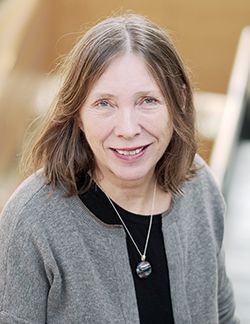
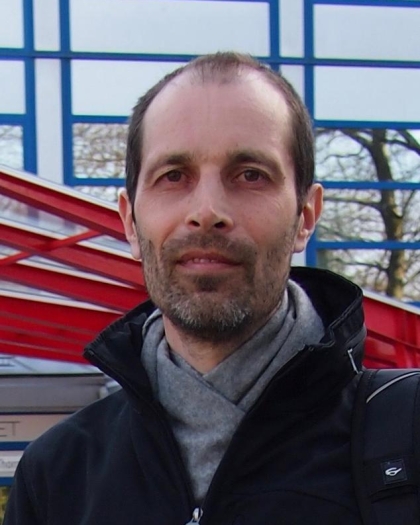
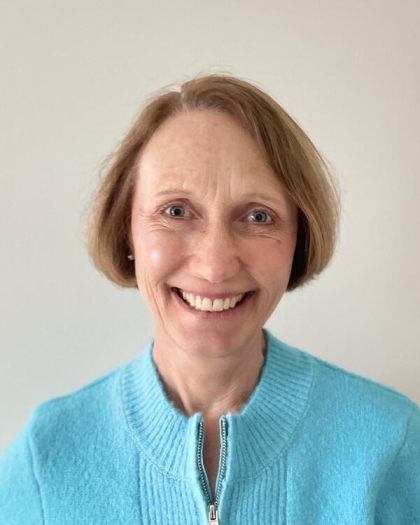
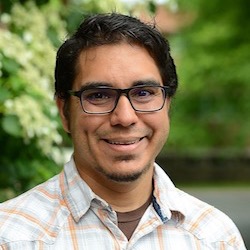
Oleksandr Kapranov is an Associate Professor of English at NLA University College's Teacher Education program. His work intersects discourse analysis, climate change communication, and English language teaching (ELT), with a focus on sustainable development education and intercultural communication. Research areas include political speeches (e.g., Keir Starmer, Rishi Sunak), corporate disclosures (Bank of England, Vedanta Resources), and media framing (Greenpeace branches, King Charles III). Key pedagogical interests: digital competence, beginner EFL training, and discourse markers in academic writing. His recent publications analyze climate change discourse through syntactic structures, metonymy, modality, and evidentiality, emphasizing institutional and political narratives. While no formal awards are listed, his work spans interdisciplinary collaborations with NGOs, governments, and universities.
Maj Schian Nielsen is a Senior Research Librarian at the University Library of the University of Agder. Her work focuses on multilingualism, crosslinguistic awareness, and German language pedagogy. She is affiliated with the research groups 'Media and Communication Studies' and 'Multilingualism in Society and Education (MUSE).' University of Agder Research Groups: Media and Communication Studies, MUSE Her research explores how multilingual awareness can enhance grammar instruction in German third-language (L3) teacher education programs across Denmark and Norway. Recent publications analyze curriculum structures, educational materials, and the integration of generative AI tools like ChatGPT in multilingual education contexts. Scientific output trends reveal a focus on: Cross-linguistic pedagogy L3 German acquisition Grammar teaching methodologies AI applications in language learning Teacher training for multilingual classrooms Systemic Functional Linguistics (SFL) frameworks She has not been publicly recognized with scientific awards listed in the available data.
Marco Seeber is a Professor at the University of Agder's Department of Political Science and Management. He holds a PhD from the University of Chieti Pescara (Italy) and has previously worked at the University of Lugano (Switzerland) and Ghent University (Belgium). His research focuses on public policy, governance, and management with specialization in higher education systems, research evaluation, and science policy. Professor Seeber's research examines policy implementation, research metrics, peer review systems, academic careers, internationalization, and interdisciplinarity in higher education. He employs comparative and quantitative methodologies to analyze governance structures and policy impacts across different educational systems. He has received significant recognition including the Swiss Prize for Research in Education (2019) and fellowships from IEEE, AIUM, and AIMBE. As Co-Editor-in-Chief of the European Journal of Higher Education, he shapes scholarly discourse in his field. He currently coordinates the Horizon CSA project IANUS (2025-) and leads courses in organizational theory, research methodology, and leadership.
Vibeke Grøver is a Professor at the Department of Pedagogical Research, University of Oslo. Her work focuses on language and reading comprehension development for language minority children, with a emphasis on bilingual education, shared book reading interventions, and sociolinguistic factors influencing literacy. Education: Dr.polit., University of Oslo (1992) Master in Educational Psychology, University of Oslo (1982) Elementary School Teacher, University of Oslo (1977) Research Interests include second-language acquisition, early literacy for dual-language learners, home literacy environments, and teacher talk features in preschool settings. She leads projects like Teaching for text comprehension and has contributed to the DEAL (Development, Equality, and Literacy in Learning Contexts) research group. Article Trends show longitudinal studies on bilingual profiles, shared reading interventions, code-switching dynamics, and neighborhood demographic impacts on vocabulary. Key themes include scaffolding language minority students, cross-cultural comparisons (e.g., Chinese-Norwegian families), and teacher-student interaction patterns in multilingual preschools. Leadership Roles include Dean of the Faculty of Educational Sciences (2009–2012) and advisory positions for the Peder Sather Center at UC Berkeley (2012–2014). Research visits span Harvard, UC Berkeley, NYU, and East China Normal University.
May Britt Drugli is a Professor at the Regional Centre for Child and Youth Mental Health and Child Welfare, affiliated with NTNU's Faculty of Medicine and Health Sciences and Department of Mental Health. Her research focuses on early childhood care, student-teacher relationships, child mental health, and intervention research. She has contributed to numerous publications addressing childcare quality, child well-being, and developmental outcomes. Her work includes studies on cortisol levels in toddlers in childcare, the impact of professional development programs like 'Thrive by Three,' and the importance of play-based learning in educational policies. She frequently collaborates with educators and policymakers to translate research into practical pedagogical strategies. Key areas of exploration include transition processes for young children entering childcare, the role of teacher-child interactions, and addressing socioeconomic disparities in early education. Her research emphasizes evidence-based practices to enhance child development and mental health.
Jaakko Timo Henrik Järvi is a Professor in the Department of Informatics at the University of Bergen, Norway, with additional affiliations at the University of Turku, Finland. His research focuses on programming language design, generic programming, and human-computer interaction, particularly in GUI frameworks and software reuse. His research interests include generic programming, programming language design (especially the Magnolia language), high-performance computing, array programming, and GUI engineering. He emphasizes formal methods and algebraic specifications to build reusable and efficient software systems. His work bridges theoretical foundations with practical applications in software development and education. The recent publications highlight a strong trend in declarative GUI frameworks, multi-selection models, and generic programming. His work explores domain-specific languages for GUI structure manipulation, reusable selection semantics across platforms, and optimizing array computations using the Mathematics of Arrays. These efforts reflect a consistent focus on software abstraction, correctness, and reusability. Jaakko Järvi has supervised doctoral students, including Tetiana Yarygina, whose dissertation explored microservice security. While no specific grants are detailed, his work on VisAST was supported by the Research Council of Norway (Project 250683), indicating active external funding. He frequently collaborates with researchers like Magne Haveraaen, Knut Anders Stokke, and Sean Parent. He contributes to tools and frameworks such as the MultiselectJS library and the VisAST educational tool. These are outcomes of collaborative research teams focused on improving software development practices and computer science education.
Sigrid Johanna Håheim Ørevik is an Associate Professor at the Department of Foreign Languages , University of Bergen. Her work focuses on multimodal text analysis in English education, genre theory, and assessment frameworks. Position: Associate Professor Email: sigrid.orevik@uib.no Research Groups: POTENT – Post-Truth English Teaching Research interests include: Multimodal pedagogies Genre patterns in EAL materials Assessment of student multimodal texts Digital learning resources Vocational English teaching Recent publications (2021–2025) explore: Multimodal design principles Agency in semiotic work Curriculum coherence challenges Remediation of digital resources Long-term genre stability in exams She contributes to the POTENT research group and collaborates internationally on multimodal English learning projects.
Roar Bakken Stovner is an Associate Professor at the Department of Primary and Secondary Teacher Education within the Faculty of Education and International Studies at Oslo Metropolitan University (OsloMet), where he also serves as Head of Studies - Area of Responsibility 2. His academic career at OsloMet began as an Assistant Professor (2021-2023) before his promotion to Associate Professor in 2023. Prior to his university position, he worked as a teacher in lower and upper secondary schools in Oslo (2012-2018) and completed his PhD at the University of Oslo (2016-2020). He holds a Master of Science and Technology from NTNU (2007-2012) with a thesis on applied computational topology. Stovner's research spans several interconnected domains within educational science: Developing methodologies for describing and measuring teaching quality across multiple classrooms, with special emphasis on mathematics education Metascience research examining how citation practices distort findings and confer unwarranted authority to claims in educational research Creating programming tools for educational research, including the gptworkr package for text analysis in R using ChatGPT His scholarly work focuses on classroom research, mathematics education, mathematical competencies, metascience, and citation analysis. He actively participates in research groups focused on Classroom Research and Task Design in Mathematics Education, and leads significant involvement in the Teacher Education Panel Study (TEPS), a comprehensive longitudinal study examining teacher education implementation in Norway. Stovner's recent publications demonstrate substantial engagement with contemporary issues in educational research methodology, AI applications in education, and critical examination of scientific practices. His work on the EDUCATE project has produced influential reports on algorithmic thinking in mathematics education across different grade levels and exploratory teaching approaches in upper secondary education. His contributions to educational discourse include conference presentations, book chapters, and practical resources for teacher education, such as "Bedre masterskriving – en bok for lærerstudenter" (Better Master's Writing - A Book for Teacher Students), which supports academic writing development among future educators.
Kirsti Klette is Professor at the Department of Teacher Education and School Research within the Faculty of Education at the University of Oslo. She serves as Centre Director at the Nordic Centre of Excellence Quality in Nordic Teaching (QUINT), launched in autumn 2018. Her academic career spans over two decades, beginning as Associate Professor at Lillehammer University College in 1994, then at the University of Oslo Faculty of Education in 1998, and becoming full Professor in 2002/2004. She held a Visiting Fulbright Professorship at Stanford University (2007-2008) and has directed numerous national research programs including UTDANNING 2020 (2009-2014). Professor Klette's research focuses on classroom teaching and learning through video methodology, instructional quality, and teacher education. Her work examines the relationship between teaching practices and student outcomes across Nordic educational contexts. She leads major projects including Linking Instruction and Student Achievement (LISA), Linking Instruction and Student Experiences (LISE), and the Synthesizing Research on Teaching Quality (SYNTEQ). Her methodological expertise in video research has established her as a leading figure in educational research methodology. Analysis of her recent publications (2022-2024) reveals consistent focus on classroom observation systems, teacher education coherence, and Nordic educational practices. Her work spans multiple subject areas including mathematics, social studies, and language arts, with particular attention to how instructional quality can be measured and improved. She frequently collaborates with international researchers, contributing to global understanding of teaching quality across different educational systems. Professor Klette has made significant contributions to educational policy and practice, particularly in teacher education reform and classroom observation methodology. Her research bridges educational theory and classroom practice, with implications for teacher preparation, professional development, and educational assessment systems.
Mari Johanne Wikhaug Andersen is an Associate Professor at the Department of Language, Literature and Culture, Oslo and Akershus University College of Applied Sciences (HiOA). Her academic work focuses on multilingualism in vocational education, Norwegian as a second language, and teacher agency within educational policy frameworks. She holds a master's degree (2014) and recently completed a doctoral project (2024) exploring multilingualism in Norwegian vocational classrooms through linguistic ethnography. Her research integrates sociolinguistic theory with practical classroom dynamics, addressing challenges such as anglonormativity, monolingual policy constraints, and teacher-student interactions in linguistically diverse settings. Key areas include curriculum implementation in vocational education, language policy enactment, and strategies for supporting multilingual learners in technical programs like hairdressing and mechanics. Andersen has published extensively on teacher perspectives, policy gaps, and pedagogical innovations in multilingual vocational contexts. Recent work emphasizes the role of vocational teachers as policy actors negotiating between national language mandates and classroom realities. Her findings highlight systemic barriers to multilingual inclusivity and propose actionable frameworks for enhancing teacher agency in diverse classrooms. Teaching responsibilities include courses on second language pedagogy, multilingualism in education, and Norwegian for vocational educators at bachelor's and master's levels. She actively supervises master's students in applied linguistics and teacher education programs.
Marcos Caballero serves as Associate Professor at both the University of Oslo's Center for Computing in Science Education and Michigan State University. His work bridges physics education research with computational science instruction across educational levels from high school to graduate programs. His educational background includes: B.S. in Physics from University of Texas at Austin (2004) M.S. in Physics from Georgia Institute of Technology (opto-microfluidics research) Ph.D. in Physics Education Research from Georgia Tech (2011, first PER-focused doctorate there) Postdoctoral research at University of Colorado Boulder Caballero's research investigates how computational tools and science practices shape physics learning, employing both cognitive and sociocultural theoretical frameworks. Key projects examine measurement uncertainty assessment, computational literacy development, and equity in graduate admissions. His work spans micro-level analyses of student coding comprehension to macro-level studies of computing's impact across degree programs, with significant contributions to transforming upper-division physics curricula toward active learning environments. His recent publications (2021-2024) reveal concentrated focus on measurement uncertainty assessment instruments , computational thinking frameworks , and holistic graduate admissions reform . These works demonstrate increasing methodological sophistication through NLP applications and large-scale educational data analysis, while maintaining practical relevance for physics classroom transformation. Caballero co-founded Georgia Tech's Physics Education Research group and currently leads UiO's Center for Computing in Science Education and Michigan State's Physics Education Research Lab . His international partnership for computing in science education drives cross-institutional curriculum development, focusing particularly on integrating computational practices into core physics instruction while addressing equity challenges in STEM education.
Ove Edvard Hatlevik is a Professor at the Faculty of Education and International Studies , Department of Primary and Secondary Teacher Education at Oslo Metropolitan University. His research focuses on Teacher Professional Digital Competence , ICT integration in education , Psychometrics , and Critical Health Literacy . He leads the Teacher Education for a Future in Flux (TEFF Academy) and Teacher Education Panel Study (TEPS) projects, while previously managing initiatives such as Developing ICT in Teacher Education (DiCTE) and Literacies for Health and Life Skills . Email : ove-edvard.hatlevik@oslomet.no Office : Pilestredet 42, Oslo (Q6007) His recent publications explore: AI applications in thesis categorization (2025) Gender differences in early childhood education outcomes (2025) Job satisfaction dynamics in teaching (2024) Digital distraction management in teacher training (2024) Professional digital competence in technology-rich classrooms (2024) Systematic reviews on digital competence dimensions (2023) Key thematic areas include: Algorithmic thinking in mathematics education Long-term impacts of ECEC quality Digital divide in adult education Assessment of critical health literacy ICT access barriers in education centers Psychometric properties of educational tools
Geir Inge Hausvik is an Associate Professor at the Department of Information Systems, University of Agder. His research focuses on digital transformation in healthcare, information quality management, and e-health services. He is affiliated with the CeDiT (Centre for Digital Transformation) and Centre for e-health research groups. Key areas of expertise include healthcare service innovation, socio-technical systems design, and the practical impact of information systems research. Research Interests: His work addresses challenges in healthcare digitalization, including online screening tools, post-COVID service innovation, and smartphone adoption among older adults. He explores theoretical frameworks such as boundary spanning and Bourdieusian analysis to understand practical impacts of research. Recent studies examine AI ethics in academic writing and mediating roles in healthcare quality assurance. Publications: Over 15 peer-reviewed articles since 2015, including studies on EHR affordances (2017), information quality lifecycle (2021), and post-pandemic digital service acceleration (2025). He co-edited conference proceedings for DESRIST 2021 and contributed to influential journals like Information Systems Journal. Affiliations: Leads academic programs in Information Systems, including B.Sc. and M.Sc. courses. Active in international conferences (e.g., Hawaii International Conference on System Sciences, AMCIS). Engaged in collaborative research initiatives like the Centre for Digital Transformation. Key Contributions: Advocates for sociotechnical systems resilience beyond crisis response, investigates smartphone usage disparities among seniors, and evaluates generative AI's implications for academic integrity.
Anya Helene Bagge is an Associate Professor in the Department of Informatics at the University of Bergen, where she is a researcher at the Bergen Language Design Laboratory. Her work focuses on programming languages and software language engineering, with strong ties to education and tool development. Research Interests: Programming language design and implementation Software language engineering Semantics of programming languages Domain-specific languages and language extensions Program transformation using Rascal, MPL, and Stratego/XT Aspect-oriented programming, especially Domain-Specific Aspect Languages Her recent publications reflect a consistent focus on software language engineering, refactoring, microservice security, and programming education. Themes across her work include language design, program analysis, and the development of educational tools and methodologies. Scientific Awards: The Realist Committee's Teaching Award 2016/17 Lecturer of the Year in Computer Science (Spring 2015) Anya Bagge actively supervises students, including PhD and Master’s candidates such as Tero Hasu, Kristoffer Haugsbakk, and Nina Andersen. She has been involved in numerous academic activities, including organizing the OOPSLE workshop and serving on program committees for conferences like SLE, HILT, and WCRE. She has also taught core courses including INF101, INF225, and INF328, demonstrating a strong commitment to both research and teaching. Labs and Teams: She is affiliated with the Bergen Language Design Laboratory , collaborating with researchers such as Magne Haveraaen, Eva Burrows, and Tero Hasu.
Magne Haveraaen is a Professor in the Department of Informatics at the University of Bergen, where he leads the Bergen Language Design Laboratory (BLDL). He is actively engaged in research on programming theory, formal methods, language design, and high-integrity systems. His work centers on algebraic specifications, generic programming, domain engineering, and the design of the Magnolia programming language. He has been a long-standing instructor of key courses such as INF220 (Program Specification) and INF222 (Programming Languages), and contributes to national and international academic forums. University: University of Bergen School: Faculty of Mathematics and Natural Sciences Department: Department of Informatics Academic Rank: Professor Email: magne.haveraaen@uib.no His research interests include programming language design, formal specifications, generic and mouldable programming, multicore and GPU computing, and algebraic methods in software development. He emphasizes correctness, reuse, and high-integrity software through theoretical and practical innovations. He has contributed extensively to the literature on algebraic reasoning, array programming, and domain-specific abstractions. The recent publications highlight a consistent focus on algebraic semantics, language design (especially Magnolia), array programming, and formal verification. Themes across these works include correctness by design, specification-driven development, and adapting programming models for modern architectures. His involvement in workshops like ARRAY, WGP, and CALCO underscores his leadership in programming language theory. No scientific awards are listed in the provided texts. He advises students and welcomes collaboration in programming theory, language design, and formal methods. He has led funded projects such as MoSIS and SHIP and is involved in the High Integrity Systems Forum. He organizes and participates in key conferences including NWPT, GPCE, and SCAM. He leads the Bergen Language Design Laboratory (BLDL), which focuses on experimental language design, and contributes to the SAGA initiative on scientific computing with algebraic abstractions. His work integrates theory with practical tooling and language implementation.