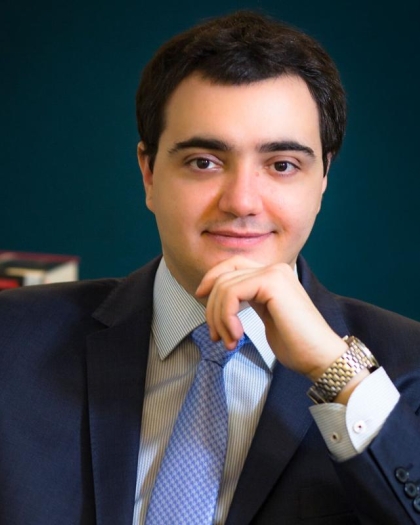
Mikhail Barash is an Associate Professor at the Department of Informatics, University of Bergen. His research focuses on software language engineering, domain-specific languages (DSLs), and graphical user interface (GUI) frameworks. He explores innovative approaches to DSL design, including spreadsheet-based workbenches and reusable GUI structures. His work emphasizes user involvement in language standardization, such as in ECMAScript/JavaScript evolution. He also investigates formal methods for GUI abstraction and constraint-based systems. Barash collaborates with industry and academia, notably through the Magnolia programming language ecosystem and teaching experiences with JetBrains' MPS tooling. His contributions span over 20 peer-reviewed publications in top conferences like ACM SIGPLAN and IEEE. Key research areas include declarative GUI manipulation, language workbench democratization, and legacy grammar modernization. He has presented at venues such as the International Symposium on Formal Methods and contributes to frameworks like Event-B IDE development. His work bridges theoretical advances with practical tooling, aiming to make language engineering accessible to broader audiences.
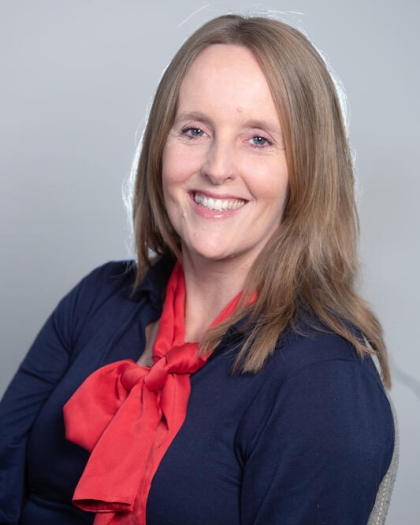
Mikhail Fominykh is a Researcher at NTNU's Department of Education and Lifelong Learning under the Faculty of Social and Educational Sciences. He specializes in augmented and virtual reality (AR/VR) applications in education, curricula development, and technology-enhanced learning. His work focuses on immersive technologies for vocational training, language teaching, medical education, and interdisciplinary doctoral programs. Coordinates major projects like VR4VET (2022-2024), DC4LT (2018-2021), and eROBSON (2021-2023) Leads the VR Lab at Dragvoll and the IMTEL research group Designs AR/VR solutions for job simulations, biofeedback therapy, and emergency management training Research interests include: - AR/VR curriculum development for STEM and healthcare - Wearable tech integration in expertise training - Cross-sector collaborations for immersive educational tools Publications (2011–2024) span AR/VR pedagogy, wearable sensors, virtual collaboration environments, and policy frameworks for TEL programs. Over 50 peer-reviewed articles and conference papers highlight his contributions to educational technology and immersive learning systems. Grants and projects include EU funding for DC4LT (€2.1M), DETEL (€3.4M), and VR4VET (€2.8M). Active in international networks like ERCIM and IEEE.
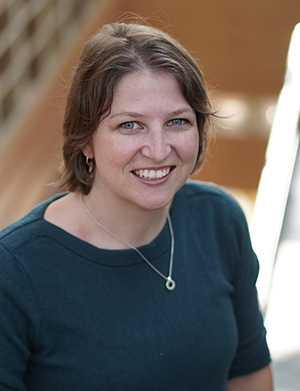
Mari Nygård is a Professor of Norwegian Language Didactics and Head of Department at the Department of Teacher Education, Norwegian University of Science and Technology (NTNU). She holds both a master's degree and doctorate in Nordic languages from NTNU, establishing her expertise in linguistic and educational domains. Her research focuses on grammar and grammar didactics, language learning and linguistic awareness, Norwegian as a second language, writing development, and multilingual education. Nygård's work bridges theoretical linguistics with practical classroom applications, particularly in teacher education contexts where she examines how future teachers understand and implement grammatical concepts. Analysis of her recent publications reveals a strong emphasis on empirical studies of student writing, particularly among early writers and multilingual learners. Her research consistently connects grammatical theory with pedagogical practice, exploring how visualization techniques, structured programs, and research-based approaches can enhance grammar education. She frequently collaborates with colleagues like Heidi Brøseth and Randi Solheim on projects examining teacher knowledge and professional development. Nygård actively supervises master's students, as evidenced by her involvement in theses examining grammatical understanding among teachers and writing development in multilingual contexts. Her media presence through NRK's Språksnakk program demonstrates her commitment to public engagement with linguistic topics.
Esther Tamara Canrinus is a Professor in the Department of Pedagogy at the University of Agder (UiA), Norway. She leads the research group 'Professions and Professionals in Collaboration' and coordinates teacher education programs (PPU and Lektorutdanning). Her research focuses on teacher education coherence, professional development, and legal/ethical aspects of education. Previously, she held roles at the University of Oslo, University of Groningen, and Norway's Knowledge Center for Education. She has edited Acta Didactica Norden and presented at conferences like AERA and EARLI. Research interests include program coherence, teaching quality, teacher identity, motivation, and social networks. She supervises master's theses and teaches courses on motivation theories and research methods. Her work bridges educational policy, pedagogical practice, and legal frameworks, with recent publications analyzing Norwegian student safety laws and teacher education reforms.
Simon-Peter Neumer is an Associate Professor at UiT The Arctic University of Norway, affiliated with the Regional Knowledge Center for Children and Youth, North (RKBU North). He holds a main position at RBUP (likely a typo for RKBU North). His work focuses on preventive mental health interventions for children, particularly addressing anxiety, depression, and the needs of immigrant/refugee families. He collaborates extensively on projects like the ECHO study and PIRM initiative. His research emphasizes evidence-based treatments, school-based interventions, and optimizing delivery formats for mental health programs. Notable contributions include systematic reviews on parenting programs for immigrant families and studies on dose-response effects of interventions. He is involved in national initiatives to improve mental health services for children and youth, including pandemic-related mental health impacts and refugee family well-being. Dr. Neumer leads or co-authors numerous peer-reviewed articles and contributes to policy discussions on implementation science and health promotion. He actively engages in collaborative projects with municipalities and schools to bridge research and practice gaps in Norway.
Lene-Mari Potulski Rasmussen serves as an Associate Professor at the Regional Knowledge Center for Children and Youth, North (RKBU North), affiliated with UiT The Arctic University of Norway. Her work bridges academic research with practical applications in child mental health services across northern Norway. Her academic foundation includes: Master's degree in Psychology from University of Tromsø (2013) Dr. Potulski Rasmussen's research program demonstrates deep commitment to improving mental health outcomes for vulnerable children through evidence-based approaches. Her work spans several interconnected domains: Implementation science for evidence-based interventions in real-world settings Mental health support for refugee families, particularly Ukrainian families resettling in Norway Optimization of cognitive behavioral therapy for children with anxiety and depression Development and validation of measurement tools for child mental health assessment Analysis of her recent publication record reveals a strategic research trajectory focusing on refugee mental health (particularly through the PIRM study), implementation of evidence-based practices in municipal and school services, and optimization of interventions for children with emotional problems. Her work increasingly incorporates digital tools like the MittEcho feedback system to enhance treatment effectiveness. Dr. Potulski Rasmussen actively contributes to significant research initiatives: PIRM (Supported Parenting Interventions for Families with Refugee Background) - evaluating parenting programs for refugee families Member of the "Preventive and Health Promoting Interventions" research group at UiT Contributor to the ECHO study optimizing school-based interventions for children with emotional problems
Espen Schjetne is an Associate Professor at the Norwegian International University of Applied Sciences (HIOF), affiliated with the Department of Natural Sciences, Practical-Aesthetic, Social and Religious Studies (RES) under the Faculty of Education. His research focuses on professional ethics, cultural diversity, and religious education (KRLE), emphasizing diversity competence, historical constructions in textbooks, and pedagogical practices. He holds a PhD from MF-Norwegian School of Theology and has extensive experience as a primary school teacher. His academic roles include serving as Chair of the Faculty Board of Teacher Education (2017–2020), Chair of the Research Group Ethics, Profession and Pedagogy (2015–2017), and Section Head for RLE and Social Sciences (2014–2016). His research explores topics such as secular narratives in education, majority church representation in field trips, and ethical challenges in multicultural classrooms. He has contributed to books like Being a Teacher in a Diverse School and co-authored articles in journals like the British Journal of Religious Education . Key professional activities include membership in the Council of Europe's ETINED (2018–2019) and roles on boards of Queen Maud University College and MF-Norwegian School of Theology. He is part of the PRIS research group (Politics, Religion, Ideology, and Society in Education).
Tom Heine Nätt is an Associate Professor at the Department of Computer Science and Communication at Høgskolen i Oslo og Akershus. His academic work focuses on foundational computer science concepts, information security, and programming language theory. He has contributed extensively to technical lexicon entries covering IT infrastructure, cyber-security practices, software development methodologies, and digital literacy education. His research interests include exploring system reliability through redundancy mechanisms, mitigating cyber-threats via robust validation techniques, and clarifying core IT concepts for educational purposes. He has authored over 50 entries in the Store Norske Leksikon , addressing topics ranging from API architecture to quantum computing basics . Professionally, he teaches courses in software engineering and cyber-security at HiOA. His publications consistently emphasize clear technical communication and practical application of theoretical principles.
May Britt Drugli serves as Professor of Pedagogy at RKBU Midt-Norway (Regional Knowledge Center for Children and Young People - Mental Health and Child Welfare), which is affiliated with the Department of Mental Health at the Faculty of Medicine and Health Sciences, Norwegian University of Science and Technology (NTNU). She also holds a Professor II position at SePU, Innlandet University College. Her work focuses on bridging research and practice in early childhood education and mental health. Dr. Drugli earned her Cand. paed degree followed by a Dr. philos. doctorate in 2007 with her thesis titled 'Young children treated because of ODD/CD: conduct problems and social competence in day-care and school settings.' Prior to her academic career, she gained extensive practical experience working in child welfare with young children in Oslo and in developmental roles across kindergartens, schools, child welfare, and health centers in Trondheim municipality. Her research centers on the critical early years of childhood development, particularly examining small children in kindergarten settings. She investigates how kindergarten quality impacts child development, the importance of teacher-student relationships, connections between kindergarten/school environments and mental health, and the effectiveness of intervention research. Her work emphasizes practical applications that can directly improve early childhood educational practices and child welfare systems. Analysis of her recent publications reveals a strong focus on stress physiology in young children (particularly cortisol measurement), teacher-child interactions, quality improvement in childcare settings, and the transition experiences of toddlers entering kindergarten. Her research employs mixed methods approaches combining biological markers with qualitative observations and parent/teacher perspectives. A recurring theme is how high-quality interactions and environments can buffer against stress and promote positive developmental outcomes. Dr. Drugli actively contributes to professional development through her service on the board of the National Development Centre for Children and Young People (NUBU) in Oslo and as a member of the admissions council for PhD candidates at NTNU's Department of Mental Health. She also serves on the Expert Group addressing how kindergarten, school, and early childhood education impact social equalization and mobility. Her teaching primarily connects to her research projects, and she supervises both master's students and PhD candidates. She leads significant research initiatives including 'Safe before 3' (Trygg før 3), a quality improvement intervention study in 70 kindergartens across 7 municipalities focusing on staff-child interactions, and 'Small and new' (Liten og ny), a public health project developing adjustment models for young children entering kindergarten in Trondheim. These projects exemplify her commitment to translating research into practical applications that directly benefit children, families, and educational professionals.
Maria Kristianne Leithaug is a PhD Research Fellow at the University of Agder (UiA) within the Department of Pedagogy . Her work focuses on: Kindergarten, children, and childhood studies Parent-teacher conferences Parental collaboration in early education Communication in professional educational contexts Education: Master's in Pedagogy (UiA) Further education in Family Therapy and Systemic Practice (HiB) Bachelor's in Education (NLA) Research Trends: Her recent publications analyze communication dynamics in parent-teacher conferences, emphasizing refugee family integration, interdisciplinary collaboration, and democratic dialogue. Topics include laughter as a sustainability factor in education, Habermasian communicative action, and systemic approaches to home-school relationships. Collaboration: She actively partners with researchers like Vibeke Glaser, Venke Krogstad Nome, and Anne Signe Høyvoll Piros, contributing to Nordic educational policy through empirical studies and theoretical frameworks.
Anna Andersen is a Kildin Sámi historian and Postdoctoral Fellow at UiT The Arctic University of Norway. She works within the research project Urban Transformation in a Warming Arctic and focuses on forced resettlements of Indigenous peoples in the Arctic, particularly the Sámi of the Kola Peninsula and Greenlandic Inuit. Her research emphasizes Indigenous oral histories, colonial education policies, and community-driven approaches to historical trauma. Education: PhD in History (UiT), MA in Indigenous Studies (UiT) Research: Forced resettlements, residential schooling, Indigenous language revitalization, Arctic urbanization Collaborations: Ilisimatusarfik (Greenland), Sámi teacher education program (V1POM series courses) Her work spans historical analysis, policy critique, and educational development, with a focus on decolonizing methodologies and fostering Indigenous-led research collaborations across the Arctic.
Marianne Hagelia is an Associate Professor at Østfold University College (HiØ) in the Department of Pedagogy, ICT and Learning, based at the Halden campus. She specializes in digital pedagogy, educational technology, and the application of artificial intelligence in educational contexts. Her work focuses on developing learning designs that incorporate emerging technologies while addressing practical challenges in educational settings. Dr. Hagelia holds a PhD in educational science from NTNU (Norwegian University of Science and Technology), with her dissertation titled "From gamer to coding expert," which explores learning and identity challenges among young coders. She also earned a Master's degree in pedagogical use of ICT, focusing on youth competence and strategies for navigating unfamiliar software programs, particularly 3D drawing. Hagelia's research centers on the educational use of artificial intelligence, especially generative AI like language models and chatbots. She has developed an open AI resource for learning about chatbots and image generation in schools and sits on the coordination group of Østfold AI Hub. Her work also spans media literacy, digital study techniques, learning design, and addressing challenges related to children with learning disabilities. She actively researches how AI literacy and media literacy intersect, particularly regarding issues like fake news, bias, and stigmatization. Her recent publications reveal a strong focus on AI's transformative impact on education, with particular attention to practical implementation challenges. She examines how AI tools like ChatGPT affect teaching and assessment while developing frameworks for AI literacy. Her work bridges theoretical understanding with practical classroom applications, emphasizing teacher development and student-centered approaches to technology integration. Marianne has served as a mentor for FUN (Fleksibel Utdanning) and has been involved in numerous collaborative projects. She has worked on the "Den digitale verktøykassa" research project with ADHD Norway and Dyslexia Norway, completed in August 2023, which aimed to provide children with action skills and self-help strategies. She has also led or contributed to multiple DIKU projects, collaborating across disciplines with various professional environments. At HiØ, Hagelia serves as the pedagogical leader for the classroom of the future, part of FCL, a European Schoolnet project. She collaborates closely with Inspiria Science Center on the digital learning workshop (DDL) and participates in an Erasmus+ project focused on AI Literacy in schools with international partners from Croatia, Poland, Greece, Estonia, and Turkey. Her work often involves testing educational tools with student teachers to explore different approaches to teaching design.
Beibei Shu serves as an Associate Professor in the Department of Industrial Technology at UiT The Arctic University of Norway, Narvik campus. Her academic position places her within the university's engineering research ecosystem focused on advanced manufacturing technologies. Dr. Shu's research spans multiple dimensions of Industrial 4.0, with particular emphasis on industrial robotics , digital twin technology , and human-robot collaboration . Her expertise extends to virtual reality applications in manufacturing, network communication protocols, computer vision (OpenCV), and hardware circuit design. She possesses substantial technical proficiency in C/C++, Python, and JavaScript programming languages, alongside practical experience with PCB design, microcontrollers, and PLC systems. Analysis of her publication record from 2016-2024 reveals a consistent research trajectory focused on enhancing manufacturing agility through digital technologies. Her work demonstrates increasing sophistication in digital twin implementations, with recent publications addressing Industry 5.0 transition challenges for SMEs and self-reconfigurable manufacturing systems. The research shows strong interdisciplinary connections between robotics, virtual reality, and network security in industrial contexts. Dr. Shu actively contributes to academic instruction as course manager for postgraduate programs including INE-3611 Digital Twin (since 2018) and the upcoming INE-3610 CIM (from 2025). She participates in the TRINITY project focused on developing data acquisition systems for industrial robot digital twins, with research goals targeting improved human-robot interaction and manufacturing flexibility through novel programming architectures. She is a member of the ArcLog research group specializing in Intelligent Manufacturing and Logistics, operating from Campus Narvik (Room D2160). Her collaborative research network includes international partners across Europe, with frequent co-authorship patterns indicating strong institutional connections with researchers like Halldor Arnarson, Bjørn Solvang, and Gabor Sziebig.
Åsta Haukås is a Professor at the Department of Foreign Languages, University of Bergen. Her research focuses on multilingualism in educational contexts, teacher psychology, and pedagogical strategies for language education. She leads the 'Multilingualism on my mind' research group and actively publishes on topics including teacher collaboration, multilingual identity, and ethical research methodologies. Her work emphasizes the practical application of multilingualism in schools, exploring how linguistic diversity can be leveraged as a resource. Key themes include the role of parental language environments in shaping student identities, the psychological mindset of educators, and innovative curriculum design across Nordic countries. She has pioneered methodologies for visualizing student language practices and advancing ethical standards in qualitative research. Recent publications (2024–2025) highlight explorations of sustainable teacher collaboration, motivational frameworks for long-term educator engagement, and the intersection of multilingualism with intercultural competence. While no specific awards are listed, her contributions to multilingual pedagogy have significant academic impact. Dr. Haukås collaborates internationally, with notable work comparing language teaching approaches in Denmark, Norway, and Sweden. Her research bridges theory and practice, often involving empirical studies with pre-service and experienced teachers to inform instructional strategies.
Roles and Affiliations: Astrid Marie Jorde Sandsør is a Professor at the Department of Special Needs Education and currently serves as Vice-Dean for Research (50%) at the Faculty of Educational Sciences, University of Oslo. She is also a Senior Researcher at NIFU (Nordic Institute for Studies in Innovation, Research and Education) and a Research Fellow at IZA and CESifo. She holds leadership roles in the CREATE Centre for Research on Equality in Education and is a member of the Young Academy of Norway. Education: PhD in Economics (2020), University of Oslo; Master's in Economics (2010), University of Oslo; affiliated with the ERC project EQOP and the ARCED project on admission architecture. Research Interests: Focuses on educational policy, economics of education, public finance, social inequality, and early childhood interventions. Her work examines how policies impact educational outcomes, inequality, and long-term socioeconomic trajectories, with a particular emphasis on Norway's welfare state context. Research Trends in Articles: Her recent work explores socio-economic mobility in academia, gender disparities in education, universal early childhood programs' long-term effects, and the widening achievement gap in Nordic contexts. She employs experimental and quasi-experimental designs (e.g., RCTs, DID) to evaluate policy impacts. Scientific Awards: Honored with the Ærespris (2022) for dissemination and membership in the Young Academy of Norway, recognizing her contributions to interdisciplinary research and policy engagement. Advising and Grants: Supervises PhD candidates and leads projects like ArcEd (admission architecture) and EQOP (inequality mechanisms). Her research is supported by grants focusing on educational equity, special needs education, and longitudinal data analysis. Labs and Teams: Leads the CREATE Centre and SpedAims SOS (Special Needs Education and Inclusive Practices). Collaborates with international networks like the Frisch Centre and IZA to bridge research and policy.