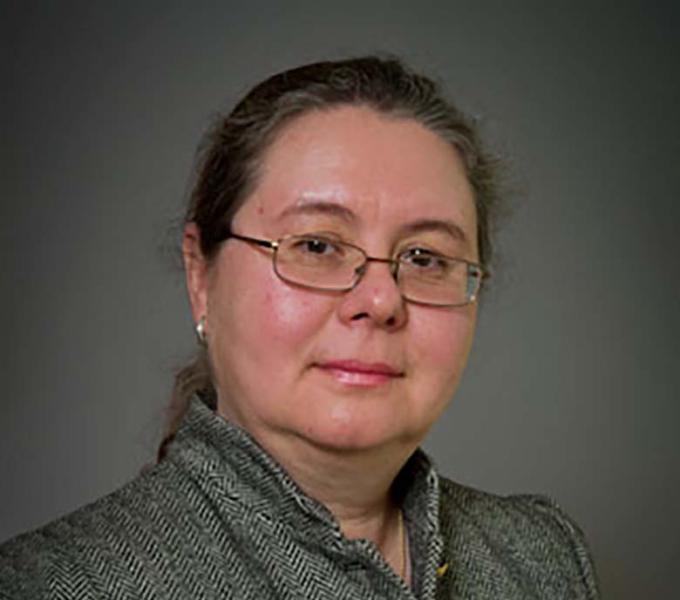
Yulia Y TyurinaView profile
Research Professor
Yulia Y Tyurina serves as a Research Professor in the Department of Environmental and Occupational Health at the University of Pittsburgh. Her research focuses on the fundamental role of phospholipids and their oxygenated species in cell death pathways including apoptosis, necroptosis, ferroptosis, and mitophagy. She discovered that cardiolipin oxygenated species are essential for apoptotic execution and serve as an 'eat-me' signal for mitochondrial quality control via mitophagy. Dr. Tyurina's educational background includes: 1988: Master of Biochemistry from Saint Petersburg State University, Saint Petersburg, Russia 1995: PhD in Biochemistry from the Institute of Evolutionary Physiology and Biochemistry, Russian Academy of Science, Saint Petersburg, Russia Her research program centers on redox lipid signaling mechanisms in cell death. She has demonstrated that phospholipid peroxidation drives ferroptosis through complex oxidation signatures and identified key roles for 15-lipoxygenase products. This work bridges basic biochemistry with translational applications in cancer, neurodegeneration, and inflammatory diseases, revealing how lipid oxidation products function as death signals across diverse biological contexts. Analysis of her 15 most recent publications (2020-2022) shows consistent focus on lipid peroxidation in ferroptosis across multiple disease models. Her work spans from cyanobacterial cell death to human pathologies including lung injury, SARS-CoV-2 complications, and cancer, with recurring mechanistic themes involving 15-lipoxygenase, cardiolipin oxidation, and mitochondrial dysfunction. Methodologies include advanced lipidomics, molecular imaging, and genetic models. Scientific awards were not mentioned in the provided information. Details about student advising and grant funding were not provided in the available text. Dr. Tyurina operates within a prominent redox biology research group led by Dr. Valerian E. Kagan at the University of Pittsburgh, maintaining extensive collaborations across departments and institutions as evidenced by her co-authorship network spanning immunology, oncology, and infectious disease research.