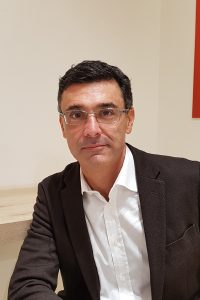
Andrea Detti is a Professor at the Department of Electronic Engineering, University of Rome Tor Vergata. His research focuses on computer networks, particularly Information-Centric Networking (ICN), Cloud Computing, and Software Defined Networks (SDN). He has coordinated major EU projects like Fed4IoT and BONVOYAGE, addressing IoT and Intelligent Transport Systems. He serves as Associate Editor for IEEE Transaction on Network and Service Management and has guest-edited special issues on ICN. His teaching includes courses on Internet Technologies, Mobile Wireless Networks, and Cloud Computing, emphasizing hands-on labs with Linux, Cisco routers, and OpenStack. Key projects include leadership roles in EU initiatives such as ICN2020, GreenICN (energy-efficient ICN), and OFELIA (ICN over SDN). He coordinates industrial projects with Telecom Italia and SSI/Finmeccanica on publish-subscribe paradigms in MANET and DTN. His research spans ICN scalability, adaptive video streaming, and satellite communication optimizations. Publications (80+) cover ICN architecture, SDN integration, and network performance modeling. He actively participates in conferences and standardization efforts, contributing to the evolution of future Internet architectures.
Dr. Adriana Sandu is a Senior Lecturer in Social Work and PhD Programme Director at Anglia Ruskin University's School of Allied Health and Social Care. She holds a PhD in Public Administration from Syracuse University and has worked across Romania, the U.S., Spain, and the UK. Her research focuses on gender, migration, social justice, and intersectionality, with a particular emphasis on marginalized communities. She is a member of the Safe and Inclusive Communities research theme and leads projects addressing refugee inclusion and gender violence. Education: PhD in Public Administration, Syracuse University (2006) MA in Public Administration, Syracuse University (1999) BA in Social Work & Sociology, Bucharest University (1994) Research Interests: Adriana’s work combines poststructuralist feminist theories with visual ethnography and participatory methods. Key areas include transnational living, gender violence, refugee integration, and the impact of migration on identity and belonging. She has led projects such as ‘Crafting the Self’ (Evelyn Trust-funded), which uses arts-based workshops to reduce isolation among migrant/refugee women. Grants & Collaborations: Principal Investigator: ‘Crafting the Self’ (£50k, Evelyn Trust, 2020-2022) Evaluation of outreach programs for women in prostitution (£47k Big Lottery Fund, 2018-2021) City of Sanctuary pilot project (£1k Guardian Fund, 2017-2018) Awards: Recipient of the prestigious Ron Brown Fellowship, enabling her studies in the U.S. She has also delivered keynote addresses at the UN Commission on the Status of Women (2016) and co-leads the Women & Girls Research Interest Group. Teaching & Supervision: Adriana supervises 6 doctoral students and leads the MA Social Work Dissertation module. She has guided 5 PhD completions, with current topics ranging from gender identities in classrooms to innovative pedagogy in sixth form colleges.
Dr. Rafi Rashid is a Senior Lecturer at the NUS Graduate School’s Integrative Sciences & Engineering Programme (ISEP) and a Fellow at Tembusu College, National University of Singapore. His research focuses on bacterial lipids’ role in antimicrobial resistance (AMR), combining mass spectrometry with interdisciplinary approaches. He teaches modules on interdisciplinary research, scientific ethics, and communication, emphasizing rigorous and responsible scientific practice. Rafi holds a PhD and BSc (Hons) from NUS (2013 and 2007). He pioneered lipid biology studies in Enterococcus faecalis during his 2013–2016 tenure as a Research Fellow at SCELSE. He co-created the MOOC Microbiomes and Sustainability , blending microbiology and sustainability themes. His teaching philosophy emphasizes redefining PhD education to prioritize interdisciplinary rigor and ethical scientific conduct. Rafi’s research bridges microbiology, chemistry, and public health, addressing global AMR challenges. He advocates for STEM curricula that foster border-crossing methodologies and 21st-century skills. His work at Tembusu College focuses on science’s societal impact and undergraduate/postgraduate education in scientific norms and philosophy. Notable contributions include advancing lipidomics techniques for bacterial membrane analysis and promoting blended learning strategies in higher education. His publications explore curricular reforms, interdisciplinary pedagogy, and the ethical dimensions of scientific research.
Catherine Mangan is a Professor of Public Management and Leadership at the Institute of Local Government Studies (INLOGOV) within the School of Government at the University of Birmingham. Her research focuses on public sector workforce development, leadership in public services, and the integration of health and social care systems. She combines academic rigor with practical experience from her background in public policy and service delivery. Education: Bachelor of Arts (Hons) in English and American Literature, University of Kent, 1993 Post Graduate Conversion Diploma in Psychology, London Guildhall University, 1998 Post Graduate Diploma in Executive and Leadership Management Coaching (LM Level 7), 2001 Research Interests: Dr. Mangan’s work emphasizes actionable solutions for public sector challenges. Her studies on the 21st-century public servant have influenced workforce strategies across local governments. She explores leadership dynamics, workforce skills, and systemic barriers to integrated care delivery. Recent projects include evaluating telecare technologies, analyzing councillor roles in long-term care systems, and assessing market shaping practices in social care. Key Contributions: Her research on national standards for adult care commissioning has been adopted nationwide. She also led an AHRC-funded evaluation of cross-sector collaboration between local government and design students. A 2018 Founders Award nomination recognized her transformative work on public service workforce development. Grants & Leadership: ESRC Impact Accelerator Account (workforce strategy seconddment) AHRC Public Collaboration Lab evaluation Small Business Initiative Grant (telecare in learning disabilities care) She designs leadership programs such as the National Graduate Development Programme and Total Leadership initiative for public sector executives. Labs/Teams: Co-convenes modules on public service leadership and health/social care integration for Masters programs. Active in interdisciplinary research teams like the Future of Public Service Leadership project led by Prof. Kiran Trehan.
Xianghan (Christine) O'Dea is a Senior Lecturer in Management and Technology Education at King’s Business School, King’s College London. She holds a PhD in Education from the University of Hull and has over 20 years of experience in higher education as a lecturer, researcher, and academic developer. Her research focuses on AI in education (AIEd), generative AI literacy, digital transformation, and digital education policy. She is a Senior Fellow of the Higher Education Academy and has led significant editorial roles, including associate editorships of Journal of University Teaching and Learning Practice and Perspectives: Policy and Practice in Higher Education . Dr. O’Dea’s academic career includes prior leadership as Subject Group Leader for Logistics, Transportation, Operations, and Analytics at the University of Huddersfield. Her work explores AI’s impact on critical thinking, digital readiness in business leadership, and cross-cultural integration challenges for international students. She actively contributes to national and international dialogues on AI ethics, AI literacy frameworks, and post-pandemic education strategies through engagements with organizations like QAA, SRHE, and CGHE. Key Roles: Programme Director for Management & Technological Change MSc at King’s Business School Editorial Contributions: Lead guest editor for Studies in Higher Education (special issue on text generators) and British Journal of Educational Technology Her research bridges pedagogical innovation with institutional policy, addressing challenges of AI integration, online professionalism, and student belongingness. Recent work emphasizes pragmatic approaches to AI literacy education and transformative learning through short-term study abroad programs.
Dr Fiona Christie is a Senior Lecturer and Researcher in the Business School at Manchester Metropolitan University, focusing on career development, employability, and higher education. She leads on employability, personal tutoring, and graduate outcomes within her department. Her research explores graduate transitions, decent work, and social justice in employment contexts. Christie completed a part-time PhD in Educational Research (2018) examining graduate career trajectories. Her academic roles include Director of Research and Knowledge for the Association of Graduate Careers Advisory Services (2018-22), and membership in key organizations such as the Institute of Student Employers and the Editorial Board of the Journal of the National Institute of Career Education and Counselling. She holds fellowships from NICEC and the RSA. Christie’s research projects include evaluations of youth employment initiatives like the Hidden Talent programme and studies on degree apprenticeships. Her work emphasizes embedding decent work principles into career guidance and addressing inequalities in labour market access. Recent studies highlight the impact of pandemic-induced workplace insecurity and regional employment dynamics in Greater Manchester. Education: PhD in Educational Research (Lancaster University, 2018, part-time) Key Research Areas: Career studies, social justice in employment, graduate outcomes Grants: British Academy Small Grant (2020), Office for Students Local Challenge Fund (2019) Her articles analyze topics such as graduate employability pedagogy, employer roles in career transitions, and the evolving landscape of higher education careers services. Christie advocates for policy integration of ethical employment standards and supports marginalized groups through targeted employability interventions.
Christopher Baker-Beall is a Senior Lecturer in Crisis and Disaster Management at Bournemouth University's Disaster Management Centre, where he serves as Programme Leader for the MSc in Disaster Management. He teaches units including Management of Man-Made Disasters, Foreign Policy Analysis, and Crisis Management. His research examines EU counter-terrorism policies, radicalization processes, and crisis management frameworks, with current projects analyzing pandemic responses for cyber crisis preparedness and counter-terrorism strategy evolution. Core interests include security discourse, border control securitization, and disaster governance. Baker-Beall's publications demonstrate consistent focus on terrorism studies and crisis management, with recent work emphasizing: Empirical analyses of terrorist perpetrator profiles and online radicalization pathways Critical discourse studies of EU security frameworks Policy evaluations of UK counter-terrorism strategies He has supervised 7 PhD students to completion including Dr. Katerina Krulisova (sexual violence discourse) and Dr. Gareth Mott (cyberterrorism securitization), and currently mentors 3 doctoral candidates researching disaster risk reduction and public policy. As co-convenor of the BISA Critical Terrorism Studies Working Group (2011-2015), he helped shape interdisciplinary security discourse. His grant involvement includes the AFTERCAB project (GCRF, 2020) examining crisis response systems.
Scott Burris is a Professor of Law at Temple Law School and Professor in Temple's School of Public Health, where he directs the Center for Public Health Law Research. He has been a faculty member at Temple since 1991 and is internationally recognized for his pioneering work in public health law, particularly in legal epidemiology, policy surveillance, and the intersection of law with HIV/AIDS policy and substance abuse. Professor Burris received his J.D. from Yale Law School and his B.A. from Washington University in St. Louis. His career began during the early days of the HIV/AIDS epidemic, where he served as an attorney at the American Civil Liberties Union, lobbying and litigating on behalf of people with HIV. He edited the first systematic legal analysis of HIV in the United States, "AIDS and the Law: A Guide for the Public" (Yale University Press, 1987). Burris's research focuses on how law influences public health and health behavior, with particular emphasis on developing theory and methods for effective local health governance. His work spans international public health law, legal epidemiology, policy surveillance, substance abuse policy, and housing law. He has made significant contributions to understanding the impact of law on HIV prevention, opioid overdose prevention, and pandemic response. His recent work increasingly examines methodological rigor in legal epidemiology, the application of artificial intelligence to legal analysis, and the relationship between housing law and health equity. His extensive publication record includes over 200 books, book chapters, articles, and reports. Recent publications demonstrate his continued leadership in advancing the science of legal epidemiology, with particular attention to methodology, policy surveillance systems, and innovative applications of technology to legal analysis. American Public Health Association Law Section Lifetime Achievement Award (2014) Jay Healey Health Law Professors award (2018) Professor Burris has served as a consultant to numerous international organizations including the United Nations Development Programme, the World Health Organization, and the United Nations Office on Drugs and Crime. He founded the Public Health Law Research Program for the Robert Wood Johnson Foundation in 2009, which has supported over 80 empirical studies of the impact of law on health. His research has been funded by major organizations including the Robert Wood Johnson Foundation, the Open Society Institute, the National Institutes of Health, the Bill and Melinda Gates Foundation, and the Centers for Disease Control and Prevention. He is the founder of Legal Science, LLC, a private company dedicated to improving access to legal information and supporting policy surveillance practice. He also serves as an advisor to several international institutions including the Tsinghua University AIDS Institute, the Shanghai Academy of Social Sciences Research Center for HIV/AIDS Public Policy, and the Program in Bioethics at Monash University. His work bridges academic research, practical application, and policy development in the field of public health law.
Benjamin Schwab is an Associate Professor in the Department of Agricultural Economics at Kansas State University's College of Agriculture. He holds a Ph.D. in Agricultural and Applied Economics from the University of Wisconsin-Madison (2011), an M.A. from the same institution, and a B.A. in Economics and Middle Eastern Studies from Rutgers University. Dr. Schwab's research spans three interconnected domains: Development Economics: Focused on poverty, food security, and household decision making through large-scale impact evaluations in Africa and the Middle East in collaboration with World Food Programme, UNICEF, Millennium Challenge Corporation, and the World Bank. Cannabis Policy: Examining implications of changing cannabis regulations on agriculture, environment, and rural land use across the United States. Agriculture-Health-Nutrition: Investigating health-labor market connections in the US and global food safety-nutrition relationships. His publication record includes articles in American Journal of Agricultural Economics, Journal of Health Economics, and World Development, with recent work focusing on risk and credit constraints in Bangladesh, mobile money's role in Kenyan household resilience, and methodological innovations in survey design. Prior to Kansas State, Dr. Schwab was an Associate Research Fellow at IFPRI's Poverty, Health and Nutrition Division, where he was a National Institute for Mental Health trainee in Health Economics. Dr. Schwab teaches AGEC 615: Global Agricultural Development and maintains active collaborations with USAID's Feed the Future Innovation Lab on agricultural mechanization and postharvest storage technologies. His interdisciplinary approach bridges agricultural economics, development economics, health economics, and policy analysis with practical implications for food security and rural development.
Ben Schwab is an Associate Professor in the Department of Agricultural Economics at Kansas State University. His academic career bridges agricultural economics with international development and health policy, maintaining active research collaborations with major global organizations. His educational background includes: B.A. in Economics and Middle Eastern Studies from Rutgers University M.A. in Agricultural and Applied Economics from University of Wisconsin-Madison Ph.D. in Agricultural and Applied Economics from University of Wisconsin (2011) Dr. Schwab's research program focuses on the intersection of international development, health, nutrition, and rural poverty. His work often employs rigorous impact evaluation methodologies to assess development interventions. Prior to joining Kansas State, he served as an Associate Research Fellow at the International Food Policy Research Institute (IFPRI) in the Poverty, Health and Nutrition Division, where he conducted large-scale evaluations across Africa and the Middle East in partnership with the World Food Programme, UNICEF, Millennium Challenge Corporation, and the World Bank. His current research portfolio has expanded to include cannabis and hemp policy issues across the United States, alongside ongoing work with USAID's Feed the Future Innovation Lab on agricultural technology adoption. His scholarly contributions appear in top-tier journals including the American Journal of Agricultural Economics, Journal of Health Economics, and World Development, reflecting his interdisciplinary approach that connects agricultural policy with health economics and development studies. Dr. Schwab teaches AGEC 615: Global Agricultural Development at Kansas State University. His research program demonstrates strong external funding connections through collaborations with international organizations and government agencies focused on development impact assessment and agricultural policy analysis.
Professor Johanna Lammintakanen is a faculty member at the University of Eastern Finland (UEF), holding a position in the Department of Health and Social Management, Faculty of Social Sciences and Business Studies. She serves as the director of the WELMA doctoral programme and is actively involved in leadership roles across multiple research groups, including the Child and Family Services Expert Group and the 'Vaikuttava sosiaali- ja terveysjohtaminen (JoVa)' initiative. Her work focuses on advancing healthcare leadership, patient safety, remote leadership models, and interdisciplinary collaboration in social and healthcare systems. Research Interests: Her research spans healthcare management, leadership development in healthcare organizations, patient safety practices, remote leadership dynamics, and policy implications for public health systems. She has contributed extensively to understanding leadership challenges in multi-professional units and the integration of digital tools in healthcare governance. Projects: She leads projects such as 'Managers under pressure – Social welfare management and its future in wellbeing counties' and 'Work and Mental Wellbeing - Mieliteko 2.0,' addressing contemporary challenges in healthcare administration and workforce well-being. Her work also emphasizes evidence-based interventions for mental health promotion and the evaluation of healthcare prioritization strategies. Labs/Teams: Prof. Lammintakanen is affiliated with the WELMA doctoral programme and collaborates with research teams focused on healthcare leadership, including the 'House of Effectiveness' initiative. Her contributions bridge academic research with practical applications in policy and organizational development.
Dr. Daniel Brown is a Senior Lecturer in Sport and Exercise Psychology at the University of Portsmouth's Faculty of Science and Health. He holds dual roles as PhD Supervisor and Course Leader for the BSc (Hons) Sport and Exercise Psychology programme. His work integrates research, teaching, and professional practice, focusing on human thriving, resilience, and well-being within sport and performance contexts. He serves as Research Lead for the British Psychological Society's Division of Sport and Exercise Psychology, sits on national and international editorial boards, and contributes to grant review processes. Dr. Brown's research explores social and cultural factors enabling sustainable performance and well-being in athletes, with emphasis on systems-based approaches, organizational environments, and relational dynamics. His work has been funded by bodies like the International Olympic Committee and has led to interventions for sport national governing bodies. He regularly presents at conferences and has authored over 50 publications across peer-reviewed journals and book chapters. His teaching expertise spans sport psychology methodologies and program leadership, while his editorial roles include contributions to the International Journal of Sport and Exercise Psychology and Journal of Sport Psychology in Action . Previously, he created the Participation and Performance Podcast , showcasing innovative approaches in the field. Dr. Brown's current projects involve participatory research to enhance thriving environments in sport organizations and longitudinal studies on athlete transitions. He actively promotes curiosity-driven practice and ethical coaching strategies through academic and applied channels.
Caroline Davies serves as a Senior Lecturer in the School of Education at Manchester Metropolitan University, bringing over twenty years of experience in Higher Education. Her career includes significant third-sector work evaluating initiatives like Sure Start East Manchester and research associate roles with the North West Education Enterprise project and Centre for Urban Education. Her research centers on Educational Leadership and Management with a critical lens on social justice and equality in education. She investigates the lived experiences of education leaders while theorizing identity and subjectivity in leadership contexts, extending to datafication's impact on student subjectivity in higher education. Recent publications reveal evolving expertise in middle leadership dynamics and professional learning complexities within English schools, while her 2020 work pioneers critical analysis of datafication in educational settings. This demonstrates a trajectory from practical leadership evaluation toward theoretical frameworks addressing systemic educational challenges. Her academic contributions include: Academic Tutor for undergraduate and postgraduate programmes Unit Lead for course modules Primary Supervisor for MA Educational Leadership students No research grants or award information is documented in available sources.
Michael Maher is an Early Career Researcher and Associate Lecturer in International Relations at the University of Northampton, affiliated with the Institute for Social Innovation and Impact (ISII). He holds a PhD in Social Innovation, alongside BA and MA degrees. His research focuses on young people, social enterprise, education, and participatory methods, with a particular emphasis on co-production and social impact measurement. Maher leads major projects including the UKRI-funded PROBable Futures AI in Law Enforcement initiative and evaluations of the Canon Young People Programme. He co-founded the Early Career Researcher Network in the Faculty of Business and Law and participates in committees like the Data Governance Subcommittee and Health Research Ethics Committee. Education : BA, MA, PhD (details not specified). Research Interests : Co-production in peacebuilding, institutional governance, ethics in AI, youth empowerment, and participatory research. He designs workshops on social impact frameworks and data management for organizations and doctoral students. Projects : Includes AI ethics in policing, Benin social impact studies, and Northampton Town Council grant evaluations. He has secured £millions in research funding, including RAI-UK and UKRI grants. Awards : None explicitly mentioned in the text. Advising/Grants : Supervises doctoral students like Robert Brown. Leads interdisciplinary teams in social innovation and ethics. Active in grant evaluations and policy design. Labs/Teams : Co-leads ISII workshops and collaborates internationally through projects in Benin and Indonesia.
Dr Jane Lewis is a Senior Lecturer in Sociology/Social Policy at London Metropolitan University's School of Social Sciences and Professions, where she has taught for over 20 years. She serves as Course Leader for the Sociology BSc and the Professional Doctorate Researching Work programme. Her academic foundation includes a PhD in Geography from the University of London, researching women's employment in the UK. This educational background underpins her expertise in socio-spatial inequalities. Jane's research critically examines housing and homelessness , poverty and inequality across UK and global contexts, and employment dynamics with a focus on marginalized groups. Her work integrates environmental justice perspectives through studies of climate change impacts and urban inequalities, while maintaining a strong commitment to gender analysis within labor markets and housing systems. Recent publications reveal a concentrated focus on applied social policy interventions, particularly collaborative research with London boroughs addressing systemic employment barriers for Black/Asian/minority ethnic communities and disabled residents. This work demonstrates methodological rigor in community-engaged approaches to housing regeneration and labor market inclusion. Her professional recognition includes: Senior Fellow of the Higher Education Academy (HEA) Jane leads externally funded projects with London Boroughs of Islington and Haringey examining employment disparities, while mentoring doctoral students through the Professional Doctorate programme. Her teaching spans core undergraduate modules on global inequalities and specialized postgraduate courses on housing policy and urban sociology. Current research initiatives emphasize partnership-driven solutions to social exclusion, leveraging local government collaborations to translate academic insights into tangible policy improvements for disadvantaged communities in North London.