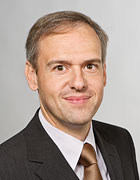
Etienne Zink is a PhD Student & Research Assistant at the University of Tübingen , affiliated with the Faculty of Science and the Department of Computer Science , specifically the Chair of Communication Networks. His research focuses on Software-Defined Networking (SDN) and P4 programming language applications in network monitoring and softwarization. B.Sc. in Computer Science (2019-2022) at DHBW Stuttgart Campus Horb M.Sc. in Computer Science (2022-2024) at the University of Tübingen Etienne contributes to network softwarization research through projects involving Snabb-Based Service Functions and Rust Barefoot Runtime (RBFRT) . His work addresses performance optimization, protocol enhancements, and runtime control in SDN architectures. Recent publications focus on histogram-based RTT monitoring and P4TG framework improvements. He supervises courses including Network Security I/II and Public Cloud Computing , while tutoring Network Softwarization and Informatik der Systeme . Etienne's programming expertise includes Rust and P4 for network device control.
Prof. Dr. Ingrid Mertig is a Professor at the Institute of Physics, Faculty of Natural Sciences II - Chemistry, Physics and Mathematics, Martin Luther University Halle-Wittenberg. Her research is centered on theoretical and computational condensed matter physics, particularly in spintronics, magnetism, and topological quantum phenomena in nanostructures and heterointerfaces. Research Interests: Her group investigates a wide range of topics including non-collinear magnetic structures, spin relaxation, atomistic magnetization dynamics, tunneling magneto-resistance, nanowires, scanning tunneling microscopy, molecular electronics, oxide interfaces, multiferroic materials, thermoelectric heterostructures, topological insulators, spin-orbit coupling, Berry-phase effects, and the anomalous Hall and Nernst effects. These studies are grounded in advanced theoretical methods such as density functional theory (DFT), Korringa-Kohn-Rostoker multiple scattering theory, Green's function theory, and relativistic transport theory. Recent Research Trends: Analysis of her recent publications (2021–2025) reveals a strong focus on topological spin textures (especially skyrmions), spin-orbit torque effects, spin-charge interconversion at interfaces, and the design of novel quantum materials for spintronic applications. Her work frequently bridges fundamental theory with potential device concepts, such as skyrmion-based memory and spin diodes, and involves close collaboration with experimental groups, as evidenced by co-authorship on terahertz spectroscopy and transport studies. Scientific Networks and Funding: She is actively involved in major collaborative research initiatives, including the Collaborative Research Centre/Transregio (CRC/TRR) 227: 'Ultrafast Spin Dynamics', the EU-funded 'Orbital Engineering for Innovative Electronics', and the MSCA-ITN 'SPEAR' network. Previous projects include participation in Priority Programmes on topological insulators, oxide interfaces, spin calorics, and nanostructured thermoelectrics. These affiliations demonstrate sustained, high-level funding and leadership in her field. Advising and Grants: While specific students are not listed, her leadership of a research group and supervision of numerous publications indicate active mentoring of PhD and postdoctoral researchers. Her involvement in large, funded collaborative networks like CRC/TRR 227 and EU projects confirms her success in securing significant research grants. Labs and Teams: She leads the 'Quantum Theory of the Solid State' research group at the Institute of Physics, Martin Luther University Halle-Wittenberg. This group specializes in first-principles and theoretical modeling, operating as a key theoretical partner in several national and international experimental collaborations.
Bernhard Schmauss is a Professor at the Department of Electrical-Electronic-Communication Engineering at Friedrich-Alexander-Universität Erlangen-Nürnberg (FAU). His primary affiliation is with the Institute of Microwaves and Photonics (LHFT). He holds leadership roles in multiple academic committees, including the MAOT Master Programme and various study commissions. His research focuses on advanced photonics, optical fiber sensing, laser technology, and telecommunications. Schmauss has authored numerous publications in high-impact journals and conferences, contributing to fields like distributed sensing, Bragg gratings, and optical network applications. His research interests emphasize innovative sensor technologies, including fiber Bragg gratings, hollow-core fibers, and integrated photonic devices. He has pioneered methods in coherent optical frequency domain reflectometry and developed novel optical sensor networks for industrial and biomedical applications. Schmauss collaborates extensively on projects involving smart infrastructure monitoring, high-precision temperature sensing, and material characterization using advanced optical techniques. Key contributions include advancements in polymer-based waveguide fabrication, sapphire photonic structures, and real-time laser beam calibration. His work bridges fundamental photonics research with practical applications in telecommunications, energy systems, and biomedical engineering. Schmauss actively participates in academic governance, shaping FAU’s engineering education and research strategies through his roles in faculty committees and study commissions.
Daniela Wilson is a Full Professor of Systems Chemistry at the Institute for Molecules and Materials, Radboud University, Netherlands. She serves as a Theme Leader in Nanomedicine at the Radboud Institute for Life Science (RIMLS), integrating chemistry with translational research into clinical applications. Her work focuses on creating autonomous, adaptive biomimetic materials that replicate cellular functions, including directional motion, environmental sensing, and collective behavior. Education : PhD in Liquid Crystalline Materials (summa cum laude), Gh. Asachi Technical University of Iasi, Romania (2007) Postdoctoral Researcher at University of Pennsylvania under Prof. V. Percec Her research bridges supramolecular chemistry, polymer science, and biomedical engineering to develop self-assembled nanomotors powered by energy harvesting. Key areas include vesicle activation , molecular communication , and programmable surface functionalization , aiming to revolutionize drug delivery systems. Recent publications highlight advances in light-responsive stomatocytes, energy-driven shape transformations, and enzyme-powered motors with biomedical applications. Scientific Awards : ERC Starting Grant (2012) ERC Consolidator Grant ERC Proof of Concept Grant Summa Cum Laude PhD Daniela leads a multidisciplinary team in nanomedicine, collaborating across chemistry, biology, and clinical research to explore collective work of biomimetic systems under stimuli. She has contributed extensively to understanding and designing autonomous molecular systems that mimic cellular behaviors for next-generation biomedical devices.
Dr. Kate Miroshnikova is a Researcher at the Max Planck Institute for Molecular Biomedicine in Münster, Germany. Her work focuses on nuclear mechanotransduction, extracellular matrix mechanics, and their roles in cancer progression, stem cell fate, and transcriptional kinetics. She is actively involved in the "Cells in Motion" (CiM) research network and serves as a supervisor in the CiM-IMPRS Graduate Programme, mentoring doctoral students in interdisciplinary biomedical research. Her research integrates biophysical principles with cellular behavior to understand how mechanical forces influence tissue architecture and disease states like glioblastoma and pancreatic cancer. Her recent publications highlight the interplay between mechanical forces and cellular responses, including nuclear shape regulation, chromatin remodeling, and tumor aggression. Key themes in her work include: Mechanical regulation of nuclear structure and genome integrity Extracellular matrix stiffness and cancer initiation Role of tissue tension in pancreatic and glioblastoma progression Biophysical mechanisms in stem cell fate and epidermal development Engineering platforms to study mechanical-ECM interactions Dr. Miroshnikova's contributions span both fundamental biophysical research and translational applications in tumor biology and tissue engineering. Her work bridges mechanical signaling with molecular pathways, offering insights into mechanopathology and therapeutic targeting.
Professor Ulf Schlichtmann holds the Chair of Design Automation at Technische Universität München's School of Computation, Information and Technology. His research specializes in electronic design automation (EDA) methodologies for complex integrated circuits, with recent focus on optical networks-on-chip, microfluidic biochips, and neuromorphic computing architectures. Research interests span hardware design automation, photonic network optimization, fault-tolerant systems, and AI-assisted hardware generation. Recent innovations include wavelength-routed optical NoCs, 3D-printed microfluidics, and LLM-enhanced HDL design tools that advance hardware efficiency and reliability. Publications demonstrate consistent breakthroughs in cross-domain optimization, with applications spanning from high-performance computing to biomedical microdevices. Laboratory leadership includes coordination of international degree programs and industry collaborations.
Prof. Dr. Michael Kues is a Professor in the Institute of Photonics at Leibniz University Hannover's Faculty of Mathematics and Physics. He holds key roles in academic governance, including serving as a Representative for Professors on the Examination Board and Admissions Board. His research focuses on advanced photonics, quantum information, and nonlinear optics, with emphasis on quantum networks, photonic computing, and integrated optical systems. He is affiliated with the Leibniz School of Optics and Photonics, contributing to interdisciplinary research initiatives. Research Interests: Quantum Photonics and Quantum Networks Nonlinear Optics and Ultrafast Phenomena Optical Signal Processing and Machine Learning Integration Integrated Photonics and Additive Manufacturing Entanglement-Based Quantum Communication Publications: Prof. Kues' recent work explores scalable quantum technologies, including photonic computing architectures, entanglement-based quantum key distribution, and novel fabrication methods for optical waveguides. His research bridges theoretical and applied optics, with applications in secure communication and high-performance computing. Awards: No scientific awards explicitly mentioned in available data. Labs/Teams: Active within the Institute of Photonics, contributing to the Leibniz University's Photonics and Optics research clusters.
Endri Goshi is a Researcher at the Chair of Communication Networks (Prof. Wolfgang Kellerer) at the Technical University of Munich (TUM). He holds a Master of Science in Communications Engineering (2019, distinction) and a Bachelor’s in Electronics Engineering (2015). His research focuses on Virtualized/Cloud-Native Core Networks, Software-Defined Networks (SDN), and Programmable Networks. He has contributed to projects like the ERC Network Flexibility initiative and the 6G Future Lab Bavaria. His work emphasizes network orchestration, edge computing, and fault-tolerant systems. Education: B.Sc. Electronics Engineering, Polytechnic University of Tirana, Albania (2015) M.Sc. Communications Engineering, TUM (2019, distinction) Research Interests: Cloud-Native Mobile Core Networks Edge Computing & Network Function Virtualization SDN/Programmable Networks Network Orchestration & Resource Management Byzantine Fault-Tolerant Systems Recent Work Trends: His publications (2021–2025) address challenges in 5G/6G core networks, including mMTC traffic modeling, UPF placement optimization, and procedure-based stateless architectures. He also explores reproducible data plane performance modeling and hardware-accelerated fault tolerance. Lab/Affiliations: Active at the FlexComNetsLab and involved in TUM’s 6G testbed initiatives.
Dr. Lorenzo Tesi is an Emmy Noether Junior Group Leader at the University of Stuttgart's Institute of Physical Chemistry (Faculty 03). His research focuses on molecular spin qubits, terahertz magnetic resonance, and plasmonic metasurfaces. He leads the Tesi Group, which explores quantum coherence in molecular systems and develops advanced spectroscopic techniques. Key projects include enhancing terahertz magnetic fields using metasurfaces and creating surface arrays of molecular qubits via self-assembly. The group collaborates with physicists and engineers to bridge chemistry and quantum technology. Recent achievements include publishing in Advanced Materials , Nature Communications , and Small Methods . Students supervised include Marco, Mansha, Nicolai, and Oleksandr. Awards and grants are not explicitly listed, but his Emmy Noether Programme position reflects significant research standing. The group's work spans quantum device fabrication, spintronics, and molecular electronics, with future directions in hybrid spintronic materials and scalable qubit networks.
Dr. Benjamin Brecht is an academic researcher at Paderborn University's Faculty of Science, Department of Physics. He serves as an Academic Senior Councillor and leads the 'Quantum Networks' research group. His roles include Deputy Senate Speaker of Paderborn University since October 2018 and Topical Editor for Optics Letters since September 2024. His research focuses on quantum optics, quantum networks, and photonic quantum computing, with projects such as TRR 142 (topological photonics) and PhoQuant (quantum computing platforms). Key interests include photon detection technology, nonlinear optics, and integrated quantum systems. Recent work emphasizes ultra-bright photon pair sources, high-fidelity quantum operations, and biphoton correlation measurements. Collaborations involve advanced photonics devices and quantum network architectures. Research activities span experimental and theoretical quantum photonics, with contributions to quantum metrology, entanglement generation, and programmable quantum networks. His group develops novel photon sources and interferometers for scalable quantum technologies. Current courses taught include Moderne Optik .
Dr. Mariana Kozlowska is a Group Leader and KIT Associate Fellow at the Institute of Nanotechnology, Karlsruhe Institute of Technology (KIT). She leads the DNA Unit of the Virtual Materials Design platform, focusing on multiscale modeling of soft matter and natural materials to understand molecular dynamics, assembly, and interfacial phenomena in chemistry, biology, and physics. Her research integrates density functional theory (DFT) , molecular dynamics simulations , and multiscale modeling to investigate spectroscopic properties, photophysical phenomena in metal-organic frameworks (MOFs) , molecular adsorption, and noncovalent interactions. Current projects include virtual design of chiral alignment materials and photoswitchable MOF conductance, supported by the Carl Zeiss Stiftung and DFG Priority Program. Dr. Kozlowska’s work has been recognized through grants like the Brigitte-Schlieben-Lange-Programm and 3D Matter Made to Order Cluster of Excellence. Her interdisciplinary approach bridges computational modeling with experimental validation, particularly in biomolecular assembly and functional materials design . She has also contributed to science communication via initiatives like Creative Discussions about Science and the ADAMED SmartUP program. Research Focus: Multiscale materials modeling, soft matter assembly, MOF electronic properties Key Collaborations: Prof. Burkhard Luy (Virtmat), Prof. Maria Andrea Mroginski (DAAD grant)
Prof. Dr.-Ing. Wolfgang Kellerer is a full professor at the Chair of Communication Networks within the Department of Computer Engineering , TUM School of Computation, Information and Technology . He also serves as an adjunct professor in the Department of Informatics. His research focuses on adaptive, programmable communication networks, particularly Software Defined Networking (SDN) , Network Function Virtualization (NFV) , and 6G technology . He has contributed to quantifying network flexibility and AI-driven network management. Member of the ERC Peer Review Panel (2023-2024) Scientific Director of TUM Venture Lab Robotics/AI/Communication (2020-present) Editorial roles: IEEE Transactions on Network and Service Management , IEEE Communications Surveys & Tutorials His research spans from 5G to 6G , emphasizing ultra-low latency, resilience, and cross-layer optimization. Key projects include 6G-life , 6G Future Lab Bavaria , and ERC FlexNets , with over 300 publications and 40 patents. Scientific Awards include the ERC Consolidator Grant (2015) , IEEE Fellow (2025) , and multiple best paper awards at IEEE/IFIP CNSM, IEEE Future Networks, and ACM SIGCOMM.
Prof. Dr. Andreas Dreuw is the Vice-Rector for Research and Digitalisation and First Vice-Rector of Heidelberg University. He holds the Chair of Theoretical and Computational Chemistry at the Interdisciplinary Center for Scientific Computing (IWR). His academic career includes roles such as Managing Director of the IWR, Dean of Chemistry Studies, and Heisenberg Professor. He earned his PhD (2001) and Habilitation (2007) in Theoretical Chemistry from Heidelberg and Frankfurt Universities, respectively. His research focuses on quantum chemical methods, molecular solar thermal systems, singlet fission, and computational spectroscopy. He leads the COSINE European Training Network and chairs the Collaborative Research Center SFB 1249. Awards include the Hermann Willkomm Award (2008) and the Heisenberg Fellowship (2009–2011). He is a Fellow of the Marsilius Kolleg and Emmy Noether Programme, and a member of the German Chemical Society (AG Theoretische Chemie), Bunsen Society, and American Chemical Society. Research Highlights: Development of novel quantum chemical methods, design of energy storage materials, and computational analysis of excited-state dynamics. His work bridges theory and experiment in materials science and optoelectronics. Affiliations: Member of the DFG Review Board for Theoretical Chemistry, Research Council for Field of Focus II, and Managing Board of the SFB 1249. He coordinates interdisciplinary research within the HEiKA partnership between Heidelberg and Karlsruhe.
Prof. Jürgen Schönwälder is a Professor of Computer Science at the School of Computer Science and Engineering, Constructor University Bremen gGmbH. His research focuses on computer networks, distributed systems, embedded systems, and computer security. He has held positions at TU Braunschweig, University of Twente, and Bell Labs. He leads the Computer Networks and Distributed Systems research group, which addresses challenges in robust network infrastructure and distributed systems resilience. Education: Doctoral Degree in Computer Science, Technical University Braunschweig (1996) Diploma in Computer Science, Technical University Braunschweig (1990) Research Interests: Design of scalable and resilient network services Security in distributed systems Measurement of network performance and behavior IoT and constrained device management Standardization of network protocols (e.g., NETCONF, YANG) Funded Projects: EU Horizon 2020 Concordia (2019-2023) EU FP7 Flamingo (2012-2016) Industry-funded projects in network management and security Key Contributions: Over 100 publications in top venues (IEEE/ACM Transactions, SIGCOMM) and co-chair roles in IETF working groups (NETMOD, ISMS). His work on network configuration (NETCONF), flow analysis, and IPv6 transition mechanisms has shaped modern network management practices.
Prof. Dr. Jürgen Eschner is a Professor of Experimental Physics at Saarland University, leading the Quantum Photonics group. His research focuses on quantum networking, trapped ions, and quantum repeater technology. He has spearheaded projects such as Quantenrepeater.Net and contributed to the development of quantum interfaces for telecom photon integration. Key achievements include the demonstration of quantum network protocols over 14-km fiber links and quantum repeater nodes using trapped ions. Roles: Director of the Quantum Photonics group, Deputy Head of the DPG Fachverband Quantenoptik und Photonik Affiliations: Member of the Saarland Interdisciplinary Center for Quantum Technologies, Collaborator with IBM and NIST Research interests span quantum photonics, quantum communication, and trapped ion systems. His work emphasizes practical implementations of quantum repeaters and photonic interfaces. Notable collaborations include projects funded by BMBF (e.g., Q.Link.X, QuantenFabLab) and DFG (CoQuLiMa SFB). Publications highlight advancements in quantum entanglement, photon-atom state transfer, and high-fidelity quantum networks. His group's contributions to quantum engineering include programmable interfaces and calibration-independent quantum channel analysis.