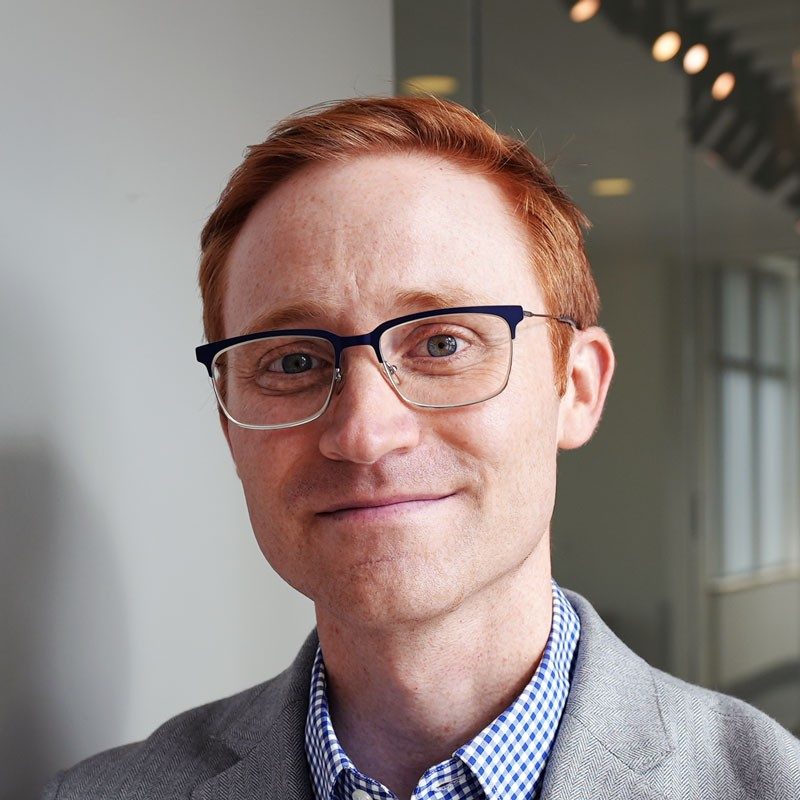
Haijun Xia is an Assistant Professor at the University of California, San Diego (UCSD), where he directs the Foundation Interface Lab and contributes to the Cognitive Science and Design Lab. His work focuses on Human-Computer Interaction (HCI) and Human-AI Collaboration , emphasizing the development of dynamic, malleable interfaces that integrate human cognition with intelligent systems to enhance thinking and working paradigms. Education: Bachelor's, Tsinghua University Master's and PhD, University of Toronto His research spans generative AI , interface design , and creative collaboration , with applications in data visualization, programming, and scholarly work. He advocates for treating information as a malleable material that can be flexibly manipulated by users and AI agents. Recent publications highlight advancements in: 2025 CHI Conference - Generative user interfaces, malleable overview-detail designs, and compositional structures for human-AI co-creation 2024 CHI Conference - Structured design space exploration with LLMs, ASCII diagram analysis, and adaptive presentation systems 2023 CHI/UIST Conferences - Data particle visualization, contextual logging tools, and metaphor generation for science communication Scientific recognitions include: Multiple Best Paper Awards and Honorable Mentions at CHI and UIST Hellman Fellowship and grants from NSF , Microsoft , Google , Meta , Apple , and Adobe He actively recruits undergraduate and graduate interns and has an upcoming postdoc position in early 2025 for researchers interested in foundational interface development.
Michael McAlpine is a Professor in the Mechanical Engineering department at the University of Minnesota . He also holds affiliations with the Biomedical Engineering and Electrical and Computer Engineering departments. His research focuses on 3D printing functional materials & devices , Nanoscale inks , Biomedical devices , Bioelectronics , and Flexible Microsystems . Research Interests : 3D Printing, Biomedical Engineering, Nanotechnology, Flexible Electronics, Microfluidics Labs : ME 361/363 Contact : mcalpine@umn.edu , (612) 626-3303, ME 117 Recent Research Trends include 3D Printed Biomedical Devices , Flexible Electronics , and Bioprinting Applications . His work spans from Spinal Organoid Formation to Programmable Drug Release Capsules . Scientific Award : Circulation Research 2020 Best Manuscript Award
Michael Bartlett is an Associate Professor in the Department of Mechanical Engineering at Virginia Tech , leading the Soft Materials and Structures Lab within the College of Engineering. His research focuses on bio-inspired materials , soft robotics , and multifunctional composites with applications in adaptive adhesives , stretchable electronics , and self-healing systems . Education: Ph.D., Polymer Science & Engineering, University of Massachusetts Amherst (2013) B.S.E., Materials Science & Engineering, University of Michigan (2008) His work explores the intersection of soft materials , morphing structures , and functional composites , leveraging techniques like kirigami and liquid metal integration to create innovations such as octopus-inspired underwater gloves and shape-shifting drones . His recent articles highlight advancements in programmable adhesion , liquid metal conductors , and multiscale material design . Scientific Awards: National Academy of Inventors Senior Member (2024) NSF CAREER Award (2023) Office of Naval Research Young Investigator Award (2021) Soft Matter Emerging Investigator (2021) DARPA Director’s Fellowship (2020) Adhesion Society Early Career Scientist (2020) DARPA Young Faculty Award (2018) 3M Non-Tenured Faculty Award (2017) Bartlett has mentored over 40 undergraduate students and numerous graduate researchers, resulting in 12 peer-reviewed articles with student co-authors. His lab receives funding from federal agencies like NSF , ONR , and DARPA , as well as industry partnerships. The group also engages in K-12 outreach programs and collaborates with institutions such as University of Nebraska-Lincoln and Iowa State University .
Yayue Pan is a Professor at the Department of Mechanical and Industrial Engineering, University of Illinois Chicago (UIC) , and serves as the Director of NASA MIRO Center for In-Space Manufacturing: Recycling and Regolith Processing (CISM-R2) . Her research focuses on advancing Additive Manufacturing (AM) technologies for applications in biomedical engineering , energy storage , and smart structures . Ph.D., Industrial and Systems Engineering, University of Southern California (2014) M.S., Mechanical Manufacturing and Automation, Zhejiang University, China (2010) B.S., Industrial Engineering, Zhejiang University of Technology, China (2007) Her work addresses technical challenges in AM such as multi-material printing , multi-scale fabrication , and field-assisted processes . Notable projects include: Development of electrostatically-assisted direct ink writing (eDIW) for high-speed, high-resolution printing Continuous projection stereolithography for rapid solid object manufacturing Acoustic field-assisted particle patterning for smart composites Light-curable hydrogels for corneal repair applications Her 15 most recent publications (2022–2025) span topics in: Multi-material AM (conductive polymers, hierarchical composites) Biomedical applications (soft robotics, corneal repair) Energy components (battery electrolytes, supercapacitors) Field-assisted processes (acoustic, electrostatic, magnetic) Scientific Awards : 2024 ASME Chao and Trigger Young Manufacturing Engineer Award 2022 UIC Researcher of the Year Rising Star Award 2020 ASME CIE TC Leadership Award 2019 UIC Outstanding Teaching Award 2017 SME Outstanding Young Manufacturing Engineer Award NSF REU Supplements (2023–2024) Advising : Mentored 24+ graduate/undergraduate researchers, including 17 NASA/GPIP interns. Former advisees hold academic positions at University at Buffalo and University of North Carolina at Charlotte , and industry roles at Apple , GE Healthcare , and ANSYS . Grants : Recipient of a $4.65M NASA grant and multiple NSF awards. Collaborations include Northwestern University, University of Michigan, and NASA centers.
Jennifer Lewis is the Hansjorg Wyss Professor of Biologically Inspired Engineering and Jianming Yu Professor of Arts and Sciences at Harvard University's Harvard John A. Paulson School of Engineering and Applied Sciences (SEAS). Her research focuses on bioengineering, materials science, and advanced manufacturing, with emphasis on 3D-printed functional materials, organoids, and soft robotics. She leads the Lewis Research Group, which develops biomimetic technologies for regenerative medicine, energy systems, and robotics. Lewis holds appointments in SEAS, the Department of Chemistry and Chemical Biology, and the Wyss Institute for Biologically Inspired Engineering. Her research areas include applied mathematics, fluid mechanics, soft matter physics, and bioengineering applications such as kidney organoid models, vascularized tissues, and programmable materials. Notable innovations include kidney organoid-on-chip systems for drug testing, 3D-printed liquid crystal elastomers, and bioprinted cardiac tissues. Lewis was awarded the 2025 James Prize in Science and Technology Integration for pioneering interdisciplinary research. Her lab's projects span organ building blocks, immune-response modeling in transplanted tissues, and acoustophoretic printing techniques for high-resolution bioprinting. Collaborations include the NIH Somatic Cell Genome Editing Program and industry partnerships for bioprosthetic valve research. She advises on grants totaling over $20M and mentors a multidisciplinary team of postdocs and graduate students in materials science, biomedical engineering, and mechanical engineering. Lewis' lab facilities include the Pierce Hall lab (Cambridge) and Allston SEAS campus, with state-of-the-art 3D printing systems, microfluidics platforms, and bioreactors for organoid culture. Current projects aim to engineer functional human tissues for therapeutic applications and develop smart materials with programmable mechanical/chemical responses.
João F. Mano is a Full Professor at the Department of Chemistry, University of Aveiro, and Director of the Doctoral Program on Biotechnology. He leads the COMPASS Research Group and serves as Vice-Director at CICECO - Aveiro Institute of Materials. His academic appointments include Invited Professor at University of Lorraine (France), Visiting Professor at KAIST (South Korea), and Adjunct Professor at Ajou University (South Korea). Education: PhD in Chemistry (1996, Technical University of Lisbon); D.Sc. in Tissue Engineering, Regenerative Medicine and Stem Cells (2012, University of Minho) Research Interests focus on Biomaterials for Regenerative Medicine , integrating Nanotechnology , Microtechnology , and Biofabrication . His group develops Bioinspired Materials using polymer chemistry, Decellularized Extracellular Matrix , and 3D Bioprinting to engineer Cell Microenvironments for therapeutic applications. Recent Publications highlight advancements in Human-Derived Hydrogels , Photopolymerizable Scaffolds , Magneto-Responsive Biomaterials , and Programmable Bioinks . Trends show emphasis on Organ-on-a-Chip integration, Smart Living Materials , and Green Bioprinting methodologies. Scientific Awards include: European Research Council Advanced Grants (2015, 2020) Fellow at IUPAC, European Academy of Sciences, and American Institute of Medical and Biological Engineering ERC Proof of Concept Grants Doctor Honoris Causa from University of Lorraine and Utrecht UNESCO Chair on Biomaterials George Winter Award (European Society for Biomaterials) Supervisions & Collaborations encompass 74+ MSc, 26+ PhD students, and 40+ postdocs. He co-founded METATISSUE and CELLULARIS Biomodels , and serves as Editor-in-Chief of Materials Today Bio .
David McNulty is an Associate Professor in the Department of Physics at the University of Limerick (UL), affiliated with the Bernal Institute and the Centre for Battery and Energy Materials Research. He holds a B.Sc. and Ph.D. in Applied Physics from UL, with postdoctoral experience at University College Cork (UCC), the Paul Scherrer Institute in Switzerland, and Confirm Centre-funded projects. His research focuses on advanced battery materials, particularly lithium-ion, lithium-sulfur, and sodium-ion batteries, emphasizing sustainable solutions like plastic waste conversion into electrode materials. Notable achievements include a Marie Curie COFUND Fellowship (ADMIRE Programme), an SFI Future Innovator Prize, and grants from the Royal Irish Academy and SFI-IRC Pathway Programme. He teaches solid-state and condensed matter physics to undergraduate and graduate students. Research interests include nanomaterial synthesis, electrode design, and energy storage systems. Key projects involve marine and biowaste-derived carbon materials for lithium-sulfur batteries and silicon nanowire anodes for improved battery performance. His work aligns with UN Sustainable Development Goals, promoting sustainable materials and energy solutions. Publications span over 50 peer-reviewed articles, with a focus on battery materials and nanotechnology. Awards highlight his contributions to sustainable energy and materials science. Current initiatives include expanding lithium-sulfur battery research through independent grants and leading interdisciplinary teams in battery innovation.
Shu Yang is the Joseph Bordogna Professor and Department Chair of Materials Science and Engineering at the University of Pennsylvania's School of Engineering and Applied Science. Her research spans multiple departments, with primary appointments in both Materials Science and Engineering and Chemical and Biomolecular Engineering. She directs the Yang Lab, which operates at the intersection of multi-materials synthesis, nano-/microfabrication, and device processing, backed by deep understanding of physical, mechanical and biological principles. Director, Center for Analyzing Evolved Structures as Optimized Products (AESOP) Principal Investigator, NSF NRT: Climate Action and Resilience for Extreme Urban Heat (CLIMATE-CARE) Member of the Engineering Research Visioning Alliance (ERVA) Professor Yang's research focuses on developing novel materials synthesis, assembly and eco-manufacturing of complex, multi-functional, nano- to macrostructured soft, sustainable materials and composites. Her lab addresses fundamental questions centered around surface/interface, actuation mechanisms, and structure-property relationships. Through directed assembly of oligomers, polymers, gels, colloids, liquid crystals, amphiphiles, and their composites with inorganic materials and biomolecules across nano- to macroscales, her team creates complex, multi-functional nano- and microstructures with unique surface, optical, and mechanical properties. Analysis of Professor Yang's recent publications reveals a strong trend toward environmentally responsive materials with applications in sustainability, water harvesting, carbon capture, and climate resilience. Her work increasingly integrates kirigami engineering principles with liquid crystal elastomers to create programmable, shape-morphing materials. The research shows a clear trajectory from fundamental materials science toward real-world applications addressing global challenges, particularly in climate action and sustainable infrastructure. Inaugural Nat Geo 33 Extraordinary Changemaker List 2022 Cozzarelli Prize from PNAS for Class III: Engineering and Applied Sciences Advanced Materials Hall of Fame collection recognition Multiple highly cited papers according to Web of Science Professor Yang's research group has secured significant funding for projects addressing climate change, sustainable materials, and advanced manufacturing. Her lab has developed numerous technologies with potential applications in coatings, adhesives, smart windows, displays, sensors, soft robotics, biomedical devices, dehumidifiers, and carbon-absorbing concrete. The Yang Lab maintains a strong mentoring record with numerous students and postdocs who have gone on to successful careers in academia and industry. Her group actively collaborates across disciplines, working with biologists, physicists, environmental scientists, and engineers to tackle complex challenges. The Yang Lab operates state-of-the-art facilities for materials synthesis, characterization, and fabrication. The lab is particularly known for its expertise in liquid crystal elastomers, kirigami engineering, and biomimetic materials. The group maintains strong industry partnerships and has filed multiple patents based on their research. Their facilities enable everything from molecular-scale synthesis to macro-scale manufacturing of functional materials, with particular strength in bridging these scales through innovative design principles.
Professor Naba Dutta is a faculty member at the School of Engineering, RMIT University, specializing in materials engineering and nanotechnology. His research focuses on biomimetic polymers, sustainable composites, and functional materials for energy and biomedical applications. He leads projects in additive manufacturing, corrosion-resistant coatings, and advanced membranes for water treatment. His work bridges interdisciplinary engineering with applications in renewable energy and environmental sustainability. Research Interests: Professor Dutta's expertise spans chemical, biomedical, and materials engineering. He investigates bioinspired polymers, electrocatalysts, and nanocomposite materials for energy storage, corrosion control, and tissue engineering. Recent projects include developing graphene-based inks for 3D printing, antimicrobial membranes, and recyclable bioplastics from agricultural waste. Publications Trends: His work emphasizes sustainable materials innovation, with contributions to polymer composites, nanomaterials for energy systems, and smart hydrogels for drug delivery. Key themes include interfacial engineering, additive manufacturing, and circular economy solutions for plastic waste. Supervision Projects: He oversees research on antimicrobial peptides, hydrogel nanocomposites, and 2D material engineering for advanced manufacturing. Projects also include corrosion-resistant coatings for magnesium alloys and biodegradable PBAT/PLA composites.
Christopher DelRe serves as Assistant Professor at the City University of New York (CUNY), holding dual appointments at the Advanced Science Research Center (ASRC) and City College of New York (CCNY) within the Department of Chemistry and Biochemistry. His laboratory operates from ASRC G.358 in Manhattan, with research activities centered on advanced materials engineering through protein manipulation and polymer synthesis. Dr. DelRe's research program focuses on polymer chemistry and nanoscience , specifically engineering novel materials through three core approaches: manipulation of natural proteins, synthesis of peptide-based polymers, and confinement of synthetic polymers. His work bridges fundamental molecular understanding with practical applications in sustainable materials, targeting environmental challenges through biodegradable polymer systems and enzymatic recycling technologies. Key methodologies include protein-polymer hybrid design, microporous material engineering, and biofunctionalization of nanomaterials. Analysis of his 15 most recent publications (2020-2025) reveals a strong emphasis on sustainable materials innovation , with recurring themes in enzymatic depolymerization of polyesters (2021-2024), programmable degradation of bioactive plastics (2025), and microporous water systems (2022-2024). His research demonstrates interdisciplinary convergence between polymer physics, synthetic chemistry, and protein science, consistently targeting environmental applications through material design. Founded in Spring 2023, the DelRe Lab actively recruits graduate students and postdoctoral researchers specializing in polymer physics, synthetic polymer chemistry, inorganic chemistry, and protein science. The laboratory maintains dual operational bases at ASRC and CCNY, with current research directions emphasizing microplastic elimination strategies and circular-economy materials for printed electronics. Dr. DelRe engages with the scientific community through platforms like the Bioinspired Green Science Symposium (2022) while maintaining active communication channels via professional email and laboratory website.
Dr. Maxim Shkunov is a Senior Lecturer at the University of Surrey's School of Computer Science and Electronic Engineering, affiliated with the Nanoelectronics Centre and Advanced Technology Institute. He serves as Programme Director for the Nanotechnology and Renewable Energy MSc, Academic Integrity Officer, and PGR Director at the ATI. His research focuses on printed electronics using solution-processable nanomaterials and organic semiconductors, particularly in flexible optoelectronics for bio-interfaces, organic-inorganic hybrid devices, and energy storage solutions. Key areas include conjugated polymers for artificial retinas, nanowire electronics, and high-performance lithium-gas batteries. Teaching responsibilities include modules such as Renewable Energy Technologies, Nanoelectronics and Devices, and Molecular Electronics. His work emphasizes synergies with industry and academic partners in chemical synthesis, sensor applications, and printable device development. Notable contributions include advancements in flexible printed electronics and bio-interfaces, with recent publications addressing full-color vision restoration and energy storage innovations. Dr. Shkunov’s research spans semiconductor physics, nanomaterial characterization, and device fabrication, with a focus on large-area electronics for health, energy, and environmental applications. His lab develops cutting-edge technologies like inkjet-printed supercapacitors and laser-patterned composite electrodes, reflecting a commitment to translating materials science into practical, scalable solutions.
Laura Rosser is a Senior Lecturer and 3rd Year Lead on the BA Fine Art programme at Falmouth University, where she joined in 2021. Her academic journey includes a practice-based PhD from the University of Plymouth completed in 2023, a Post Graduate Certificate in Academic Practice (2017), an MA in Contemporary Art Practice (2015), and a BA (Hons) in Fine Art from Falmouth University (1998). Dr. Rosser's research investigates the tensions between different interpretations of error—from binary digital evaluations to abstract human approaches—positioning error as both activity and subject matter. Her work bridges expanded print practices, post-digital culture, and new materialist thought, creating spaces that disrupt computational logic through what she describes as 'the misadventurous and crooked path.' Her artistic practice spans analogue and low-tech print technologies, artist books, diagramming, textual practices, installation, and live events. She draws on Katherine N. Hayles' concepts of nonconscious cognition to explore how materials like paper, ink, and printer mechanisms 'think without thinking,' challenging techno-computational logics through relational methodologies. Honors and Awards 3d3 AHRC funded doctoral studentship (2017) Two honorary mentions at the International Printmaking Triennial (2017) RK Burt Exhibition Award – solo show (2016) Neo Print Prize (2016) #1 artwork of Salon des Refusés (public vote) (2016) Arts Club Charitable Trust Award for outstanding work (2015) Gwen May Bursary (2015) Associate Membership Royal Society of Painter-Printmakers (RE) (2015) A4 Printmakers prizewinner (2012) Dr. Rosser serves as third supervisor for Cari Edmunds' PhD research on 'Diagnosis Deficit - a practice-led enquiry into Female ADHD.' Her teaching encompasses studio practice and critical studies including printmaking, post-digital print, diagramming, textual practices, writing as practice, and critical theories specifically focusing on New Materialism and the expanded field of printmaking. Her work has been exhibited internationally at prestigious venues including the Royal Academy in London, Kronika Centre for Contemporary Art in Bytom Poland, Sydney Contemporary Art Fair in Australia, Gallery of Contemporary Fine Arts Serbia in Belgrade, and Yinchuan Museum of Contemporary Art in China, demonstrating the global recognition of her practice-based research.
Hasan Dad Ansari Mohammad is a postdoctoral researcher at Scuola Superiore Sant'Anna's BioRobotics Institute and affiliated with the Department of Excellence in Robotics & A.I. Research . He holds a joint PhD in BioRobotics from Scuola Superiore Sant'Anna and a Doctor of Engineering Technology from KU Leuven, earned through the Marie-Sklodowska Curie ATLAS project. His work focuses on microrobotics and surgical robotics, particularly magnetic actuation for endovascular applications. Research Interests: Specializing in magnetic microrobotics , Hasan develops technologies for endovascular interventions , combining 3D printing and soft robotics for medical devices. His research includes AI-driven biomedical material design , biohybrid robots , and nano-toxicology modeling. Recent Publications (2025-2020): Key contributions include magnetic catheterization systems, soft robots with programmable magnetization, and computational nanotoxicology frameworks. These works span robotics , biomedical engineering , and AI applications . Scientific Awards: Marie-Sklodowska Curie Early Stage Researcher Fellowship
Dr. Farhan Abdul Ghaffar is an Associate Professor in the Department of Electrical & Computer Engineering at Georgian College, affiliated with Lakehead University. He joined Lakehead University in August 2019. His research focuses on RF and microwave engineering, with a particular emphasis on reconfigurable and tunable RF devices, system-on-package integration, and flexible RF electronics. He holds a Ph.D. in Electrical Engineering from King Abdullah University of Science and Technology (KAUST), Saudi Arabia, and has extensive academic qualifications including an M.Sc. from KAUST and a B.E. in Electronics Engineering from NED University, Pakistan. His research addresses challenges in antenna design, including phased arrays, leaky-wave antennas, and frequency/polarization reconfigurability. He has pioneered work on additive manufacturing with magnetic inks and field-programmable microwave substrates (FPMS), enabling dynamic adjustments in antenna performance. His innovations in wearable and flexible antennas have applications in medical dosimetry and industrial sensors. Notably, he has secured grants totaling over $2.3 million for bold research projects, including blood storage optimization and automotive radar systems. Dr. Ghaffar’s publications span 2010–2024, with a strong focus on tunable components, antenna arrays, and material-based solutions for RF systems. His recent work includes a 2024 phased array antenna using magnetically-controlled additive manufacturing and a 2023 full-duplex wireless power transfer system for industrial sensors. He has been featured in Lakehead University’s 'Big Ideas' series for his contributions to improving blood storage logistics via RF-enabled solutions. His academic contributions include 60+ peer-reviewed articles and collaborative projects with industry partners. While no formal awards are listed, his grant success and media coverage reflect his impactful research. Current activities involve advancing wearable electronics and reconfigurable microwave systems for diverse applications.
Monirosadat (Sanaz) Sadati is an Assistant Professor in the Department of Chemical Engineering at the University of South Carolina's Molinaroli College of Engineering and Computing. She holds an affiliate faculty position in Biomedical Engineering. Her research focuses on soft materials engineering, with emphasis on active matter systems and additive manufacturing. She received her PhD in Materials Science from ETH Zurich (2012), followed by postdoctoral training at Harvard University (2012–2014) and the University of Chicago (2014–2018). Research Themes: Active Matter: Designing autonomous micromachines for drug delivery and environmental remediation in complex environments. Additive Manufacturing: Developing in-situ characterization techniques for 3D printing of soft materials with tailored properties for tissue engineering and responsive systems. Key Contributions: Her work integrates experimental and computational approaches to study liquid crystal self-assembly, chiral nanostructures, and responsive materials. Recent efforts include blue phase stabilization under confinement and MXene-based hybrid materials for energy applications. Awards: Swiss National Science Foundation Prospective Researchers Award (2012) Swiss National Science Foundation Advanced Postdoc. Mobility Award (2013) Lab Focus: The Sadati Lab explores structure-property relationships in soft matter systems using advanced fabrication techniques. Current projects address challenges in programmable materials, biohybrid constructs, and energy storage solutions.