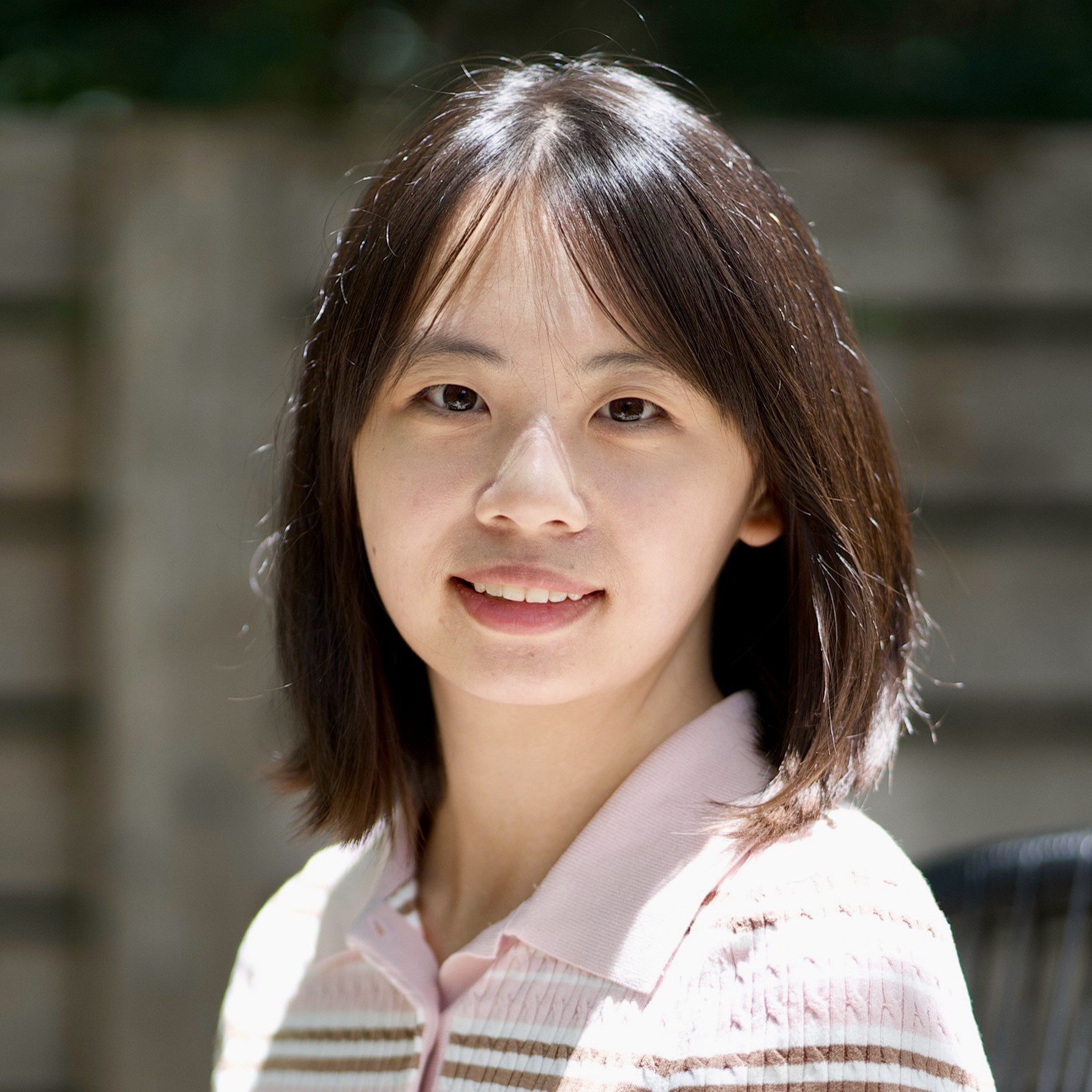
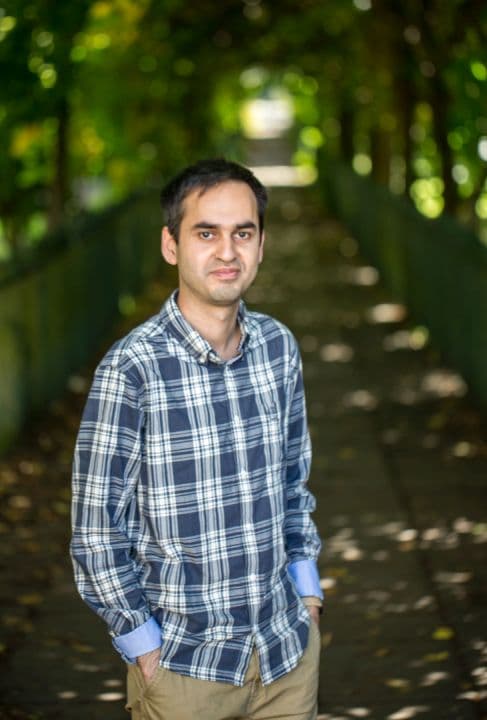
Jiaxin Lin is an Assistant Professor in the Department of Electrical and Computer Engineering at Cornell University , affiliated with the Computer Systems Laboratory . She earned her Ph.D. in Computer Science from UT Austin (2025) , preceded by an M.S. from University of Wisconsin-Madison and a B.S. from ShenYuan Honors College at Beihang University. Her research focuses on co-designing software and hardware systems to enable high-performance data center communication, particularly through: Programmable network interface controllers (SmartNICs) Terabit network system stacks Cache/memory interconnects Compilers for in-network computing Chip-to-chip interconnects Her work addresses challenges in portability across heterogeneous SmartNICs, demonstrated through the development of the Alkali compiler framework (NSDI '25). Key themes include hardware abstraction, data center scalability, and network-compute co-design. Scientific Awards: Google Junior Faculty Award (2025) MIT EECS Rising Star (2024) Google Ph.D. Fellowship (2021) Meta Ph.D. Fellowship (2021)
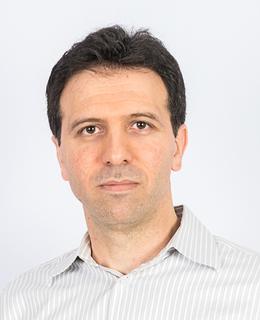
Jeremy Gibbons is a Professor of Computing at the University of Oxford, affiliated with the Department of Computer Science within the Faculty of Computer Science. He serves as Director of the Professional Programmes, overseeing part-time postgraduate degrees in Software Engineering. His roles include Chair of the Faculty of Computer Science (2012–2016), Director of the Software Engineering Programme, and Fellow of Kellogg College. Gibbons' research focuses on programming methodologies, particularly functional and object-oriented languages, with an emphasis on program calculation, design patterns, and bidirectional transformations. He leads the Algebra of Programming research group and is Editor-in-Chief of the Journal of Functional Programming and The Art, Science, and Engineering of Programming . Education includes a D.Phil. from Oxford University. His work spans formal methods, domain-specific modeling for clinical trials (e.g., CancerGrid project), and semantic frameworks for software systems. He has advised numerous students and contributed to open-access initiatives in publishing. Key collaborations include roles in ACM SIGPLAN and IFIP Working Groups 2.1 and 2.11. Research interests emphasize foundational aspects like profunctor optics, categorical programming, and algorithm design. Notable projects include datatype-generic programming and metadata-driven engineering for clinical trials. His work bridges theoretical computer science with practical applications in software architecture and system design.
Petteri Nurmi is a Professor of Computer Science at the University of Helsinki, affiliated with the Department of Computer Science and the Helsinki Institute of Sustainability Science (HELSUS). His research focuses on IoT systems, environmental monitoring, AI-driven solutions, and sustainable computing. He leads projects such as the NordForsk-funded initiative (2024-2028) and the Team Finland Knowledge programme (2024-2026), emphasizing large-scale IoT deployments and quantum computing integration. Key research interests include drone-based air quality monitoring, low-cost sensor networks, and AI applications in environmental science. Nurmi has published extensively in top venues like IEEE IoT Journal and ACM workshops. His work bridges technical innovation with societal challenges, such as urban pollution reduction and sustainable resource management. He supervises doctoral students in the Computer Science program and collaborates internationally on projects like underwater plastic detection (SEAGULL) and smart city infrastructure. Nurmi’s contributions to edge computing and pervasive sensing have been recognized through grants totaling over €2M. His lab develops tools for data-intensive systems, including thermal imaging for energy efficiency analysis and AI-driven sensor fusion frameworks.
Justin K S Yim is an Assistant Professor in the Department of Mechanical Science and Engineering at the University of Illinois Urbana-Champaign with a secondary appointment at the Coordinated Science Lab. His research focuses on bioinspired robotics, particularly legged locomotion systems and dynamic balance control mechanisms derived from animal behavior. Education: Ph.D. in Electrical Engineering (awarded May 15, 2020) Dr. Yim's work centers on translating biological principles—especially squirrel locomotion—into robotic systems capable of complex maneuvers like branch-to-branch leaping and stable landings. His research integrates hardware design, control theory, and biomechanical analysis to address challenges in robot-environment interaction on non-rigid surfaces and complex terrains, with applications in search-and-rescue and construction robotics. Recent publications (2024-2025) reveal a cohesive research trajectory exploring monopedal jumping dynamics, squirrel-inspired balance control, and cooperative cable-driven manipulation. Key themes include state-space stability analysis, nonprehensile foot torque utilization, and programmable surface interactions, demonstrating interdisciplinary convergence of robotics, biomechanics, and materials science. Dr. Yim maintains active affiliation with the Coordinated Science Lab, a premier UIUC research hub fostering innovation in robotics, control systems, and autonomous technologies through cross-departmental collaboration.
Steven Swanson is a Professor in the Department of Computer Science and Engineering at the University of California, San Diego, within the Jacobs School of Engineering. He is the Director of the Non-Volatile Systems Laboratory (NVSL), where he leads cutting-edge research in non-volatile memory, storage systems, and hardware-software co-design. His work bridges computer architecture, systems, and software to develop efficient, reliable, and secure computing platforms. Ph.D., University of Washington, 2006 B.S., University of Puget Sound, 1999 Dr. Swanson's research centers on non-volatile and persistent memory systems , exploring how next-generation storage technologies can transform computing. His lab develops full-stack solutions including file systems like NOVA and Orion , programming models such as NV-Heaps , and hardware prototypes like Moneta and Onyx . The team also works on low-power co-processors (e.g., GreenDroid ) and tools for debugging and verifying persistent memory programs. Research spans system reliability, security, energy efficiency, and performance optimization. His recent publications reveal a strong focus on persistent memory safety , zero-copy I/O , RDMA-based distributed file systems , and real-world characterization of Intel Optane . These works appear in top venues including ASPLOS, FAST, MICRO, and USENIX ATC, demonstrating sustained innovation in storage and systems research. Scientific honors include: NSF CAREER Award Google Faculty Award Facebook Faculty Award NetApp Faculty Fellow Dr. Swanson has advised 15 PhD students and 4 postdocs , many now faculty or senior engineers at Google, Microsoft, Intel, and other leading tech firms. He has secured significant research funding and leads major community initiatives such as the annual Non-Volatile Memories Workshop and Persistent Programming In Real Life (PIRL) . His educational efforts include innovative courses on robotic system design, quadcopter building, and modern storage systems, emphasizing hands-on learning and real-world implementation. The Non-Volatile Systems Laboratory (NVSL) under his leadership fosters a collaborative, international research environment, hosting visitors and postdocs from around the world. The lab is recognized globally as a pioneer in storage systems research and a key contributor to the adoption of persistent memory technologies in industry.
Kevin Singh is an Assistant Professor at The Ohio State University in the Department of Physics, holding the John W. Wilkins Endowed Professorship. He established the Singh Group in the Physics Research Building on January 1, 2025, focusing on building quantum devices and information processors using individually controlled single atoms. Education: B.S. in Physics from Massachusetts Institute of Technology (2013) M.A. in Physics from University of California, Santa Barbara (2016) Ph.D. in Physics from University of California, Santa Barbara (2019) Dr. Singh's research spans quantum information science, atomic physics, and quantum optics with emphasis on neutral atom quantum computing. His group develops dual-species Rydberg atom arrays (rubidium and cesium) for quantum error correction, mid-circuit measurement, and quantum simulation. Key methodologies include optical tweezers for atom rearrangement and Floquet engineering for non-equilibrium quantum dynamics. This work bridges fundamental quantum phenomena with transformative device technologies. His publication record (2018-2024) shows consistent advancement in neutral-atom quantum computing, featuring dual-species systems for error mitigation and studies of Floquet-engineered quantum matter. Articles appear in premier journals including Nature Physics, Science, and Physical Review X, demonstrating high-impact contributions to quantum processor architecture and non-equilibrium dynamics. Awards: Boeing Quantum Creators Prize (Chicago Quantum Exchange), 2023 The Maria Lastra Excellence in Mentoring Award (PME, University of Chicago), 2021 Dr. Singh actively recruits undergraduate students, PhD candidates, and postdocs for his laboratory. His prior mentoring at the University of Chicago earned institutional recognition. Research is supported by the John W. Wilkins Endowed Professorship and likely external quantum initiative funding, though specific grants aren't detailed in the source material. The Singh Group operates from OSU's Physics Research Building, utilizing optical tweezers to create programmable atom arrays. Current work focuses on scaling quantum processors through dual-species architectures and developing real-time feedback protocols for error correction in neutral-atom systems.
David Blaauw is the Kensall D. Wise Collegiate Professor of Electrical Engineering and Computer Science (EECS) at the University of Michigan. His research focuses on ultra-low-power analog/mixed-signal circuits, mm-scale sensors, neural networks, and biomedical applications. He leads the Blaauw Lab, which has pioneered innovations like the Michigan Micro Mote (M^3) and neural recording probes. His work emphasizes real-world deployability, with applications in environmental monitoring (e.g., monarch butterflies), medical devices, and robotics. Education: B.S. in Physics and Computer Science, Duke University (1986) Ph.D. in Computer Science, University of Illinois Urbana-Champaign (1991) Research Interests: Blaauw’s lab explores ultra-low-power computing, mm-scale systems, RF communication, in-memory computing, and genomics acceleration. Key projects include: Millimeter-scale computers (e.g., 0.04mm³ temperature sensors) Wireless neural interfaces for brain-machine communication Energy-efficient accelerators for edge AI and genomics Micro-robotics with sensing/actuation/computation Awards: IEEE Fellow 2016 SIA-SRC Faculty Award Motorola Innovation Award Best Paper Awards at ISSCC, ISCA, and RFIC Advising & Impact: Over 600 publications, 65 patents, and 4 startup companies spun from his lab. Current research includes genome sequencing accelerators (GenAx) and neural recording dust for brain mapping. He directs the Michigan Integrated Circuits Lab and chairs major conferences like ISSCC and DAC. Labs/Teams: Blaauw Lab (University of Michigan) Michigan Integrated Circuits Lab (MICAL)
Talia Ringer is an Assistant Professor in the Department of Computer Science at the University of Illinois, where she is a member of the PL/FM/SE (Programming Languages/Formal Methods/Software Engineering) research group. She leads the Illinois Theorem Provers (ITP) lab, which focuses on advancing proof engineering technologies to make formal verification accessible to programmers of all skill levels across all domains. Research Interests Dr. Ringer's research spans multiple aspects of proof engineering with a strong focus on integrating techniques from dependent type theory, program transformations, and neural proof synthesis to solve real-world verification challenges. Her work addresses how to build systems that allow programmers to prove the absence of costly or dangerous bugs in software. She is particularly interested in proof repair, machine learning for proofs, and developing new methodologies that can drive the creation of large, secure, and robust verified software and hardware systems. Research Trends Dr. Ringer's recent publications demonstrate a strong shift toward integrating machine learning with formal verification, particularly in proof repair and synthesis. Her work explores how large language models can assist with theorem proving, how reinforcement learning can automate verification processes, and how to make proof engineering more practical for real humans. Many publications involve collaborations with students and researchers from multiple institutions, reflecting her commitment to interdisciplinary research. Awards and Recognition Distinguished Paper Award at ESEC/FSE 2023 for "Baldur: Whole-Proof Generation and Repair with Large Language Models" ACM SIGPLAN Distinguished Service Award in 2023 Mentoring and Service Dr. Ringer is a dedicated mentor who has advised numerous undergraduate and graduate students. She is the founder and president of the Computing Connections Fellowship, which provides transitional funding for computer science PhD students needing to escape unhealthy environments. She is also the founder and previous chair of the SIGPLAN Long-Term Mentoring Committee (SIGPLAN-M), which connects more than 200 mentors and 300 mentees across more than 44 countries. Her service work was formally recognized with the 2023 ACM SIGPLAN Distinguished Service Award. Laboratory and Collaborations Dr. Ringer leads the Illinois Theorem Provers (ITP) lab with current members including postdocs, PhD students, masters students, and undergraduates. She collaborates extensively with researchers at the University of Washington, UMass Amherst, Google Research, Galois, and other institutions on various proof engineering projects.
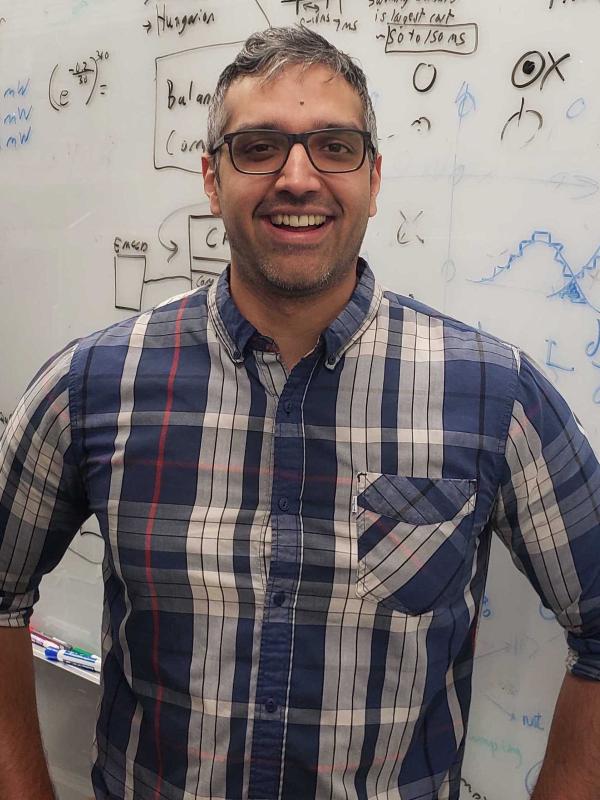
Rachee Singh is an Assistant Professor of Computer Science at Cornell University, leading the sysphotonics research group. She concurrently serves as an Amazon Scholar within the SageMaker Hyperpod teams, specializing in large-scale machine learning infrastructure development for cloud environments. Her research focuses on photonic interconnect systems for server-scale, rack-scale, and long-haul communication networks, targeting performance optimization for distributed machine learning and planet-scale cloud workloads. Key specialties include optical network design, fault-tolerant WAN architectures, and energy-efficient datacenter interconnects, with strong emphasis on practical deployment in real-world systems. Her group bridges theoretical networking principles with applied AI infrastructure challenges. Recent publications demonstrate concentrated innovation in photonic network optimization for ML workloads, particularly in wavelength management, collective communication algorithms, and chip-to-chip photonic fabrics. This work spans optical physics, distributed systems, and machine learning, revealing a trajectory toward sustainable, high-performance AI infrastructure. Scientific recognition includes: Amazon Research Award (2023) Cisco Research Award Dr. Singh actively mentors graduate researchers including Jonathan Aimuyo, Byungsoo Oh, and Arjun Devraj, whose co-authored publications form the core of her group's output. Research funding is secured through competitive grants from the NSF (including a $1M award for chip-to-chip photonic fabrics), SRC/DARPA JUMP 2.0 program, Cisco, and Cornell's Atkinson Center for Sustainability. The sysphotonics group operates as Cornell's hub for photonic network systems research, developing programmable integrated photonics solutions and collaborating with Amazon on SageMaker Hyperpod for next-generation ML infrastructure.
Danfeng Zhang is a faculty member at Duke University whose research sits at the intersection of programming languages and security. Active across the premier PL conferences since 2015, Zhang has served on more than two-dozen program committees and currently co-chairs the POPL Student Research Competition. Education & Affiliation: Home page: users.cs.duke.edu/~dz132 Affiliation: Duke University, United States Research Interests: Zhang’s work spans programming-language design, static and dynamic analysis, formal verification, and security. A recurring theme is developing language-based techniques that guarantee strong security and privacy properties—ranging from side-channel resistance and constant-time execution to differential-privacy proofs—while preserving performance and usability. His recent projects combine type systems, program logics, and automated reasoning to build practical verification tools for concurrent, speculative, and approximate software. Publication Trends: Across nine representative papers (2015-2024) Zhang has advanced static detection of cache side channels, automated proofs of differential privacy, and relaxed concurrency models. The trajectory shows deepening integration of security concerns into language infrastructure, with tool-building (CtChecker, SpecSafe, LightDP) that bridge formal guarantees and real-world systems. Service & Leadership: 2024 POPL Student Research Competition Co-Chair 2025 POPL Program Committee member Repeated reviewer/PC member: PLDI, SPLASH/OOPSLA, ISSTA, ECOOP, APLAS, PriSC, PASS Zhang regularly mentors student researchers through SRC sessions and workshop panels, fostering diversity and early-career participation in the programming-languages community.
Saugata Ghose is an Assistant Professor in the Siebel School of Computing and Data Science at the University of Illinois Urbana-Champaign (UIUC), with affiliate appointments in the Coordinated Science Laboratory and the Department of Electrical and Computer Engineering. His research focuses on data-centric computing, processing-in-memory architectures, memory systems, and hardware-software co-design. He holds a Ph.D. and M.S. in Computer Engineering from Cornell University and dual B.S. degrees in Computer Engineering and Computer Science from SUNY Binghamton. His academic positions include roles at Carnegie Mellon University (2016–2020) and postdoctoral research at CMU (2014–2016). Ghose has received notable awards such as the 2024 HPCA Hall of Fame, 2023 Intel Rising Star Faculty Award, and the 2019 CMU Wimmer Faculty Fellowship. His work has been supported by grants from NSF, Samsung, and Sandia National Laboratories. Research Interests: His group (ARCANA) explores data-centric architectures, processing-in-memory (PIM), and emerging memory technologies. Key areas include architectures for smart cities, autonomous systems, and genomics. He teaches courses on computer architecture and systems organization. Awards: HPCA Hall of Fame (2024) Intel Rising Star Faculty Award (2023) CMU Wimmer Faculty Fellow (2019) Cornell ECE Teaching Assistant Award (2013) Grants & Projects: NSF $2M for semiconductor advancements Samsung/Sandia grants for PIM programming models UIUC/ZJU DREMES collaboration on neuromorphic PIM Labs/Teams: Leads the ARCANA Research Group, focusing on reimagining computing around new applications. Collaborates with ASAP and HYBRID centers for co-design tools and neuromorphic architectures.
Dr. Danial Chitnis is a Chancellor's Fellow and Lecturer in Electronics at the School of Engineering, University of Edinburgh. He holds a DPhil in Engineering Science from the University of Oxford (2013) and has expertise in microelectronics, biomedical engineering, and quantum imaging. His research focuses on SPAD arrays, time-of-flight sensors, and wearable optical systems for biomedical applications. Education: BSc in Electronics Engineering, Chamran University of Ahvaz (2002–2007) MSc in Advanced Microelectronics Systems Engineering, University of Bristol (2007–2008) DPhil in Engineering Science, University of Oxford (2009–2013) Research Interests: Single-Photon Avalanche Diode (SPAD) arrays for optical communications and biomedical imaging Quantum-enhanced imaging via QuantIC Hub Wearable sensors for near-infrared spectroscopy (NIRS) AI-driven automation in test and measurement systems Articles Trends: Recent work emphasizes AI integration in electronics design, photon-counting receivers for 6G networks, and portable biomedical devices. Notable contributions include SYCL-based acceleration of circuit simulations and FPGA-driven time-to-digital converters. Grants & Collaborations: Principal Investigator of multiple grants, including EPSRC-funded projects on AI-enhanced human-machine interfaces and quantum technology applications. Collaborates with UCL, QuantIC, and industry partners like Keysight Technologies. Labs/Teams: Co-investigator at QuantIC, the UK Quantum Technology Hub in Quantum Enhanced Imaging. Leads interdisciplinary research on detector arrays and systems for quantum physics and consumer cameras.
Eleonora Vacca is a PhD student and Research Fellow in the Department of Automatic Control and Computer Science (DAUIN) at the Polytechnic University of Turin. She holds a B.S. in Electronic Engineering from the University of Palermo (2018) and an M.S. in Electronic Engineering-Embedded Systems from Politecnico di Torino (2021). Her research focuses on digital hardware design, reliability engineering, reconfigurable devices, and AI applications in aerospace and safety-critical systems. She is a member of the Aerospace and Safety Computing Lab and the CAD - Electronic CAD & Reliability Group (DAUIN). Her work addresses challenges such as radiation effects mitigation in space missions, fault-tolerant AI accelerators, and real-time anomaly detection in satellite telemetry. She has contributed to projects like the RAMSES CubeSat-1 Development (2025-2026), funded by commercial contracts. In 2024, she won the Best Student Paper Award at the NEWCAS Conference for her research on radiation effects in space missions. Vacca collaborates on teaching, including assisting in the course 'Electronic Calculators' for Computer Engineering students. Her recent publications explore AI resilience in RISC-V ecosystems, radiation environment analysis for space missions, and gesture recognition systems for smart cities. She actively contributes to conferences such as the ACM International Conference on Computing Frontiers and the IEEE International Smart Cities Conference.
Majid Ghaderi is a Professor in the Department of Computer Science at the University of Calgary, Faculty of Science. His expertise spans network algorithms, secure communication, and machine learning applications in network control. He holds a Ph.D. in Computer Science from the University of Waterloo (2006), and M.Sc. and B.Sc. degrees in Software Engineering from Sharif University of Technology (2001 and 1999). Education: Ph.D. Computer Science, University of Waterloo, 2006 M.Sc. Software Engineering, Sharif University of Technology, 2001 B.Sc. Software Engineering, Sharif University of Technology, 1999 Research Interests: Dr. Ghaderi focuses on optimizing network algorithms, securing communication in distributed systems, and leveraging machine learning for network control. His work addresses challenges such as secure wireless protocols, SDN-based network management, and efficient resource allocation in data centers. He explores proactive traffic scheduling and anomaly detection in critical infrastructures like industrial control systems and vehicular networks. Publications Trends: His recent work emphasizes covert communication in heterogeneous networks, adaptive federated learning in edge environments, and low-overhead diagnostic systems for cloud networks. He also investigates cybersecurity defenses against hardware vulnerabilities and dynamic threat landscapes. Awards: Best in-session Presentation Award, IEEE INFOCOM 2018 Municipal Excellence Award, Government of Alberta 2018 Faculty of Science Excellence in Teaching Award 2012 Advising & Grants: While no specific advisees are listed, his research has been supported by grants focusing on network security, edge computing, and IoT applications. He teaches CPSC 441 (Computer Networks) and maintains an active lab focused on network systems and cybersecurity. Labs & Teams: His research group collaborates on projects involving software-defined networks, vehicular communication, and industrial IoT security. The team develops open-source tools for network monitoring and anomaly detection.
John Wawrzynek is a Professor of Electrical Engineering and Computer Sciences at the University of California, Berkeley. He is affiliated with the Department of Electrical Engineering and Computer Sciences in the College of Engineering and serves as Co-Director of the Berkeley Wireless Research Center and Co-PI of the CONIX Research Center, one of the six centers in the Joint University Microelectronics Program sponsored by DARPA. Dr. Wawrzynek received his B.S. in Electrical Engineering from SUNY, Buffalo (1977), M.S. in EE from the University of Illinois, Urbana/Champaign (1979), and Ph.D. in Computer Science from Caltech (1987). Before joining the Berkeley faculty in 1988, he worked as a consultant at Schlumberger Palo Alto Research. His research focuses on Computer Architecture, Reconfigurable Computing, Wireless Systems, and Integrated Circuit and System Design . His work spans both theoretical foundations and practical implementations, with particular emphasis on FPGA-based computing systems, reconfigurable architectures, and wireless communication systems. His research group has made significant contributions to the field of reconfigurable computing, including the development of the Garp architecture and various tools for reconfigurable computing systems. Analysis of his recent publications (2022-2025) reveals continued focus on reconfigurable computing, FPGA design, wireless networking, and formal methods for hardware verification. His work shows an evolution from traditional computer architecture towards specialized hardware acceleration, machine learning for EDA, and wireless systems research, with particular emphasis on SAT sampling, differentiable computing, and efficient FPGA implementation of neural networks. DAC's Most Influential Paper Award (2025) NSF Presidential Young Investigator (PYI) (1989) Charles Lee Powell Fellowship (1985) NASA Certificate of Recognition (1983) Rensselaer Engineering and Science Medal (1975) Professor Wawrzynek has advised numerous graduate students throughout his career, many of whom have gone on to prominent positions in both industry and academia including Google, Xilinx, and MIT Lincoln Laboratory. His research has been supported by various grants from NSF, DARPA, and industry partners. He leads the Berkeley Wireless Research Center, which focuses on next-generation wireless communication systems and technologies, and is actively involved in the CONIX Research Center which explores connected intelligence at the network's edge.