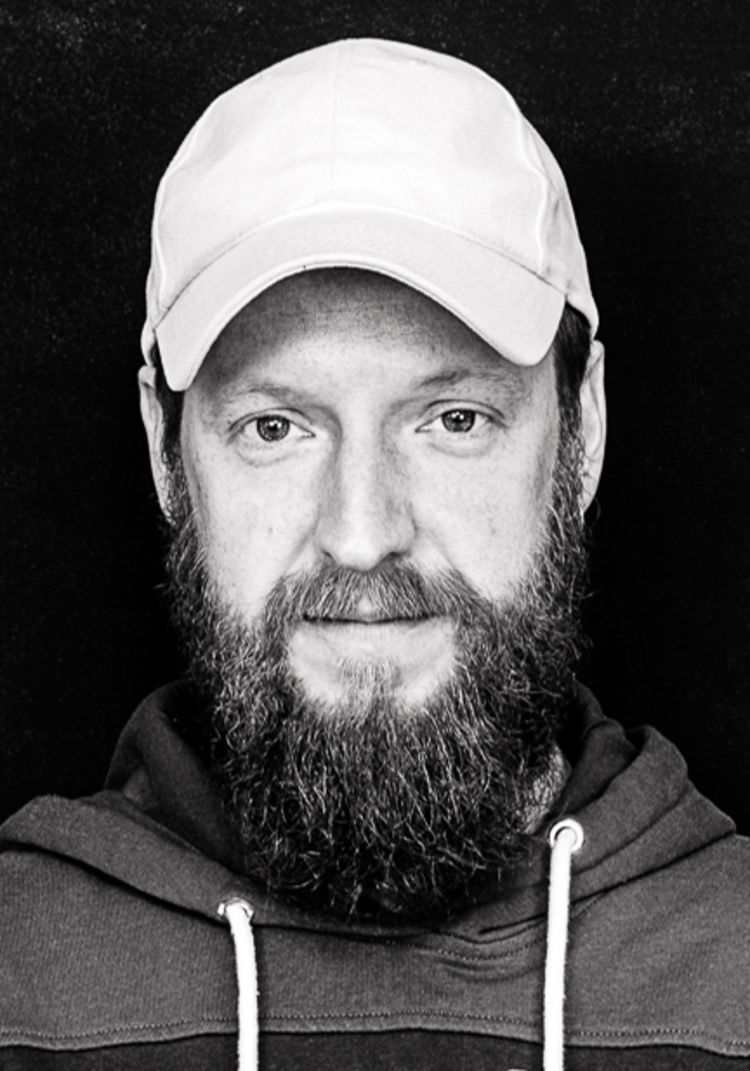
Philipp Wendler is an academic lecturer in the Department of Computer Science at Ludwig-Maximilians-Universität München (LMU Munich). He is affiliated with the Software and Computational Systems Lab and actively involved in research, teaching, and open-source tool development. As an employee representative in the steering committee of the Institute of Informatics, he contributes to institutional governance. His research focuses on software verification, formal methods, and program analysis. Key projects include CPAchecker (a configurable verification framework) and BenchExec (a benchmarking tool). His work emphasizes practical applications in automated testing, energy-efficient algorithms, and reproducible benchmarking. Publications span topics like interpolation-based model checking, energy measurement tools, and strategies for software verification competitions. He has contributed to advancing predicate analysis, k-induction, and refinement selection techniques. Notable achievements include leading the development of CPAchecker and BenchExec, which are widely used in academic and industrial verification efforts. His research addresses challenges in scalable verification, flaky test analysis, and energy-aware computing.
Luis Ferroni is a Tenure-track Assistant Professor in the Department of Mathematics at Università di Pisa since April 2025. He concurrently holds a Postdoctoral Member position at the Institute for Advanced Study (IAS) in Princeton, New Jersey, under the mentorship of June Huh. Previously, he was a Postdoctoral Researcher at KTH Royal Institute of Technology (2022–2024) and earned his PhD in Mathematics from the University of Bologna (2018–2021), advised by Luca Moci. His Licentiate Degree in Mathematics was obtained from the Universidad Nacional de Córdoba (2013–2018). His research focuses on Algebraic Combinatorics , Matroid Theory , Polytopes , and Ehrhart Theory . Notable contributions include work on Ehrhart positivity, Kazhdan-Lusztig polynomials of matroids, and the Merino-Welsh conjecture. His research bridges combinatorial geometry, algebraic structures, and discrete mathematics. Ferroni has been awarded prestigious honors such as the Premio INdAM-UMI-SIMAI 2023 (for his PhD thesis on matroid polytopes), the Premio Mario Baldassarri 2023 (for his article on matroid non-Ehrhart positivity), and the Michele Cuozzo Prize 2022 for his thesis. He is also recognized for academic excellence during his undergraduate studies, including multiple top rankings at the Universidad Nacional de Córdoba. His teaching experience spans roles as a Teaching Assistant (TA) and Tutor at institutions like the University of Bologna and KTH. He has taught courses such as Enumerative Combinatorics and Geometry. Ferroni actively participates in academic outreach, serving as a jury member for the CIMA Olympiad and coaching programming teams in international competitions like the ICPC World Finals. He has presented at leading venues including the Harvard/MIT Combinatorics Seminar, the Institute for Pure & Applied Mathematics (UCLA), and international conferences like the British Combinatorial Conference. His work appears in top journals such as Advances in Mathematics , SIAM Journal on Discrete Mathematics , and Combinatorial Theory .
Dr. Nurefşan Sertbaş Bülbül is a Research Associate/Postdoc at the University of Hamburg's Department of Informatics, part of the Faculty of Mathematics, Informatics and Natural Sciences. She completed her PhD at the University of Hamburg in 2023 under Prof. Mathias Fischer, following two Bachelor's degrees (Electronics and Communication Engineering, Computer Engineering) from Istanbul Technical University and a Master's from Boğaziçi University. Her research focuses on programmable networks, TSN (Time Sensitive Networks), and network security. Key areas include SDN (Software Defined Networking), attack detection, and reinforcement learning applications in networking. Her work addresses critical challenges like DoS attack mitigation in TSN, dynamic path reconfiguration, and P4-based solutions for network security. She has contributed to publications at IEEE GLOBECOM, IFIP Networking, and other conferences. Her research emphasizes practical implementations and resilient network designs, particularly for mission-critical systems. She is part of the Computer Networks research group, previously known as the IT-Security and Security Management group. Dr. Bülbül's recent projects include developing TSN Gatekeeper mechanisms and Transparent TSN solutions for agnostic end-hosts, leveraging SDN and reinforcement learning. Her work bridges theoretical advancements and real-world network challenges, ensuring robust and adaptable network infrastructures.
Thomas W. Reps is the J. Barkley Rosser Professor & Rajiv and Ritu Batra Chair in the Computer Sciences Department of the University of Wisconsin-Madison, where he has been a faculty member since 1985. He is also President of GrammaTech, Inc., which he co-founded in 1988 to commercialize research on programming environments. Reps received his Ph.D. in Computer Science from Cornell University in 1982, winning the ACM Doctoral Dissertation Award. His research spans program analysis, abstract interpretation, model checking, programming languages, and computer security. Reps's most influential work includes pioneering program slicing techniques with Susan Horwitz, development of the Cornell Program Synthesizer and Synthesizer Generator with Tim Teitelbaum, and significant contributions to interprocedural dataflow analysis. His recent work extends into quantum computing and advanced program synthesis techniques. The analysis of his publications reveals consistent focus on program analysis techniques, with recent papers exploring quantum circuit verification, abstract transformer synthesis, and program synthesis. His work bridges theoretical foundations with practical applications, often addressing scalability challenges in program analysis. NSF Presidential Young Investigator Award (1986) Packard Fellowship (1988) ACM Fellow (2005) ACM SIGPLAN Programming Languages Achievement Award (2017) Elected foreign member of Academia Europaea (2013) Multiple best paper awards including ETAPS (2004, 2008) Reps has advised numerous students, several of whom have received departmental and national recognition. His work on the Wisconsin Program-Slicing Tool led to commercial products through GrammaTech. He has served on advisory boards for significant projects including Year 2000 remediation for the Department of Defense and F/A-22 avionics software integration.
Muhammad Bilal is an Associate Professor at Zhejiang University's School of Computer Science, Department of Computer Science and Technology. His research spans multiple cutting-edge domains in computer science and engineering, with a particular focus on edge computing, Internet of Things, and vehicular networks. His research interests include Edge Computing , Internet of Things , Vehicular Networks , Federated Learning , Digital Twins , and Cloud Computing . His work addresses critical challenges in resource allocation, latency optimization, privacy preservation, and intelligent decision-making in distributed computing environments. He has made significant contributions to developing novel frameworks for service caching, computation offloading, and secure data processing in next-generation networks. His recent publications reveal a strong trend toward integrating artificial intelligence with edge and cloud infrastructure, particularly focusing on privacy-preserving techniques and resource-efficient algorithms. His work spans applications from intelligent transportation systems to healthcare monitoring and meteorological services, demonstrating the versatility and real-world impact of his research. Dr. Bilal has established a prolific publication record with numerous high-impact papers in top-tier journals and conferences, reflecting his active engagement in the academic community. His collaborative approach is evident through extensive co-authorship networks, particularly with researchers in China, Pakistan, and internationally.
Yulei Sui is an Associate Professor at the School of Computer Science and Engineering, University of New South Wales (UNSW), where he conducts research at the intersection of programming languages, software engineering, and machine learning. His work focuses on developing open-source frameworks for static analysis and verification to enhance software reliability and quality. He currently serves as Program Chair for LCTES 2024, SAS 2025, and ISSRE 2025, and is a program committee member for numerous top-tier conferences including PLDI, OOPSLA, and ICSE. His educational background includes a PhD from UNSW, where he has been a faculty member since completing his studies. His research interests span program analysis, software verification, machine learning applications in software engineering, and the intersection of programming languages with natural language processing and code LLMs. He leads the development of SVF (Static Value-Flow), an open-source framework for code analysis and verification, which has gained significant traction in both academic and industrial settings. His recent publications demonstrate a strong focus on improving the precision and efficiency of static analysis techniques, particularly in areas like context-free language reachability, pointer analysis, typestate analysis, and vulnerability detection. His work often bridges theoretical advances with practical applications, resulting in tools that address real-world software reliability and security challenges. Several of his papers have received distinguished paper awards at top conferences including ICSE and FSE. ICSE Distinguished Paper Award (2025) FSE Distinguished Paper Award (2024) OOPSLA 2022 Distinguished Artifact Award Australian Research Council Future Fellowship Fellow of Engineers Australia (FIEAust) Professor Sui actively mentors PhD students and undergraduate thesis candidates, with numerous students having completed their research under his supervision. He has secured significant research funding including ARC Discovery Projects and an ARC Future Fellowship. His community service includes editorial roles for IEEE Transactions on Software Engineering and IEEE Transactions on Reliability, demonstrating his standing as a leader in the software engineering research community.
Abhishek Tiwari is an Associate Professor of Software Engineering at the Maersk Mc-Kinney Moller Institute, University of Southern Denmark, where he was promoted from Assistant Professor in September 2025. His academic journey includes positions as Senior Researcher at Software Institute, USI Lugano (2024), Senior Researcher at University of Passau (2022-2023), and Research Fellow at National University of Singapore (2020-2021). He completed his PhD in Software Engineering at University of Potsdam, Germany in 2019 under supervision of Prof. Dr.-Ing Christian Hammer. His research focuses on the intersection of programming languages and software engineering, with particular expertise in static program analysis, language-based security, information flow control, and automated program repair. His work has significant practical applications in Android security and privacy, addressing critical challenges in information flow analysis, vulnerability detection, and program repair. His research has evolved from foundational work on Android security mechanisms like PendingIntent analysis and anti-theft frameworks to more recent sophisticated approaches for information flow security repair and multilingual program analysis. Trends in his publication record show a consistent focus on Android security challenges, with increasing sophistication in analysis techniques from 2017 through 2025. His work spans theoretical foundations of program analysis while maintaining strong practical relevance to real-world Android security issues. Recent publications demonstrate growing interest in multilingual program analysis and formal specification challenges. ACM SIGSOFT Distinguished Paper Award (MOBILESoft 2023) Dr. Tiwari actively contributes to the academic community through program committee service for major conferences including ASE (2024, 2025), ICSE (2025), and ISSTA (2022-2024). His teaching portfolio includes Advanced Software Engineering Methodologies (2024), Automated Program Repair (2022-2023), and Mobile Security (2022) courses. He has received research funding from prestigious sources including Deutsche Forschungsgemeinschaft (DFG), German Federal Ministry of Education and Research, and EIT Digital for projects related to programming principles for privacy, SmartPriv, and SMAPPER.
Omar I. Al-Bataineh is a Research Scientist at Gran Sasso Science Institute (GSSI) in Italy, specializing in software engineering and formal methods. His work bridges theoretical foundations with practical applications in automated program repair and software verification. Education: Ph.D. in Computer Science, University of Western Australia Additional degrees from University of New South Wales and Jordan University of Science and Technology His research centers on three interconnected themes: (1) Multi-fault Automated Program Repair addressing complex bug interactions, (2) Formal Methods for Reliable Repair ensuring provable correctness, and (3) Termination-Aware Repair integrating performance considerations. He develops lightweight test oracles and context-sensitive repair techniques to overcome patch overfitting and scalability limitations in real-world systems. Recent publications reveal strong focus on multi-fault scenarios (60% of 2025 output), with growing emphasis on formal verification (30%) and performance-aware repair (10%). Key venues include ASE, ICSME, and SANER where he explores program slicing, oracle design, and fault interaction analysis. Awards: Best Paper Award at QRS 2022 for advancing automated program repair capabilities Prior to GSSI, he held research positions at Simula Research Laboratory, National University of Singapore, and Nanyang Technological University. His teaching experience includes Advanced Computer Security at UNSW and Java Programming at UWA, though current academic instruction isn't emphasized in recent activities. He maintains active contributions to workshops like APR@ICSE and FASE, focusing on practical tool development.
Jacek Rak is a Professor at the Department of Communications and Computer Networks within the Faculty of Electronics, Telecommunications and Informatics at Gdańsk University of Technology. His research career spans over two decades with continuous contributions to network resilience engineering, evidenced by over 50 publications in top-tier IEEE and Springer journals. He serves as a leading authority in optical network design, vehicular communications, and disaster-resilient systems, frequently collaborating with international institutions including Hungarian Academy of Sciences, University of Lisbon, and Polish-Japanese Academy of Information Technology. Professor Rak's research focuses on network resilience engineering across multiple domains. His work establishes foundational frameworks for protecting communication systems against disasters, with significant contributions to optical network survivability, 5G/6G fronthaul optimization, and vehicular network security. His research methodology integrates mathematical modeling with practical implementation, particularly evident in his development of the κ-Penalty approach for disjoint path calculation and eFRADIR disaster resilience framework. Recent work emphasizes the convergence of wireless and optical technologies for next-generation networks, addressing critical challenges in energy efficiency and cost modeling for 6G infrastructure. His publication portfolio reveals a clear evolution from VANET security (2010-2015) to comprehensive disaster resilience frameworks (2016-present), culminating in the 2020 Springer monograph Guide to Disaster-Resilient Communication Networks co-edited with David Hutchison. Current research examines optical fronthaul optimization for 6G systems, with multiple 2023-2025 publications establishing new methodologies for cost-energy tradeoff analysis in next-generation wireless infrastructure. IEEE Communications Society Distinguished Lecturer (2018-2020) Editor-in-Chief, Optical Switching and Networking special issue on Disaster-Resilient Optical Networks (2021) Technical Program Committee Chair, International Workshop on Reliable Networks Design and Modeling (RNDM 2012-2015) Professor Rak actively mentors next-generation researchers through collaborative projects like RECODIS (Resilient Communication Services Protecting End-user Applications from Disaster-based Failures) and coordinates international research efforts through EU-funded initiatives. His work demonstrates consistent leadership in establishing resilience metrics and validation methodologies for critical communication infrastructure, with increasing focus on climate change adaptation and sustainable network design principles in recent publications.
Claus Withopf serves as a Lecturer at the University of Art and Design Offenbach within the School of Art's Art department, where he has taught film and video production since 2007. As founder and director of the VideoLab, he integrates practical filmmaking with academic instruction, emphasizing hands-on technical training and creative exploration in documentary and experimental formats. His educational foundation includes film studies at the City University of New York (CUNY), film and photography at HfG Offenbach, and art at Freie Kunstakademie Mannheim. He augmented this with a DAAD-funded postgraduate specialization in screenwriting, directing, and cinematography at City College of New York, where he received the Bert Saperstein Scholarship from the MFA Film Program in 2003. Withopf's creative research centers on documentary filmmaking intersecting with electronic music culture, particularly through biographical explorations of pioneering artists like Anne Clark. His work examines social criticism through visual poetry, urban identity, and cultural memory, often utilizing both analog and digital techniques. The VideoLab under his direction functions as an experimental production hub where students engage with Bolex Super 16mm cameras, motion graphics, and sound design to develop distinctive visual languages. His filmography demonstrates consistent thematic evolution from early urban narratives ( Standspur , 1998) toward complex music documentaries, culminating in the internationally screened Anne Clark (2017). These works collectively explore identity formation, cultural resistance, and sensory experience through meticulously crafted visual narratives that bridge German and American artistic traditions. While specific awards remain unnamed in available records, his films have received international festival recognition. Production funding has been secured through major institutions including HessenFilm und Medien, nordmedia, Filmförderung Hamburg Schleswig-Holstein, and the German Federal Film Fund, reflecting the cultural significance of his work. Through the VideoLab, Withopf mentors students in end-to-end film production—from concept development to theatrical distribution—fostering collaborations with industry partners like Neue Visionen Filmverleih. His teaching integrates professional filmmaking practice with academic rigor, preparing students for careers in both commercial and artistic film production while maintaining active engagement with current industry technologies and distribution models.
Laetitia Chapel is a full professor in computer science at Institut Agro Rennes-Angers , conducting research within the OBELIX team at IRISA , a mixed research unit in computer science, signal/image processing, and robotics. Her work focuses on machine learning for structured data (time series, graphs, hierarchical representations) with applications in remote sensing, and she obtained her HDR in 2022. Research Interests center on advancing optimal transport theory for structured datasets, including time series alignment, hyperbolic embeddings, and Riemannian neural networks. She actively participates in international workshops and conferences, delivering invited talks at venues like NeurIPS and IEEE MLSP. Ambroise Odonnat (2024, Huawei-funded PhD) Léo Buecher (2024, supervised with Nicolas Courty) Sergio Osson (2025, supervised with Charlotte Pelletier) Guillaume Mahey (2024, with Gilles Gasso) Manal Hamzaoui (2023, with Sébastien Lefèvre and Minh-Tan Pham) Titouan Vayer (2020, now at INRIA) Pierre Gloaguen (2017, now assistant professor at UBS) Scientific Awards include the Best paper award at MajecSTIC 2005 and Best paper award at ICPRAI 2022 . Her research projects span from theoretical foundations (e.g., hyperbolic metric learning) to applied remote sensing tasks (e.g., cropland mapping in the Brazilian Amazon).
Dr. Balázs Sonkoly is a researcher specializing in edge computing, serverless applications, and 5G network optimization. His work focuses on latency-sensitive systems, multi-user augmented reality coordination, and cloud-native microservice management across distributed architectures. Key research themes include network function virtualization (NFV), software-defined networking (SDN), and programmable packet-optical networks Recent publications analyze AI-driven autoscaling, P4-assisted serverless migration, and multi-domain service orchestration Article trends reveal expertise in mixed reality frameworks, federated learning for vehicular networks, and edge-cloud convergence. His collaborations span institutions like IEEE, SIGCOMM, and the UNIFY project. Contributions to conferences like NOMS, ISMAR, and GLOBECOM highlight practical implementations of edge cloud platforms, SLAM integration, and latency-constrained resource allocation.
Dr. Michael Schwarz is a tenured faculty member at the CISPA Helmholtz Center for Information Security in Saarbrücken, Germany, where he leads the RootSec research group. Since 2020 he has been investigating microarchitectural side-channel attacks, system security, CPU security, transient-execution vulnerabilities, and corresponding defense mechanisms. He previously served as a post-doctoral researcher (2019–2020) and PhD student (2016–2019) at Graz University of Technology, after earning two master’s degrees in computer science and software engineering with a security focus. Education PhD, Graz University of Technology, 2019 — “Software-based Side-Channel Attacks and Defenses in Restricted Environments” (Advisor: Daniel Gruss) MSc, Computer Science, Graz University of Technology MSc, Software Engineering, Graz University of Technology Research Interests Dr. Schwarz’s work centers on microarchitectural side-channel attacks and system security , spanning: CPU security and transient-execution vulnerabilities (Meltdown, Spectre, Fallout, LVI, ZombieLoad, ÆPIC Leak, CacheWarp) Detection, mitigation, and formal guarantees against microarchitectural leakage Hardware–software co-design for secure operating systems and trusted execution environments Reverse engineering of CPU internals, cache architectures, and prefetchers Browser and web-platform security, including sandbox bypasses and fingerprinting Compiler security and constant-time programming enforcement Scientific Awards & Recognition 2022 Busy Beaver Award for “Foundations of Cybersecurity II” 2021 Busy Beaver Award for “Side-Channel Attacks and Defenses” 2020 EuroSys Roger Needham PhD Award 2019 IEEE S&P Distinguished Paper Award (Spectre) 2019 NSA Best Scientific Cybersecurity Paper Competition Honorable Mention (Meltdown) 2019 Open Exploit Award (Meltdown & Spectre) 2018 CSAW Best Paper Award (Meltdown) 2018 Pwnie Awards: Best Privilege Escalation Bug & Most Innovative Research 2023 USENIX Security Noteworthy Reviewer Award 2023 WOOT Best Paper Award (CustomProcessingUnit) 2022 Pwnie Award for Best Desktop Bug (ÆPIC) 2022 AI 2000 Security & Privacy Honorable Mention 2021 CCSW Best Paper Award & CSAW Best Paper 3rd Place Advising & Collaborations Dr. Schwarz currently mentors numerous PhD students and post-docs within the RootSec group. His collaborations extend across CISPA, Graz University of Technology, and an international network visible through extensive multi-author publications at top-tier venues including USENIX Security, IEEE S&P, ACM CCS, NDSS, ESORICS, DIMVA, ASPLOS, WWW, FC, and specialized microarchitecture security conferences. Labs & Teams He heads the RootSec Research Group at CISPA, whose core mission is to uncover, analyze, and mitigate microarchitectural and system-level security threats. The group maintains close links with industry partners, open-source communities, and policy makers to ensure that research findings are rapidly translated into practical defenses deployed in modern operating systems and processors.
Xiang Fu is a researcher in the Department of Computer Science at Hofstra University, with affiliations to institutions including Georgia Southwestern State University, University of California, Santa Barbara, and Massachusetts Institute of Technology. His work spans formal verification of web services, software security, zero-knowledge proofs, and automated testing frameworks. His research interests include: Web Services Formal Verification Software Security Zero-Knowledge Proofs Automated Testing Software Engineering Recent publications focus on zero-knowledge auditing for financial systems, formal verification of web services, and secure software analysis. Notable tools developed include APOGEE for automated grading and WISEngineering for scalable online learning. No explicit scientific awards are documented in the provided data.
Carla Gomes da Silva serves as Assistant Professor and Principal Investigator at the Department of Translational Neuroscience within the UMC Brain Center, University Medical Center Utrecht (Utrecht University). Her laboratory investigates fundamental mechanisms of brain development, specializing in interneuron migration, cortical morphogenesis, and cellular dynamics during neural circuit formation. Her work bridges molecular neuroscience and developmental biology with implications for understanding neurodevelopmental disorders. Her research program explores how neural cells migrate and interact during cerebral cortex development using advanced methodologies including live-cell imaging of brain organotypic slices, data analysis, and molecular techniques. Key investigations focus on oligodendrocyte precursor-guided neuronal migration, adenosine-GABA signaling convergence in synapse stabilization, and cell-intrinsic control mechanisms of cortical organization. This research provides critical insights into developmental processes underlying neurological conditions. Analysis of her recent publications (2018-2022) reveals consistent emphasis on cellular dynamics in brain development, particularly interneuron migration mechanisms and molecular pathways governing cortical morphogenesis. Her work demonstrates technical innovation in imaging and experimental models, with significant contributions to understanding neural circuit formation through high-impact publications in Science, Cell, and Nature Reviews Neuroscience. Dr. Gomes da Silva actively mentors the next generation of neuroscientists with current supervision of PhD student Carlos Flores Clara and research assistant Danny van Nuijs. Her alumni include PhD graduates Fanny Lepiemme and Romain LeBail, alongside multiple Master's and Bachelor students. The laboratory environment emphasizes technical excellence in brain organotypic slice preparation, live imaging, and data analysis, welcoming motivated students and postdocs for Master, PhD, or Postdoc positions in developmental neuroscience.