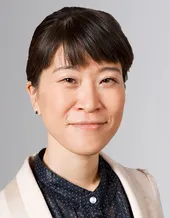
Dongheui Lee is an Assistant Professor at the Institute of Automatic Control Engineering (LSR) within the Faculty of Electrical Engineering and Information Technology at Technische Universität München (TUM). She leads the Dynamic Human Robot Interaction for Automation System Lab. Her research focuses on human motion understanding, physical human-robot interaction, and machine learning in robotics. Education: B.S. and M.S. in Mechanical Engineering from Kyunghee University (2001-2003), PhD in Mechano-Informatics from the University of Tokyo (2007). Prior roles include research scientist at KIST Korea (2001-2004) and project assistant professor at the University of Tokyo (2007-2009). Research Interests: Human-robot collaboration, probabilistic robotics, motion recognition, and incremental lifelong learning mechanisms. She has contributed to advancements in motion primitives, compliant physical interaction, and real-time object tracking. Selected Awards: Finalist for KUKA Service Robotics Best Paper Award (2009), Hirose Scholarship (2006-2007), and multiple grants from KRF, KOSEF, and international robotics competitions. Key Publications: Focus on prioritized inverse kinematics, motion imitation, and adaptive control systems. Her work bridges robotics theory and practical applications in humanoid robots and human-robot interaction.
Prof. Dunja Bruder is a university professor of infection immunology at the Institute of Medical Microbiology and Hospital Hygiene at Otto von Guericke University (OVGU) and Head of the Immune Regulation Research Group at the Helmholtz Center for Infection Research (HZI). She obtained her PhD in immunology from TU Braunschweig and completed postdoctoral training at Harvard Medical School and Yale University School of Medicine. Her research focuses on immune regulation in respiratory viral infections, chronic inflammatory lung diseases, and mucosal immunity. She leads two research groups and holds leadership roles in the Research Focus on Respiratory Viral Infections (HZI), the CRC 854, and the Otto-von-Guericke Graduate Academy. Her work integrates innate and adaptive immunity, with particular emphasis on T-cell responses, microbiota interactions, and vaccine development. She also contributes to teaching in master's programs and human medicine. Education Bachelor/Master: Biotechnology, Technical University of Braunschweig PhD (1996–1999): Immunodominance and T-cell responses to bacterial toxins, HZI Habilitation (2009): Immunology, Hannover Medical School Research Interests Bruder’s work examines immune responses to respiratory pathogens like influenza and SARS-CoV-2, the role of epithelial-T-cell interactions in asthma, and the modulation of immune defenses by microbiota. She investigates vaccine strategies using defective interfering particles and antigen-targeting approaches. Her studies also address antitumor immune training via viral infections and metabolic control of T-cell function in asthma endotypes. Key Contributions She pioneered the analysis of alveolar macrophage dysfunction in chronic lung diseases and demonstrated the protective role of IL-33 in microbiota-mediated antibacterial defenses. Her team developed predictive models for influenza infection using hematological data and identified CD47 as a critical regulator of antiviral macrophage activity. Labs/Teams Leads the Immune Regulation Group at HZI and collaborates with the Institute of Medical Microbiology at OVGU. Active in the HZI’s Respiratory Viral Infections Research Focus and the CRC 854.
Alfonso Emilio Gerevini is a prominent researcher in artificial intelligence with over 30 years of continuous academic contributions. His work spans theoretical foundations of automated planning to practical healthcare applications, with recent publications demonstrating significant impact in both traditional AI domains and emerging interdisciplinary areas. His research interests focus on automated planning systems , temporal reasoning , and multi-agent coordination , with recent expansion into healthcare applications using machine learning techniques. Gerevini has made fundamental contributions to planning algorithms, particularly in width-based search, case-based planning, and privacy-preserving multi-agent planning. His work on PDDL (Planning Domain Definition Language) has been influential in standardizing planning representations. Analysis of his 15 most recent publications reveals a strategic evolution from core planning research toward impactful healthcare applications, particularly during the COVID-19 pandemic. While maintaining his expertise in planning algorithms, he has successfully integrated machine learning techniques to address real-world medical challenges including radiology report analysis, prognosis prediction, and lab test interpretation. His work demonstrates exceptional versatility across both theoretical and applied domains of artificial intelligence. Gerevini maintains a robust collaborative network, primarily with Italian researchers including Ivan Serina, Alessandro Saetti, and Luca Putelli. His publications appear consistently in top-tier AI venues including Artificial Intelligence journal, Journal of Artificial Intelligence Research, and AAAI/ICAPS conferences. The collaborative patterns suggest he leads a significant research group focused on advancing planning systems while applying them to critical real-world problems.
Prof. Gabriele Kaiser is a Full Professor of Mathematics Education at the University of Hamburg’s Faculty of Education. She holds a part-time professorship at the Norwegian University of Science and Technology and an honorary professorship at the Australian Catholic University (ACU). Her research focuses on mathematical modeling, teacher professional competence, and comparative studies in education (East-West). She led the ICME-13 conference in 2016 and serves as former Editor-in-Chief of ZDM Mathematics Education. Key contributions include the TEDS research program on teacher education and the development of video-based assessment tools for teacher noticing. Awards include top Springer downloads for her edited volumes and leadership in international educational initiatives. Roles: Chair of ICME-13, Editor of ZDM, ICMI Representative, ICTMA President Affiliations: University of Hamburg, ACU Brisbane, University of Macau collaborations Research Interests: Mathematical modeling, teacher education, inclusive mathematics, flipped classrooms, and cross-cultural studies Her work emphasizes innovation in teacher training, classroom observation methodologies, and addressing diversity in mathematics education. Recent projects include studies on Chinese and German teachers’ competencies and the use of AR/VR in STEM education. Awards: Honorary professorships in Australia and Hong Kong, board member of Hamburg Scientific Foundation, and recognition for impactful publications.
Prof. Markus Krajewski is a Professor of Public Law and Public International Law at the University of Erlangen-Nürnberg’s School of Law, serving as Chair in these fields since 2010. He is an academic director of FAU’s M.A. Human Rights program, teaching courses on international human rights law, business and human rights, and human rights research methods. His research focuses on corporate human rights responsibilities, trade/investment impacts on rights, and due diligence legislation. Prior roles include teaching at King’s College London, Potsdam, and Bremen Universities, and co-directing an Ethiopian law school program on international trade law. He has been a visiting professor at universities in Switzerland, Italy, and the U.S. Krajewski chairs the Board of Trustees of Germany’s national human rights institution, advises international organizations, and engages with parliaments on economic law and human rights. His work bridges international law, corporate accountability, and sustainable development, with notable contributions to OECD case studies, EU-Mercosur agreements, and legal frameworks for human rights due diligence. He co-edits the European Yearbook of International Economic Law and hosts the FAU Human Rights Podcast series, discussing topics like environmental rights, corporate responsibility, and migration law.
Andrew T. Duchowski is a Professor at Clemson University, specializing in Eye Tracking Methodology, Human-Computer Interaction, and Computer Graphics. His work spans over two decades with significant contributions to gaze-based interaction systems, foveated rendering, and cognitive load measurement. He authored three editions of the influential textbook Eye Tracking Methodology (Springer, 2003/2007/2017). Duchowski's research integrates eye movement analysis with applications in virtual reality, medical imaging (e.g., colonography viewers), and aviation safety. He actively collaborates with institutions globally and serves on editorial boards for journals like Proceedings of the ACM on Human-Computer Interaction . His recent projects include developing real-time gaze analytics pipelines and exploring entropy-based metrics for visual attention analysis. Publications (selected 15 recent): Focus on advancing gaze interaction in immersive environments, optimizing 3D visualization, and measuring cognitive load through pupillary activity and microsaccades. Key co-authors include Krzysztof Krejtz, Matias Volonte, and Donald House.
Christian Eichhorn is an Assistant Professor in the Department of Computer Science at Technical University of Munich, specializing in Human-Computer Interaction, Virtual Reality, and Augmented Reality applications. His research primarily focuses on developing serious games and immersive technologies for healthcare, education, and older adults. He has established a strong collaborative network, particularly with David A. Plecher and Gudrun Klinker, resulting in numerous publications in top HCI and VR venues. Dr. Eichhorn's research interests center around creating accessible and engaging technology applications. His work demonstrates particular expertise in developing serious games for various educational purposes (language learning, history education), healthcare applications (rehabilitation, dementia care), and technologies specifically designed for older adults. His research combines technical innovation in AR/VR systems with practical applications addressing real-world challenges in healthcare and education. Analysis of his recent publications (2022-2025) reveals a consistent focus on practical applications of immersive technologies. His work spans educational tools for programming and language learning, healthcare applications for rehabilitation and clinical training, and specialized technologies for older adults. The research demonstrates a strong interdisciplinary approach, bridging computer science with healthcare, education, and gerontology. His technical contributions include innovations in AR/VR system design, collaborative environments, and novel interaction techniques. Dr. Eichhorn has been actively involved in organizing workshops and contributing to major conferences in the VR/AR field, including IEEE VR and ISMAR. His collaborative approach is evident in his extensive co-authorship network spanning multiple institutions. His laboratory work focuses on developing practical AR/VR applications, with particular emphasis on creating systems that bridge virtual and physical experiences. Current projects include serious games for health behavior change, rehabilitation assessment tools using wearable sensors, and social VR environments for older adults.
Prof. Dr. Klaus-Dieter Drüen serves as a University Professor at the Faculty of Law of Ludwig Maximilian University of Munich, where he holds the Chair of German, European and International Tax Law and Public Law. His academic leadership extends across multiple research centers and educational programs focused on tax legislation and public law frameworks. Research Center for European and International Tax Law Library for German Tax Law Center for Digitalization of Tax Law at LMU (LMUDigiTax) Association for International Taxes and Finance Munich eV Professor Drüen's research interests span the complex intersection of tax legislation with constitutional frameworks, European integration, and international legal standards. His work examines how digital transformation impacts traditional tax systems while maintaining constitutional protections. He investigates the evolving relationship between national tax sovereignty and supranational legal frameworks within the European Union context. His academic contributions focus on the constitutional dimensions of tax legislation, particularly examining how fundamental rights protections operate within multi-level governance systems. Professor Drüen analyzes the tension between administrative efficiency in tax collection and the protection of legitimate expectations in public law contexts. Through the BFH Moot Court and various research initiatives, Professor Drüen actively engages students in practical applications of tax law principles while fostering critical analysis of emerging challenges in tax administration and digital governance.
Dr. Maria Norkus is a Research Associate and Lecturer in the Department of Sociology at Technische Universität Berlin, affiliated with Faculty VI: Planning, Building, Environment. She specializes in Methodology and Mixed Methods in Social Research, with a focus on Social Inequality, Labor Markets, and the Sociological Analysis of Work and Welfare State dynamics. Her work critically examines projectification in academia, intersectonal inequalities, and temporary organizational structures' impacts on academic careers. She contributes to interdisciplinary research on gender equality, knowledge production, and organizational innovation in science. Research Interests: Her core areas include figurational sociology applied to spatial and organizational analysis, mixed-methods research design, and the socio-structural dimensions of inequality. She has co-authored influential works on projectification's effects on academic careers, feminist methodological critiques, and the interplay between temporary work conditions and social stratification. Labs/Teams: She serves as Scientific Coordinator at the Global Center of Spatial Methods for Urban Sustainability (SMUS), advancing interdisciplinary spatial analysis methodologies. Her publications frequently address methodological innovations and their applications to sociological questions, reflecting a commitment to bridging empirical rigor with theoretical depth.
Jan-Henrik Haunert is a Professor at the University of Bonn, affiliated with the Institute of Cartography and Geoinformatics within the Faculty of Civil Engineering and Geodetic Science. His research focuses on map generalization, geographic information systems (GIS), and optimization techniques in cartography. He has contributed to projects funded by the German Research Foundation (DFG), particularly in deriving scale-dependent representations of geographic data. His work emphasizes logical consistency, semantic accuracy, and quality assessment in geospatial data processing. Key research areas include land cover map generalization, spatial data integration (e.g., volunteered geographic information), and rule-based incremental generalization. He has developed methodologies leveraging mixed-integer programming and straight skeleton algorithms for cartographic automation. His publications span peer-reviewed journals like GeoInformatica and Photogrammetrie - Fernerkundung - Geoinformation , as well as conference proceedings such as AGILE and ACM-GIS. Haunert’s contributions address challenges in geospatial data quality, including polygon simplification and river dataset matching. He has also explored applications in vehicle localization and virtual reality systems like the GeoScope for urban planning. His work bridges theoretical GIScience with practical applications in cartography and geoinformatics.
Bernhard Brehmer is a Professor of Slavic Linguistics at the University of Konstanz since 2020, holding a W3-professorship in Slavic Linguistics. He previously held academic positions at the Universities of Greifswald, Hamburg, and Tübingen, including a Juniorprofessur and W2-professorship. His research focuses on multilingualism, language attrition, heritage languages, and sociolinguistic aspects of Slavic languages. He earned his doctorate in Ostslavische Philologie from Eberhard Karls University of Tübingen in 2004 with a dissertation on politeness expressions in Russian. Brehmer has led numerous interdisciplinary research projects, including the DFG-funded 'Russian in Germany across Generations' (2021–2024) and the EU-funded 'Nachbarspracherwerb' initiative. His awards include the 2012 Junior Fellowship at FRIAS and the 2018 Sparkassen-Förderpreis for German-Polish collaboration. His scholarly contributions span monographs, edited volumes, and over 50 peer-reviewed articles. Key works include Politeness between Convention and Creativity (2009) and co-edited collections like Lost in Transmission (2020). He actively participates in academic governance, serving as director of Slavistik institutes and developing interdisciplinary programs like the Baltic Sea Region MA program. His research integrates corpus linguistics, sociolinguistics, and applied language policy, addressing contemporary issues such as minority language maintenance and digital language behavior.
Prof. Dr. Enno Bahrs is Head of the Department of Agricultural Business Management (410b) at the University of Hohenheim, Germany, where he has held a full professorship since 2008. His work is based at the Institute of Agricultural Business Management, and he plays a leading role in shaping sustainable agricultural systems through interdisciplinary research and policy engagement. His research interests lie at the intersection of agricultural economics, sustainability, and digital innovation in farming. Key areas include: Sustainable biomass production and agro-ecological transitions Climate resilience and adaptation strategies in agriculture Development of GIS-based tools for sustainability assessment Decision support systems (DSS) for farm-level climate risk management Innovations in pasture and grassland management Policy analysis in plant protection, biodiversity, and bioeconomy Although no specific publications are listed in the provided text, his involvement in multiple large-scale, interdisciplinary research projects indicates a strong and ongoing publication record in agricultural economics, environmental modeling, and sustainable land use. These projects often combine economic analysis with ecological and technological innovations. Prof. Bahrs holds several prestigious roles that reflect his scientific leadership: Scientific Advisory Board for Biodiversity and Genetic Resources at the BMEL Co-editor of the German Journal of Agricultural Economics Steering committee member of the research program 'Bioeconomy Baden-Württemberg' Member of the Senate of the University of Hohenheim Chairman of the DMK eV (German Corn Committee) Scientific Advisory Board of the National Action Plan for Plant Protection at the BMEL He has led and contributed to significant research grants and collaborative projects including NOcsPS 2.0, NBiomassBW, StressRes, KaRisMa, and GreenGrass 2.0—funded by agencies such as BMBF and BMEL. These projects involve partnerships with institutions like the Julius Kühn Institute and Georg-August University of Göttingen, demonstrating strong national collaboration. He supervises bachelor's and master's theses, following formal guidelines, though no specific students are named. His team operates within a well-structured research environment focused on translating scientific findings into practical tools for farmers, advisors, and policymakers. His research group is deeply engaged in developing integrative models and web-based tools that assess sustainability at multiple scales (field, farm, regional), support real-time monitoring of environmental stressors, and enable climate adaptation planning. Projects like GreenGrass 2.0 aim to restore ecological balance through innovative grazing systems, while others focus on pesticide-free agriculture and mineral fertilizer optimization.
Martin Diehl is a computational materials scientist affiliated with KU Leuven (Departments of Computer Science and Materials Engineering) and the Max-Planck-Institut für Eisenforschung GmbH in Germany. His work focuses on crystal plasticity simulations, computational materials engineering, and multi-physics modeling of metallic systems. Research interests include: Crystal plasticity finite element method (CPFEM) and spectral solvers Microstructure evolution and damage mechanics Machine learning applications in materials design Development of the DAMASK simulation toolkit Multi-phase steel alloys and heterogeneous deformation Integrated computational materials engineering (ICME) Key trends in his publications since 2021 highlight advancements in: Multi-physics DAMASK framework for coupled chemo-mechanical and thermal simulations AI-driven inverse design of steel microstructures Damage modeling in dual-phase steels Collaborative software development for materials science Experimental-simulation integration for stress-strain partitioning High-resolution spectral methods for finite strain analysis He actively collaborates with institutions like Harbin Institute of Technology, University of Oxford, and research groups across Europe and Asia.
Tania de León Yong is a Mexican visual artist and academic currently serving as Assistant Professor in Experimental Animation at the Academy of Media Arts Cologne (Kunsthochschule für Medien Köln) while also holding a tenured professorship at the Faculty of Arts and Design (FAD UNAM) in Mexico City. Her career spans institutions including Universitat Jaume I (Spain) and Tecnológico de Monterrey (ITESM). Bachelor's in Visual Arts (UNAM) Master's in Multimedia Internet Production (UPV Spain) PhD in Fine Arts (UPV Spain 2005) Master's in History of Art (UNAM) As a specialist in experimental animation theory and practice, her work explores time perception through installations and films using traditional techniques like engraving alongside emerging technologies like VR. She has exhibited in 11 solo shows and over 50 collectives across Canada, Germany, Mexico, and other countries. Key publications include 2020 research on VR drawing and 2017 analyses of Kentridge/Yamamura's work. Her 2018 award-winning Chronography series investigates temporal structures through animation loops and interactive installations. Grants include PAPIME UNAM for VR environments and PECDAT 2019 for artistic books. Scientific Awards: 2013 National Acknowledgment for Young Academic (UNAM) 2018 International Silent Film Festival Experimental Prize She has mentored over 25 animation students in postgraduate programs and developed educational media for Mexico's National University Open Learning platform. Her research bridges traditional media like etching with digital innovation, focusing on expanded animation formats and temporal storytelling.
Nina Otter serves as a Computational and Applied Mathematics Assistant Professor in the Department of Mathematics at the University of California, Los Angeles. She previously held a postdoctoral position in the Nonlinear Algebra group at the Max Planck Institute for Mathematics in the Sciences (MPI MiS) through December 2018. Dr. Otter also acts as an executive editor for the open-access journal Compositionality , which commenced operations in August 2018. Her research program centers on applying algebraic topology and geometric methods to analyze complex-structured data. Current initiatives include developing topological signatures for galactic morphology classification and implementing persistent homology techniques for climate data interpretation. She maintains active theoretical interests in category-theoretic approaches to group finiteness properties, bridging abstract mathematics with real-world applications across astrophysics and environmental science. Dr. Otter's primary research affiliation was with the Nonlinear Algebra group at MPI MiS during her postdoctoral tenure (2017-2018), where she contributed to interdisciplinary projects connecting pure mathematics with data science. Her editorial work at Compositionality establishes her role in advancing research on compositional structures in mathematical sciences, reflecting her commitment to open-access scholarly communication.