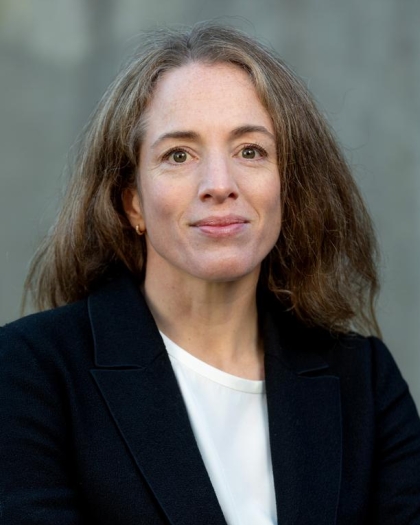
Inga Berre is a Professor at the Department of Mathematics, University of Bergen, and serves as Director of the Center for Modeling of Coupled Subsurface Dynamics (CSD). She leads the Porous Media Research Group and was appointed Argyris Visiting Professor at the University of Stuttgart's SimTech Cluster of Excellence in 2023. Research Interests: Mathematical modeling, partial differential equations, numerical methods for coupled thermo-hydro-mechanical-chemical processes in subsurface systems, and fault reactivation induced by injection/production. Scientific Leadership: Member of SIAM Council (2022-2027), Chair of SIAM GS activity group (2021-2022), Co-Chair of SET-Plan Deep Geothermal Implementation Working Group (2019-2021), and Chair of the Joint Program Geothermal, European Energy Research Alliance (2018-2021). Awards: 2011 Meltzer Award for Young Researchers. Advisory Roles: Member of Scientific Advisory Boards for GFZ (2024-2027) and SFB1313 (2018-), among others. Teaching: Developed courses on calculus, functional analysis, mathematical modeling, and numerical methods at the Bergen Summer Research School.
Shaukat Ali serves as Research Professor and Head of the Department of Engineering Complex Software Systems at Simula Research Laboratory, concurrently holding the title of Chief Research Scientist. His academic leadership drives innovation at the critical nexus of quantum computing, artificial intelligence, and software engineering, with concentrated expertise in verification, validation, and testing methodologies for complex systems including cyber-physical infrastructures and autonomous robotics. His primary research domains encompass: Verification and Validation Search-Based Software Engineering Autonomous Driving Systems Cyber-Physical Systems Engineering Digital Twin Technologies Quantum Software Engineering Analysis of recent publications (2024-2025) reveals a decisive trend toward quantum-AI convergence in software engineering, particularly through quantum software testing frameworks and AI foundation models applied to cyber-physical systems. His work systematically addresses noise mitigation in quantum hardware, uncertainty quantification in adaptive robotics, and novel testing paradigms using vision-language models for industrial robotics—demonstrating both theoretical rigor and industrial applicability. As department head, Ali spearheads strategic research directions in complex software systems, fostering cross-disciplinary collaboration while actively shaping quantum software engineering through workshops like QAI2024 and Q-SANER 2024. His invited presentations at venues including JYU Quantum Electronics and EU-Korea Quantum Forums underscore his influence in defining emerging research landscapes.
Shao-Fang Wen is an Associate Professor at the Department of Information Security and Communication Technology, Faculty of Information Technology and Electrical Engineering, Norwegian University of Science and Technology (NTNU). Their work focuses on integrating artificial intelligence with cybersecurity, secure software development, and socio-technical systems. Research Interests: Artificial Intelligence and Cybersecurity Secure Software Development Semantic Web and Ontology Socio-Technical Systems System Security Assurance Publications and Contributions: Shao-Fang Wen has contributed significantly to developing frameworks for AI security assurance, quantitative security evaluation models (e.g., SAEOn metamodel), and contextualized learning systems for software security. Their work spans journal articles, conference papers, and book chapters, emphasizing ontology-based approaches and open source community dynamics. Teaching: IIKG2001 - Software Security
Eduard Kamburjan is a Researcher at the University of Oslo , affiliated with the Reliable Systems (PSY) and Data and Knowledge Systems (DKM) research groups. His work bridges formal methods , digital twin engineering , and knowledge graph applications . Research interests include: Formal verification of hybrid systems using deductive methods Digital twin architecture with compositional correctness guarantees Semantic lifting and ontology-driven modeling for complex systems Concurrency analysis and non-determinism in program verification Interactive visualization as serious games for formal methods His 2024-2023 publications demonstrate expertise in digital twin reconfiguration , semantic interoperability , and knowledge-based runtime enforcement . Key contributions include Crowbar for active object verification and ABS simulator toolchain for model-driven engineering. Collaborations span institutions like Springer , ACM , and IEEE , with work featured in Lecture Notes in Computer Science (LNCS) , Software and Systems Modeling (SoSyM) , and Science of Computer Programming . His research integrates RDF data management , behavioral contracts , and modular analysis for distributed systems.
Egor Kostylev serves as an Associate Professor in the Department of Informatics within the Faculty of Mathematics and Natural Sciences at the University of Oslo. His research focuses on the theoretical foundations connecting symbolic and sub-symbolic artificial intelligence, particularly examining relationships between formal logic systems and machine learning approaches. His educational background includes an MSc (Specialist, 2005) and PhD (Candidate, 2009) from Lomonosov Moscow State University under Prof. Vladimir A. Zakharov. He subsequently held research positions at the University of Edinburgh (2010-2013) and the University of Oxford (2013-2020) before joining the University of Oslo in 2020. Kostylev's research interests center on bridging symbolic AI formalisms with sub-symbolic approaches. He investigates connections between various logics (Description Logics, Temporal Logics, Datalog), query languages (SPARQL, Regular Path Queries, OTTR), and machine learning formalisms (Graph Neural Networks, Markov Logic Networks). His work addresses critical challenges in Explainable, Trustworthy, and Green AI through theoretical foundations that connect different AI paradigms. His publication record demonstrates consistent high-impact contributions in theoretical computer science and AI, with numerous publications in top venues including AAAI, LICS, Journal of the ACM, and ICLR. His recent work shows a clear trajectory toward unifying logical reasoning with neural network approaches, particularly through graph neural networks and their connections to logical formalisms. The research spans theoretical foundations of knowledge representation, temporal reasoning in knowledge bases, and the logical expressiveness of modern neural architectures. As a research leader, Kostylev supervises multiple PhD students including Shuwen (Aurora) Liu, Maximilian Pflüger, Roxana Pop, Dongzhuoran Zhou, and Erik Snilsberg. He serves as a Research Theme Leader for the Integreat SFF: Norwegian Centre for Knowledge-driven Machine Learning. His teaching responsibilities include IN3020/4020 Database Systems courses. He leads the Data and Knowledge Management (DKM) research group at the University of Oslo, which focuses on foundational aspects of knowledge representation, database theory, and the intersection with modern machine learning techniques. The group actively collaborates with international researchers and contributes to advancing theoretical understanding of how symbolic and neural approaches to AI can complement each other.
Ole Arve Misund serves as a Professor at the Norwegian Fisheries College within UiT The Arctic University of Norway, Tromsø. His research spans polar science, Arctic marine ecology, fisheries management, and international relations in polar regions, with particular focus on Norway-Russia scientific cooperation dynamics following geopolitical shifts in 2022. His research interests center on climate change impacts on Arctic marine ecosystems, acoustic monitoring of marine organisms, and the geopolitical dimensions of polar research. Recent work examines boreal species migration into the Central Arctic Ocean, machine learning applications for backscatter analysis, and management frameworks for the Central Arctic Ocean. Analysis of his recent publications reveals strong interdisciplinary trends, integrating marine ecology with political science through studies of Russian-Norwegian scientific collaboration under sanctions, illegal fishing enforcement, and policy-relevant polar research. His work consistently bridges academic research with practical fisheries management and geopolitical considerations. Misund actively engages in science communication through Norwegian media outlets like Nordlys and Fiskeribladet, addressing topics from climate policy contradictions to Antarctic hydrological changes. His expeditionary work includes North Pole 2022 aboard the "Kronprins Haakon" research vessel. Professional activities demonstrate significant leadership in polar research infrastructure development and international scientific collaboration, particularly through the Norwegian Polar Institute where he contributes to strategic planning and policy advice. His work emphasizes evidence-based approaches to Arctic governance amid evolving geopolitical landscapes.
Astrid Gynnild is a Professor at the Department of Information and Media Studies, Faculty of Social Sciences, University of Bergen, Norway. She is also the Principal Investigator of the ViSmedia project and Head of the Journalism Program. Her work bridges journalism innovation, pedagogy, and ethical technology use in media. Education & Background: PhD in Journalism and Media Studies (2006), University of Bergen, with a grounded theory on creative exchange in journalism. Extensive professional experience at Adresseavisen, including news work, editorial management, and organizational development. Visiting researcher at the University of California, Berkeley. Research Interests: Gynnild’s research is organized into three core tracks: (1) AI and technological innovation in journalism, especially drone and mobile journalism; (2) student-active learning and workshop-based pedagogy in higher education; and (3) surveillance, privacy, and responsible innovation in visual media. She emphasizes ethical frameworks like Responsible Research and Innovation (RRI) and grounded theory methodology. Publication Trends: Her recent work reflects a strong focus on emerging technologies in journalism, particularly drones and immersive storytelling. Articles consistently explore ethical implications, professional adaptation, and pedagogical integration. There is a clear trajectory toward interdisciplinary, socially responsible research with real-world impact in media practice and policy. Scientific Awards: Fellow of the Grounded Theory Institute Meritorious Lecturer, Faculty of Social Sciences, University of Bergen (2019) Advising and Grants: Gynnild has supervised students at bachelor's, master's, and PhD levels. She led the ViSmedia project (2015–2021), funded by the Research Council of Norway (NFR), and contributed to multiple collaborative initiatives such as INJECT, Visual Journalism in the Newsroom, and Communicative Effects of Climate Messaging. She has developed curricula including the master’s program in investigative journalism and promotes open-access, co-creative dissemination. Labs and Research Groups: She leads the Journalism Research Group at UiB and was central to the ViSmedia project, which created a digital archive of conferences, student experiments, and publications on visual surveillance in media. The project website ( https://www.uib.no/en/vismedia ) serves as a hub for interdisciplinary dialogue and innovation.
Magne Haveraaen is a Professor in the Department of Informatics at the University of Bergen, where he leads the Bergen Language Design Laboratory (BLDL). He is actively engaged in research on programming theory, formal methods, language design, and high-integrity systems. His work centers on algebraic specifications, generic programming, domain engineering, and the design of the Magnolia programming language. He has been a long-standing instructor of key courses such as INF220 (Program Specification) and INF222 (Programming Languages), and contributes to national and international academic forums. University: University of Bergen School: Faculty of Mathematics and Natural Sciences Department: Department of Informatics Academic Rank: Professor Email: magne.haveraaen@uib.no His research interests include programming language design, formal specifications, generic and mouldable programming, multicore and GPU computing, and algebraic methods in software development. He emphasizes correctness, reuse, and high-integrity software through theoretical and practical innovations. He has contributed extensively to the literature on algebraic reasoning, array programming, and domain-specific abstractions. The recent publications highlight a consistent focus on algebraic semantics, language design (especially Magnolia), array programming, and formal verification. Themes across these works include correctness by design, specification-driven development, and adapting programming models for modern architectures. His involvement in workshops like ARRAY, WGP, and CALCO underscores his leadership in programming language theory. No scientific awards are listed in the provided texts. He advises students and welcomes collaboration in programming theory, language design, and formal methods. He has led funded projects such as MoSIS and SHIP and is involved in the High Integrity Systems Forum. He organizes and participates in key conferences including NWPT, GPCE, and SCAM. He leads the Bergen Language Design Laboratory (BLDL), which focuses on experimental language design, and contributes to the SAGA initiative on scientific computing with algebraic abstractions. His work integrates theory with practical tooling and language implementation.
Elin Strand Larsen serves as an Associate Professor in the Department of Information Technology and Communication at Østfold University College, where she is Deputy Head of the Area Studies Research Group (AreaS) and contributes to the Digital Communication (DIGICOM) research group. Based in Halden, she teaches core courses in the Bachelor in International Communication and Bachelor in Digital Media and Design programs, including spring 2024 coordination of Media Studies (SFB50316) and supervision of bachelor theses (SFB58022). Her academic foundation stems from a 2014 PhD in media and journalism from the University of Oslo, where her dissertation When a woman has to apologize... Mediated scandals, female politicians and rhetorical defense strategies analyzed rhetorical defenses by eight female politicians and trade union leaders during political scandals. This work established her expertise in gendered political communication and apology rhetoric. Dr. Larsen's research centers on media integrity in digital environments, with key interests spanning fake news and fact-checking mechanisms, political scandal dynamics, female politicians' rhetorical strategies (apologia), and crisis communication frameworks. Her work critically examines how misinformation spreads during conflicts like the Israel-Hamas war, how female politicians navigate media scandals, and how trust erodes in polarized digital societies—often revealing gendered double standards in political accountability. Analysis of her 15 most recent publications (2015-2024) shows persistent engagement with misinformation combat through fact-checking initiatives (e.g., CrossCheck), rhetorical analysis of political crises, and interdisciplinary explorations of borders/trust in digital societies. Her scholarship frequently appears in edited volumes on trust, alliances, and border studies, demonstrating strong collaborative patterns with researchers like Franck Orban and Sondre Lindahl. As an educator, she integrates research into bachelor-level teaching on media systems and digital design, emphasizing real-world applications of crisis communication theory. Her leadership in AreaS and DIGICOM facilitates cross-disciplinary projects examining digital society challenges, though specific lab structures or grant funding isn't detailed in available texts.
Joakim Sundnes is a Chief Research Scientist and Research Professor at the Department of Scientific Computing, Simula Research Laboratory. He specializes in computational physiology, cardiac biomechanics, and mathematical modeling of cardiovascular systems. Key Research Areas: Cardiac electromechanics, computational fluid dynamics in cardiology, uncertainty quantification in cardiac models, and mechano-electric feedback mechanisms Recent Trends: Focus on patient-specific modeling, left atrial flow dynamics, right ventricular mechanics in pulmonary hypertension, and personalized treatment simulations Scientific Contributions: Active participant in international conferences and editorial work. Co-author of multiple benchmark studies and educational texts on physiological modeling.
Ragnhild Kobro Runde is an Associate Professor in Computing Education at the Department of Informatics, University of Oslo. Her work focuses on software engineering methodologies, formal methods in system design, and computing education at both secondary and undergraduate levels. She is affiliated with the Computing Education research group. Her research explores topics such as UML sequence diagram semantics, formal specification techniques (Event-B/STAIRS), and the transition from block-based programming (Scratch) to text-based languages (Python) in schools. She also investigates how ICT exposure impacts mathematics self-belief and academic performance in PISA assessments. Runde has contributed to over 30 peer-reviewed publications since 2005, appearing in journals like Formal Aspects of Computing and Software and Systems Modeling. Her work frequently addresses challenges in software design, security risk analysis, and service-oriented architecture modeling using UML extensions. Key contributions include developing pattern languages for web application security risk analysis, analyzing nondeterminism in sequence diagrams, and creating methodologies for dynamic service composition using UML 2.x. She has collaborated with international researchers on computing education initiatives and formal methods applications.
Sandip Sukhtankar is a Professor in the Department of Economics at the University of Virginia, where he has been teaching since 2016. He previously taught at Dartmouth College from 2009-2016. Sukhtankar is a co-editor of the Journal of Public Economics, serves on the Board of Reviewing Editors at Science, is a Research Associate at the National Bureau of Economic Research (NBER), and an affiliate of the Bureau for Research and Economic Analysis of Development (BREAD) and the Jameel Poverty Action Lab (J-PAL). At J-PAL, he co-directs the Payments and Governance Research Program and serves on the board of the DIGIFI Africa initiative. His educational background includes a PhD in Economics from Harvard University (2009) and a BA with Highest Honors from Swarthmore College (2000). Prior to his academic career, he worked at NERA, the Brookings Institution, and the Center for Global Development between 2000-2004. Sukhtankar's research focuses on development economics, political economy, and public economics, with particular emphasis on corruption, governance, and the delivery of public benefits and services. His work often centers on India, where he has conducted extensive field research on topics including women's help desks in police stations, biometric authentication in welfare programs, cash transfers, and corruption dynamics. His research frequently employs experimental methods to evaluate policy interventions. Sukhtankar's recent publications demonstrate a consistent focus on governance challenges in developing countries, particularly India. His work spans welfare program design, identity verification systems, gender-sensitive policing reforms, and the economic implications of technology adoption in public service delivery. A notable trend in his research is the examination of trade-offs in program design, such as between fraud prevention and exclusion errors, or between administrative efficiency and program accessibility. Board of Reviewing Editors at Science Co-editor of Journal of Public Economics Research Associate at National Bureau of Economic Research Affiliate of Bureau for Research and Economic Analysis of Development Sukhtankar has served on the review board of J-PAL's Social Protection Initiative and has lectured at J-PAL training events. His research has been supported by J-PAL's Crime and Violence Initiative and Innovation in Government Initiative. He has developed significant partnerships with government entities, particularly in India, including the Madhya Pradesh Police Department, where he evaluated women's help desks in police stations. His work often involves collaboration with government agencies to design and implement evidence-based policy reforms. Sukhtankar is actively involved in research initiatives focused on improving governance through technology, particularly in the context of welfare programs in India. His current work includes studying interventions to improve female labor force participation among newly recruited women constables in the Madhya Pradesh police force, addressing challenges related to job retention, satisfaction, and performance.
Kazuhiro Ogata is a Professor in the School of Information Science at Japan Advanced Institute of Science and Technology (JAIST). He actively teaches courses such as i116 Basic of Programming, i217 Functional Programming, and i219 Software Design Methodology, indicating a strong commitment to computer science education and curriculum development. Institution: Japan Advanced Institute of Science and Technology (JAIST) School: School of Information Science Position: Professor Email: ogata@jaist.ac.jp Research Laboratory: http://www.jaist.ac.jp/~ogata/lab/ His research interests center on programming languages, software design methodology, formal methods, and compiler construction. He emphasizes formal verification using theorem proving and rewriting logic, particularly with tools like Maude. His work bridges theoretical computer science with practical software engineering and education, focusing on correctness, design patterns, and language semantics. The analysis of his recent publications reveals a consistent focus on formal specification, verification of software systems, and educational tools for programming. His work spans functional programming, concurrent systems, and distributed algorithms, often using rewriting logic as a unifying framework. He integrates formal methods into both research and teaching, promoting rigorous software development practices. No scientific awards are explicitly mentioned in the provided texts. Kazuhiro Ogata advises students through his laboratory at JAIST and has developed structured course materials that suggest active mentorship. While specific grant information is not available, his sustained research output and tool development imply ongoing project funding. He contributes to academic outreach through summer schools and educational frameworks. He leads a research laboratory focused on formal methods and programming language design, fostering a collaborative environment for students and researchers. The lab develops tools for teaching and verifying software systems, emphasizing correctness and educational impact.
Halvor Øygarden is an Associate Professor at the University of Oslo, Department of Medicine. His research focuses on stroke epidemiology, vascular risk factors, and medical interventions for ischemic stroke, with particular emphasis on thrombectomy accessibility, blood pressure management, and genetic cardiovascular risk factors. He works at Campus South with a visiting address in Kristiansand. Key research areas: Neurology, Stroke Treatment, Atherosclerosis, Blood Pressure, Medical Simulation Recent publications analyze stroke treatment barriers, wake-up stroke characteristics, and virtual reality training for thrombectomy Major collaborations with NOR-SYS (Norwegian Stroke in the Young Study) and Bergen NORSTROKE Study Published 15 articles since 2013 in journals like Stroke, PLOS ONE, and European Stroke Journal His work integrates clinical stroke treatment with longitudinal studies on vascular aging and familial risk factor analysis, though no specific awards or grants are mentioned in the provided texts.
Silvia Lizeth Tapia Tarifa is an Associate Professor in the Department of Informatics at the University of Oslo, specializing in formal methods for parallel and distributed systems. She serves as one of the principal investigators for the NFR SJM (Smart Journey Mining) project, which runs until 2026, and actively participates in Digital Twins research with a focus on GDPR-compliant data management. Her academic affiliations include the Reliable Systems research group and the Analytical Systems and Reasoning (ASR) group at the Department of Informatics. Professor Tapia Tarifa's research spans formal methods, concurrency theory, and distributed systems with particular emphasis on self-adaptive systems, semantics of concurrent languages, compositional reasoning about distributed system behavior, and formal modeling of resource usage. Her work bridges theoretical computer science with practical applications in digital twins, GDPR compliance, and resource management in distributed environments. She has made significant contributions to the ABS language framework and active object models for parallel and distributed computing. Her publication record shows a consistent focus on formal verification techniques applied to emerging challenges in distributed computing. Recent work demonstrates increasing attention to digital twins technology, user journey modeling, and privacy-preserving systems. The research trajectory reveals evolution from foundational work on concurrent language semantics toward applied research in self-adaptive systems and GDPR-compliant architectures, while maintaining strong theoretical underpinnings in formal methods. Young Research Talent grant from Research Council of Norway (2017), the only computer science grant in that call Fellow at United Nations University, International Institute for Software Technology (2007) Active participation in formal methods community as general chair, PC chair, and committee member Professor Tapia Tarifa has supervised PhD and master's students while teaching graduate-level courses. She has led significant research initiatives including the Analysis and Complex System Research Program at SIRIUS Center (ended 2023) and the EU MSCA-ITN REMARO project on Reliable AI for Marine Robotics (ended 2024). Her current research portfolio includes multiple active grants focused on digital twins, user journey analysis, and privacy-preserving distributed systems. She collaborates extensively with researchers across Europe through various EU-funded projects including FP7 ENVISAGE, FP7 FET UpScale, and FP7 FET HATS. Her research activities are centered around the ABS language framework and its applications to distributed systems verification. She maintains active collaborations through the SIRIUS Center and participates in the international formal methods community through conference organization and program committees.