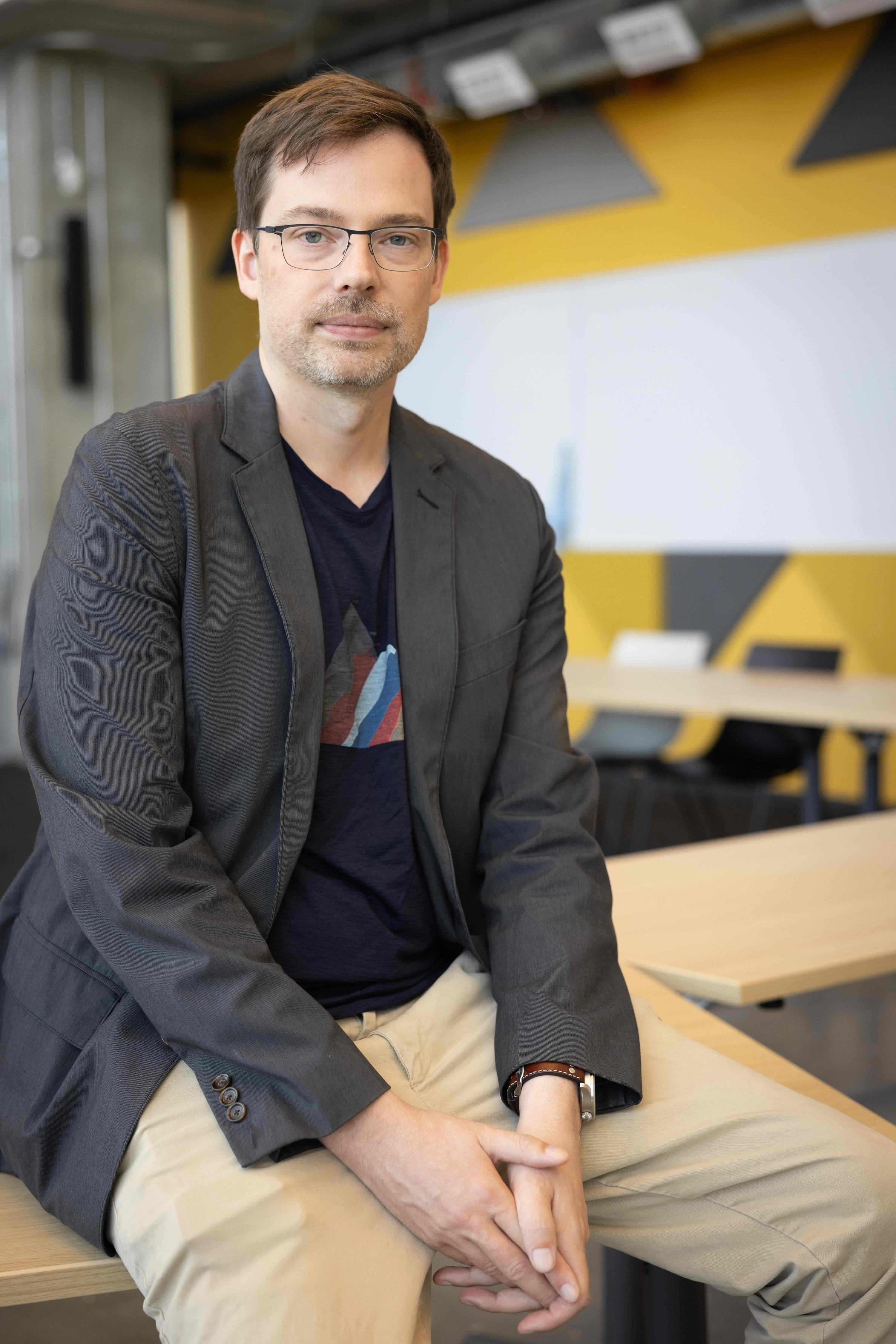
Alan Ritter is an Associate Professor at the School of Interactive Computing , Georgia Institute of Technology, with additional affiliation to the Machine Learning Center . His research focuses on Natural Language Processing , particularly robust models across domains/languages with fewer labels and efficient resource use, plus data-driven dialogue agents for open-topic conversations. Research Interests : Robust NLP models, cross-lingual transfer, resource-efficient learning, dialogue systems, cultural bias measurement, and privacy-aware language models Students : Mentors Ph.D. students in Georgia Tech's ML and CS programs, including Junmo Kang, Yang Chen, and Duong Minh Le. Alumni include Fan Bai (Ph.D. 2023), Yang Chen (Ph.D. 2024), and Andrew Li (M.S. 2024). Awards : NSF CAREER Award, Amazon Research Award, ACL 2024 Best Social Impact Paper, IUI 2009 Best Student Paper. Recent Work : Studies training budget allocation between supervised and preference-based finetuning, cross-lingual information extraction, cultural bias in LLMs, and privacy risk mitigation in social media disclosures. Service : Served as Program Chair for NAACL 2025, Area Chair for multiple top-tier conferences (COLM, EMNLP, ACL, EACL, AAAI). Email : alan.ritter@cc.gatech.edu
Yang P. Liu is an Assistant Professor at Carnegie Mellon University 's Department of Computer Science . He received his PhD from Stanford University under the supervision of Aaron Sidford and previously studied at MIT . Fields of Interest : Graph Algorithms, Optimization, High-Dimensional Geometry, Additive Combinatorics, Theoretical Computer Science. His research focuses on algorithmic design and analysis for graph problems, optimization, and combinatorics, with applications in machine learning and complexity theory. Recent work includes advancements in parallel repetition games , combinatorial lines , and dynamic graph algorithms . In 2024, his research spanned FOCS , STOC , and RANDOM conferences, addressing problems in k-CSPs , min-cost flow , and hypergraph sparsification . Earlier contributions (2023) included deterministic flow algorithms and spectral hypergraph techniques. Scientific Awards : NDSEG Fellowship (2018-2021), Google PhD Fellowship (2022-2023), FOCS Best Paper (2022), STOC Best Student Paper (2022), FOCS Best Student Paper (2021). He teaches CS 15-759 , a graduate course on convex optimization theory and applications, covering gradient descent, interior point methods, and algorithmic sparsification techniques.
David Duvenaud is an Associate Professor at the University of Toronto , holding a Canada Research Chair in Generative Models and a Schwartz Reisman Chair in Technology and Society . He is cross-appointed to the Department of Computer Science and Department of Statistical Sciences . A Sloan Research Fellow and founding member of the Vector Institute , his work bridges deep probabilistic models , AI safety , and scientific computing . PhD in Machine Learning (University of Cambridge, 2014) Postdoc in Hyperparameter Optimization (Harvard University, 2016) Co-founded Invenia (energy forecasting company) His research spans foundational Neural Ordinary Differential Equations (NeurIPS 2018 Best Paper) and Automatic Chemical Design (ACS Central Science 2018) to recent work on AGI governance (2025) and AI safety (2024). Key contributions include stochastic variational inference , implicit differentiation frameworks , and antisymmetrization layers for quantum Monte Carlo. Recent publications (2024-2025) focus on systemic existential risks from AI , many-shot jailbreaking attacks , and epistemic uncertainty quantification . His group trains energy-based models with scalable MCMC samplers and develops invertible neural architectures (e.g., Residual Flows NeurIPS 2019). He also explores human-AI alignment through LLM Processes (NeurIPS 2024) and Sycophancy in Language Models (ICLR 2024). Canada Research Chair (2025) NSERC Grant (2025) Sloan Research Fellow (2021) Schwartz Reisman Chair (2021) Best Paper Award (NeurIPS 2018) Distinguished Paper Award (ICFP 2021) His students include James Requeima , Jesse Bettencourt , and Raymond Douglas . He teaches courses on Statistical Methods for Machine Learning and Differentiable Inference . Current work (2025) investigates systemic human disempowerment through incremental AI capabilities and sabotage risk mitigation via hyperparameter-aware evaluations.
Peter Selinger is a Professor in the Department of Mathematics and Statistics at Dalhousie University , with a cross-appointment in Computer Science. He specializes in mathematical methods in computer science, particularly quantum computing and combinatorial game theory . His work on quantum programming languages like Quipper and foundational research in category theory has garnered international recognition. Education : Ph.D. in Mathematics (University of Pennsylvania, 1997), undergraduate studies in Mathematics (Technische Universität Darmstadt). Research Interests span quantum computing, category theory, and combinatorial game theory. He has pioneered formalisms for quantum programming languages, developed categorical models for quantum mechanics, and analyzed game-theoretic structures in games like Hex. His recent work includes linear dependent type theory , quantum circuit synthesis , and combinatorial game classification . Publications demonstrate expertise in quantum programming languages, categorical semantics, and game theory. Key trends include Hamiltonian simulation , Clifford+T circuits , and monotone game realization . Scientific Honors include the Killam Professorship (2017–2022), Faculty of Science Award for Excellence in Teaching (2023), and fellowships from the Alfred P. Sloan Foundation and German National Scholarship Foundation . Students he has supervised include PhD graduates Xiaoning Bian , Francisco Rios , and Neil J. Ross , along with MSc students like Fahimeh Bayeh and Seth Greylyn . He has advised 16 postdoctoral researchers.
Kuldeep S. Meel is the Stephen Fleming Early-Career Associate Professor at the School of Computer Science, Georgia Institute of Technology, and an Associate Professor at the University of Toronto (on leave). He previously held a NUS Presidential Young Professorship at the National University of Singapore. His research focuses on automated reasoning, aiming to enable computing systems to handle uncertain real-world environments through scalable techniques integrating randomized algorithms, statistical inference, formal methods, distribution testing, and software engineering. Core research areas: Automated Reasoning, Formal Methods, Approximate Model Counting, Probabilistic Inference, Constraint Solving His research group has achieved significant recognition in both individual awards and publications. Key trends in his recent work include advancing model counting algorithms, developing frameworks for probabilistic explanations, and improving scalability in formal verification and constraint satisfaction. His tools have consistently ranked top in international competitions, demonstrating practical impact in automated reasoning. 2019 NRF Fellowship for AI 2022 ACP Early Career Researcher Award 2020 IEEE Intelligent Systems AI's 10 to Watch Top placements in Model Counting, SAT, and CAV competitions He mentors a diverse group of PhD and Master's students and collaborates with institutions worldwide. His group's publications span premier conferences in AI, formal methods, and design automation, reflecting interdisciplinary contributions to theoretical and applied computer science.
Dr. Joey Paquet is a Tenured Associate Professor and Department Chair in the Department of Computer Science and Software Engineering at Concordia University in Montreal, Canada. He holds a PhD and specializes in research areas including Design and Implementation of Programming Languages, Context-Driven Computing, and Demand-Driven Computing. His work focuses on advancing programming paradigms and their applications in cybersecurity, distributed systems, and autonomic computing. Dr. Paquet is actively involved in thesis supervision across Computer Science and Software Engineering programs at both master's and doctoral levels. Research interests are centered around programming language design, particularly in demand-driven and context-aware systems. His contributions include frameworks like GIPSY and OpenISS, enabling scalable data processing and forensic computing. Recent work explores autonomic intent-driven networking, real-time gesture recognition, and IoT forensics. These efforts highlight his expertise in both theoretical constructs and practical implementations. His advising role supports students in MCompSc, MASc, and PhD programs. While specific grants are not detailed, his projects often involve interdisciplinary collaboration. Dr. Paquet is affiliated with platforms like LinkedIn and ResearchGate, reflecting an active academic presence. Key technical contributions include pioneering work on forensic computing backends, intent expression languages, and multimodal interaction systems. His research addresses challenges in cybersecurity, distributed systems, and service composition, with a focus on resilience and scalability.
Caroline Lemieux is an Assistant Professor at the Department of Computer Science, University of British Columbia (UBC), with research focused on advancing software correctness, security, and performance through innovative testing and synthesis techniques. Her work bridges Programming Languages and Software Engineering , particularly in fuzz testing, specification mining, and program synthesis. PhD from University of California, Berkeley (2021), advised by Koushik Sen Postdoctoral researcher at Microsoft Research, NYC (2021-2022) Key contributions: FuzzFactory , CodaMOSA , Arvada , and Gauss Her research integrates machine learning with traditional testing methods, exemplified by projects like RLCheck (reinforcement learning for test generation) and AutoPandas (neural synthesis for dataframes). Recent publications analyze generator-based fuzzing challenges and propose hybrid strategies combining coverage feedback with AI-driven insights. Scientific Awards : ACM/SIGSOFT Best Paper Award (ESEC/FSE 2019) ACM/SIGSOFT Tool Demonstration Award (ISSTA 2019) ACM/SIGSOFT Distinguished Artifact Award (ISSTA 2019) NSERC Postgraduate Scholarship-Doctoral (PGS D) UBC Governor General's Silver Medal (2016) Teaching roles include: 2025W2: CPSC 539L - Topics in Programming Languages 2024W2: CPSC 410 - Advanced Software Engineering 2023W2: CPSC 410 (with Alex Summers) She supervises graduate and undergraduate researchers working on projects like ExploTest (automated unit test generation) and GRIMOIRE (grammar extraction from pseudo-rules). Her research team collaborates with institutions including Microsoft Research, Google, and academic partners in systems security and AI-driven testing.
Henry Yuen is the Srivani Family Associate Professor of Computer Science at Columbia University, with affiliations in the CS Theory group, Data Science Institute, and Columbia Quantum Initiative. His work bridges theoretical computer science and quantum information, focusing on the computational foundations of quantum systems. Yuen received his BA in Mathematics from the University of Southern California (2010) and PhD in Computer Science from MIT (2016). His research explores quantum complexity theory, quantum cryptography, and quantum information through both theoretical frameworks and practical applications. His recent publications reveal a strong focus on quantum pseudorandomness, quantum circuit complexity, and quantum cryptographic primitives. The research trajectory demonstrates increasing sophistication in connecting quantum computational models with fundamental questions in complexity theory, particularly through the lens of quantum interactive proofs and quantum state complexity. His work frequently intersects with operator algebras and quantum information theory, reflecting the interdisciplinary nature of modern quantum computing research. NSF CAREER award Sloan Fellowship Yuen actively mentors graduate students, with several PhD students having graduated to postdoctoral positions or faculty roles. His service includes co-organizing the Columbia CS Theory Seminar and serving on program committees for major conferences including QIP, STOC, and ITCS. He has organized multiple workshops on quantum computing challenges and cryptography. As a member of the Columbia Quantum Initiative, Yuen contributes to Columbia's growing quantum ecosystem, collaborating across departments to advance both theoretical foundations and potential applications of quantum information processing.
Jason Foster is an Assistant Professor at the Faculty of Engineering, University of Toronto, specializing in Engineering Education and Philosophy of Engineering . His work bridges rigorous academic inquiry with practical applications in engineering pedagogy. His research focuses on Research Through Design , aiming to redefine how design and education intersect. Key projects include analyzing the utility of design tools in small enterprises, developing coherent engineering requirements models, and creating open-source lab equipment for budget-constrained institutions. Recent publications highlight trends in engineering education, such as integrating multidisciplinary design, flexible project planning, and addressing intersubjective grading dynamics. His work emphasizes interdisciplinary collaboration, sustainable development, and systems thinking in curricula. He supervises graduate students through a junior colleague/collaborator model, prioritizing adaptability and critical engagement. No awards or formal honors are mentioned in the provided texts.
Jennifer Lavoie is an Associate Professor at Wilfrid Laurier University's Faculty of Human and Social Sciences, affiliated with the Department of Psychology and Criminology. She specializes in mental health crisis response, policing strategies, de-escalation techniques, and scenario-based training. Wilfrid Laurier University: Faculty of Human and Social Sciences, Psychology and Criminology Departments Research Interests : Her work focuses on integrating virtual reality and scenario-based training to improve police de-escalation skills. She examines violence risk assessment , correctional systems , and housing first programs for homeless individuals with mental illness. Recent studies address big data governance , cyberstalking victimization , and community-driven policing approaches . Publication Trends : Her research spans mental health policy , police training efficacy , and technological integration in crisis management . She explores virtual reality applications and community co-designed interventions , alongside longitudinal studies on stress and coping mechanisms in correctional and psychiatric settings. Scientific Awards : No scientific awards listed in available data. Advising : Actively supervises students in psychology and criminology, with unlisted advisees. Her work bridges academic research and practical policing applications .
Ahmad Al-Dabbagh is an Assistant Professor in Manufacturing Engineering and holds a Principal's Research Chair in Control Systems (Tier 2) with the School of Engineering at The University of British Columbia. As a Senior Member of IEEE and ISA, he contributes significantly to the field of resilient automation and control systems through research, teaching, and professional service. His academic journey includes postdoctoral fellowships at Imperial College London, the University of Toronto, and the University of Alberta, where he also earned his PhD in Electrical and Computer Engineering. Dr. Al-Dabbagh's research focuses on designing resilient automation and control systems by addressing critical challenges in fault diagnosis, cyber security, and alarm management. His work spans theoretical foundations and practical applications in industrial control systems, with particular emphasis on detection and isolation of faults and cyber attacks, control reconfiguration, event-triggered control, remote state estimation, and alarm systems design. His research interests also extend to causality analysis, prediction methods, and root cause analysis for industrial processes. His extensive publication record demonstrates consistent contributions to control systems security and reliability, with recent work focusing on sophisticated methods for detecting false data injection attacks, analyzing alarm correlations using advanced machine learning techniques, and developing recommender systems for human operators in industrial environments. The trajectory of his research shows an evolution from foundational control theory toward increasingly complex applications in cyber-physical security and human-system interaction in industrial settings. NSERC Postdoctoral Fellowship NSERC Alexander Graham Bell Canada Graduate Scholarship (CGS – D3) Queen Elizabeth II Graduate Scholarship Governor General's Academic Medal (Gold) As a graduate student supervisor, Dr. Al-Dabbagh mentors the next generation of control systems engineers while maintaining an active research program. He serves as an Associate Editor on the IEEE Control Systems Society Conference Editorial Board and is a licensed Professional Engineer in British Columbia and Ontario. His teaching portfolio includes courses such as System Identification, Digital Enterprise, Systems and Control, and Internet of Things, reflecting the breadth of his expertise. Dr. Al-Dabbagh leads the Okanagan Laboratory for Control Systems Research, where his team develops innovative approaches to enhance the security and reliability of industrial automation systems. The laboratory serves as a hub for interdisciplinary research that bridges theoretical control engineering with practical industrial applications, particularly in the energy, manufacturing, and process industries.
Alexander Summers is an Associate Professor at the Department of Computer Science , University of British Columbia . He joined UBC in March 2020 after serving as a Senior Researcher (Oberassistent) at ETH Zurich from 2014-2020. His research bridges Programming Languages , Formal Methods , and Software Engineering , with a focus on automated verification tools for heap-based and concurrent programs. MSc Joint Mathematics and Computer Science, Imperial College London (2004) PhD Computer Science, Imperial College London (2009) Postdoc, ETH Zurich (2009-2014) Summers leads the Prusti Project , developing deductive verification tools for Rust, and contributes to the Viper Project for intermediate verification languages. His work addresses challenges in: Memory safety and concurrency verification Ownership models and aliasing control Automated reasoning with SMT solvers Resource-oriented programming specifications Debugging verification condition quantifiers Formal validation of verification infrastructure His research has been recognized with a Amazon Research Award and ACM SIGPLAN Distinguished Paper Awards . He teaches courses like Advanced Software Engineering and Program Verifiers and Program Verification , and supervises graduate students in formal verification and Rust-related research.
Olivia Di Matteo serves as an Assistant Professor in the Department of Electrical and Computer Engineering within UBC's Faculty of Applied Science, leading the Quantum Software and Algorithms Research (QSAR) group since her January 2022 appointment. Her academic foundation includes a BSc from Lakehead University and MSc/PhD in Physics (Quantum Information) from the University of Waterloo, completed in 2019. Dr. Di Matteo's research centers on quantum software engineering , with pioneering work in quantum compilation , circuit optimization , and debugging tools . She champions open-source quantum frameworks and develops accessible educational resources to democratize quantum computing. Analysis of her 15 most recent publications (2021-2025) reveals dominant trends in quantum programming infrastructure, particularly circuit analysis (33%), bug classification (20%), and qubit network optimization (15%), with strong emphasis on practical software tooling over theoretical physics. No scientific awards were documented in the source materials. She advises graduate students in the QSAR group while contributing to open-source quantum ecosystems through projects like PennyLane and The Ionizer transpiler, and teaches courses including CPEN 400Q (Gate-model quantum computing) and ELEC 221 (Signals and Systems). The QSAR group operates at the intersection of quantum software development and education, focusing on making quantum programming accessible through visual tools, real-time debugging environments, and hardware-agnostic compilation techniques.
Mathias Lécuyer is an Assistant Professor in the Computer Science Department at the University of British Columbia (UBC) , part of the Faculty of Science . His research focuses on trustworthy AI systems, with emphasis on privacy (differential privacy), adversarial robustness, and causal machine learning. He leads the Systopia Lab and collaborates with groups such as UBC S&P, TrustML, and CAIDA. Education: PhD in Computer Science from Columbia University (2019), MSc from Columbia University (2013) and École Polytechnique (2011). Research Interests: Ensuring rigorous guarantees for AI systems via differential privacy, robustness against adversarial attacks, and causal inference. His work spans theoretical foundations and practical implementations in areas like privacy-preserving systems, federated learning, and transparent machine learning. Awards: SOSP Distinguished Artifact Honorable Mention (2024), Google Research Award (2022), Bourse Carnot Fellowship (2011), and UBC’s top teaching evaluations (2021). Advising & Service: Supervised over 20 students (PhD, MSc, undergrad) across privacy and machine learning topics. Serves on PCs for top conferences (OSDI, S&P, NeurIPS) and organizes workshops like TrustML @ UBC. Actively mentors high school students in ML research through outreach programs. Labs/Teams: Leads the Systopia Lab at UBC, focusing on AI safety and privacy. Collaborates with MSR, Google, and industry partners on practical system implementations.
Victoria Lemieux is a Professor at the University of British Columbia (UBC) Faculty of Arts, School of Information, and Cluster Lead for Blockchain@UBC, Canada’s largest research cluster focused on blockchain technology. Her research centers on risks to trustworthy records in blockchain systems and their impact on transparency, financial stability, and human rights. She has pioneered Canada’s first research-oriented graduate blockchain training program and organized multiple interdisciplinary summer institutes. Education: Ph.D. in Archival Studies from University College London (2002), Certified Information Systems Security Professional (CISSP, 2005). Affiliated with UBC’s Peter Wall Institute for Advanced Studies, Sauder School of Business, and Institute for Computers, Information and Cognitive Systems (ICICS). Research interests span blockchain technology , trustworthy records , risk management , information governance , and visual analytics , with recent work addressing healthcare data frameworks, Web3 AI integration, and socio-cultural dynamics of decentralized systems. She has published extensively on blockchain applications in archives, land transactions, and privacy-preserving technologies. Scientific Awards : 2015 Emmett Leahy Award 2015 World Bank Big Data Innovation Award 2016 Emerald Literati Award 2016 Emerald Literati Outstanding Paper Award Supervision: Currently accepts doctoral students in Computational Archival Science and blockchain-related archival research. Affiliated with the Blockchain@UBC cluster and multidisciplinary research teams exploring decentralized systems for social good.