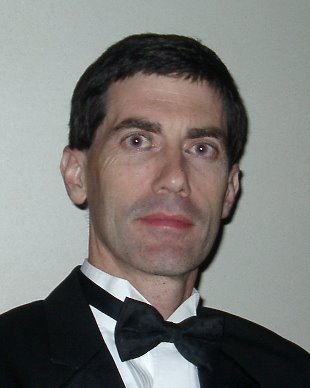
Alex Biryukov is a full professor in Cryptography and Information Security at the University of Luxembourg, affiliated with the Computer Science and Communications Research Unit (CSC) and the Interdisciplinary Centre for Security, Reliability and Trust (SnT). Previously, he served as an associate professor and visiting professor at K.U.Leuven, contributing to European standards (NESSIE) and ECRYPT consortia. His expertise spans applied cryptography, cryptanalysis, lightweight cryptography for IoT, cryptocurrency security, and privacy technologies like Tor and blockchain. Biryukov has held roles as program chair for FSE'07, SAC'10, and INDOCRYPT'15, and is a program committee member for top conferences including CRYPTO and CCS. He leads the FNR CORE project ACRYPT on lightweight cryptography for IoT and contributes to the COST Action IC1403 on cryptanalysis of ubiquitous systems. His teaching focuses on symmetric cryptography, network security, and real-world applications. Biryukov earned his M.Sc. and Ph.D. from the Technion and completed postdoctoral research at the Weizmann Institute under Adi Shamir. Research interests include cryptanalysis of block ciphers (e.g., AES, SIMON, SPECK), cryptocurrency protocols, and privacy-enhancing technologies. He has pioneered attacks on AES variants and contributed to lightweight algorithms like SPARX and Argon2. Biryukov's work bridges theoretical cryptography with practical implementations, addressing security in embedded systems and blockchain.
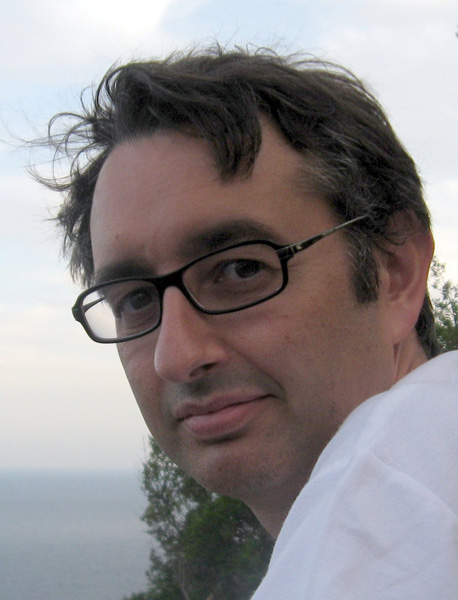
Konstantin Selyunin is a researcher at TU Wien's Institut für Technische Informatik (Institute of Computer Engineering). He holds a Dr.techn. (PhD) in Computer Engineering from TU Wien, completed in 2017. His research focuses on neural models, runtime monitoring in automotive systems, and adaptive control in cyber-physical systems. Key areas include hardware-efficient neural networks, temporal logic monitoring, and mission-critical system design. **Education**: PhD in Computer Engineering (TU Wien, 2017). Research interests span automotive systems-of-systems, neuromorphic computing, and high-level synthesis for hardware monitoring. He collaborates on projects like HARMONIA, addressing hardware monitoring for automotive systems. His work integrates formal verification techniques with real-time systems and biophysical neural models. Publications emphasize applications in adaptive control, self-healing systems, and spiking-neuron models for monitoring. While no formal awards are listed, his contributions to runtime monitoring and cyber-physical systems are notable. Advising and grants: Colleagues include Thang Nguyen, Denise Ratasich, and Radu Grosu. Active in automotive electronic development and cyber-physical systems. Involved in the Network Lab at TU Wien.
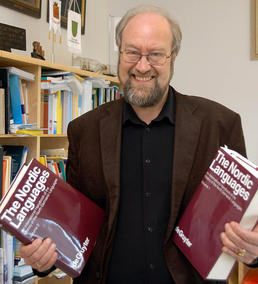
Martin Pirker serves as a Professor and Senior Researcher at the Institute of IT Security Research within the Department of Computer Science and Security at St. Pölten University of Applied Sciences in Austria. His academic profile demonstrates extensive expertise in IT security, trusted computing, and blockchain technologies, with a particular focus on Trusted Platform Modules, boot integrity, and secure systems development. His research interests span multiple critical areas of modern cybersecurity including Trusted Computing, blockchain-based security solutions, boot integrity verification, secure system design, privacy-preserving technologies, and information security auditing. Dr. Pirker's work consistently addresses practical security challenges in contemporary computing environments, with numerous publications exploring the intersection of hardware security, software implementation, and cryptographic verification mechanisms. His recent publications reveal a strong focus on blockchain applications for security auditing, Trusted Platform Module implementations, and secure boot processes. The research trends show progression from foundational trusted computing work toward more distributed security solutions using blockchain technology and addressing emerging challenges in AI security. His publications demonstrate consistent contributions to major security conferences including ARES (International Conference on Availability, Reliability and Security) and ICISSP (International Conference on Information Systems Security and Privacy). Dr. Pirker leads or participates in several significant research projects including the Josef Ressel Center for Blockchain-Technologies & Security Management, Josef Ressel Center for Unified Threat Intelligence on Targeted Attacks (TARGET), RPM- Rusted Plattform Module, and E³UDRES² Ent-r-e-novators. These projects reflect his commitment to addressing real-world security challenges through collaborative research initiatives. He actively contributes to the academic community through teaching in the IT Security (BA) and Cyber Security and Resilience (MA) programs at St. Pölten University of Applied Sciences. His work bridges theoretical security concepts with practical implementation challenges, making significant contributions to the field of applied cybersecurity research.
Bernhard Kasberger is a Professor of Energy and Environmental Economics at the Johannes Kepler University Linz and the Austrian Institute of Economic Research. He joined both institutions in May 2025 as a University Professor after serving as Assistant Professor of Applied Microeconomic Theory at the University of Konstanz (2023-2025). His academic journey includes postdoctoral research at the Düsseldorf Institute for Competition Economics and a Junior Research Fellowship at The Queen's College, University of Oxford. Dr. Kasberger's research focuses on auction and market design, energy and environmental economics, industrial organization, and game theory. He has developed computational tools for analyzing auction equilibria, as evidenced by his GitHub repository 'auction_solver' which computes symmetric equilibria of discrete first-price and all-pay auctions. His methodological approach combines theoretical modeling with computational techniques to address complex market design problems. His recent publications demonstrate a strong trajectory in top economics journals, highlighted by the acceptance of 'Bidding in Multi-Unit Auctions under Limited Information' in the Journal of Economic Theory (2025). His research portfolio spans energy market design, environmental policy instruments, healthcare efficiency, and labor market structures, showing both theoretical depth and practical policy relevance. teaching prize (Lehrpreis) of the Department of Economics of the University of Konstanz (2024) DFG funding for research project 'strategic uncertainty in market design' (~270,000 EUR for three years) (2024) Scientific program committee for the 2024 European Winter Meeting of the Econometric Society As an educator, Professor Kasberger teaches 'Public Finance, Environment and Health' at JKU. His commitment to both research and teaching excellence is evident in his career progression and recognition. His work bridges theoretical economics with practical applications in energy, environmental, and healthcare markets, contributing valuable insights for both academic and policy communities.
Patrick Cousot is a Professor of Computer Science at École Normale Supérieure (ENS) in Paris, France, where he directs educational activities and leads the ENS-CNRS-INRIA joint project team "Abstraction." He has held academic positions at École Polytechnique (1984–1997), University of Metz (1979–1984), New York University (2008), and MIT (2005) as a J. C. Hunsaker Distinguished Visiting Professor. Education: Engineer, École des Mines of Nancy (1971) Doctor Engineer (PhD) in Computer Science, University of Grenoble (1974) Doctor ès Sciences in Mathematics, University of Grenoble (1978) As co-inventor of Abstract Interpretation with Radhia Cousot (1975), he developed a foundational theory for sound approximation of mathematical structures in computer systems. This framework underpins methods for solving undecidable or complex problems across semantics, verification, static analysis, program optimization, and security, with industrial applications in hardware/software safety and security. Scientific honors include: Chevalier in Ordre des Palmes académiques (1990) Chevalier in Ordre National du Mérite (1993) CNRS Silver Medal (1999) Honorary doctorate from Saarland University (2001) Grand Prix de l'Académie des Sciences (2006) Humboldt Research Award (2008) Member of Academia Europaea (2006) His prior roles include Research Scientist at CNRS (1974–1979), where he developed foundational work in static analysis. He also established the LIX research laboratory at École Polytechnique.
Michael Hofbaur is a full Professor at the University of Klagenfurt, where he works in the Institute for Intelligent Systems Technologies within the Faculty of Technical Sciences. His office is located at Lakesidepark Haus B04, Ebene 2, Raum B04.2.206, and he can be contacted at michael.hofbaur@aau.at. Professor Hofbaur has established himself as a leading researcher in robotics with particular expertise in human-robot collaboration, safety systems, and formal verification methods for robotic applications. His research interests focus on the intersection of robotics, safety engineering, and human factors. Professor Hofbaur has made significant contributions to the field of robot safety, particularly in developing methods for safe human-robot collaboration without physical barriers. His work spans multiple dimensions of robotics including kinematic analysis, motion planning, sensor integration, and formal verification techniques to ensure system reliability. He has published extensively on topics such as obstacle avoidance strategies, proximity perception systems, and methods to enhance flexibility in collaborative workspaces while maintaining safety standards. Analysis of his recent publications reveals a clear trend toward integrating formal verification methods with practical robotics applications, particularly focusing on safety-critical aspects of human-robot interaction. His research increasingly incorporates advanced sensing technologies like radar and capacitive proximity sensors to create more intelligent and responsive robotic systems. The work demonstrates a progression from theoretical kinematic analyses toward practical implementations in industrial and collaborative settings, with a consistent emphasis on safety assurance throughout. Professor Hofbaur's research portfolio includes numerous projects related to robotic safety, formal verification, and human-robot collaboration, though specific awards directly attributed to him are not listed in the available materials. His work appears to have significant practical applications in industrial automation and collaborative robotics settings. While specific information about his students and advising activities isn't provided in the available materials, his extensive publication record spanning over two decades suggests he has likely supervised numerous graduate students and postdoctoral researchers. His research activities indicate involvement in both theoretical and applied projects, potentially including collaborations with industry partners given the practical nature of many of his publications. Based on his departmental affiliation and research focus, Professor Hofbaur is likely associated with robotics laboratories at the University of Klagenfurt that specialize in human-robot interaction, safety systems, and formal verification of robotic workflows. These facilities likely include experimental setups for testing collaborative robots, sensor integration systems, and simulation environments for verifying robotic behaviors before physical implementation.
Prof. Nikolaus Augsten is a Professor and Head of the Database Research Group at the Department of Computer Science, University of Salzburg. He previously held positions at the Free University of Bozen-Bolzano, Italy, and visited Technische Universität München (TUM) and Washington State University. His research focuses on data-centric applications, approximate matching techniques for complex data structures, and efficient index structures for similarity search. Education: PhD from Aalborg University (Denmark, 2008), supervised by Prof. Michael Böhlen. Master's from Adam Mickiewicz University (Poland). Research interests include hierarchical data similarity (e.g., tree structures), scalable algorithms for tree edit distance, and applications in e-government and XML search engines. His work emphasizes practical solutions for tree-to-tree matching and similarity joins. Selected Awards: ICDE 2010 Best Paper Award for TASM: Top-k Approximate Subtree Matching Advising includes PhD student Mateusz Pawlik (thesis: Efficient Computation of the Tree Edit Distance). His group develops open-source tools like the RTED algorithm and approximate tree matching libraries. Labs/Teams: Database Research Group at University of Salzburg, collaborating on projects like Tree Edit Distance reference implementations and set similarity join algorithms.
Matteo Maffei is a **Professor** at TU Wien's Institute of Computer Engineering, part of the Security and Privacy research group. His work focuses on blockchain security, cryptographic protocols, and decentralized systems. He has contributed to formal verification of smart contracts, payment channel networks, and web security mechanisms. Recent research includes analyzing vulnerabilities in web session integrity, optimizing Lightning Network protocols (e.g., Thora, Sleepy Channels), and developing privacy-preserving coin mixing services. Education: PhD in Computer Science (details not specified) Affiliations: TU Wien's Security and Privacy Research Group Labs/Teams: Network Lab (affiliated with TU Wien) Research Interests: Cryptography and its applications to blockchain systems Secure decentralized protocols (e.g., payment channels, smart contracts) Formal methods for verifying system security properties Publications emphasize practical security solutions for blockchain scalability (e.g., atomic multi-channel updates) and privacy (e.g., coin mixing services). His work bridges theoretical cryptography with real-world implementations, addressing vulnerabilities in widely used protocols like Bitcoin and Ethereum. Grants/Advising: Supervised over 15 graduate students on topics including blockchain analysis, static code verification, and privacy-preserving systems. Notable advisees include Aron Wussler (Post-Quantum Cryptography), Martin Schweighofer (Ethereum contract analysis), and Nikolas Haimerl (Terra Network tracing).
Univ.-Prof. Dr. Aart Middeldorp is a Professor in the Department of Computer Science at the University of Innsbruck. He serves as the Associate Dean of Studies for the Informatik (BA/MA/ES) and Software Engineering (MA) programs, and as the Erasmus coordinator for Informatik. His research focuses on term rewriting systems, formal methods, automated reasoning, and theoretical computer science. He leads initiatives in confluence analysis, termination proofs, and the development of tools like crest and CSI . His work emphasizes formal verification, with contributions to proof term manipulation and abstract completion. Recent research trends include undecidability results in rewrite systems, formalized confluence criteria, and tool-based evaluation in competitions like CoCo. He actively contributes to the Confluence Competition , advancing automated analysis techniques for rewrite systems. Notable projects include the development of FORT-h and ProTeM , tools supporting formal proofs and term rewriting. His administrative roles ensure academic coordination across undergraduate and graduate programs in computer science and software engineering. Labs/Teams: His research group develops foundational tools for automated reasoning and term rewriting, with a focus on practical implementations for confluence and termination analysis.
Stefan Resmerita is an Associate Professor and Deputy Head of the Department of Computer Science at the University of Salzburg, Faculty of Digital and Analytical Sciences. His office is located at Jakob-Haringer-Str. 2, Room 2.32, 5020 Salzburg, Austria, with contact number +43 662 8044-6406. His research focuses on embedded and real-time systems, particularly in the areas of software timing analysis, logical execution time paradigms, and model-based design for automotive applications. His work addresses challenges in migrating legacy embedded software to modern architectures while maintaining timing predictability and verification. He has extensively researched the Timing Definition Language (TDL) and developed the Validator Tool Suite for bridging the gap between software-in-the-loop and hardware-in-the-loop simulation environments. His publication record shows consistent contributions to real-time systems from 2022 back to 1997, with recent work focusing on fine-grained timing in Simulink models, data consistency in automotive multi-core applications, and efficient realization of logical execution times in legacy systems. His research demonstrates a clear trajectory from foundational work on hybrid systems and air traffic management toward contemporary challenges in automotive and embedded software systems. As Deputy Head of Department, he plays a significant administrative role within the Computer Science department while maintaining an active research profile in embedded systems engineering.
Laura Kovács is a full professor at the Faculty of Informatics of Vienna University of Technology (TU Wien), leading the Automated Program Reasoning Group (APRe) and contributing to the Formal Methods in Systems Engineering (FORSYTE) research unit. Her research establishes critical synergies between computer algebra and automated deduction to enhance software reasoning capabilities. Key directions include algebraic analysis of systems for invariant synthesis and termination analysis, deductive verification for safety/security, SMT solving with on-demand theory reasoning, and first-order theorem proving for quantified reasoning with theory extensions. She develops foundational software tools including the Vampire theorem prover, Polar static analyzer, and Z3 SMT solver extensions. Her leadership extends to major conference roles as Co-chair of TACAS 2024, CICM 2024, RP 2024, and iFM 2024, along with invited lectures at FORTE 2024, IJCAR 2024, and the Marktoberdorf Summer School 2024. Her distinguished recognition includes: ERC Starting Grant (2014), ERC Consolidator Grant (2020), and ERC Proof of Concept Grants (2018, 2024) Amazon Research Awards (2020, 2023) Wallenberg Academy Fellowship (2014) Promotion Prize in STEM from Vienna City (2021) She actively supervises student projects through the APRe group and drives research via multiple grants, with recent accepted papers at top venues including POPL 2024, S&P 2024, and IJCAR 2024. Her group maintains strong industry-academia collaboration through tools like Vampire and Polar.
Thomas W. Reps is a Professor in the Department of Computer Science at the University of Wisconsin, holding the position since 1985. He has served as President and Co-founder of GrammaTech, Inc. since 1988, and held visiting roles including Guest Professor at the University of Paris 7 (2007-08), Visiting Researcher at CNR in Pisa, Italy (2000-01), and Guest Professor at the University of Copenhagen (1993-94). He previously served as Associate Chairman of the Computer Sciences Department at Wisconsin (1990-93) and held postdoctoral roles at Cornell University and INRIA. Reps' research spans programming languages, software engineering, and computer security, with a focus on static program analysis, machine-code analysis, and program slicing. His work in model checking, software maintenance, and analysis techniques for information security has significantly impacted the field of computer science. 2017 ACM SIGPLAN Programming Languages Achievement Award 2015 WARF Named Professorship 2005 ACM Fellow 2000 Guggenheim Fellowship 1986 NSF Presidential Young Investigator Award Reps' publications highlight advancements in interprocedural dataflow analysis, weighted pushdown systems, and symbolic computation. His work bridges theoretical foundations with practical applications in software verification and security, creating tools that have shaped modern program analysis techniques. He has collaborated extensively with researchers like Somesh Jha, Mooly Sagiv, and Gogul Balakrishnan across institutions in Europe and the U.S.
Javier Esparza is a Professor and Chair of Foundations of Software Reliability and Theoretical Computer Science at the Technical University of Munich (TUM), Germany. He has held academic positions at several prestigious institutions including the University of Stuttgart, University of Edinburgh, and Technische Universität München since 1990. His work focuses on theoretical computer science with applications in software verification and formal methods. His educational background includes: M.S. in (Theoretical) Physics from the University of Zaragoza (Spain, 1987) Ph.D. in Computer Science from the University of Zaragoza (Spain, 1990) Habilitation in Computer Science from the University of Hildesheim (Germany, 1994) Professor Esparza's research interests span multiple areas of theoretical computer science and formal methods. He has made significant contributions to the fields of software verification, model checking, and Petri nets. His work on algorithms for the design and verification of reactive and distributed systems has been particularly influential. He has developed theoretical foundations and practical tools for analyzing systems with infinitely many states, pushing the boundaries of what can be formally verified. His research on formal models for distributed systems, particularly Petri nets and process algebras, has provided new insights into concurrency theory. Additionally, his work on the analysis of probabilistic systems and applications of linear and constraint programming to verification problems has opened new avenues for research. His recent publications demonstrate a continued focus on fundamental problems in verification and theoretical computer science, with particular emphasis on population protocols, model checking techniques, and theoretical foundations of distributed computing. His work bridges the gap between theoretical insights and practical applications in software reliability. His scientific achievements have been recognized with several prestigious awards: Doctor honoris causa in Informatics, Masaryk University (2009) Dissertation prize, University of Zaragoza (1990) TeachInf Award for best Bachelor course at TU München (2009) TeachInf Award for best Master course at TU München (2010) Diploma for excellent Teaching, TU München (2011) Member of Academia Europaea (2011) Professor Esparza has successfully advised numerous PhD students who have gone on to make their own significant contributions to computer science. His research has been consistently supported by competitive grants from major funding bodies including the German Research Council (DFG), the British Engineering and Physical Sciences Research Council, and the European Union. His research projects have often involved international collaborations, reflecting the global recognition of his work. He leads a vibrant research group at TUM focused on theoretical computer science and verification. The group has developed several influential software tools including Rabinizer, Peregrine, Owl, and Strix, which are widely used in both academia and industry for verification tasks. His group maintains strong collaborations with research institutions worldwide, particularly in Europe.
Ernst Håkon Jahr is a distinguished Norwegian linguist currently serving as Professor of Scandinavian Linguistics at the University of Agder's Department of Nordic and Media Studies. Born in Oslo on March 4, 1948, Jahr has had a prolific academic career spanning over five decades, with significant leadership roles including serving as Rector of Agder University from 2000-2007. His academic journey began with a PhD in Scandinavian Linguistics from the University of Oslo in 1976, followed by a dr.philos. degree from the University of Tromsø in 1984, where he served as Professor from 1986-1998 before moving to Agder University. Professor Jahr's research focuses primarily on historical sociolinguistics, language history, language contact, language conflict, language planning, and the history of linguistics . His work has particularly examined the historical development of Norwegian language standards, the influence of Low German on Scandinavian languages during the Middle Ages, and the sociopolitical aspects of language planning in Norway. Jahr has made significant contributions to understanding language contact phenomena, notably through his research on Russenorsk, the historical pidgin language used between Russian and Norwegian traders in Northern Norway. His extensive publication record includes over 200 scientific works and 40 books, with recent research focusing on comparative language planning (particularly between Norwegian and Ukrainian contexts), historical linguistic figures like Clara Holst, and contemporary issues in language standardization. Jahr has demonstrated remarkable scholarly productivity well into his seventies, with numerous publications appearing in 2024 and 2025. Member of the Norwegian Academy of Science and Letters President and founder of the Agder Academy of Sciences and Letters Member of Academia Europaea (2008) Member of The Royal Society of Arts and Sciences in Göteborg (2010) Recipient of the Swedish Academy's Nordic Prize (2011) Doctor Honoris Causa from Adam Mickiewicz University, Poznan (1995) and Uppsala University (2009) Recipient of the Fridtjof Nansen Award for outstanding research in the humanities (2012) Beyond his research, Jahr has played significant roles in academic administration and editorial work, having founded several major linguistic journals including the International Journal of Applied Linguistics and Norsk Lingvistisk Tidsskrift. He has supervised numerous major research projects funded by the Norwegian Research Council and organized dozens of national and international conferences throughout his career. Jahr has also been actively involved in broadcasting as a linguistic consultant for Norwegian television programs about dialects.
Gregor Kastner is Professor and Deputy Head of the Institute of Statistics at the University of Klagenfurt. His research focuses on Bayesian statistics, time series analysis, econometrics, and computational methods, with applications in finance, economics, and environmental modeling. He develops statistical software including packages for stochastic volatility modeling in R. Kastner's methodological work centers on Bayesian inference for high-dimensional problems, developing efficient computational algorithms for complex models. His applied research examines volatility dynamics in financial markets, macroeconomic forecasting, and spatial analysis of economic indicators. Recent projects include Bayesian nonparametric clustering for evaluating agricultural subsidies in Europe, sparse vector autoregressions for high-dimensional forecasting, and stochastic volatility models for commodity markets. He maintains active collaborations across economics, finance, and environmental science disciplines.