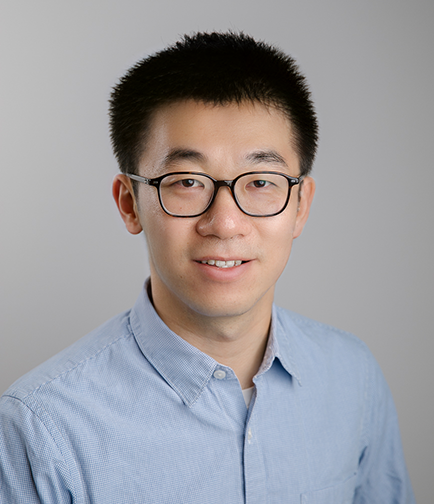
Dr. Dong Gong is a Senior Lecturer and ARC DECRA Fellow (2023-2026) at the School of Computer Science and Engineering (CSE), UNSW. He holds an adjunct position at the Australian Institute for Machine Learning (AIML), University of Adelaide. His research focuses on machine learning challenges in dynamic environments, including continual learning, foundation models, generative models, and applications in interdisciplinary areas like mining and agriculture. Research interests include learning with non-ideal supervision, foundation model adaptation, generative models, and interdisciplinary problems combining CV/ML with domain-specific applications. His work often addresses real-world scenarios such as mineral exploration and soil trait analysis using CV/ML technologies. Outstanding Reviewer: NeurIPS 2018 Outstanding Area Chair: ACM MM 2024 ARC DECRA Fellowship (2023-2026) Advising and grants: Actively supervises PhD/MPhil students in computer vision and ML. Collaborates with industry and government on research projects. Utilizes advanced infrastructure like UNSW's Katana supercomputing cluster and Gadi (NCI). Labs/Teams: Involved in interdisciplinary research groups at UNSW CSE and AIML, focusing on dynamic learning paradigms and real-world applications of AI.
Dr. Kirsten Winter is an Honorary Senior Fellow at the University of Queensland's School of Electrical Engineering and Computer Science. Her research focuses on formal verification, concurrent programming, and weak memory models. She has contributed significantly to areas such as model checking, railway interlocking systems, and behavior trees. Her work spans theoretical foundations (e.g., linearizability, concurrency semantics) and practical applications in security and embedded systems. Recent projects include the Program Analysis Cell and BASIL: Boogie Analysis for Secure Information-Flow Logics. Winter has collaborated extensively with researchers like Graeme Smith and Robert Colvin. Her most recent publications address speculative execution vulnerabilities and compositional reasoning in weak memory architectures.
Dr ASM Kayes serves as Senior Lecturer in Cybersecurity and Cyber Curriculum Lead at La Trobe University's Department of Computer Science and Information Technology, where he shapes cybersecurity education programs including Master's, Bachelor's, and Double Degrees. His academic journey began with a PhD from Swinburne University of Technology in 2015, followed by postdoctoral research at La Trobe before joining as Lecturer in 2019 and promotion to Senior Lecturer in 2022. His research spans critical cybersecurity domains including data security, privacy preservation, context-aware access control, malware/ransomware defense, and IoT/fog/cloud security leveraging AI/ML techniques. Dr Kayes has established himself as a leading voice in blockchain security frameworks, privacy policy analysis, and cyber incident response through publications in top-tier venues like ACM Computing Surveys, IEEE Internet of Things Journal, and Computers & Security. His recent publications reveal a strong trajectory toward integrating AI with traditional security frameworks, particularly in blockchain risk assessment (2025), cross-domain access control (2025), and IoT behavior prediction (2024). The research demonstrates consistent focus on practical security solutions addressing ransomware mitigation, privacy breaches, and emerging threats in decentralized systems. Over $880,000 secured as Chief Investigator for cybersecurity projects Australian Government Department of Social Services grant (2023-2026) for cyberbullying prevention AustCyber research funds with industry partners (2020-2023) SmartSat CRC and ASCRIN PhD scholarship grants (2021) Dr Kayes has successfully supervised 5 PhD candidates to completion and currently mentors 5 doctoral students across diverse topics including AI-driven threat hunting, satellite network security, and blockchain risk frameworks. His collaborative network spans UK, USA, Europe, and Asia, with active industry partnerships through Westpac, BHP, and Quantum Victoria. He serves on editorial boards for leading cybersecurity journals and has examined HDR dissertations globally, reflecting his significant standing in the academic community.
Professor Justine Nolan serves as the Director of the Australian Human Rights Institute and a Professor in the Faculty of Law and Justice at UNSW Sydney. With over 25 years of experience, she is an internationally recognized expert in modern slavery and human rights issues relating to business practices. Her career has included significant advisory roles with business, civil society, government, and the United Nations, and she has been a key driver of the Australian and global business and human rights movement. Professor Nolan holds an MPP from the University of California, Berkeley, and both an LLB(Hons) and BSc from the Australian National University. Her educational background provides a strong foundation for her interdisciplinary approach to human rights and business issues. Nolan's research focuses on the intersection of business and human rights, particularly supply chain responsibility for human rights and modern slavery. Her work is noted for both conceptual clarity and practical application, setting strategic paths to address significant business and human rights challenges. She has led major research projects, including one on 'transformative business practices' funded by the Laudes Foundation, which identifies and tests replicable business practices for just transitions in global supply chains. Her influential publications include the 2019 co-authored book Addressing Modern Slavery , The International Law of Human Rights (OUP, 2017), and Business and Human Rights: From Principles to Practice (Routledge, 2016). Professor Nolan's scholarly output reveals consistent focus on modern slavery legislation, supply chain transparency, human rights due diligence, and corporate accountability. Her work demonstrates a progression from theoretical frameworks to practical applications, with increasing emphasis on remediation mechanisms and regulatory effectiveness in recent years. UNSW Arc Postgraduate Outstanding Research Supervisor Award (2020) Academic of the Year, Australian Law Awards (2019) UNSW Vice Chancellor's Award for Teaching Excellence (2018) UNSW Plus Alliance Fellow (2019-2020) Professor Nolan has supervised numerous doctoral students on topics including human rights protection in manufacturing supply chains, extraterritorial processing of refugees, the lithium extractive sector and corporate human rights compliance, and remedying corporate human rights violations. She has secured substantial research funding, including grants from the Laudes Foundation (EUR238,033), Freedom Fund (US$72,727), and Australian Government programs. Her teaching portfolio includes International Human Rights Law and Advocacy, Business and Human Rights, and Human Rights Law in Practice. As Director of the Australian Human Rights Institute, Nolan leads a major research center focused on business and human rights issues. She has held significant leadership roles including Deputy Director of the Australian Human Rights Centre (2006-2017) and Associate Dean Academic at UNSW Law (2016-2019). She continues to influence policy through appointments to the Australian Government's Modern Slavery Expert Advisory Group (2020, reappointed 2024) and other expert panels.
Dr. Ida Aju Pradnja Resosudarmo is a faculty member at the Fenner School of Environment & Society of the Australian National University. Holding a PhD in Resource Management, she specializes in socio-legal dimensions of environmental governance, with particular emphasis on climate change policy, forest management, and gender equity in Southeast Asia. Current collaborator in the ANU Indonesia Project Active in multidisciplinary research across environmental economics and social sciences Her research bridges legal frameworks with community-level impacts, focusing on land tenure security and forest degradation dynamics. Recent publications analyze the effectiveness of REDD+ mechanisms (2024) and policy compliance in smallholder forestry (2019), while her 2023 work examines fire prevention policies in Indonesian peatlands and international climate partnerships. Current projects include initiatives on Women's Engagement in Peatland Fire Abatement (2022–present) and contributions to Indonesia's climate change modeling frameworks. She supervises graduate students in environmental policy and participates in policy advisory roles, though specific student names are not listed in the provided text.
Associate Professor Iain MacGill at the University of New South Wales leads interdisciplinary research at the intersection of renewable energy integration , electricity market design , and policy frameworks for low-carbon transitions. As a core member of the Centre for Energy and Environmental Markets , he develops computational models for coordinating distributed energy resources in restructured power systems. PhD in Electrical Engineering (UNSW) B.Eng. & M.Eng.Sci. (University of Melbourne) His work examines technical-economic-commercial challenges of renewable integration, with recent focus on: 24/7 zero-emission energy tracking frameworks Temporal matching in renewable procurement Open-source tools for green hydrogen value chains Residential solar-battery interaction dynamics Current research projects involve smart grid technologies , community microgrid economics , and climate-resilient energy systems . He collaborates with institutions like ARENA , CSIRO , and ARC on grants addressing grid stability, cost allocation, and policy innovation.
Niloufer Selvadurai is Professor and Director of Research & Innovation at Macquarie Law School, where she also co-directs the Data Horizons Research Centre and co-chairs the Australian Law Associate Deans Research Network. A technology law scholar focusing on AI regulation, she examines how laws can calibrate technological innovation benefits and risks. Her interdisciplinary research collaborates with computing, engineering, finance, and health fields. Key leadership roles and recognitions include: Co-Director, Data Horizons Research Centre Program Leader for 'AI and Law' at Centre for Applied AI 2022 Australian Legal Education Award for Excellence in Graduate Research Supervision 2023 Higher Degree Research Supervisor of the Year Her publications extensively cover AI governance, digital finance, copyright, and smart contracts law, with recent work examining AI inventorship and regulatory frameworks for central bank digital currencies.
Professor Moe Thandar Wynn is a Co-Director of QUT's Centre for Data Science and holds a Professorship in the School of Information Systems at Queensland University of Technology (QUT). She leads the Process Science Academic Program and serves as the Academic Lead of Research for the School of Information Systems. Her expertise spans Process Mining, Data Quality, and Robotic Process Automation (RPA). Prof Wynn has attracted over AUD 6 million in research funding and holds an h-index of 41 with 8700+ citations. She is a member of the Australian Research Council College of Experts (2023–2025) and has received prestigious awards including the QLD Women in Technology Excellence Award (2024). Her research focuses on formal foundations of process modeling, verification, and automation. She has contributed to international conferences as a co-chair and program committee member, and co-edited special issues on RPA and process dynamics. Prof Wynn collaborates with industries like healthcare, insurance, and agriculture to optimize business processes through data-driven insights. Current research includes privacy-preserving process mining and quality-driven event log enhancement. Education: PhD (QUT, 2006), M. Information Technology (Research, QUT) Key Projects: Hospital Capacity Optimization, Liquid Process Model Collections, Risk-Aware BPM Supervision: Over 10 completed PhD/MSc students in process mining and analytics Awards: Multiple QUT Excellence Awards, ARC College Membership Her lab focuses on advancing process intelligence and RPA, with ongoing efforts in data quality frameworks and process mining standards (e.g., IEEE XES). She actively participates in industry partnerships, such as the CRC Food Agility project, to bridge research and real-world applications.
Saeed Ur Rehman serves as a Senior Lecturer in Cybersecurity and Networking within the College of Science and Engineering at Flinders University. He holds leadership positions as Course Leader for BIT and MIT (Networks and Cybersecurity) programs and Deputy Research Section Lead for Data and Information Sciences. His institutional affiliations include membership in the Centre for Defence Engineering Research and Training and the South Australia Cyber Security Innovation Node (SA Node) Advisory Board. Dr. Rehman's educational background includes: PhD in Electrical and Electronic Engineering from the University of Auckland (2015) Graduate Diploma in Higher Education from Unitec Institute of Technology (2016) Master of Engineering from the University of Auckland (2009) BSc Engineering from Pakistan (2004) His research spans cybersecurity, wireless communication, and network security with specific expertise in physical layer security, satellite communication, visible light communication, and fog computing. Dr. Rehman has developed innovative approaches in RF fingerprinting for device authentication and has contributed to vital sign monitoring technologies using radar systems. His work bridges theoretical security frameworks with practical applications in digital agriculture, vehicular networks, and energy harvesting systems. Analysis of his recent publications reveals a strong focus on emerging security challenges in next-generation networks, particularly addressing vulnerabilities in digital agriculture systems, privacy preservation in fog computing environments, and physical layer security enhancements for 6G networks. His research demonstrates consistent interdisciplinary collaboration across computer science, electrical engineering, and healthcare technology domains. Dr. Rehman has received significant recognition including: IEEE Senior Member status (2016) Fellowship from The Higher Education Academy, UK (2019) Cisco Networking Academy instructor certifications (2019, 2022) PhD Completion Award from University of Auckland (2014) As an active researcher and supervisor, he has secured substantial research funding including AUD$810,000 for the SmartSat CRC project (2020), AUD$150,000 from Defence Innovation Partnership (2023), and multiple grants from Flinders University and New Zealand institutions. He supervises PhD and Master's students in cybersecurity, with completed projects focusing on IoT security and privacy-preserving data aggregation, and current projects exploring intelligent reflective surfaces, RF emitter geolocation, and vehicular data communication frameworks. Dr. Rehman contributes extensively to the academic community as an IEEE Senior Member serving multiple societies, conference chair, journal editorial board member, and peer reviewer for numerous publications in his field.
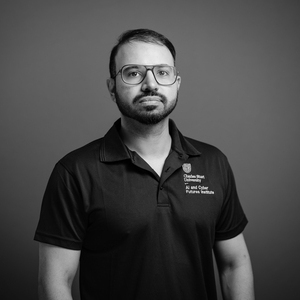
Dr. Ibrar Yaqoob serves as a Senior Research Fellow and Program Lead for the Smart and Resilient Supply Chain strand at the Artificial Intelligence and Cyber Futures Institute (AICF) at Charles Sturt University. He leads a research team comprising PhD students and postdoctoral fellows, and previously held research positions at Khalifa University in the UAE and Kyung Hee University in South Korea. Dr. Yaqoob holds a PhD in Computer Science from Universiti Malaya (2017) and has been a Visiting Academic at the University of Cambridge. His research focuses on blockchain, NFTs, and metaverse applications for healthcare, supply chain and logistics, wireless networks, IoT, and smart cities, with additional expertise in mobile edge-cloud computing and big data. Dr. Yaqoob has published over 100 research articles with more than 24,000 citations and an h-index of 58, with 98.9% of his publications appearing in Q1 journals. His recent publications demonstrate a strong trend toward practical blockchain implementations across diverse sectors including healthcare data management, sustainable supply chains, and smart city infrastructure. His work frequently combines blockchain with emerging technologies like NFTs, metaverse applications, and large language models to solve complex real-world problems in supply chain transparency, medical data security, and sustainable development. Ranked in the world's top 0.1% of researchers for three consecutive years (2023-2021) as a Highly Cited Researcher Listed among the World's top 2% scientists for five consecutive years (2020-2024) 2024 IEEE Consumer Electronics Magazine Best Paper Award (1st Place) 2024 Vice Chancellor's Researcher of the Year Commendation 2024 AICF Research Excellence Award 13 highly cited papers (top 1%) and 21 most downloaded articles Dr. Yaqoob serves as Chief Investigator on multiple significant research projects including the AgriTwins project (AUD $2.38 million), Trustworthy Operations and Supply Chain Management project (AUD $10,000), and Decentralized AI Juries project (AUD $13,875). He actively mentors PhD students and postdoctoral researchers while serving on editorial boards for prestigious journals including IEEE Network Magazine, Future Generation Computer Systems, and IEEE Access. His research team at the AICF Institute focuses on bridging emerging technologies with practical applications to address real-world challenges in supply chain resilience and sustainability.
Matthew Hall is a Professor of Accounting at Monash University's Department of Accounting, part of the Impact Labs initiative. Previously, he spent a decade at the London School of Economics and Political Science (LSE) before returning to Australia in 2016. He also holds Research Associate positions at the Stockholm School of Economics and the LSE. His research focuses on management accounting and performance measurement in challenging contexts like mutuals, cooperatives, nonprofits, and social enterprises. His work appears in top journals such as Accounting, Organizations and Society , Management Accounting Research , and Harvard Business Review . Key projects include the Mutual Value Measurement (MVM) initiative (2018–2019), exploring value assessment in cooperatives, and the Service Performance Reporting Research Project (2024–2025) funded by the Australian Accounting Standards Board. Collaborations span global institutions, with a focus on third-sector evaluation and social impact assessment. Recent publications emphasize qualitative research methods, trust repair in nonprofits, and innovative accounting practices for social enterprises. He actively supervises PhD students and engages in industry partnerships, such as the Care Together Program with the Business Council of Cooperatives and Mutuals. Labs/Teams: Impact Labs (Monash University), collaborating with interdisciplinary teams on measurement challenges in the third sector.
Xiaoning Du is a Senior Lecturer (equivalent to Associate Professor) in the Department of Software Systems & Cybersecurity at Monash University's Faculty of Information Technology. She holds a PhD from Nanyang Technological University (2020) and a Bachelor's from Fudan University (2014). Her research focuses on software security and quality assurance for traditional and AI-based systems, with notable contributions to DevOps for AI, vulnerability detection, and runtime verification. Education: PhD in Computer Science, Nanyang Technological University (2015–2020) Bachelor of Software Engineering, Fudan University (2010–2014) Research Interests: Security of intelligent software systems, AI-driven software testing, DevOps for AI, and trustworthy AI services . Her work emphasizes practical applications like Devign (vulnerability detection), DeepStellar (deep learning system analysis), and BigCodeBench (code generation benchmarking). Recent Projects: Collaborations include CSIRO cybersecurity initiatives, Algorand Center of Excellence, and IBM-funded research. She leads projects addressing AI ethics, federated learning security, and code completion robustness. Awards: 2024 Google Research Scholar Award, 2024 FIT Dean’s Early Career Award, and multiple distinguished paper awards at top venues like ACM SIGSOFT and ICLR. Labs/Teams: Active in Monash’s cybersecurity and AI research groups, contributing to open-source tools like DeepStellar and BigCodeBench . She advises PhD students and mentors on scholarships.
Ashish Nanda is a Research Fellow at the Deakin Cyber Research and Innovation Centre (Deakin Cyber) at Deakin University, Australia, where he contributes expertise to pioneering cybersecurity research. Prior to his current role, he served as a Research Fellow at the Centre for Cyber Resilience and Trust (CREST), Centre for Cyber Security Research and Innovation (CSRI), and the Deakin Blockchain Innovation Lab (DBIL). He has also enriched the academic community as a Lecturer at the University of Technology Sydney. Dr. Nanda's educational background includes: PhD in Computer Science from the University of Technology Sydney Bachelor of Technology in Computer Science & Engineering from Amity University, India His research spans cybersecurity, authentication technologies, digital identity, and usable security. Nanda has contributed to national projects funded by the Cyber Security CRC, focusing on multi-factor authentication, privacy-preserving digital credential wallets, and ambient intelligence-based continuous authentication systems. His work bridges technical security measures with human factors, emphasizing that security solutions must be both robust and user-friendly to achieve widespread adoption. This human-centered approach to security has become increasingly prominent in his recent publications. Dr. Nanda's publication trajectory shows a clear evolution from foundational network security protocols toward increasingly human-centered security approaches. While his earlier research focused on technical aspects of secure routing for wireless mesh networks and IoT infrastructure, his recent work emphasizes usable security, authentication devices, and digital identity systems. This shift reflects the growing recognition in cybersecurity that technical solutions alone are insufficient without considering human factors and user experience. Dr. Nanda has received significant research funding through: Cyber Security Cooperative Research Centre (CRC) Australia's Economic Accelerator program He actively contributes to public discourse through articles in The Conversation and interviews with major media outlets including SBS News, The Guardian, and The Feed. His research collaborations extend across multiple institutions with emphasis on practical applications addressing real-world cybersecurity challenges. Nanda has also co-founded Adroit Explorer Innovation Chambers, a not-for-profit organization dedicated to fostering innovation and exploration in technology.
Brae Webb is an Associate Lecturer in the Faculty of Engineering, Architecture and Information Technology at The University of Queensland. His email is b.webb@uq.edu.au . His research focuses on formal methods, compiler optimizations, and software verification, with contributions to verification frameworks for compiler optimizations and formal semantics of programming language implementations. He has co-authored multiple publications at conferences such as FormaliSE, CPP, and ICFEM, and contributed to editions of the textbook Software Architecture . His work spans theoretical and applied aspects of software engineering, including the use of proof assistants like Isabelle/HOL for verifying term graph optimizations. Recent projects include analyzing GraalVM's intermediate representation and differential testing methodologies for compiler verification frameworks. Brae Webb's publications reflect a commitment to advancing formal verification techniques in compiler design and software systems. His textbook series on software architecture emphasizes practical design principles for scalable software systems.
Dr. Mike Bambach is a Senior Lecturer at the University of Sydney's School of Civil Engineering, where he also serves as Director of the Centre for Advanced Structural Engineering and Undergraduate Program Director for Civil Engineering. His research spans composite materials, crashworthiness, and structural optimization. Structural Engineering Composite Material Analysis Road Safety & Impact Mechanics Research Interests Dr. Bambach investigates advanced structural systems using fiber-reinforced polymers (FRP), natural fiber composites for sustainable construction, and crash energy absorption in transportation systems. His work combines experimental testing with numerical modeling to improve structural performance under extreme loads. Recent Publications (2025-2018) Current research focuses on natural fiber composites for structural applications, hybrid metal-composite energy absorption systems, and innovative buckling control mechanisms. Key trends include sustainable material development and dynamic structural response analysis. Teaching & Supervision He teaches foundational civil engineering courses and supervises PhD/Master's students working on projects like AI-based quality control in steel fabrication, sustainable cementitious composites, and deep foundation reuse solutions.