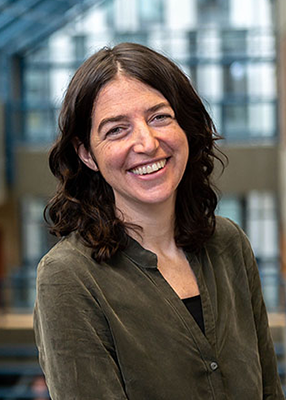
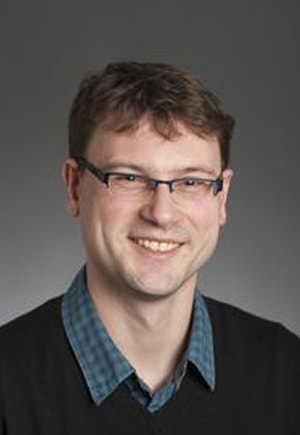
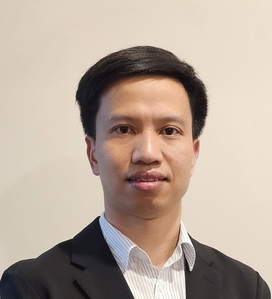
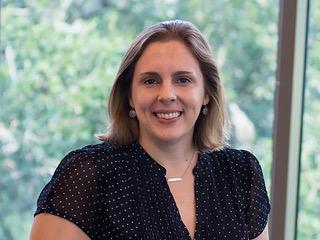
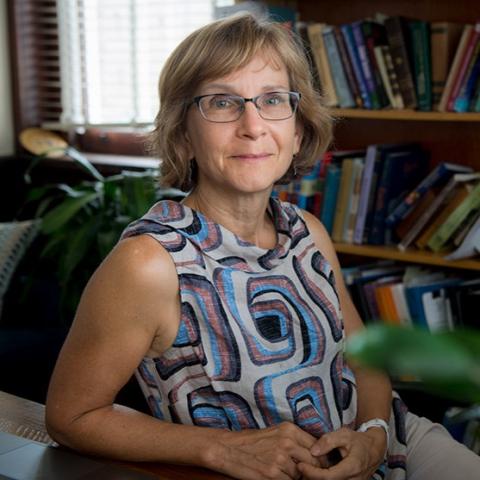
Dana Small, PhD is a Senior Scientist at the RI-MUHC and Professor in the Department of Neurology and Neurosurgery at McGill University . Her research is centered in the Metabolic Disorders and Complications Program within the Centre for Translational Biology . Her research focuses on understanding how body and mind work together to optimize behavior, particularly through neuroimaging, metabolic, and behavioral studies of ingestive behavior. She investigates how modern food environments affect brain evolution and eating behavior. The 15 most recent publications show a consistent focus on food reward mechanisms (2025), nutrient-brain interactions (2024), addiction-genetics relationships (2023), and neural processing of taste and reward (2020-2023). These works appear in high-impact journals like Cell Metabolism and Science .
Daniel Rabosky is a Professor in the Department of Ecology and Evolutionary Biology at the University of Michigan, where he also serves as Curator at the Museum of Zoology. His research program spans macroevolution, speciation dynamics, and phylogenetic comparative methods, with particular expertise in Australian reptiles and squamate evolution. Rabosky maintains an active laboratory and is currently seeking new graduate students and postdoctoral fellows to join his research team. Rabosky's research interests focus on macroevolutionary patterns and processes, particularly the connections between microevolutionary dynamics and large-scale biodiversity patterns. His work integrates phylogenetic comparative methods with ecological and morphological data to understand speciation processes, adaptive radiations, and the evolutionary dynamics of reptile communities, especially Australian skinks. He has made significant contributions to methodological developments in evolutionary biology through software tools like BAMM (Bayesian Analysis of Macroevolutionary Mixtures) and BAMMtools for analyzing evolutionary rate heterogeneity across phylogenetic trees. Analysis of Rabosky's recent publication record reveals a strong focus on evolutionary theory, methodological development, and empirical studies of reptile diversification. His work spans theoretical macroevolution, phylogenetic comparative methods, Australian herpetology, and the connections between population-level processes and macroevolutionary patterns. The research demonstrates increasing integration of genomic data with traditional morphological and ecological approaches, reflecting broader trends in evolutionary biology. Rabosky actively mentors graduate students including Matheus Januário and Tristan Schramer, and supervises postdoctoral fellows Michael Harvey, Jonathan Mitchell, Sonal Singhal, and Rudolf von May. His laboratory receives research funding supporting multiple projects in macroevolutionary dynamics, with recent grants likely supporting work on the connections between metapopulation ecology and speciation rates, as evidenced by his 2025 Ecology Letters paper. The Rabosky Lab maintains a strong presence in both theoretical and empirical evolutionary biology, with particular strengths in phylogenetic methods development, squamate reptile evolution, and the interface between micro- and macroevolution. The lab actively collaborates with researchers across institutions and contributes to major initiatives like the openVertebrate project for 3D imaging of museum specimens.
Tyler Simko is an Assistant Professor of Political Science at the University of Michigan, specializing in US state and local politics, political geography, and computational social science. His research focuses on understanding and addressing inequality in American public policy through innovative methodological approaches. Education: Ph.D. in Government, Harvard University (2024) A.B. in Politics, Princeton University Simko's research examines state and local politics in the United States with particular focus on political geography and subnational policymaking. His active research agendas include legislative redistricting ("gerrymandering"), local public meetings, school segregation, affordable housing, and data privacy. Methodologically, he develops new techniques in computational social science and machine learning to evaluate subnational inequality and how it can be reduced. His work regularly involves partnerships with federal, state, and local officials to improve the design of public policy. His recent publications demonstrate a strong focus on applying computational methods to address real-world policy challenges, particularly in school desegregation, redistricting, and local government transparency. His research often leverages large-scale data collection efforts, such as LocalView (the largest database of local government meetings in the US), to analyze patterns of political behavior and policy outcomes across different jurisdictions. Awards and Recognition: APSA 2024-25 Best Paper in Education Politics and Policy Award APSA 2024-25 Best Paper in Urban and Local Politics, Honorable Mention MPSA 2024 Robert H. Durr Award for "the best paper applying quantitative methods to a substantive problem" Derek C. Bok Award for Excellence in Graduate Student Teaching of Undergraduates (2023) Simko teaches graduate and undergraduate courses in American Politics and Political Methodology at the University of Michigan. His teaching experience spans multiple institutions, including Harvard University and Princeton University. He has designed innovative courses on US Local Policymaking, data science, and computational social science. As a Data Scientist at the Office of Evaluation Sciences, he partners with federal, state, and local officials to improve program design and reduce administrative burdens. He is a co-PI of the Algorithm-Assisted Redistricting Methodology (ALARM) Project and co-creator of LocalView, the largest audio, video, and text database of local government meetings in the United States. These projects represent significant contributions to the field of computational social science and provide valuable resources for researchers studying local governance and policy-making.
Linda A. Hill serves as the Wallace Brett Donham Professor of Business Administration at Harvard Business School and is Faculty Chair of the Leadership Initiative. She is widely recognized as one of the top experts on leadership and innovation globally, with her work shaping how organizations approach creative problem-solving and organizational development. Dr. Hill earned her B.A. summa cum laude in psychology from Bryn Mawr College, followed by an M.A. and Ph.D. in Behavioral Sciences from the University of Chicago. After completing a post-doctoral research fellowship at Harvard Business School, she joined the faculty where she has remained a prominent figure in organizational behavior research. Her research focuses on leadership development, building agile innovative organizations, implementing global strategies, and digital leadership. Hill is particularly known for her work on collective genius—the concept that innovation emerges from the right organizational conditions rather than individual brilliance alone. Her research has evolved to address scaling innovation across organizations and ecosystems, with increasing emphasis on digital leadership in contemporary business environments. Dr. Hill's scholarly output reveals consistent themes of practical leadership frameworks that help organizations navigate complex challenges while fostering creativity. Her recent work shows a progression toward understanding how innovation can be systematically scaled across organizational boundaries and through digital transformation initiatives. Thinkers50 top ten management thinker (2013, 2021) Thinkers50 Innovation Award (2015) Warren Bennis Prize for Excellence in Leadership (2015) Leadership Axiom Business Book Award Gold Medal (2015) #5 in Top 20 MIT SMR articles of 2020 Included in Thinkers50 since 2011 Named to Inc. 2025 Female Founders 500 List Shortlisted for 2025 Thinkers50 Innovation Award Beyond academia, Hill has extensive advisory and consulting experience with major global organizations including Google, Microsoft, IBM, and numerous Fortune 500 companies. She has chaired numerous Harvard Business School Executive Education programs and developed innovative online learning platforms for leadership development. Her practical experience spans leadership development, innovation strategy, global implementation, and diversity initiatives across multiple industries. Dr. Hill serves on the Board of Directors of Relay Therapeutics and the Board of Trustees of The Kresge Foundation, ArtCenter College of Design, and Brigham and Women's Hospital. She also serves on advisory boards for the American Repertory Theater, Aspen Institute programs, Calit2, and several other organizations, demonstrating her commitment to applying leadership principles across diverse domains.
Maiko Favaro is a Type B Researcher at Sapienza University of Rome's Department of Modern Literature and Culture, having joined in August 2022 through the 'Rita Levi Montalcini' Young Researcher Program. Previously, she served as Assistant of Italian Literature at Université de Fribourg from 2017 to 2022 and held prestigious fellowships including a Marie Skłodowska-Curie Individual Fellowship at Freie Universität Berlin. Her academic journey began with a Perfezionamento in Literary and Philological Disciplines from Scuola Normale Superiore di Pisa (2014), preceded by a Laurea Specialistica in Italian Language and Literature from Università di Pisa (2007), where she graduated with highest honors. Her educational path also included research periods at Harvard University, École Normale Supérieure in Paris and Lyon, and Université de Fribourg. Favaro's research focuses on Italian Renaissance literature with particular emphasis on heroic virtue in Renaissance literature, Petrarchism, and the reception of Dante. Her work explores the intersections between philosophical thought, literary representation, and cultural context in sixteenth and seventeenth century Italy. She has made significant contributions to understanding the representation of heroes in Renaissance epic, the topos of lovers' separation, and the role of women in Renaissance dialogues. Her publication record demonstrates consistent scholarly productivity across multiple formats including monographs, edited volumes, and journal articles. Recent work shows increasing focus on Torquato Tasso's prose works, Renaissance philosophical dialogues, and the Friulian literary tradition. Her scholarship often bridges literary analysis with intellectual history and philosophical inquiry. Premio Tasso 2016 for her article on heroic virtue Canadian Society for Italian Studies Award 2011 Premio di laurea from Società Filologica Friulana Favaro has secured significant research funding including the competitive 'Rita Levi Montalcini' fellowship, a Marie Skłodowska-Curie Individual Fellowship, and an Alexander von Humboldt Fellowship (which she declined). She serves on multiple editorial boards including 'Letteratura cavalleresca italiana' and 'Rivista di letteratura tardogotica e quattrocentesca', and has organized international conferences on Renaissance literature. Her current research continues to explore heroic virtue in Italian Renaissance literature while expanding into Friulian literary traditions and Dante reception.
Brad Sutton is a Professor of Bioengineering at the University of Illinois Urbana-Champaign and Technical Director of the Biomedical Imaging Center at Beckman Institute. He holds affiliate roles in the Neuroscience Program, Department of Electrical and Computer Engineering, and is a Health Innovation Professor at the Carle Illinois College of Medicine. His roles also include fellowship positions with the National Center for Supercomputing Applications and the CZ Biohub Chicago. Education: Ph.D. in Biomedical Engineering from the University of Michigan (2003). Research Interests: Focus on advanced MRI techniques for structural and functional brain imaging, including diffusion-weighted imaging, dynamic imaging, and neuromuscular coupling studies. His work emphasizes multi-scale bioimaging to understand brain function across interventions, aging, and disease. Publications: Over 180 peer-reviewed articles in 2025-2024 highlight innovations in MRI technology and applications in neuroscience, including breakthroughs in laminar fMRI specificity, myelin development modeling, and Alzheimer’s biomarker studies. Recent work extends to clinical applications like aortic imaging automation and mixed reality training tools. Awards: AIMBE and ISMRM Fellowships (2017/2024), Abel Bliss Scholar (2014-), and over 9 patents in imaging techniques. Labs & Teams: Leads the Magnetic Resonance Functional Imaging Lab. Collaborates with interdisciplinary teams across engineering, medicine, and computational science to advance imaging technologies and their clinical translation.
Dr. Lauren Emberson (she/her/hers) is an Associate Professor in the Department of Psychology at the University of British Columbia, Faculty of Arts. She directs the Baby Learning Lab, which is part of UBC's Early Development Research Group, a consortium focused on infant and child development. Prior to her position at UBC, Dr. Emberson was an Assistant Professor at Princeton University where she co-founded and co-directed the Princeton Baby and Princeton Kid Labs. Education: Postdoctoral Associate, University of Rochester (PI Aslin) Ph.D, Cornell University (PIs Amso, Goldstein, Spivey) B.Sc, University of British Columbia Dr. Emberson's research focuses on learning, perception (audition, vision, crossmodal or multisensory), language development, face/object perception, and attention in infants. She investigates these capacities using behavioral and neuroimaging techniques, particularly fNIRS (functional near infrared spectroscopy), working primarily with very young infants (birth through 1 year) and preterm/premature infants. Her work examines how infants' learning capacities contribute to rapid development of perception in ecological contexts, with implications for understanding how early life experiences affect later outcomes. Analysis of Dr. Emberson's recent publications reveals a consistent focus on infant perception, learning mechanisms, and neuroimaging methodology. Her work increasingly incorporates advanced fNIRS techniques while maintaining focus on fundamental questions about how infants learn from their environment. There's a growing emphasis on individual differences, cross-cultural comparisons, and applications to infants facing developmental challenges. Dr. Emberson serves on the editorial board of Infancy (journal of the International Congress of Infancy Studies) and is a consulting editor for the Journal of Cognitive Neuroscience . Her research has been published in top journals including PNAS, Current Biology, Psychological Science, Cognition, Developmental Science, and the Journal of Neuroscience. Dr. Emberson has secured significant research funding from prestigious organizations including the Bill and Melinda Gates Foundation, James S. McDonnell Foundation, Natural Sciences and Engineering Research Council (NSERC), Canadian Institutes of Health Research (CIHR), and the National Institutes of Health (NIH). She collaborates with clinicians at BC Women's and Children's Hospitals to understand how different early life experiences impact learning and brain development. Dr. Emberson is currently accepting graduate students into her research program. The Baby Learning Lab, under Dr. Emberson's direction, is part of UBC's Early Developmental Research Group and collaborates with multiple institutions. The lab strives to provide interactive research experiences for infants and families while advancing scientific understanding of early cognitive development. The lab acknowledges that it operates on the traditional, ancestral, and unceded territory of the xʷməθkʷəy̓əm (Musqueam) people.
Frank Heinrich serves as an Associate Research Professor in the Department of Physics at Carnegie Mellon University's Mellon College of Science, while maintaining a significant research presence at the National Institute of Standards and Technology (NIST) Center for Neutron Research in Gaithersburg, Maryland. His dual appointment reflects his interdisciplinary work bridging academic research and national laboratory resources, focusing on advanced biophysical techniques for studying membrane-associated biological processes. Dr. Heinrich earned his Ph.D. in Nuclear Physics from the University of Leipzig, Germany in 2005, followed by postdoctoral research at Johns Hopkins University and Carnegie Mellon University. His academic trajectory shows steady progression from Research Physicist (2008-11) to Assistant Research Professor (2011-16) and finally to his current position as Associate Research Professor (2016-present), while simultaneously maintaining his role as a Staff Scientist at NIST since 2008. His research centers on the structure of disease-relevant proteins, peptides, and small molecules at lipid membranes, with particular interest in the structural foundations of cell signaling in cancer. Heinrich employs a broad range of surface-sensitive techniques including electrical impedance spectroscopy, surface plasmon resonance, and neutron reflectometry. His work contributes significantly to developing future-generation neutron scattering instrumentation for soft-matter and biological research, making these advanced techniques accessible to both academic and industrial scientists. Analysis of his 15 most recent publications reveals a consistent focus on membrane-protein interactions, particularly examining KRAS signaling in cancer, antimicrobial peptides, and membrane-associated processes in neurodegenerative diseases. His work demonstrates sophisticated integration of experimental biophysics with computational approaches, often utilizing neutron scattering techniques to provide structural insights that other methods cannot achieve. As part of the Lösche/Heinrich Group within the Supramolecular Structures Lab, he collaborates extensively with Mathias Lösche and contributes to the joint UPSM-CMU MBSB graduate program. His research has practical implications for understanding cancer mechanisms, developing new antimicrobial strategies, and advancing biophysical instrumentation.
Associate Professor Sonny Pham leads research in artificial intelligence at Curtin University's School of EECMS. His work balances theoretical foundations with practical applications in computer vision, data mining, and deep learning. As head of the IAMAI research group, he collaborates with industry partners on security systems, healthcare AI, and sustainable technologies. His research explores: Computationally efficient deep learning architectures Compressed sensing for high-dimensional data Robust statistical methods for real-world problems Applications in computer vision and industrial automation Recent publications demonstrate a focus on medical imaging interpretation and efficient neural networks, with applications spanning radiology report generation, semantic segmentation for autonomous systems, and cybersecurity. His team's work consistently bridges theoretical AI advancements with industrial applications. Honors include: Multiple WANMA Awards (2021-2024) for industry-impactful research INCITE Award for social impact technology (2024) IEEE Young Author Best Paper Award (2010) Over $5M in competitive research funding including MRFF and DFAT grants He leads the IAMAI research group with 12+ graduate students and coordinates Curtin's Master of Artificial Intelligence program. Industry collaborations include Alcoa Australia, iCetana, and HyprFire.
Peter K. Smith is a Professor in Psychology at Goldsmiths, University of London. His research focuses on bullying and cyberbullying prevention, peer relationships, and child development. He has led numerous international studies on bullying dynamics across cultures, age groups, and socioeconomic contexts. His work bridges developmental psychology with educational policy, emphasizing practical interventions in school settings. Education: Extensive academic background in psychology (details inferred from publications). Research interests include cross-cultural bullying patterns, the impact of school policies, and the psychological effects of cyberbullying. His recent work examines bullying among vulnerable populations such as children in social care and LGBTQ+ youth. Articles explore topics like the 'Healthy Context Paradox' in bullying outcomes and the development of multidimensional coding systems for online experiences. Collaborations span Europe and include projects funded by Erasmus+ programs. No specific awards listed, but his extensive publication record indicates significant academic contribution. Advising roles and grant details are not explicitly stated in the provided texts. Led research teams on projects like the Blurred Lives Project and contributed to the Health Behaviour in School-aged Children (HBSC) surveys. Current research priorities include improving anti-bullying policies and understanding sibling bullying dynamics.
Dr. Julie Markant is an Associate Professor in the Department of Psychology at Tulane University and a Faculty Associate in the Tulane Brain Institute. Her research focuses on the interplay between selective attention and learning in infants and young children, emphasizing developmental and neurobehavioral perspectives. She uses behavioral, eye-tracking, genetic, MRI, and fNIRS methods to explore how attention control influences learning efficacy and vice versa. Education: Ph.D., 2010, University of Minnesota Her research interests include developmental attention mechanisms, perceptual learning, and how biological and contextual factors shape cognitive outcomes. Key themes involve understanding how infants and children selectively attend to information and how this attention drives learning processes. Recent work explores caregiver influence on attention, prenatal factors affecting infant attention, and the role of competing information in school-aged learning. Dr. Markant leads the Learning and Brain Development Lab , which investigates cognitive and neural mechanisms underlying attention and learning. She is actively recruiting graduate students from Tulane’s Psychology and Neuroscience Ph.D. programs. Her publications reflect a focus on attention biases, developmental learning dynamics, and methodological innovations like remote infant studies. Awards and honors are not explicitly listed in the provided text.
Cynthia Ebinger is a Professor in the Department of Earth and Environmental Sciences at Tulane University, affiliated with the School of Science & Engineering. She holds the Marshall-Heape Chair and previously served at the University of Rochester and as an Adjunct Professor at Royal Holloway, University of London. Her research focuses on geophysics, rift systems, seismic monitoring, volcanoes, and plate tectonics in West Africa and East Africa, particularly the Turkana Depression and East African Rift. She has conducted fieldwork in Ecuador, Peru, Kenya, Uganda, Ethiopia, and Australia. Education : Ph.D., MIT/WHOI, Joint Program in Oceanography, Marine Geology & Geophysics (1988) M.A., MIT, Geophysics (1986) B.S., Duke University, Geology (1982) Research Interests : Dr. Ebinger investigates continental rifting mechanisms, magmatic processes, seismic anisotropy, and volcanic systems. Her work integrates geophysical methods (e.g., InSAR, receiver functions) to study deformation in regions like the East African Rift and Gulf of Mexico passive margin. She emphasizes understanding crustal dynamics, lithosphere modification, and the interplay between tectonics and surface processes. Publications : Her recent work addresses rift linkage mechanics, crustal anisotropy variations, and volcanic deformation (e.g., Nyiragongo eruption). Key themes include seismic imaging of rift zones, subsidence patterns in coastal Louisiana, and mantle lithosphere interactions. Awards : American Geophysical Union Distinguished Lecturer (2023-2024) NASEM Jefferson Science Fellow (2022-2023) Woollard Award (2021) Tulane Honors Professor of the Year (2021) Grants & Collaborations : Leads projects funded by NSF and international collaborations, focusing on Turkana Depression geodynamics, Gulf of Mexico subsidence, and volcanic monitoring in East Africa. Active in education initiatives to strengthen quantitative geophysics training. Labs/Teams : Core member of the Tulane Earth Sciences group and collaborates with global networks (e.g., Project TRAILS in East Africa). Engages in field-based research and satellite geodesy applications.
John Eck is a Professor at the University of Cincinnati's Department of Criminology. He earned his Ph.D. in Criminology from the University of Maryland in 1994. Prior to academia, he spent 17 years as Research Director at the Police Executive Research Forum, focusing on police reform and problem-oriented policing strategies. His work emphasizes practical crime prevention solutions rooted in rigorous research, including the development of guides for law enforcement and community initiatives. Eck played a pivotal role in the Cincinnati Collaborative Agreement, addressing racial discrimination in policing, for which he received the 2016 Collaborative Agreement Award and the Ronald V. Clarke Award in 2016. His research interests span problem-oriented policing, crime analysis, environmental criminology, and police reform. He has authored and co-authored numerous books and articles, including Problem-Solving Detective and Mapping Crime: Understanding Hot Spots . Eck teaches courses on policing and crime prevention, contributing to both academic and practitioner communities. Eck's publications reflect a focus on crime prevention strategies, evaluation methods, and policy implementation. His work often bridges theoretical frameworks with real-world applications, such as using GIS and crime mapping to identify and address high-crime areas. He has served on the National Academy of Sciences panel on police research and policy, further highlighting his influence in shaping criminal justice practices. Awards: 2016 Collaborative Agreement Award 2016 Ronald V. Clarke Award Grants and Advising: Eck has contributed to projects funded by the U.S. Department of Justice and the Police Foundation, though specific grant details are not disclosed here. His advisory role in the Cincinnati Collaborative Agreement exemplifies his commitment to bridging academic research and community action. Labs/Teams: Affiliated with the University of Cincinnati Criminal Justice Research Center, focusing on empirical studies of crime prevention and policing strategies.
Keith Conrad is an Associate Professor in the Department of Mathematics at the University of Connecticut (UConn), part of the College of Liberal Arts and Sciences. His research focuses on Number Theory, particularly in areas such as algebraic and analytic number theory, prime numbers, arithmetic geometry, and modular forms. He has published extensively on topics like congruent numbers, prime specialization, and the Möbius function. His work integrates classical number theory with modern algebraic techniques, contributing to foundational understanding in the field. Conrad is actively involved in academic outreach, organizing and teaching at programs like the Ross Mathematics Program and PROMYS. He has delivered lectures on advanced topics such as L-functions, the Riemann Hypothesis, and the ABC conjecture. His expository papers and teaching materials emphasize clarity and accessibility, bridging gaps between complex mathematical concepts and broader audiences. Conrad's academic contributions include significant publications in journals like *Mathematics Magazine* and *Journal für die reine und angewandte Mathematik*, as well as expository works on modular forms, prime patterns, and historical aspects of representation theory. He maintains a comprehensive website with resources for students and researchers, including detailed lecture notes, problem sets, and links to mathematical tools and software.
Tor Söderström is a Professor at the Department of Education at Umeå University. His research focuses on learning and development in sports, computer simulation training, and professional knowledge development in police education. He has contributed extensively to understanding talent identification in sports, particularly in Swedish football, and the efficacy of simulation-based training methodologies in law enforcement education. His research spans topics including athlete development trajectories, the impact of physiological testing on elite athlete performance, and the role of childhood athletic ability in long-term sports participation. Notable projects include a study on dropout processes in Swedish football talent systems and analyses of Swedish gym-goers' training patterns over two decades. Publications highlight interdisciplinary approaches, combining sports science, sociology, and educational technology. Recent work explores children’s rights in sports through scoping reviews and examines athlete retention strategies from adolescence into adulthood. His research often emphasizes practical applications in training design and policy development for both sport and professional education sectors. No scientific awards are explicitly mentioned in the provided texts. His work has involved collaborations with institutions like the Swedish Football Association and police education programs, focusing on scenario-based training methodologies and competency development in high-stakes professions.