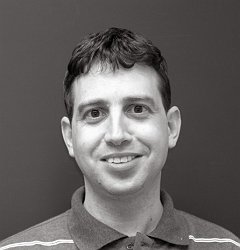
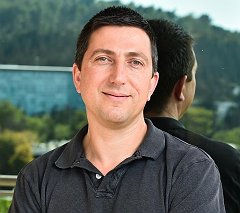
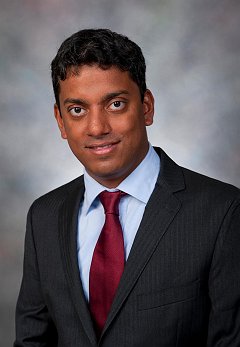
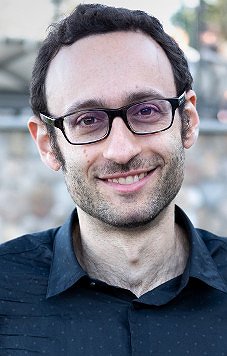
George Rotas serves as an Assistant Professor in the Department of Chemistry at the University of Ioannina, Greece, with office location X3-206d. His contact includes email rotasgiorgos@uoi.gr and telephone +30-2651008386, reflecting active institutional affiliation. His research program centers on organic synthesis and materials innovation, specifically: Synthesis/characterization of aromatic compounds, heterocyclic systems (pyrroles), and chromophores (BODIPY, xanthenes, acridines) Design of photoactive molecules for analytical, biological, and energy applications Development of nanostructured hybrid materials using fullerene chemistry Dr. Rotas contributes to the department's academic ecosystem, including Postgraduate Chemistry Programs highlighted in university announcements.
Triantafyllos A. Albanis is a Professor and current Rector of the University of Ioannina (since 2018), with faculty appointment in the Department of Chemistry. He additionally serves as President of the Regional Council for Research and Innovation of Epirus and Director of the Institute of Environment and Sustainable Development at PEK Ioannina. His research centers on environmental chemistry and analytical methodologies for pollutant detection. Key focus areas include: development of chromatography-mass spectrometry techniques for toxic compounds in water/soil/food; assessment of micropollutant impacts; advanced remediation technologies (photocatalysis, adsorption, advanced oxidation); and green chemistry applications. His work bridges fundamental environmental processes with practical pollution control solutions. Professor Albanis maintains exceptional research productivity with 240 publications and over 12,000 citations (Scopus, 2020), reflecting significant field impact. Recent work (2017-2020) emphasizes pharmaceutical residues in water systems, pesticide monitoring in Greek rivers, and innovative photocatalytic treatment methods for emerging contaminants. Supervised 31 doctoral and 45 master's theses in Chemistry Active research program supported by institutional leadership roles International collaborations across European environmental projects Regular high-impact publications in environmental science journals His research group provides students with advanced analytical training and real-world environmental problem-solving opportunities, leveraging university laboratory resources and field study sites across Northwestern Greece.
Hamid Bagheri is an Associate Professor in the School of Computing at the University of Nebraska-Lincoln and a faculty associate of the Institute for Software Research (ISR) at the University of California, Irvine. He co-directs the ESQuaReD Lab and serves on the review boards of IEEE Transactions on Software Engineering and ACM Transactions on Software Engineering and Methodology. His research focuses at the intersection of software engineering, security, and formal methods, with particular expertise in Security of Mobile Devices and IoT Systems Scaling Formal Verification with Machine Learning Software Analysis and Testing Dependable Cyber-Physical Systems Automated Program Repair and Fault Localization His publication record spans top-tier venues including ICSE, ASE, ISSTA, ESEC/FSE, and IEEE/ACM Transactions, with recent work focusing on efficient analysis of Alloy specifications, IoT security, and ML-enhanced formal verification. His research has been recognized with multiple Distinguished Paper Awards. Among his notable awards are: EPSCoR FIRST Award NSF CISE Career Research Initiation Initiative Award SoC Student Choice Outstanding Teaching Award (2023-2024) CSE Outstanding Teaching Award (2020-2021) NSF EPSCoR First Award (2017) Prof. Bagheri has successfully advised multiple PhD students including Mohannad Alhanahnah (now tenure-track faculty at Chalmers University) and Clay Stevens (now tenure-track faculty at Iowa State University). He has received substantial research funding including NSF SHF Research Grants and has been actively involved in conference organization as PC member and track chair across numerous major software engineering venues.
Işıl Dillig is an Associate Professor of Computer Science at the University of Texas at Austin, where she leads the UToPiA research group. Her academic career spans over a decade of significant contributions to programming languages research, particularly in program analysis, verification, and synthesis. Dr. Dillig received all her academic degrees (BS, MS, and PhD) from Stanford University before joining the faculty at UT Austin. Her educational background established the foundation for her innovative research approach that bridges theoretical computer science with practical applications. Her research focuses on developing techniques to make software systems more reliable, secure, and easier to build through advanced program analysis, verification, and synthesis methods. She has pioneered approaches that combine symbolic reasoning with machine learning to tackle complex software engineering challenges across multiple domains including security, databases, and programming language theory. Her work demonstrates exceptional depth in creating practical tools that address real-world software development problems while maintaining strong theoretical foundations. Analysis of Dr. Dillig's publication record reveals a consistent trajectory of innovation in program synthesis, with recent work expanding into neurosymbolic approaches that bridge neural networks with formal methods. Her research shows strong connections between theoretical foundations and practical applications, particularly in security-critical systems, database technologies, and blockchain applications. The evolution of her work demonstrates increasing sophistication in handling complex program structures while maintaining practical usability. Dr. Dillig has received prestigious recognition for her research contributions: Sloan Fellowship NSF CAREER award As a dedicated educator and research leader, Dr. Dillig has served in significant roles including Program Chair for PLDI 2022 and Steering Committee member for PLDI. She has mentored numerous students through her UToPiA research group, guiding research in program synthesis, verification, and analysis. Her work has been supported by substantial research grants that have enabled innovative projects at the intersection of programming languages and security. Dr. Dillig leads the UToPiA (UT Austin Programming, Languages, and Analysis) research group, which focuses on developing novel techniques for program analysis, verification, and synthesis. The group maintains strong collaborations with industry partners and academic institutions worldwide, translating theoretical advances into practical tools that address real software engineering challenges.
Arjun Guha is an Associate Professor at Northeastern University's Khoury College of Computer Sciences, where he also serves as the Area Chair for Software. He conducts research in programming languages with a focus on program synthesis for low-resource programming languages and understanding how computer science education is impacted by large language models. His work spans multiple domains including WebAssembly, software-defined networking, and serverless computing. Guha's research interests center around programming language design, implementation, and application. He has made significant contributions to understanding JavaScript through formal semantics (LambdaJS), developing functional reactive programming for web applications (Flapjax), and creating tools for software-defined networks (NetKAT, Frenetic). His recent work focuses on leveraging large language models for code generation in specialized programming languages and understanding their impact on programming education. His publications reveal a strong trend toward applying AI and machine learning techniques to programming language problems, particularly in code generation and understanding. The research spans from foundational programming language theory to practical applications in education and software development tools, with increasing focus on the intersection of programming languages and large language models. Guha has received several prestigious awards including the OOPSLA Most Influential Paper Award in 2019 for his work on Flapjax, an ACM SIGPLAN Research Highlight for his work on NetKAT, and a Best Student Paper Award. His research has been recognized for its foundational contributions to programming language theory and practical impact on software development. OOPSLA Most Influential Paper Award (2019) for Flapjax ACM SIGPLAN Research Highlight for A Fast Compiler for NetKAT Best Student Paper Award for Flapjax paper Guha advises numerous PhD, MS, and undergraduate students, with several alumni now at leading tech companies and academic institutions. His research has been supported by the National Science Foundation, the Department of Energy, the Office of Naval Research, and industry partners including Google, JPMorgan Chase, MathWorks, Meta, Oracle, and Roblox. He leads the Programming Research Laboratory at Northeastern and is actively involved in major research collaborations like the BigCode Project. Guha is a member of the Programming Research Laboratory at Northeastern and leads several major research initiatives including the BigCode Project's evaluation working group. His lab develops practical software systems like MultiPL-E (a polyglot benchmark for Code LLMs) and WasmFX (bringing effect handlers to WebAssembly), with applications in education, software development, and high-performance computing.
Shachar Itzhaky is an Associate Professor in the Department of Computer Science at Technion - Israel Institute of Technology, Haifa. His research spans multiple areas of programming languages, formal methods, and software engineering, with a focus on making program development and verification more accessible and efficient. He has served on program committees for numerous prestigious conferences including PLDI, POPL, SPLASH, and ICFP. Dr. Itzhaky's research interests center around program synthesis, automated reasoning, and formal verification. His work in program synthesis explores techniques for automatically generating programs from high-level specifications, with applications in end-user programming and software development. In automated reasoning, he has made significant contributions to e-graph based reasoning, invariant inference, and property-directed verification. His research in formal methods focuses on practical applications for program verification, particularly for data structures and security properties. An analysis of his recent publications reveals a strong focus on leveraging advanced formal techniques for practical program understanding and generation. His work consistently bridges theoretical foundations with practical applications, particularly in program synthesis, verification, and end-user programming tools. The trend shows increasing integration of machine learning techniques with traditional formal methods, as well as expanding applications to security and privacy domains. ACM SIGPLAN John C. Reynolds Doctoral Dissertation Award Dr. Itzhaky has been actively involved in the programming languages research community, serving on numerous program committees and contributing to the advancement of formal methods and program synthesis. His work has practical implications for software development tools, security analysis, and end-user programming environments. While specific grant information isn't detailed in the provided text, his extensive publication record in top-tier venues suggests successful funding for his research endeavors. His work on projects like Object Spreadsheets and Lifty demonstrates a commitment to creating practical tools that address real-world programming challenges. Dr. Itzhaky's research is conducted within the vibrant programming languages and formal methods group at Technion's Computer Science department. His work intersects with multiple research threads including program synthesis, verification, and security, suggesting collaboration across these areas within the department. His tools like EPR-based Verification, PDR∀, and VeriCon represent significant technical contributions that likely form the basis of ongoing research projects with students and collaborators.
Eran Yahav is an Associate Professor in the Computer Science Department at the Technion - Israel Institute of Technology. He previously served as a research staff member at IBM T.J. Watson Research Center from 2004 to 2010. His academic journey began with a B.Sc. from the Technion in 1996, followed by a Ph.D. from Tel Aviv University in 2005. Yahav's research focuses on program analysis, program synthesis, program verification, and machine learning for programming. His work bridges theoretical foundations with practical applications, particularly in developing techniques that help programmers work more effectively with complex frameworks and APIs. He has pioneered approaches that combine static analysis with machine learning to address challenges in code search, completion, and understanding. His recent work heavily intersects with neural network applications to programming tasks, demonstrating how deep learning can enhance traditional program analysis techniques. His publication record shows a clear evolution from traditional program analysis and verification toward integrating machine learning with programming language processing. The most recent articles reveal a strong focus on neural methods for code understanding, including structural language models, adversarial examples for code models, and neural approaches to binary analysis and program synthesis. This represents a significant shift toward leveraging AI techniques to solve longstanding problems in programming languages and software engineering. Yahav has received numerous accolades including the prestigious Alon Fellowship for Outstanding Young Researchers, the Andre Deloro Career Advancement Chair in Engineering, and an ERC Consolidator Grant. He also earned best paper awards at ISSTA 2006 and 2007. As an advisor, Yahav has mentored numerous Ph.D. and Master's students who have gone on to make significant contributions in academia and industry. His research has been supported by substantial grants, including the ERC Consolidator Grant. He also serves as CTO at Tabnine, demonstrating the practical impact of his research. Yahav leads multiple research projects including PRIME (Programming with Millions of Examples), Fender (Preserving Correctness under Weak Memory Models), Saint (Synthesis using Abstract Interpretation), and several others focused on program analysis, verification, and synthesis. His work often involves building practical tools that translate theoretical advances into usable software engineering solutions.
Swarat Chaudhuri is a Professor of Computer Science at the University of Texas at Austin and Senior Staff Research Scientist at Google Deepmind (currently on leave). He directs the Trishul laboratory, focusing on neurosymbolic AI at the intersection of programming languages, formal methods, and machine learning. His research aims to develop reliable, transparent intelligent systems capable of complex reasoning beyond contemporary AI. Education: Ph.D. in Computer Science, University of Pennsylvania (2007) Bachelor's in Computer Science, Indian Institute of Technology, Kharagpur (2001) Research Interests: Neurosymbolic programming, program synthesis, automated reasoning, and AI applications in code generation, mathematics, systems engineering, and scientific discovery. Key focuses include interpretability, safety certification, and robustness in learning-enabled systems. Honors & Awards: Guggenheim Fellow (2025) NSF CAREER Award ACM SIGPLAN John Reynolds Dissertation Award Multiple ACM Distinguished Paper Awards Meta/Google Research Awards Leadership & Advising: Directs Trishul Lab with 9 current PhD students. Alumni hold positions at Meta, Google, Penn State, and UC Berkeley. Served as Program Chair for ICLR 2024 and CAV 2016. Affiliations: Core faculty in UT's Machine Learning Laboratory, Programming Languages/Formal Methods group, and Texas Robotics affiliate.
Adam Chlipala is a Professor at the Massachusetts Institute of Technology working at the intersection of programming languages, formal methods, and computer systems. His research focuses on building practical verified systems with end-to-end machine-checked proofs, particularly using the Coq proof assistant. His educational background includes a Computer Science undergraduate degree from Carnegie Mellon University (2003) and a PhD in Computer Science from the University of California, Berkeley (2007). Following a postdoctoral position at Harvard University through 2011, he joined MIT as faculty. Chlipala's research spans multiple domains with strong emphasis on dependent types , verified compilation , and hardware-software co-verification . His work consistently bridges theoretical foundations with practical implementation, as evidenced by his development of the Ur/Web programming language and his focus on creating clean-slate hardware-software stacks with formal guarantees. Key research thrusts include cryptographic constant-time verification, side-channel security, and verified tensor compilation. His recent publications (2020-2025) reveal a clear trajectory toward increasingly complex verified systems, with growing emphasis on hardware-software integration, cryptographic implementations, and performance-critical applications. The work consistently leverages Coq for machine-checked proofs while addressing real-world constraints like timing channels and hardware interfaces. Chlipala is the author of the influential textbook Certified Programming with Dependent Types , which serves as a primary educational resource for Coq at numerous institutions worldwide. His professional activities include significant service to the PL community through program committees for major conferences including PLDI, POPL, ICFP, and CPP. He leads research initiatives connecting hardware and software verification, most notably through the DeepSpec project which aims to build fully verified computing stacks. His current work focuses on practical applications of dependent types for business applications through Ur/Web and verified cryptographic implementations.
Stephen Chong is a Gordon McKay Professor of Computer Science in the Harvard John A. Paulson School of Engineering and Applied Sciences, where he serves as Co-Director of Undergraduate Studies for Computer Science. His academic career spans over a decade of teaching and research at Harvard, where he has made significant contributions to programming languages and information security. Chong received his PhD from Cornell University under the guidance of Andrew Myers, and a bachelor's degree from Victoria University of Wellington, New Zealand. Prior to graduate school, he worked as a consultant and contractor in the software industry, bringing practical experience to his academic research. Professor Chong's research focuses on language-based information security, using programming language techniques to provide information security assurance. His work bridges the gap between theoretical foundations and practical applications, developing tools and frameworks that help programmers write trustworthy programs. His research has evolved to address increasingly complex security challenges in modern computing environments, from web applications to cyber-physical systems. His recent publications reveal a strong trend toward integrating advanced programming language techniques with security analysis, particularly through the use of Datalog, SMT solvers, and program synthesis. His work on Formulog has been particularly influential, extending Datalog with mechanisms to construct and reason about SMT formulas for static analysis. His research has expanded to address security challenges in cyber-physical systems, where sensor attacks pose unique threats to safety-critical infrastructure. Chong has received numerous prestigious awards including an NSF CAREER award, an AFOSR Young Investigator award, and a Sloan Research Fellowship. He has also served in leadership roles for major conferences including CSF 2012-2013, PLMW @ PLDI 2021, and as SIGPLAN-M Chair for 2025-2026. As an educator, Chong has mentored numerous students through Harvard's undergraduate research programs and has served as a thesis advisor. His teaching portfolio includes foundational courses like CS51, systems courses like CS61, and advanced topics in programming languages (CS152) and compilers (CS1530). He has been instrumental in shaping Harvard's computer science curriculum, particularly in security and programming languages. Chong leads a research group focused on language-based security, with projects including Formulog (for SMT-based static analysis), PRINCESS (for autonomous adaptation of software), and work on secure shell scripting (Shill). His group collaborates with researchers across Harvard and other institutions to tackle challenging problems at the intersection of programming languages and security.
Dr. Sankha Narayan Guria is a Professor at the University of Kansas specializing in programming languages research. He completed his PhD at the University of Maryland, College Park and has industry experience at Meta (Facebook), BrowserStack, and Firefox. His primary research focuses on programming language theory, type systems, and automated program synthesis techniques. His research explores cutting-edge techniques in program verification and synthesis, including abstract interpretation-guided synthesis, refinement types for security applications, and effect-guided program synthesis. His work consistently appears at top-tier conferences including PLDI, ECOOP, and SPLASH. Dr. Guria actively contributes to the programming languages community through committee service, including roles as Artifact Evaluation Co-Chair for SPLASH/OOPSLA (2023-2025) and committee member for PLDI Research Artifacts (2020-2026). He maintains an active research profile with publications spanning programming language design, type systems, and formal methods.
Ranjit Jhala is a Professor of Computer Science Engineering in the Jacobs School of Engineering at the University of California, San Diego. His research focuses on building reliable computer systems through programming languages and software engineering techniques. His primary research interests include Programming Languages, Formal Verification, and Software Engineering. He draws from and contributes to areas such as Type Systems, Model Checking, Program Analysis, and Automated Deduction, bridging theoretical foundations with practical implementations for real-world software development. Prof. Jhala's publication record shows a consistent trajectory in refinement type systems, evolving from Liquid Haskell to Flux for Rust, while also exploring neurosymbolic approaches to error repair and type error diagnosis. His work demonstrates a commitment to making formal verification techniques accessible to practitioners. He leads the Programming Systems Group at UCSD, mentoring graduate students and collaborating with researchers across the programming languages community. His service includes General Chair roles for POPL 2018 and PLDI 2022, reflecting his leadership position in the field. Prof. Jhala is also known for his mentoring activities, including talks on academic presentation skills and participation in ICFP's mentoring programs for students and early-career researchers.
Umang Mathur is a Presidential Young Professor (Assistant Professor) in the School of Computing at the National University of Singapore (NUS), where he leads the FOCS Lab and is affiliated with PLSE@NUS (Programming Languages and Software Engineering group). He has established himself as a leading researcher in Formal Methods, with significant contributions to concurrency analysis and program verification. Dr. Mathur received his PhD from the University of Illinois at Urbana-Champaign under Prof. Mahesh Viswanathan. Prior to joining NUS, he worked as a Research Scientist at Facebook Inc. and as a Research Fellow at the Simons Institute for the Theory of Computing. His doctoral work was supported by a Google PhD Fellowship. PhD: University of Illinois at Urbana-Champaign Current Position: Presidential Young Professor at NUS School of Computing Previous Positions: Research Scientist at Facebook, Research Fellow at Simons Institute His research spans Formal Methods and Logic with applications to Programming Languages, Software Engineering, and Cyber-Physical Systems. Dr. Mathur specializes in developing algorithmic techniques for analysis of concurrent software and understanding decidability boundaries in verification and synthesis. His work bridges theoretical foundations with practical implementations, making verification techniques more efficient for real-world systems. Analysis of his recent publications reveals a strong focus on practical concurrency analysis, with many papers addressing race detection, deadlock prediction, and memory model verification. His research consistently demonstrates how theoretical computer science can solve practical software engineering challenges, particularly in making verification techniques scalable and efficient for industrial applications. Google PhD Fellowship ESEC/FSE 2018 Distinguished Paper Award ASPLOS 2022 Best Paper Award POPL 2023 ACM SIGPLAN Distinguished Paper Award CPP 2024 Distinguished Paper Award Dr. Mathur actively mentors numerous PhD students, Master's students, and undergraduates through the FOCS Lab. His research group has received support from Google Research grants and other funding sources. He serves on program committees for major conferences including PLDI, POPL, and ASPLOS, and has organized events like PLMW@PLDI. His teaching includes courses on Data Structures and Algorithms, Foundations of Logic in Computer Science, and advanced topics in Programming Languages. As director of the FOCS Lab, Dr. Mathur oversees a vibrant research group focused on foundational aspects of computer science with direct applications to programming languages and software engineering. The lab maintains strong international collaborations and regularly publishes in top-tier venues, reflecting its significant contributions to the field of formal methods and programming languages.
Sidi Mohamed Beillahi is a Lecturer in the Department of Computer Science at the University of Toronto's Faculty of Arts and Science. He teaches courses including Principles of Programming Languages (CSC324H1S) and Algorithms and Data Structures (ECE345H1F). Previously, he served as a Teaching Assistant at both University of Paris and Concordia University for courses ranging from Automata Theory to Hardware Functional Verification. Dr. Beillahi's research focuses on developing formal verification and programming languages techniques to ensure the correctness of software systems, particularly distributed systems, concurrent programs, blockchain, and smart contracts. His work bridges theoretical computer science with practical security applications in decentralized finance. His publication record shows a clear progression from quantum circuit verification during his Master's to blockchain and smart contract security in his doctoral and postdoctoral work. Recent publications demonstrate expertise in authenticated data structures for blockchain storage, flash loan attack analysis, and formal verification of decentralized applications. Scientific Awards: ACM SIGSOFT Distinguished Paper Award (ICSE '24) ICBC Distinguished Paper Award (ICBC '22) Dr. Beillahi has advised multiple research projects in blockchain security and verification, often collaborating with Professor Fan Long and Professor Andreas Veneris at the University of Toronto. His research has been supported by prestigious fellowships including an NSERC Postdoctoral Fellowship and a Mitacs Accelerate Fellowship.
Magnus O. Myreen is a Professor in the Department of Computer Science and Engineering at Chalmers University of Technology, Sweden. He has been with Chalmers since 2014, becoming a tenured Associate Professor in 2015 and being promoted to full Professor in June 2023. Myreen has an extensive record of service to the programming languages and formal methods communities, including serving on program committees for major conferences like PLDI, POPL, ICFP, and CPP, and chairing the steering committee for the ITP conference series since November 2023. Myreen received his academic training at prestigious institutions: B.A. in Computer Science at the University of Oxford, tutored by Dr. Jeff Sanders Ph.D. on program verification in 2009 at the University of Cambridge, supervised by Prof. Mike Gordon Myreen's research focuses on program verification, interactive theorem proving, and compiler verification. He is best known for his work on the CakeML project, which is an ML-style language with a formal semantics and a growing ecosystem of proofs and tools that support construction of verified applications. As he states on his website, "My most recent work has focused on CakeML, which is an ML-style language with a formal semantics and a growing ecosystem of proofs and tools that support construction of verified applications. As far as I know, the CakeML compiler is the first verified compiler to have been bootstrapped." His research spans several key areas: Decompilation into logic — verification of machine code Proof-producing synthesis from logic Verified Lisp and ML runtimes Connecting things up: verified stacks Myreen's publication record shows a strong focus on verified compilation and theorem proving, particularly through the CakeML ecosystem. His work consistently bridges the gap between theoretical foundations and practical implementation, with numerous papers on verified compilers, program verification, and theorem proving. A significant trend in his recent work (2021-2024) has been extending CakeML's capabilities to handle more complex language features, improve performance, and verify increasingly sophisticated compilation techniques including bootstrapping and dynamic computation. Myreen has received several prestigious awards and recognitions: Winner of the BCS Distinguished Dissertation Competition 2010 for his PhD work Royal Society Research Fellow (UK) since 2012 ACM SIGPLAN Most Influential POPL Paper Award for the 2014 CakeML paper Amazon Research Award for his proposal "Compiling Dafny to CakeML" Myreen has advised several PhD students to completion, including Alejandro Gomez (Sep 2017 – Jun 2023), Oskar Abrahamsson (Aug 2017 – Dec 2022), and Andreas Loow (Sept 2016 – Sep 2021). He also collaborated with postdocs including Hira Syeda, Thomas Sewell, and Johannes Aman Pohjola. His research has been supported by various funding sources, though specific grants aren't detailed in the provided text. Notably, he received an Amazon Research Award for his work on compiling Dafny to CakeML, and his CakeML project has clearly attracted significant attention in the programming languages and formal methods communities. Myreen leads research on the CakeML project, which has grown into a substantial ecosystem for verified compilation. The project involves a team of researchers working on various aspects including compiler verification, program synthesis, and theorem proving. Myreen also collaborates with researchers at other institutions, as evidenced by his visits to EPFL (meeting Viktor Kuncak, Martin Odersky, and James Larus) and NUS (visiting Ilya Sergey's group). In October 2023, he began a ten-month sabbatical at Cambridge UK, where he worked part-time for Arm Ltd., indicating ongoing industrial collaboration.