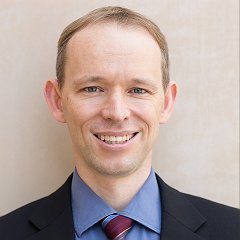
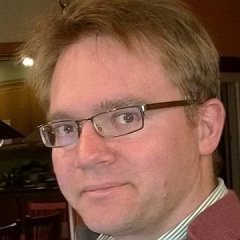
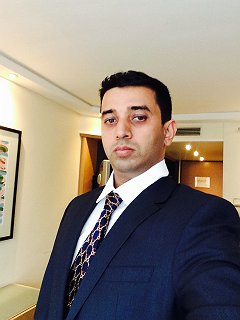
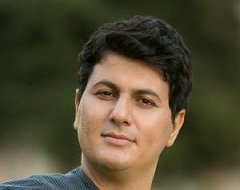
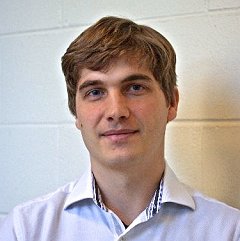
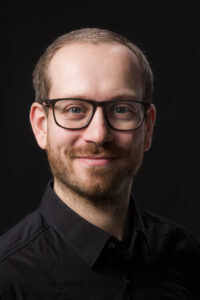
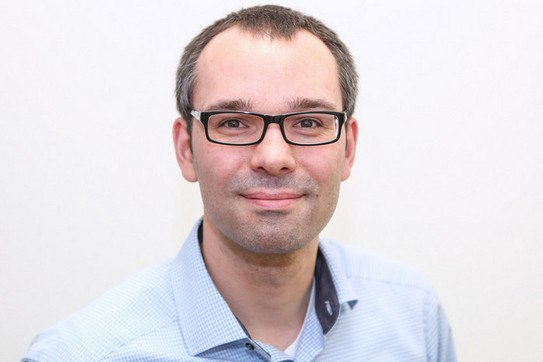
Dennis C. Ahrholdt is a Professor of General Business Administration at the Hamburg School of Business Administration (HSBA) , specializing in Digital Marketing & E-Business . He serves as a member of the scientific advisory board and ombudsperson for scientific integrity at HSBA. His academic journey began at the University of Hamburg and Lappeenranta University of Technology (Finland). He earned his PhD summa cum laude from the University of Hamburg's Institute for Operations Research, with a dissertation on "E-Commerce Website Success Factors" that received multiple awards. Research Interests: Digital Marketing & E-Business Service Management Online & Service Consumer Behavior Data Science & Analytics The 15 most recent publications reveal three major research trends: (1) digital trust mechanisms in e-commerce, (2) visitor satisfaction dynamics in tourism/hospitality, and (3) nonlinear customer loyalty models through data-driven approaches. Scientific Awards: Best Dissertation Award (University of Hamburg) BÜROPA-PREIS 2011 (Stifterverband für die Deutsche Wissenschaft) As an advisor, he has mentored notable researchers like Dr. Ricarda Bohn, Dr. Susanne Faerber, and Prof. Dr. Tobias Knuth. He contributes to journals including European Journal of Operational Research and European Management Journal , while co-authoring the best-selling Springer textbook "Online-Marketing-Intelligence" (300,000+ downloads).
Prof. Dr. Constantin Hoch serves as a full-time Professor in the Department of Chemistry within the Faculty of Chemistry and Pharmacy at Ludwig Maximilian University of Munich (LMU Munich). His research group (Arbeitskreis Hoch) operates from Butenandtstraße 5-13 Haus D, D-81377 München, with direct contact via +49 (0)89 2180-77421. His research program focuses on fundamental chemical phenomena with emphasis on sustainable material development and structural analysis. The group actively investigates inorganic synthesis pathways, crystal engineering principles, and environmentally conscious chemical technologies aimed at advancing sustainable industrial applications. Experimental work includes advanced characterization of novel compounds and materials systems. Group activities are documented through laboratory videos available on their institutional webpage, demonstrating practical research methodologies and experimental setups within their specialized chemistry domain.
Dr. Lukas Pflug is a researcher at the Department of Mathematics, School of Engineering, Friedrich-Alexander University Erlangen-Nürnberg (FAU). His work spans applied mathematics, chemical engineering, and materials science with a focus on nonlocal conservation laws, topology optimization, and nanoparticle synthesis. Primary affiliation: FAU Erlangen-Nürnberg Research themes: Nonlocal PDEs, Robust Optimization, Plasmonics Key contributions include: Developing mathematical frameworks for nonlocal conservation laws and their singular limit problems Advancing topology optimization techniques for photonic crystals and composite materials Pioneering simulation-driven approaches in nanoparticle synthesis and characterization His methodology integrates theoretical analysis with computational implementation, producing 15+ peer-reviewed publications in high-impact journals like Advanced Optical Materials and SIAM Journal on Applied Mathematics between 2023-2025.
David Monniaux is a senior researcher (directeur de recherche) at CNRS and an adjunct professor at École polytechnique. He works at VERIMAG, a computer science laboratory jointly operated by CNRS and the University of Grenoble. Dr. Monniaux obtained his PhD in 2001 from Université Paris Dauphine under Professor Patrick Cousot, with a dissertation on the static analysis of probabilistic programs by abstract interpretation. He later earned his habilitation in computer science in 2009 from Université Joseph Fourier, Grenoble, and also holds an agrégation in mathematics. Monniaux's research focuses on program verification, with particular emphasis on proving software correctness. His work spans theoretical foundations in computability theory and practical applications in safety-critical systems. He has made significant contributions to abstract interpretation, static analysis, and the verification of numerical properties in programs. His research bridges computer science theory with practical engineering challenges, particularly in the context of critical embedded systems where software failures can have severe consequences. His work connects to diverse fields including game theory, algebra, and convex optimization. His recent publications demonstrate a strong focus on improving the precision and efficiency of static analysis techniques. Key themes include polyhedral approximation, program analysis with local policy iteration, abstraction of arrays and maps, synthesis of ranking functions, and computing worst-case execution times. These works collectively advance the field of program verification by addressing challenges in handling nonlinear constraints, branching, and complex data structures while maintaining computational feasibility. Monniaux has supervised several students including Julien Henry, Alexis Fouilhé, George (Egor) Karpenkov, and Alexandre Maréchal (now at LIP6), with current students Hang Yu and Valentin Touzeau. He has led significant research projects including VERASCO (2012-2015), which aimed at integrating a static analyzer into the CompCert certified compiler, and STATOR (2012-2017), an ERC starting investigator grant exploring advanced techniques for automatic inference of program invariants. At VERIMAG, Monniaux is part of a vibrant research community focused on critical systems. His work connects with broader efforts in formal methods, with applications in aviation, automotive systems, and other safety-critical domains where software reliability is paramount.
Erika Ábrahám is a Full Professor at RWTH Aachen University , Germany, leading the Theory of Hybrid Systems research group. Her academic journey includes positions as a Junior Professor (2008-2013) and postdoctoral researcher at institutions like Jülich Research Centre and Albert-Ludwigs-University Freiburg. Her research interests span formal methods, SMT solving, hybrid systems verification, and probabilistic systems. She has contributed to symbolic computation, railway timetables, and probabilistic hyperproperties, with recent work focusing on cylindrical algebraic decomposition, conflict-driven search algorithms, and stochastic modeling. Scientific contributions include 15+ articles (2021-2025) on topics like probabilistic hyperproperties , hybrid automata , and symbolic arithmetic , often published in LNCS, Springer, and Elsevier venues. She has collaborated on tools like HyPro and SMT-RAT, and edited proceedings for conferences including NASA Formal Methods and QEST.
Clark Barrett is a Professor in the Department of Computer Science at Stanford University, where he conducts research in formal methods, automated reasoning, and verification. He is affiliated with several research centers including the Stanford Center for Automated Reasoning, Stanford Center for AI Safety, Stanford Agile Hardware Project, and Stanford Center for Blockchain Research. His research focuses on developing formal methods and tools for verifying complex systems, with particular emphasis on satisfiability modulo theories (SMT), verification of neural networks, hardware design verification, and security. His work bridges theoretical foundations with practical applications across multiple domains. Over the past decade, Barrett's research has evolved from foundational work in SMT solving to increasingly diverse applications including neural network verification, hardware verification, and AI safety. His recent publications demonstrate a strong focus on practical verification techniques for real-world systems, particularly in the areas of hardware design, neural networks, and programming languages. The trend shows an expansion from core verification techniques to broader applications in AI safety and secure systems design. 2021 CAV (Computer Aided Verification) Award Barrett leads several major research initiatives and collaborates extensively with industry partners. His work on the Marabou neural network verification framework, SMT-LIB standard, and Symbolic QED verification methodology have had significant impact in both academic and industrial settings. He has supervised numerous PhD students and postdoctoral researchers who have gone on to successful careers in academia and industry. He is a key member of the Stanford Center for Automated Reasoning, which develops foundational technologies for automated reasoning, and the Stanford Center for AI Safety, where he focuses on formal methods for ensuring the safety and reliability of AI systems. His work on the Stanford Agile Hardware Project aims to revolutionize hardware design through formal methods and verification techniques.
Nikolaj Bjørner is a Principal Researcher at Microsoft Research , renowned for his foundational contributions to automated reasoning and formal verification. He is the co-creator and lead architect of the award-winning Z3 SMT solver , one of the most widely used tools in formal methods and program analysis. His research interests lie at the intersection of formal methods , programming languages , and automated reasoning . Specific areas include: SMT solving – theory solvers, quantifiers, and solver architectures Program verification – symbolic execution, model checking, and scalable analysis Constraint solving – linear arithmetic, strings, bit-vectors, and custom theories Network and cloud verification – configuration synthesis and policy checking Bjørner's recent work emphasizes scalable verification techniques for complex systems including cloud configurations, parameterized protocols, and sparse code optimizations. His publications span foundational theory, tool design, and real-world applications. He has served on the program committees of premier conferences such as POPL , PLDI , VMCAI , ASE , and SPLASH , shaping the direction of the field. He is a frequent invited speaker and tutorial presenter, including at PADL 2020 and POPL 2023 TutorialFest .
Rupak Majumdar is a Scientific Director at the Max Planck Institute for Software Systems (MPI-SWS), with a distinguished career in formal verification, control systems, and programming languages. His research spans reactive, real-time, hybrid, and probabilistic systems, focusing on verification and synthesis problems in distributed and concurrent environments. Majumdar earned his B.Tech. in Computer Science from IIT Kanpur (where he received the President’s Gold Medal) and his Ph.D. from UC Berkeley (awarded the Leon O. Chua Award). His work has been recognized through prestigious honors including an NSF CAREER Award, Sloan Fellowship, ERC Synergy Grant, and Most Influential Paper Awards from PLDI and POPL. Research Areas: Formal Verification, Hybrid Systems, Stochastic Systems, Programming Languages, Automata Theory Leadership: Scientific Director, MPI-SWS; ISEC 2026 PC Chair His publications address critical problems in software verification, with recent work focusing on probabilistic systems, distributed protocol testing, and reinforcement learning for formal methods. Awards and grants reflect his impact on computer science and software engineering. Current students include Mahmoud Salamati, Ashwani Anand, V.R. Sathiyanarayana, and Mohammad Khoshechin, while graduated advisees hold positions at institutions like Amazon, Google, and academic research centers. Scientific Awards: President’s Gold Medal (IIT Kanpur) Leon O. Chua Award (UC Berkeley) NSF CAREER Award Sloan Foundation Fellowship ERC Synergy Award Distinguished Alumnus Award (IIT Kanpur) Most Influential Paper Awards (PLDI, POPL) Best Paper Awards (SIGBED, EAPLS, SIGDA)
Mohsen Lesani is an Associate Professor at the Computer Science and Engineering Department of University of California, Santa Cruz . He obtained his PhD from UCLA , MS in Artificial Intelligence from Sharif University of Technology , and BS in Software Engineering from University of Tehran . His research focuses on reliability and security of software systems , particularly concurrent and distributed systems , with recent work on secure replicated systems and distributed machine learning . NSF CAREER Award (2020) DARPA Young Faculty Award (2022) SIGPLAN Research Highlight (2019) Distinguished Paper Award at OOPSLA 2018 Best Paper Award at ISSRE 2015 His recent publications tackle challenges in automated synthesis of distributed protocols , heterogeneous replication , secure blockchain transactions , and verified RDMA-based data types . He advises PhD students Xiao Li , Eric Chan , Javad Saber-Latibari , and Tejas Mane in the Safe and Secure Software (S3) lab . He has taught courses on Distributed Systems , Parallel Programming , and Compiler Design .
Loris D'Antoni is an Associate Professor in the Department of Computer Science and Engineering at the University of California at San Diego (UCSD). He also holds a visiting academic position at AWS. His research focuses on helping people write trustworthy software through advances in programming languages, program verification, and synthesis techniques. Education : Bachelor's and Master's degrees in Computer Science from the University of Torino (2008-2010); PhD in Computer Science from the University of Pennsylvania (2015). His research interests span programming languages, formal verification, program synthesis, automata theory, and trustworthy machine learning systems. Recent work includes developing frameworks for semantics-guided synthesis (SemGuS), formal verification of fairness in machine learning, and methods for constraining large language models of code. Recent publications address topics like access control policy analysis, grammar-constrained decoding for language models, and automated specification synthesis. These works intersect computer science, formal methods, and machine learning. Awarded multiple prestigious accolades including the NSF CAREER Award, Microsoft Research Faculty Fellowship, and Google Faculty Award, he has also received the Morris and Dorothy Rubinoff Dissertation Award and was a Phillip R. Certain-Gary D. Sandefur Distinguished Faculty Award recipient. D'Antoni advises PhD students including Keith Johnson, Shaan Nagy, Jinwoo Kim, and Kanghee Park. Former advisees like Yuhao Zhang, Qinheping Hu, and Kausik Subramanian have moved on to prominent roles at companies such as Amazon, Google, and Facebook. He leads the Programming Systems Group at UCSD and collaborates with AWS on specification-aligned LLMs. His work also involves tools like AutomataTutor for education and projects at the intersection of program synthesis and machine learning robustness.
Robert S. Makar, MD, PhD is Associate Professor of Pathology at Harvard Medical School and Director of the FDA-licensed Blood Transfusion Service at Massachusetts General Hospital (MGH). He concurrently serves as Associate in Pathology at MGH, where he oversees a multi-disciplinary team responsible for transfusion support, therapeutic apheresis, and histocompatibility testing across the hospital’s transplant, trauma, cardiac surgery, and oncology programs. Education & Certification MD – UT Southwestern Medical School Residency – Massachusetts General Hospital, Pathology Fellowship – Massachusetts General Hospital, Blood Banking / Transfusion Medicine Board Certified – Blood Banking/Transfusion Medicine, American Board of Pathology Board Certified – Clinical Pathology, American Board of Pathology Research Interests Dr. Makar’s laboratory and translational research focuses on three interconnected themes: (1) immunologic mechanisms driving HLA and red-cell alloimmunization following transfusion; (2) evidence-based screening strategies to mitigate transfusion-related acute lung injury (TRALI); and (3) clinical translation of cellular immunotherapies—particularly CAR-T cells—for autoimmune and malignant diseases. His group integrates high-resolution HLA typing, cellular immunology assays, and large-scale transfusion databases to refine risk prediction models and to design safer blood products. Publication Themes Over the past decade Dr. Makar has published extensively on thrombotic microangiopathies (TMA), validating the widely adopted PLASMIC score for rapid TTP risk assessment and exploring recombinant ADAMTS13 as targeted therapy for immune-mediated TTP. Recent manuscripts also address germline determinants of transplant-associated TMA, non-alloimmune causes of platelet refractoriness, and optimization of apheresis protocols for CAR-T manufacturing at MGH. Scientific Awards & Honors No specific awards or named lectureships were identified in the provided text; however, his authorship in New England Journal of Medicine , Lancet Haematology , and other high-impact journals attests to peer recognition in transfusion medicine and hematology. Leadership & Clinical Service Director, Blood Transfusion Service, MGH (FDA-licensed, AABB-accredited reference laboratory) Medical Director oversight for ~70,000 blood-component transfusions and >13,000 whole-blood donations annually Clinical consultation services for apheresis, transfusion management, and pre-transplant compatibility assessment Supervision of resident physicians and fellows rotating through transfusion medicine Laboratory & Team Dr. Makar leads the integrated Blood Transfusion Service, encompassing the Kraft Family Blood Donor Center, Outpatient Infusion Unit, Apheresis Unit, and ASHI-certified Histocompatibility Laboratory. The clinical team includes attending physicians, resident pathologists, specialized nurses, and research coordinators who collectively support adult and neonatal transfusion needs as well as cutting-edge cellular-therapy trials.
Dr. Basil Ell is a faculty member at Bielefeld University's Faculty of Engineering, where he is affiliated with the Semantic Databases Group within the Center for Cognitive Interaction Technology (CITEC). He teaches several courses including Applied Optimization, Programming, Deep Learning, and International Courses in Data Science. His research focuses on the intersection of artificial intelligence, semantic web technologies, and data science. Dr. Ell's work spans multiple areas including knowledge graph representation, ontology engineering, natural language processing, and machine learning applications for dataset retrieval and question answering systems. He has made significant contributions to the fields of link prediction, relation extraction, and semantic data spaces. Dr. Ell's research output demonstrates a consistent focus on improving how machines understand and process semantic information. His recent work has explored the integration of numerical literals in knowledge graphs, advanced dataset retrieval systems, and the application of graph neural networks for relation extraction. He has also contributed to domain-specific applications in materials science and clinical evidence synthesis. ACORDAR: A test collection framework for dataset retrieval OTTR-centric ontology engineering methodologies Human-machine collaborative annotation systems Semantically accessible data spaces for specialized domains Dr. Ell maintains an active research agenda with numerous recent publications that bridge theoretical advances with practical applications. His work often involves interdisciplinary collaboration, particularly with the Center for Cognitive Interaction Technology at Bielefeld University.
Dr. Daniel Kunkel is a Researcher at the Institute for Atmospheric Physics, Johannes Gutenberg University Mainz. He works within the group "Airborne Measurements and UTLS Transport Processes" headed by Univ.-Prof. Dr. Peter Hoor. Research Interests: Constituent transport in the troposphere and UTLS Dynamical processes in the UTLS Numerical modeling Data analysis Research Tools: Numerical models (ICON, COSMO, LAGRANTO, FLEXPART) NWP products and reanalysis data Airborne measurements Python programming His work focuses on synoptic- and meso-scale dynamics affecting atmospheric constituent transport, particularly across the tropopause and polar dome. He employs global and regional numerical models, Lagrangian trajectory analysis, and observational data to study mixing processes and exchange phenomena. Scientific Awards: No awards listed in the available data. Collaborations: Involved in international field campaigns (PHILEAS, TPEx, WISE, SOUTHTRAC) and SPARC activities like OCTAV-UTLS.
Boris Pfander is a full Professor of Cell Biology at the Faculty of Chemistry and Chemical Biology, Technische Universität Dortmund, within the Dortmund Life Science Center (DOLCE). His research focuses on DNA replication dynamics, genome maintenance mechanisms, and chromatin remodelling during DNA repair. Current research includes systems for unscheduled replication in G1 phase, DSB repair pathway choice, and nuclear proteostasis via autophagy. Major collaborations include labs at Columbia University, IRB Bellinzona, and Max Planck Institute of Biochemistry. His work has been cited over 5000 times, with key discoveries like the PCNA switch mechanism in replication stress and cell cycle-chromatin integration for DSB repair. He has received prestigious awards including the Otto Hahn Medal and Human Frontier Science Program fellowship. Professor Pfander's lab has trained numerous PhD students, including Lorenzo Galanti and Martina Peritore, and received DFG funding for projects on replication stress and DNA repair. His recent publications highlight advances in replication fork stability, nucleosome remodelling domains, and double-strand break processing. Scientific Awards: Otto Hahn Medal (2006) Otto Hahn Award (2010-2017) Human Frontier Science Program Fellowship (2007-2010) Grants: DFG FOR5504 funding (2022 retreat) DFG SFB1064 chromatin dynamics (441,600 Euro) Labs/Teams: Moved lab from Martinsried to Dortmund (2024) Collaborative teams with CECAD, IRB Bellinzona, and Columbia University
Prof. Sebastian Henke leads the Inorganic Chemistry research group at the Faculty of Chemistry and Chemical Biology, Technische Universität Dortmund. His team focuses on materials chemistry at the intersection of solid-state and molecular chemistry, developing functional materials via Werner-type coordination networks. Key research themes include metal-organic frameworks (MOFs), coordination networks, and MOF glasses for applications in gas separation, energy storage, and solid electrolytes. Research Focus: Stimuli-responsive MOFs for industrial separations Mechanochemical synthesis of MOF glasses Design of water-processible porous materials Thermal and mechanical stability of framework systems Exploration of entropy-driven disorder-order transitions Article Trends: Recent publications emphasize MOF glass formation through mechanochemistry, linker exchange strategies to engineer porosity, and the use of thermally sensitive metals like sodium and cadmium for sustainable materials. Collaborations with institutions in Oxford, Kyoto, and Düsseldorf highlight interdisciplinary approaches to redox-active glasses and polyamorphism. Scientific Awards: Teaching Price, TU Dortmund University (2020/21) Max-Buchner-Scholarship from DECHEMA Advising & Grants: Henke mentors PhD students like Tim Krokowski (Best Poster Prize, MOFschool2025) and Jan-Benedikt Weiß (Kekulé Fellowship). His group secures funding from the Volkswagen Foundation, DFG Priority Program COORNETs, and the Heinrich J. Klein Foundation for projects on MOF glasses, porous liquids, and solid-state ionics. Labs & Collaborations: The group utilizes advanced facilities, including the Dortmund synchrotron DELTA and Diamond Light Source (UK), and collaborates internationally with labs in Oxford, Kyoto, and Perth. Their work spans mechanochemical synthesis, high-pressure studies, and the development of MOF-derived glass-ceramics with enhanced mechanical properties.