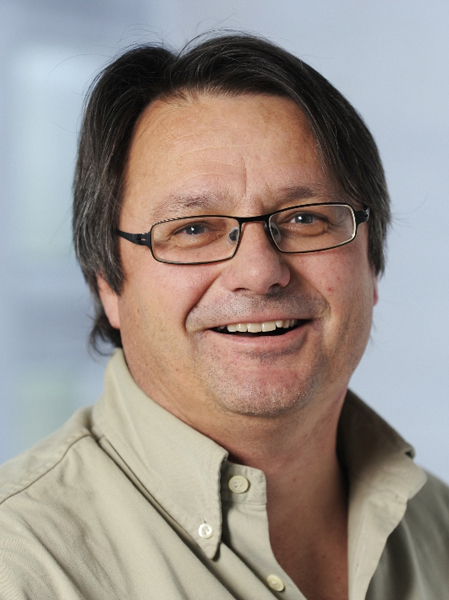
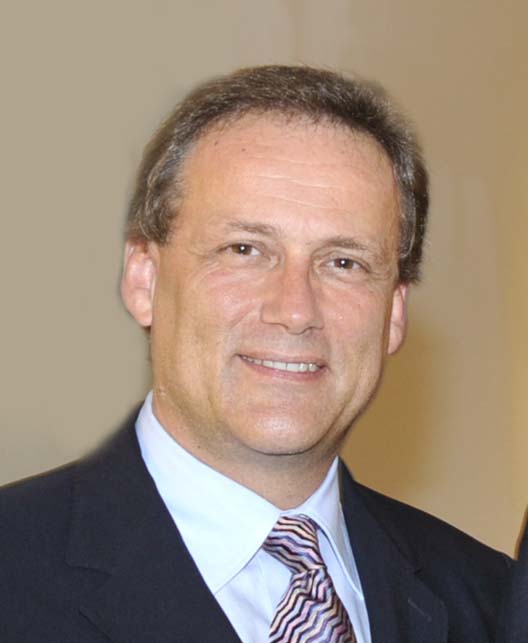
Tobias Bolch is a full Professor at the Institute of Geodesy, Graz University of Technology (TU Graz), Austria, specializing in cryospheric research with a focus on High Mountain Asia and the Tibetan Plateau. His work integrates advanced geodetic and remote sensing methodologies to address critical climate change impacts on glaciers and related systems. His research spans: Glacier dynamics and mass balance monitoring using InSAR and optical satellite data Rock glacier kinematics and permafrost interactions Glacial lake evolution and outburst flood hazards Climate-glacier-hydrology linkages in Central Asian river basins Long-term cryosphere reconstruction using historical satellite archives Analysis of his 2023-2025 publications reveals dominant trends in quantifying ice loss acceleration, particularly from lake-terminating glaciers, and the application of multi-sensor approaches (Sentinel, ASTER, UAV) for decadal-scale change detection. His work consistently emphasizes the hydrological consequences of glacier retreat for downstream water security across High Mountain Asia. No scientific awards or specific grant programs were documented in the provided materials. While student supervision details are absent, his position at TU Graz's Institute of Geodesy indicates active mentorship within geospatial and cryospheric research programs. His homepage (https://ifg.tugraz.at) serves as the primary hub for research dissemination through the university's PURE portal.
Wolfgang Kunz is a Full Professor (C4, W3) and Chair of Electronic Design Automation at the Technische Universität Kaiserslautern since 2001. His academic career spans multiple prestigious institutions, including Goethe-University Frankfurt/Main and the University of Massachusetts, Amherst. He has held leadership roles such as Dean (2005-2007) and Vice-Dean (2007-2009) at TU Kaiserslautern. Habilitation (Dr. rer. nat. habil.), Computer Science, University of Potsdam (1996) Doctoral degree (Dr.-Ing.), Electrical Engineering, University of Hannover (1992) Dipl.-Ing. degree, Karlsruhe Institute of Technology (1989) His research focuses on hardware verification, security, and optimization, particularly in embedded systems and processors. His work on formal verification methods has been commercialized by companies like Synopsys, Mentor Graphics, and Siemens EDA. His 2016-2021 publications address critical security issues such as Spectre/Meltdown and introduce innovative verification frameworks adopted by industry leaders like Infineon and OneSpin Solutions. Scientific awards include the IEEE Fellow (2006), German IT Society Award (2005), and TU Kaiserslautern Distinguished Teaching Award (2016). He has served on editorial boards of major journals and coordinated the Erasmus Mundus European Master Program in Embedded Computing Systems since 2010. Key students: Jörg Bormann, Raik Brinkmann, Tobias Ludwig Collaborations: Siemens EDA, Infineon, AbsInt, Intel SCAP Spin-offs: LUBIS EDA, OneSpin Solutions
Christian Friedrich Wilhelm Becker is a full Professor at the University of Vienna, holding a position within the Faculty of Chemistry and the Department of Biological Chemistry. His research profile shows extensive activity in protein chemistry and biochemistry, with particular focus on post-translational modifications and their implications in disease mechanisms. His work bridges chemical biology, biochemistry, and biomedical applications, contributing significantly to the academic and research landscape at one of Europe's oldest and most prestigious universities. Faculty of Chemistry, University of Vienna Department of Biological Chemistry Active research leader with numerous ongoing projects Significant publication record spanning multiple disciplines Professor Becker's research primarily focuses on protein chemistry, particularly post-translational modifications and their role in protein function and dysfunction. His work spans multiple interconnected areas including ubiquitination, protein aggregation, prion protein behavior, and biomimetic approaches to protein analysis. His research has significant implications for understanding neurodegenerative diseases and developing novel therapeutic approaches. The fingerprint analysis of his work shows strong connections to biochemistry, molecular biology, and chemistry, with particular emphasis on cysteine chemistry, glycosylation, and amino acid modifications. Analysis of Professor Becker's recent publications (2021-2025) reveals a consistent research trajectory focused on protein modification techniques and their biological implications. His work shows increasing sophistication in chemical biology approaches to study protein function, with particular emphasis on ubiquitination pathways and protein aggregation mechanisms. The integration of chemical synthesis methods with biological analysis represents a hallmark of his research approach. His publications span high-impact journals in biochemistry, chemical biology, and peptide science, demonstrating the interdisciplinary nature of his contributions. Professor Becker has received notable recognition for his research contributions, most prominently the Cathay Award in 2020. This award acknowledges his significant contributions to the field of protein chemistry and chemical biology. His work appears to have practical applications in therapeutic development, particularly in the areas of targeted protein degradation and immunotherapy, which likely contributed to this recognition. Cathay Award (2020) Professor Becker leads multiple significant research projects, including 'Targeted protein degradation - from small molecules to complex organelles' (2020-2024), 'Taktira: Development of an improved, low-side-effect and sustainable immunotherapy' (2019-2023), and 'Structure Zoom: Zooming in on protein functional sites with atomic resolution' (2018-2021). These projects demonstrate substantial grant funding and collaborative research efforts across multiple institutions. His active participation in 290 recorded activities through 2025 indicates a highly engaged research program with numerous collaborators and trainees. Targeted protein degradation project (2020-2024) Taktira immunotherapy project (2019-2023) Structure Zoom project (2018-2021) Professor Becker's research environment includes a robust team of collaborators and junior researchers, as evidenced by the numerous co-authored publications and activities. His work intersects with multiple research groups studying protein function, modification, and therapeutic applications. The international collaboration network shown in his profile indicates significant engagement with researchers across multiple countries, creating a dynamic research ecosystem focused on advancing protein science and its biomedical applications.
Professor Moncef Gabbouj is a distinguished academic and researcher currently serving as Professor of Signal Processing at the Department of Computing Sciences, Faculty of Information Technology and Communication Sciences, Tampere University, Finland. Previously, he held the same position at Tampere University of Technology before the merger in 2019. He has also held visiting professorships at prestigious institutions including Hong Kong University of Technology and Science, University of Southern California, and Purdue University. Ph.D. and MSc. in Electrical Engineering from Purdue University, USA (1989 and 1986) B.Sc. in Electrical Engineering from Oklahoma State University, USA (1985) Prof. Gabbouj's research spans multiple domains within signal and image processing, with a strong focus on machine learning applications. His primary research interests include artificial intelligence, machine learning, Big Data analytics, multimedia content-based analysis, indexing and retrieval, nonlinear signal and image processing, voice conversion, and video processing and coding. His work bridges theoretical advancements with practical applications across various industries, particularly in multimedia communications and biomedical applications. His extensive publication record demonstrates a clear evolution from traditional signal processing techniques toward more sophisticated machine learning and deep learning approaches. Recent work shows increasing focus on convolutional neural networks for various applications including ECG classification, video processing, financial time-series analysis, and image recognition tasks, reflecting the broader trend in the field toward deep learning methodologies while maintaining strong foundations in signal processing theory. IEEE Fellow (2011) Member, Finnish Academy of Science and Letters (2014) Knight, First Class, of the Order of the White Rose of Finland (2006) Nokia Foundation Recognition Award (2005) Nokia Foundation Visiting Professor Award (2012) Finnish Cultural Foundation for Art and Science Award (2017) TUT Foundation Grand Award (2015) Prof. Gabbouj has supervised 64 doctoral and 72 Master's theses, demonstrating his significant contribution to academic mentoring. His research has been supported by substantial funding, including research grants totaling 8.5 million Euro (2001-2015). He has served as Academy of Finland Professor during 2011-2015 and has been involved in numerous EU research projects including Horizon, ESPRIT, HCM, IST, COST, Tempus and Erasmus programs. As Editor, Guest Editor or member of the Editorial Board of 6 international scientific journals, he has significantly influenced the academic discourse in his field. He leads the Signal Analysis and Machine Intelligence (SAMI) research group at Tampere University and serves as the Finland Site Director of the NSF IUCRC funded Center for Visual and Decision Informatics. His research unit focuses on applying advanced machine learning techniques to solve complex problems in signal processing, computer vision, and multimedia analytics, with applications ranging from healthcare to multimedia communications and financial analysis.
Elisa Riedo is a tenured Professor of Chemical and Biomolecular Engineering at New York University (NYU) Tandon School of Engineering, with joint appointments as Professor of Physics in NYU’s College of Arts and Science and as affiliated Professor of Mechanical Engineering at Tandon. She serves as Director of Faculty Development at NYU Tandon and has held prior tenured positions at Georgia Tech (2003–2015) and CUNY ASRC (2015–2018). Her academic career spans over two decades, with a Ph.D. in Physics from the University of Milano (2000) and postdoctoral work at EPFL. Her research focuses on nanotechnology , graphene and 2D materials , and thermal scanning probe lithography (tSPL) , with applications in biomedical diagnostics quantum electronics electromagnetic interference shielding mechanical reinforcement of materials She pioneered tSPL for sustainable nanofabrication and discovered diamene—a single-layer diamond structure from graphene under pressure. Her recent work involves transparent infrared electrodes using silver nanowires (2025) and self-organized graphene stacking domains for quantum technologies (2024). She has secured major grants from National Science Foundation , Department of Defense , and Army Research Office . Scientific honors include: 2023 NYU Tandon Excellence in Research Award 2013 American Physical Society Fellow 2005 CREA Innovation Award Membership in the Academy of Europe (2023) She contributes to editorial boards for journals like 2D Materials and Applications and advises companies such as Mirimus Inc. and SwissLitho AG .
Professor Matthew Jonathan Rosseinsky holds the Chair of Inorganic Chemistry at the University of Liverpool, a position he has occupied since October 1999. His career includes significant appointments at the University of Oxford (1992-1999) and Bell Laboratories in New Jersey (1990-1992), following his DPhil at Merton College, Oxford. As a Fellow of the Royal Society and recipient of numerous prestigious awards, Professor Rosseinsky maintains an active research program and leadership roles in the international chemistry community. Professor Rosseinsky's educational background includes a First Class Honours degree in Chemistry with Quantum Chemistry from the University of Oxford (1987) and a DPhil in "Physical Properties of Superconducting Oxides and Radical Cation Salts" completed in 1990 under Professor P. Day FRS. His research focuses on the synthesis of new materials with applications in energy storage and generation, communications, separation, and catalysis. The Rosseinsky Group employs a broad range of synthesis and characterization techniques, including neutron and synchrotron X-ray diffraction, combined with computational methods in collaboration with Dr. George Darling. Current research areas include Dynapore, CO2 fuels, SOLBAT, and CATMAT projects that target specific material challenges. Professor Rosseinsky's publication record is exceptional, with 304 papers including 11 in Nature, 6 in Science, and 3 in Nature Materials, accumulating over 15,000 citations and an h-index of 56 as of 2012. His work demonstrates consistent excellence across materials chemistry, with particular emphasis on porous frameworks, electronic materials, and solid-state chemistry. Among his numerous accolades are the Harrison Memorial Prize (1991), Corday-Morgan Medal (2000), Royal Society Wolfson Research Merit Award (2002), De Gennes Prize (2009), and the prestigious Hughes Medal from the Royal Society (2011). He also holds an ERC Advanced Investigator Grant and has delivered distinguished lectures worldwide. Professor Rosseinsky has served in numerous editorial and advisory capacities, including as Associate Editor for Chemical Sciences, membership on the Royal Society Conference and Travel Grant Committee since 2007, and as a member of the International Advisory Board for the Max Planck Institut for Solid State Research since 2011. His professional activities extend to international review committees for research institutions in France, South Korea, and Saudi Arabia. The Rosseinsky Group operates within the Department of Chemistry at the University of Liverpool, collaborating extensively with researchers including Dr. John Claridge, Professor Andrew Cooper, and Professor Paul Chalker. The group maintains strong international partnerships and utilizes advanced facilities for materials synthesis and characterization to drive innovation in functional materials development.
Georges Gielen is Full Professor in the Department of Electrical Engineering (ESAT) at KU Leuven, Belgium, and part-time Research Director at imec. He has held multiple leadership roles including Chair of ESAT Department (2012-2013, 2020-2024) and Vice-Rector for Science, Engineering & Technology (2013-2017). His academic career spans over 30 years at KU Leuven, progressing from Assistant to Full Professor. His research focuses on analog and mixed-signal integrated circuit design automation , with expertise in CAD tools, design optimization, sensor interfaces, and neuromorphic systems. His work bridges hardware design with machine learning, particularly in hardware-efficient AI implementations and biomedical applications. He has pioneered techniques for automated analog circuit sizing, topology synthesis, and reliability-aware design in nanometer CMOS. Gielen has received numerous accolades including the IEEE CAS Mac Van Valkenburg Award (2015), IEEE CAS Charles Desoer Award (2020), and EDAA Achievement Award (2021). He holds an ERC Advanced Grant AnalogCreate and is an IEEE Fellow since 2002. As a prolific scholar, he has chaired major conferences including DATE (2006), ICCAD (2007), and ESSCIRC (2017). He has graduated over 55 PhD students through the MICAS research group at KU Leuven, currently supervising 13 doctoral candidates. His research team collaborates extensively with imec and industry partners on cutting-edge projects in carbon-aware AI accelerators, uncertainty-aware design, and neuromorphic sensor interfaces.
Sylvain Lefebvre is a permanent researcher at INRIA (Institut National de Recherche en Informatique et en Automatique) in France, where he leads the MFX research team since 2018. Previously, he was part of the ALICE group at INRIA Nancy (2009-2018) and the REVES team in Sophia Antipolis (2006-2009). His career includes a postdoctoral position at Microsoft Research Seattle (2005) following his PhD at INRIA Rhones-Alpes under Fabrice Neyret. His educational background includes a PhD in Computer Graphics from Université Joseph Fourier (Grenoble) in 2005, preceded by a Master in Computer Graphics from INP Grenoble in 2001. His habilitation thesis focused on Runtime Texture Synthesis. Lefebvre's research centers on simplifying content creation for highly detailed patterns, structures, and shapes with applications spanning Computer Graphics to additive manufacturing. He develops fast, controllable by-example synthesis approaches that generate content while enforcing user-specified constraints. His work addresses computational challenges through novel data structures and algorithms optimized for GPUs and FPGAs, including his Silice programming language. The ERC-funded ShapeForge project (2012-2017) advanced shape generation for 3D printing, leading to the IceSL software for digital modeling and fabrication. Analysis of his 15 most recent publications reveals a strong focus on additive manufacturing optimization, with recurring themes in structural integrity, material efficiency, and geometric algorithms. His work bridges computer graphics theory with practical fabrication constraints, particularly in microstructure design, slicing techniques, and mechanical metamaterials. The interdisciplinary nature spans computer science, materials engineering, and robotics. EUROGRAPHICS Young Researcher Award (2010) ERC Starting Grant for ShapeForge project (2012) Lefebvre has advised over 25 PhD students and interns including Marco Freire, Thibault Tricard, and Jimmy Etienne. His ShapeForge project received significant ERC funding, supporting research in computational fabrication. He serves on numerous program committees including SIGGRAPH, Eurographics, and SIGGRAPH Asia, reflecting his leadership in the computer graphics community. As leader of the MFX team since 2018, Lefebvre directs research in computational fabrication, focusing on IceSL software development for 3D printing workflows. The team integrates computer graphics techniques with manufacturing constraints, developing tools that simplify complex object design and fabrication while addressing real-world challenges in material usage and structural integrity.
Assoc. Prof. Dietmar Pum is a leading researcher at the Institute of Biophysics, University of Natural Resources and Life Sciences, Vienna (BOKU). With a career spanning over three decades, he has pioneered work on S-layer proteins as nanobiotechnological tools and biomimetic surface functionalization. His research bridges microbiology, biophysics, and nanomaterials science. Education & Career Doctorate (1984) and Habilitation (1992) at Vienna University of Technology Awarded FEBS (1987) and EMBO (1982) fellowships Assoc. Univ. Prof. since 1997, Deputy Head of Biophysics Institute since 2014 Research Focus Dr. Pum's work centers on leveraging S-layer proteins for nanoscale fluid mechanics , molecular imprinting , and biohybrid materials . His projects explore: Self-assembly of 2D protein crystals Functionalization of carbon nanotubes Biomimetic sensor development Applications in diagnostics and environmental technology Publication Trends His recent publications (2025-2019) highlight interdisciplinary advancements in: Nanoscale biofluid dynamics Gold nanoparticle synthesis via microbial enzymes Archaeal S-layer characterization Protein-directed nanomaterials Biosensor platforms Lipid quantification via machine learning Scientific Recognition Philip Morris Research Prize (1998) Cardinal Innitzer Prize (1992) ÖAGM Prize (1986) Peer reviewer for Nature Materials , Advanced Materials , and Biophysical Journal Advising & Collaborations Dr. Pum has supervised over 15 theses, mentoring students in topics ranging from Caenorhabditis elegans imaging to nanomembrane fabrication. He leads international collaborations under EU Horizon and FWF grants, including the Stimuli Responsive Materials project (2020-2025). Labs & Networks As a core member of BOKU's Center for NanoBiotechnology and the Ludwig Boltzmann Institute for Molecular Nanotechnology , he develops bioinspired nanomaterials and contributes to global programs in molecular self-assembly.
Hans Tompits is an Associate Professor in the Department of Knowledge-Based Systems at Technische Universität Wien (Vienna University of Technology). His research focuses on computational logic, declarative logic programming, and formal methods, with a particular emphasis on Answer-Set Programming (ASP). He coordinates the Master's program in Logic and Computation and leads projects in areas such as formal methods for optimization, fault-tolerant autonomous systems, and algorithmic composition. His work bridges theoretical advancements with practical applications, including tools like SeaLion (an ASP IDE with debugging support) and dlvhex (an ASP-based semantic web reasoner). He has contributed to foundational topics like program equivalence, debugging techniques, and integration of ASP with external systems. His recent projects address challenges in autonomous vehicle architectures, music composition algorithms, and safety-critical system design. Tompits has published extensively on topics ranging from nonmonotonic reasoning and modal logics to the development of declarative programming tools. His interdisciplinary approach spans computer science, mathematics, and AI, with applications in both academic and industrial contexts.
Matthias Peter is a Professor of Biochemistry at ETH Zurich, leading research into mechanisms governing cell growth and division. His laboratory focuses on ubiquitin-dependent regulation of DNA replication and mitosis, and autophagy's role in cellular quality control. He chairs the Department of Biology (2011-2015) and holds leadership roles in Switzerland's research infrastructure, including Vice Chair of ScopeM's microscopy platform. His academic career includes roles at ISREC (1996-2002) and postdoctoral training at UCSF (1991-1996). Education: PhD in Biochemistry from ISREC (1991), ETH Zurich diploma in Gene Technology (1987). Research interests span molecular mechanisms of cell division, ubiquitin systems, and autophagy. Awards include ERC Advanced Grant (2011) and UBS Excellence in Research (2002). Leadership: Member of Swiss National Research Council, SNF selection committee, and SWTR council. Over 20 years of committee service in national research programs. His lab's work is published in top journals like Science, Nature, and Molecular Cell.
Prof. Maurizio Musso is a Professor of Experimental Physics at the University of Salzburg , leading the Musso Group within the Faculty of Natural and Life Sciences . His research focuses on condensed matter physics, materials science, and Raman spectroscopy applications. The group specializes in the characterization of novel materials, including biofoams, nanomaterials, and sustainable biomaterials, leveraging advanced spectroscopic techniques such as Raman scattering and FTIR. Prof. Musso is also actively involved in teaching, contributing to courses in the Joint-Degree Bachelor’s Program in Engineering (PLUS-TUM), the Master’s program in Chemistry and Physics of Materials, and the Bachelor’s degree in Physics. Research activities emphasize multi-technique analysis of materials like tannin-furanic foams and nanostructured silicon, with applications in energy storage, environmental sensing, and industrial manufacturing. The Musso Group collaborates on projects related to sustainable materials development, plasmonic device fabrication, and electrochemical systems. Their work bridges fundamental research with practical applications, such as wastewater filtration and renewable energy solutions. Prof. Musso’s team includes researchers like Dr. Sonja Gamsjäger (visiting scientist), Gebhard Sabathi (MSc/Ing.), and Dr. Paolo Sereni (Senior Lecturer). They utilize state-of-the-art facilities for material synthesis, characterization, and nanofabrication. Current studies explore machine learning-driven data validation in Raman spectroscopy and the structural dynamics of polymers under varying conditions. Notable projects include the IN-CIMa initiative for smart material characterization and the PLUS Research programs on eco-sustainable materials. Prof. Musso’s contributions to Raman spectroscopy and material science have positioned him as a leader in experimental physics and sustainable technology innovation.
Gernot Stöglehner is a Full Professor at the Institute of Spatial Planning, Environmental Planning and Land Rearrangement , part of the Department of Landscape, Water and Infrastructure at the University of Natural Resources and Life Sciences, Vienna (BOKU) . He holds a doctorate and habilitation in environmental planning, with a career spanning research, teaching, and applied consultancy. His research focuses on sustainable spatial planning, land use efficiency, integrated spatial and energy planning, climate resilience, and environmental assessment . He investigates how urban and regional development patterns impact energy demand, environmental quality, and climate adaptation, advocating for land-saving strategies and resilient settlement structures. His work bridges planning theory with practical policy tools. The recent publications reflect a strong trend in spatial resilience, energy transition, climate change adaptation, and sustainable land use . Articles cover topics such as flood recovery, urban energy modeling for electric vehicles, bioeconomy spatial aspects, and methodological foundations of planning. His research is highly applied, often contributing to policy frameworks and strategic planning instruments. Preis der Prof. Anton-Kurir-Stiftung zur Unterstützung des wissenschaftlichen Nachwuchses (2004) Stöglehner has led or participated in over 60 research projects, many as principal investigator, funded by the Austrian Research Promotion Agency (FFG), the European Commission, and Austrian federal and regional governments. His projects often involve interdisciplinary teams and knowledge transfer to municipalities and planning authorities. He actively advises on spatial and energy strategies for communities and regions. He leads a research group focused on spatial planning and environmental policy, contributing to doctoral programs and major initiatives like the BOKU Energy Cluster. His work is central to the university’s efforts in sustainability and climate action.
Paola Ayala is a Professor at the Faculty of Physics of the University of Vienna, specializing in the Electronic Properties of Materials . Her research focuses on nanomaterials, particularly carbon nanotubes, graphene, and carbyne, exploring their electronic, magnetic, and optical properties. She leads the Doctoral College Advanced Functional Materials (DCAFM) (2020–2025), fostering interdisciplinary training in nanotechnology. Key research areas include nitrogen doping of carbon nanotubes, magnetic coupling in nanoclusters, and sensor applications of nanocomposites. She has pioneered studies on confined carbyne synthesis and the environmental stability of 1D nanocarbons. Ayala’s work bridges theoretical modeling (e.g., DFT simulations) and experimental techniques like Raman spectroscopy and XPS analysis. Her 2017 Matilde Hidalgo Prize recognizes contributions to nanomaterials science. She actively promotes STEM equity, co-authoring reports on women in physics in Austria and Ecuador. Ayala has supervised over 97 publications since 2007, with recent emphasis on functional nanomaterials for energy, sensing, and biomedical applications. Notable projects include developing flexible formaldehyde sensors and investigating magnetic properties of iron nanoclusters. She collaborates globally, presenting at conferences like the 2024 UNIVIE NanoteC Symposium and the 2023 International Nanotechnology Congress.
Nicolas Donin is a Professor and Chair of Musicology at the University of Geneva and a Senior Researcher at IRCAM (Paris), leading the 'Analysis of Musical Practices' team within STMS Labs. He specializes in interdisciplinary musicology, focusing on 20th- and 21st-century musics, compositional processes, and the intersection of music history with social sciences. Elected to the Academy of Europe in 2020, he has held key roles such as Head of IRCAM’s Research Group and Pedagogical Board Member at the Ecole des Hautes Etudes en Sciences Sociales. His research explores post-Wagnerian listening practices, post-spectral aesthetics, and ethnography of creative processes. He led major French research programs (MuTeC, GEMME) and founded the Tracking Creative Process in Music conference series. Over 100 publications span music analysis, composition theory, and interdisciplinarity, with edited volumes like *L’Analyse musicale, une pratique et son histoire* (2009) and *Théories de la composition musicale au XXe siècle* (2013). As an associate member of Oxford University’s Faculty of Music and the Centre de Recherche sur les Arts et le Langage, he contributes to musicological discourse and institutional leadership. His work bridges empirical research, historical analysis, and social science methodologies.