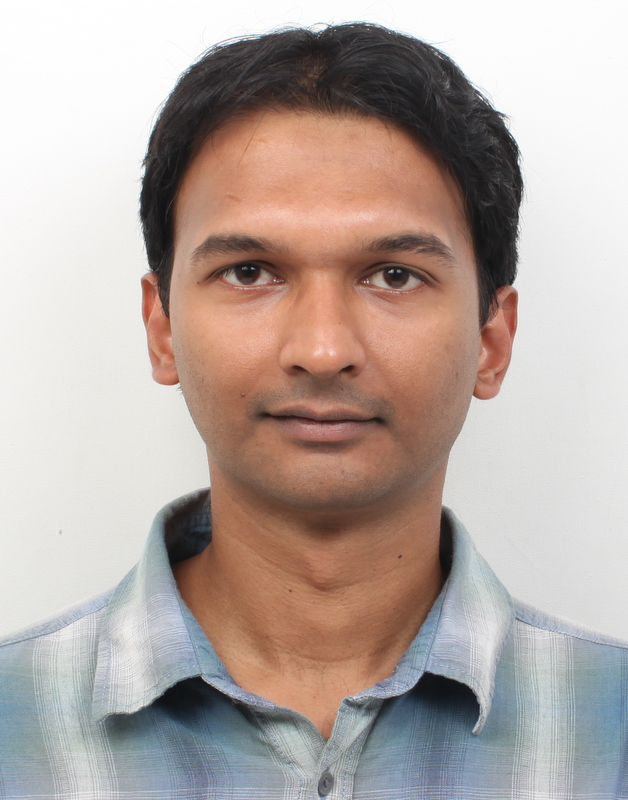
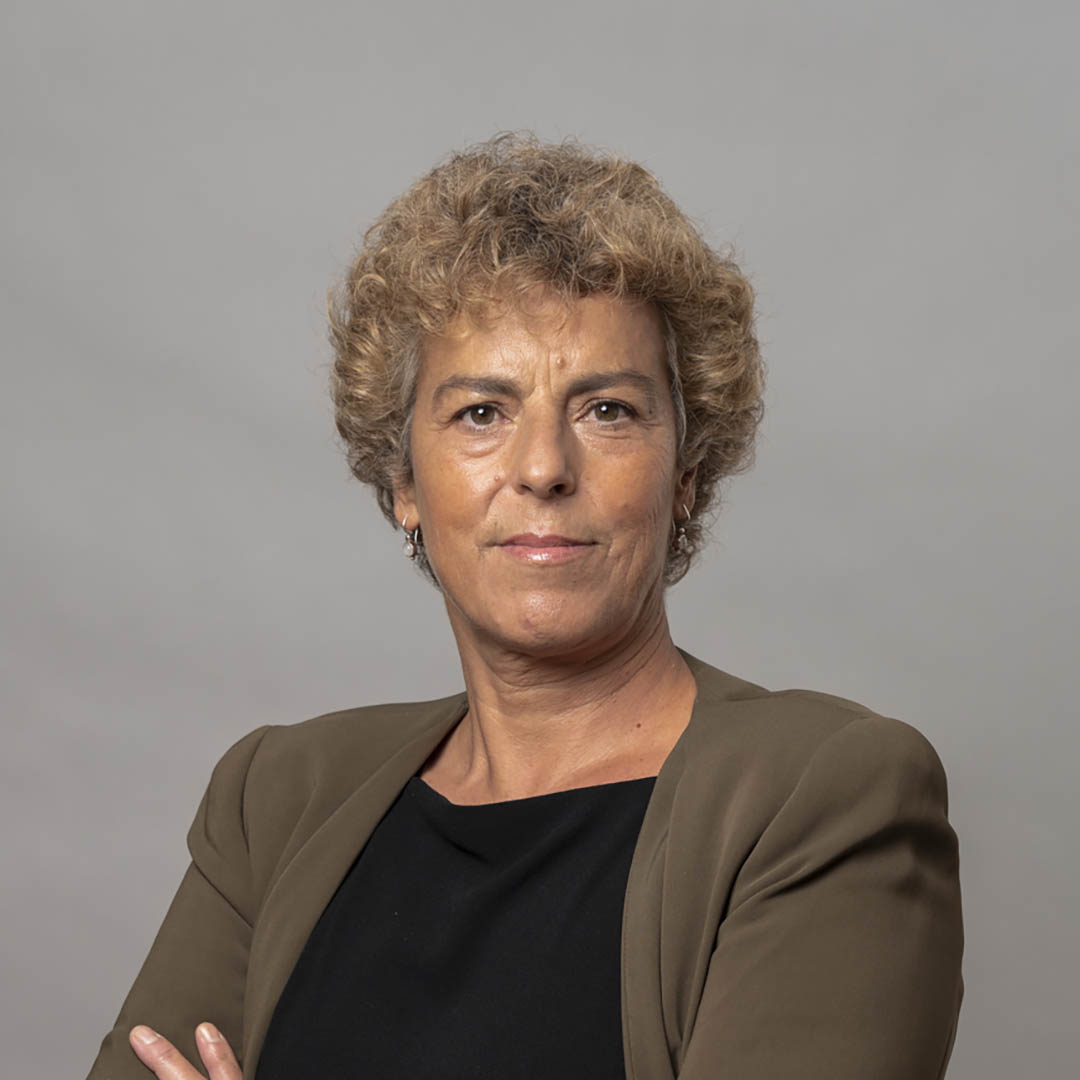
Shivaram Kalyanakrishnan is an Associate Professor at the Department of Computer Science and Engineering , Indian Institute of Technology Bombay , specialising in Artificial Intelligence and Machine Learning . His research spans sequential decision making , multiagent learning , multi-armed bandits , and humanoid robotics , with applications in robot soccer , computer games , and online advertising . He teaches advanced courses like CS 747: Foundations of Intelligent and Learning Agents and CS 748: Advances in Intelligent and Learning Agents , focusing on end-to-end system design and theoretical analysis. His scientific awards include the Best Student Paper Award at RoboCup International Symposium 2006 and nomination for Best Student Paper Award at AAMAS 2007 . His work on reinforcement learning and policy iteration has been published in leading venues such as IJCAI , ICML , and COLT , with recent contributions to railway scheduling and bandit algorithms. While no explicit list of advisees is provided, his research projects and publications suggest mentorship of students in collaborative efforts. Contact : shivaram@cse.iitb.ac.in .
Minh Hue Nguyen is a Senior Lecturer in EAL/TESOL Teacher Education at Monash University's School of Curriculum, Teaching and Inclusive Education within the Faculty of Education. She holds a PhD in Education (TESOL focused) from Monash University and has taught at Vietnam National University, Deakin University, and the University of Melbourne. Her educational background includes: PhD in Education (TESOL focused), Monash University (2015) MA in Applied Linguistics, Victoria University of Wellington (2008) BA in English Language Teaching, Vietnam National University (2003) Nguyen's research centers on teachers' professional learning, curriculum, and pedagogy in TESOL and EAL contexts, with specific focus on emotional experiences, identity development, mentoring, agency, and collaboration. She explores sociocultural contexts of teacher development through activity theory and sociocultural perspectives, examining how institutions support teachers' learning journeys from preservice to in-service stages. Recent work investigates professional learning for teacher educators and implementation of the Victorian EAL Curriculum. Her 15 most recent publications (2024-2025) reveal a strong thematic focus on language teacher agency, identity negotiation, and multilingual pedagogies. The research increasingly examines emotional dimensions of teaching, cross-cultural identity tensions, and collaborative models between EAL and content teachers, with significant contributions to understanding how teachers navigate complex educational contexts while developing professional identities. Her scientific recognition includes: Penny McKay Award Special Commendation Monash Education Research Community's Publication Award ATEA/Kay Martinez Award for Best Paper Monash Dean of Education’s ECR Project Award Advancing Women's Research Success Grant Vietnamese Government Merit-based Scholarships Nguyen actively supervises PhD research in TESOL teacher professional learning, teacher identity, and curriculum development, though is currently unavailable for new PhD students until 2027. She contributes to editorial boards for Teaching and Teacher Education, Second Language Teacher Education, and System journals, and serves on the Australian Teacher Education Association. Her work supports UN Sustainable Development Goal 4 (Quality Education) through inclusive pedagogical frameworks. She leads research projects including 'Elucidating practices to assist EAL learners to acquire specialised science vocabulary' and 'Establishing an online community-of-practice model for learner agency during work placements,' demonstrating commitment to practical educational innovations.
Professor Stephan Frühling is a leading academic in strategic and defence studies at The Australian National University's (ANU) Strategic and Defence Studies Centre. He specialises in Australian defence policy, nuclear weapons, NATO, and alliance dynamics. His research bridges academic analysis and policy impact, contributing to national security strategies such as the 2016 Defence White Paper. He has held key administrative roles, including Acting Head of his Centre (2022), Associate Dean (2016–2022), and inaugural Director of the ANU Master in Military Studies program (2011–2013). His international experience includes a Fulbright Fellowship at Georgetown University (2017) and research roles at NATO's Defence College (2015). His research focuses on deterrence theory, Indo-Pacific security, and alliance resilience, with a particular emphasis on Australia's strategic position amid rising great power competition. Recent work examines NATO-Asia partnerships, extended nuclear deterrence, and the evolving role of Australia-US alliances in regional stability. Professor Frühling's projects include Pathways of Deterrence: Causal Chains of 21st Century Signalling (2024–2027) History of Strategic Policy since 1976 (ongoing) AusCSCAP DFAT-funded diplomacy initiatives His 146+ publications span books, policy papers, and peer-reviewed articles, addressing topics such as force development in small/middle powers, nuclear strategy, and regional security dynamics. His work is cited widely in policy circles and academia, reflecting its practical relevance to contemporary strategic challenges.
Associate Professor Stephen Carter is an Associate Professor in Pharmacy Practice at the University of Sydney's Sydney Pharmacy School within the Faculty of Medicine and Health. He serves as the Program Director for Undergraduate Pharmacy programs and is a registered pharmacist with clinical specialisation in medication management review. Stephen holds qualifications including BPharm, MSc, PhD, and Grad Cert Edu (Higher Ed). He is a Fellow of the Pharmaceutical Society of Australia (FPS), Fellow of the Higher Education Academy (FHEA), and holds other professional accreditations. His research focuses on optimizing the role of pharmacists in healthcare, particularly examining how consumers and caregivers obtain and use medicines, designing effective pharmacist services, and supporting pharmacists throughout their professional journey. His work spans areas including osteoporosis care, medication adherence, service quality in community pharmacies, and the application of advanced statistical methods like Structural Equation Modelling. Stephen's publications demonstrate a strong focus on practical pharmacy interventions, with significant work on osteoporosis management services, perinatal depression screening in pharmacies, and digital health approaches to improve medication adherence. His research employs diverse methodologies including randomized controlled trials, qualitative studies, and advanced psychometric analyses. Early Career Investigator Award Australasian Pharmaceutical Science Association (APSA) for 2017 Lesmuller Award for Best Oral Communication - Pharmaceutical Care Network Europe Working Conference, Berlin, 2013 Recipient of the 2013 Annual Best Paper Award by Elsevier publication, Research in Social and Administrative Pharmacy Best Poster Presentation Award: International Social Pharmacy Workshop, Boston, USA, 2014 Top reviewer, Research in Social and Administrative Pharmacy (2015, 2016, 2017, 2019) Stephen actively supervises several graduate students including PhD candidates Fatima Rezea, Steven Tran, Veronika Seda, Kingston Leung, and Joel Hillman, as well as MPhil student Linda Krogh. He has secured significant research funding, including co-leading a $2.36 million Randomized Controlled Trial and managing four current competitive grant-funded projects totaling over $6.3 million. His work has particular emphasis on translating research into practical pharmacy services that improve patient outcomes. Stephen is actively involved in major research initiatives including the #STOP trial (Safer medicines To reduce falls and refractures for OsteoPorosis) and the TICTOC trial (Timely post-discharge medication reviews to Improve Continuity – the Transitions Of Care stewardship), both focusing on innovative pharmacist-led interventions to improve medication safety and effectiveness.
Andreas Richter is a Professor of Organisational Behaviour at Cambridge Judge Business School (University of Cambridge), specialising in creativity and innovation in teams, leadership development, and team effectiveness. His research integrates theoretical insights with practical applications in healthcare, pharmaceutical, and financial sectors. He holds a PhD in Management from Aston University and advanced degrees from Giessen University. He advises multinational corporations and public institutions globally, including TomTom, UNICEF, and the UAE Ministry for Internal Affairs. His work focuses on enhancing team collaboration through psychological safety, leadership training, and resource distribution. Richter serves on editorial boards of top journals like the Academy of Management Journal and Journal of Applied Psychology . Key research themes include: Team processes & creative environments Leadership learning mechanisms Failure recovery systems Temporal dynamics in innovation Notable contributions include frameworks for converting workplace shame into creativity and analyzing team effectiveness through multiplex leadership networks. His 2019 study on learning from failure highlights team resource systems' role in transforming adversities into growth opportunities. Executive education expertise includes designing positive leadership programs addressing empathy and dark triad traits in management. Richter has developed innovative team-building models for organisational change, such as the 'twelve steps to heaven' framework for successful transitions.
Oliver Nash is a researcher at Imperial College London, actively engaged in the formalisation of advanced mathematical concepts. His work bridges geometry and computational logic, with a focus on rigorous proof systems. Research Interests: Oliver's research lies at the intersection of geometry and the formalisation of mathematics. He specialises in using proof assistants to verify deep mathematical results, including topics such as the h-principle, sphere eversion, and Lie algebras. His work contributes to the growing field of certified mathematics, ensuring correctness through machine-checked proofs. Publication Trends: His recent publications at the CPP conference demonstrate a consistent focus on formalising foundational results in differential geometry and algebra. These works reflect a trend toward computational trust in mathematical proofs, particularly in complex geometric transformations and algebraic structures. Professional Activities: Oliver is an active contributor to the Certified Programs and Proofs (CPP) conference, presenting cutting-edge work in formal verification. He maintains a personal website detailing both his academic contributions and early explorations in computer graphics, such as raytracing and radiosity rendering from the early 2000s. Labs and Projects: While specific lab affiliations are not mentioned, his work is closely aligned with research groups in formal methods and interactive theorem proving, likely involving tools like Lean, Coq, or Isabelle.
Associate Professor Margaret Grose is an academic at the University of Melbourne's Melbourne School of Design, specialising in Landscape Architecture. She holds an Associate Professorship and teaches ecological design principles in the Masters of Landscape Architecture and Bachelor of Environments programs. Her work bridges design and ecological science, with a focus on urban ecosystems, water management, and cultural landscapes. Education: Grose began in Agricultural Science (soils/water processes), completed a PhD in ecophysiology of Australian plants, followed by postdoctoral research at Oxford University and the University of Cambridge’s Mathematical Biology group. She later trained in Landscape Architecture and practiced as an environmental scientist in urban design projects. Research interests include integrating ecological science into design, the role of historical ecological knowledge in contemporary design, and urban water systems. Her recent Universitas 21 Fellowship explores teaching ecology to built environment students globally. Publications span topics like urban forestry in China, dryland river parks, and impacts of artificial light on ecosystems. She has received the 2011 Faculty Teaching Award for Excellence in the Masters program. Supervision focuses on river design, urban waterways, ecological planting resilience, and design of public spaces in Mediterranean climates. She collaborates on interdisciplinary projects combining ecology, urban planning, and cultural heritage.
Felicia Fai is a Senior Lecturer (Associate Professor) at the University of Bath, affiliated with the Management Strategy & Organisation department. She holds roles in the Centre for Governance, Regulation and Industrial Strategy, the Made Smarter Innovation: Centre for People-Led Digitalisation, and the Institute of Sustainability and Climate Change. Her research focuses on technological capabilities, regional innovation ecosystems, and policy frameworks for economic development. She is particularly interested in how regional capabilities can drive innovation beyond traditional industry classifications. PhD: Corporate Technological Competence (University of Reading, 1999) MA: International Business (University of Reading, 1994) BA: Applied Economics (Ulster University, 1993) Her research explores corporate technological competence, regional innovation networks, and the role of universities as anchor institutions. Recent projects include studies on coworking spaces' impact on regional development, smart specialisation strategies for lagging regions, and the UK's Industrial Strategy. She has advised the Cabinet Office on regional growth policies and served as an external examiner for postgraduate programs at Birkbeck and the University of Strathclyde. Her work contributes to UN Sustainable Development Goals by addressing innovation-driven economic growth and regional inequality reduction. She actively supervises doctoral students interested in competence-based technological innovation and networks. Key grants include projects funded by the Economic and Social Research Council and Engineering and Physical Sciences Research Council, focusing on topics such as regional innovation ecosystems and the potential of coworking spaces for levelling up regional economies. Her research outputs highlight themes like the role of policy in regional development, the contemporary relevance of classical economic theories to modern workspaces, and the temporal effects of R&D subsidies on innovation outcomes.
Sofia Mavropoulou is an Associate Professor at the School of Education , Queensland University of Technology , specializing in Inclusive Education and Autism Education . She serves as Study Area Coordinator for the Inclusive Education Specialisation in the Master of Education program. Dr. Mavropoulou holds a PhD in autism and theory of mind from Durham University and a Master of Education in Special Educational Needs with Distinction from Lancaster University, supported by scholarships from the Greek State Scholarships Foundation and Durham University. Academic Background : PhD (Durham University), MA (Lancaster University) Her research focuses on inclusive education , autism support strategies , and disability rights . She has developed national curricula for autism education in Greece and led pilot programs for transitioning students with autism to general education and employment. Her work explores culturally responsive education , teacher training , and policy reform for autism inclusion. Recent publications examine inclusive pedagogy , autism education systems , and global education trends . Scientific awards include: National Research Award by the Australian Association of Special Education (2016-2018) Scholarship from the Greek State Scholarships Foundation and Durham University Dr. Mavropoulou serves as: Associate Editor of the International Journal of Special Needs Education and Journal of Policy and Practice in Intellectual Disabilities Committee member of the IASSIDD-SIRG in Inclusive Education Her research has been funded by the Greek Ministry of Education, European Union, and Autism CRC, with projects spanning Greece , Australia , and Bhutan .
Cristina Baptista is an Associate Professor at the Lisbon School of Economics & Management (ISEG), Universidade de Lisboa, where she has held various leadership roles including Member of the Coordination Committee of Sports Management Master Programme (2021-2022), Member of the Executive Committee of the Management Department (2020-2022), and Coordinator of the Sports Management undergraduate program (2017-2019). Her academic career spans multiple institutions across Europe, including ISLA, ISG, and Lulea University of Technology where she served as Assistant Professor from 1994-2000. Education: 2020: Aggregation in Sciences de Gestion, Management, ISEG, Lisbon School of Economics & Management - Universidade de Lisboa 2001: Doctor of Philosophy in Business Administration and Economics, Lulea University of Technology 1997: Master spécialisé in Sciences de Gestion, Strategic Management and Marketing, Lulea University of Technology 1994: Bachelor of Business Administration in Sciences de Gestion, Management, Lulea University of Technology 1986: Master of Science in Ingénierie, Engineering, Instituto Superior Técnico - Universidade de Lisboa Professor Baptista's research focuses on business relationships, strategic management, and digital transformation. Her work examines buyer-supplier interactions, strategic alliances, value creation in business relationships, and the impact of digital ecosystems on organizational collaboration. She has extensively studied coopetition dynamics, where competitors collaborate within multi-actor alliances, and the role of strategic networks in international entrepreneurship, particularly in the pharmaceutical industry. Her recent work explores the transformative impact of digital platforms and ecosystems on traditional business relationship models. Her publication record shows a clear evolution from traditional industrial marketing topics (particularly in the mining industry during her early career) toward contemporary digital business models and strategic relationship management. While her early work focused on industrial buying behavior and capital equipment procurement, her recent research has shifted toward digital ecosystems, platform economics, and sustainability in business relationships. This progression reflects both her academic development and the broader transformation of business models in the digital age. Professor Baptista has supervised over 60 Master's students at ISEG, with thesis topics spanning marketing plans for sports federations, digital marketing strategies, business relationship management, and sustainability initiatives. Her supervision portfolio demonstrates her commitment to applied research that addresses real-world business challenges across diverse sectors including sports management, fashion, pharmaceuticals, and digital services. She has contributed to academic leadership through committee service, including membership on the Executive Committee of the Management Department and coordination of multiple academic programs. Her pedagogical contributions include developing course materials such as the 'Sebenta de Marketing' for specialized management courses and 'Sebenta de Fundamentos de Marketing' for Master's programs in Mozambique.
Maxime Aubert is Professor of Archaeological Science at Griffith University, Australia, specialising in geochemical dating of early rock art and hominin fossils. He is a National Geographic Explorer and ARC Future Fellow whose discoveries have twice (2014 & 2020) been selected among the top-10 scientific breakthroughs by the journal Science . His research centres on uranium-series and other micro-analytical techniques to illuminate the timing and context of human evolution, early symbolic behaviour and the colonisation of Wallacea and Sahul. Education PhD Earth Sciences (Uranium-isotope Geochemistry), Université du Québec / INRS, 2009 Research Interests Aubert develops and applies cutting-edge geochemical methods to key questions in human evolution: Dating of Palaeolithic cave art and rock engravings Geochronology of hominin fossils and archaeological deposits Early human dispersals through Island Southeast Asia and into Australia Conservation science for Pleistocene rock-art heritage His recent publications reveal 51,200-year-old narrative art in Sulawesi, 1.04-million-year-old hominin sea-crossings to the same island, and the world’s earliest known surgical amputation (31,000 BP, Borneo), collectively reshaping global timelines of art, technology and medicine. Scientific Recognition Science journal Top-10 Scientific Breakthroughs 2014 & 2020 National Geographic Explorer ARC Future Fellowship Grants & Projects Aubert has secured > AUD 6 million in competitive funding, including ARC Discovery and Linkage projects, National Geographic grants, and industry partnerships with Google Arts & Culture. Current major projects investigate early art and occupation along the northern route to Australia, Aboriginal rock-art management in Cape York Peninsula, and the archaeology of the Great Papuan Plateau. Doctoral Supervision & Team Science He currently supervises Griffith doctoral candidates working on oxalate dating of Australian rock art and Tasmanian hand-stencil heritage, and has previously led or co-supervised PhD projects on Sulawesi underwater archaeology, Indonesian prehistoric migration, Siberian rock art, and Philippine cave archaeology. His team collaborates closely with Indonesian, Australian and European institutions, conducting large-scale field programs in Sulawesi, Borneo and Papua New Guinea.
Dr. Ebony Lewis is a Scientia Lecturer in the School of Population Health at the University of New South Wales, where she serves as the Master of Public Health Stream Convenor for the Aboriginal Health and Wellbeing Specialisation and convenes the postgraduate course PHCM9630. An early career researcher with extensive clinical experience in gerontology, she completed her PhD through the Faculty of Medicine & Health at UNSW in 2024, following a Masters of International Public Health (2013) and Bachelor of Nursing (2010). PhD, University of New South Wales (2024) Masters of International Public Health (2013) Bachelor of Nursing (2010) Dr. Lewis has a passion for improving health and wellbeing of older adults, with research focused on reducing avoidable hospitalizations and improving end-of-life care for frail older adults. Her work emphasizes culturally appropriate approaches to frailty assessment and management, particularly for Aboriginal and Torres Strait Islander communities. She employs mixed methods to translate research into practice, addressing critical gaps in aged care services and advancing culturally safe healthcare delivery. Her extensive publication record demonstrates a clear trajectory toward understanding frailty across diverse populations, with increasing focus on Indigenous health perspectives. Recent work shows growing emphasis on community-based approaches, intergenerational connections, and culturally adapted tools for assessing frailty and supporting end-of-life decision making in Aboriginal communities. Winner, Paper of the Year Award 2016 Finalist, NSW Health Statewide Awards for Innovation in Research Winner, Quality Award for Patient Safety, September 2017 Australian Association of Gerontology (AAG) NSW Division Conference Scholarship, November 2021 UNSW Hall of Fame recognition, September 2022 Dr. Lewis has secured over $700,000 in research funding as PI or co-investigator across multiple projects, including the INTERACTION intergenerational trial ($149,337), the CHAppS Network Laboratory ($192,511), and several seed grants focused on frailty in Aboriginal populations. She actively supervises HDR candidates, Masters by Research, Honours, and ILP projects related to geriatric/aging/elderly health, indigenous health, and end-of-life decision making. Her work bridges clinical practice, research, and education to improve healthcare outcomes for vulnerable older populations. Dr. Lewis leads a program of research around frailty and ageing in older adult populations and collaborates with the UNSW Ageing Futures Institute on multiple seed grant projects. She is actively involved in committees and working groups focused on improving aged care services and end-of-life care practices across Australia.
Susan Moore is Professor of Urban Studies and Planning at The Bartlett School of Planning, University College London, where she has been employed since January 2009. She progressed from Lecturer (2009-2017) to Associate Professor (2017-2024) and was promoted to Professor in 2024. Prior to UCL, she held academic positions at Cardiff University's School of City and Regional Planning and the London School of Economics' Department of Geography and Environment. Her interdisciplinary background spans human geography, community planning, and environmental studies. PhD in Human Geography, London School of Economics and Political Science (2006) Masters of Environmental Studies (Community Planning), York University, Toronto (1999) Bachelor of Environmental Studies (Specialised Honours, Summa cum laude), York University, Toronto (1997) Post-Graduate Certificate in Teaching and Learning, Cardiff University (2008) Data and Urban Governance certification, Sciences Po, Paris (2023) Professor Moore's research focuses on the relational geographies of urban and suburban development, with particular emphasis on comparative understanding of planning and development cultures across international contexts. She investigates urban development and governance models, the circulation of so-called 'best practices', and has conducted significant research on New Urbanism as a global movement. More recently, her work has expanded to examine platform urbanism and its implications for understanding and planning local urban change, particularly low traffic neighborhoods (LTNs), urban data cultures, housing policy, and the 'local' dimensions of content governance on social media platforms. Her methodological approach often combines qualitative analysis with digital research methods. Moore's publication record reveals a clear evolution from traditional urban planning topics toward digital urbanism. Her earlier work focused on New Urbanism and comparative planning systems, while her most recent publications demonstrate significant engagement with platform urbanism, social media as urban infrastructure, and digital methodologies for urban research. She maintains a strong comparative framework, particularly examining London and Toronto as case studies, while increasingly addressing how digital technologies transform urban experiences and governance. As Departmental Graduate Tutor for Research at UCL, Professor Moore coordinates PhD studies in Planning and supervises doctoral research. She has been involved in numerous research projects examining urban development models, platform urbanism, and housing policy. Her editorial roles include Executive Editor for North America for International Planning Studies Journal (2024-present) and Associate Editor for Dialogues in Urban Research (2021-present). She has also served on grant assessment panels for UKRI ESRC and SSHRC Canada. Professor Moore is actively involved with the UCL Urban Laboratory Steering Group and the Bartlett Equality, Diversity and Inclusion Working Group, where she led the 'Culture' sub-group. She co-led the UCL-University of Toronto Comparative Urbanism Book Project and has served as External Examiner for planning programs at Cardiff University and University of Westminster. Her teaching includes core modules on Comparative Planning Systems and Cultures, Contemporary Cities, and Dissertation supervision at both undergraduate and postgraduate levels.
Ross Horne is a Senior Lecturer in the Department of Computer & Information Sciences at the University of Strathclyde, Glasgow, United Kingdom. He is a member of the StrathCyber and Mathematically Structured Programming research groups. Education: PhD (University of Southampton, 2012), BA (Oxford University, 2005) Prior Appointments: Research Fellow at University of Luxembourg (2018-2023), Senior Research Fellow at Nanyang Technological University (2015-2018), Associate Professor at Kazakh-British Technical University (2012-2015) Research Interests: Dr. Horne's work focuses on security and privacy protocols for digital systems, particularly addressing threats in payment technologies, ePassports, and decentralized identity management (e.g., Solid protocol). His theoretical contributions bridge concurrency theory, proof theory, and logic through applications to security verification and process calculi. Developed formal models for unlinkability in EMV payment protocols Created intuitionistic logical frameworks for process equivalence Explored graphical proof systems beyond formulaic representations Investigated legal-compliant AI for space systems (CubeSat anomaly detection) Scientific Contributions: He has published extensively in top venues including ACM CCS, IEEE CSF, LICS, and CONCUR. His 2017 CONCUR best paper introduced intuitionistic characterizations of bisimilarity. Principal Investigator for EU COST Action on Distributed Knowledge Graphs Co-developed privacy models adopted in Luxembourg parliamentary responses Advising: Currently accepting PhD students with strong mathematical and computer science skills for research in security/privacy of emerging systems. Former student Semen Yurkov completed a thesis on privacy-preserving smart card payments. Interdisciplinary Work: Collaborates with space lawyers through the Interdisciplinary Master Program in Space Resources. Projects include AI for CubeSat reliability and legal-compliant software certification frameworks.
Sandrine Blazy is a Professor in the Computer Science Department at the University of Rennes, France. She is a member of CELTIQUE (also referred to as Epicure), a joint project-team with Inria Rennes Bretagne Atlantique and the IRISA laboratory. Since 2021, she has served as deputy director of the IRISA CNRS UMR 6074 laboratory and will be the general chair for POPL 2026, which will be held in Rennes. She is also a member of the editorial board of the LMCS journal. Dr. Blazy completed her PhD at CNAM (Conservatoire National des Arts et Métiers) in 1993 with a thesis titled "La spécialisation de programmes pour l'aide à la maintenance du logiciel" (Program Specialization for Software Maintenance Assistance). She later completed her Habilitation à diriger des recherches (HDR) in 2008 at the University of Évry Val d'Essonne with a thesis titled "Sémantiques formelles" (Formal Semantics). Her research focuses on the formal verification of program transformations and semantic properties of programming languages, particularly in the context of the CompCert compiler and Verasco static analyzer. She develops mechanized semantics using the Coq (or Rocq) proof assistant to ensure software correctness and security. A prime application domain of her work is software security, including constant-time programming for cryptographic applications and software obfuscation techniques. Her teaching includes mechanized semantics (in Coq), functional programming (in OCaml), formal methods (using Why3), and software vulnerabilities. Dr. Blazy's publication record from 2019-2025 shows a sustained focus on verified compilation techniques, particularly in preserving security properties during compilation. Her work bridges theoretical formal methods with practical compiler implementation, resulting in tools that have real-world impact in safety-critical systems. She has made significant contributions to the CompCert formally verified compiler project, with particular attention to constant-time preservation for cryptographic applications and JIT compilation verification. Her scientific achievements have been recognized with several major awards: CNRS Silver Medal (2023) Lucas Award from Formal Methods Europe (2023) ACM SIGPLAN Programming Languages Software Award for CompCert (2022) ACM Software System Award for CompCert (2021) Dr. Blazy has been actively involved in the programming languages research community, serving on numerous program committees for major conferences including POPL, ICFP, PLDI, and CPP. She has mentored students and contributed to education through teaching mechanized semantics and formal methods. Her work with the CompCert compiler has led to practical applications in safety-critical systems, with industry collaborations documented in publications like "CompCert: Practical experience on integrating and qualifying a formally verified optimizing compiler" (ERTS 2018). She leads research within the CELTIQUE project team, which focuses on developing trustworthy software using deductive verification. Her team works on advancing the state of the art in formal verification of compilers and static analyzers, with applications in security-critical domains including cryptographic implementations and safety-critical embedded systems.