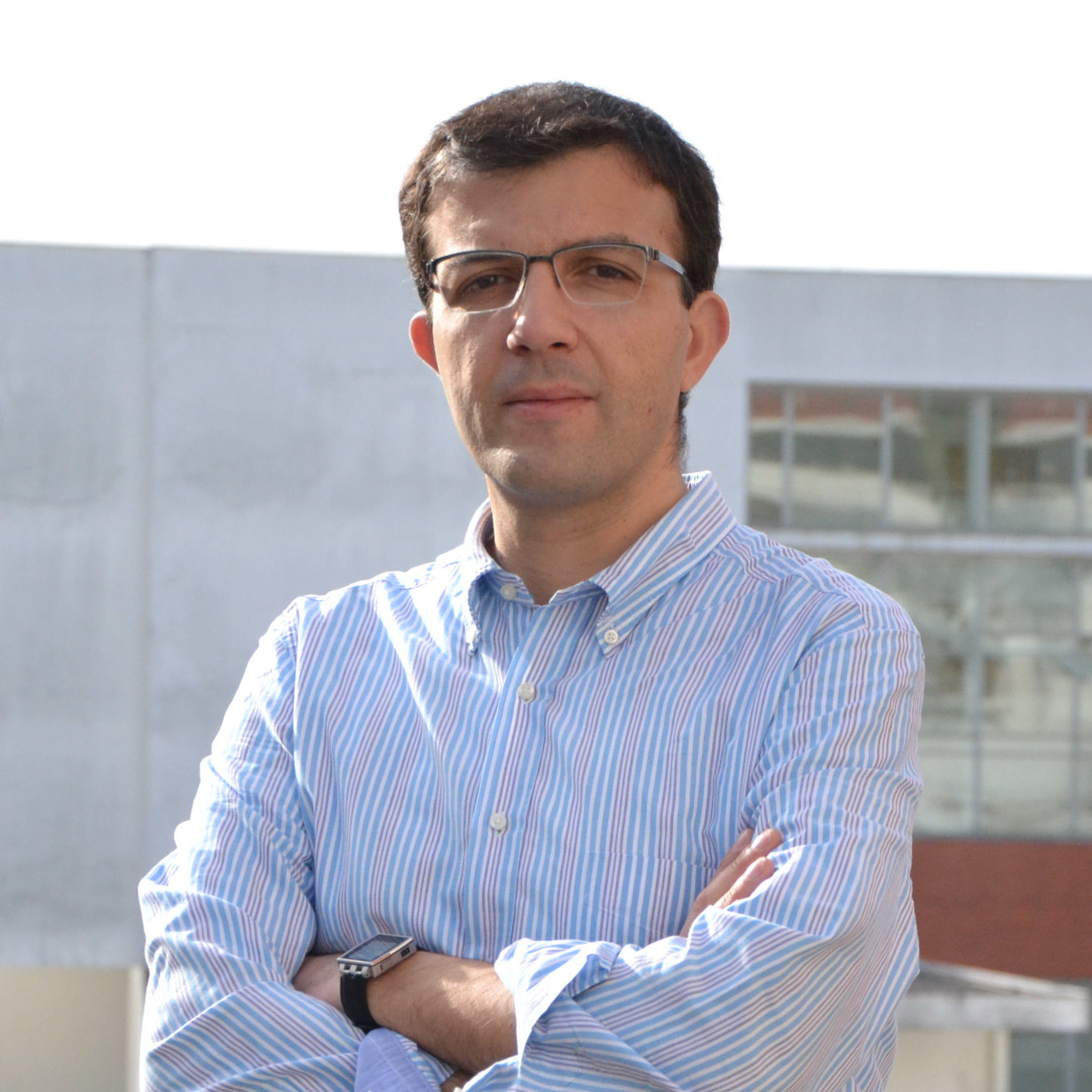
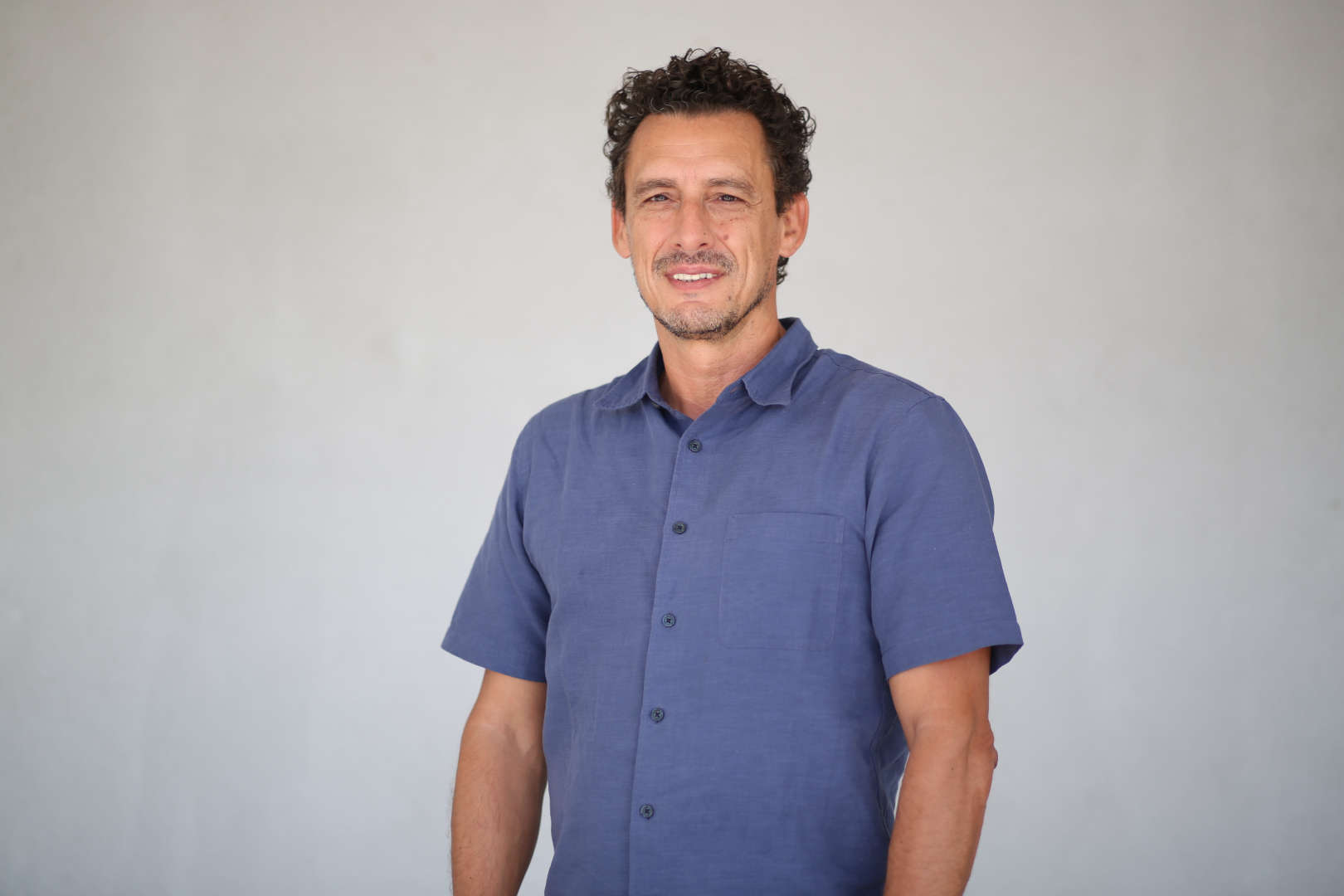
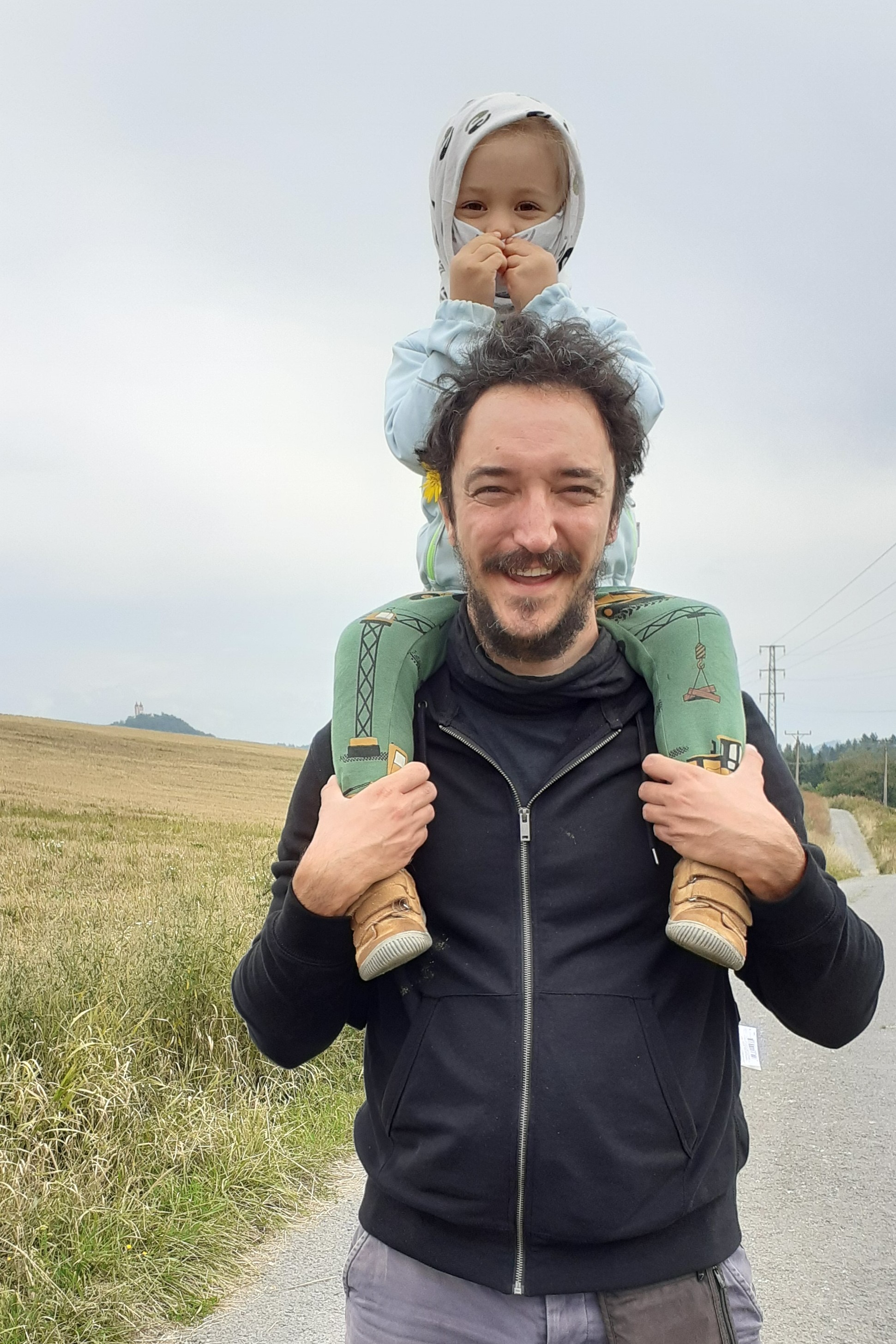
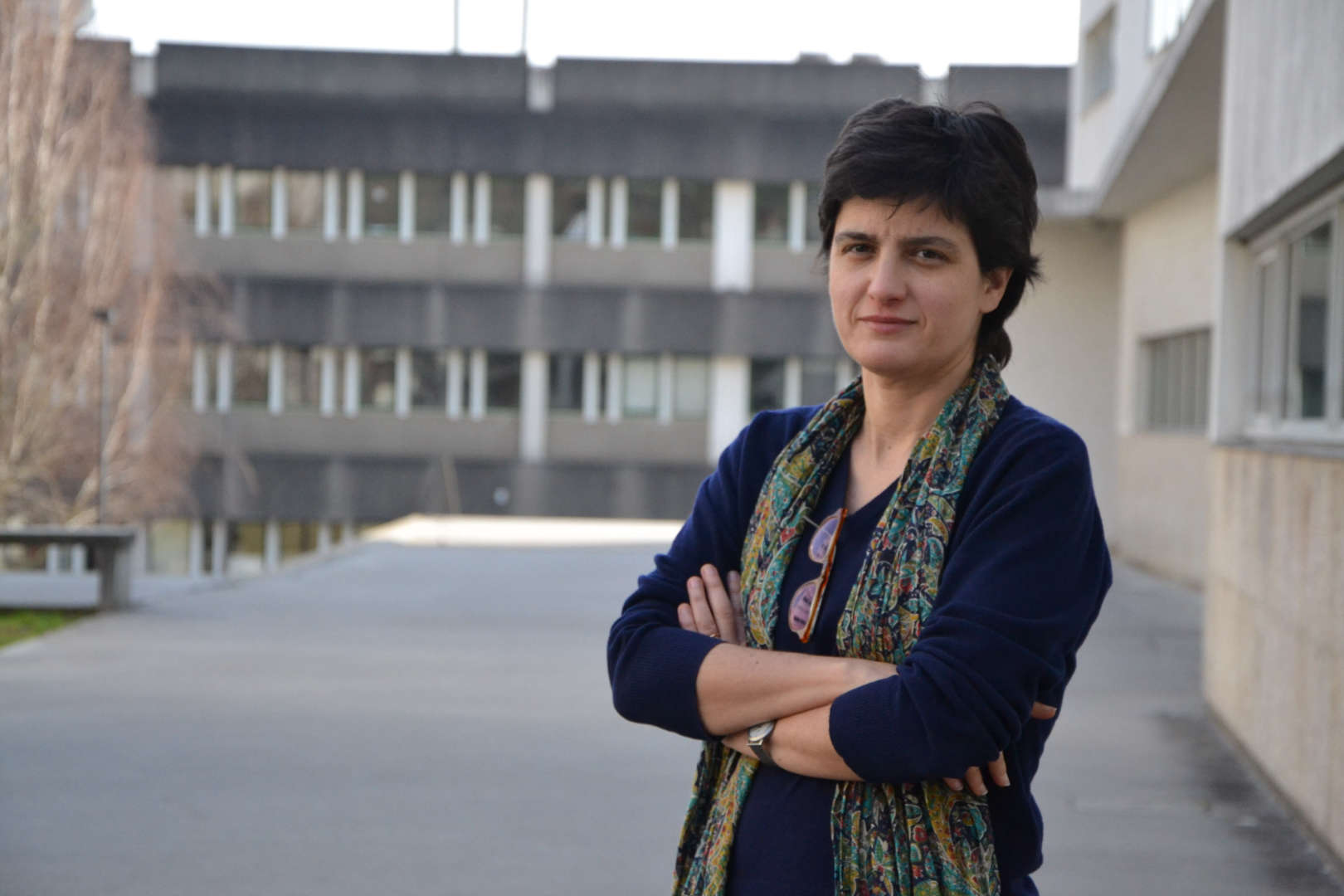
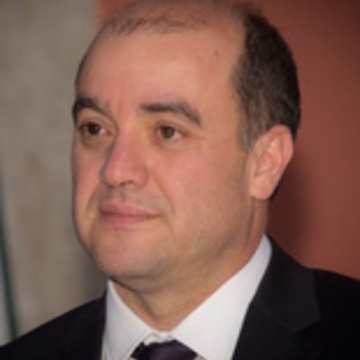
João Pedro Leal Abalada de Matos Carvalho is an Assistant Professor at Lusófona University , Lisbon, specializing in Aerial Robotics and Deep Learning . He holds an MSc (2017) and PhD (2021) in Electrical and Computer Engineering from FCT/UNL, graduating in the top 1% of his class. His work focuses on autonomous navigation, environmental monitoring via satellite systems, and AI-driven healthcare solutions. Projects : ANTIDOTE (AI Attack/Defense for Smart Healthcare, 2025-2028), AIDiAL (AI Chatbot for Literacy, 2024-2025), REMARKABLE (Federated Learning for Environmental Monitoring, 2023-2026). Collaborations : Involved in Horizon Europe, Marie Curie Actions, and Seedfunding ILIND programs with institutions across AI, IoT, and environmental domains. His research includes GNSS-denied navigation , LoRaWAN engineering , and 2D semantic segmentation . Recognized with the Best Paper Award at a prestigious IEEE conference in 2018 for UAV applications.
Miguel Luís serves as Marketing and Employer Branding Director at The Key Talent while maintaining an academic affiliation as a guest lecturer at ISCTE - Lisbon University Institute's Business School. With over two decades of industry experience, he founded Comunidade Employer Branding Portugal in 2015—a non-profit advancing employability and training in Employer Branding across Portugal. His corporate role focuses on technological solutions for People Management, bridging business strategy with human-centric organizational design. His educational foundation includes: Master's degree in Management from INDEG-IUL Degree in Social and Organisational Psychology from ISPA-IU Research interests manifest a dual trajectory: contemporary work centers on Employer Branding, Talent Management, and Organizational Psychology, while historical publications (1995-2015) reveal deep expertise in Artificial Intelligence, particularly multi-agent systems and semantic web technologies. This interdisciplinary nexus connects computational methods with human resource challenges—evident in works like "Enhancing Excel business tools" (2021) and "Context-Awareness System" (2008). His approach consistently applies technical rigor to organizational behavior problems, such as modeling observed behavior through Rhetorical Structure Theory (2022). Analysis of his 15 most recent publications demonstrates sustained innovation in agent-based systems, with evolving applications from pure AI (2008-2013) to business-integrated solutions (2021-2022). Key thematic threads include: Context-aware computing for adaptive organizational systems Semantic resource discovery in distributed environments Observation-based learning paradigms for human-agent collaboration Quantitative modeling of business processes Notably, his 2021 work transitions from theoretical AI to practical business tool enhancement, reflecting his career shift toward industry applications. Scientific recognition: No formal awards or fellowships documented in available sources Academic mentorship shows no current PhD/Master's advisees, consistent with his industry-focused role. While his pre-2015 research likely involved grant-funded projects (evidenced by semantic web publications), no active grants are referenced—current work operates through The Key Talent's commercial framework. His affiliation with ISCTE remains strictly as a guest lecturer, delivering specialized training without departmental integration. Organizational engagement centers on Comunidade Employer Branding Portugal's event management and training programs, with no dedicated research labs or academic teams indicated. His operational model leverages industry partnerships rather than traditional academic infrastructure, exemplifying practice-based knowledge transfer between corporate and educational spheres.
José Orlando Pereira is an Associate Professor at the Department of Informatics, University of Minho, and Research Coordinator at INESC TEC (INESC Technology and Science). His primary research interests lie in dependable distributed systems, with a focus on data management, group communication protocols, and tools for distributed system evaluation. He leads the High-Assurance Software Laboratory (HASLab) , part of INESC TEC and the University of Minho. Roles: Academic supervisor, conference committee member (e.g., SRDS 2025 General Co-Chair), and grant recipient (e.g., ADAPQO funding from CMU Portugal 2024). Key Projects: Includes CYBERACTIONING (cybersecurity education), EUMaster4HPC (European HPC master's program), and AIDA (adaptive assurance platform). Research Themes: Database replication, georeplicated systems, consensus protocols, edge computing, and fault injection tools like LAZYFS. His work emphasizes practical applications, such as improving transactional performance in hybrid workloads (TiQuE) and designing scalable NoSQL middleware (CloudMdsQL). He has authored over 200 publications, including seminal contributions to gossip protocols (HyParView) and consensus algorithms. Awards: Honorable Mention at ACM SIGMOD 2025 for CRDV research. Active in organizing conferences such as SRDS, DSN, and EuroSys. Teaching: Offers advanced courses on distributed systems, database administration, and large-scale data replication at both undergraduate and graduate levels.
António Lucas Soares is an Associate Professor at the Department of Informatics Engineering, Faculty of Engineering, University of Porto, and a researcher at INESCTEC. He coordinates the Center for Enterprise Systems Engineering and Cluster Industry & Innovation at INESCTEC. His expertise lies in Information Systems with a focus on Collaborative Networks and Knowledge Management in industrial contexts. He directs the Master's program in Information Science (FEUP/FLUP) and holds executive roles in international academic organizations. His research emphasizes socio-technical design, digital platforms, and Industry 5.0 applications in manufacturing and logistics resilience. Research Interests: Socio-technical systems design Knowledge representation frameworks AI-driven supply chain transformations Augmented Reality applications Logistics 5.0 technologies Publications (2024) highlight advancements in requirements management frameworks, cognitive digital twins, and Industry 5.0 logistics innovations. His work bridges technical solutions with human-centered operational needs in industrial ecosystems. Advising: Supervised 10+ theses on topics like Scrum adoption, digital twins, and circular economy ecosystems. Active in grant-funded projects addressing manufacturing resilience and supply chain digitalization. Labs/Teams: Leads the Enterprise Systems Engineering Centre at INESCTEC, fostering interdisciplinary research in industrial informatics and collaborative networks.
Maria João Varanda Pereira is a Professor at the Technology and Management School of the Polytechnic Institute of Bragança and an integrated member of the Research Centre in Digitalization and Intelligent Robotics (CeDRI). She served as the vice-president of her school from 2007 to 2022 and has been a computer science researcher for 25 years. Her educational background includes an M.Sc. and Ph.D. in computer science from the University of Minho, awarded in 1996 and 2003, respectively. Simulation and Advanced Data Analytics Advanced Human-Machine Integration Domain Specific Software Development Visualization Tools Human-Computer Interaction QA Systems Data Science Machine Learning Learning Analytics Generation of Virtual Learning Spaces Computer-assisted Education Her recent publications highlight trends in Human-Machine Integration, Data Analytics, and Educational Technology. These include applications of neural networks to dermatology, ontological frameworks for software development, and complexity analysis of programming cocktails. Her work spans journal papers, book series, and conference proceedings. While no scientific awards are explicitly mentioned in the text, she has supervised 30 Master’s students and 2 Ph.D. students and participated in numerous research projects with international collaborators from Poland, Italy, Spain, Romania, Serbia, Slovenia, Argentina, and Brazil. Maria João Pereira is affiliated with CeDRI, a research center focused on digitalization and intelligent robotics, and contributes to virtual learning space initiatives.
Paulo Jorge Teixeira Matos is a Professor at the Polytechnic Institute of Bragança's Informatic and Communication Department, where he has held a faculty position since 1996. With a PhD in Technologies of programming (2005) and over 40 indexed publications, he bridges academic research with entrepreneurial ventures. His educational background includes: Industrial Electronic Engineering (1994) M.Sc. in Informatics (1999) PhD in Technologies of programming (2005) Matos's research centers on Intelligent Decision Support Systems , Web Semantic , IoT , and Industry 4.0 , with dominant focus on technological innovation entrepreneurship . His work consistently translates theoretical frameworks into practical applications through startups and industry collaborations, emphasizing real-world problem-solving in smart environments and resource optimization. Analysis of his 60+ publications reveals strong trends in smart environmental systems (comfort management, energy efficiency), sports technology immersion, and agricultural/disease control solutions. His interdisciplinary approach integrates computer science with medicine, agriculture, and finance, demonstrating exceptional versatility across domains. He has supervised over 180 students across academic levels and secured participation in major projects including Grace, Arum, Smart-LEM, Smart-Light, and AgriFood. His entrepreneurial leadership spans Techwelf (founded 2013, as CTO/CEO) and Aresta Binária (founded 2017, as CTO), developing products like Welfy HVAC controllers and Pin2Give marketplace that gained international recognition through EDP Innovation and Boston Global Immersion programs.
Igor Sedlár is a researcher at the Czech Academy of Sciences (CAS) in Prague, affiliated with the Institute of Computer Science (ICS CAS) in the Department of Theoretical Computer Science, where he is part of the LogICS group. He holds a part-time position in the Department of Logic at the CAS Institute of Philosophy. His work primarily focuses on modal and non-classical logics, dynamic logics, and their applications in modeling information dynamics. He has led projects such as the Czech-Taiwanese KATRA project (2025-2027) and the Czech Science Foundation-funded GRADLACT project (2022-2024). Sedlár teaches courses in dynamic logic and non-classical reasoning at Charles University and Czech Technical University. He serves as deputy head of the Department of Theoretical Computer Science at ICS CAS and on program committees for conferences like Logica, DaLí, and AiML. His research interests include epistemic logic, temporal logic, and the formal analysis of reasoning systems.
Ann Henshall is a Visiting Associate Professor at ISEG - Lisbon School of Economics & Management, University of Lisbon. Her work focuses on linguistics, language policies in academic contexts, and multimodal literacy. She holds a Doctorat in Linguistics and Discourse Analysis from the University of Lisbon (2015), a Master's in Didactics of Modern Places and Cultures from the University of Algarve (2003), and earlier degrees in Asian Studies, Languages, and Linguistics from institutions in Australia. Her research interests include the role of English in scientific communication, particularly in economics journals, and the application of multimodal strategies in education. She has also explored shell nouns and their functions in academic writing. Recent work includes studies on data commentary tasks and interdisciplinary approaches to literacy. Teaching responsibilities span multiple programs at ISEG, including Business English and English language courses for economics, management, and finance students. She frequently coordinates courses and has been actively involved in curriculum development. No scientific awards are listed, but her contributions to academic discourse analysis and pedagogy are evident in her publications. She is affiliated with research initiatives at ISEG, including the Data Lab and Futures Lab, though specific projects are not detailed. Her work reflects a commitment to bridging linguistic theory with practical educational applications.
Nuno Fachada is an Assistant Professor at Lusófona University's School of Communication, Arts and Information (ECATI) and a researcher at COPELABS (Cognitive and People-centric Computing). He teaches Programming and AI in the Videogames Bachelor's program and Research Software in the Informatics PhD program, with research spanning Artificial Intelligence, Machine Learning, Modeling and Simulation, High Performance Computing, and Computer Science Education. His work integrates computational methods with applications in game development, wildfire management, and networking. Education: Bachelor's degree in Electrical and Computer Engineering from IST (2005) Master's degree in Electrical and Computer Engineering from IST (2008), focusing on immune system simulation PhD in Electrical and Computer Engineering from IST (2016) with thesis 'Agent-Based Modeling on High Performance Computing Architectures', awarded 'Pass with Distinction and Honour' Research interests emphasize Agent-Based Modeling for complex systems like wildfires and immune responses, Particle Swarm Optimization algorithms, and OpenCL for parallel computing. He develops educational tools for game development curricula and applies AI to environmental monitoring and wireless networks, with strong output in simulation frameworks and human-centric computing. Recent publications (2024-2025) reveal three dominant trends: wildfire modeling using satellite data and agent-based approaches, large language models for engineering code generation (e.g., LoRaWAN), and game AI for procedural content and rehabilitation. His work bridges theoretical computer science with practical applications in environmental science and healthcare, while maintaining focus on education through tools like TextCL and cf4ocl. Scientific Awards: No scientific awards, fellowships, or medals were mentioned in the provided text Advising and Grants: Fachada serves as a researcher in ILIND-funded projects, notably the 'Cybersecurity Awareness Training Simulator' (2024-2025) with six collaborators. He supervises PhD students in Informatics but specific advisees aren't listed. His grant activity primarily involves institutional projects through Lusófona University's research center, with emphasis on simulation-based tools for real-world applications. Labs and Teams: He is a core researcher at COPELABS, focusing on cognitive and people-centric computing projects including wildfire simulation and cybersecurity training. Prior to Lusófona, he conducted postdoctoral work at LaSEEB/ISR (Institute for Systems and Robotics), maintaining connections to IST. His team collaborations span international researchers in environmental modeling and AI, with recent projects involving Portuguese and European institutions.
Catarina Ferreira da Silva is an Associate Professor with Habilitation in Information Science and Technology at the Department of Information Science and Technology, School of Technologies and Architecture (ISTA), ISCTE – University Institute of Lisbon. She serves as Director of ISTAR-Iscte, the Research Center for Information Sciences, Technologies, and Architecture, and previously led the Master’s program in Information Systems Management. Her international research affiliations include former roles at the University of Lyon 1 and CNRS-LIRIS in France, and CISUC at the University of Coimbra. PhD in Informatics, University Claude Bernard Lyon 1 (2007) Agregação (Habilitation) in Information Science and Technology, ISCTE (2020) MSc in Informatics – Information Systems, INSA Lyon (2003) Bachelor in Engineering, University of Aveiro (1999) Her research centers on Information Systems , with a focus on blockchain, distributed ledger technologies, semantic web, and interoperability . She explores how ontologies and service-oriented architectures can enable smarter, more connected systems in domains such as smart cities, IoT, and digital twins. Her work bridges technical innovation with real-world applications in sustainability, energy, and public health. Her recent publications reveal a strong trend toward blockchain-enabled digital twins , smart city solutions , and AI-driven urban analytics . She integrates machine learning with semantic technologies to solve challenges in energy management, air quality monitoring, and pandemic modeling. Her work increasingly emphasizes user empowerment and data sovereignty through decentralized architectures. Doctoral and Research Supervision Bonus (French National Council of Universities), 2014–2018 and 2019–2022 Research Quality Prize, University of Lyon 1, 2013 Member, European Blockchain Observatory and Forum (since 2020) Catarina has co-supervised multiple PhD students and leads significant EU-funded research projects, including InCITIES (HORIZON Europe) , BLISS , and VET4APPS , all recognized for innovation and impact. Her work involves extensive collaboration with international teams and institutions. She is a key contributor to the development of ontologies for blockchain applications and semantic interoperability in distributed systems. She leads the Information Systems research group at ISTAR-Iscte and has been a member of the Service-Oriented Computing team at CNRS-LIRIS and the CISUC research center . Her lab activities focus on developing frameworks for cloud-based applications, semantic data integration, and blockchain-based identity and trust systems.
Luís Miguel Botelho is an Associate Professor at the Department of Information Science and Technology (ISTA), ISCTE – IUL (Instituto Universitário de Lisboa), where he actively contributes to teaching and research in Artificial Intelligence and Intelligent Agents. He teaches courses in Artificial Intelligence and Intelligent Systems Technology, using Prolog as the implementation language. PhD in Business Organization and Management, ISCTE-IUL (1997) Master’s in Electrical and Computer Engineering, Higher Technical Institute – UTL (1990) Bachelor’s in Electrical Engineering, Higher Technical Institute – UTL (1983) His research focuses on autonomous agents, multi-agent systems, context-aware computing, semantic web services, and affective interactions. He has led and participated in major projects including CASCOM, Agentcities, SAFIRA, and MODEST, contributing to architectures for service coordination, agent communication, and intelligent surveillance. His recent publications (2021–2022) explore rhetoric modeling, automatic story generation, and enhancements to business tools, reflecting a trend toward cognitive modeling, narrative AI, and practical AI integration. Earlier works (2008–2013) emphasize service discovery, composition, and execution in agent-based systems, grounded in semantic technologies and distributed coordination. He has held academic leadership roles, including Director of the PhD in Information Science and Technology and 3rd Year Coordinator for multiple undergraduate programs. His work is published in top AI venues such as AAMAS, IJCAI, and IEEE conferences. Research Projects: CASCOM – Context-aware Service Coordination (FP6) KnowledgeAndCulture.org – Intelligent Team Selection (FCT) Agentcities – Worldwide Agent Network (FP5) SAFIRA – Affective Interactions (FP5) MODEST – Surveillance Video Analysis (FP4) He advises students and leads research in agent-based systems, with a strong emphasis on open, dynamic, and semantically rich environments. He is affiliated with the Instituto de Telecomunicações and maintains active profiles on Scopus, ORCID, and Google Scholar.
Renato Neves is an Assistant Professor at the University of Minho's Department of Informatics. His research focuses on Quantum Computing, Cyber-Physical Systems, and Programming Languages, with an emphasis on formal semantics and hybrid systems. He has contributed to foundational work in category theory applied to computational models and has led multiple research projects in quantum software engineering and formal methods. Education: Ph.D. in Computer Science (not explicitly stated but inferred from research output) His teaching includes courses on Quantum Computing and Cyber-Physical Systems at the undergraduate and doctoral levels. He has been principal investigator (PI) or co-investigator (co-I) on projects like Ibex (2022-2024) and CTRL-F (2022-2025), advancing computational methods in quantum and hybrid systems. Key research themes include hybrid automata, coalgebraic semantics, and formal verification. His work bridges theoretical computer science with practical applications in programming languages and quantum software engineering.
Maria João Frade is an Assistant Professor at the Department of Informatics of the University of Minho and a Senior Researcher at HASLab/INESC TEC. She holds a PhD in Computer Science from the University of Minho (2004). Her research focuses on formal methods, program verification, type systems, and logic, with contributions to foundational aspects of program logics and verification tool certification. Education: PhD in Computer Science, University of Minho (2004) Research Interests: Formal verification techniques Dynamic and Hoare logics Verification condition generation Program analysis and transformation Her work emphasizes meta-verification of verification tools, exploring soundness/completeness proofs for systems like Why3 and KeY. Publications: Recent work includes studies on lambda-calculus naturality, dynamic logic-based VCGen verification, and generalized program verification frameworks. These contributions highlight advancements in foundational aspects of program verification methodologies. Advising: Supervised theses include work on Why3 formalizations (2022), single-assignment program transformations (2016), and test generation platforms (2018). Labs/Teams: Active member of HASLab/INESC TEC, collaborating on high-assurance software systems research.
José Júlio Alferes is a Full Professor in the Department of Computer Science at the Universidade NOVA de Lisboa since 2010, and a researcher at NOVA LINCS. He coordinates the Knowledge-Based Systems group and has held significant administrative roles, including Head of the Computer Science Department (2009-2011) and Vice-Dean of FCT NOVA (2011-2018). Previously, he was Associate Professor at the same institution and Assistant Professor at the University of Évora (1993-2000). Affiliation: Universidade NOVA de Lisboa (since 2010) Research Lab: NOVA LINCS, where he coordinates the Knowledge-Based Systems group Previous Roles: Director of CENTRIA (Artificial Intelligence Centre), Head of the Mathematics Department at Évora, and coordinator of the M.Sc. in Applied Artificial Intelligence (1994-2000). His research focuses on Artificial Intelligence , particularly in Logic Programming , Knowledge Representation , and Non-Monotonic Reasoning . He has contributed to Knowledge Base Updates and reactive systems in the Web, as part of the EU project Rewerse. His work includes developing software like r3 (Resourceful Reactive Rules) and XSB Prolog. Scientific recognition includes being elected as a EurAI Fellow in 2012. He has supervised numerous PhD and MSc students, including Ana Sofia Gomes (PhD thesis on Transactions in Dynamic Reactive Environments, 2015) and Matthias Knorr (PhD thesis on Combining Open and Closed World Reasoning, 2011).
Ricardo Gonçalves is an Assistant Professor at the Department of Computer Science, Faculdade de Ciências e Tecnologia , Universidade Nova de Lisboa. He is also a researcher at NOVA LINCS , focusing on knowledge representation and reasoning within artificial intelligence. His research interests include Knowledge Representation and Reasoning Logic Programming Non-Monotonic Reasoning Answer Set Programming He has published extensively on forgetting mechanisms in logic programming and knowledge integration techniques. Recent publications emphasize Answer Set Programming optimizations Knowledge forgetting operators Neural-symbolic integration Stream reasoning with deep learning