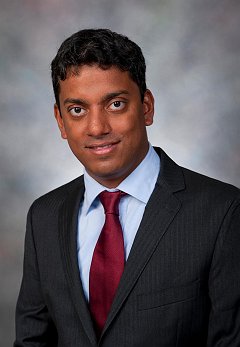
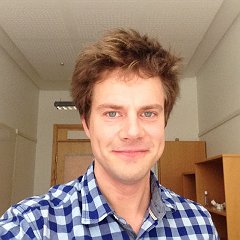
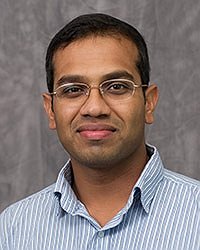
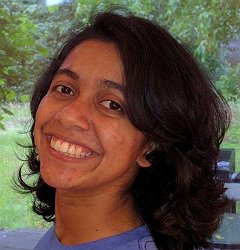
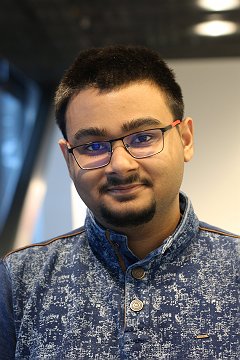
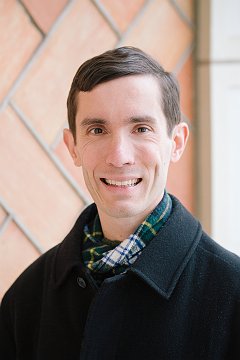
Swarat Chaudhuri is a Professor of Computer Science at the University of Texas at Austin and Senior Staff Research Scientist at Google Deepmind (currently on leave). He directs the Trishul laboratory, focusing on neurosymbolic AI at the intersection of programming languages, formal methods, and machine learning. His research aims to develop reliable, transparent intelligent systems capable of complex reasoning beyond contemporary AI. Education: Ph.D. in Computer Science, University of Pennsylvania (2007) Bachelor's in Computer Science, Indian Institute of Technology, Kharagpur (2001) Research Interests: Neurosymbolic programming, program synthesis, automated reasoning, and AI applications in code generation, mathematics, systems engineering, and scientific discovery. Key focuses include interpretability, safety certification, and robustness in learning-enabled systems. Honors & Awards: Guggenheim Fellow (2025) NSF CAREER Award ACM SIGPLAN John Reynolds Dissertation Award Multiple ACM Distinguished Paper Awards Meta/Google Research Awards Leadership & Advising: Directs Trishul Lab with 9 current PhD students. Alumni hold positions at Meta, Google, Penn State, and UC Berkeley. Served as Program Chair for ICLR 2024 and CAV 2016. Affiliations: Core faculty in UT's Machine Learning Laboratory, Programming Languages/Formal Methods group, and Texas Robotics affiliate.
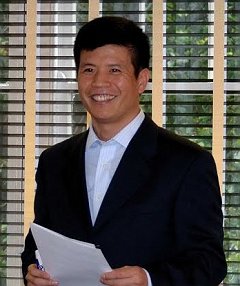
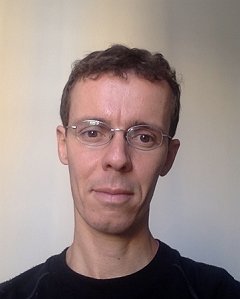
Chen Ding is a Professor and Chair of the Computer Science Department at the University of Rochester, where he leads research in computer memory systems and locality theory. His work focuses on optimizing memory hierarchy performance across computing platforms from handheld devices to supercomputers. Ph.D. from Rice University (2000) M.S. from MTU (1996) B.S. from Beijing University (1994) Professor Ding's research centers on the scientific foundation of computer memory, particularly locality theory and its applications for minimizing data movement - the primary bottleneck in modern computing systems. His work has established that data movement, data reuse, and working set are mathematically related manifestations of the same underlying phenomenon. His research spans parallel program locality, data movement complexity, relational theory of locality, reference affinity, and whole-program locality analysis. His recent publications demonstrate a continued focus on memory system optimization, with particular emphasis on lease caching, symmetric locality modeling, and continuous-time analysis of Zipfian workloads. His work bridges theoretical foundations with practical implementations across CPU/GPU cache modeling, cache sharing optimization, and key-value memory caching systems. NSF CAREER award (2003) DOE Young Investigator Award (2002) Professor Ding has supervised numerous graduate students, including Lavaee who contributed to the "Hardness of data packing" research presented at POPL'16. His work has received consistent funding from NSF and DOE, supporting his research in memory systems and parallel programming. He has served in leadership roles including General Chair for ISMM 2020 and committee positions for major conferences like PLDI and PPoPP. His research group maintains the roclocality.org resource and develops tools like SLO (suggestions of locality optimizations) for analyzing and improving program locality. The group collaborates with industry partners including Microsoft Research, where Ding served as a Visiting Researcher, and academic institutions worldwide.
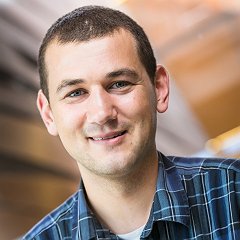
Nate Foster is a Professor of Computer Science at Cornell University's Bowers Computing and Information Science college. He also serves as a Visiting Professor at EPFL's Data Center Systems Laboratory during the 2023-24 academic year and as a Visiting Researcher at Jane Street. His research focuses on developing languages and tools that make it easy for programmers to build secure and reliable systems, with particular emphasis on software-defined networking. Dr. Foster's educational background includes: PhD in Computer Science from the University of Pennsylvania MPhil in History and Philosophy of Science from Cambridge University BA in Computer Science from Williams College Nate Foster's research spans multiple areas within programming languages and systems. His current work focuses on the design and implementation of languages for programming software-defined networks. He has also made significant contributions to bidirectional languages (also known as "lenses"), database query languages, data provenance, type systems, mechanized proof, and formal semantics. His interdisciplinary approach combines theoretical foundations with practical systems building, seeking to bridge the gap between formal methods and real-world network programming. An analysis of Foster's recent publications reveals a strong focus on network programming languages, particularly NetKAT and P4. His work consistently applies formal methods to networking problems, with increasing emphasis on verification, equivalence checking, and symbolic execution techniques. The research trajectory shows progression from foundational language design to practical verification tools, demonstrating how theoretical programming language concepts can solve real-world networking challenges. Dr. Foster has received numerous prestigious awards for his contributions: Sloan Research Fellowship NSF CAREER Award ACM SIGPLAN Robin Milner Young Researcher Award (2023) Most Influential POPL Paper Award Tien '72 Teaching Award Google Research Award Yahoo! Academic Career Enhancement Award Cornell Engineering Research Excellence Award Morris and Dorothy Rubinoff Award ACM SIGCOMM Rising Star Award As an active member of the programming languages community, Foster has advised numerous graduate students and secured significant research funding through his NSF CAREER award and Google Research Award. He has served in leadership roles for major conferences including PLDI, POPL, and ICFP, demonstrating his commitment to mentoring the next generation of researchers through programs like PLMW@PLDI. His collaborative approach is evident in his extensive co-authorship network across academia and industry. Foster leads research in the area of programming languages for networking, with particular focus on the NetKAT framework for network verification. His work bridges the gap between formal methods and practical networking systems, creating tools that have influenced both academic research and industry practice in software-defined networking. His collaborations with institutions like EPFL and industry partners like Jane Street demonstrate the real-world impact of his research agenda.
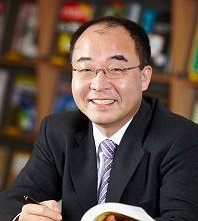
Jeremy Gibbons is Professor of Computer Science at the University of Oxford, where he leads the Algebra of Programming research group and serves as Director of the Software Engineering Programme offering part-time professional Masters' degrees. He is a Governing Body Fellow at Kellogg College and has held significant leadership roles including Deputy Head of Department and Chair of the Faculty of Computer Science (2012-2016). His research focuses on programming methodology, particularly functional languages and object-oriented languages, with emphasis on expressing and reasoning about recurring patterns in software structure. He has made substantial contributions to functional programming, program construction, and the mathematics of program design, often drawing connections between category theory and practical programming techniques. His recent publications demonstrate continued innovation in functional programming techniques, memory technologies, and algorithm design, showing consistent focus on mathematical foundations of programming. The work spans theoretical explorations and practical applications of programming language concepts. CEng (Chartered Engineer) MBCS (Member of the British Computer Society) CITP (Chartered IT Professional) FIAP (Fellow of the International Association for Pattern Recognition) Gibbons has supervised numerous doctoral students and actively mentors both current and past students including Juuso Haavisto, Johannes Hartmann, and Jack Liell-Cock. His leadership extends to major conference committees and editorial boards, having served as Editor-in-Chief of the Journal of Functional Programming and current Editor-in-Chief of The Programming Journal. He leads the Algebra of Programming research group at Oxford, which explores the mathematical foundations of programming and develops techniques for program construction based on algebraic principles. The group maintains strong connections with international research communities through IFIP Working Groups 2.1 and 2.11.
Rajiv Gupta is a Distinguished Professor and the Amrik Singh Poonian Professor of Computer Science at the University of California, Riverside (UCR), where he serves as Associate Dean for Academic Personnel in the Bourns College of Engineering (BCOE). He is a member of the RIPLE research group and has co-authored 327 papers with an h-index of 69 and over 16,600 citations. His extensive service includes chairing major conferences such as FCRC 2015, PPoPP 2020, ASPLOS 2011, and PLDI 2008. Professor Gupta's research focuses on Programming, Compiler, Runtime & Architectural Support for Parallel & Distributed Heterogeneous Systems and Software Tools for Monitoring and Managing Runtime Behavior . His work spans graph analytics with scalability and performance, understanding and managing the dynamic behavior of parallel programs, software speculation for irregular parallelism, dynamic program analysis for secure and reliable computing, and compiler optimizations with architectural support. His research has significant applications in high-performance computing, GPU programming, and distributed systems. Analysis of his recent publications reveals a strong focus on graph processing systems, with particular emphasis on evolving and streaming graph analytics. His work addresses critical challenges in memory management for large-scale graph processing, hardware acceleration for graph algorithms, and optimization techniques for concurrent and distributed graph computations. The research demonstrates a progression from foundational compiler and architecture work to increasingly sophisticated systems for handling modern data-intensive computing challenges. Fellow of the ACM (2009) Fellow of the IEEE (2008) Fellow of the AAAS (2011) NSF Presidential Young Investigator Award (1991) UCR Doctoral Dissertation Advisor/Mentor Award (2012) Multiple best paper awards across major conferences Two students won ACM SIGPLAN Outstanding Doctoral Dissertation Award Five advisees received NSF CAREER Award Professor Gupta has supervised 42 PhD students to completion and currently advises several doctoral candidates. His advising success is reflected in his students' achievements, including multiple award-winning dissertations and significant career accomplishments in academia and industry. His research has been supported by numerous grants from NSF, DARPA, and industry partners, enabling sustained investigation into parallel computing systems. The RIPLE research group under his leadership has produced influential work that bridges theoretical foundations with practical system implementations. As the leader of the RIPLE research group at UC Riverside, Professor Gupta oversees a vibrant team focused on innovative approaches to parallel and distributed computing. The group maintains strong collaborations with industry partners and other academic institutions, contributing to the development of next-generation computing systems. Current projects include GRASP (Graph Analytics with Scalability & Performance) and research on understanding and managing the dynamic behavior of parallel programs, reflecting the group's continued focus on cutting-edge computing challenges.
Ranjit Jhala is a Professor of Computer Science Engineering in the Jacobs School of Engineering at the University of California, San Diego. His research focuses on building reliable computer systems through programming languages and software engineering techniques. His primary research interests include Programming Languages, Formal Verification, and Software Engineering. He draws from and contributes to areas such as Type Systems, Model Checking, Program Analysis, and Automated Deduction, bridging theoretical foundations with practical implementations for real-world software development. Prof. Jhala's publication record shows a consistent trajectory in refinement type systems, evolving from Liquid Haskell to Flux for Rust, while also exploring neurosymbolic approaches to error repair and type error diagnosis. His work demonstrates a commitment to making formal verification techniques accessible to practitioners. He leads the Programming Systems Group at UCSD, mentoring graduate students and collaborating with researchers across the programming languages community. His service includes General Chair roles for POPL 2018 and PLDI 2022, reflecting his leadership position in the field. Prof. Jhala is also known for his mentoring activities, including talks on academic presentation skills and participation in ICFP's mentoring programs for students and early-career researchers.
Jaejin Lee is a Professor in the Department of Computer Science and Engineering at Seoul National University (SNU) and serves as the Director of the Center for Manycore Programming and Multicore Computing Research Laboratory. He holds a BS in Physics from SNU (1991), an MS in Computer Science from Stanford University (1995), and a PhD in Computer Science from the University of Illinois at Urbana-Champaign (1999), where his research was supported by IBM and Korea Foundation for Advanced Studies fellowships. Research Focus: His work centers on heterogeneous computing systems with expertise in GPU/FPGA programming, deep learning compiler architectures, PyTorch/TensorFlow optimization, and quantum computing simulation environments. Key areas include parallelization techniques and performance enhancement for machine learning frameworks. Publications: His research output demonstrates consistent focus on GPU efficiency, compiler-directed optimizations, and distributed computing, with recent emphasis on deep learning acceleration and error resilience in heterogeneous architectures. Awards & Honors: IEEE Fellow IBM Graduate Fellowship Korea Foundation for Advanced Studies Graduate Fellowship Leadership: Directs the Multicore Computing Research Laboratory and Center for Manycore Programming, focusing on next-generation parallel computing architectures.
Magnus O. Myreen is a Professor in the Department of Computer Science and Engineering at Chalmers University of Technology, Sweden. He has been with Chalmers since 2014, becoming a tenured Associate Professor in 2015 and being promoted to full Professor in June 2023. Myreen has an extensive record of service to the programming languages and formal methods communities, including serving on program committees for major conferences like PLDI, POPL, ICFP, and CPP, and chairing the steering committee for the ITP conference series since November 2023. Myreen received his academic training at prestigious institutions: B.A. in Computer Science at the University of Oxford, tutored by Dr. Jeff Sanders Ph.D. on program verification in 2009 at the University of Cambridge, supervised by Prof. Mike Gordon Myreen's research focuses on program verification, interactive theorem proving, and compiler verification. He is best known for his work on the CakeML project, which is an ML-style language with a formal semantics and a growing ecosystem of proofs and tools that support construction of verified applications. As he states on his website, "My most recent work has focused on CakeML, which is an ML-style language with a formal semantics and a growing ecosystem of proofs and tools that support construction of verified applications. As far as I know, the CakeML compiler is the first verified compiler to have been bootstrapped." His research spans several key areas: Decompilation into logic — verification of machine code Proof-producing synthesis from logic Verified Lisp and ML runtimes Connecting things up: verified stacks Myreen's publication record shows a strong focus on verified compilation and theorem proving, particularly through the CakeML ecosystem. His work consistently bridges the gap between theoretical foundations and practical implementation, with numerous papers on verified compilers, program verification, and theorem proving. A significant trend in his recent work (2021-2024) has been extending CakeML's capabilities to handle more complex language features, improve performance, and verify increasingly sophisticated compilation techniques including bootstrapping and dynamic computation. Myreen has received several prestigious awards and recognitions: Winner of the BCS Distinguished Dissertation Competition 2010 for his PhD work Royal Society Research Fellow (UK) since 2012 ACM SIGPLAN Most Influential POPL Paper Award for the 2014 CakeML paper Amazon Research Award for his proposal "Compiling Dafny to CakeML" Myreen has advised several PhD students to completion, including Alejandro Gomez (Sep 2017 – Jun 2023), Oskar Abrahamsson (Aug 2017 – Dec 2022), and Andreas Loow (Sept 2016 – Sep 2021). He also collaborated with postdocs including Hira Syeda, Thomas Sewell, and Johannes Aman Pohjola. His research has been supported by various funding sources, though specific grants aren't detailed in the provided text. Notably, he received an Amazon Research Award for his work on compiling Dafny to CakeML, and his CakeML project has clearly attracted significant attention in the programming languages and formal methods communities. Myreen leads research on the CakeML project, which has grown into a substantial ecosystem for verified compilation. The project involves a team of researchers working on various aspects including compiler verification, program synthesis, and theorem proving. Myreen also collaborates with researchers at other institutions, as evidenced by his visits to EPFL (meeting Viktor Kuncak, Martin Odersky, and James Larus) and NUS (visiting Ilya Sergey's group). In October 2023, he began a ten-month sabbatical at Cambridge UK, where he worked part-time for Arm Ltd., indicating ongoing industrial collaboration.
Mayur Naik is the Misra Family Professor in the Department of Computer and Information Science at the University of Pennsylvania's School of Engineering and Applied Science. He holds office in Room 642B, Amy Gutmann Hall and maintains an active research program focused on the intersection of programming languages and artificial intelligence. Before joining UPenn, he was faculty at Georgia Institute of Technology and a researcher at Intel Labs, Berkeley. Naik received his PhD in Computer Science from Stanford University in 2008 under Alex Aiken, a Masters from Purdue University in 2003 under Jens Palsberg, and a Bachelors from BITS Pilani in 1999. He grew up in Goa, India. His primary research interests center around neurosymbolic programming, which combines symbolic reasoning with machine learning to create more accurate, interpretable, and domain-aware AI systems. His group develops language design, learning algorithms, and compiler optimizations in this space, with their most mature effort being the Scallop neurosymbolic programming language and compiler toolchain. He also conducts research in trustworthy AI for healthcare applications and AI-enabled programming tools that improve programmer productivity. Analysis of his recent publications shows a strong trend toward neurosymbolic programming frameworks (Scallop, TorchQL), LLM-assisted program analysis (IRIS), and applications of these techniques to security, healthcare, and computer vision. His work consistently bridges theoretical foundations with practical implementations, often releasing open-source systems. Misra Family Professor (endowed chair, effective July 2024) Multiple distinguished paper awards (PLDI 2019, FSE 2015, PLDI 2014) Test-of-Time Paper Awards (FSE 2013, FSE 2012, EuroSys 2011) His student Elizabeth Dinella won the 2025 ACM SIGSOFT Outstanding Dissertation award Naik has advised numerous PhD students who have gone on to faculty positions at top institutions including Peking University, University of Toronto, Ashoka University, Bryn Mawr College, and Johns Hopkins University. His research is supported by grants from NSF, Google, Amazon, and other industry partners. His lab maintains active collaborations with clinicians and bioinformatics researchers to apply neurosymbolic programming to healthcare problems. His research group, which includes current PhD students and postdocs, develops practical open-source systems and applies them to diverse domains including computer vision, cybersecurity, medicine, and bioinformatics. The group maintains strong industry connections with Google, Microsoft, Amazon, and other tech companies.
Chandrakana Nandi is the Director of US R&D at Certora and an affiliate assistant professor in the Department of Computer Science & Engineering at the University of Washington's College of Engineering. She completed her PhD at the University of Washington working with Zachary Tatlock and Dan Grossman in the PLSE research group. Her research focuses on building tools for scaling automated formal verification to real-world programs, particularly for DeFi applications. She works extensively with equality saturation techniques (egg project) and has made significant contributions to computational fabrication through projects like Carpentry Compiler, Szalinski, and LambdaCAD. Her work bridges programming languages, compilers, and digital fabrication, creating novel tools that transform how we design and manufacture physical objects. Nandi's publication record shows a strong trajectory in programming language techniques applied to verification and fabrication. Her work on equality saturation has become foundational in the field, with the egg library enabling state-of-the-art results in compiler optimization and program synthesis. Recent work has expanded into formal verification of smart contracts, demonstrating the versatility of her research approach across different domains. Distinguished Paper Award at OOPSLA 2021 Sigplan Research Highlight for POPL 2021 As Director of US R&D at Certora, she leads research efforts on verification tools for languages like WASM and techniques to help users write formal specifications more easily using mutation testing. She has served in numerous organizational roles for major programming languages conferences including as Workshops Co-Chair for ICFP 2025 and Committee Member for PLDI Review Committee. Nandi has established herself as a leader in the intersection of programming languages and computational fabrication, with her work on equality saturation becoming particularly influential across multiple subfields of programming languages research.
Rachit Nigam serves as an Assistant Professor in the Department of Electrical Engineering and Computer Science (EECS) at the Massachusetts Institute of Technology's School of Engineering. He leads the FLAME Lab, focusing on the intersection of programming languages and computer architecture. His research profile demonstrates significant involvement in major programming languages conferences including PLDI, SPLASH, and ICFP, where he has served in various committee roles from Artifact Evaluation to Student Research Competition Chair. Dr. Nigam's research centers on programming languages and hardware systems, with particular emphasis on creating compilers that transform programs into architectures. His work bridges theoretical type systems with practical hardware implementation, developing tools like Calyx (an intermediate language for hardware accelerator generators) and Dahlia (implementing time-sensitive affine types). His approach combines formal methods with practical compiler design to address challenges in predictable accelerator generation and hardware compilation. His publication record reveals a consistent trajectory in hardware-aware programming language design, with recent work focusing on unifying static and dynamic intermediate languages for accelerator generators. The publications demonstrate expertise across multiple subfields including type systems for hardware timing constraints, modular hardware design methodologies, and synthesis-aided compiler techniques for specialized architectures like DSPs. As an active member of the programming languages community, Nigam has served on numerous conference committees including PLDI, OOPSLA, and LCTES. He has chaired sessions, organized tutorials (including 'DSL-based Hardware Generation'), and contributed to community initiatives like PL Tea. His GitHub presence shows active development in projects related to hardware compilation with significant contributions to repositories like Calyx, Filament, and Dahlia. Dr. Nigam leads the FLAME Lab at MIT, which focuses on creating programming models and compiler infrastructure for hardware acceleration. His work with the Calyx compiler ecosystem represents a significant contribution to the field of hardware accelerator generation, providing tools that enable more predictable and efficient hardware compilation processes. His research has practical implications for domain-specific hardware accelerators and the broader challenge of making hardware design more accessible through programming language techniques.
Kunle Olukotun is a Professor of Electrical Engineering and Computer Science at Stanford University's School of Engineering, where he has been faculty since 1991. He directs the Stanford Pervasive Parallelism Lab (PPL) and co-leads the Transactional Coherence and Consistency (TCC) project. His research focuses on computer architecture, parallel programming environments, and scalable parallel systems. Key areas include chip multiprocessors (CMPs), transactional memory systems, domain-specific languages (DSLs) for heterogeneous computing, and hardware-software co-design for machine learning workloads. His work bridges theoretical foundations with practical systems implementation. Notable contributions include the Stanford Hydra research project (one of the first chip multiprocessors with thread-level speculation), founding Afara Websystems (acquired by Sun Microsystems), and developing the Niagara processor architecture. His DSL frameworks like Green-Marl and Spatial enable efficient graph analysis and hardware acceleration. His publications reveal strong trends in parallel systems evolution: from foundational CMP research (2000s) to transactional memory (2004-2010), then DSLs for heterogeneous computing (2010-2015), and currently foundation model systems (2023-2025). Subfield analysis shows consistent focus on hardware-software co-design, sparse computation, and compiler techniques across decades. ACM Fellow (2006) for contributions to multiprocessors on a chip and multi-threaded processor design Best Paper Award at IEEE International Symposium on Workload Characteristics (IISWC '10) for EigenBench Olukotun actively mentors researchers through the Stanford Pervasive Parallelism Lab (PPL), which seeks to proliferate parallelism across application domains. His projects have secured significant industry partnerships, including the acquisition of his startup Afara Websystems by Sun Microsystems. Current research focuses on compiler frameworks for foundation model systems and hardware acceleration for sparse machine learning workloads, supported by collaborations with major tech companies. He leads the Stanford Pervasive Parallelism Lab (PPL), which develops compiler and runtime systems for heterogeneous architectures. The lab's work spans DSLs, hardware acceleration, and parallel programming models, with strong industry ties to companies like NVIDIA and Google. Current initiatives include the Mosaic compiler framework and Stardust architecture for sparse tensor computation.
Jens Palsberg is a Professor and former Department Chair of Computer Science at UCLA. He directs the UCLA-Amazon Science Hub for Humanity and Artificial Intelligence and co-directs UCLA's quantum research center (30+ faculty). He co-founded UCLA's Master's program in quantum science and serves as an associate editor for ACM Transactions on Quantum Computing. His research spans programming languages, software engineering, and quantum computing. He has received the ACM SIGPLAN Distinguished Service Award (2012) and a UCLA teaching award (2023). As ACM Council member and former SIGPLAN chair, he has led 100+ program committees (POPL, PLDI, ECOOP) and conferences (General Chair for POPL, LICS, SPIN). Current initiatives include quantum programming research, optimizing compilers for quantum circuits, and developing concurrency analysis tools. His team focuses on quantum abstract interpretation and logical bytecode reduction.
Bryan Parno is the Kavčić-Moura Professor of Electrical & Computer Engineering and Computer Science at Carnegie Mellon University, where he leads the Secure Foundations Lab within CyLab, CMU's Security & Privacy Institute. His research combines theory and practice to provide formal, rigorous security guarantees about concrete systems, with emphasis on creating solid foundations for practical solutions. His research spans secure systems , formal software verification , applied cryptography , data privacy , and usable security . Current work focuses on protocols for verifiable computation and zero-knowledge proofs, building practical formally verified secure systems, and developing next-generation application models. His lab maintains a strong commitment to reproducibility, open-sourcing code under permissive licenses, and avoiding patenting results to maximize public benefit. His recent publications demonstrate a clear trend toward practical verification of real-world systems, particularly through the Verus project for verifying Rust code, Everest for building verified HTTPS stacks, and Ironclad for provably secure systems. These works bridge the gap between theoretical security guarantees and practical implementation, with applications ranging from blockchain protocols to verified cryptographic libraries deployed in the Linux kernel. His scientific achievements include multiple Distinguished Paper/Artifact Awards (USENIX Security, SOSP, PLDI), the IEEE Cybersecurity Award for Practice , the Sloan Fellowship , and the ACM Doctoral Dissertation Award . His work on verifiable computation protocols has influenced blockchain systems, while his research on secure code execution environments contributed to Intel's SGX and TDX technologies. As an advisor, Parno has mentored numerous PhD students including Aymeric Fromherz (recipient of the ACM SIGSAC Doctoral Dissertation Award) and Jay Bosamiya. His lab receives funding from diverse sources including NSF, industry partners, and security foundations. Notably, his work has been incorporated into Windows 8+, iOS 13+, and the Linux kernel. He also serves in leadership roles including Chair of IEEE Computer Society's Technical Committee on Security & Privacy. The Secure Foundations Lab maintains strong industry connections, with alumni joining Microsoft Research, Inria, Northeastern University, and other leading institutions. Recent projects like Verus, Everest, and Ironclad represent the lab's commitment to building end-to-end verified systems that provide rigorous security guarantees while maintaining practical performance.
Fernando Magno Quintão Pereira is an Associate Professor at the Federal University of Minas Gerais (UFMG), Brazil, specializing in compiler design and program analysis. His academic journey began with a Ph.D. from UCLA in 2008 under Jens Palsberg's supervision, establishing his foundation in compiler research. His research focuses on compilers , with core expertise in code generation , compiler optimizations , and static program analyses . Recent work explores quantum compilation, binary analysis, and security-aware compilation techniques. His publications reveal consistent contributions to major conferences including PLDI, CGO, and SPLASH, with emphasis on practical optimization frameworks and theoretical compiler advancements. Analysis of his 15 most recent publications (2020-2026) shows dominant themes in binary optimization (e.g., AnghaBench), security-aware compilation (e.g., Memory-Safe Elimination of Side Channels), and emerging architecture support (e.g., Quantum Computing Compilation). His work bridges theoretical compiler principles with real-world systems challenges. He actively contributes to the academic community through: Program committees for PLDI (2020-2025), CGO (2021-2026), and SPLASH conferences Leadership roles including CGO Finance Chair (2026) and PLDI Diversity & Inclusion Co-Chair (2023-2024) Organizing JENSFEST 2024 and serving on multiple conference steering committees Pereira maintains an active research group evidenced by continuous publication output and conference leadership, with his personal website ( homepages.dcc.ufmg.br/~fernando/ ) serving as a hub for his academic activities.