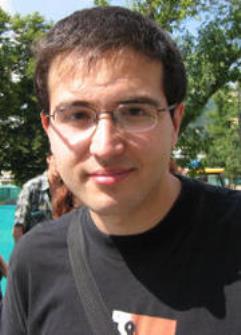
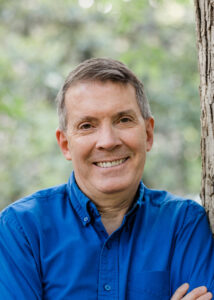
Fernando Corinto is a Research Fellow at the Department of Electronics and Telecommunications (DET) , Polytechnic University of Turin , and a member of the SmartData@PoliTO Big Data and Data Science Laboratory. He holds a European Doctorate in Electronics and Communications Engineering (2005) and was a Marie Curie Fellow (2004) at University College Dublin, focusing on cardiac fibrillation modeling and chaotic systems. Education : Laurea (2001) and Ph.D. (2005) in Electronics and Communications Engineering from Politecnico di Torino His research spans nonlinear dynamical systems , memristor devices , and complex network modeling , with over 50 publications. Key projects include RECOMMEND (2024–2027) and COSMO (2020–2024), where he served as Scientific Director . His recent work involves memristor-based neuromorphic systems and nonlinear circuit applications in biomedical and industrial contexts. He supervises PhD students Rosanna Cavazzana and Davide Rossetti and teaches Nonlinear Systems for Engineering (Mathematical Engineering) and Memristor-based Neuromorphic Systems (Electrical Engineering). His scientific contributions include the Flux-Charge Analysis Method and Bifurcations without Parameters in memristor circuits. He holds a national/international patent for skin ulcer classification algorithms and has led commercial research projects in biomedical and packaging systems.
Kevin Buckelew is an Assistant Professor of Religious Studies at Northwestern University specializing in Chinese Buddhism, with particular expertise in Chan (Zen) traditions and Buddhist-Daoist interactions. He earned his B.A. in Liberal Arts from Sarah Lawrence College and his Ph.D. in East Asian Languages and Cultures from Columbia University. Affiliation: Northwestern University, Religious Studies Department Education: B.A. (Sarah Lawrence College), Ph.D. (Columbia University) His research explores Chan Buddhist claims to authority equivalent to the historical Buddha, focusing on embodiment, gender, and institutional practices during the Song dynasty. He also investigates Buddhist-Daoist intellectual exchanges, particularly regarding theories of liberation and bodily practices. Recent publications include Discerning Buddhas: Authority, Agency, and Masculinity in Chan Buddhism (2025) and co-edited volume Buddhist Masculinities (2023). His work appears in top journals like Harvard Journal of Asiatic Studies and T’oung Pao , supported by Fulbright and Bukkyo Dendo Kyokai grants. Scientific Awards: Fulbright Program Grant Bukkyo Dendo Kyokai Grant Buckelew's scholarship combines textual analysis, historical methodology, and thematic explorations of moral responsibility and gender construction in premodern Chinese religious contexts.
Ambrus Pal is a Reader in Pure Mathematics at the Department of Mathematics, Imperial College London, within the Faculty of Natural Sciences. His research interests span Pure Mathematics, Mathematical Physics, and Applied Mathematics, with a focus on algebraic geometry, number theory, and cohomology theories. He is affiliated with the CNRS-Imperial Abraham de Moivre UMI and contributes to both research and teaching in mathematics. His work often addresses cohomological pairings, arithmetic geometry, and the Brauer-Manin obstruction. Notable projects include studies on p-adic cohomology, motivic Euler characteristics, and the arithmetic Yau-Zaslow formula. Pal has collaborated on international conferences and schools, such as the LMS-CMI Research School on Homotopy Theory and Arithmetic Geometry. His publications reflect a deep engagement with abstract algebraic structures, including quasi-Boolean groups, Grothendieck-Witt rings, and real projective geometry. While his research emphasizes theoretical advances, applications to arithmetic applications and global function fields are recurrent themes. No scientific awards or advising records are explicitly mentioned.
Saharon Shelah is an Israeli mathematician renowned for his groundbreaking work in mathematical logic and set theory. He currently holds the Robinson Chair for Mathematical Logic at Hebrew University, a position he has held since 1978, and has been a Professor at Hebrew University since 1974. Additionally, he serves as a Distinguished Visiting Professor at Rutgers University since 1986. His educational background includes: B.Sc. from Tel Aviv University (1964) M.Sc. from Tel Aviv University (1967) M.Sc. from Hebrew University (1968) Ph.D. from Hebrew University of Jerusalem (1969), summa cum laude, supervised by Michael Rabin Shelah's research primarily focuses on mathematical logic, particularly model theory and set theory. His work has revolutionized these fields through the development of stability theory, PCF theory, and proper forcing. He has made significant contributions to understanding the connections between logic and other mathematical disciplines including algebra, computer science, and combinatorics. His approach often involves creating general frameworks that solve multiple problems simultaneously, demonstrating extraordinary depth and breadth in mathematical thinking. An analysis of Shelah's extensive publication record reveals consistent innovation across mathematical logic. His work shows a progression from foundational model theory in the 1970s through the development of stability theory, to groundbreaking set theory results in the 1980s and 1990s, particularly in cardinal arithmetic and PCF theory. Recent publications continue to expand abstract model theory while finding new applications across mathematics. His research demonstrates remarkable consistency in quality and originality over five decades. Shelah's exceptional contributions have been recognized with numerous prestigious awards: 2013 AMS Steele Prize 2011 EMET Prize in Mathematics 2001 Wolf Prize in Mathematics 2000 Bolyai Prize 1998 Israel Prize for Mathematics 1992 SIAM George Pólya Prize 1991 Honorary Foreign Member of the American Academy of Arts and Sciences 1988 Member of the Israel Academy of Sciences and Humanities 1983 Karp Prize 1982 Rothshild Prize 1977 Erdös Prize Throughout his career, Shelah has mentored numerous students and collaborated with over 200 coauthors. His research has been supported by multiple grants from prestigious organizations including the Israel Science Foundation and the National Science Foundation. Shelah's work has fundamentally shaped modern mathematical logic, with his classification theory providing frameworks that continue to guide research directions. His ability to connect seemingly disparate areas of mathematics through logical structures has made his contributions exceptionally influential. Shelah maintains an active research group at Hebrew University, where he continues to supervise doctoral students and postdoctoral researchers. His research program, known for its depth and technical sophistication, continues to generate new directions in mathematical logic. The Shelah Archive (http://shelah.logic.at) serves as a comprehensive repository of his extensive publication record, which surpassed 1190 papers by the end of 2024.
Nguyen Dang is a Lecturer at the School of Computer Science, University of St Andrews, actively supervising PhD students and teaching AI-related modules including Artificial Intelligence (CS3105), Artificial Intelligence Practice (CS5011), Machine Learning (CS5014), and Uncertainty in Artificial Intelligence (CS5016). He leads the Centre for Interdisciplinary Research in Computational Algebra and maintains an active research profile with numerous publications in top conferences. University of St Andrews, School of Computer Science Lecturer (equivalent to assistant professor) Supervising PhD students including Tai Nguyen Teaching multiple AI and Machine Learning courses Dr. Dang's research focuses on the intersection of machine learning and optimization, particularly automated algorithm configuration and design. His work centers on leveraging machine learning techniques to automate the development of optimization algorithms, with special emphasis on deep reinforcement learning for Dynamic Algorithm Configuration and integrating machine learning into constraint programming. His research has significant applications across various domains, especially in automated constraint modeling. The publications reflect strong activity in combinatorial optimization, algorithm selection, and benchmark instance generation. His recent publications demonstrate consistent output in top venues including Artificial Intelligence Journal, GECCO, FOGA, and CP conferences, with notable achievements including Best Paper Awards at GECCO'2025 and GECCO'2022. The research spans theoretical foundations of parameter control, practical applications in constraint programming, and innovative approaches to algorithm configuration. Best paper award at GECCO'2025 Best paper award at GECCO'2022 Nomination for best paper award at FOGA'2023 Best paper award at GECCO'2017 Dr. Dang holds a Leverhulme Early Career Fellowship (2020-2023) worth £90,000 for his project on constraint-based automated generation of synthetic benchmark instances. He has secured additional funding including EPSRC High Performance Computing grants totaling over 2.2 million CPU hours and a COST Action grant. His research group actively develops tools and frameworks for automated algorithm configuration and benchmark instance generation, with several open-source datasets available on GitHub. He is involved with multiple research groups including the Centre for Interdisciplinary Research in Computational Algebra and collaborates extensively with researchers at University of St Andrews and internationally, including at Université de Paris I Panthéon-Sorbonne where he conducted visiting research.
İlhan Kocaarslan is a Professor in the Department of Control and Automation Engineering at Istanbul Technical University (ITU), Faculty of Electrical and Electronic Engineering. His research focuses on advanced control systems, energy conversion, and sustainable transportation technologies. Research Interests: His work spans Load Frequency Control , Adaptive and Fuzzy Logic Control , PI Controllers , Electric Vehicle energy modeling , Battery and Fuel Cell systems , and Smart Grid integration . He actively contributes to innovations in renewable energy and electromobility. Publication Trends: Recent publications emphasize high-fidelity energy modeling for electric vehicles, optimization of battery systems, control strategies for fuel cells using fuzzy and Lyapunov-based PI controllers, and electromagnetic design for next-generation transportation like Hyperloop. His work bridges theoretical control design with practical energy applications. Scientific Awards: No awards mentioned in the provided text. Advising and Grants: He supervises 25 ongoing theses, indicating active mentorship. He is Principal Investigator (PI) on multiple research projects funded by ITU’s BAP and TTO programs, including initiatives on blockchain-based energy systems, hydrogen technologies, electric mobility, and cybersecurity-integrated sustainability platforms. Labs and Teams: While specific lab names are not mentioned, his role as PI on diverse energy and control projects suggests leadership in a multidisciplinary research group focused on smart energy systems, power electronics, and sustainable transportation at ITU.
Michał Kłosiński is an Associate Professor in the Institute of Literary Studies at the Faculty of Humanities, University of Silesia in Katowice, Poland. He holds a habilitation in Literary Studies / Game Studies and is recognized as a professor at the University of Silesia. He is an active member of the Utopian Studies Society and The Society for Utopian Studies, and a signatory to the Declaration on Research Assessment (DORA). His academic journey includes participation in the Paris Critical Theory Program during his doctoral studies. His research interests lie at the intersection of Game studies, utopian studies, science fiction studies, literary theory, philosophy, and biopolitics . He employs hermeneutical and postphenomenological approaches to analyze digital games, focusing on representation, simulacra, quasi-objects, and critiques of capitalism. His recent work investigates the mediation of power and control in digital games, particularly through the lens of biopolitics. His recent publications and research demonstrate a strong trend toward interpreting video games as complex cultural texts that reflect and critique contemporary socio-political realities. He examines how games like Disco Elysium , Cyberpunk 2077 , and Frostpunk engage with themes of subjectivity, ideology, trauma, and utopian/dystopian visions. His work often draws on the philosophies of Paul Ricoeur, Jean Baudrillard, Michel Foucault, and Roberto Esposito. OPUS grant from the National Science Centre for "Mapping the Biopolitics of Games" (2022) Research grant "Baudrillard – Theory – Literature" from the National Science Centre (2011-2014) He has supervised and edited several collective works, including Dyskursy gier wideo (2019) and More After More (2016). He is also engaged in academic outreach, maintaining a personal YouTube channel to popularize his research. His laboratory or research team is implicitly centered around his work in the Institute of Literary Studies, where he fosters interdisciplinary research connecting literary theory with game studies and philosophy. His projects often involve the analysis of narrative structures, ideological underpinnings, and philosophical concepts within digital games.
Raina Plowright serves as the Rudolf J. and Katharine L. Steffen Professor of Veterinary Medicine at Cornell University's College of Veterinary Medicine, where she leads the Department of Public & Ecosystem Health. She is also a Cornell Atkinson Scholar at the Cornell Atkinson Center for Sustainability. Previously, she was a Professor of Epidemiology at Montana State University (2022-present), Associate Professor (2020-2022), and Assistant Professor (2014-2020) in the same department. Plowright earned her B.V.Sc. Hons I (DVM equivalent) from the University of Sydney in 1997, followed by an M.S. in Epidemiology (2005) and Ph.D. in Ecology (2007) from the University of California, Davis. She completed postdoctoral training as a David H. Smith Fellow in Conservation Research at Pennsylvania State University's Center for Infectious Disease Dynamics (2009-2014). Her research program integrates evolutionary biology, ecology, environmental science, immunology, virology, and social sciences to understand and prevent zoonotic spillover—the critical first step in pandemic emergence. She leads transdisciplinary collaborations focused on WHO-priority pathogens originating in bats, with work spanning from sub-cellular to landscape scales. Her team investigates how land-use change, climate variation, and social vulnerability drive pathogen emergence, identifying practical strategies for prevention. Her Plowright Lab and Bat One Health Research Group conduct field studies, laboratory experiments, and predictive modeling to generate actionable insights for public health strategies. Analysis of her recent publications reveals a consistent focus on understanding the ecological and physiological mechanisms driving viral spillover from bats to other species. Her work increasingly emphasizes practical interventions and policy recommendations for pandemic prevention, moving beyond simply understanding spillover mechanisms to implementing ecological countermeasures. Recent research has particularly examined the role of bat nutrition and metabolism in viral shedding dynamics, the spatial and temporal patterns of viral excretion in reservoir hosts, and the development of comprehensive frameworks for primary pandemic prevention. Elected to the National Academy of Medicine (2023) Elected as Fellow of the American Association for the Advancement of Science (2022) Charles and Nora Wiley Award for Meritorious Research (2022) Rudolph J. and Katharine L. Steffen Professorship (2023) DARPA Young Faculty Award (2016) David H. Smith Fellowship in Conservation Research (2009) Plowright co-chairs the Lancet Commission on Prevention of Viral Spillover and serves on the NSF Advisory Committee for Environmental Research and Education. Her research has received significant funding from organizations including DARPA, NSF, and the Morris Animal Foundation. She leads the Plowright Lab and Bat One Health Research Group, which conduct interdisciplinary research spanning field studies, laboratory experiments, and modeling approaches to understand and prevent zoonotic disease emergence. Her laboratory maintains active collaborations with researchers across multiple institutions and countries, working closely with wildlife managers, public health officials, and communities to develop practical strategies for pandemic prevention. The lab's approach emphasizes the integration of ecological knowledge with public health practice through the One Health framework.
Cynthia D. Rudin is the Gilbert, Louis, and Edward Lehrman Distinguished Professor of Computer Science at Duke University, with joint appointments in the Departments of Electrical and Computer Engineering, Statistical Science, Mathematics, and Biostatistics & Bioinformatics. She directs the Interpretable Machine Learning Lab and has held previous positions at MIT, Columbia, and NYU. Her educational background includes: Undergraduate degree from the University at Buffalo PhD from Princeton University (2004) Research Interests: Dr. Rudin's research focuses on interpretable machine learning and its applications across multiple domains. Her work emphasizes creating machine learning models whose reasoning processes people can understand, which includes algorithms for extremely sparse models, interpretable neural networks, interpretable matching methods for causal inference, and dimension reduction for data visualization. She applies these techniques to critical societal problems in healthcare, criminal justice, materials science, and other domains. Her lab has developed practical code for sparse models such as decision lists, decision trees, and additive models that provably optimize accuracy and sparsity. Dr. Rudin's recent publications (2024-2025) demonstrate a strong focus on interpretable AI applications across diverse fields including healthcare (mortality risk scores, breast cancer prediction), materials science (metamaterials design), and environmental justice (location-based health analysis). Her work consistently emphasizes practical implementations with real-world impact, particularly in high-stakes decision-making domains where model transparency is critical. Scientific Awards: Squirrel AI Award for Artificial Intelligence for the Benefit of Humanity (2022) - often described as the "Nobel Prize of AI" INFORMS Society on Data Mining Prize (2024) Guggenheim Fellowship (2022) Three-time winner of the INFORMS Innovative Applications in Analytics Award (2013, 2016, 2019) Winner of the 2023 John M. Chambers Statistical Software Award for PaCMAP Winner of the 2024 Award for Innovation in Statistical Programming and Analytics Dr. Rudin has advised numerous PhD students and postdocs who have co-authored significant publications with her. Her lab has received substantial funding for projects applying interpretable machine learning to healthcare (seizure prediction in ICU patients), criminal justice (crime series analysis), and energy infrastructure (underground electrical distribution networks). Her work on the Series Finder algorithm has been adapted by the NYPD and has been running live in NYC since 2016. She directs the Interpretable Machine Learning Lab at Duke, which includes the Almost-Matching-Exactly Lab focused on interpretable causal inference. Her team develops practical code implementations for all their research, emphasizing usability and real-world application in critical domains.
Stephani L. Wrabel is a Senior Policy Researcher at the RAND Corporation and Professor of Policy Analysis at the RAND School of Public Policy. She conducts influential research on education policy, social and emotional learning, and defense-funded youth programs, with her work shaping both federal and state policies. Institution: RAND Corporation School: RAND School of Public Policy Position: Professor of Policy Analysis Email: Stephani_Wrabel@rand.org Education: Ph.D. in Urban Education Policy, University of Southern California M.Ed., University of Florida B.A., Boston University Her research focuses on improving educational outcomes for students and military-connected populations through rigorous evaluation and policy analysis. She specializes in standards-based accountability, educational equity, program evaluation, and social and emotional learning. Her work often centers on vulnerable youth, including those in the National Guard Youth ChalleNGe and JROTC programs, and she has led major federal evaluations, including for the U.S. Department of Education’s Center to Improve SEL and School Safety. Analysis of her recent publications shows a consistent focus on youth development, military-civilian integration, educational equity, and evidence-based policy. Her research spans program evaluation, technical assistance frameworks, and longitudinal impact studies, with a strong emphasis on practical, policy-relevant findings. She frequently publishes both comprehensive reports and executive summaries to reach diverse stakeholders. Scientific Awards: No awards listed in the provided text. Wrabel leads major research initiatives and serves as principal investigator on defense-funded education studies. Her work involves collaboration with federal agencies, education departments, and military organizations. She has developed practical tools for program evaluation, particularly for Marine and Family Division programs, supporting effective resource use and program improvement. Her leadership in large-scale evaluations demonstrates significant grant and project management experience. She is actively involved in research teams focused on education reform and military youth programs. Her work with the Center to Improve Social and Emotional Learning and School Safety involved a multi-year technical assistance network, indicating leadership in collaborative, interdisciplinary teams.
Konstantin Ardakov is a Tutorial Fellow in Mathematics at Brasenose College and University Lecturer in Pure Mathematics at the University of Oxford. He holds an MMath from the University of Oxford and a PhD from the University of Cambridge. His academic background includes positions at the Universities of Sheffield, Nottingham, Queen Mary University of London before returning to Oxford in 2013. Dr. Ardakov's research focuses on applying techniques from algebraic geometry and noncommutative algebra to study problems in representation theory arising from areas of algebraic number theory such as non-commutative Iwasawa theory and the Langlands programme. His work explores the geometric representation theory of p-adic groups and the development of p-adic analogues of Beilinson-Bernstein localization.
Professor Jana Zaumseil is a distinguished academic at Heidelberg University, holding the position of Professor for Applied Physical Chemistry at the Faculty of Chemistry and Earth Sciences since 2014. She also maintains a co-opted position with the Faculty of Physics and Astronomy since 2016. Currently serving as Executive Director of the Institute for Physical Chemistry and Spokesperson for the DFG Research Training Group GRK 2948, she leads the Zaumseil research group (also known as the Nanomaterials for Optoelectronics group) at Heidelberg University's Institute for Physical Chemistry. Her educational background includes a PhD in Physics from the University of Cambridge (2003-2007) with a Gates Cambridge Trust Scholarship, and a Diplom (equivalent to M.Sc.) in Chemistry from the University of Leipzig (1997-2022). Prior to her position at Heidelberg, she served as Professor for Nanoelectronics at Friedrich-Alexander-Universität Erlangen-Nürnberg (2009-2014), and completed postdoctoral work at Argonne National Laboratory (2007-2009) following an internship at Bell Laboratories (2002-2003). Zaumseil's research program focuses on the optical and electronic properties of carbon-based nanomaterials, particularly single-walled carbon nanotubes (SWCNTs) and organic semiconductors. Her group specializes in processing, functionalization, characterization and application of these unconventional semiconductors for optoelectronic devices and sensors. They investigate charge transport and light-matter interaction using a wide range of experimental techniques including synthesis, optical spectroscopy, atomic force microscopy, device fabrication, and electrical/optical device characterization. Their work bridges fundamental understanding with potential applications in sensing, imaging, circuits, and energy conversion. Analysis of her recent publications reveals a strong trend toward defect engineering in carbon nanotubes, particularly creating and optimizing luminescent sp 3 defects for near-infrared applications. Her research increasingly integrates fundamental studies of charge transport with practical device applications, especially in neuromorphic computing, biosensors, and thermoelectrics. The interdisciplinary nature of her work is evident in the combination of chemistry, physics, and materials science approaches across her publication record. Dan Maydan Prize for Nanoscience and Nanotechnology (2024) Jahrespreis der Universität Heidelberg (2023) ERC Consolidator Grant (2019) ERC Starting Grant (2012) Alfried-Krupp-Award for Young University Professors (2010) Professor Zaumseil has secured substantial research funding including multiple ERC grants and leads several major collaborative projects such as the ERC Advanced Grant SCALE-NT, Collaborative Research Center SFB 1249, Cluster of Excellence 3D Matter Made to Order, and Research Training Group GRK 2948. She has mentored numerous doctoral and master's students, with her group recently receiving recognition including a Student Poster Presentation Award for Niklas Herrmann. As Dean of the Faculty of Chemistry and Earth Science (2019-2021) and current Vice Dean (2021-), she has played significant leadership roles within the university structure. The Zaumseil research group operates within Heidelberg University's Institute for Physical Chemistry, utilizing advanced facilities for nanomaterial synthesis, optical spectroscopy, and device characterization. The group participates in several major collaborative initiatives including the Cluster of Excellence 3D Matter Made to Order and the Collaborative Research Center SFB 1249, reflecting its integration within Heidelberg's broader research ecosystem focused on molecular systems and materials science.
Dr. Caitlin Nunn serves as Reader in Migration and Youth Studies at Manchester Metropolitan University, where she leads research at the intersection of refugee studies and youth studies with emphasis on refugee-background young people's lived experiences. Her work is anchored in the Manchester Centre for Youth Studies (MCYS) and involves significant collaboration with institutions including Manchester Museum and UKRI-funded initiatives. Her educational background demonstrates interdisciplinary training: PhD in Australian Studies (2013), University of Melbourne MA Preliminary (Honours equivalent) in Development Studies (2005), La Trobe University Graduate Diploma in Development Studies (2004), La Trobe University Bachelor of Dramatic Arts in Theatre Production (2000), Victorian College of the Arts, University of Melbourne Professional qualifications include Associate Fellowship of the Higher Education Academy, Certificate II in Applied Language (Vietnamese), and CELTA certification. Nunn's research program critically examines refugee youth resettlement through innovative participatory and arts-based methodologies. Key thematic strands include: Rural and regional refugee resettlement dynamics Environmental dimensions of migration and belonging Transnational generational relations among refugee families Decolonizing research approaches with displaced communities Creative interventions for refugee wellbeing Her work consistently centers youth agency while challenging conventional integration paradigms. Analysis of her 15 most recent publications reveals evolving methodological sophistication with increasing emphasis on environmental migration, cross-disciplinary collaboration (particularly with ecological sciences), and co-produced knowledge generation. The research demonstrates consistent focus on rural resettlement contexts and creative methodological innovations while expanding into digital engagement (e.g., AI/data co-production projects). Current research leadership includes: NERC Future of UK Treescapes Grant (£2m, 2021-2024): 'Voices of the future' exploring children's relationships with treescapes UKRI Citizen Science Collaboration (£343k, 2021-2023): 'Ancient History, Contemporary Belonging' with refugee-background youth EPSRC Public Engagement Scheme (£197k, 2022-2025): 'PEAs in Pods' for AI/data research co-production She actively supervises doctoral research including Nobila Bano's work on intergenerational knowledge transfer and Ahmad Al Shahma's research on equitable ESOL policies. Nunn maintains significant professional engagement as Member of the Editorial Board for Qualitative Research , Member of the AHRC Peer Review College, and Member of the UKRI Interdisciplinary Assessment College, demonstrating her disciplinary leadership beyond direct research outputs.
Holger Dette is a Professor and Chair Holder of Stochastics (specializing in Statistics) at the Faculty of Mathematics, Ruhr University Bochum. He leads the prominent Group Dette within the Institute of Statistics, overseeing a team of researchers, doctoral students, and administrative staff including Birgit Tormöhlen as team assistant. His research group is deeply integrated within the university's mathematical ecosystem, collaborating with other research groups across algebra, analysis, numerics, and topology. Dette's research spans mathematical statistics with strong applications in real-world problems. His primary interests include optimal experimental design, time series analysis, functional data, change point problems, nonparametric regression, biostatistics, special functions, goodness-of-fit tests, and random matrices . His work bridges theoretical statistics with practical applications, particularly evident in his collaborations with pharmaceutical giants Novartis and Bayer AG in biostatistics, as well as Quasol, a spin-off company from his statistics institute. His recent publications (2024-2025) reveal a research program increasingly focused on high-dimensional and functional data analysis, privacy-preserving statistics, and novel methodological approaches to longstanding statistical problems. Dette's work shows strong interdisciplinary connections, particularly with biomechanics (analyzing joint angles during fatigue phases) and data science (addressing challenges in the era of big data). His research group is actively involved in multiple DFG-funded projects including the newly established 'Small Data' collaborative research center (Sonderforschungsbereich 1597) and the Spatio-temporal Statistics for the Transition of Energy and Transport (Transregio 391). Dette has received significant recognition including the prestigious Humboldt Research Award . His paper 'With Great Power Come Great Side Channels: Statistical Timing Side-Channel Analyses with Bounded Type-1 Errors' achieved second place at the CSAW'24 Applied Research Competition MENA. His research group has also secured multiple significant funding awards from the German Research Foundation (DFG). As an advisor, Dette supervises numerous doctoral and master's students including Pascal Quanz, Marius Kroll, and Carina Graw. His group offers statistical consulting services for scientists and students across bachelor's, master's, and doctoral phases. The group maintains strong industrial partnerships, particularly in biostatistics applications, demonstrating Dette's commitment to translating theoretical statistics into practical solutions for real-world challenges.
Patrick J. Curran is a Professor in the Department of Psychology at the University of North Carolina, affiliated with the L.L. Thurstone Psychometric Laboratory and the Quantitude initiative. His research focuses on quantitative methodologies, particularly longitudinal data analysis and structural equation modeling, applied to developmental psychopathology and adolescent substance use. He collaborates on statistical education through YouTube tutorials, a blog (Help Desk), and workshops, alongside a podcast with Greg Hancock. His work bridges methodological innovation with substantive research in psychology and public health. Key contributions include advancing latent curve models with structured residuals, integrative data analysis techniques, and the dissemination of statistical tools. His research spans disciplines such as developmental psychology, clinical psychology, and epidemiology, addressing topics like alcohol use trajectories, chronic depression mechanisms, and pandemic-related disparities in healthcare workers’ mental health. Lab Affiliations: L.L. Thurstone Psychometric Lab, Quantitude Collaborations: Dan Bauer (statistical education), Greg Hancock (podcast), and interdisciplinary teams in public health and clinical research His publications emphasize methodological rigor and practical application, often addressing gaps in longitudinal data analysis and measurement equivalence. Notable work includes the latent curve model with structured residuals (LCM-SR) and integrative data harmonization strategies for prevention science.