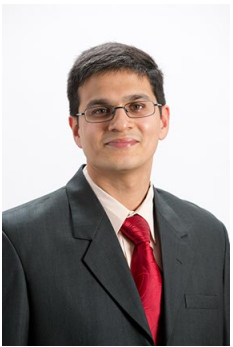
Makhlouf Shabou Basma is a Professor at the Haute école de gestion de Genève (HES-SO), leading the Master in Information Sciences program. She specializes in archival science, digital preservation, and information governance with a focus on sustainable data practices and AI integration. She is actively involved in interdisciplinary research addressing environmental impacts of data management, appraisal processes in the AI era, and computational methods in archival science. Her work spans over 20 years, with leadership in projects such as Arch’Eco (ecological costs of data lifecycle), InterPARES Trust AI (AI-driven archival appraisal), and Ask ArchiLab (AI conversational assistant for archives). She collaborates internationally with institutions like the University of Geneva, CICR, and UNESCO, and has secured over CHF 2 million in research funding. Key research interests include: sustainable digital preservation, environmental impact of data practices, computational archival science, AI ethics in appraisal, and interdisciplinary knowledge management. She has published extensively on topics such as eco-design of archives, maturity models for appraisal processes, and digital heritage preservation. Her teaching and research bridge practical archiving challenges with cutting-edge technologies, emphasizing ethical and sustainable solutions for information governance in both public and private sectors.
Kimberly Swanson is an Associate Professor of French at the University of Kansas. She serves as the French Language Program Director and oversees Graduate Teaching Assistant training. Her work extends to the Language Training Center, providing military-focused language and culture education. Education: Ph.D. in French Linguistics and General Linguistics, Indiana University M.A. in French Linguistics, Indiana University B.A. in International Studies and French, Hamline University Professor Swanson’s research focuses on French linguistics, phonology/phonetics, and historical evolution of French. Her pedagogical work bridges SLA theory with classroom practice, emphasizing phonological acquisition, constraint demotion, and cultural integration in language learning. Her publications highlight trends in French pedagogy, including interactive digital resources, textbook supplements, and theoretical studies on phonology and syntax. These works reflect interdisciplinary approaches combining linguistics, cognitive theory, and educational technology. Scientific Awards: KU Cramer Professorship for 2009-2011 KU Cramer Award for excellence in teaching and research (2008) Outstanding Woman Educator, KU Emily Taylor Woman’s Resource Center (2011) Professor Swanson supervises Graduate Teaching Assistants and lecturers in elementary French instruction. Current projects include Quel accent?! (a book with KU’s Open Language Resource Center) and studies on L2 acquisition of palatalization and constraint hierarchy processing in French/English interlanguage. She collaborates with teams in the French Language Program and Language Training Center, integrating research into military and academic language instruction frameworks.
Christine Tardy is a Professor in the Department of English at the University of Arizona, teaching in undergraduate English, MA-TESL, and SLAT PhD programs. Her research centers on second language writing, genre studies, and English for Academic Purposes within institutional contexts. Her scholarship critically examines how genre conventions shape academic writing across disciplines and languages, emphasizing equity for multilingual writers. She investigates English language policies in higher education and their implications for writing instruction, bridging theoretical frameworks with practical applications for educators. Recent publications (2023-2025) analyze genre innovation in academic writing, ethical challenges in transnational education, and digital genres in scientific communication. Key themes include the GELT paradigm for multilingual writing, World Englishes in academic publishing, and Twitter's role in science communication during crises. Tardy co-edited the Journal of Second Language Writing for six years and authored influential books including Genre-based writing: What every ESL teacher needs to know (2019) and Beyond convention: Genre innovation in academic writing (2016), establishing her as a leading voice in writing studies.
Joseph Tripp is a Professor in the Department of Mathematics at Ferris State University, within the College of Arts, Sciences and Education. He actively contributes to mathematics education through scholarship of teaching and learning initiatives and departmental leadership. His educational background includes: PhD in Mathematics Education from Syracuse University MS in Mathematics Education from Syracuse University BA with a double major in Mathematics and Secondary Mathematics Education from the State University of New York at Plattsburgh Professor Tripp specializes in innovative pedagogical approaches for collegiate mathematics, particularly focusing on active learning strategies in Precalculus instruction. His research emphasizes shifting from traditional content delivery to experiential learning models that develop workplace skills through group work and concept-intensive problem solving. He investigates student cognitive shifts using reformed curricula like Functions Modeling Change materials and contributes to the Scholarship of Teaching and Learning through structured learning assistance (SLA) frameworks. His presentation record demonstrates sustained engagement with teaching innovation, including colloquia on group work implementation, engagement strategies at the University of Findlay's Teaching and Learning Academy, and SLA program development presented at Michigan State University and Ferris State University.
Dr. Omar Khadeer Hussain serves as an Associate Professor and Deputy Head of School (Research) at the School of Business, UNSW Canberra. He has been with the School since February 2014, initially working as a Lecturer and Senior Lecturer before his current appointment. Prior to joining UNSW, he worked as a Senior Research Fellow at Curtin University. Dr. Hussain's educational background includes a Bachelor of Technology in Computer Science from JNTU (2002), a Master of Research in Computer Science from La Trobe University (2004), and a Doctor of Philosophy in Information Management from Curtin University (2008). His research focuses on Logistics and Supply Chain Management, with particular emphasis on Supply Chain Risk Management, Distributed and Grid Systems, Decision Support, and Group Support Systems. Dr. Hussain applies these areas to develop knowledge synthesis from data for business applications such as decision making, risk management, cloud service management, new product development, and milk quality management. His work incorporates predictive analytics to enable informed business decision making, with recent research increasingly integrating artificial intelligence and large language models for supply chain risk identification and management. Analysis of Dr. Hussain's recent scholarly output reveals a strong focus on applying cutting-edge AI techniques to supply chain challenges. His work spans systematic literature reviews on supply chain risk modeling, development of frameworks for SLA violation prevention in Cloud of Things environments, and innovative applications of explainable AI in various domains. There is a clear trend toward leveraging large language models for event identification in supply chain risk management and developing dual-sided decision frameworks that integrate multiple stakeholder perspectives. His research bridges theoretical advances with practical applications in logistics and business engineering. Curtin Business School New Researcher of the Year award for 2012 Prize for Early Career Researcher, Curtin Business School (2013) Chancellor's thesis commendation award, Curtin University (2008) Master Prize – Computer Science, La Trobe University (2004) Dr. Hussain has successfully secured multiple competitive research grants, including ARC Linkage Projects on 'Economically Efficient Green Logistics through Cyber Physical Systems' (2016) and 'Intelligent CRM through Conjoint Data Mining of Heterogeneous Sources' (2015), both with Professor Elizabeth Chang as lead CI. He has also supervised 9 PhD students to completion, serving as both main and joint supervisor. While specific lab or team information isn't explicitly mentioned in the available text, Dr. Hussain's research appears to be conducted within the School of Business at UNSW Canberra, likely collaborating with colleagues across business disciplines and computer science to address complex supply chain and logistics challenges through interdisciplinary approaches.
Nuria Sagarra is a Professor at Rutgers, The State University of New Jersey , affiliated with research groups in Latin American, Iberian, and Luso-Afro-Brazilian Literatures and Cultures (LAILAB) and Second Language Acquisition (SLA) and Bilingualism. Her work bridges cognitive science, linguistics, and language pedagogy. Educated at the University of Illinois, Urbana-Champaign (Ph.D.) Her research investigates factors underlying adults’ challenges in acquiring second language (L2) morphosyntax, focusing on working memory, language proficiency, exposure, and cross-linguistic similarity. She employs experimental methods like self-paced reading , eye tracking , and event-related potentials to analyze real-time processing and instructional effectiveness. Recent publications highlight trends in computerized training (AI and human voices), lexical stress processing , and the interplay between interpreting experience and L2 morphological anticipation . These studies emphasize suprasegmental and segmental cues, proficiency metrics, and cognitive resource allocation. Her work also explores the longitudinal impacts of cognitive variables on L2 grammar and reading abilities, with implications for linguistic and cognitive models. Collaborative projects and methodological guides, such as her eye-tracking manual , further underscore her technical and theoretical contributions.
Professor Arunachala Mada Kannan is a distinguished academic at the Polytechnic School, Ira A. Fulton Schools of Engineering, Arizona State University . With over 30 years of experience in low-temperature fuel cells, battery technologies, and solar energy systems , he has made significant contributions to clean energy research . His career spans roles as Engineering Graduate Program Chair (since 2017), Professor (since 2014), and Associate Professor (2005-2014). Education : Ph.D. in Batteries & Fuel Cells (Indian Institute of Science, 1990), M.S. in Chemistry (Madurai Kamaraj University, 1985), B.S. in Chemistry (Madurai Kamaraj University, 1983), MBA in Statistical Process Control (Madras University, 1999) Dr. Kannan's research focuses on: Fuel Cell Technologies (PEMFC, DMFC, AFC) Battery Systems (Li-ion, SLA, solid-state) Solar Energy (DSSC, CSP) Green Hydrogen Production Nanomaterials for Energy Applications His recent publications highlight advancements in: Photoelectrochemical water splitting using doped TiO2 nanostructures Medium entropy alloys as bifunctional electrocatalysts Graphene-based composites for supercapacitors and metal-air batteries Surface patterning techniques for enhanced catalytic performance Thermal management systems using phase change materials Scientific Recognition : Fulbright Specialist (2011-2015) ASU-CTI Dean’s Awards for Service (2013) and Creative Activities (2011) Marquis WHO’s WHO in America (2009) Best Employee Award at Exide Industries (1998) Research Funding includes projects from: SRP Salt River Project IRENA Argonne National Laboratory US Civil Research & Development Foundation His work bridges fundamental materials science with applied energy solutions , emphasizing sustainable technology development for global energy challenges.
Lesley-Anne Pearson serves as Senior Biologist in the Drug Discovery Unit at the University of Dundee's School of Life Sciences. Her work bridges molecular pharmacology and public engagement through innovative art-science collaborations. Her research focuses on high-throughput screening for RNA methyltransferase inhibitors, with significant contributions to SARS-CoV-2 antiviral development. The fingerprint analysis reveals dominant expertise in Guanine Methyltransferases (66%), High-Throughput Screening (66%), and Leishmania Parasites (44%), indicating a strong focus on infectious disease targets. Recent publications (2021-2025) show consistent output in biochemical methodology and antiviral research, with notable impact on assay development. Her 2021 SLAS Discovery paper on SARS-CoV-2 inhibitors has garnered 32 Scopus citations and patent family citations. Science For All Badge 2023 (Public Engagement Award) Wellcome Trust-funded Drug Discovery Unit membership Dundee City Council collaborative projects Pearson leads extensive public engagement through the Discover Life Sciences program, Girlguiding Science Camps, and community murals. Her 'Life Space' methodology transforms complex biochemistry into accessible public health tools, demonstrating exceptional science communication impact through 4 major annual outreach initiatives.
Miyuki Sasaki is a Professor at Nagoya City University's Faculty of Education and Integrated Arts and Sciences, School of Education, specializing in second language writing, language assessment, and the effects of study abroad experiences. With a PhD in Applied Linguistics from UCLA and extensive research experience, she has made significant contributions to understanding L2 writing development and assessment. Educational Background: PhD in Applied Linguistics, University of California, Los Angeles MA in English Education, Hiroshima University BA in English Education, Hiroshima University Additional studies at Georgetown University in Teaching English as a Second Language Professor Sasaki's research focuses on the longitudinal development of second-language writing ability, the effects of raters' values and belief systems on composition evaluations, and sociocultural factors affecting L2 writers' motivation. Her work takes an ecological-historical approach to understanding multilingual writing development, examining how learners' experiences across different languages and contexts interact to shape their writing abilities. Recent research has increasingly incorporated technology, exploring AI tools like ChatGPT in writing assessment and the impact of machine translation on writing instruction. Her publication trends show a consistent focus on longitudinal studies of writing development, with increasing attention to technology-mediated language learning and assessment. The research demonstrates a progression from examining individual writing processes to investigating broader sociocultural and technological influences on L2 writing. Recent work has particularly emphasized the ecological context of writing development and the intersection of writing with other language skills. Scientific Awards: Special Grant for the Promotion of Research (2019) Nagoya City University Highest Ranked Paper Award (2018) Abe Fellowship for international research (2016) UCLA Nida Award for best qualifying paper (1990) Rotary International Foundation scholarship (1984) Ministry of Education scholarship for University of Michigan (1980) Professor Sasaki has served on numerous editorial boards including the Journal of Second Language Writing, Language Testing, and TESOL Quarterly. She has coordinated AAAL conference strands and served on TOEFL and TOEIC technical panels. Her research projects have been consistently funded by Japanese academic institutions, with current work examining third-language study abroad effects and multilingual writing development. She teaches courses in second language writing, applied linguistics, and English communication, mentoring the next generation of language education researchers.