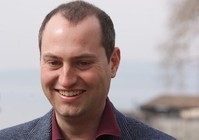
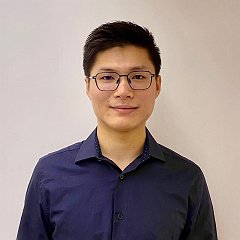
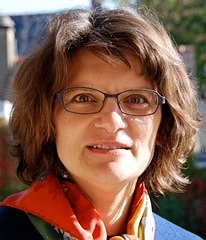
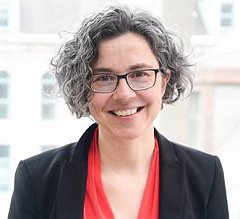
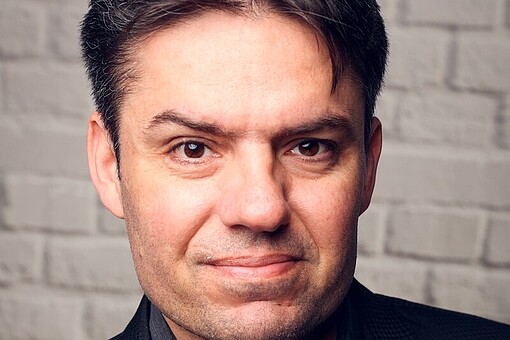
Alin Deutsch is a Professor of Computer Science at the University of California, San Diego (UCSD), specializing in database systems, graph databases, and formal verification. He has contributed significantly to research areas including query optimization, data integration, and privacy-preserving systems. His work spans theoretical foundations and practical implementations, such as the Linked Data Benchmark Council (LDBC) and the TigerGraph database system. He co-authored over 100 papers and has been involved in major conferences like SIGMOD and VLDB. Research interests include graph query processing, parallel computing, data-centric business processes, and automated system verification. Recent work focuses on scalable hybrid analytics and graph databases. Deutsch is also active in database education, co-authoring a paper on UCSD's database curriculum. He has led projects in privacy-aware systems, such as policy-aware location-based services, and contributed to tools like CLIDE for interactive query formulation in service-oriented architectures. His collaborations involve industry partners like TigerGraph and academic institutions globally.
Lara Lesch is an academic researcher affiliated with the Faculty of Psychology and Sport Science at Bielefeld University . She serves as an Academic Councillor since March 2025, following a postdoctoral role and research assistantship in the same department from June 2024 to February 2025 and January 2021 to May 2024 respectively. Her academic background includes a Doctorate in Sport Science (Dr. phil.) completed in March 2021, a Master’s degree in Sport Management from Tübingen University (2017-2020), and a Bachelor’s degree in Sport and Sport Science from Mainz University (2013-2017). Academic Councillor, Department of Sport Science, Bielefeld University (2025–present) Post-Doc, Department of Sport Science, Bielefeld University (2024–2025) Research Assistant and Doctoral Student, Department of Sport Science, Bielefeld University (2021–2024) Lesch’s research focuses on gender dynamics in sports leadership , organizational change in sports institutions , and inclusion in both non-profit and commercial sports organizations . Her recent publications emphasize the structural and societal barriers to women’s representation in sports governance, organizational responses to inclusion and diversity mandates, and the evolving competencies required in elite sports coaching. Her work appears in journals such as the European Journal for Sport and Society , where she has contributed empirical analyses on gender diversity and organizational performance. Lesch also investigates the impact of global crises, such as the COVID-19 pandemic , on corporate social responsibility practices within sports entities. Her methodological approach includes both quantitative citation analyses and qualitative assessments of stakeholder experiences in unique settings like prison sports programs . Lesch is actively involved in student academic advising for programs including the 1-Subject Profile "Economy and Society" and the MA program in Organizational Development & Management. She is responsible for the module 61-PW-WAM Scientific Work and Methods , indicating her commitment to academic training and research methodology in sports science education.
Dr. Paul Schweitzer-Martin is a Researcher at Ludwig Maximilian University of Munich's Department of Medieval History, specializing in Late Medieval Europe. He holds a Ph.D. in Philosophy from Heidelberg University and has been associated with LMU since 2021, transitioning from a Research Associate role at Heidelberg University's SFB 933 'Material Text Cultures' (2018–2021). Doctorate: Heidelberg University (2021) Study: History and Protestant Theology, Heidelberg University (2011–2018) His research focuses on Incunabula, book and paper history, codicology, and history education. Notable projects include the Koelhoff Chronicle 1499 Digital initiative and co-editorship of Between Manuscript and Print. Transcultural Perspectives, ca. 1400–1800 . He supervises Bachelor's and Master's theses in History and Medieval/Renaissance Studies. Key honors include the Recognition Prize for Young Scholars in Cultural Studies (Historical Society of the Palatinate). He serves as Deputy Chair of the 'Medieval and Renaissance Studies' Master's program examination board and Teaching Coordinator at LMU's Department of Medieval History. Member: Association of German Historians Editorial Board: 'De Gulden Passer/The Golden Compasses' (Book History journal) Committee Roles: Evangelisches Studienwerk Villigst, Heidelberg School of Education
Sarah Jadwiga Jahn is a Lecturer in Ethics, Intercultural Competence and Professional Role Reflection at the Police University of North Rhine-Westphalia (HSPV NRW), where she has been employed since October 2018. She serves as Spokesperson for the Institute for History and Ethics of Police and Public Administration (IGE) since 2022 and is Deputy Chair of the Senate Commission for Continuing Education, University Didactics and Media since 2024. Dr. Jahn earned her Magistra Artium in Religious Studies, Sociology and Philosophy from Universität Leipzig in 2009 and completed her doctoral dissertation on religious freedom in the German penal system in 2015. Her academic journey includes research positions at Ruhr-Universität Bochum and Westfälische Wilhelms-Universität Münster. Dr. Jahn's research focuses on religious diversity, antisemitism, police education, and religious freedom in correctional facilities. Her work examines the intersection of religion, law, and public administration, with particular attention to how religious minorities navigate institutional settings like prisons and police forces. She has developed numerous educational programs addressing cultural and religious diversity in public service. Her recent publications demonstrate a strong focus on antisemitism in police education and practice, examining police officers' perceptions of Jewish life and developing training approaches to address knowledge gaps. Her work also explores religious diversity in prisons, analyzing how religious freedom is implemented in correctional settings and addressing challenges related to Islamic chaplaincy services. Dr. Jahn leads several significant research projects including the BMBF-funded EMPATHIA³ project (2021-2025) on empowering police officers to address antisemitism, and the DFG Network on religious minorities and majorities in plural societies (2019-2023). EMPATHIA³ - EMpowering Police Officers and TeacHers in Arguing Against Antisemitism (2021-2025) DFG Network: Constellations of religious minorities and majorities in plural societies (2019-2023) Implementation of the Istanbul Convention in the city of Gelsenkirchen (2021-2023) Development of educational offerings on religious diversity for public administration Dr. Jahn has established herself as a leading expert in religious diversity within police education and correctional facilities, bridging academic research with practical applications in public service training and policy development.
Claire Le Goues is a Professor of Computer Science at Carnegie Mellon University, primarily affiliated with the Software and Societal Systems Department (S3D) within the School of Computer Science (SCS). She serves as the Associate Department Head for Faculty within S3D and leads the squaresLab research group. Le Goues also co-directs the REUSE@CMU summer program and teaches software engineering and program analysis at undergraduate, master's, and PhD levels. Her research spans software engineering and programming languages, with a particular focus on how to construct, maintain, evolve, improve/debug, and assure high-quality software systems. Le Goues has made significant contributions to automated program repair, program analysis, and defect detection. Her work often bridges theoretical foundations with practical applications, addressing real-world challenges in software development and maintenance. Le Goues' recent publications demonstrate a clear trend toward integrating large language models and generative AI with traditional software engineering techniques. Her research examines how these technologies can enhance program repair (BatFix, AdverIntent-Agent), vulnerability detection (Interpretable Vulnerability Detection Reports), and testing (LWDIFF for WebAssembly). This represents an evolution from her earlier foundational work in program repair (GenProg) toward leveraging contemporary AI advancements. She has mentored numerous students through her squaresLab research group and has been instrumental in developing educational programs that prepare the next generation of software engineers. Le Goues is also known for her advocacy for double-blind review processes in academic conferences, having implemented this approach when co-chairing the Symposium for Search-Based Software Engineering in 2014.
Shaohua Li is an Assistant Professor at The Chinese University of Hong Kong (CUHK), specializing in the correctness and security of critical software systems with emphasis on compilers. His research spans Software Engineering , Programming Languages , and Security , focusing on innovative compiler testing methodologies. Key areas include leveraging large language models for test generation, optimizing fuzzing techniques through prefix-guided execution, and decoupling sanitization mechanisms to reduce overhead in vulnerability detection. His work addresses fundamental challenges in ensuring reliability of systems programming infrastructure. Recent publications demonstrate a cohesive trajectory toward practical compiler validation: from empirical rustc bug analysis to SAND's low-overhead sanitization framework. The research consistently bridges theoretical formal methods with real-world implementation challenges in security-critical systems, showing particular strength in adapting AI techniques for traditional software testing problems.
Sarah Fakhoury is a Senior Researcher in the Research in Software Engineering (RiSE) group at Microsoft Research, Redmond. Her work bridges formal methods, empirical software engineering, machine learning, and human-computer interaction to optimize developer cognitive effort in AI-assisted programming tools. Her research focuses on trustworthy AI for code generation , leveraging formal verification to ensure correctness in LLM-generated outputs. Key areas include program comprehension, source code readability, and empirical evaluation of developer-AI interaction. She develops tools like 3DGen for provably correct binary parsers and NL2Fix for natural language-based code repair. Her publications reveal strong trends in formal methods integration with AI (60% of recent work), empirical developer studies (30%), and readability/metrics innovation (10%). Keywords cluster around program verification, LLM evaluation, and cognitive load measurement. ACM/SIGSOFT Distinguished Paper Award (ICPC 2018) Fakhoury actively contributes to the academic community as PC member for ASE, ICSE, and ESEC/FSE. She co-organizes workshops like Muslims in ML at NeurIPS and mentors through SMeW. Her RiSE group collaboration with Shuvendu Lahiri and Madanlal Musuvathi drives Microsoft's trustworthy AI4Code initiatives, focusing on verifiable developer tools.
Dr. Stephan Stieberger is a Permanent Staff Member and Research Group Leader at the Max Planck Institute for Physics (Werner-Heisenberg-Institut) in Munich, Germany. He is also an Associate Member of the Arnold Sommerfeld Center for Theoretical Physics at Ludwig-Maximilians-Universität München and participates in the Elite Graduate Program "Theoretical and Mathematical Physics." As Scientific Head of the institute library, he oversees one of the most comprehensive physics collections in Europe. Stieberger's research focuses on cutting-edge theoretical physics with emphasis on Celestial and Carrollian conformal field theories , flat-space holography , and asymptotic symmetries . His work explores new formulations and amplitude techniques in gauge and gravity theories , including soft-theorems, spinors, and twistors. He investigates relations between gravitational and gauge amplitudes , perturbative string theory with implications for field theory, and non-perturbative effects in superstring theory such as instanton corrections and string dualities. His research also extends to string phenomenology with applications to the LHC and number theory with connections to arithmetic algebraic geometry. Analysis of Stieberger's recent publications reveals a strong focus on celestial holography and amplitude techniques, with increasing attention to mathematical structures like multiple zeta values and modular forms. His work bridges high-energy physics with advanced mathematics, particularly in the context of string theory and quantum gravity. The trend shows growing interest in the connections between scattering amplitudes, conformal field theory, and mathematical structures from number theory. Stieberger actively contributes to the theoretical physics community through numerous international lectures and workshops. He has organized significant events including the Workshop on Celestial Amplitudes and Flat Space Holography at the Corfu Summer Institute and has been involved in major conferences such as STRINGS 2012 and Amplitudes 2013. His academic service includes participation in the Research Seminar "Strings and Fields" and leadership roles in organizing major international events in theoretical physics. Based at the Max Planck Institute for Physics in Garching near Munich, Stieberger works within one of the world's leading centers for theoretical particle physics. His office is located in Room 323 at the institute, where he leads his research group focused on string theory, amplitude techniques, and related mathematical structures. The institute provides a vibrant research environment with strong connections to both the Ludwig-Maximilians-Universität München and the broader international theoretical physics community.
Prof. Dr. Rainer Heintzmann serves as Head of the Microscopy Department at the Leibniz Institute of Photonic Technology (Leibniz-IPHT) in Jena, Germany. His research focuses on advancing optical microscopy techniques, particularly super-resolution methods that surpass the diffraction limit to visualize cellular structures at nanoscale resolution. His primary research interests center on structured illumination microscopy (SIM), point spread function modeling, and computational imaging techniques. He has made significant contributions to developing automated multicolor SIM systems, extreme ultraviolet microscopy approaches, and deep learning-enhanced image analysis methods. His work bridges optical physics, computational algorithms, and biomedical applications, with particular emphasis on making advanced microscopy techniques more accessible through open-source hardware and software solutions. Analysis of his recent publications reveals a strong focus on overcoming fundamental limitations in optical microscopy. His research spans from theoretical modeling of optical systems to practical implementations for biological imaging. Key trends include the development of more accurate point spread function calculations, expansion of super-resolution techniques to new wavelength regimes, and integration of machine learning for image analysis and segmentation. Prof. Heintzmann actively collaborates with researchers across multiple institutions, as evidenced by his co-authorship on numerous interdisciplinary publications. His work has appeared in high-impact journals including Nature Methods, Nature Reviews Molecular Cell Biology, and Optics Express, reflecting the significance of his contributions to advancing microscopy techniques. His laboratory at Leibniz-IPHT appears to focus on developing novel microscopy instrumentation, particularly open-source implementations of super-resolution techniques. Recent projects include the openSIMMO platform for automated multicolor structured illumination microscopy and work on extreme ultraviolet microscopy that could potentially extend super-resolution capabilities into the X-ray regime.
Sandrine Blazy is a Professor in the Computer Science Department at the University of Rennes, France. She is a member of CELTIQUE (also referred to as Epicure), a joint project-team with Inria Rennes Bretagne Atlantique and the IRISA laboratory. Since 2021, she has served as deputy director of the IRISA CNRS UMR 6074 laboratory and will be the general chair for POPL 2026, which will be held in Rennes. She is also a member of the editorial board of the LMCS journal. Dr. Blazy completed her PhD at CNAM (Conservatoire National des Arts et Métiers) in 1993 with a thesis titled "La spécialisation de programmes pour l'aide à la maintenance du logiciel" (Program Specialization for Software Maintenance Assistance). She later completed her Habilitation à diriger des recherches (HDR) in 2008 at the University of Évry Val d'Essonne with a thesis titled "Sémantiques formelles" (Formal Semantics). Her research focuses on the formal verification of program transformations and semantic properties of programming languages, particularly in the context of the CompCert compiler and Verasco static analyzer. She develops mechanized semantics using the Coq (or Rocq) proof assistant to ensure software correctness and security. A prime application domain of her work is software security, including constant-time programming for cryptographic applications and software obfuscation techniques. Her teaching includes mechanized semantics (in Coq), functional programming (in OCaml), formal methods (using Why3), and software vulnerabilities. Dr. Blazy's publication record from 2019-2025 shows a sustained focus on verified compilation techniques, particularly in preserving security properties during compilation. Her work bridges theoretical formal methods with practical compiler implementation, resulting in tools that have real-world impact in safety-critical systems. She has made significant contributions to the CompCert formally verified compiler project, with particular attention to constant-time preservation for cryptographic applications and JIT compilation verification. Her scientific achievements have been recognized with several major awards: CNRS Silver Medal (2023) Lucas Award from Formal Methods Europe (2023) ACM SIGPLAN Programming Languages Software Award for CompCert (2022) ACM Software System Award for CompCert (2021) Dr. Blazy has been actively involved in the programming languages research community, serving on numerous program committees for major conferences including POPL, ICFP, PLDI, and CPP. She has mentored students and contributed to education through teaching mechanized semantics and formal methods. Her work with the CompCert compiler has led to practical applications in safety-critical systems, with industry collaborations documented in publications like "CompCert: Practical experience on integrating and qualifying a formally verified optimizing compiler" (ERTS 2018). She leads research within the CELTIQUE project team, which focuses on developing trustworthy software using deductive verification. Her team works on advancing the state of the art in formal verification of compilers and static analyzers, with applications in security-critical domains including cryptographic implementations and safety-critical embedded systems.
Brigitte Pientka is a Professor at McGill University's School of Computer Science , where she leads the Computation and Logic group . She earned her PhD from Carnegie Mellon University in 2003 and previously studied at the University of Edinburgh and Technical University of Darmstadt. Education PhD in Computer Science, Carnegie Mellon University (2003) University of Edinburgh Technical University of Darmstadt Research Interests Her work focuses on the theoretical and practical foundations for building reliable software systems, combining logic, type theory, and verification with system-building. Key areas include: Type Theory and Dependent Types Logical Frameworks and Mechanized Metatheory Session-Typed Concurrency and Linear Logic Metaprogramming and Contextual Type Systems Theorem Proving and Formal Verification Functional Programming and Language-Based Security Professional Roles She has served as: PC Chair for ICFP'24 and CPP'24 General Chair for POPL'20 Executive Editor of Logical Methods in Computer Science Steering Committee Member for LICS, POPL, and ESOP Scientific Awards Dr. Pientka has received: Test of Time Award at PPDP'18 Humboldt Fellowship for research at MPI-SWS, Germany Labs & Teams She actively develops the Beluga programming language , a tool for mechanizing meta-theory proofs and type-driven program manipulation.
Dr. Alexander Goettker is a postdoctoral researcher at Justus Liebig University Giessen's Department of Psychology and Sports Science, specializing in oculomotor behavior and sensorimotor integration. He contributes to the Collaborative Research Center "Cardinal Mechanisms of Perception" and the International Research Training Group "The Brain in Action". Ph.D. in Psychology (2020) with thesis on saccadic-pursuit eye movement interactions M.Sc. in Psychology (2016), including predoc program in visual neuroscience B.Sc. in Psychology (2014) Key research areas: Saccadic and pursuit eye movement coordination Integration of retinal and extra-retinal signals Eye-hand movement interactions Naturalistic visual processing in sports contexts Publication trends show focus on sensorimotor integration, visual processing during eye movements, and the interplay between perceptual judgments and motor control. His work spans journals like Current Biology , PNAS , and Scientific Reports .
Prof. Mauricio de Campos Porath is a Professor of Production Engineering and Measuring Technology at the Hamburg University of Applied Sciences (HAW Hamburg), Department of Mechanical Engineering and Production. He holds a Dr.-Ing. from RWTH Aachen University (2009), M.Sc. in Production Engineering from RWTH Aachen (2004), and B.Sc. in Mechanical Engineering from Universidade Federal de Santa Catarina (UFSC), Brazil (2002). His research focuses on precision metrology, including coordinate measuring technology, industrial computed tomography, and uncertainty analysis in manufacturing processes. Key roles include serving as Deputy Study Program Coordinator for the B.Eng. in Mechanical Engineering (Production Technology) at the Shanghai-Hamburg College (since 2024), Member of the Faculty Council (TI Faculty), and Reviewer for journals like Precision Engineering and Measurement Science and Technology. He has extensive industry experience, including roles at Carl Zeiss IMT GmbH and as a Measurement Engineer at CERTI Brazil. Research interests span advanced measurement techniques for industrial applications, robot calibration, and quality management. His work emphasizes bridging theoretical metrology with practical manufacturing challenges, particularly in additive manufacturing and shipbuilding assembly processes. Publications highlight contributions to calibration methodologies, uncertainty quantification, and precision measurement systems. He actively participates in international conferences and academic reform initiatives, reflecting his commitment to advancing technical education and industrial metrology standards.
Sebastian Riedmiller is a Senior Research Fellow at the Max Planck Institute for Research on Collective Goods in Bonn. He earned his PhD in Economics from the University of Cologne in 2025 and previously held visiting positions at Stanford University (2024) and University of Trento (2019). His work bridges behavioral economics with policy design to address real-world behavioral barriers. Education: B.Sc. in Economics (2014–2017), University of Münster M.Sc. in Economics (2017–2020), University of Münster PhD in Economics (2020–2025), University of Cologne Sebastian’s research focuses on how targeted behavioral interventions can align individual decisions with policy goals, particularly in student financial aid and risk preference modeling . His studies reveal that misperceptions about eligibility and repayment obligations significantly hinder social benefit take-up, and he explores diagnostic tools to optimize intervention design. His papers analyze experimental evidence on correcting misperceptions in student aid programs, barriers to social benefit take-up, and preferences for information timing in compound lotteries. Collaborations with institutions like Fraunhofer FIT and researchers such as Matthias Sutter and Sascha Strobl highlight his interdisciplinary approach. Advisors: Matthias Sutter, Pia Pinger, Bettina Rockenbach Media Coverage: His work on student aid has been featured in German outlets like Die Zeit , Spiegel , and Wiarda-Blog .
Bertrand Meyer is a renowned academic and software engineering expert affiliated with Constructor University in Switzerland. He previously held positions at ETH Zurich (2001-2016), the University of Toulouse (2015-2016), and Monash University. His research focuses on object-oriented programming, software engineering, formal methods, and programming languages. He is best known for developing the Eiffel programming language and pioneering the 'Design by Contract' paradigm. Meyer earned his PhD from the University of Nancy, France. His contributions include seminal textbooks like *Object-Oriented Software Construction* (1988, 1997), *Touch of Class* (2009), and *Agile!* (2014). He has received the ACM Software System Award (2006) for his work on Eiffel. His research emphasizes rigorous software design principles, formal verification, and practical software engineering practices. Key innovations include: Design by Contract methodology Advancements in object-oriented design patterns Contributions to component-based development Work on software testing and validation techniques Meyer has authored over 374 publications spanning journals, conferences, and books. His work bridges theoretical foundations and practical software development methodologies.