Michel BesserveView profile
Professor
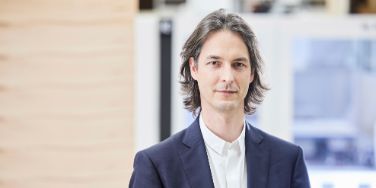
Michel Besserve is a Full Professor in the Department of Empirical Inference at the Max Planck Institute for Intelligent Systems in Tübingen, Germany. His research bridges artificial intelligence, causal inference, and neuroscience to develop trustworthy and interpretable AI systems for understanding complex phenomena in artificial, physical, and socioeconomic systems. Dr. Besserve completed his PhD dissertation titled Analyse de la dynamique neuronale pour les Interfaces Cerveau-Machine : un retour aux sources at Université Paris-Sud 11 in November 2007. His academic journey has led him to become a leading researcher in causal machine learning, collaborating extensively with Bernhard Schölkopf and other prominent scientists in neuroscience and AI. Professor Besserve's research centers on causal machine learning, with a focus on understanding and anticipating changes in complex systems. He investigates principles like the Independence of Causal Mechanisms (ICM) to improve causal model identifiability and develop more robust AI. His work spans theoretical foundations of causal inference to practical applications in neuroscience, brain function analysis, and socioeconomic systems. He has made significant contributions to understanding brain networks through causal inference and machine learning, with publications in major journals including Nature, PLOS Biology, and Neuron. His publication record reveals a clear trajectory from theoretical causal inference toward developing frameworks for real-world applications. Recent work focuses on building Causal Computational Models (CCMs) that integrate data, domain knowledge, and causal structure to improve robustness and interpretability of complex system models. His research shows increasing integration of causal machine learning with applications to neuroscience and socioeconomic systems, particularly in developing causal AI that can address real-world complexity while producing interpretable outcomes for decision makers. Through his leadership in the Department of Empirical Inference, Professor Besserve has established a research program that bridges theoretical machine learning with practical applications in neuroscience and complex systems. His team develops novel causal machine learning tools that uncover internal structure and transformations of complex systems, with potential applications ranging from brain function analysis to sustainable economic modeling.